Normal Vital Signs for Peds & Pain Assessment Tools
 Call Kai
 Learn
Learn Practice Test
 Spaced Repetition
 Match
Match Flashcards
 Knowt Play
1/20

There's no tags or description
Looks like no tags are added yet.
Name | Mastery | Learn | Test | Matching | Spaced | Call with Kai |
|---|
No analytics yet
Send a link to your students to track their progress
21 Terms
Neonates (1-30 days) normal blood pressure:
67-84/35-53
Infant (30 days-1yr) normal blood pressure:
72-104/37-56
Toddler (1-3 yrs) normal blood pressure:
86-106/42-63
Preschoolers (3-5 yrs) normal blood pressure:
89-112/ 46-72
School age (6-9 yrs) normal blood pressure:
97-115/57-76
Adolescent (12-18 yrs) normal blood pressure:
110-131/64-83
Neonate normal pulse (awake and sleeping)
awake: 100-205
sleeping: 90-160
infant normal pulse (awake and sleeping)
awake: 100-180
sleeping: 90-160
Toddler normal pulse (awake and sleeping)
awake: 98-140
sleeping: 80-120
Preschooler normal pulse (awake and sleeping)
awake: 80-120
sleeping: 65-100
School-age normal pulse (awake and sleeping)
awake: 75-118
sleeping: 58-90
Adolescent normal pulse (awake and sleeping)
awake: 60-100
sleeping: 50-90
normal respiratory rate 1 day to 1 yr (neonates and infants)
30-60
normal respiratory rate 1-3yrs (toddlers)
24-40
normal respiratory rate 3-5yrs (preschool)
22-34
normal respiratory rate 5-12 yrs (school-age)
18-30
normal respiratory rate 12 + yrs:
12-18
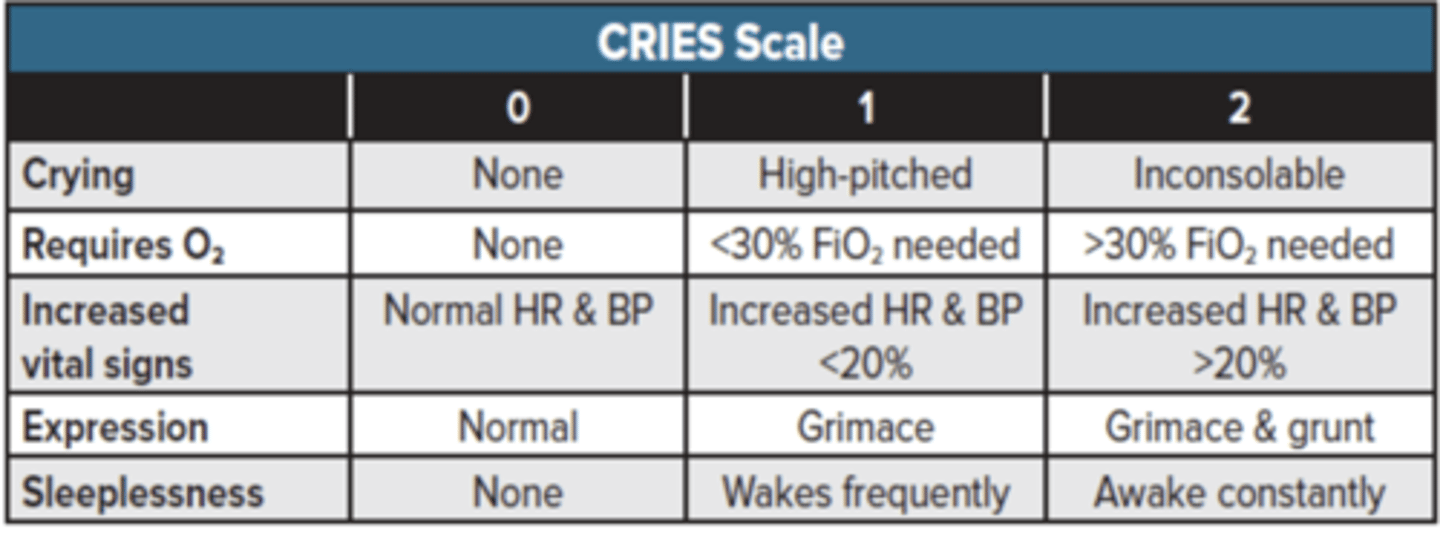
CRIES pain assessment tool:
used for neonates (1-30 days)
assesses crying, respirations, increased vitals, facial expressions, and sleep.
each category receives a score from 0-2. higher pain level correlates with a higher score.
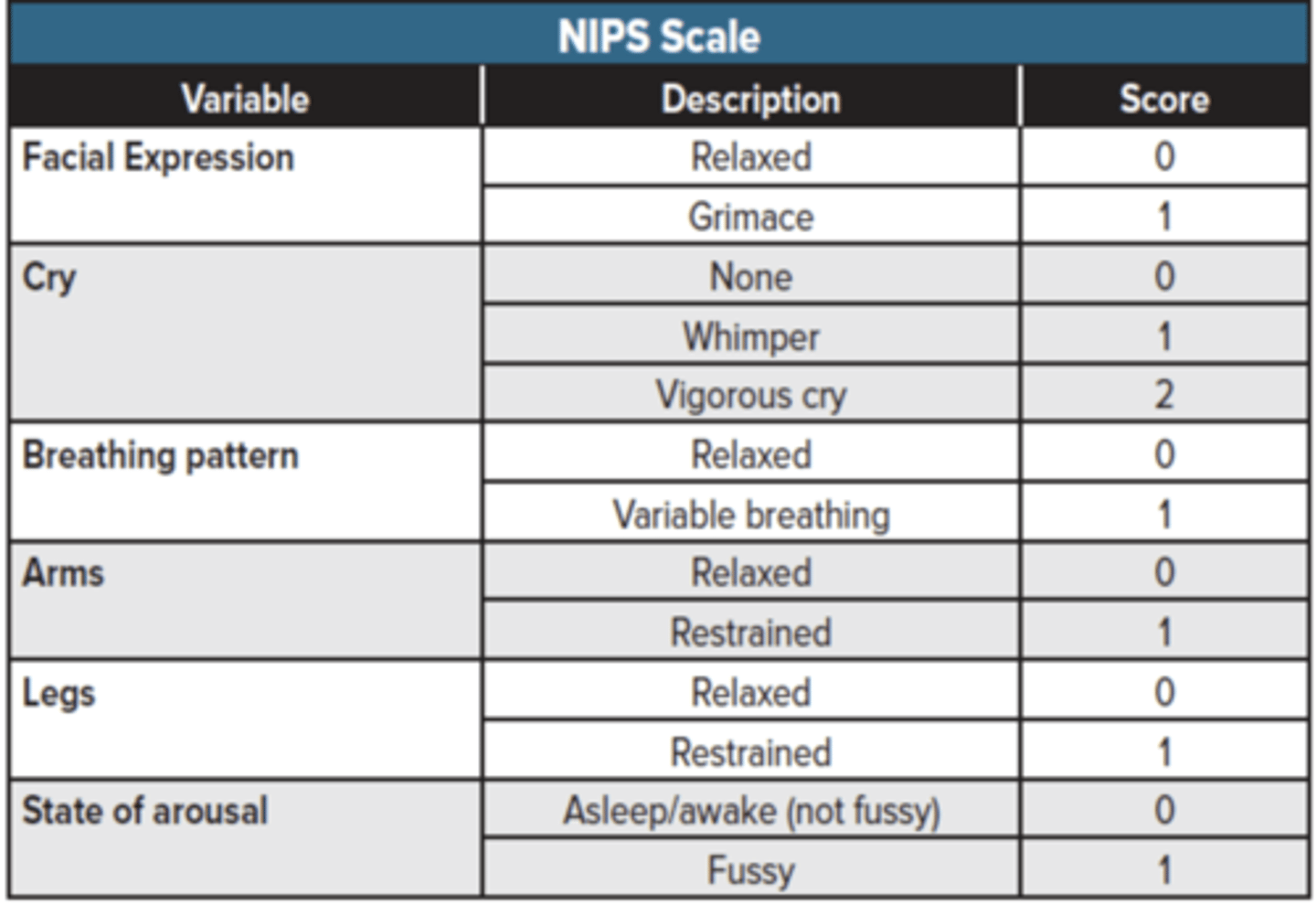
NIPS pain assessment tool:
used for neonates (1-30days)
Assesses facial expression, cry, breathing pattern, arms, legs, and state of arousal.
each category receives a score from 0-1 (except for cry which is 0-2)
a score of 3-4 indicates mild-moderate pain
a score greater than 5 indicates severe pain requiring pharmacological intervention.
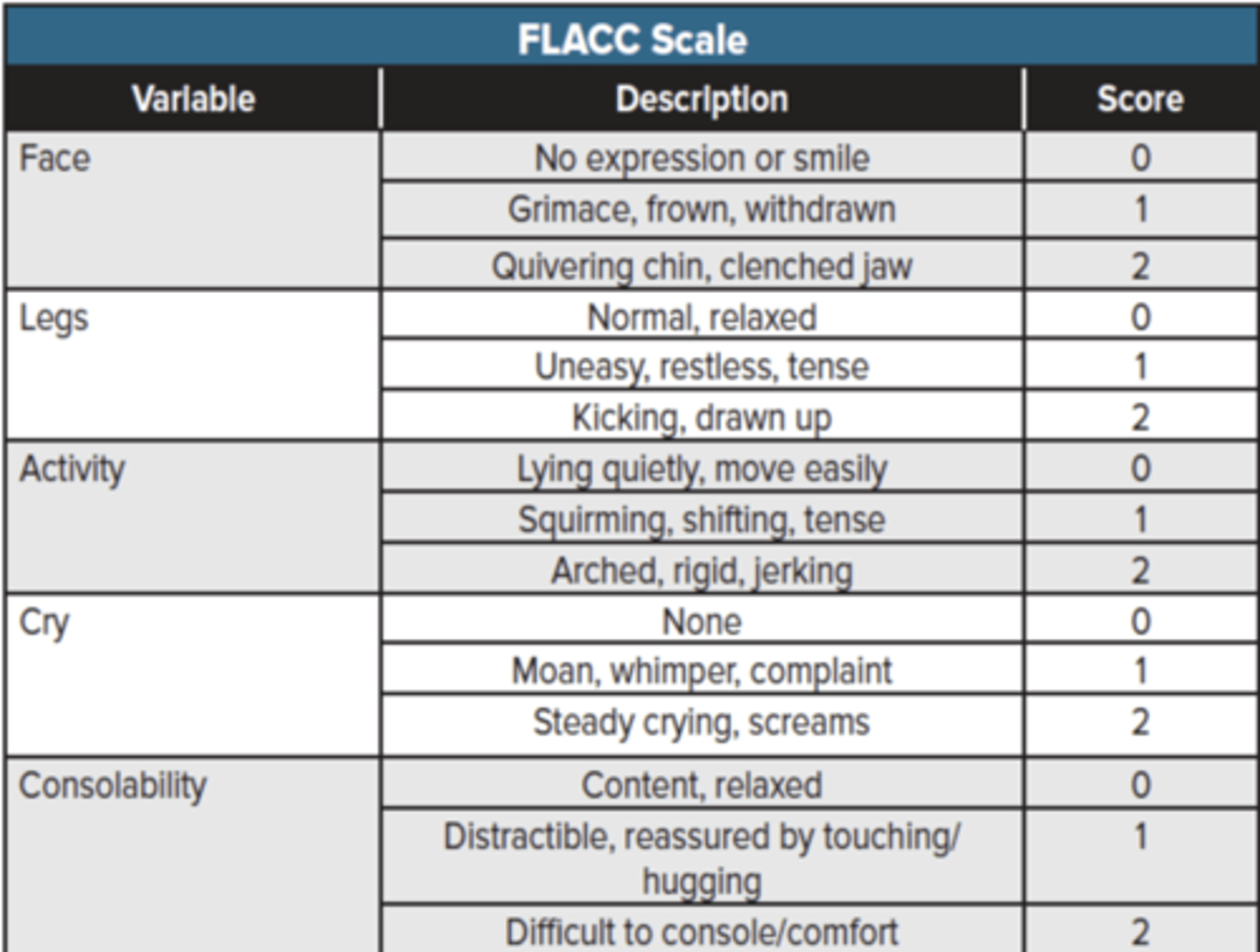
FLACC pain assessment tool:
used for infants and toddlers or any age that has developmental delay
assesses face, legs, activity, cry, and consolability.
each category receives a score from 0-2.
a higher score correlates with a higher level of pain.
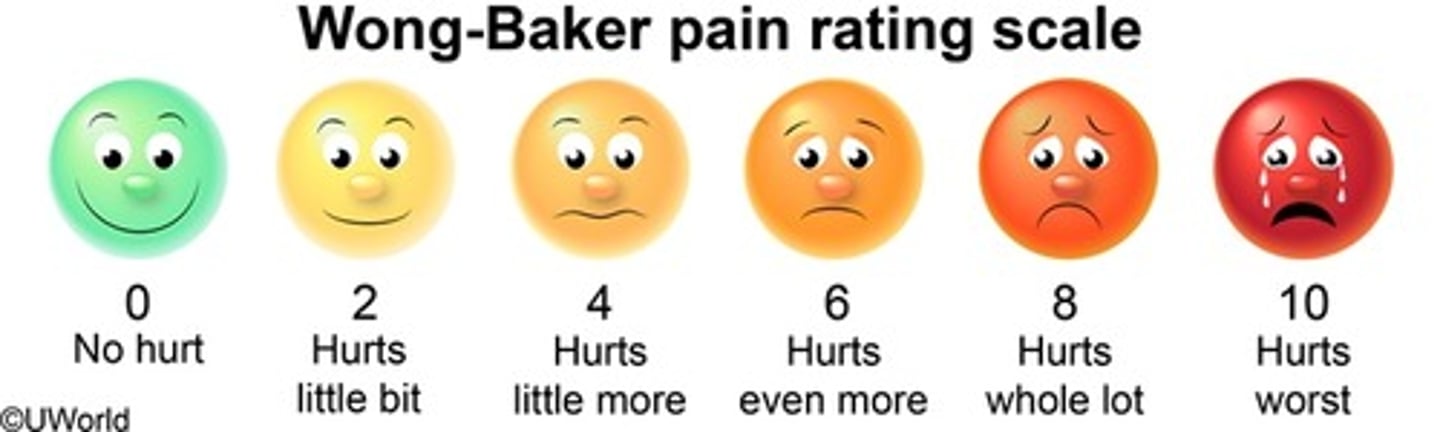
Wong-Baker pain rating scale:
used for preschool/school-age children (3-5 and 5-12yrs)
asks patient to point to which face correlates with the pain they are feeling