Biology - Chapter 8.3: The Central Nervous System (CNS)
 Studied by 0 people
 Call Kai
 Learn
Learn Practice Test
 Spaced Repetition
 Match
Match Flashcards
 Knowt Play
1/16

There's no tags or description
Looks like no tags are added yet.
Name | Mastery | Learn | Test | Matching | Spaced | Call with Kai |
|---|
No analytics yet
Send a link to your students to track their progress
17 Terms
spinal cord
- where sensory and motor neurons are found
- vital communication link between the brain and PNS
- spinal cord tissue is protected by cerebrospinal fluid, soft layer tissues, and the spinal column (vertebrae)
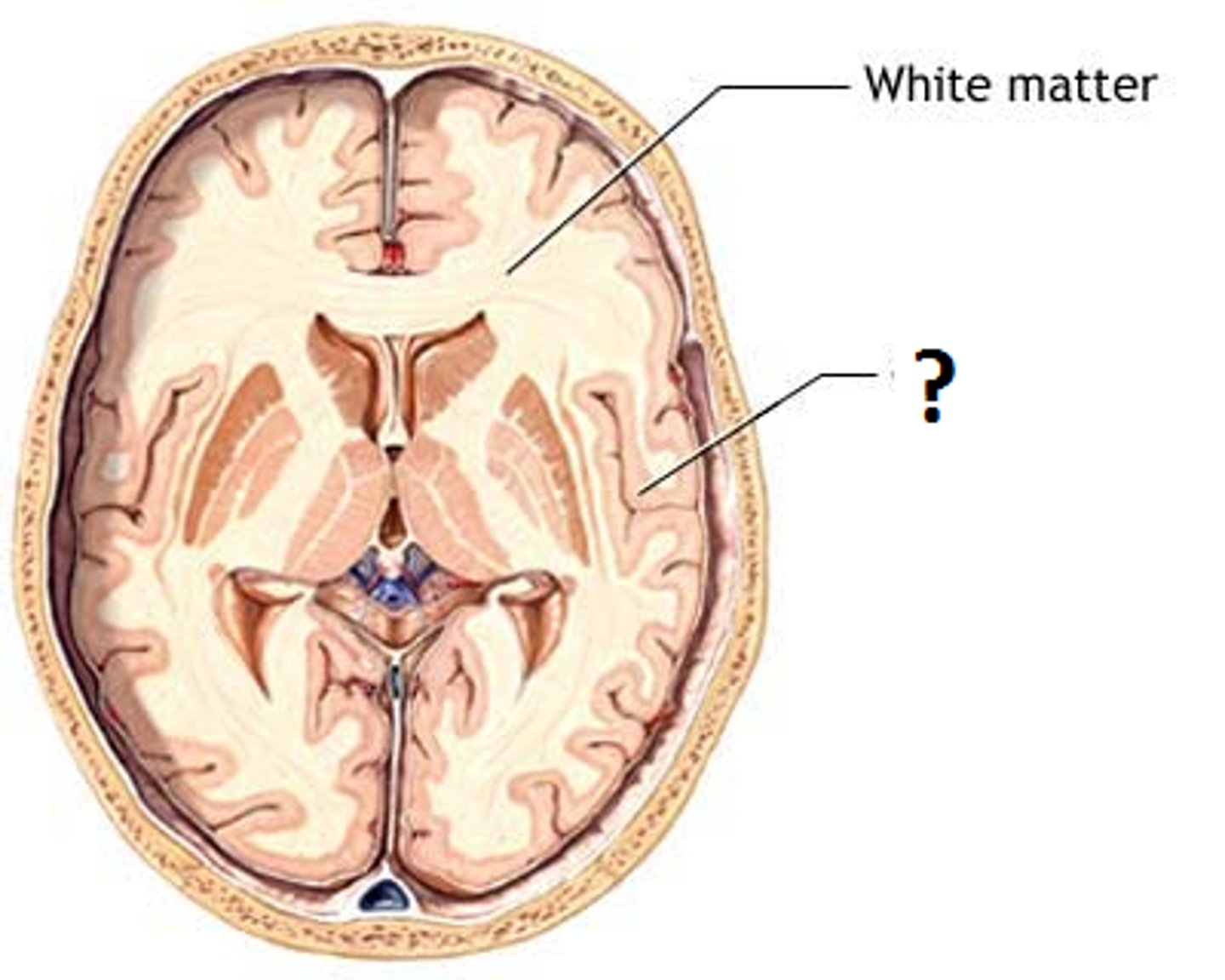
white matter
- myelinated neurons
- form the inner regions of some areas of the brain and the outer area of the spinal cord
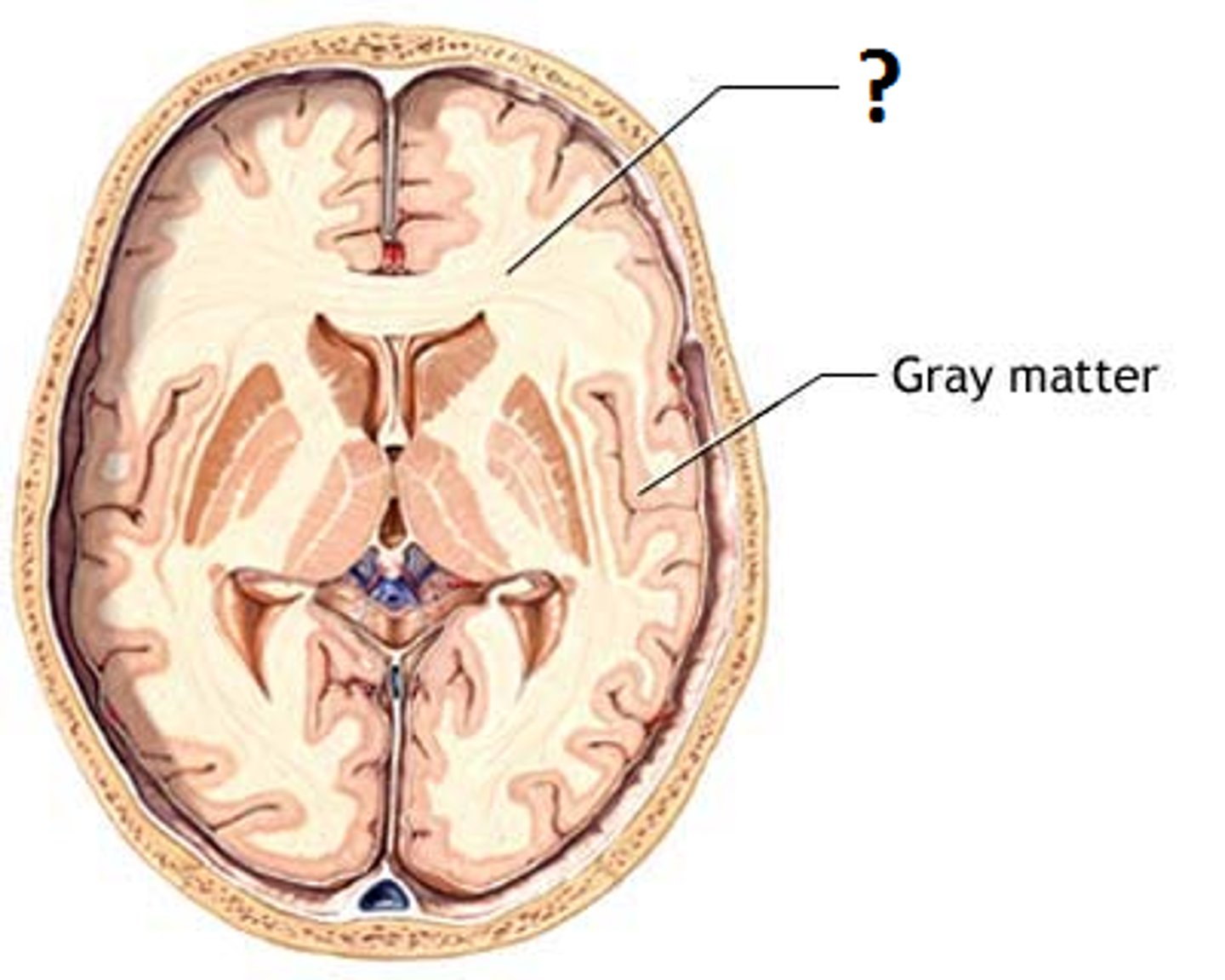
grey matter
- unmyelinated neurons
- found around the outer regions of the brain and forms the "H-shaped" core of the spinal cord
the brain
- protected by the skull and the meninges
- divided into 3 general regions: hindbrain, midbrain, forebrain
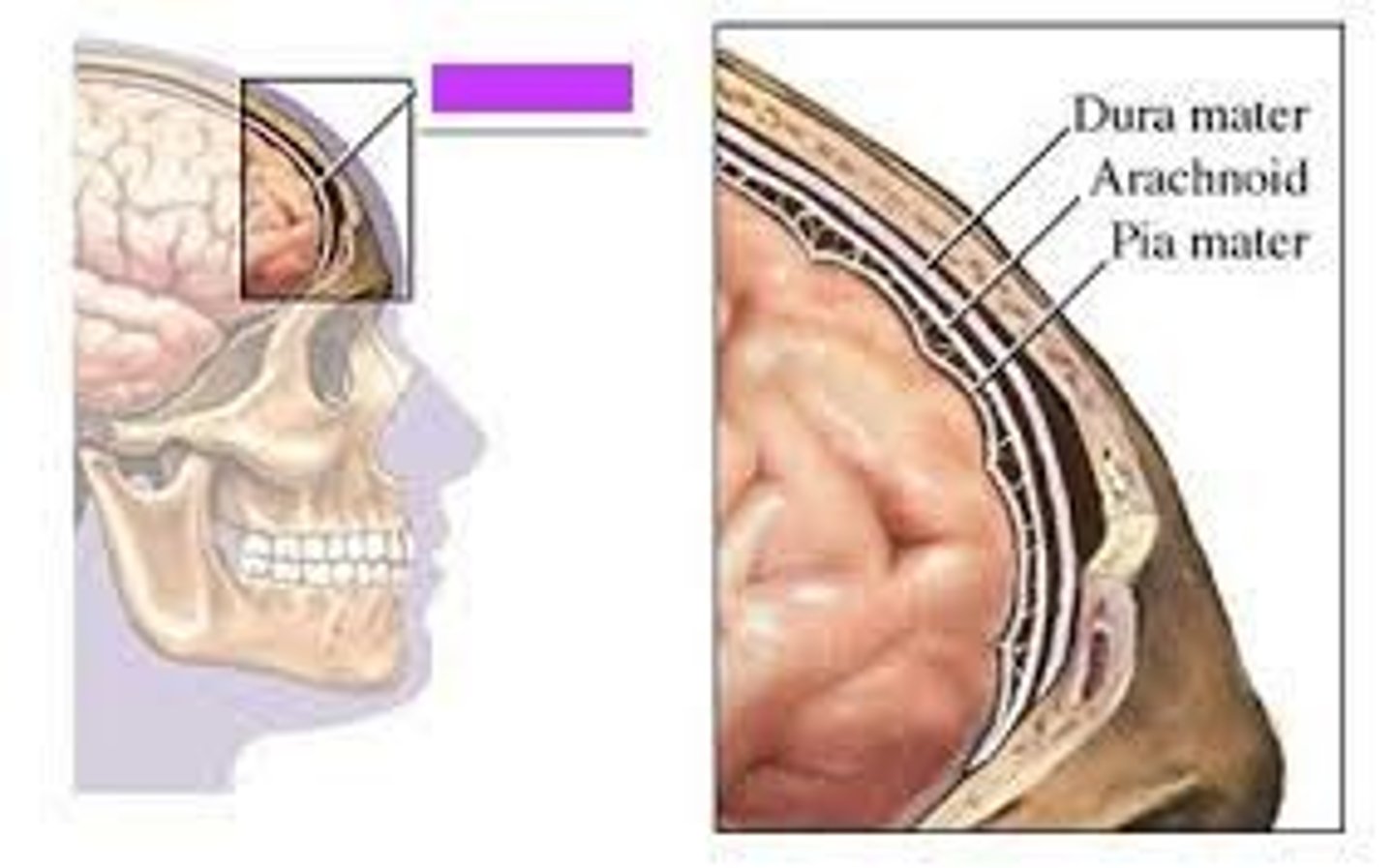
meninges
dura mater, arachnoid later, and pia mater
hindbrain
- coordination and homeostasis
- cerebellum (little brain): involved in unconscious coordination of posture, reflexes, body movement, and fine voluntary motor skills
- medulla oblongata: base of the brain stem coordinates automatic bodily functions that maintain homeostasis (heart rate, breathing, coughing)
- pons
midbrain
- processing sensory input
- process information from sensory neurons in the eyes, ears, and nose
- controls skeletal muscle movement
forebrain
- thought, learning, and emotion
- cerebrum
- thalamus: connects the forebrain and hindbrain
- hypothalamus: regulates the body's internal environment (e.g behaviour, blood pressure, heart rate, body temperature, hunger, thirst). acts as a major link between the nervous and endocrine systems. controls the pituitary gland
- pituitary gland: secretes a large amount of hormones
- cerebrum: divided into right and left cerebral hemispheres; each centres for intellect, learning, memory, consciousness, and language
the blood-brain barrier
- formed by glial cells and blood vessels
- separates blood from the CNS and selectively controls the entrance of substances into the brain from the blood
cerebrospinal fluid
- a dense, clear liquid derived from blood plasma
- transports hormones, white blood cells,and nutrients across the blood-brain barrier to the cells of the brain
- shock absorber: circulates between 2 layers of the meninges (arachnoid and pia mater)
structure and function of the cerebrum
- each half of the cerebrum consists of an internal mass of white matter and a thing, outer covering of grey matter called the cerebral cortex
- corpus callosum: links cerebral hemispheres and sends messages
cerebrum
- cognitive functions originate from both hemispheres (right and left brain)
the cerebral cortex
- 4 lobes
- occipital lobes
- temporal lobes
- parietal lobes
- frontal lobes
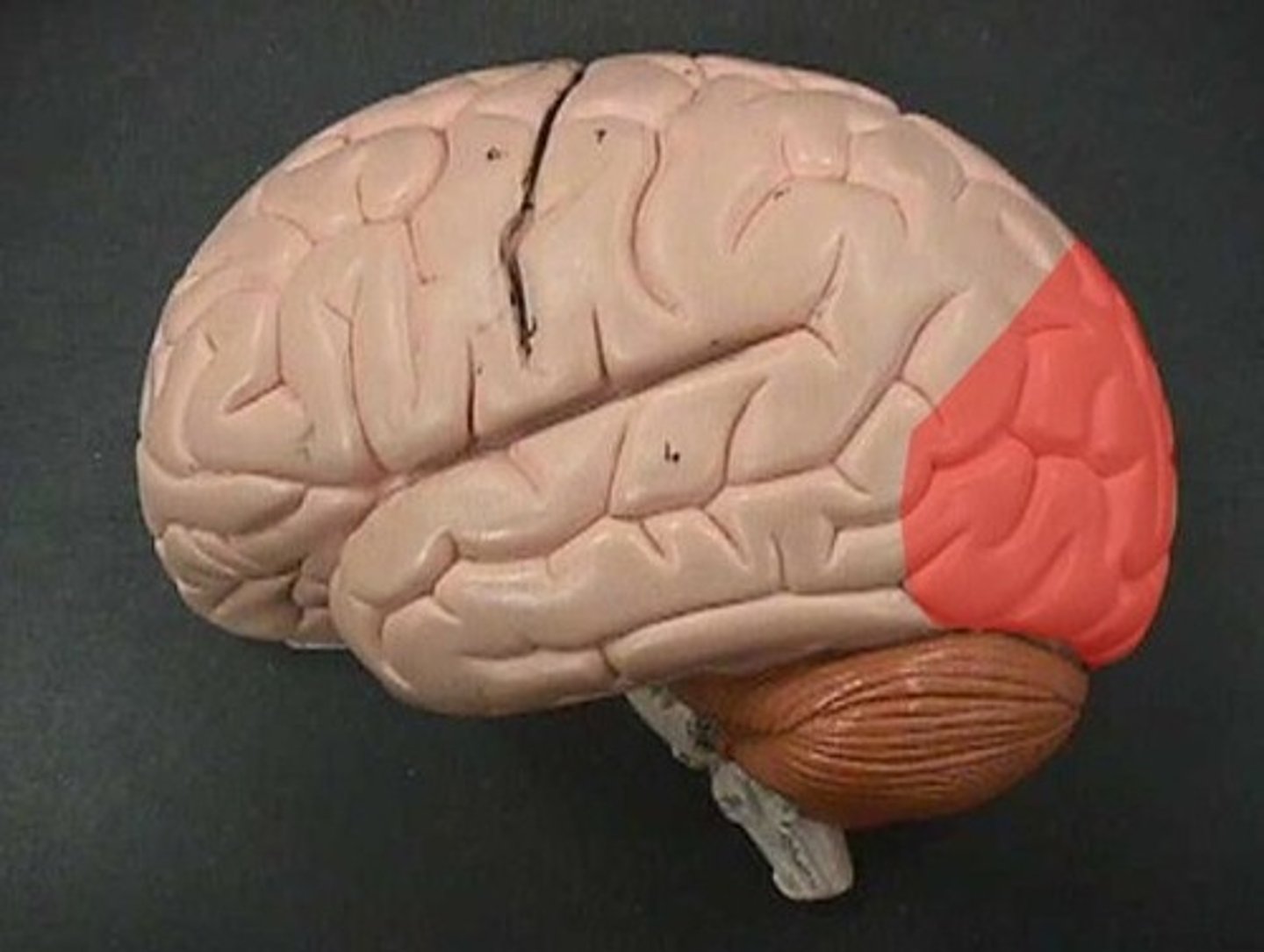
occipital lobe
receive and analyze visual information
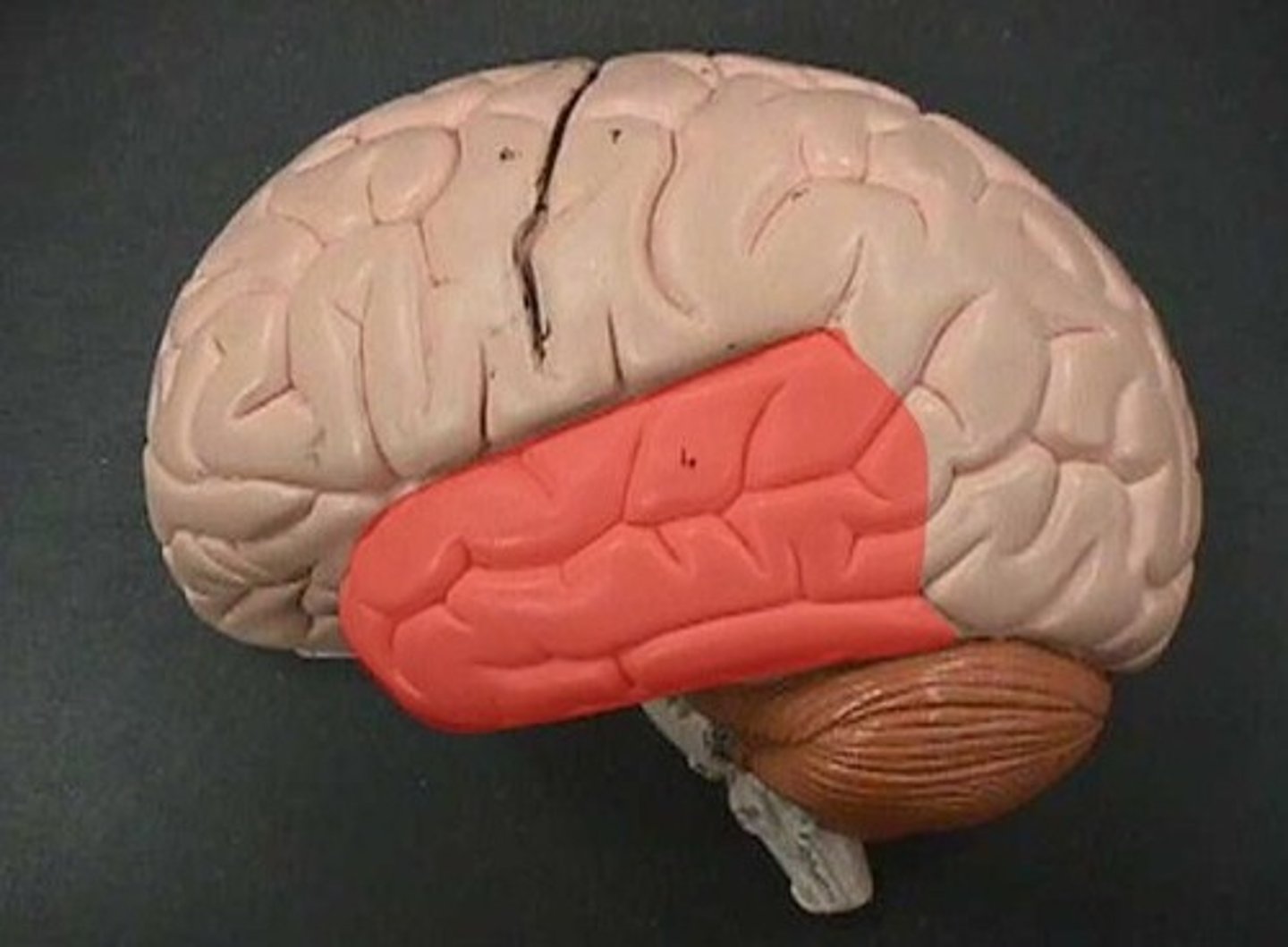
temporal lobe
share mainly auditory information and some visual processes
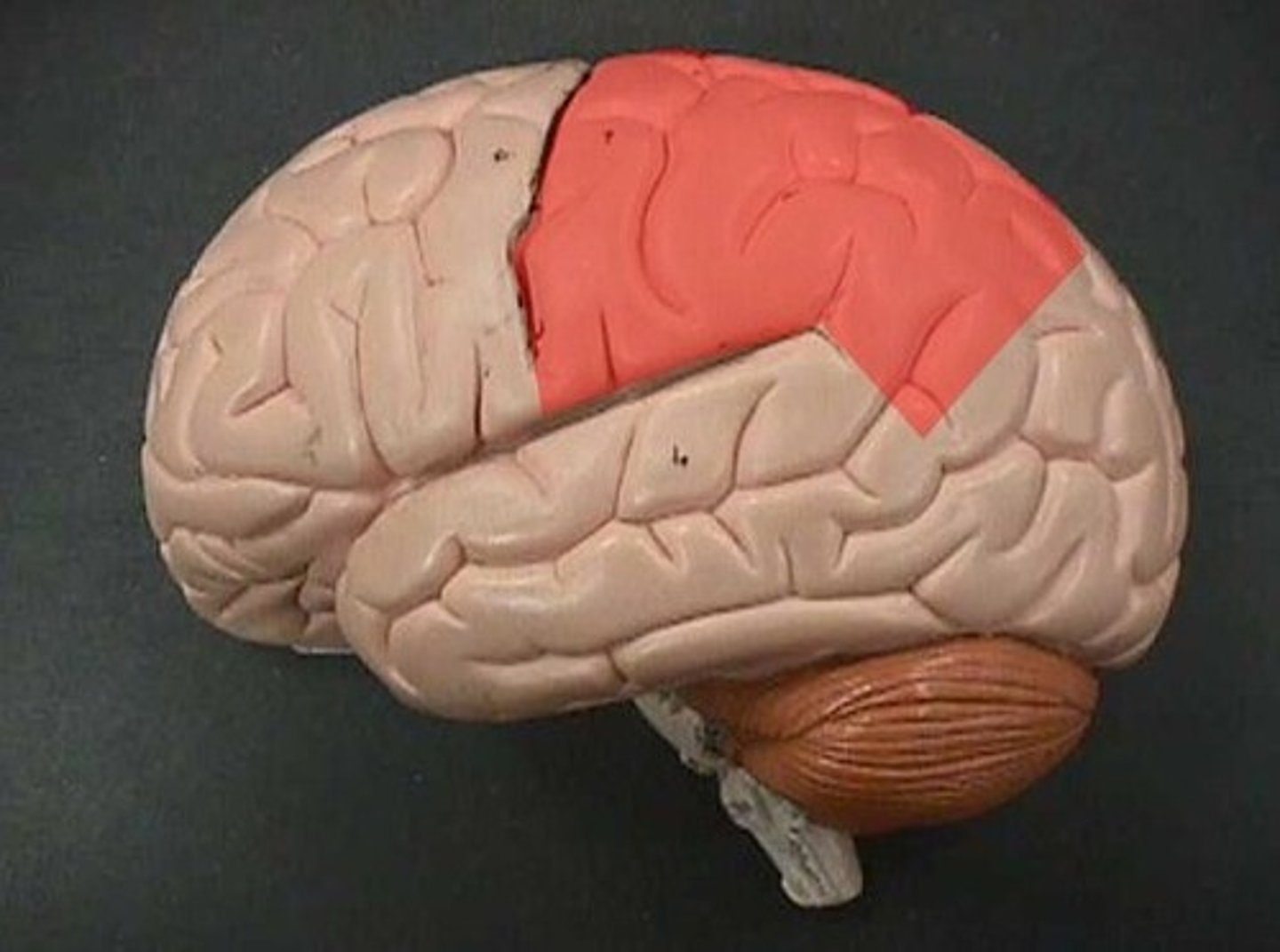
parietal lobe
receive/process sensory information from the skin
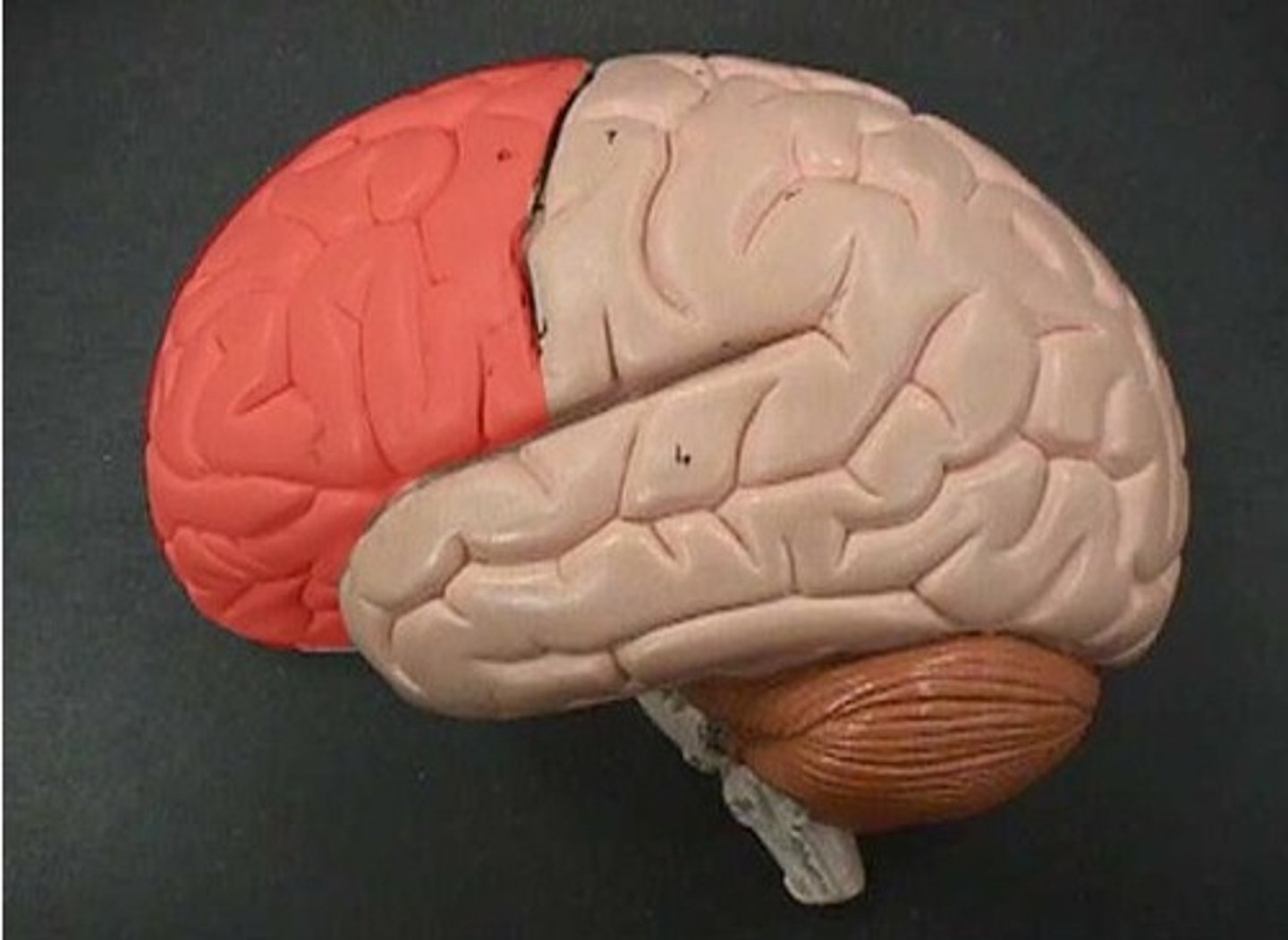
frontal lobes
- integrate information and controls critical thinking, memory, personality, and fine motor skills
- each side of the frontal lobes control muscles on the opposite end of the body
 Note
Note  Flashcards (62)