Eighteenth Century Art - Week 8
 Call Kai
 Learn
Learn Practice Test
 Spaced Repetition
 Match
Match Flashcards
 Knowt Play
1/9

There's no tags or description
Looks like no tags are added yet.
Name | Mastery | Learn | Test | Matching | Spaced | Call with Kai |
|---|
No analytics yet
Send a link to your students to track their progress
10 Terms
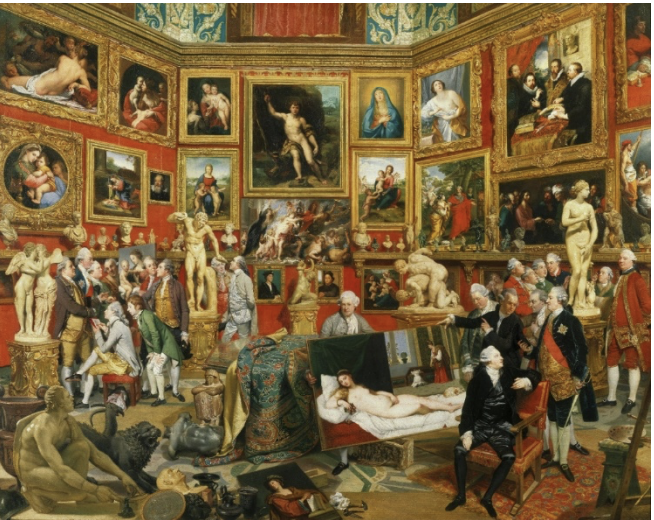
Johan Zoffany, The Uffizi Gallery, 1778
-The medici collection
-The Medici Venus (nude goddess statue)
-Grand Tour, blending portraiture, connoisseurship, and Neoclassical appreciation of Renaissance art.
-Male gaze
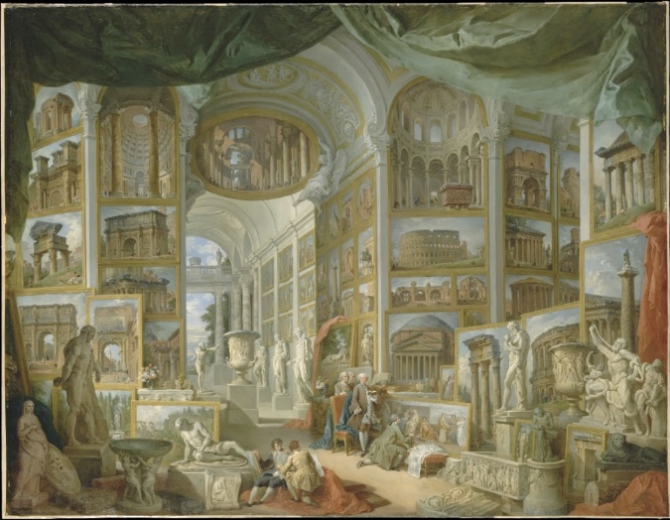
Paolo Panini, Ancient Rome, 1757
-Grand Tour
-Vedute ideate = imaginary views
-Vedutisti = using ancient ruins to create an orderly interior space
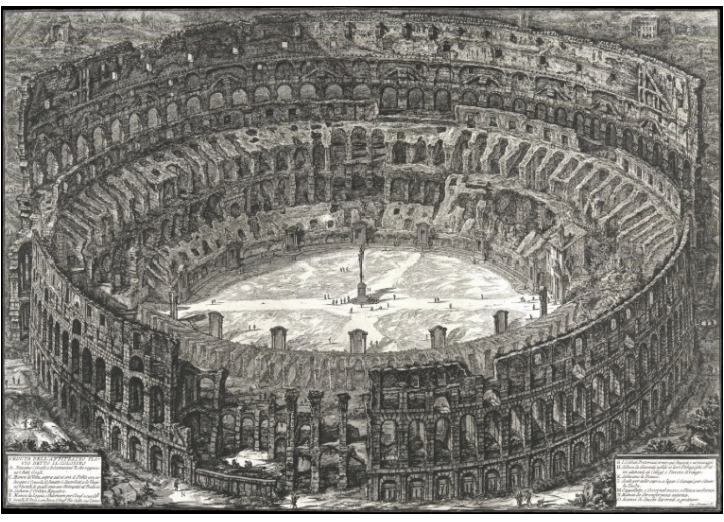
Piranesi, Colosseum from Views of Rome, 1776
-Aerial view, makes the top feel taller and the space in the middle feel larger
-Dynamic
-Romantic theatrical art
-
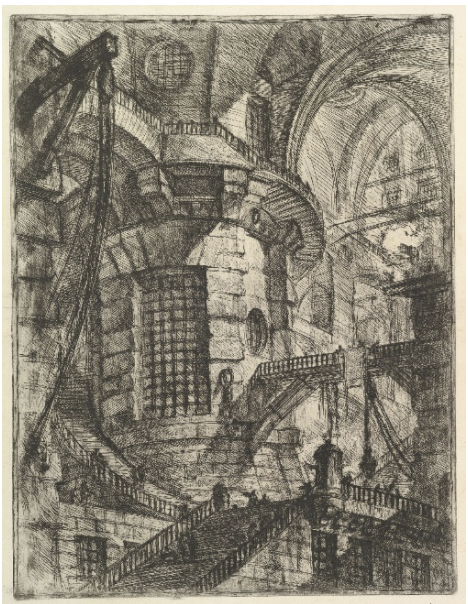
Piranesi, The Round Tower, from Imaginary Prisons, c. 1750
-marking a shift from classical vedute to nightmarish, sublime architectural fantasies
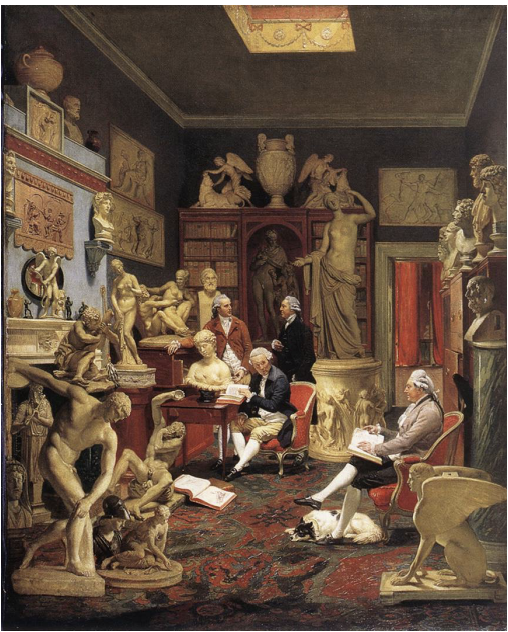
Johan Zoffany, Charles Townley’s Park Street Library, 1783
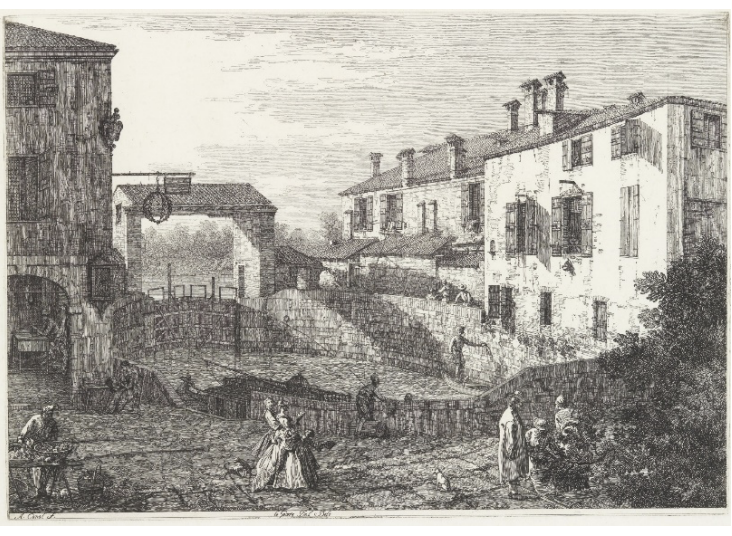
Canaletto, Al Dolo, 1745, etching
-A lock, filled and drained with water to move ships
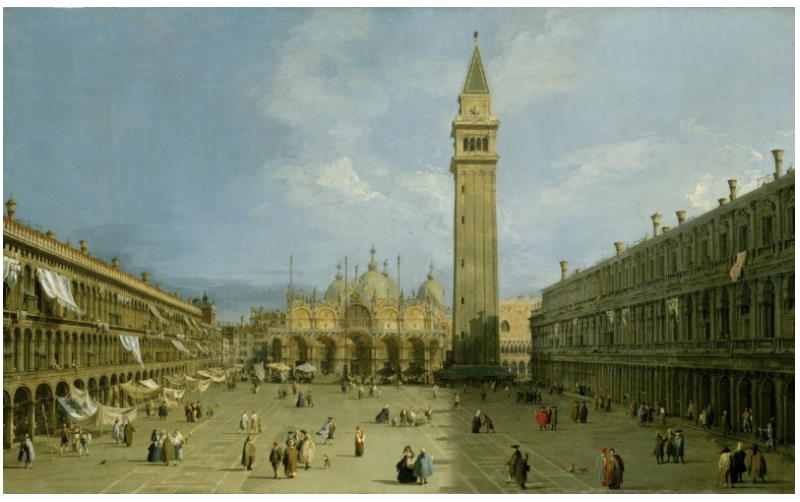
Canaletto, Piazza San Marco, c. 1725
-Gives a higher more panoramic view than what is usually able to be viewed irl
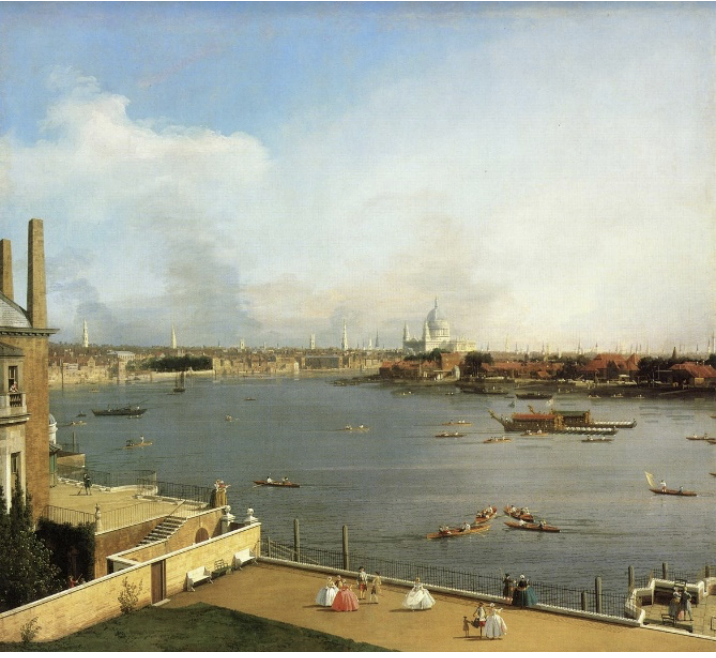
Canaletto, London from Richmond House, c. 1750
-Thames
-Idealizes the space by removing ugly shipping boats and brings structures closer to our eyes by making the river appear narrower
The Grand Tour
The Grand Tour was the principally 17th- to early 19th-century custom of a traditional trip through Europe, with Italy as a key destination, undertaken by upper-class young European men of sufficient means and rank (typically accompanied by a tutor or family member) when they had come of age (about 21 years old).
gavin hamilton
-loved excavations
-sold the things he found
-art dealer
-

