APUSH Period 1: European, Native American, and African Interactions (1491-1607)
 Studied by 1 person
 Call Kai
 Learn
Learn Practice Test
 Spaced Repetition
 Match
Match Flashcards
 Knowt Play
1/24

There's no tags or description
Looks like no tags are added yet.
Name | Mastery | Learn | Test | Matching | Spaced | Call with Kai |
|---|
No analytics yet
Send a link to your students to track their progress
25 Terms
What was the primary reason for European exploration and conquest of the New World?
A search for new sources of wealth, economic and military competition, and a desire to spread Christianity.
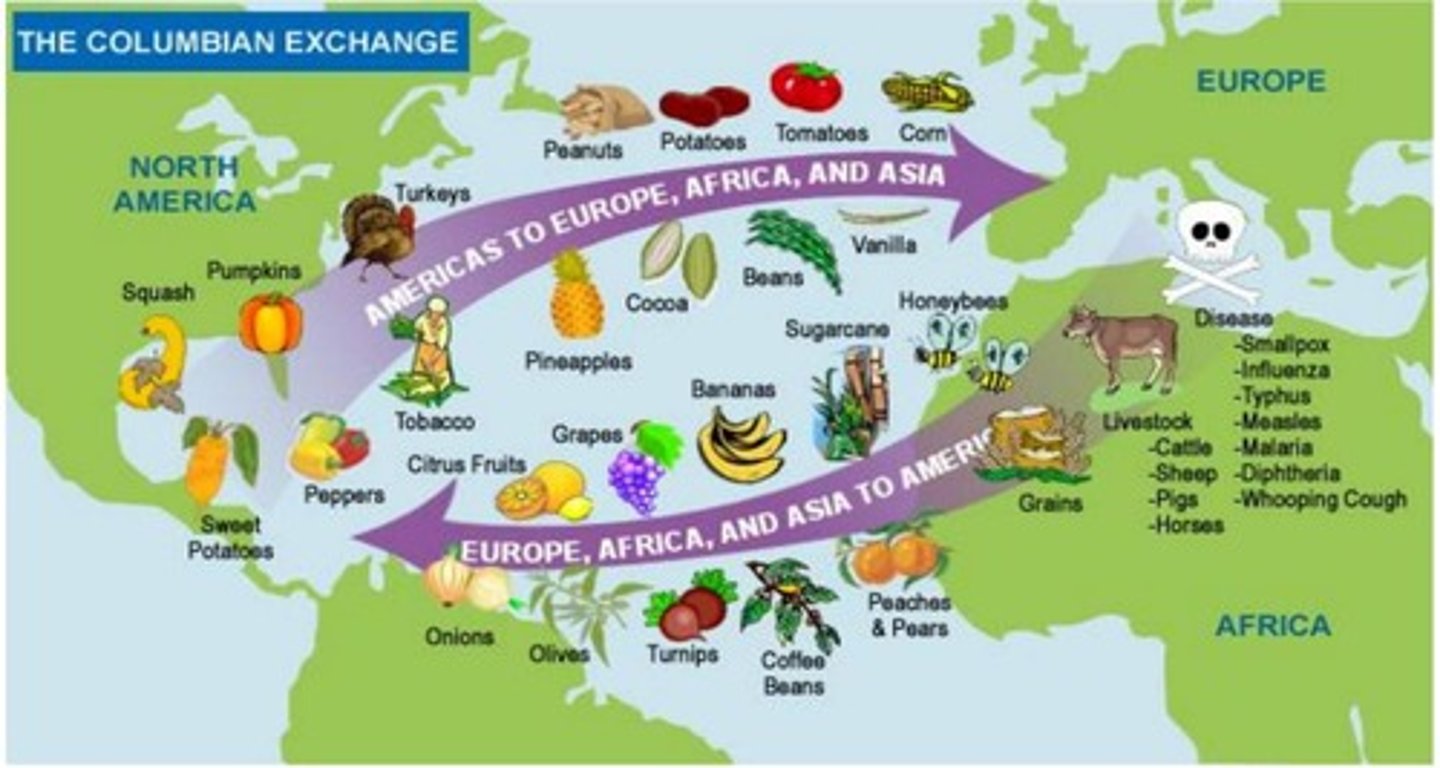
What significant exchange occurred as a result of contact among Europeans, Native Americans, and Africans?
The Columbian Exchange.
How did Native American societies adapt to their environments before European contact?
They developed distinct and increasingly complex societies through innovations in agriculture, resource use, and social structure.
What agricultural crop spread from present-day Mexico into North America, supporting economic development?
Maize.
How did societies in the Great Basin and western Great Plains respond to their environment?
By developing largely mobile lifestyles.
What type of economies developed in the Northeast and Mississippi River Valley?
Mixed agricultural and hunter-gatherer economies that favored permanent villages.
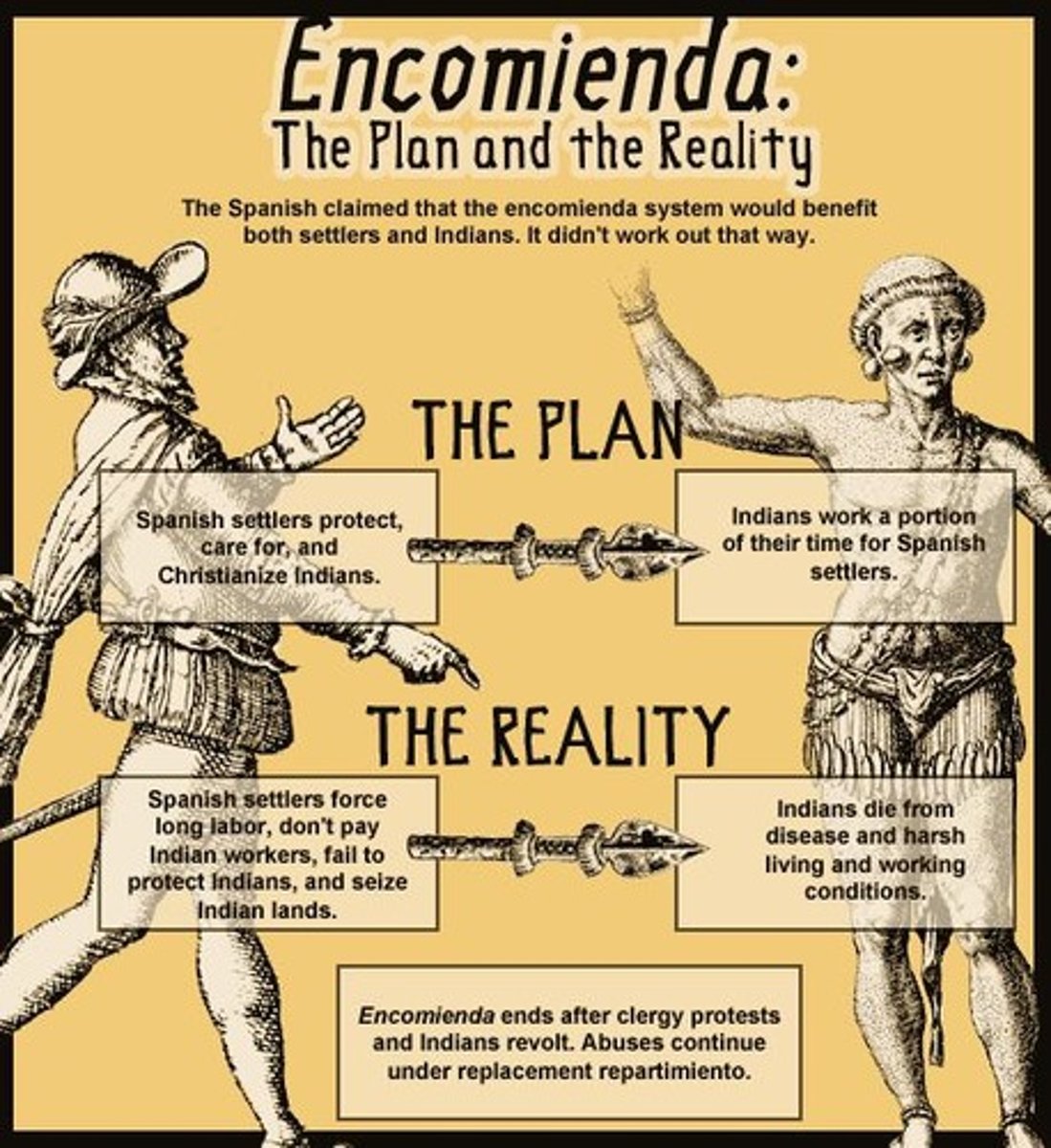
What was the encomienda system?
A system where Spanish colonial economies marshaled Native American labor to support plantation-based agriculture and extract resources.
What was a significant consequence of the Columbian Exchange for Europe?
Stimulated population growth and facilitated the shift from feudalism to capitalism.
What role did joint-stock companies play in European exploration?
They helped drive changes to economies in Europe and the Americas through organized international trade.
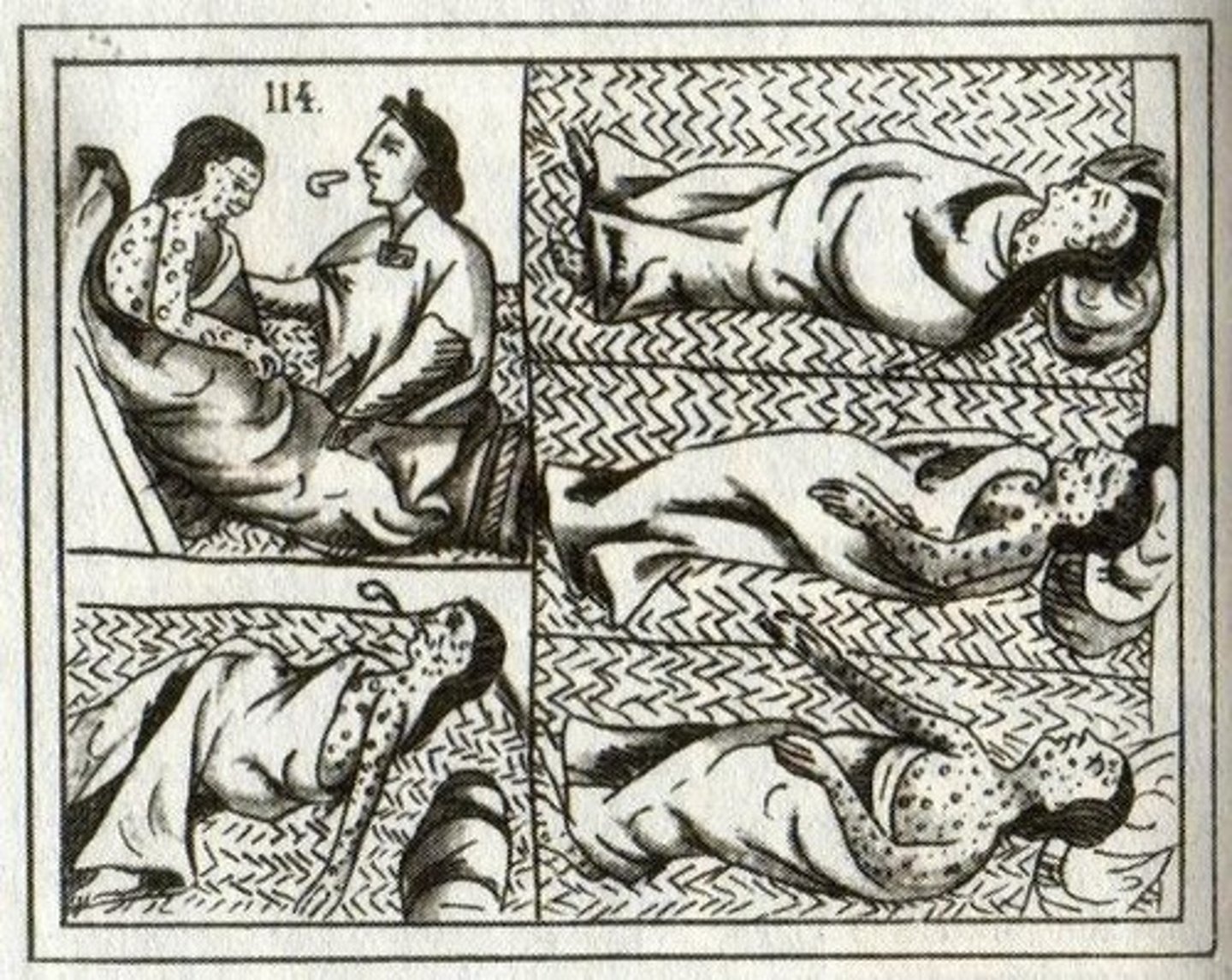
What impact did Spanish exploration have on Native American populations?
It was accompanied by deadly epidemics that devastated native populations.
What was the effect of European encroachments on Native American lands?
Native peoples sought to defend their political sovereignty, economic prosperity, and religious beliefs.
What was a major aspect of the cultural interactions between Europeans and Native Americans?
Mutual misunderstandings often defined early interactions, leading to cultural exchanges.
How did the Spanish Empire's growth shape social structures in North America?
It led to the development of a caste system that defined the status of Europeans, Africans, and Native Americans.
What were the divergent worldviews asserted by Europeans and Native Americans?
They differed regarding religion, gender roles, family, land use, and power.
What did the Columbian Exchange result in for the Americas?
Extensive demographic, economic, and social changes.
What was the significance of the maritime technology improvements during this period?
They facilitated European exploration and trade.
What were the social, cultural, and political changes resulting from European expansion into the Western Hemisphere?
Intense competition and changes within European societies.
What was the role of enslaved Africans in the Spanish colonial economy?
They were imported to labor in plantation agriculture and mining.
What did the interactions between Europeans and Native Americans lead to in terms of cultural exchange?
Over time, both groups adopted useful aspects of each other's cultures.
What were the effects of the development of transatlantic voyages from 1491 to 1607?
They led to significant changes in trade, culture, and demographics across the Atlantic.
What was the impact of the Spanish conquest on Native American societies?
It often resulted in the collapse of native societies due to disease and violence.
How did the introduction of new crops from the Americas affect Europe?
It stimulated population growth and economic changes.
What was the primary agricultural adaptation of societies in the Northeast and along the Atlantic seaboard?
The development of mixed agricultural and hunter-gatherer economies.
What were the motivations behind European nations' exploration of the New World?
Economic gain, military competition, and the spread of Christianity.
How did the Columbian Exchange affect the social structures in the Americas?
It led to demographic shifts and the establishment of new social hierarchies.
 Note
Note  Flashcards (110)