Gothic Final
 Studied by 0 people
 Call with Kai
 Learn
Learn Practice Test
 Spaced Repetition
 Match
Match Flashcards
 Knowt Play
1/63

There's no tags or description
Looks like no tags are added yet.
Name | Mastery | Learn | Test | Matching | Spaced | Call with Kai |
|---|
No study sessions yet.
64 Terms
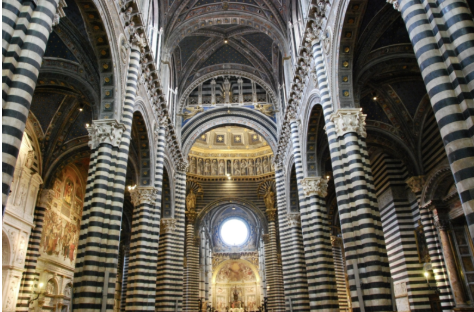
Siena, Cathedral of Santa Maria, façade (by Giovanni Pisano) 1284-1297, nave view towards east, 1220-1260 (Powerpoint 18, slides 15 and 20)
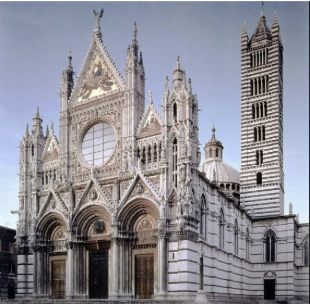
Siena, Cathedral of Santa Maria, façade (by Giovanni Pisano) 1284-1297, nave view towards east, 1220-1260 (Powerpoint 18, slides 15 and 20)
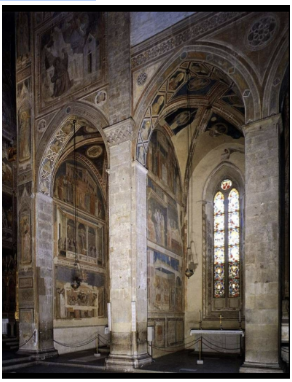
Florence, Santa Croce (Franciscan), c. 1292+, Bardi and Peruzzi Chapels (Powerpoint 18, slide 29, left)
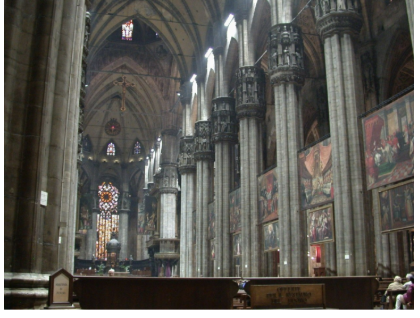
Milan Cathedral, 1387+, exterior decoration 17-19th centuries, façade and nave with quadroni (Powerpoint 19, slides 20 and 28)
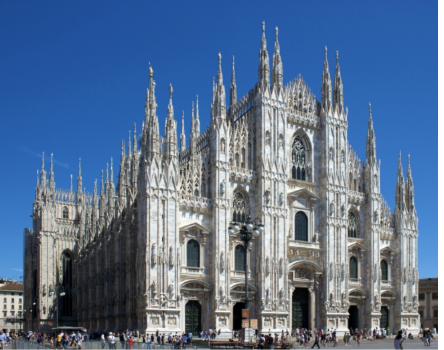
Milan Cathedral, 1387+, exterior decoration 17-19th centuries, façade and nave with quadroni (Powerpoint 19, slides 20 and 28)
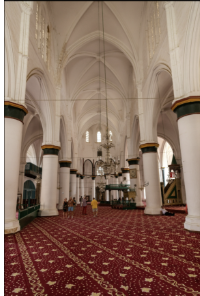
Nicosia, Cathedral of Saint Sophia, now Selimiye Mosque, ca. 1209-1326, exterior view and interior view of nave (Powerpoint 20, slides 4, and 7, left)
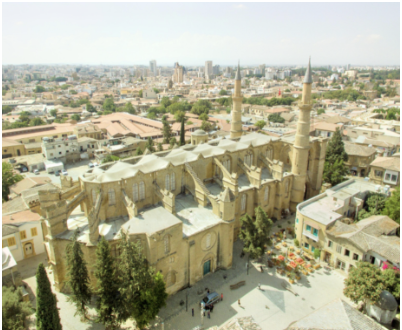
Nicosia, Cathedral of Saint Sophia, now Selimiye Mosque, ca. 1209-1326, exterior view and interior view of nave (Powerpoint 20, slides 4, and 7, left)
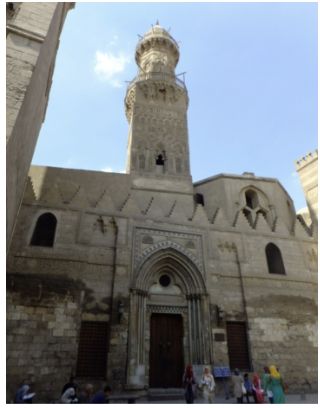
Cairo, Madrasa of Al-Nasir Muhammad, ca. 1296-1303 (Powerpoint 20, slide 11)
Venice, Palazzo Ducale (Doge’s Palace), ca. 1320-1424 (Powerpoint 20, slide 16)
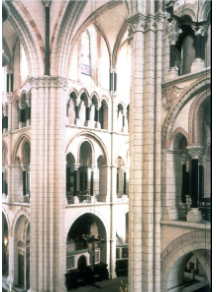
Limburg an der Lahn, Collegiate Church of St. George (now cathedral), 1190-1200, view of façade and view with crossing elevation (Powerpoint 21, slides 14 and 16)
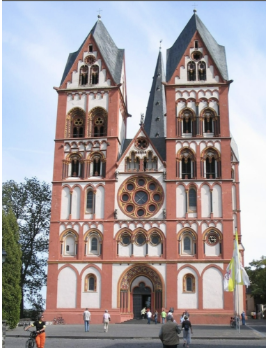
Limburg an der Lahn, Collegiate Church of St. George (now cathedral), 1190-1200, view of façade and view with crossing elevation (Powerpoint 21, slides 14 and 16)
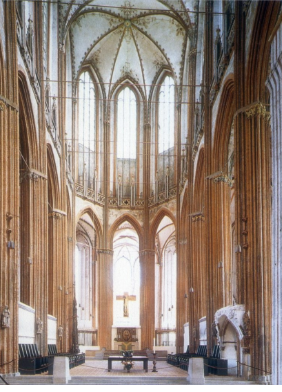
Lübeck, Saint Mary’s Parish Church, 1277-1351, exterior and choir (Powerpoint 21, slides 24 and 26
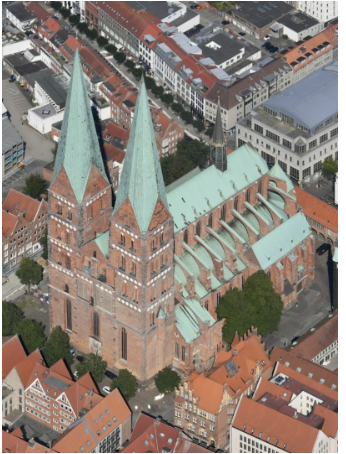
Lübeck, Saint Mary’s Parish Church, 1277-1351, exterior and choir (Powerpoint 21, slides 24 and 26
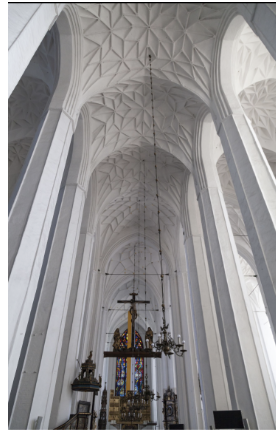
Gdansk, Poland, Cathedral of Saint Mary, 1379-1502, nave (Powerpoint 22, slide 7, left)
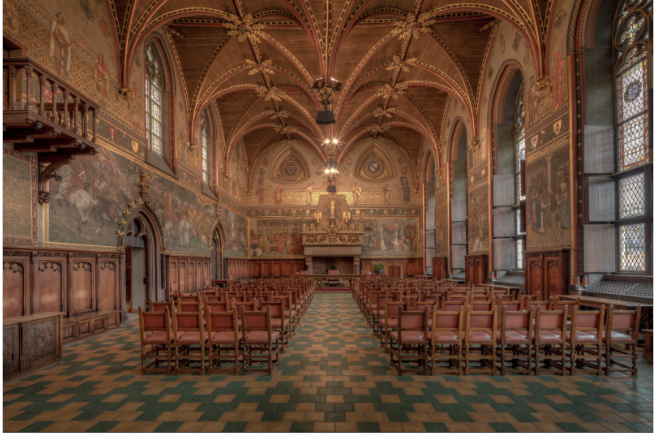
Bruges, City Hall, 1376-1421, interior meeting hall, 1895-1905 (
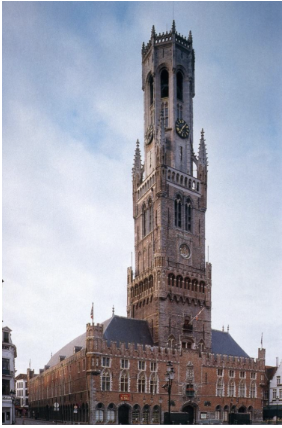
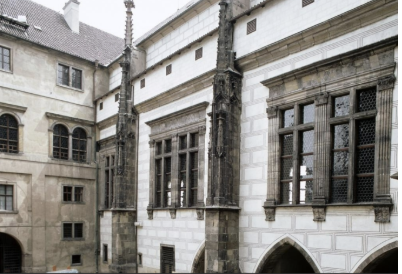
Bruges, Cloth Hall, late 13th century-1486
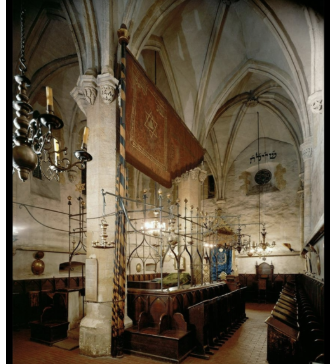
Prague, Bohemia (Czech Republic), Altneuschul, ca. 1270+, view of prayer hall towards bimah and Torah niche
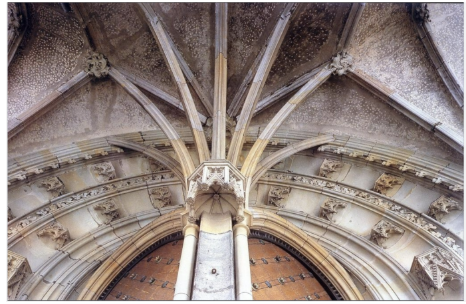
Prague, Bohemia (Czech Republic), Cathedral of Sts. Vitus, Wenceslas and Adalbert, view of choir, 1344+ (Matthew of Arras and Peter Parler), and south porch interior, looking directly up, 1367-1368, (Peter Parler)
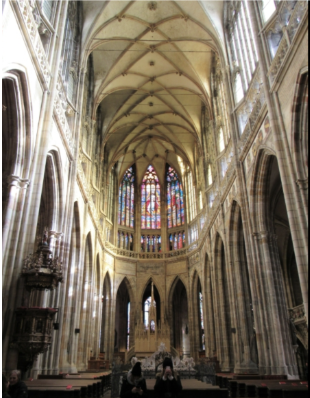
Prague, Bohemia (Czech Republic), Cathedral of Sts. Vitus, Wenceslas and Adalbert, view of choir, 1344+ (Matthew of Arras and Peter Parler), and south porch interior, looking directly up, 1367-1368, (Peter Parler)
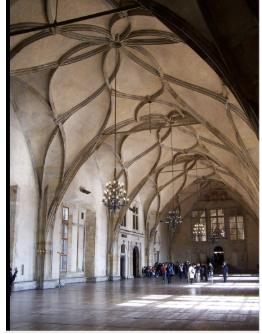
Prague, Bohemia (Czech Republic), Hradčany Castle, Rider stairway (view with stairs), ca. 1500, view of Vladislav Hall, 1493-1502 (both Benedikt Ried)
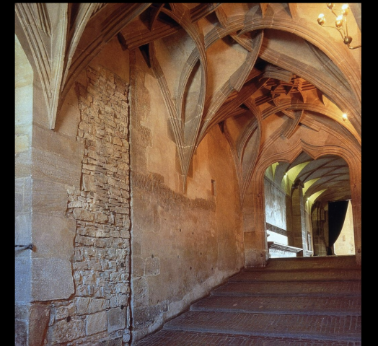
Prague, Bohemia (Czech Republic), Hradčany Castle, Rider stairway (view with stairs), ca. 1500, view of Vladislav Hall, 1493-1502 (both Benedikt Ried)
Kutná Hora, “Cathedral” of Saint Barbara, ca. 1512, view of nave and aisle ceiling (Benedikt Ried)
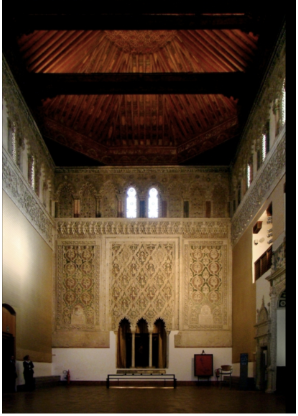
Toledo, Samuel Halevi Abulafia Synagogue, ca. 1360+, view of prayer hall towards Torah niche
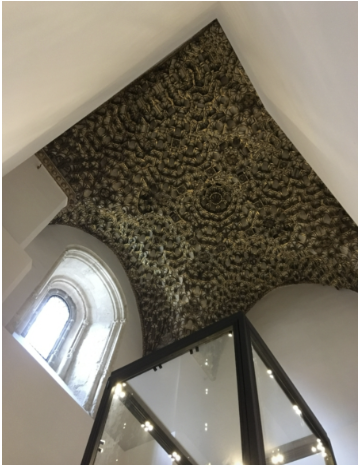
Toledo, Cathedral, begun 1222, view of choir and of Capilla de San Juan, 15th century
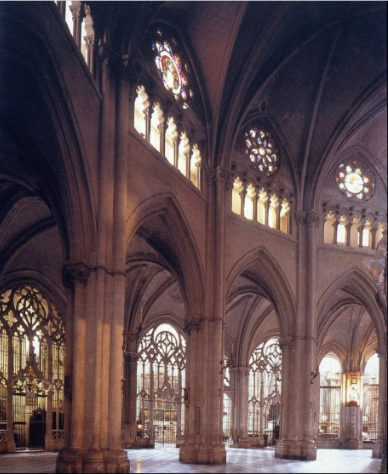
Toledo, Cathedral, begun 1222, view of choir and of Capilla de San Juan, 15th century
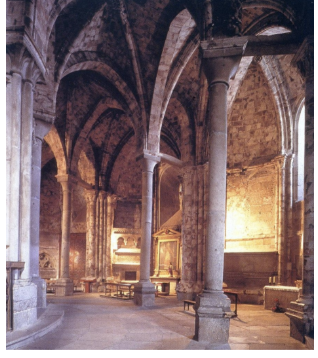
Ávila, Cathedral of San Salvador, late 12th century, view of choir
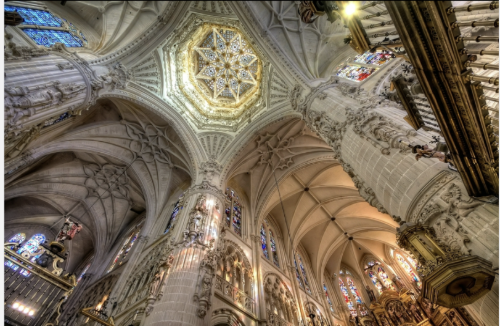
Burgos, Cathedral, Chapel of the Constable, 1482, and crossing lantern, 1567
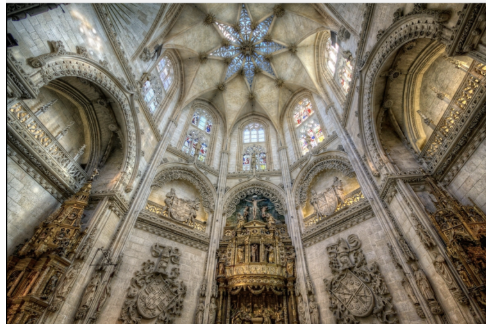
Burgos, Cathedral, Chapel of the Constable, 1482, and crossing lantern, 1567
Tuscany
a county and region assembled in the early medieval, dominated by city states in central northern Italy.
Saint Dominic
lived at same time as frances founded the Order of Preachers (Dominicans) in the 13th century to combat heresy through preaching, poverty, and prayer
Saint Frances
Came from a wealthy family, went to war as a knight, experienced a religious experience and was claimed to preach to animals. Preached that we should own nothing and give everything to the poor. Founded franciscan order.
Dominican Order
mendicant order similar to franciscans. Preach to the poor
Franciscan Order
a Catholic religious movement emphasizing poverty, humility, and service
Friars
individual in a mendicant order, praying and preaching to the poor
Lombardy
entity county that was found in Milan and had its own count, the viscount
Mosque
a space where muslims come together to prayer, and in the case of a friday mosque to listen to the sermon
Minaret
towers intended to facilitate the call to prayers, happens according to an elastic time table according to the time of the day, usually called out by a person so it is as high as possible so people can hear to the friday mosque
Casa (ca’)
an italian word for house
Holy Roman Empire
a complex, multi-ethnic political entity in Central Europe, lasting from roughly 962 to 1806, that united diverse Germanic peoples under an elected emperor, claiming continuity with the Roman Empire and emphasizing Christian rule
Conrad II
holy roman emperor member of saline family in germany, a holy roman emperor he was a method of the salian dynasty and his father was a count (the pope in rome would choose a hereditary ruler to defend christians) anointed by the pope, needed to elevate the salian dynasty so he built Speyer Cathedral
Helm towers
very characteristic of the 11th century period in Germany, usually capped with copper caps that slant down to the corners kind of like helmets that the soldiers worn in this period
Corbel tables
row of arches applied underneath a string course
Brick Gothic/Backsteingotik
“baked stone” brick, did not have substantial amounts of stone so they used brick
Cell/Diamond vault
a vault that is constructed of little faceted segments (Gdansk), wouldn't be considered a liern vault because it doesn't have ribs
Historicist
someone or something interprets events, ideas, or art by emphasizing their unique development through history
Neo-gothic/gothic revival
invented in the 18th and 19th century used for structures, intended to be ideo syncratic and borrowed lots of motifs in a way that was not historically gothic, adapted but not accurate to a certain time and place
Charles IV - Luxemburg dynasty (King of Bohemia 1346+, Holy Roman Emperor 1355-1378) -
holy roman emperor and wanted to set up his dynastic center so the church he built was the burial and coronation church and it was the cathedral of the city so it brought everything together and was at the same time his palace church since the palace was built around it
Matthew of Arras
an architect who came from france who was most likely very familiar with french gothic and was imported to prague to build charles IV’s church
Peter Parler
architect who replaced matthew of arras after he died, he started to make changes to the rayonnant typical plan the other guy had
Saint Wenceslas
lived in the 9th century, the cathedral of st vitus and adalbert was dedicated to him (was renowned for seven works of mercy like feeding and warming the poor and feeding them which are considered the good acts of a king) - figurehead of the good royal so Charles IV is drawing on that to elevate his dynasty (like we saw in England)
Benedikt Ried
stairway and jousting hall at Hradcany castle was built by him
Al Andalus
The name for the area under islamic control at a certain time in spain
Protestant reformation
a 16th-century movement that shattered Western Christianity's unity, starting with Martin Luther's critique of the Catholic Church's practices
Reconquista
he words that christians used for conquering the southern half of spain
Spolia
the use of parts that already existed, like spoils of war but in architectural terms
Horseshoe Arch
shaped like a horseshoe, really popular in Spain, more than a circle, nips in at the bottom - anywhere in the islamic world but mostly in spanish architecture
Poly-lobed -
an arch that has multiple lobes or multiple arches
Muqarnas
a type of decoration where you take tiny niches and pile them up on top of each other to create depth, sometimes used in archways (like the palace in granada, spain), filling in a three dimensional hole, mediterranean aesthetic
King Alfonso VIII
a significant medieval monarch who ascended to the throne at just two years old after the death of his mother. Helped build cathedral de avila as a royal cathedral
Plateresque-
a distinctive Spanish architectural style from the 15th-16th centuries, meaning "in the manner of a silversmith,"
 Note
Note  Flashcards (51)