BIOL 114 Exam 3 Vocabulary
 Call Kai
 Learn
Learn Practice Test
 Spaced Repetition
 Match
Match Flashcards
 Knowt Play
1/49

There's no tags or description
Looks like no tags are added yet.
Name | Mastery | Learn | Test | Matching | Spaced | Call with Kai |
|---|
No analytics yet
Send a link to your students to track their progress
50 Terms
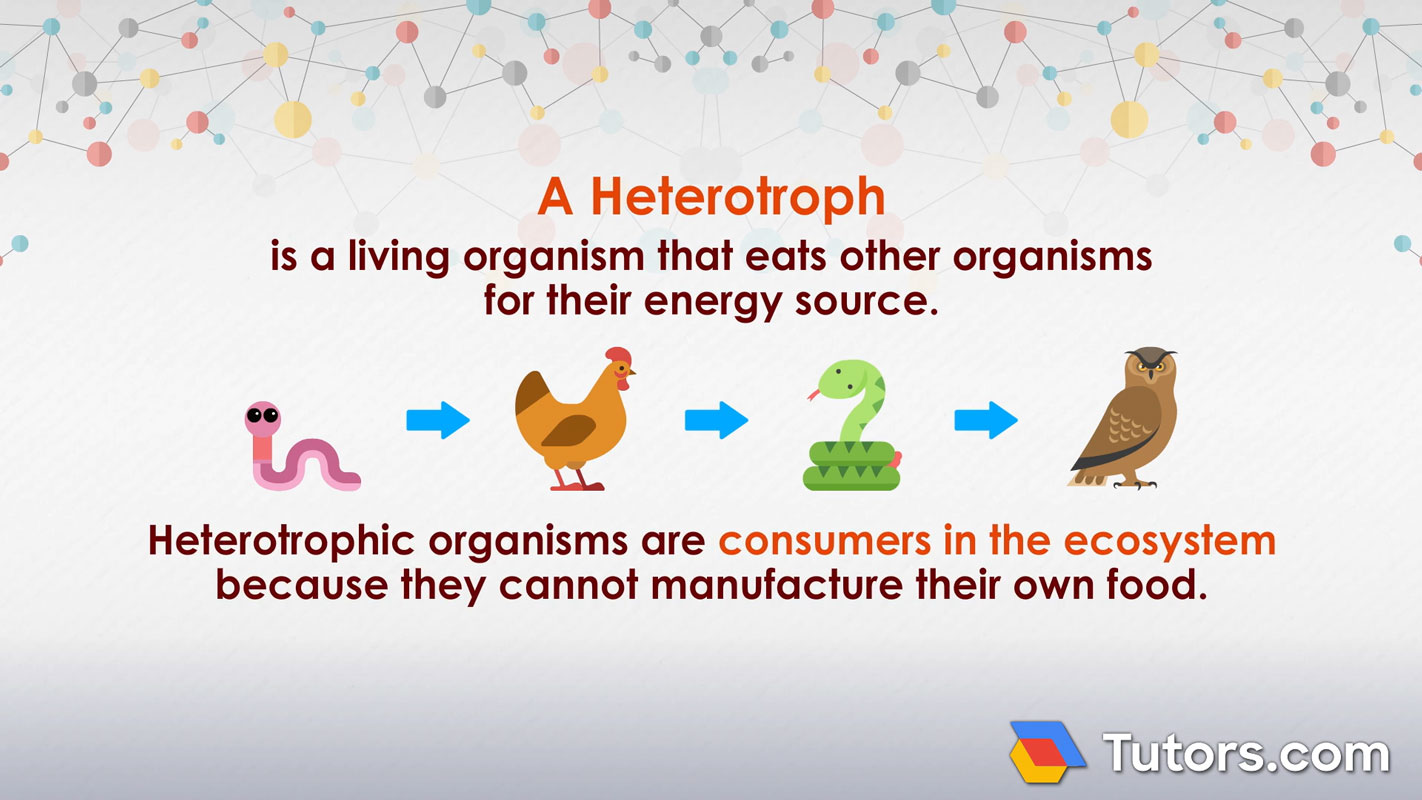
Heterotrophic lifestyle
Deriving nutrition by consuming other life forms
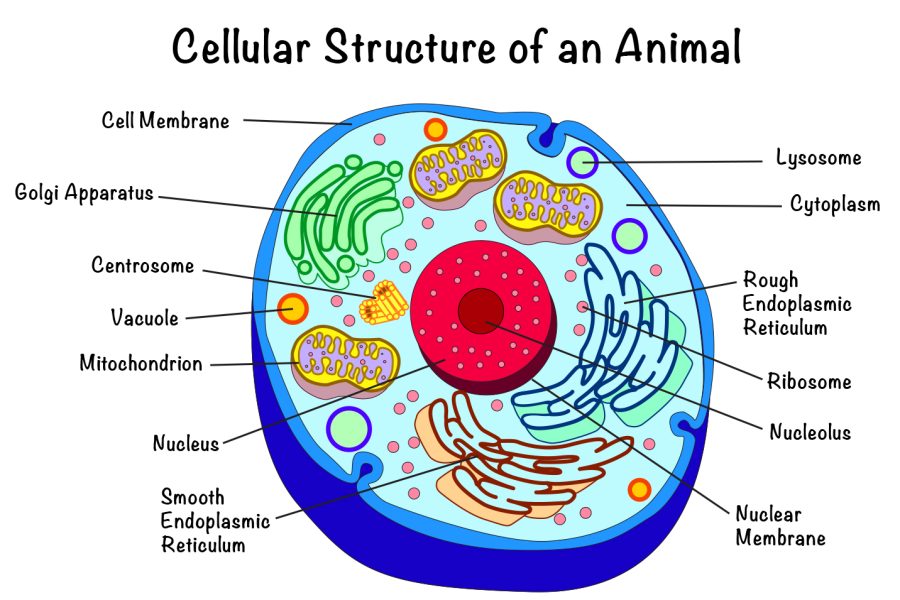
Flexible cell membranes
Like plant cells, but unlike them in that plant cells are surrounded by a cell wall made rigid by cellulose
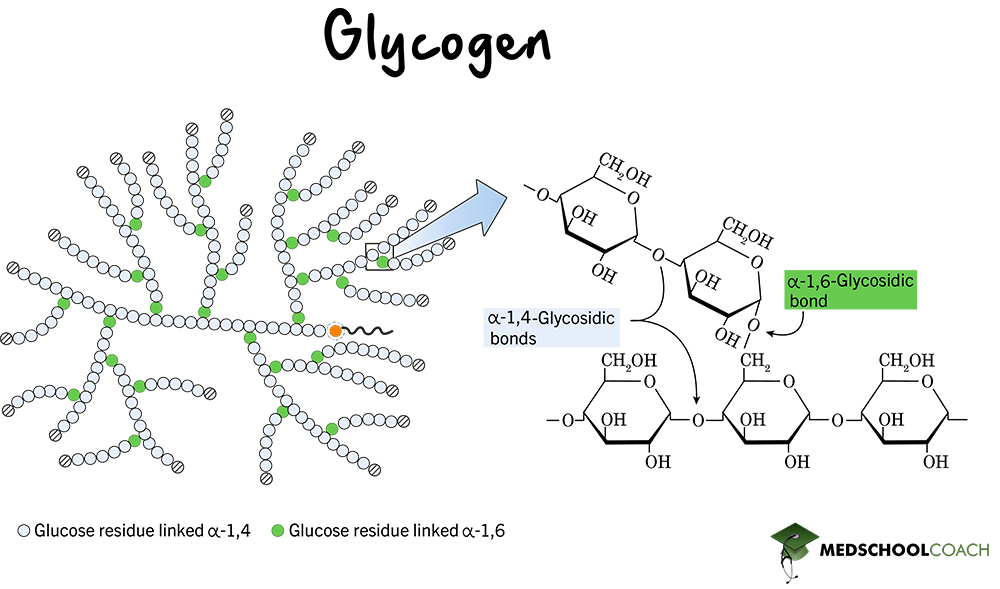
Glycogen
A carbohydrate energy storage product
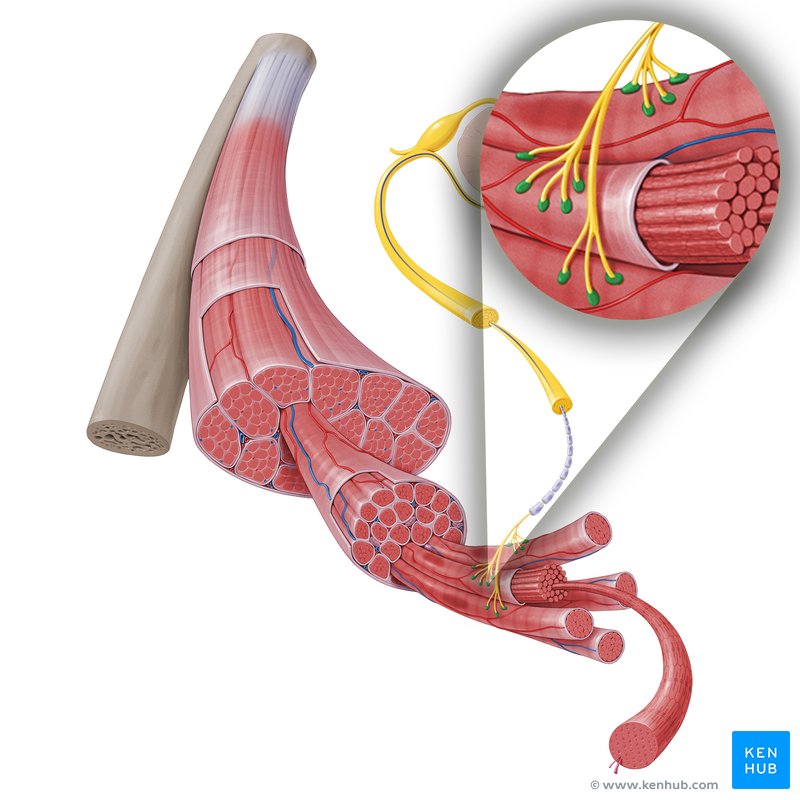
Neuromuscular tissue
Associated with movement
Vast majority of animals show locomotion
Basic animal characteristics
Heterotrophic lifestyle
Flexible cell membrane
Glycogen
Neuromuscular tissue
Choanoflagellate protist
Closest living relative of the animals
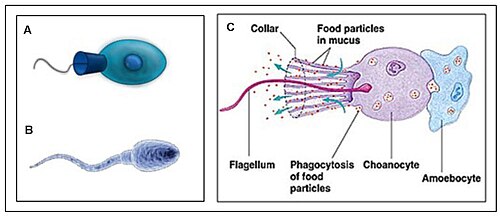
Choanocyte cells
Cells with an attached cylinder of microfibrils within which of flagellum resides
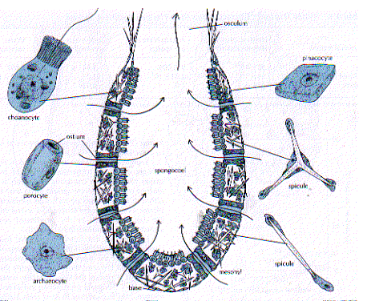
Micro-feeders
Show a phylogenetic connection between protists and animals
Supports the belief that these specialized cells evolved when only the smallest suspended organisms were available as food (bacteria and protists)
Protist ancestors of Animalia
Choanoflagellate protists
Phylum Porifera
Micro-feeders
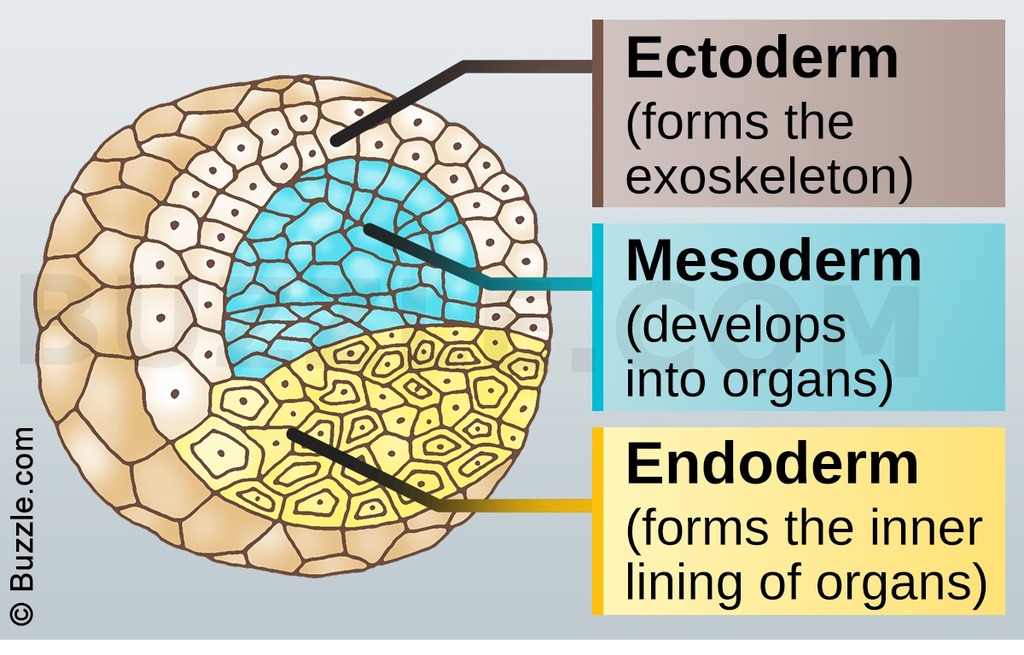
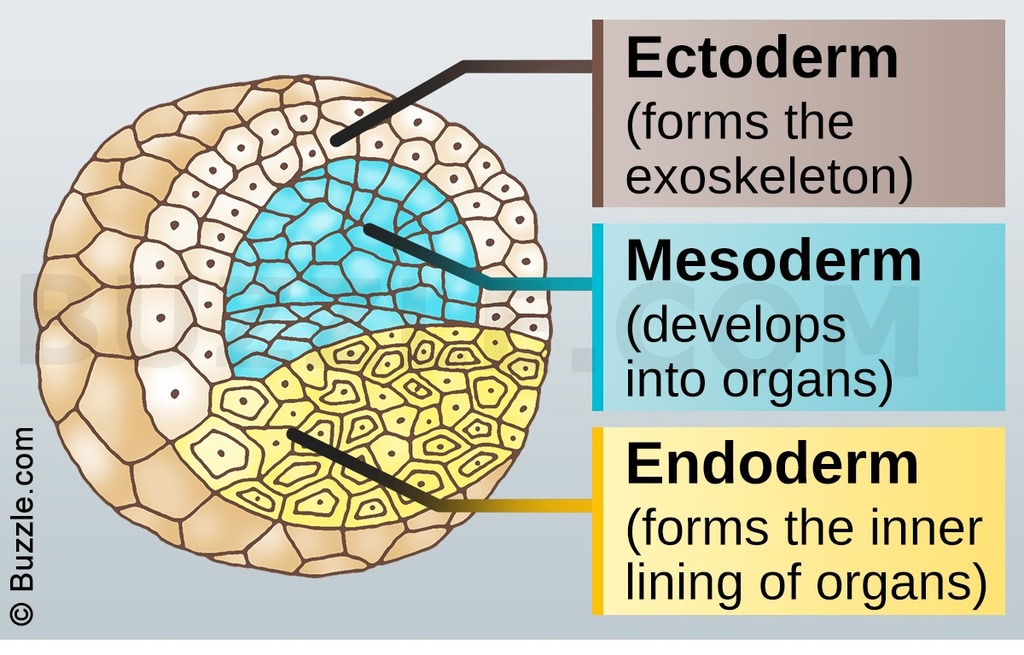
Germ layers
Layers of similar dividing cells (analogous to plant meristematic cells)
Produces a characteristic subset of structures/organs in the adult animal
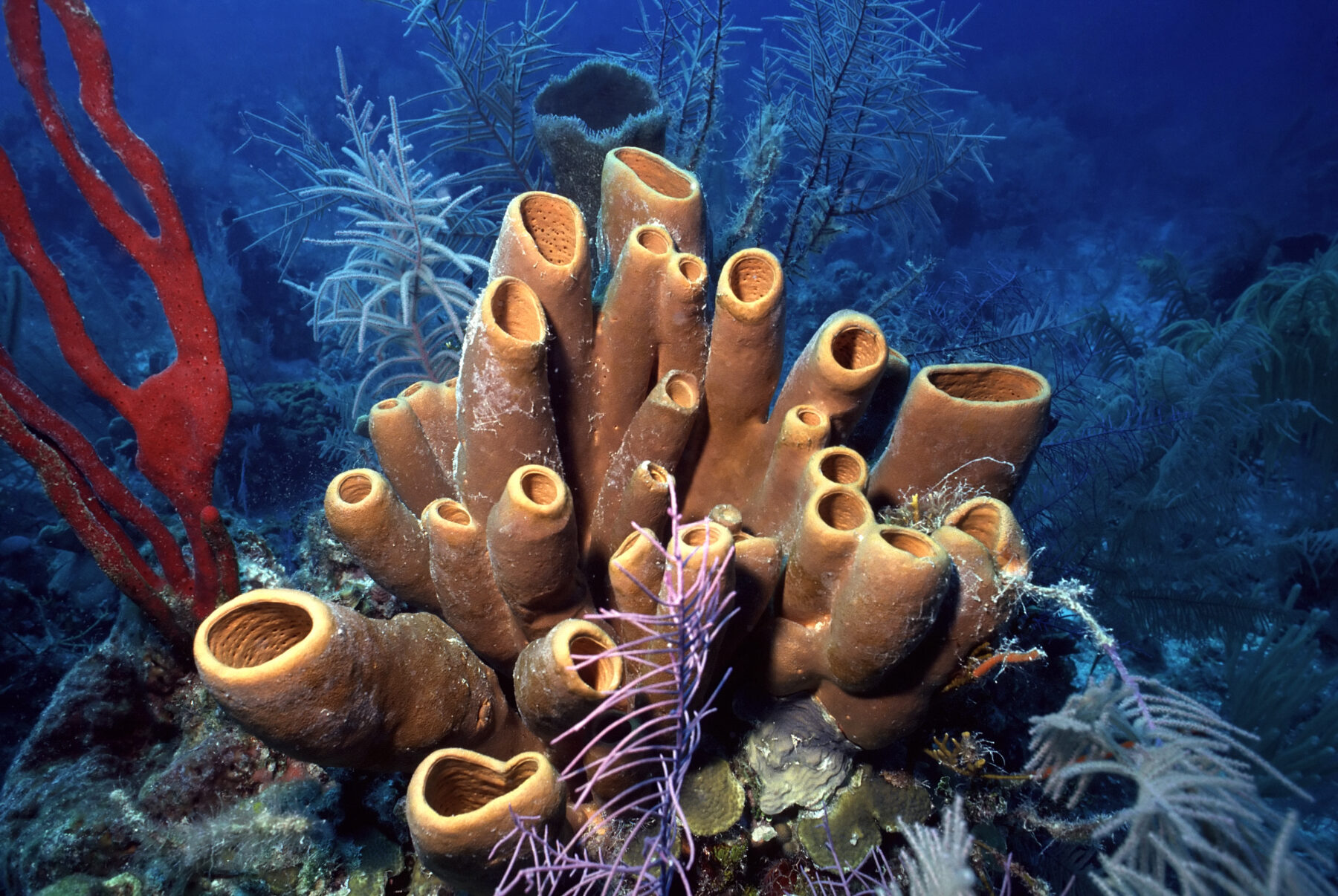
No primary germ layer
Although different looking cells come together and function as a multicellular organism, the cells remain totipotent
Example: sponges
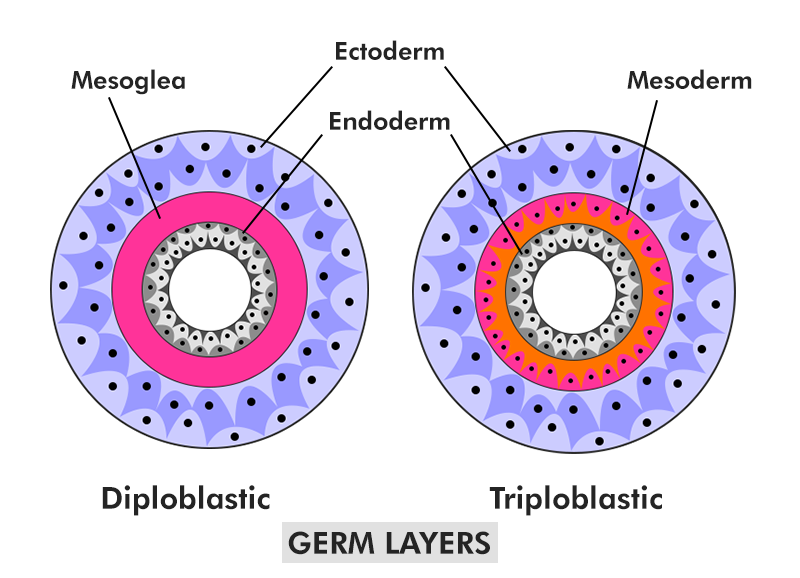
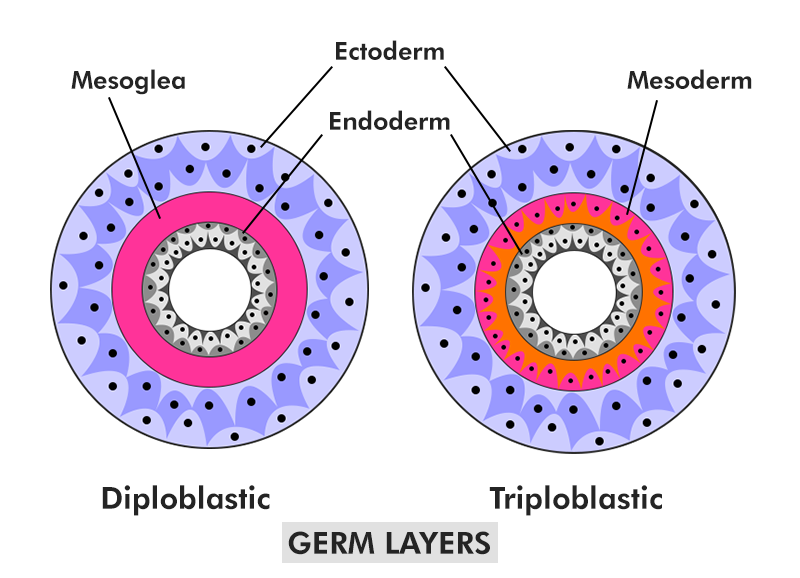
Diploblastic
Two major germ layers form, from which different structures develop
Ectoderm
Endoderm
Ectoderm
Outer layer
Gives rise to the skin and nervous system structures
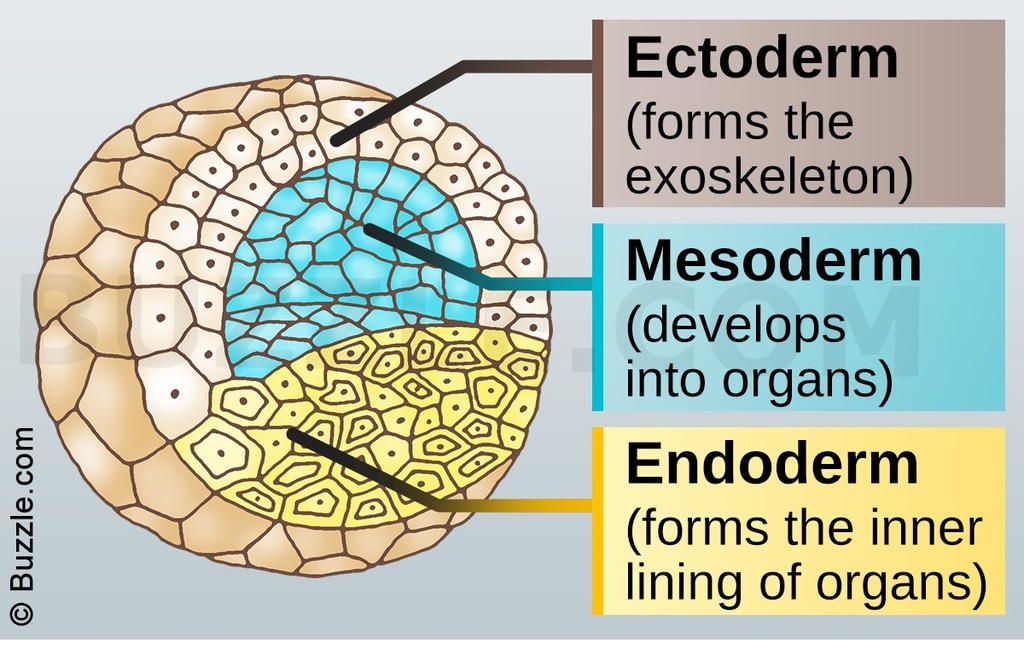
Endoderm
Inner layer
Gives rise to the lining of the digestive tract
Example: cnidarians
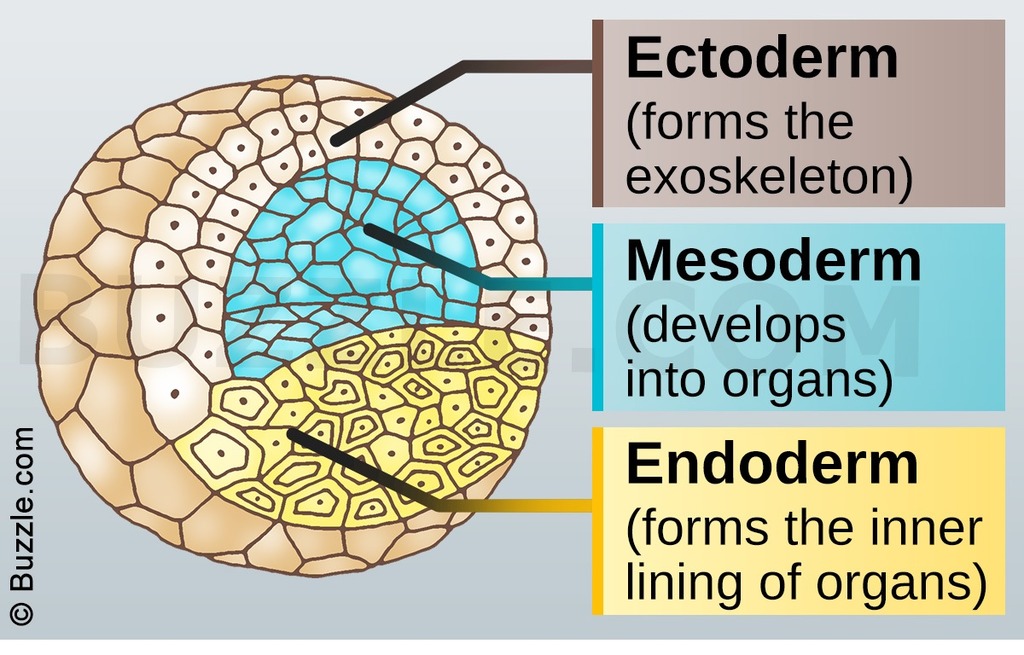
Mesoderm
Middle layer
Gives rise to the muscles, bones, and most organ systems
Example: all other animals
Triploblastic
Three major germ layers
Ectoderm
Endoderm
Mesoderm
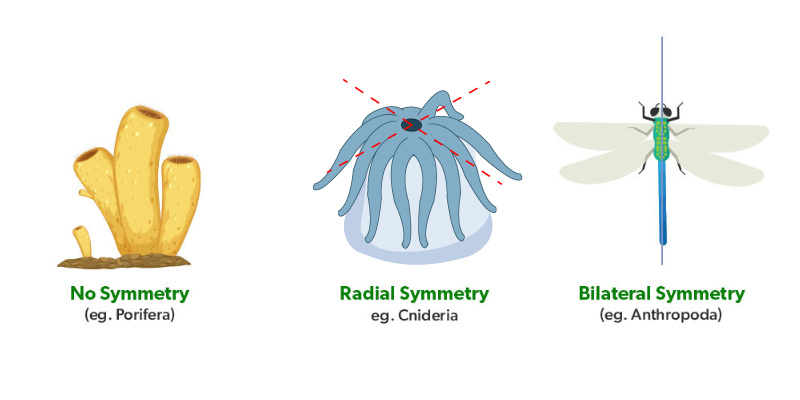
Asymmetry
The animal cannot be subdivided into equal, but opposite, halves
Example: sponge
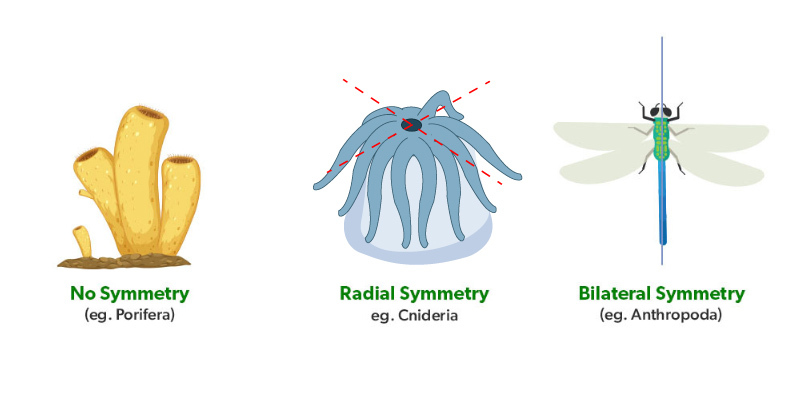
Radial symmetry
Condition in which many planes will divide an organism into equal, but opposite halves so long as the plane goes through the center of the animal
These animals have circular body with equally effective action/response in all directions
Example: jellyfish
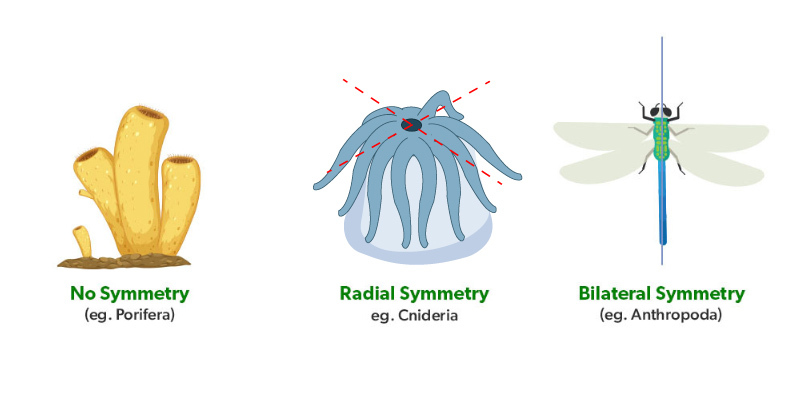
Bilateral symmetry
Condition in which only one plan will subdivide the animal into equal halves
Example: mammals
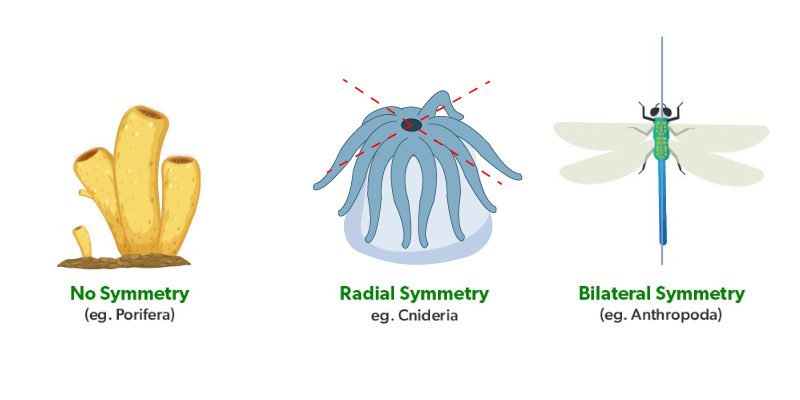
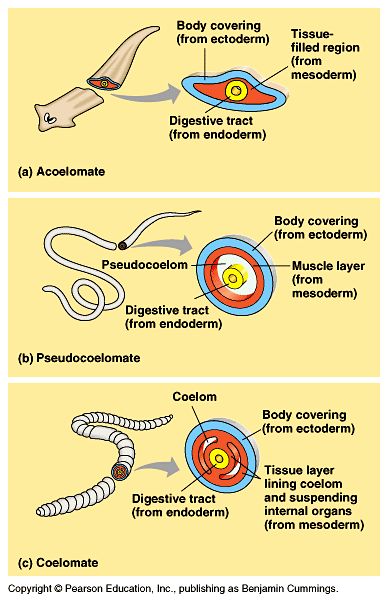
Body cavity
Separates internal organs from the body wall, allowing greater maneuverability
Acoelomate
No body cavity exists
Example: flatworms
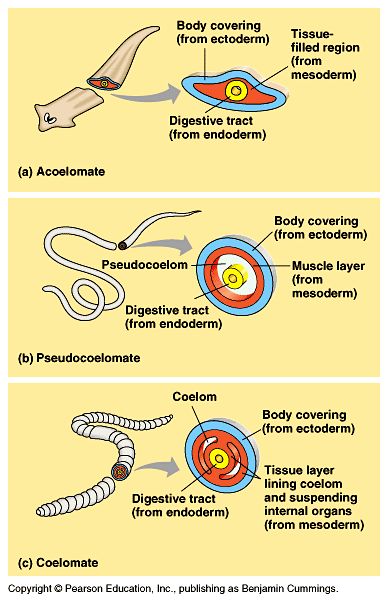
Pseudocoelomate
Animal has a body cavity without a mesodermal lining of organs
Allows better diffusion of substances inside the organism and better maneuverability
A certain amount of rubbing between the organs and body walls occurs in these animals
Example: nematodes
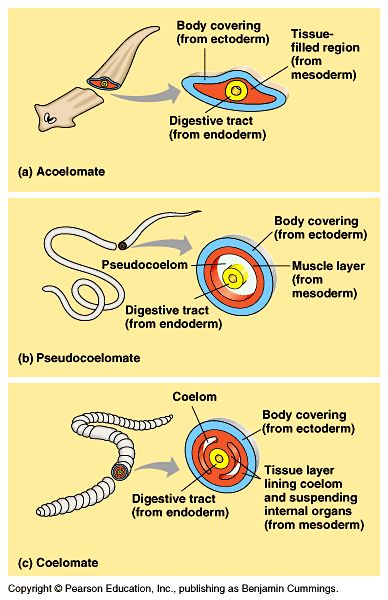
Eucoelomate
Animal has a body cavity and internal organs covered with a membrane derived from mesoderm
Form provides the best protection from rubbing and foreign antigens entering the coelom from a wound
Found in most higher organisms
Protostomes
Triploblastic organism
Blastopore results in a mouth
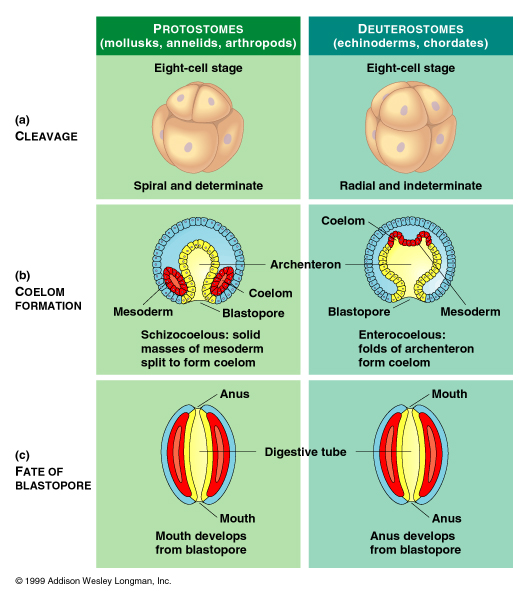
Deuterostomes
Triploblastic organisms
Blastopore results in anus
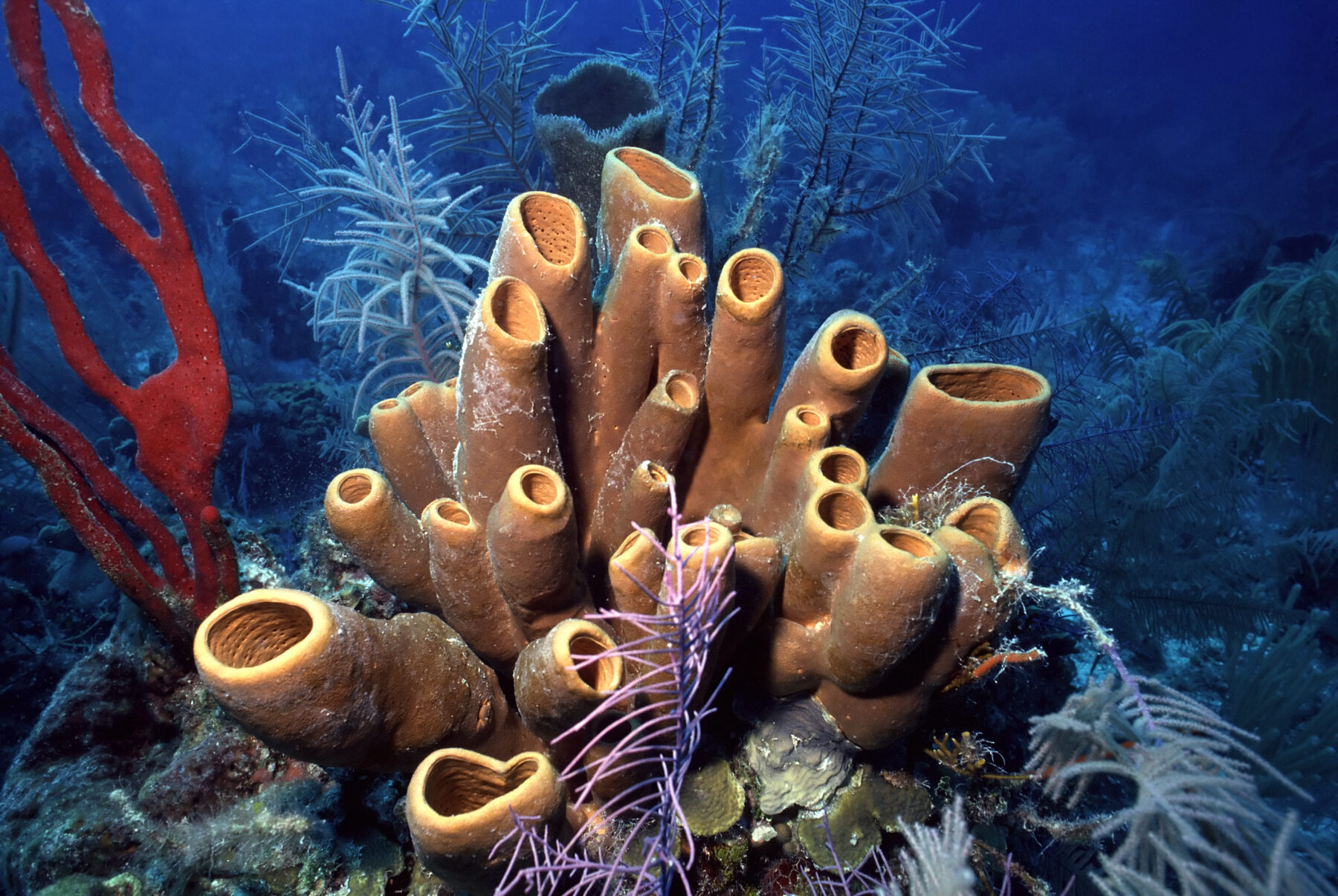
Phylum Porifera - Asymmetric animals without germ layers
Sponges
Most ancient animal phylum with living representatives
Did not give rise to other existing phyla
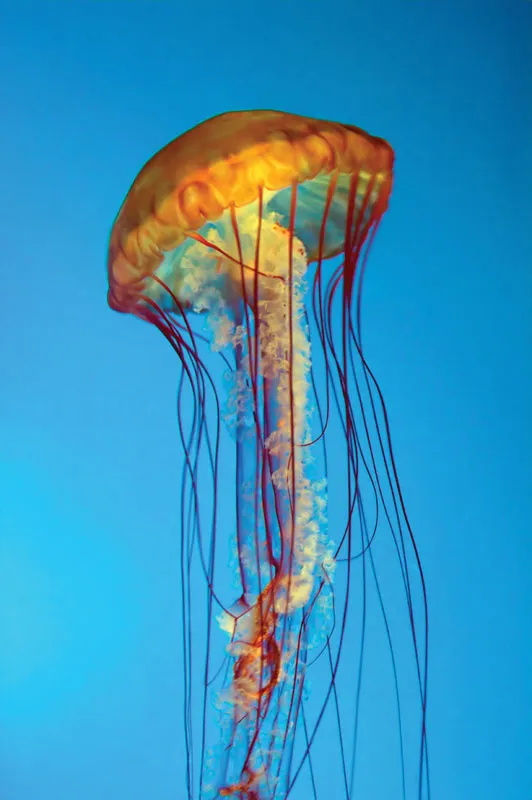
Phylum Cnidaria - The radiates
Coral
Anemones
Jellyfish
Most have multipurpose, blind, gastrovascular cavity for nutrient delivery
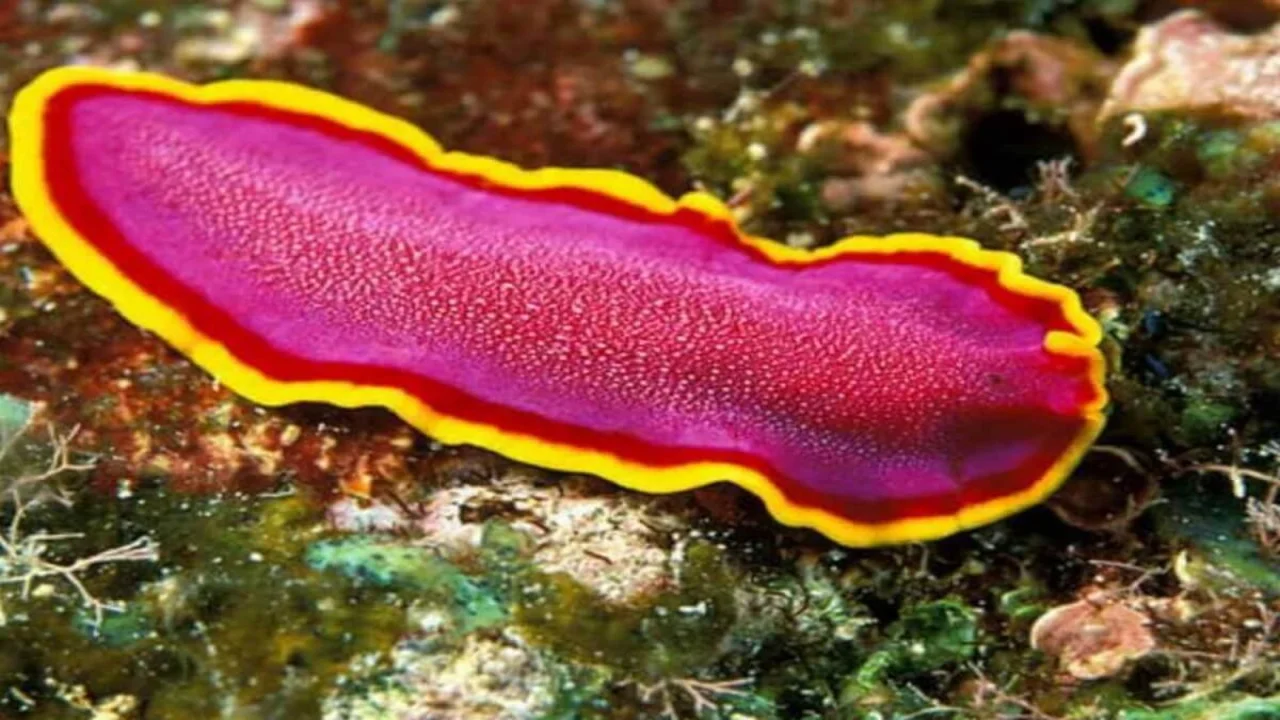
Phylum Platyhelminthes - Lophotrochozoan protostomes
Flatworms
Parasitic flukes
Tapeworms
No respiratory system
Flat body for diffusion of gasses
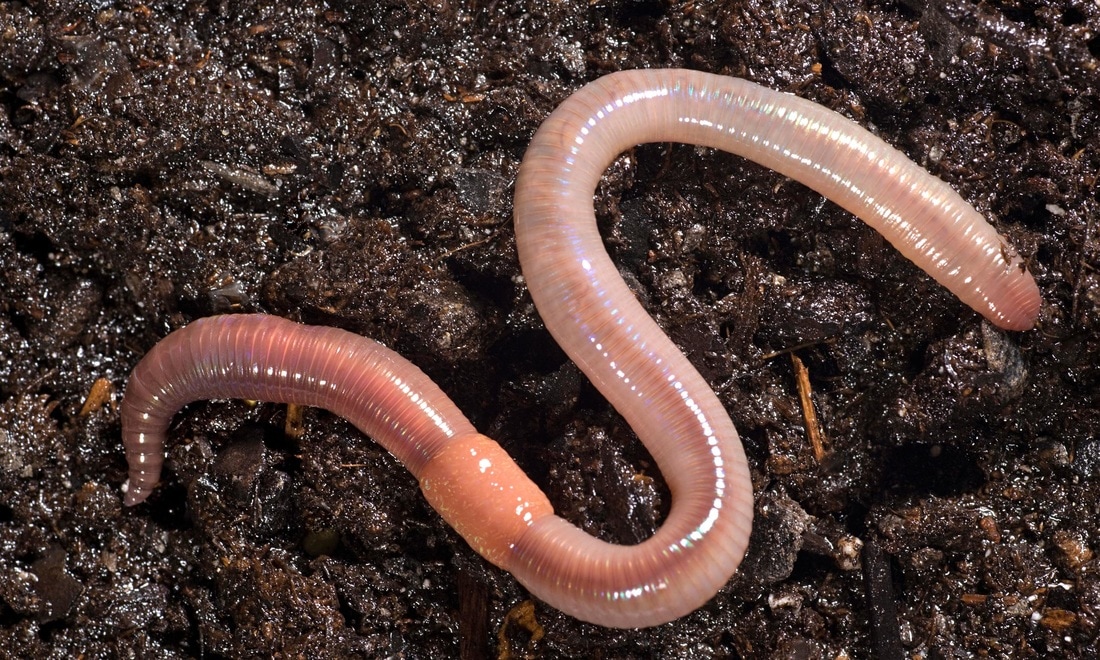
Phylum Annelida - Lophotrochozoan protostomes
Segmented worms
Earthworms
Predatory marine worms
Leeches
Hydrostatic skeleton and gripping setae to assist burrowing through substrate
Repetition of body parts along body axis
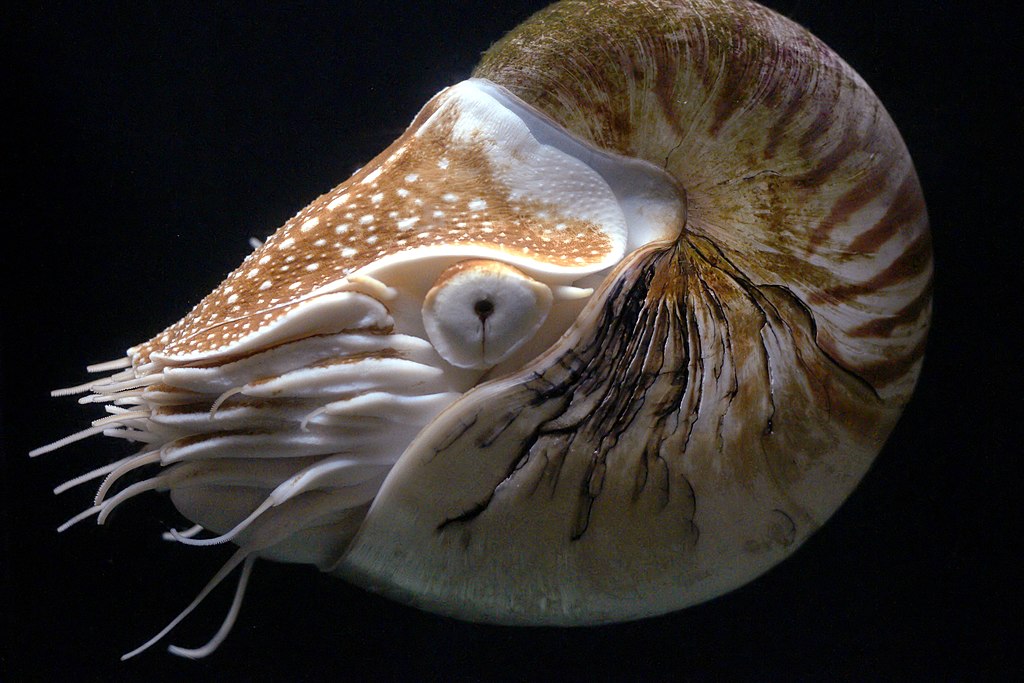
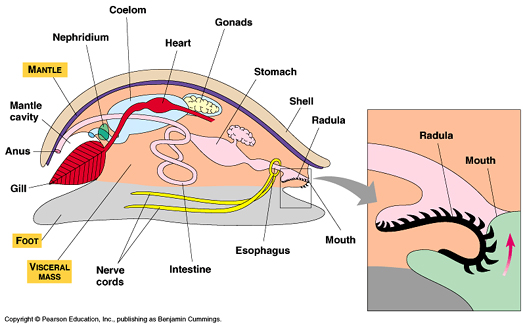
Phylum Mollusca - Lophotrochozoan protostomes
Chitons
Clams
Squid
Octopus
Snails
Second largest phylum
Mantle, protective shell, muscular foot, scraping radula to feed on algae near shore
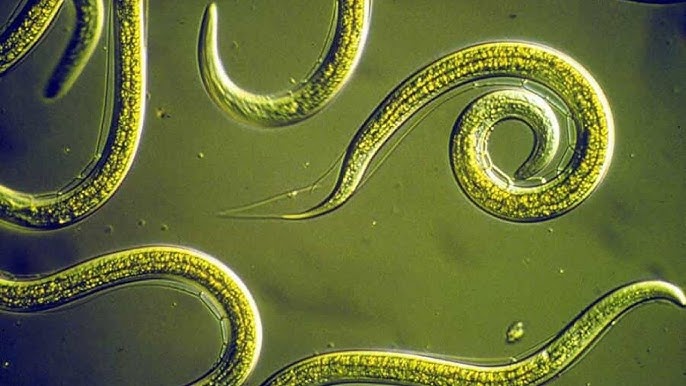
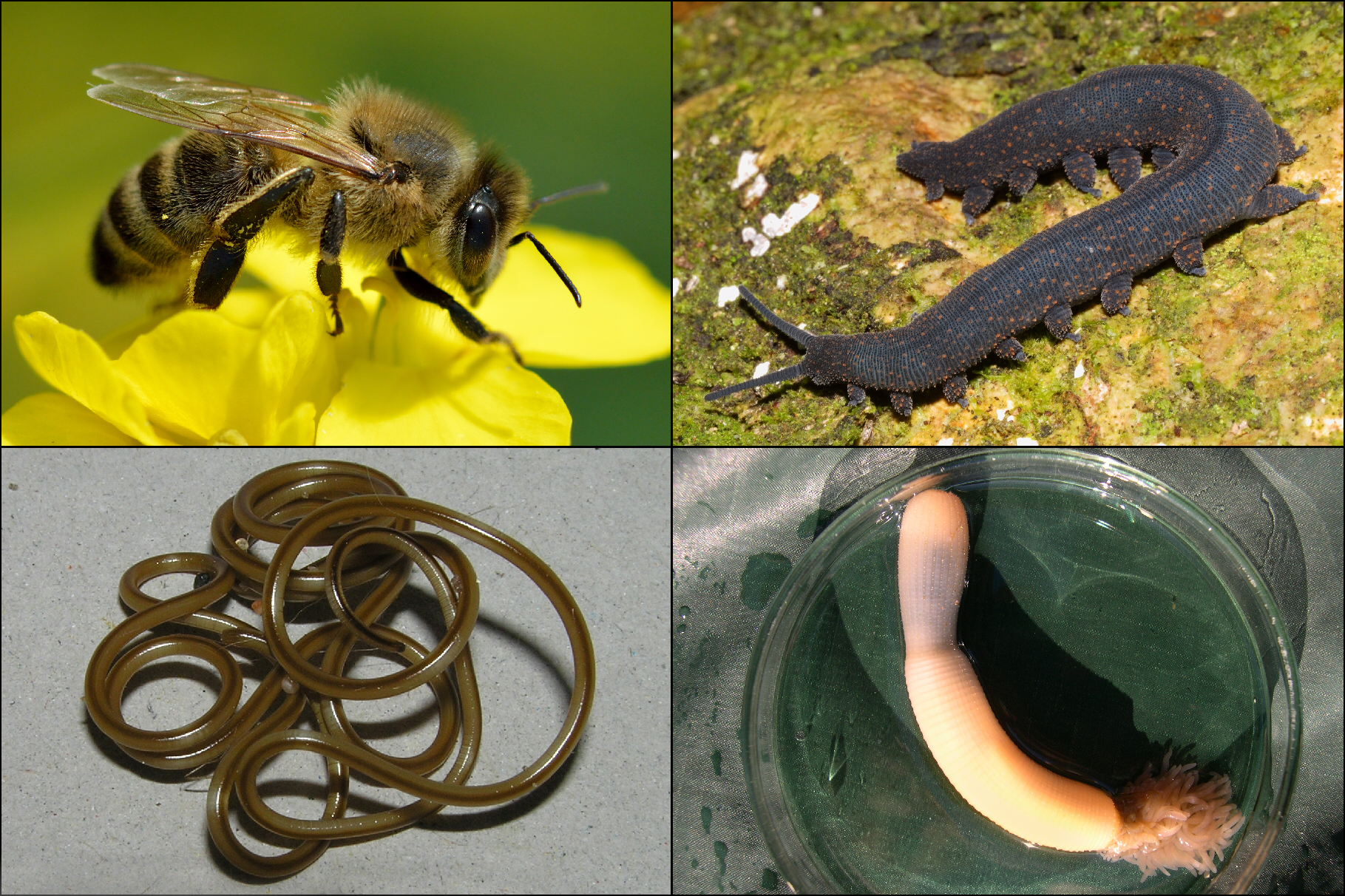
Phylum Nemotoda - Ecdysozoan protostomes
Nematodes
Roundworms
Tolerant of a variety of extreme conditions
Protective, dehydration-resistant cuticle
Most abundant multicellular organism that feeds on bacteria and fungi
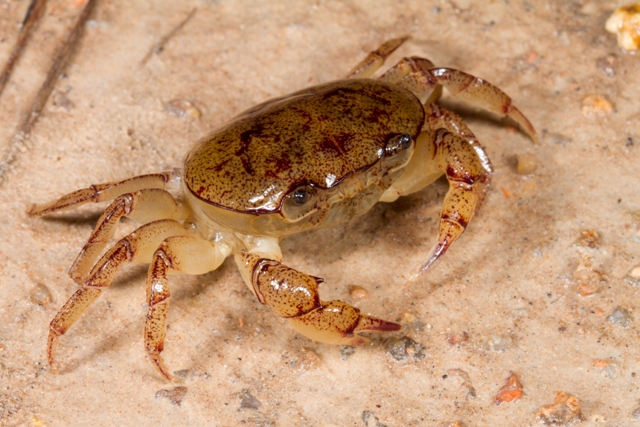
Phylum Arthropoda - Ecdysozoan protostomes
Crabs
Lobster
Shrimp
Spiders
Mites
Ticks
Scorpions
Largest phylum
Chitinous external skeleton allowed for moving out the water
Evolved tracheae system and a compound eye
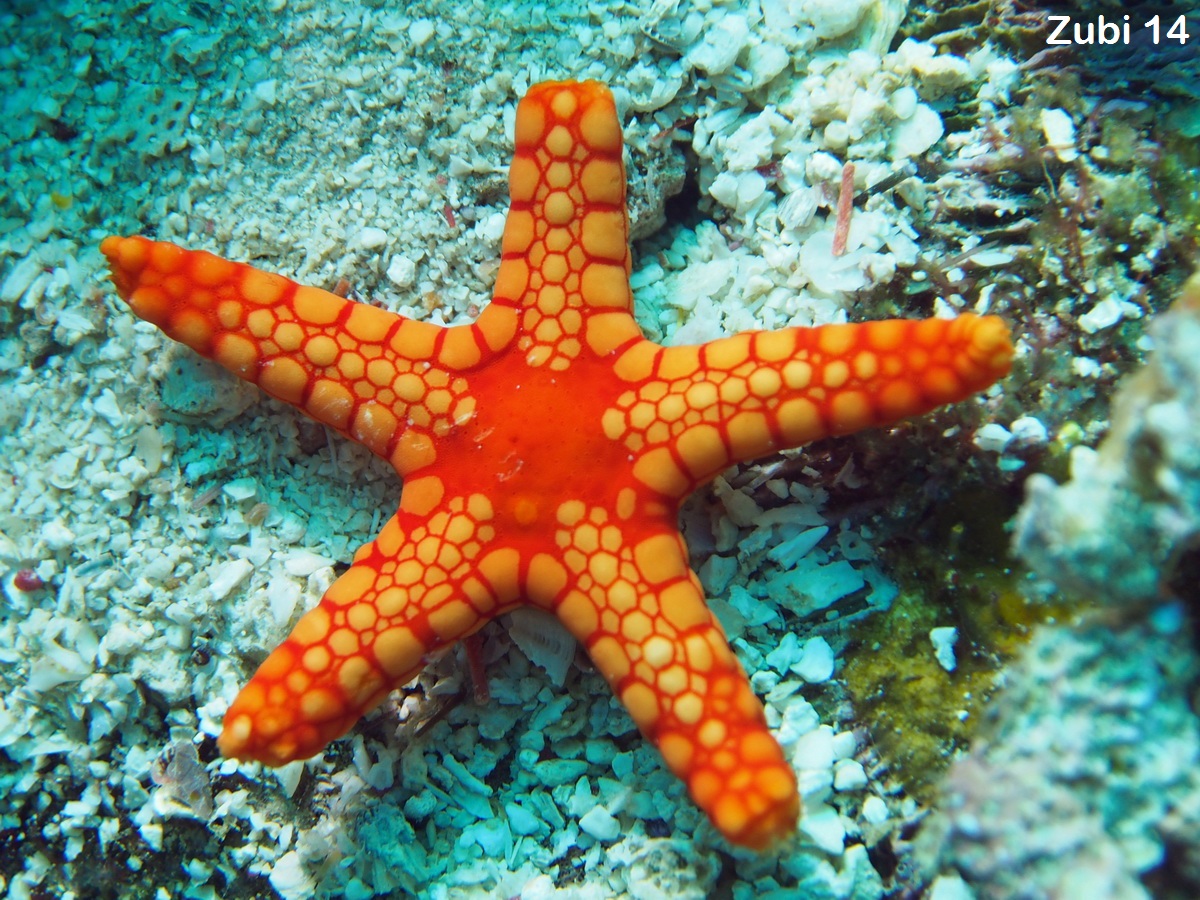
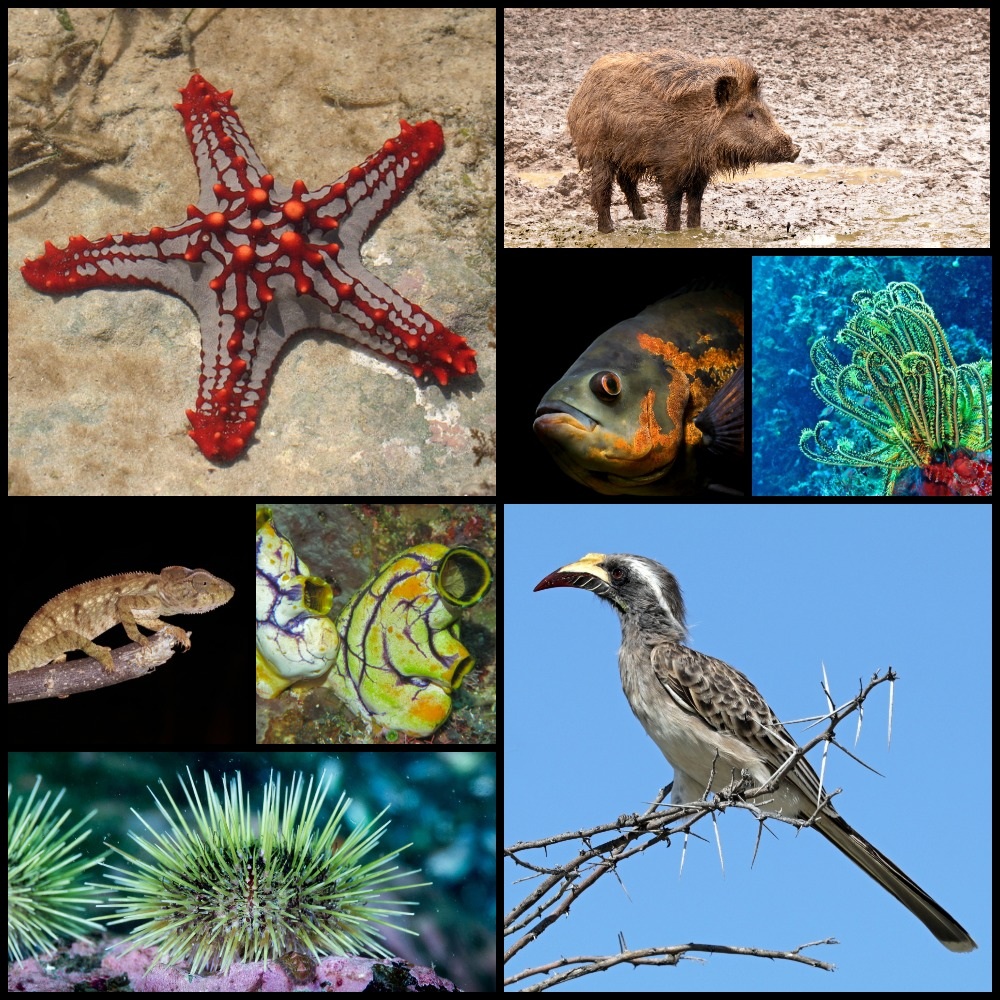
Phylum Echinodermata - Deuterostome Phyla
Starfish
Sea urchins
Sea cucumbers
Snow-moving, omni-directional, heterotrophs, with spines for protection
Arms with gripping suction cups for locomotion and predation
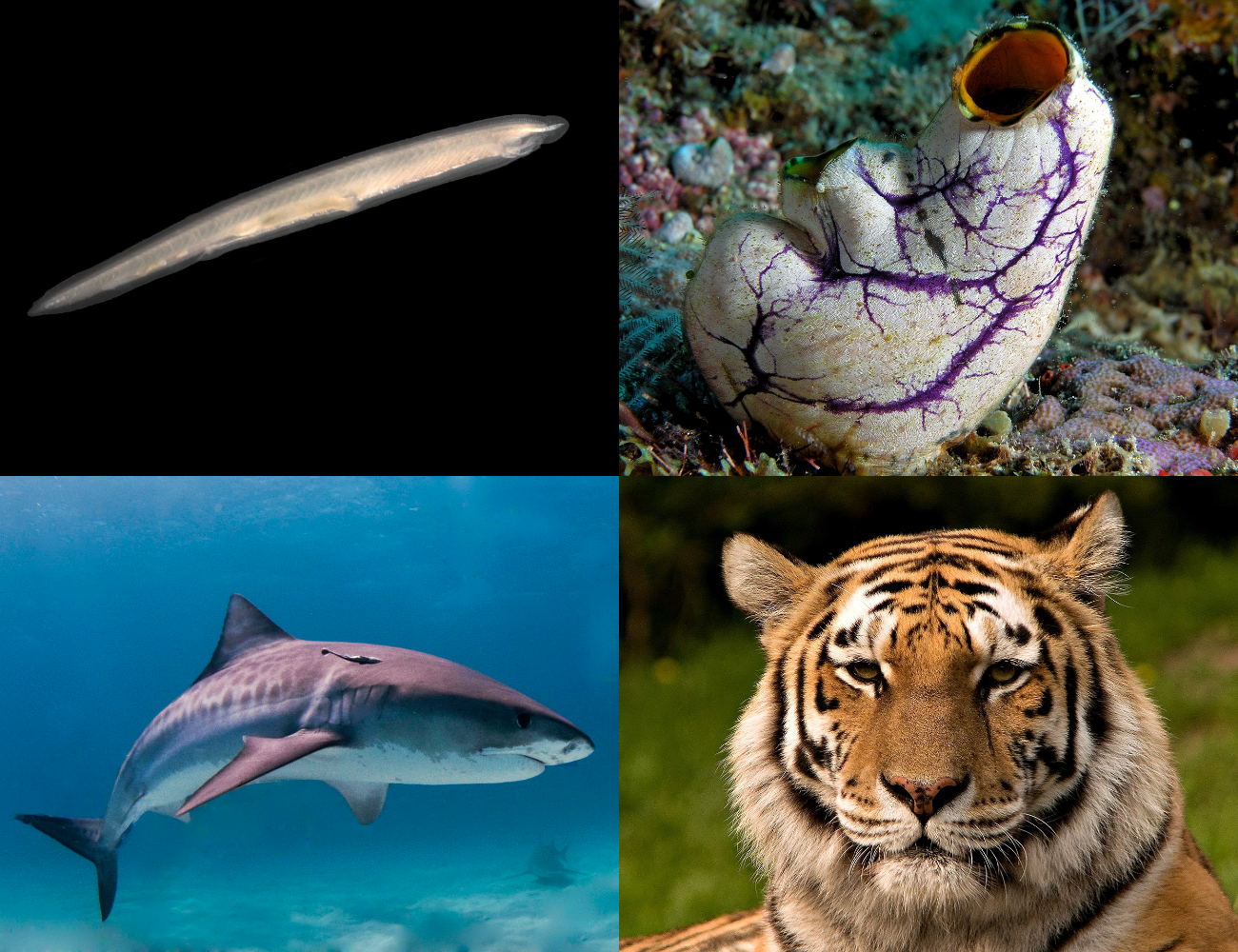
Phylum Chordata - Deuterostome Phyla
Sharks
Rays
Bony fishes
Frogs
Toads
Salamanders
Lizards
Snakes
Turtles
Crocodiles
Birds
Mammals
Notochord, pharyngeal gill slits, dorsal hallow nerve cord, post-anal tail
The radiates
Diploblastic animals with radial symmetry
Lophotrochozoan protostomes
Triploblastic animals with bilateral symmetry
Blastopore becoming a mouth
Showing growth by incremental additions to the body (without having to shed to grow)
Ecdysozoan protostomes
Triploblastic animals with bilateral symmetry
Blastopore becoming a mouth
Showing growth via repeated shedding of the outer body exoskeleton (ecdysis).
Deuterostome Phyla
Mouth is the second opening to develop during embryonic growth, anus being the first (“second mouth”)
Triploblastic animals with bilateral symmetry
Eucoelomate body cavities
Plasticity
Ability for a trait to change based on environmental conditions
Environmental variability
Different environments demand different suites of adaptations
Ex: an animal can’t master terrestrial life without compromising aquatic life
A hippo is comparatively slow swimmer compared to a killer whale, but much more versatile on land
Generalist
Good in everything, master in nothing
Corvids, like the jungle crow, are omnivores capable of eating a wide range of foods including fruits, insects, and human garbage
Can compete with other animals, but have so many options
Specialists
Specializes in specific food sources
Hummingbirds, like the sparkling violetear, can mirror the flowers from which they get their food and specialize in specific flowers
Rarely have to compete for nectar with other animals
Energy source variability
Different energy sources demand different, mostly incompatible adaptations to access them
No animal is able to photosynthesize, no plants eat other organisms
Lions can’t digest grasses like a cow, cows can’t capture and digest meat
Digestive system
Breakdown of larger compounds into smaller, useable ones
Digestive systems of carnivores are simpler than those of herbivores
Storing energy
Food isn’t always readily available; energy from food needs to be stored for later
Dromedary camels live in harsh environments and have humps filled with fat stores to use as energy, and can drink up to 20 gallons of water at a time
Endothermy vs. ectothermy
Endothermic animals that hibernate still need to periodically awaken to dump waste and restock energy
Ectothermic animals, like snakes, have a much lower energy lifestyle that endotherms, like birds/mammals
Respiratory system
Brings in O2, releases CO2
Endotherms have more complex lungs for greater oxygen usage
Cardiovascular system
Transports nutrients, wastes, and gases throughout the body
Most complex in endotherms
Using energy
Animals must decide how, when, and for what purpose they will use their energy
Some travel the circumference of the earth every year while some barely move at all, some put all their resources for sexual selection while some are plain
Octopi have a “life fast die young” life history and breed once before they die and have a lifespan of 3-5 years
Galapagos giant tortoises are among the longest lived species on the planet and have a lifespan of 100 years, devoting most of their energy of developing their shells as protection
Adaptions for winter in seasonal environments
Winters are very harsh, different animals adapt in different ways
Woodchucks will dig a deep burrow and hibernate for most of the winter, allowing their body temperature to decrease drastically so they do not need to forage for food
Arctic terns spend half the year in Antarctica (southern hemisphere) and half the year in the Arctic (northern hemisphere) in order to not experience winter at all
Coyotes don’t migrate or hibernate, they grow a thick fur coat and hunt for small mammals and birds

