Auditory and Vestibular Systems
 Call Kai
 Learn
Learn Practice Test
 Spaced Repetition
 Match
Match Flashcards
 Knowt Play
1/74

There's no tags or description
Looks like no tags are added yet.
Name | Mastery | Learn | Test | Matching | Spaced | Call with Kai |
|---|
No analytics yet
Send a link to your students to track their progress
75 Terms
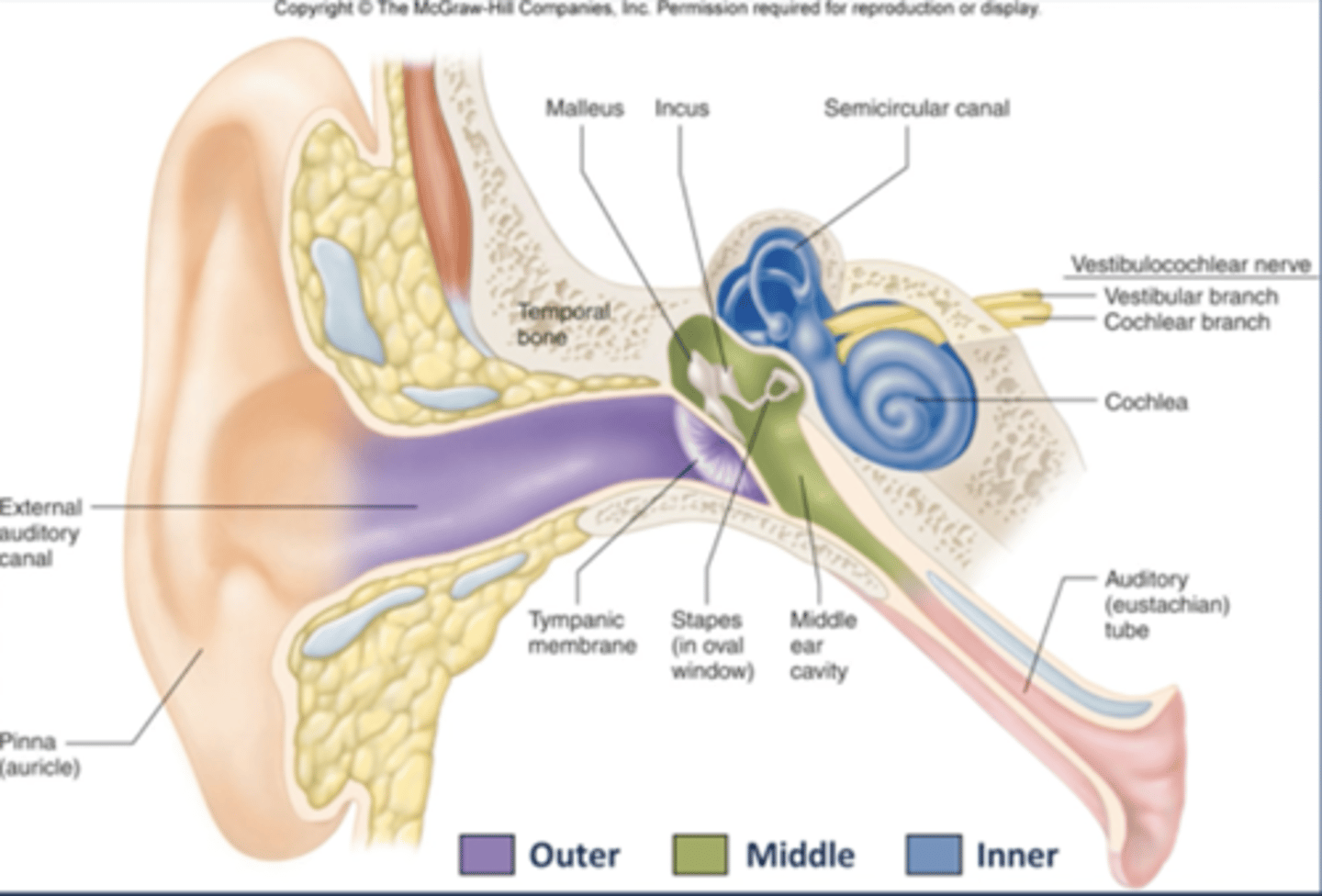
list the structures of the outer ear:
1. pinna
2. auditory canal
3. tympanic membrane
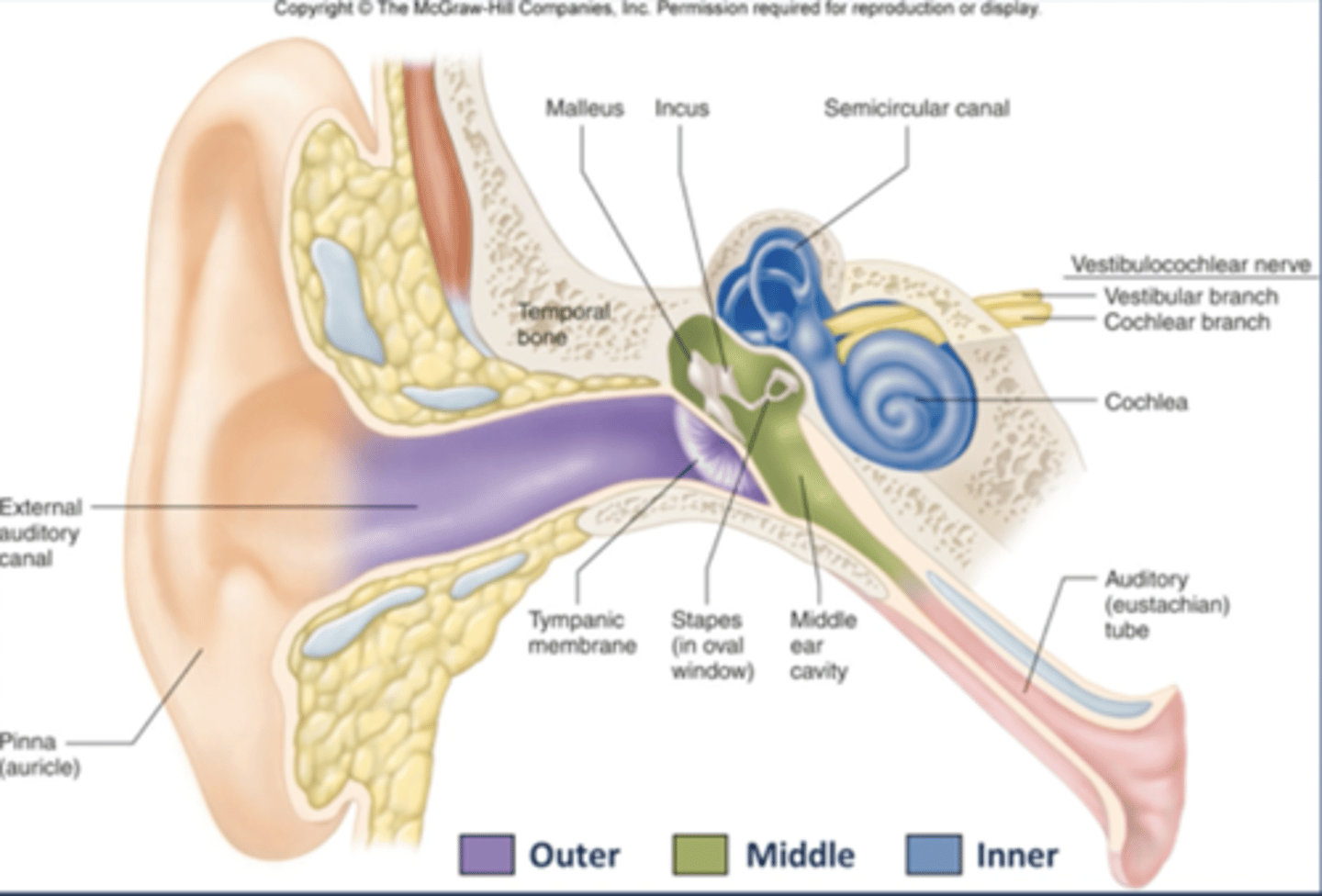
list the structures of the middle ear:
1. malleus
2. incus
3. stapes
list the structures of the inner ear:
1. cochlea (auditory)
2. utricle and saccule (vestibular)
3. semicircular canals (vestibular)
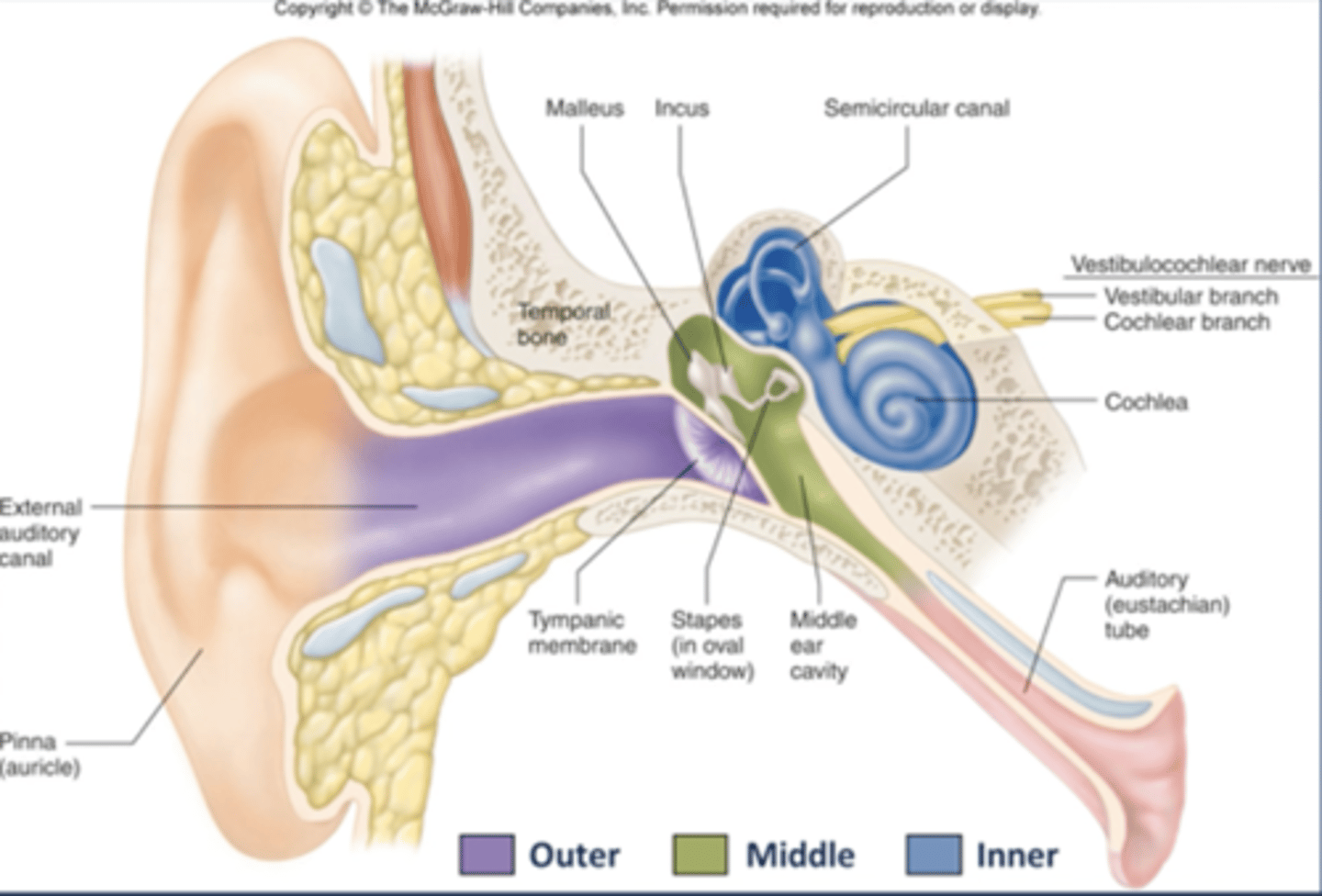
what cranial nerve is responsible for transmitting sensory information from the ear to the central nervous system?
CN VIII (vestibulocochlear)
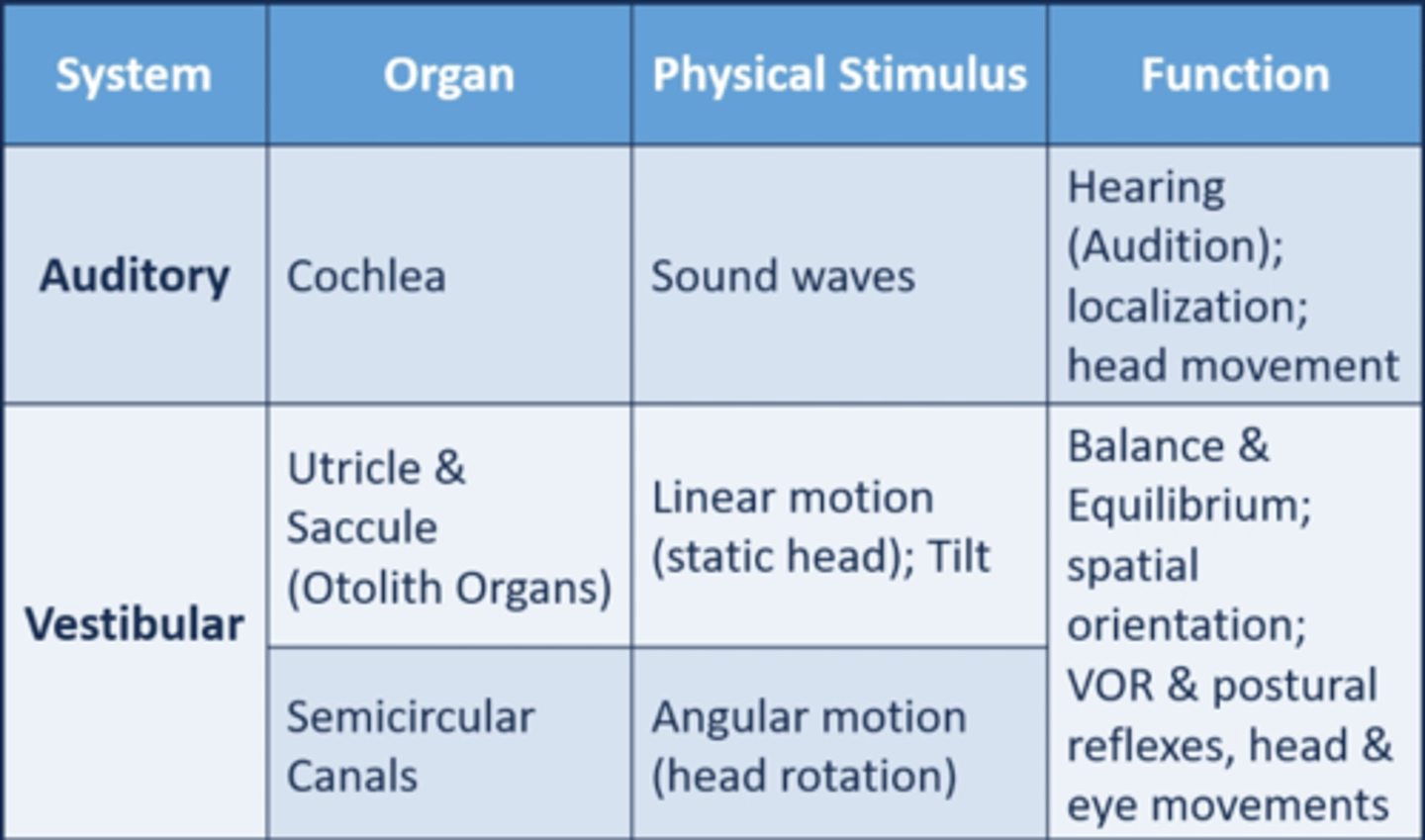
what is the function of the auditory portion of the hearing system?
1. hearing (audition)
2. localization (knowing where a sound is coming from)
3. head movement (i.e. hearing a sound and looking in that direction)
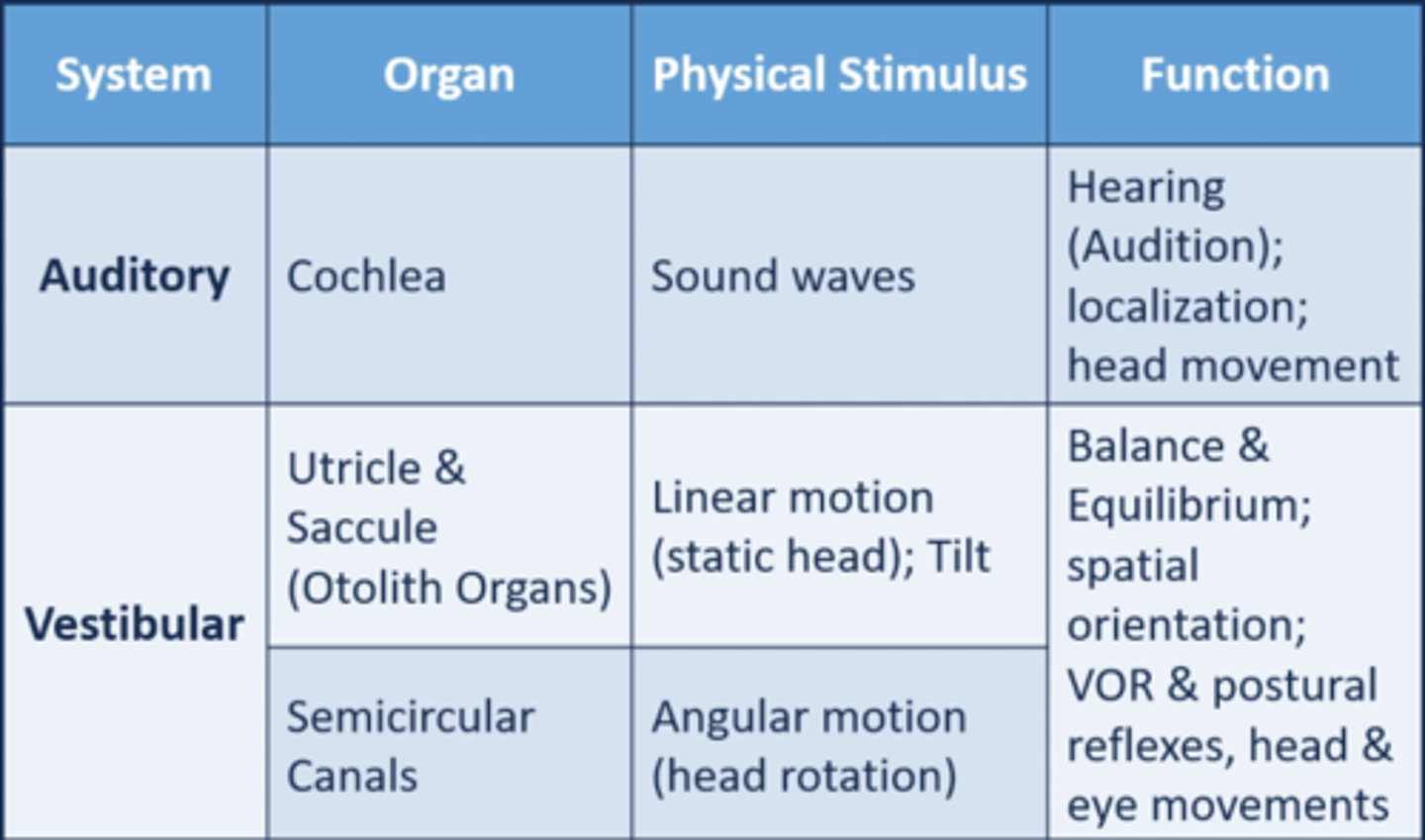
what is the physical stimulus for the cochlea?
sound waves
what is the function of the vestibular portion of the hearing system?
1. balance and equilibrium
2. spatial orientation
3. vestibular ocular reflexes
4. postural reflexes
5. coordinate head and eye movements
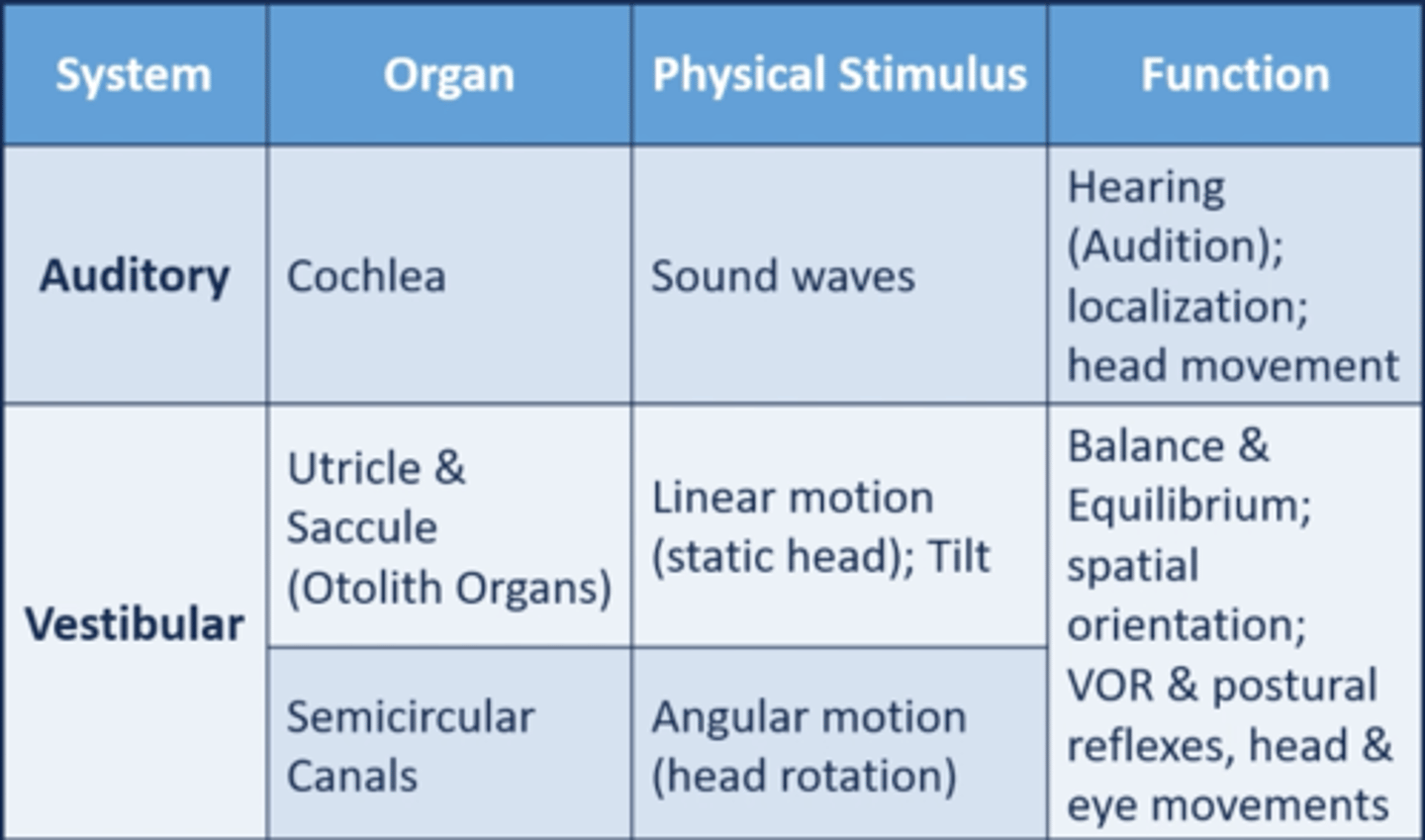
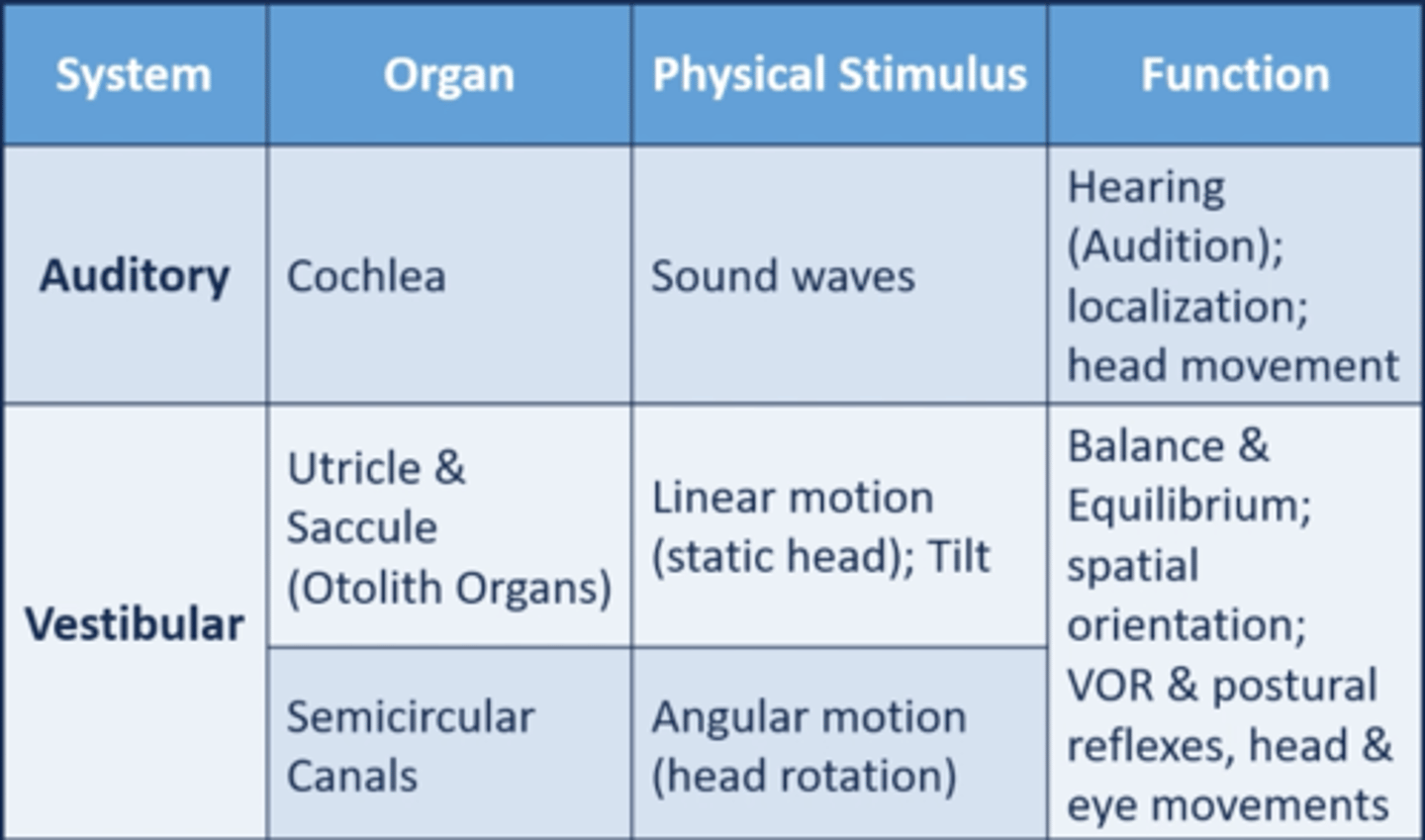
what is the physical stimulus for the utricle and saccule?
linear motion (static head); tilt
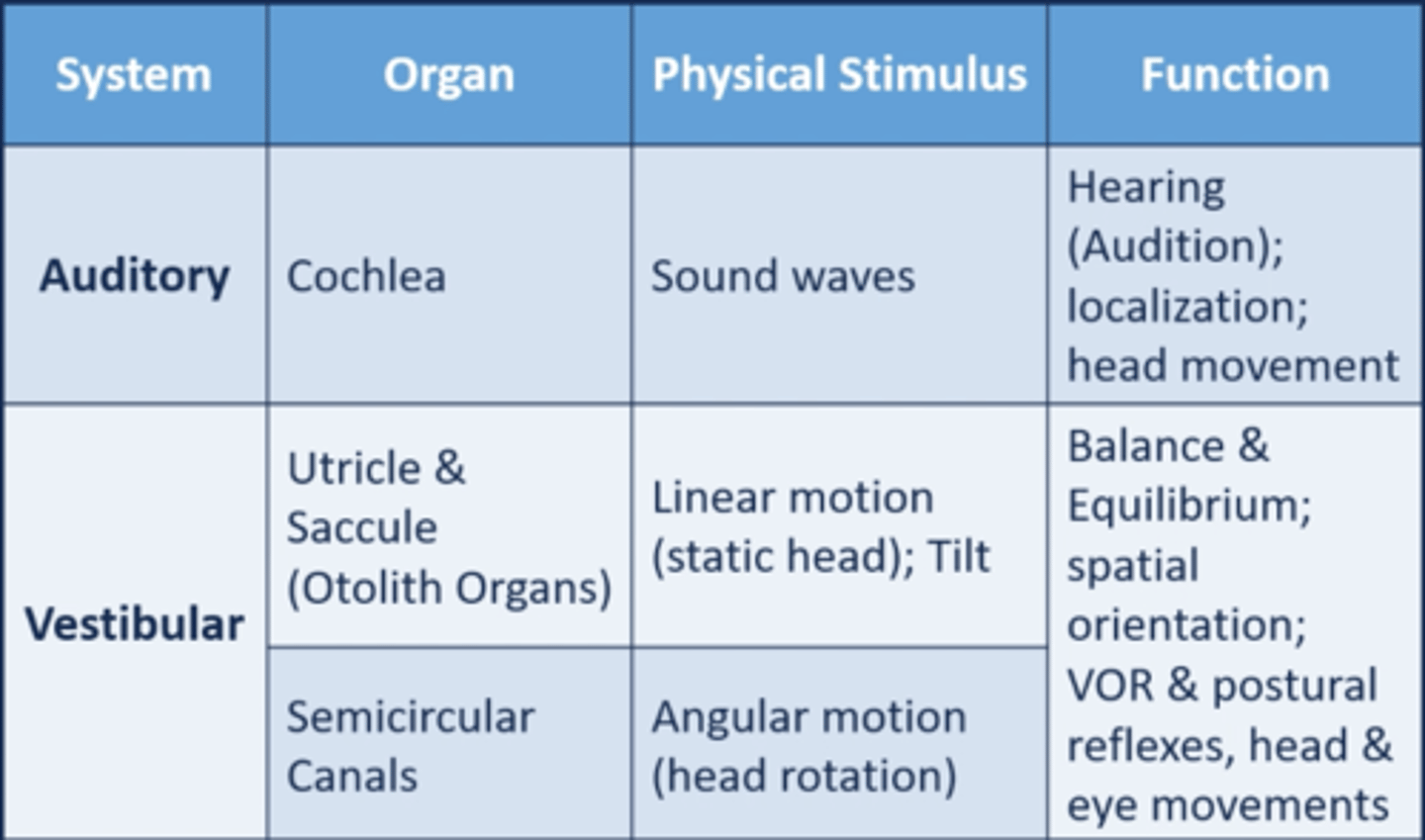
what is the physical stimulus for the semicircular canals?
angular motion (head rotation)
the cochlea, utricle and saccule, and semicircular canals use the same specialized sensory receptors. what receptors are these?
hair cells
what are the sensory afferent neurons in the auditory system?
hair cells
how are sound waves made into mechanical energy?
increasing and decreasing air pressure to create waves
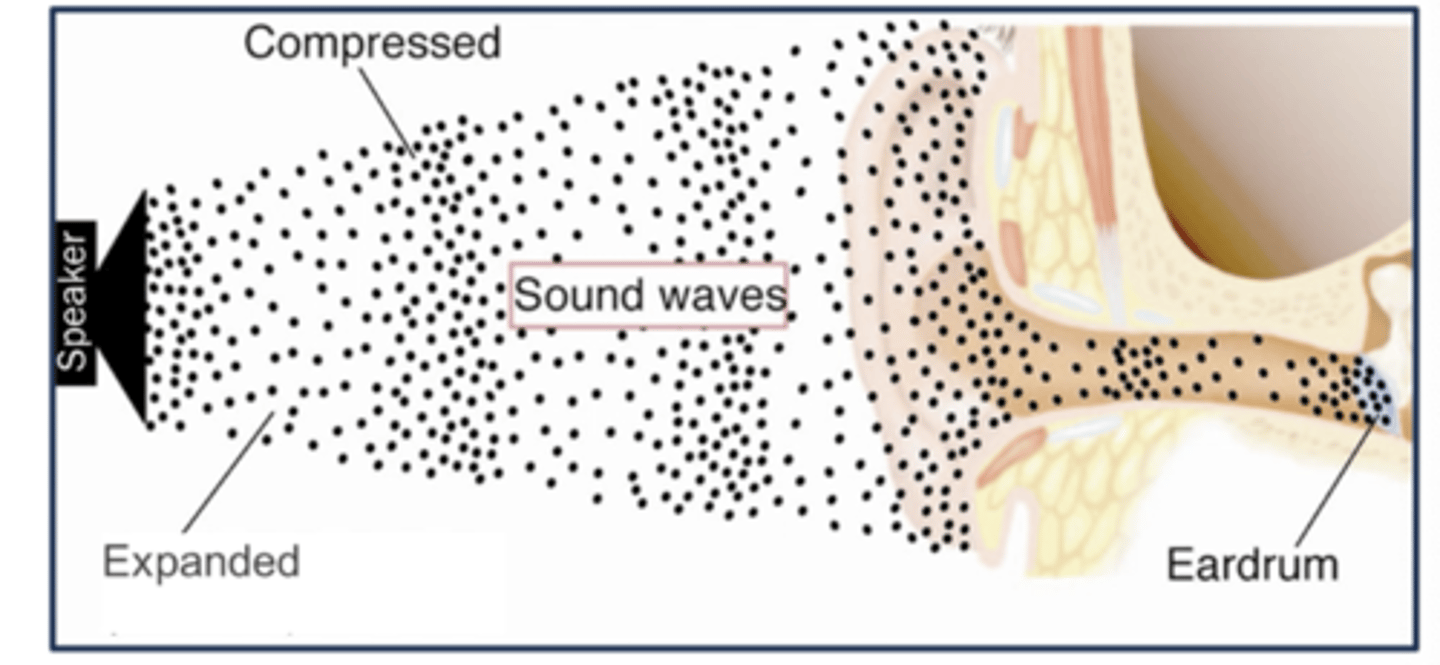
what physical qualities determine the features of the sound experience?
1. frequency
2. amplitude
3. complexity
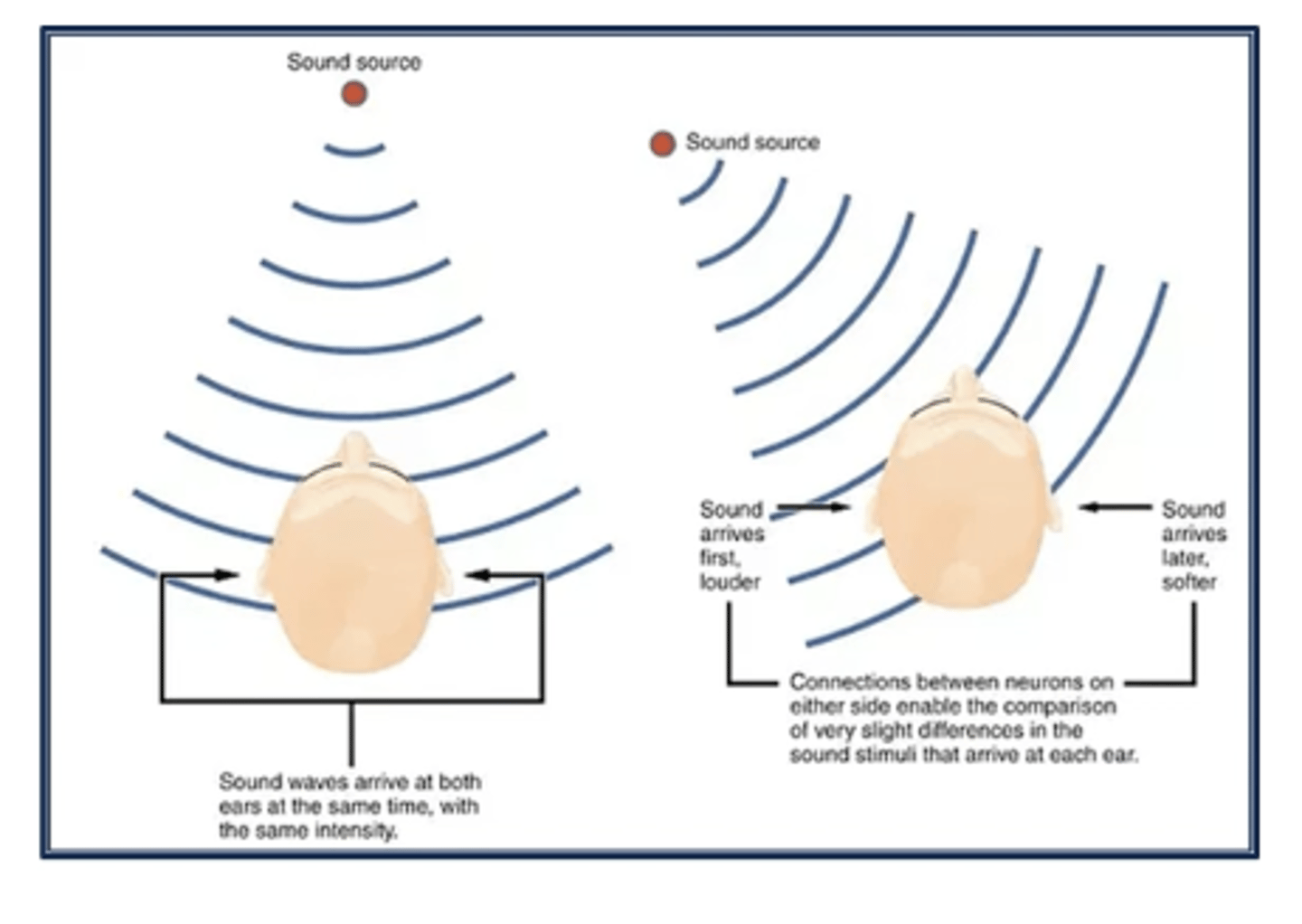
how does localization work?
depending on where a sound is coming from, sound waves may hit one ear before the other
what is frequency of sound?
pitch - number of wave cycles per second
measured in Hertz (Hz)
low frequency = low pitched
high frequency = high pitched
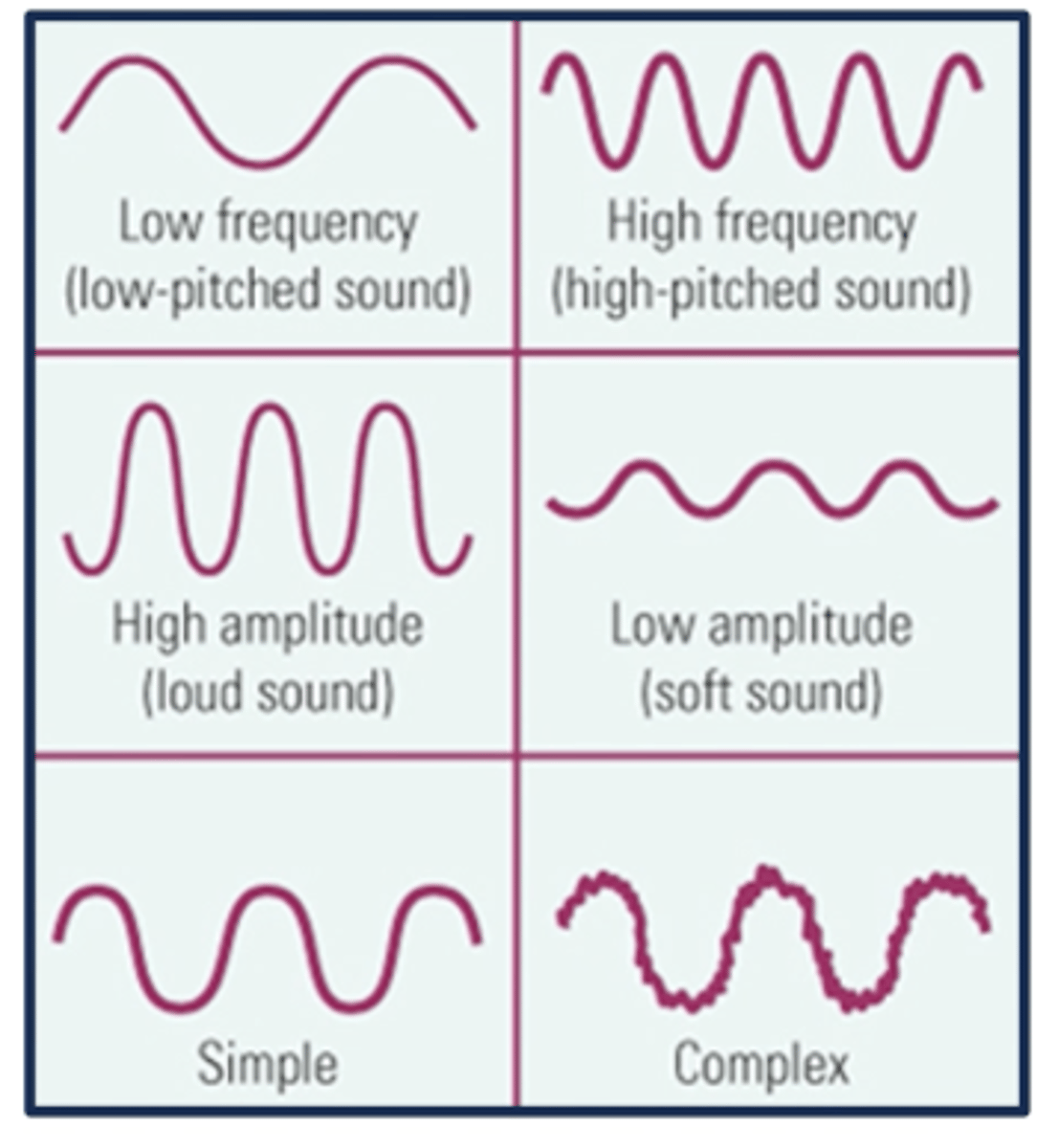
what is amplitude of sound?
loudness - intensity of wave cycles
measured in decibels (dB)
high amplitude = loud
low amplitude = quiet
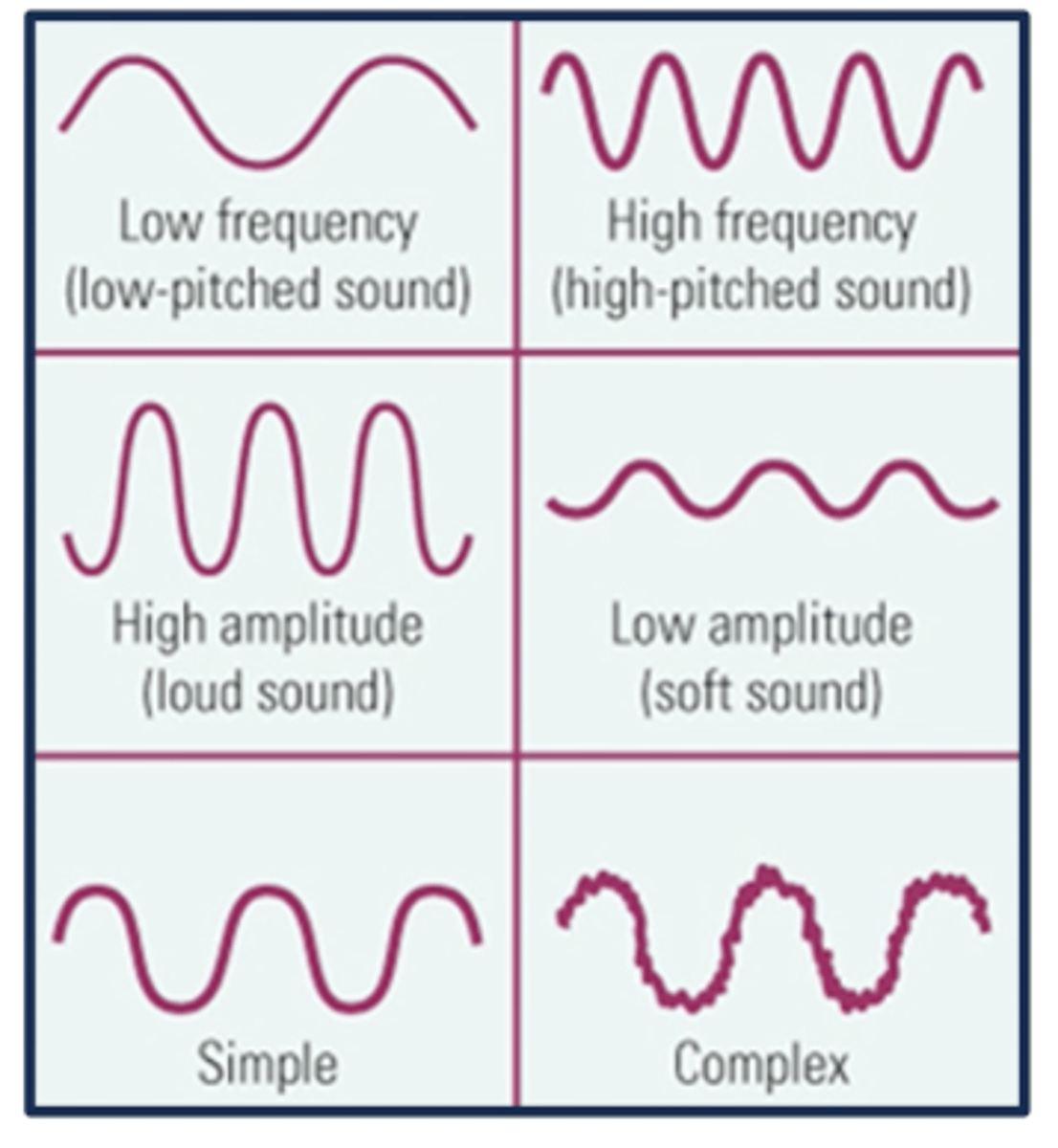
what is complexity/timbre of sound?
uniqueness of sound
composed of a mixture of wave frequencies to make the sound distinguishable
i.e piano vs. violin
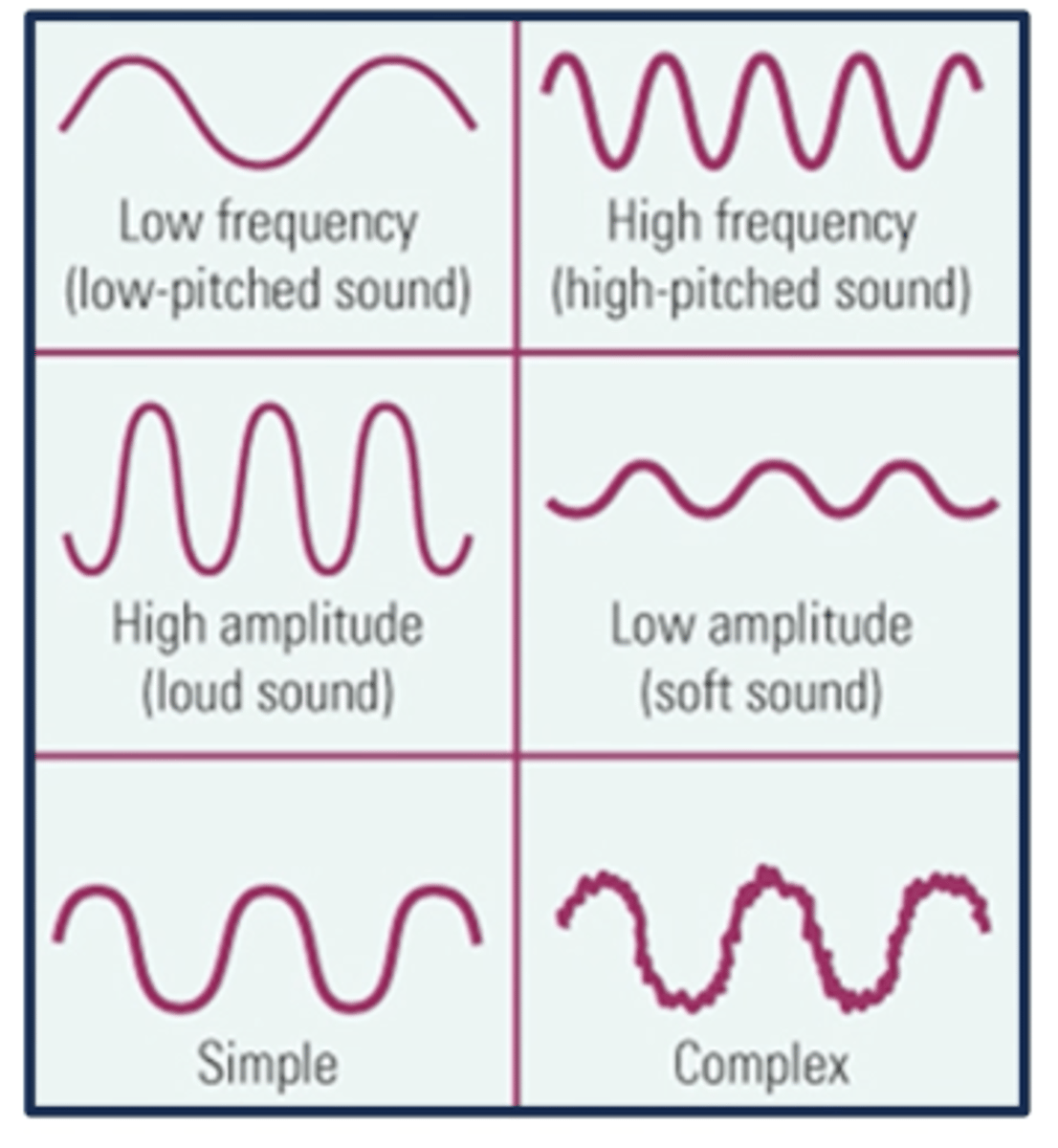
what is the range of frequencies that humans can hear?
20 Hz to 20,000 Hz
this usually declines with age - higher frequency noises go away first
what is linear motion?
position of the static head and body relative to gravity (acceleration and deceleration)
linear motion is motion along an axis with (static/turning) head positions
static
what are the x, y, and z axes for linear motion?
x: moving front or back (being in car)
y: moving left or right (stepping to the side)
z: moving up or down (being in an elevator)
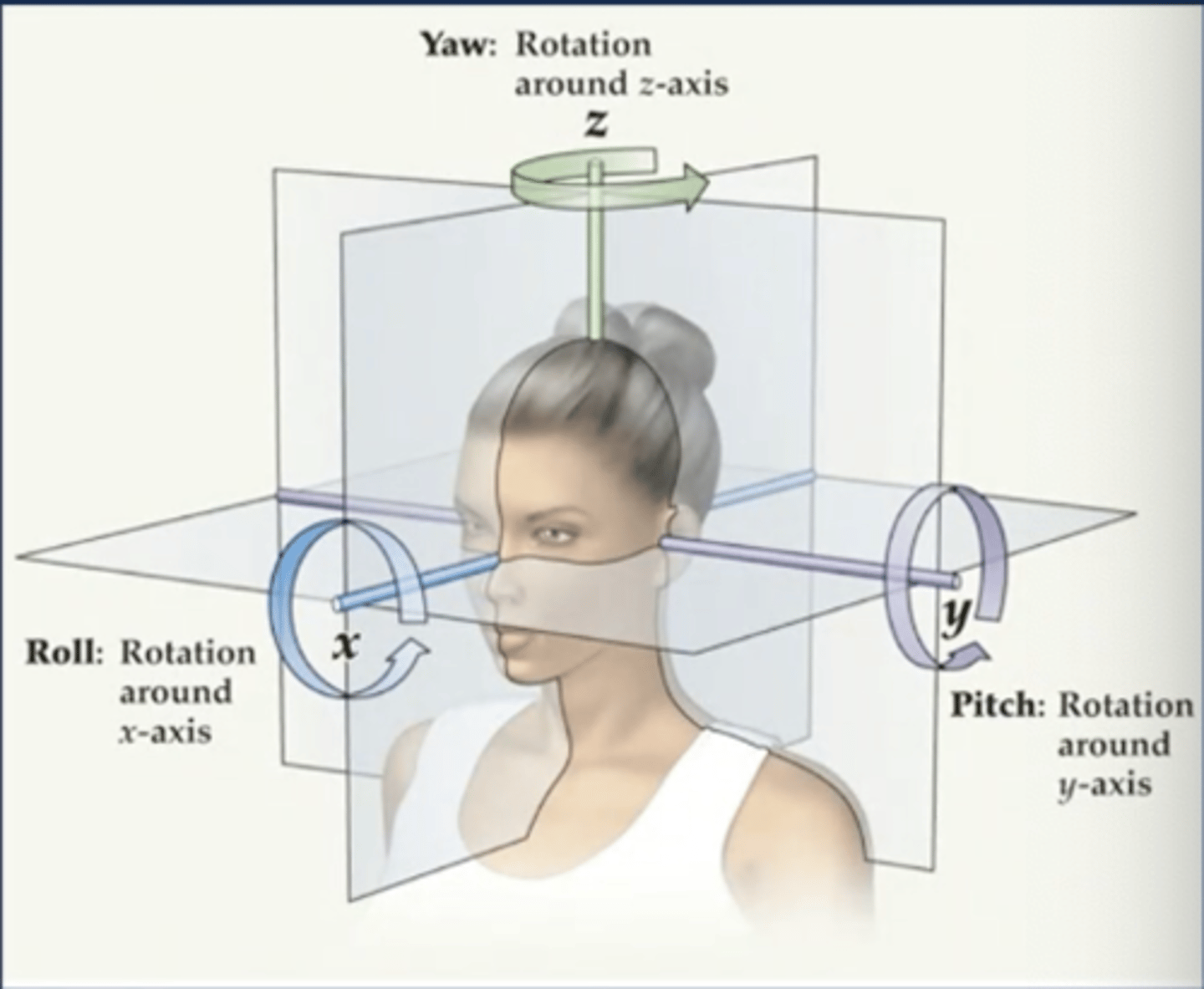
what is angular motion?
rotating head positions turning about each axis
angular motion is motion along an axis with (static/turning) head positions
turning
what are the x, y, and z axes for angular motion?
x: side to side (touch ear to shoulder)
y: up and down (nodding yes)
Z: left and right (saying no)
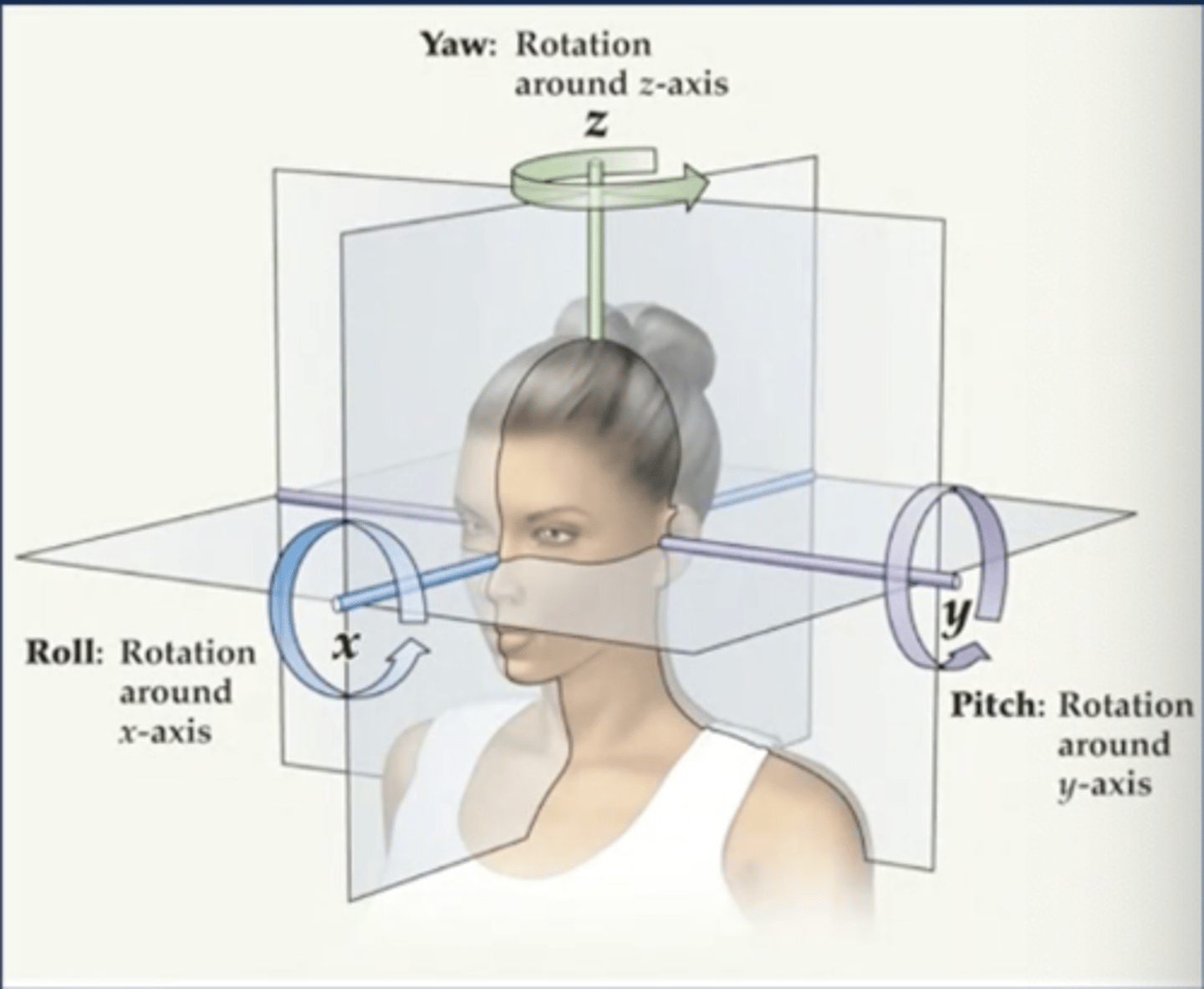
what is tilt of the head?
determines if the head is right-side up or tilted in a static position
for example, looking at the stars and staying in that position is a static head tilt
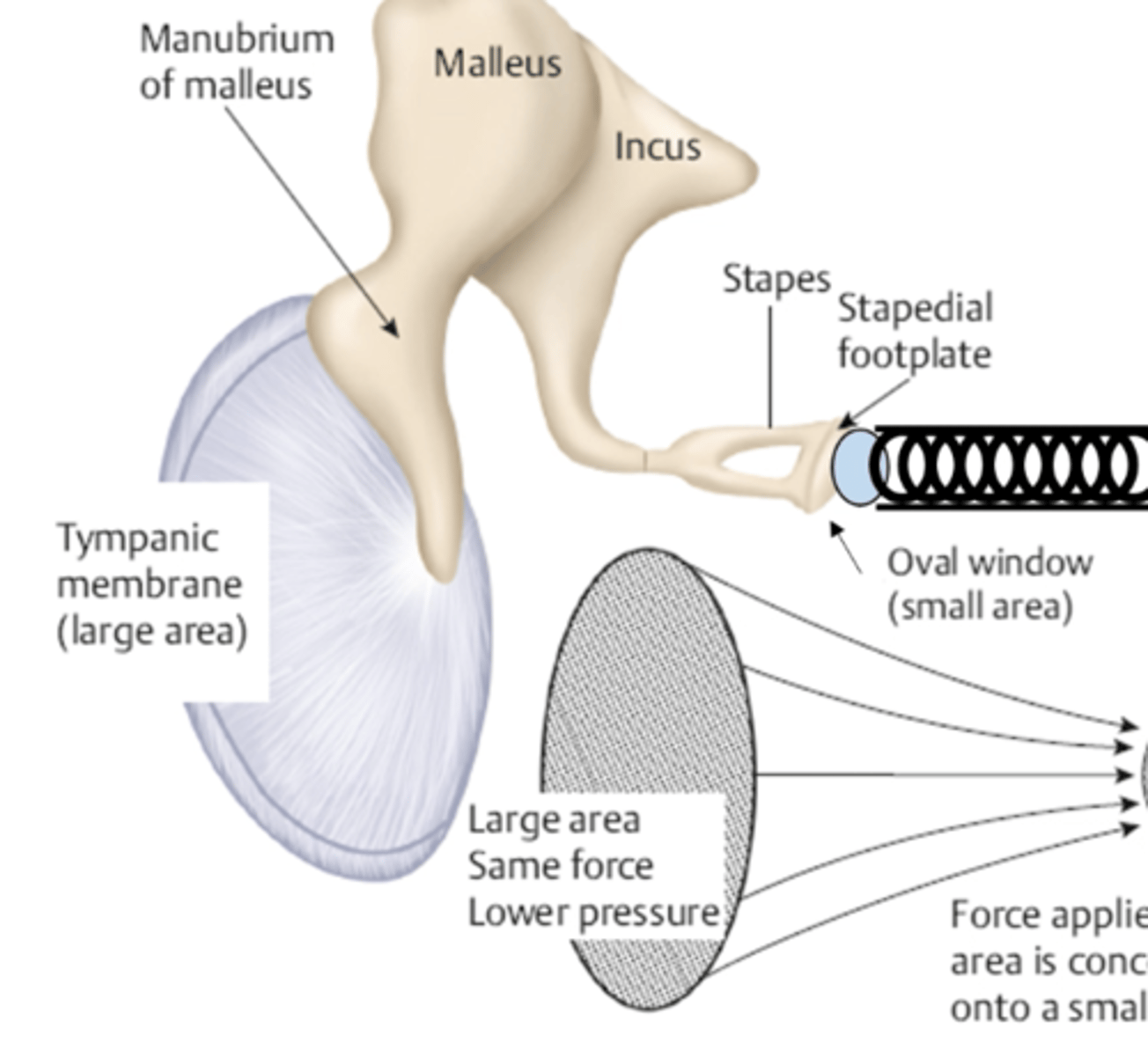
what is the oval window?
membrane that connects the middle ear to the inner ear
the stapes connects to the oval window
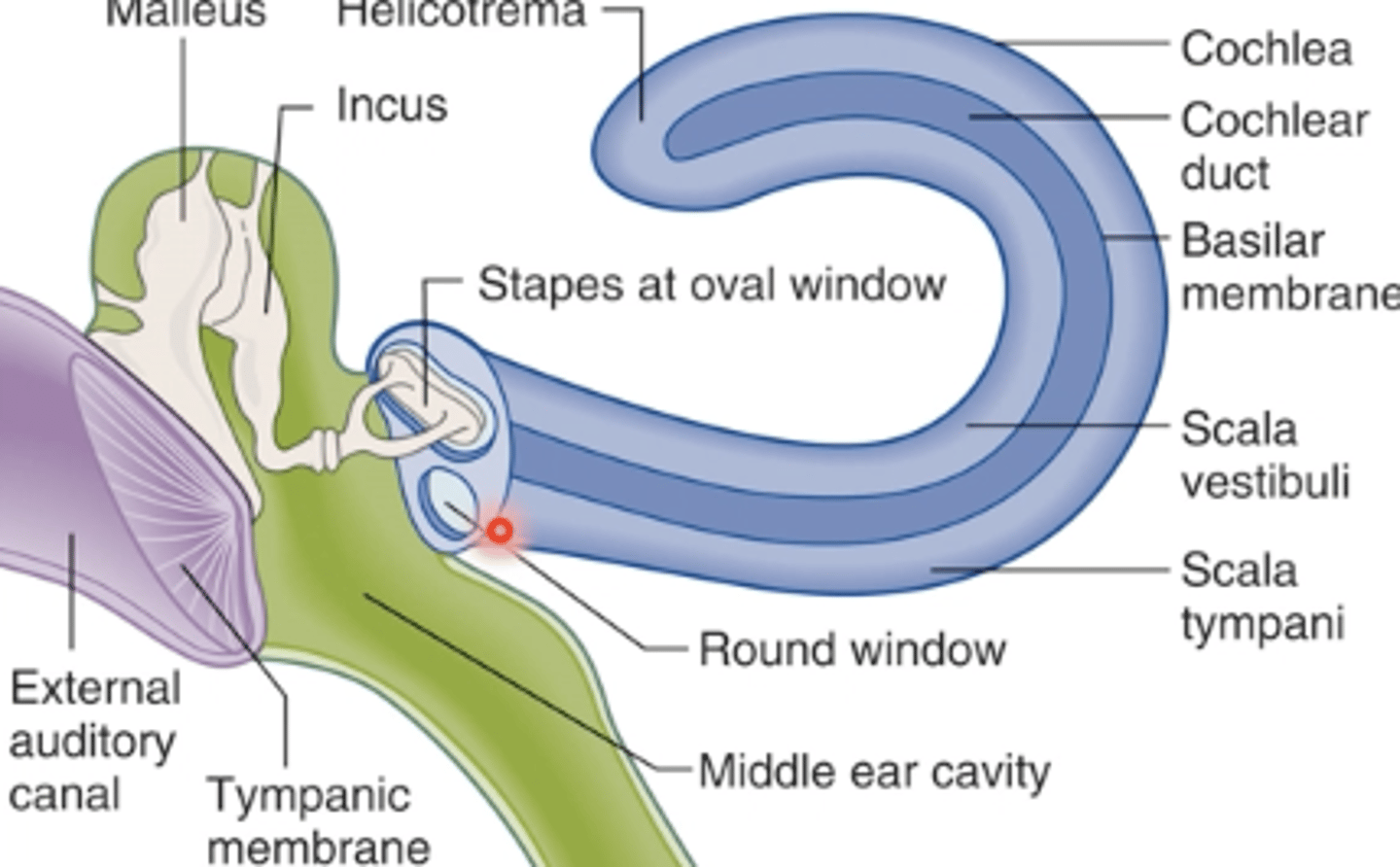
what is impedance mismatch?
the idea that the ossicles of the middle ear allow vibrations from the tympanic membrane to be more focused and forceful
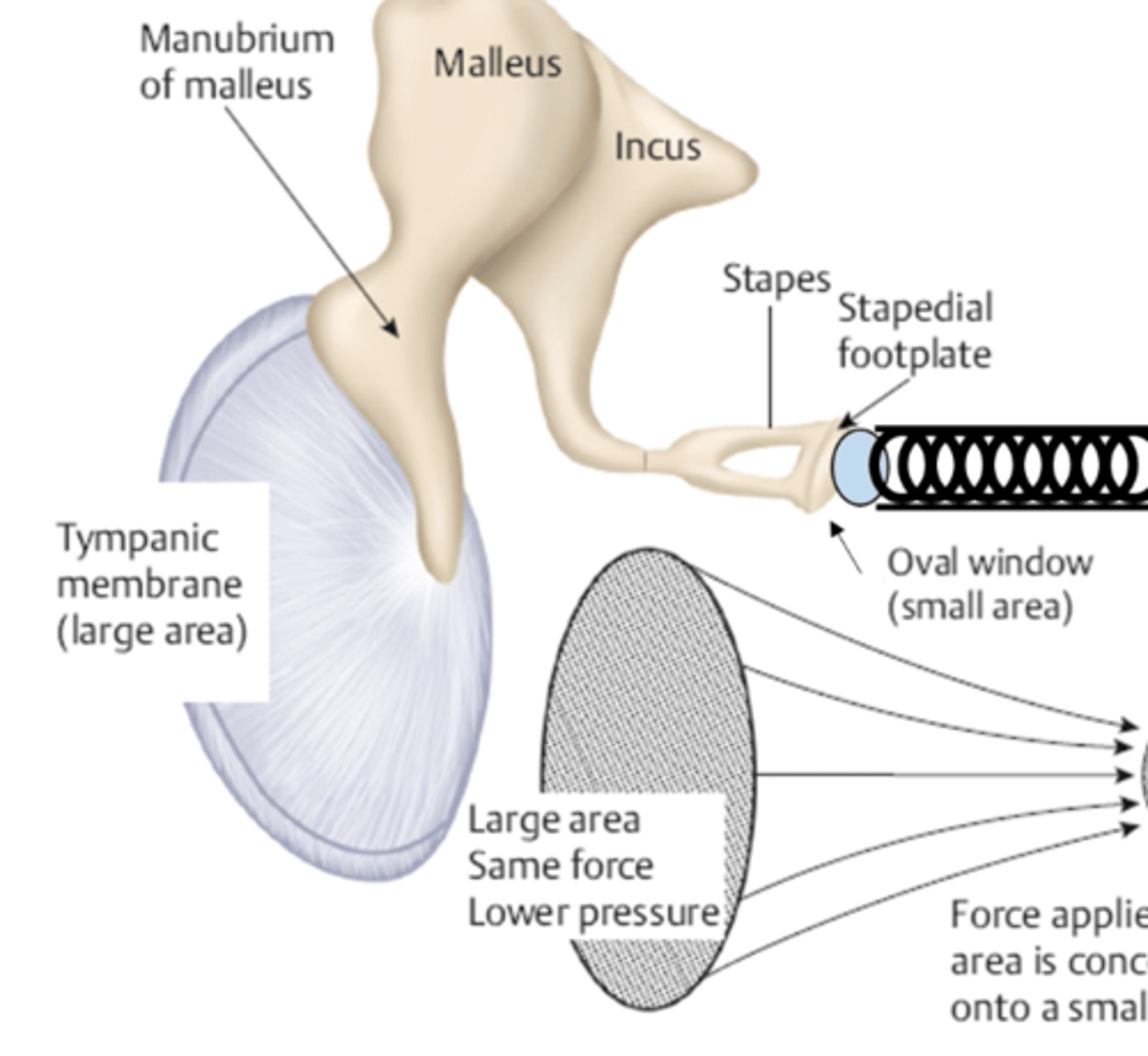
what is the function of the ossicles of the middle ear?
compensate for impedance mismatch
basically they allow for vibrations from tympanic membrane to successfully reach the cochlea
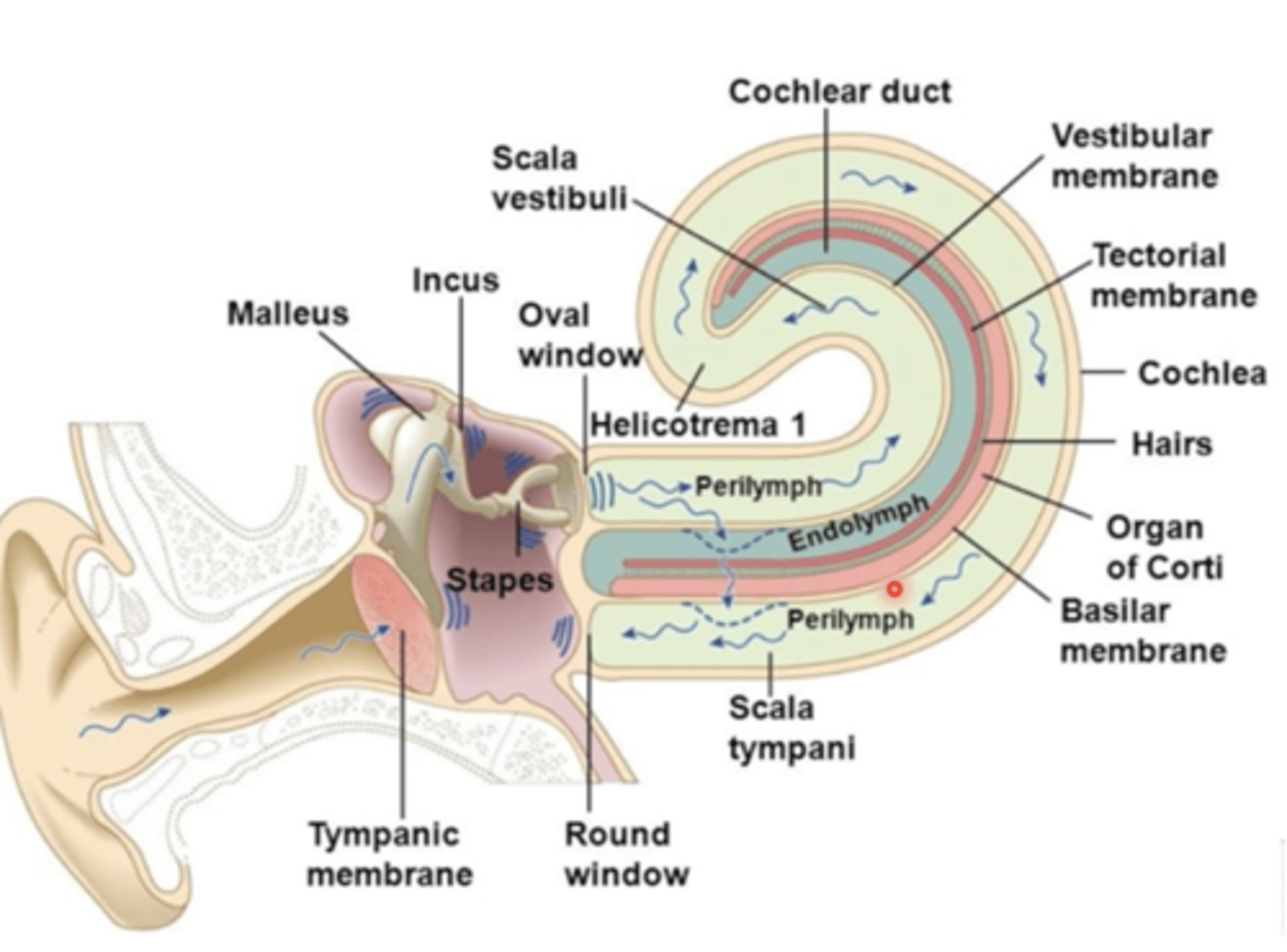
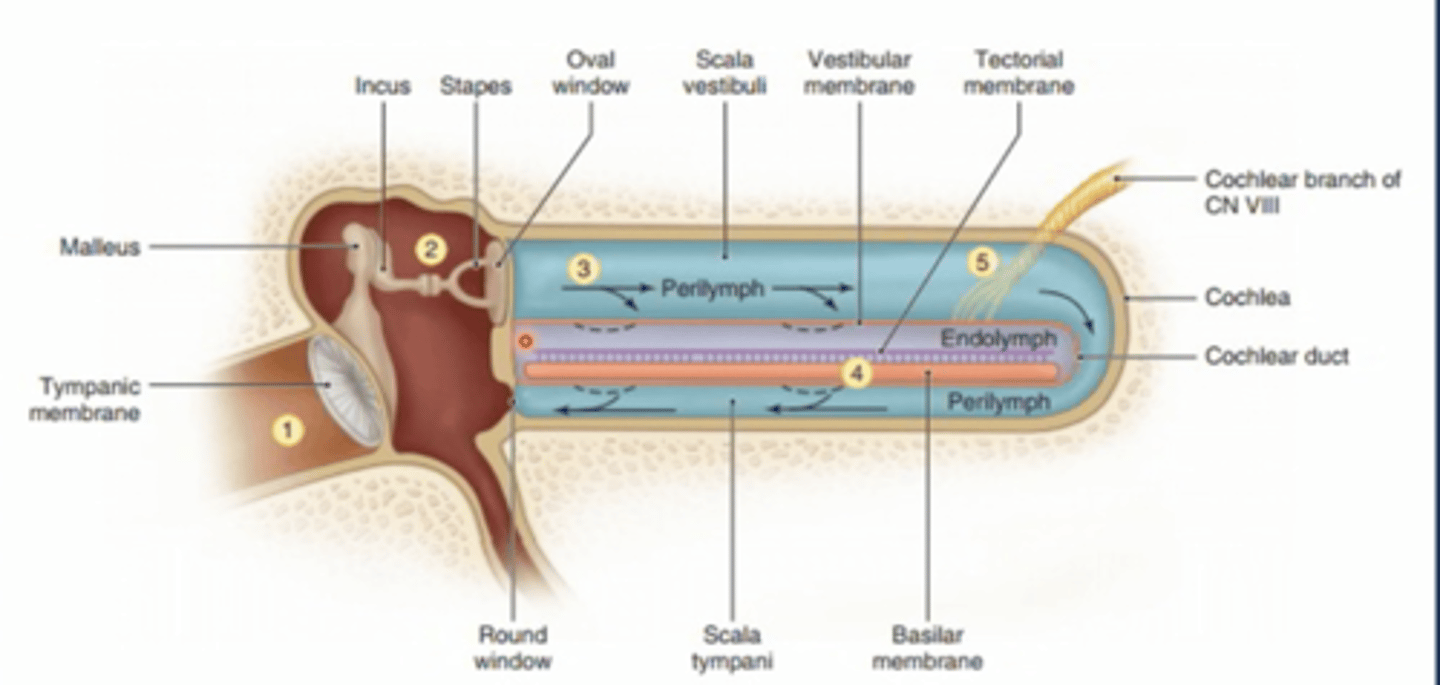
describe movement of sound within the ear:
1. tympanic membrane vibrates
2. ossicles amplify vibration
3. stapes vibrates oval window
4. sound waves converted to fluid waves in cochlea
5. waves travel through scala vestibuli and scala tympani
5. waves cause basilar membrane to vibrate
what is the function of the round window?
works in conjunction with the oval window to compensate for pressure changes
i.e. it releases pressure
what is the organ of corti?
specialized neuroepithelium located on the basilar membrane
this is where sound is going to be transduced
inner hair cells are responsible for __________
transduction
outer hair cells are responsible for _________
amplification
stereocilia attach to the _________ membrane
tectorial
where is the perilymph located?
within the scala vestibuli and scala tympani
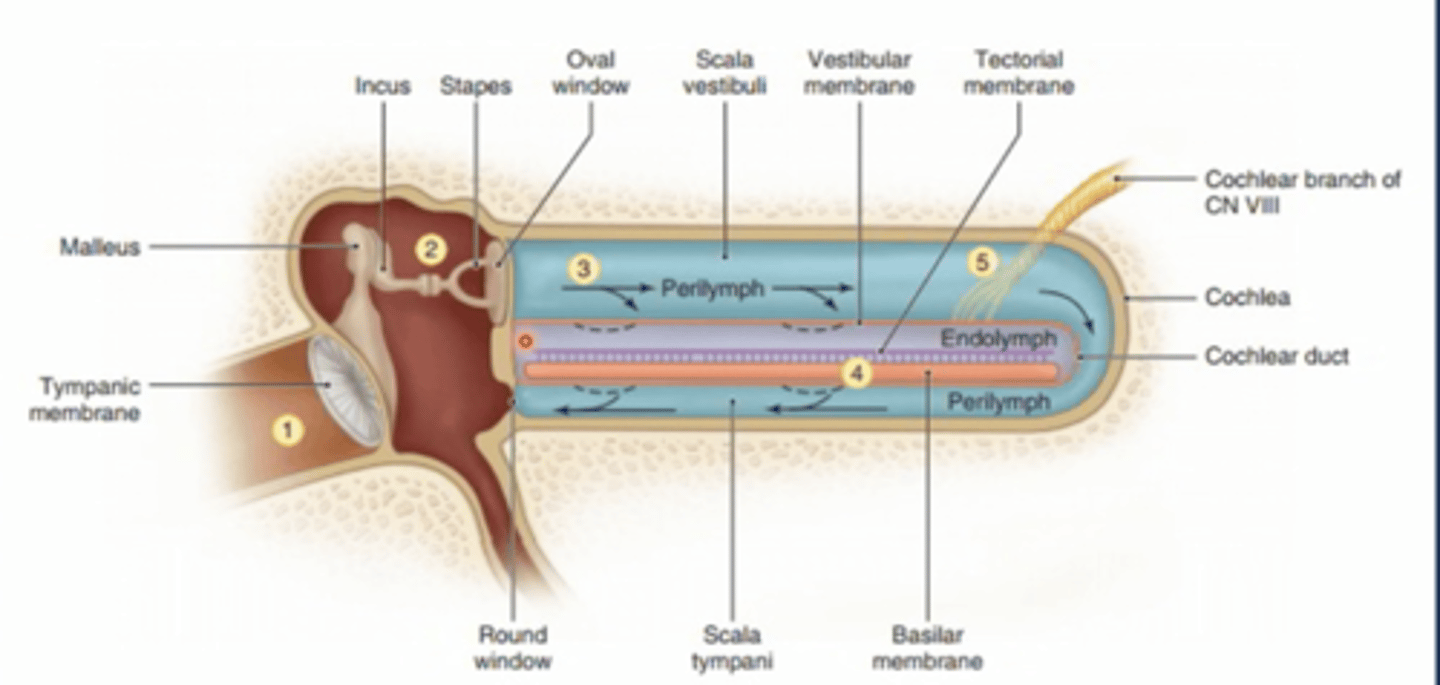
where is the endolymph located?
scala media
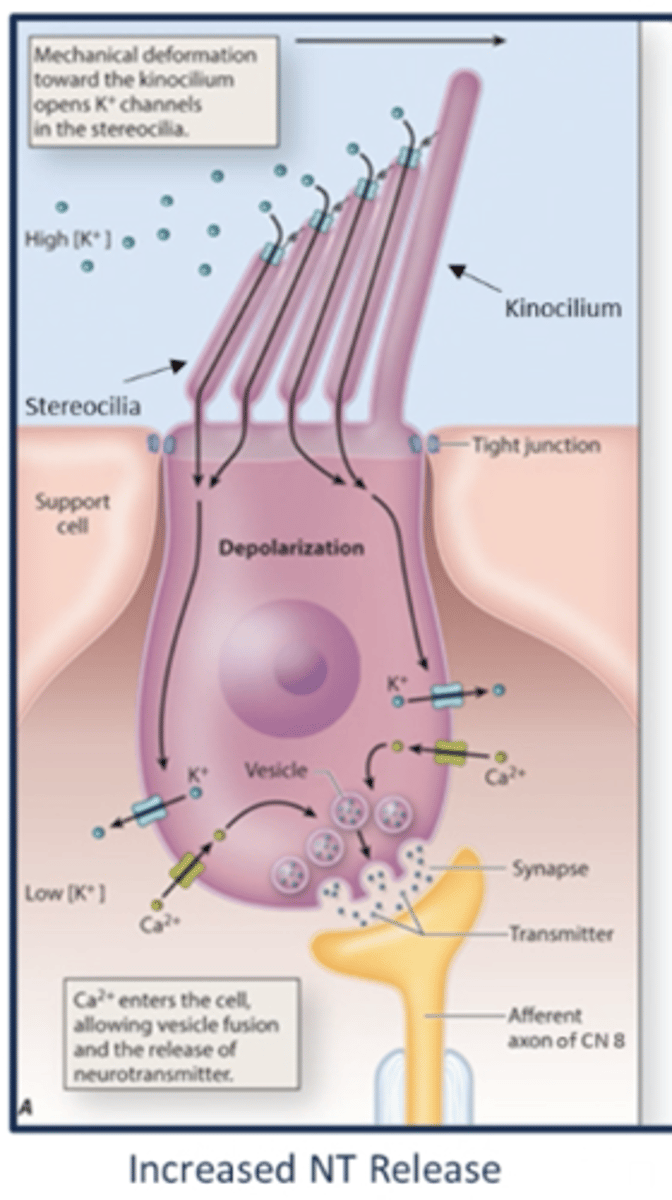
list the steps in hair cell transduction:
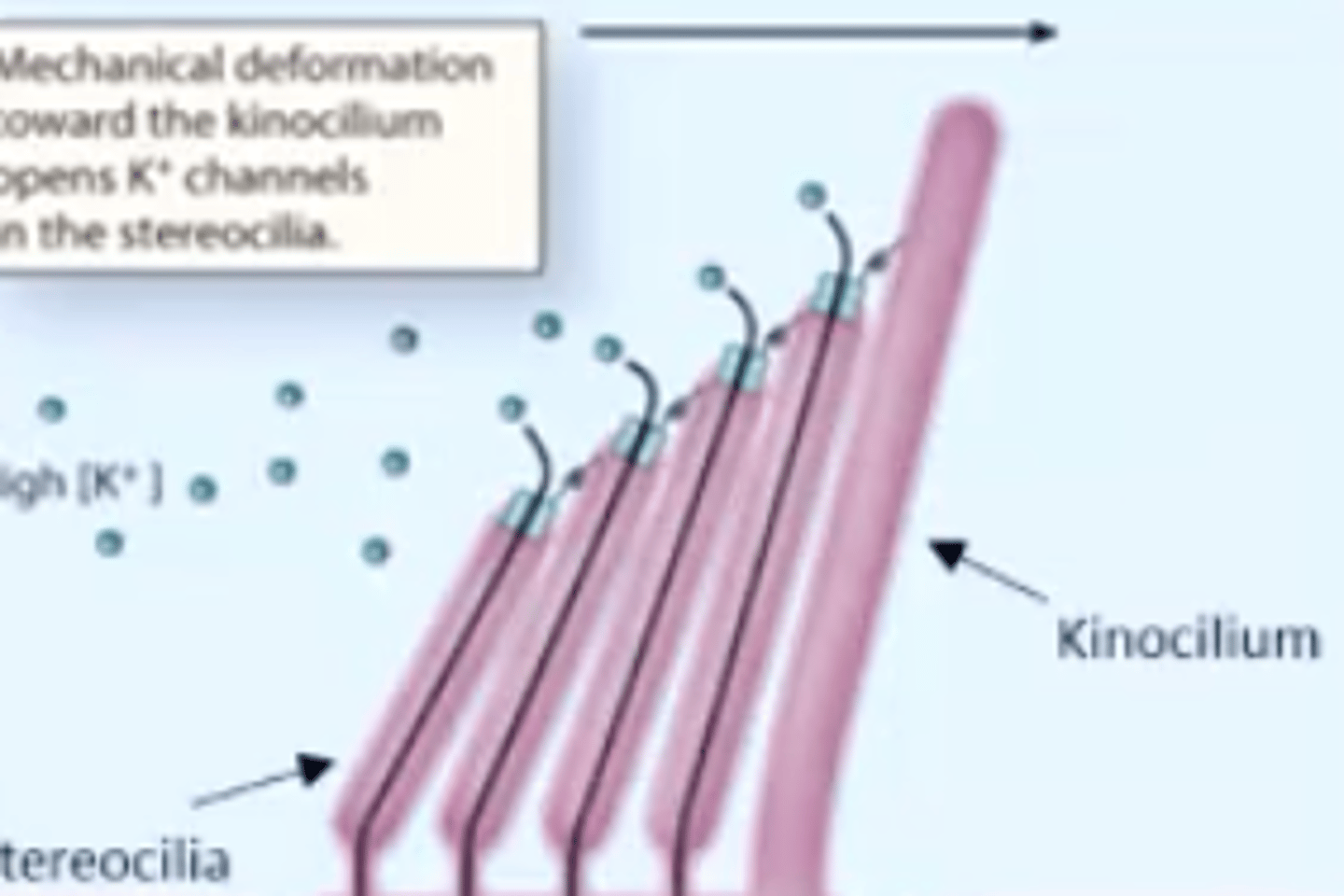
1. stereocilia connect to kinocilium (longest cilia) via tip links
2. pressure sways stereocilia toward the kinocilium
3. mechanically-gated K+ channels open
4. K+ enters hair cell and depolarization occurs
5. Ca2+ channels open
6. Ca2+ influx releases glutamate onto CN VIII
7. action potential fired
describe the composition of perilymph:
resembles ECF
high Na+, low K+
describe the composition of endolymph:
resembles ICF
high K+, low Na+
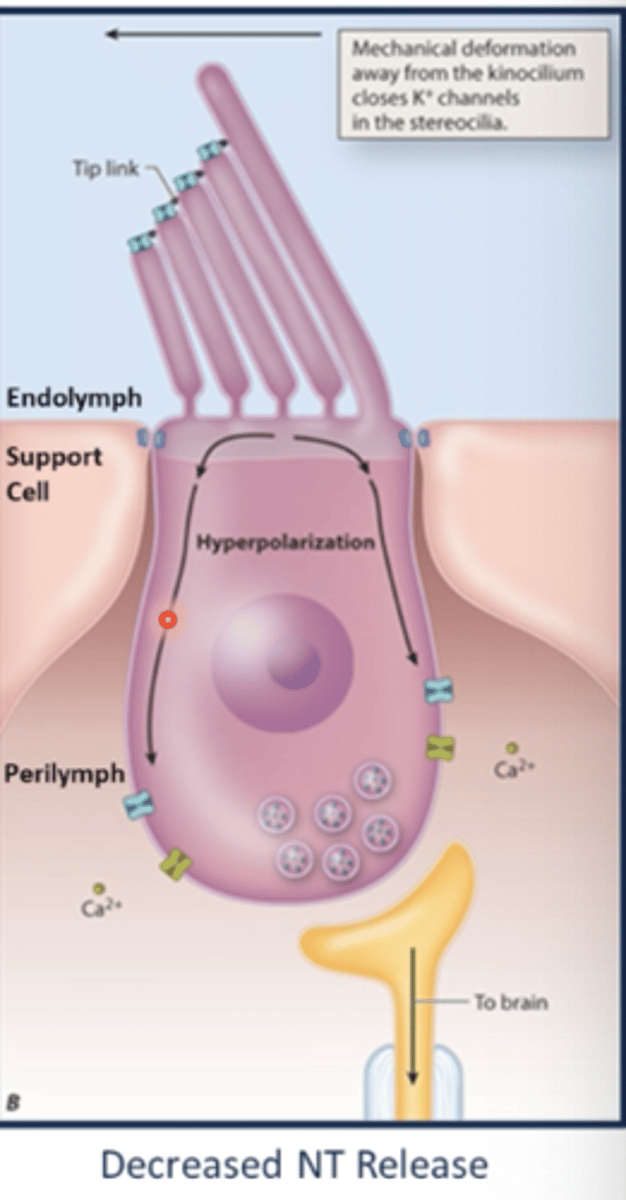
if the sound wave pushes the stereocilia away from the kinocilium, what happens?
K+ channels will not open and the hair cell will hyperpolarize
T/F: different points on the basilar membrane code different sound frequencies
true
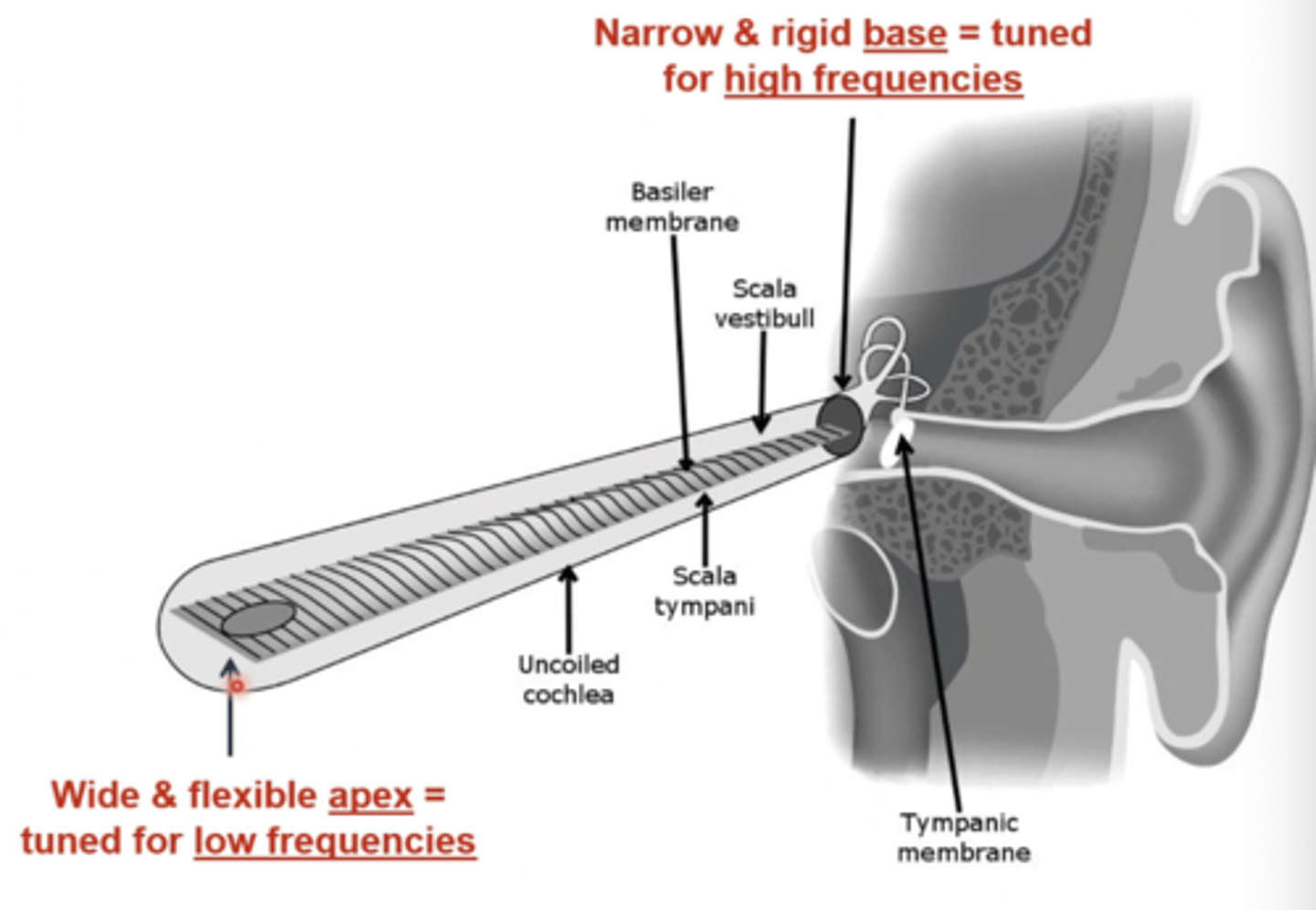
what is tonotopic organization?
spatial arrangement of the basilar membrane that encodes different frequencies
base = high tones
apex = low tones
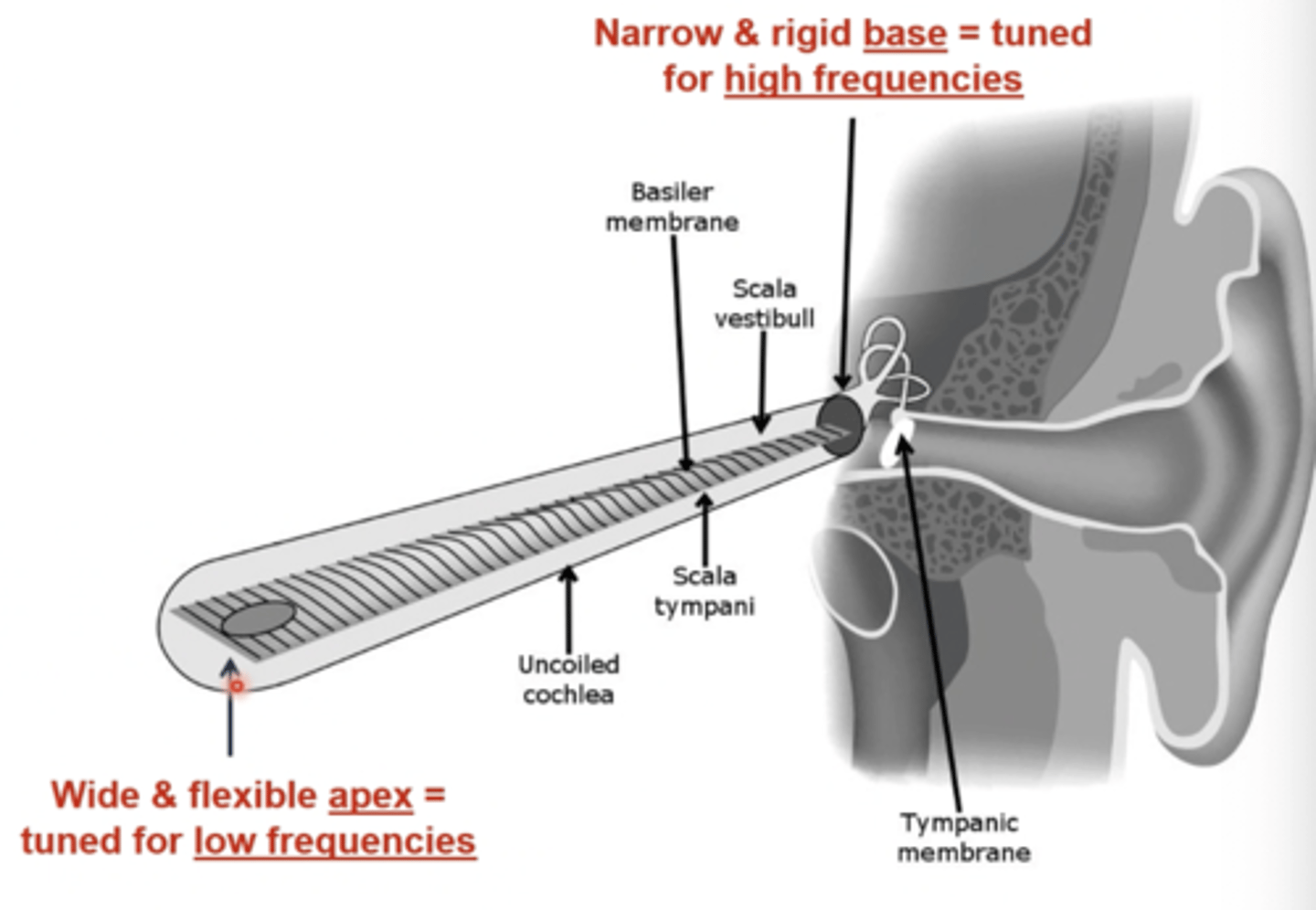
what frequency does the base of the basilar membrane encode?
high tones
this is located near the tympanic membrane
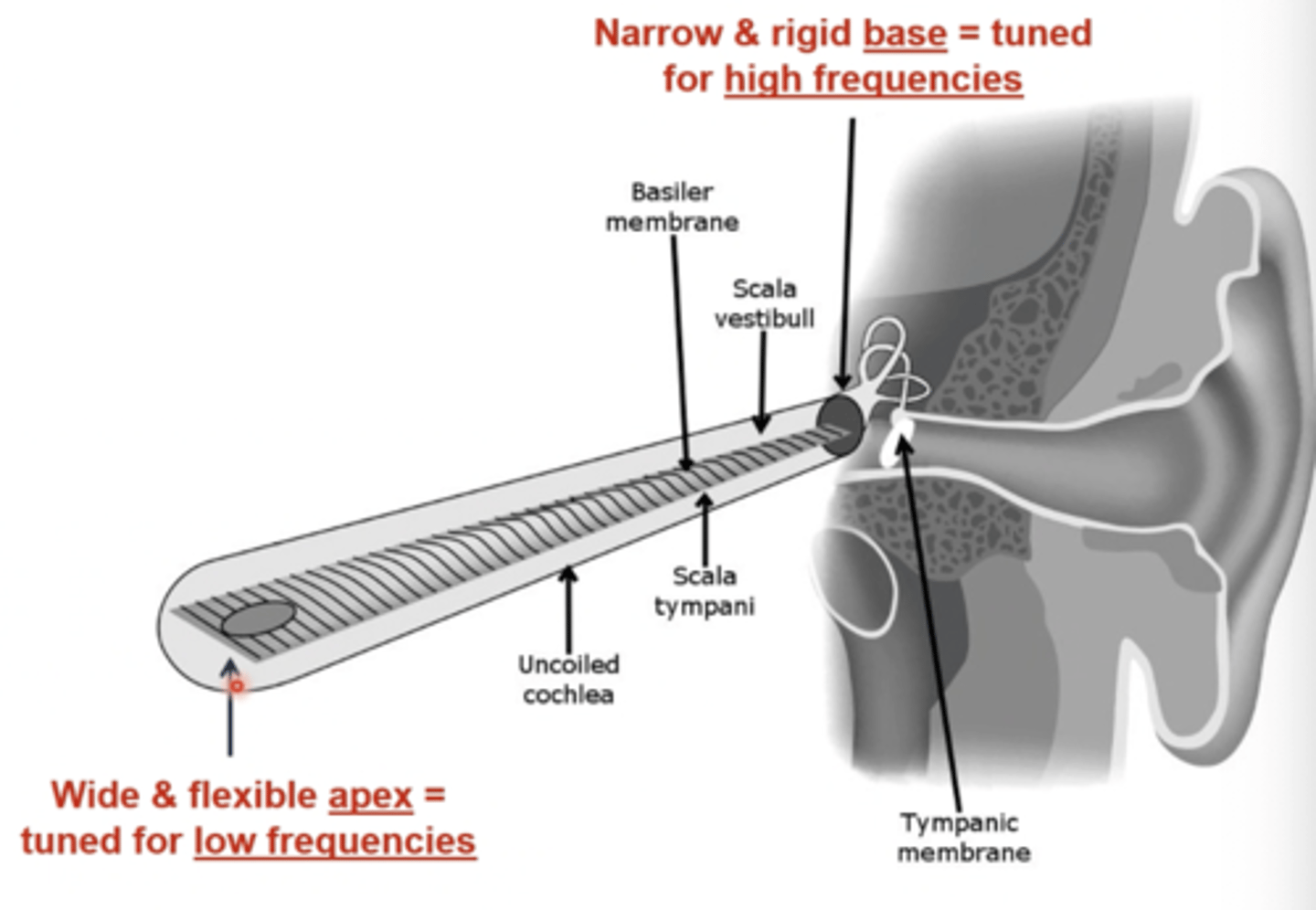
what frequency does the apex of the basilar membrane encode?
low tones
this is the tip/end of the uncoiled membrane
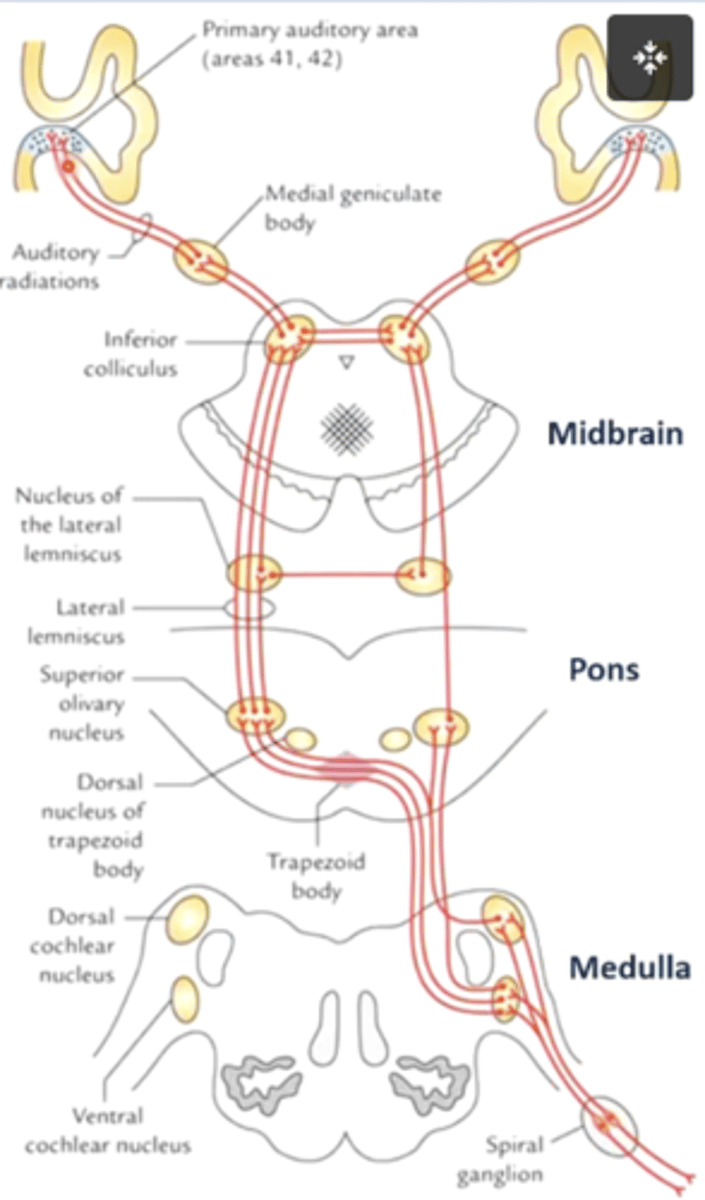
list the steps of the auditory pathway:
hair cells --> CN VIII (cochlear portion) --> brainstem --> thalamus --> cortex

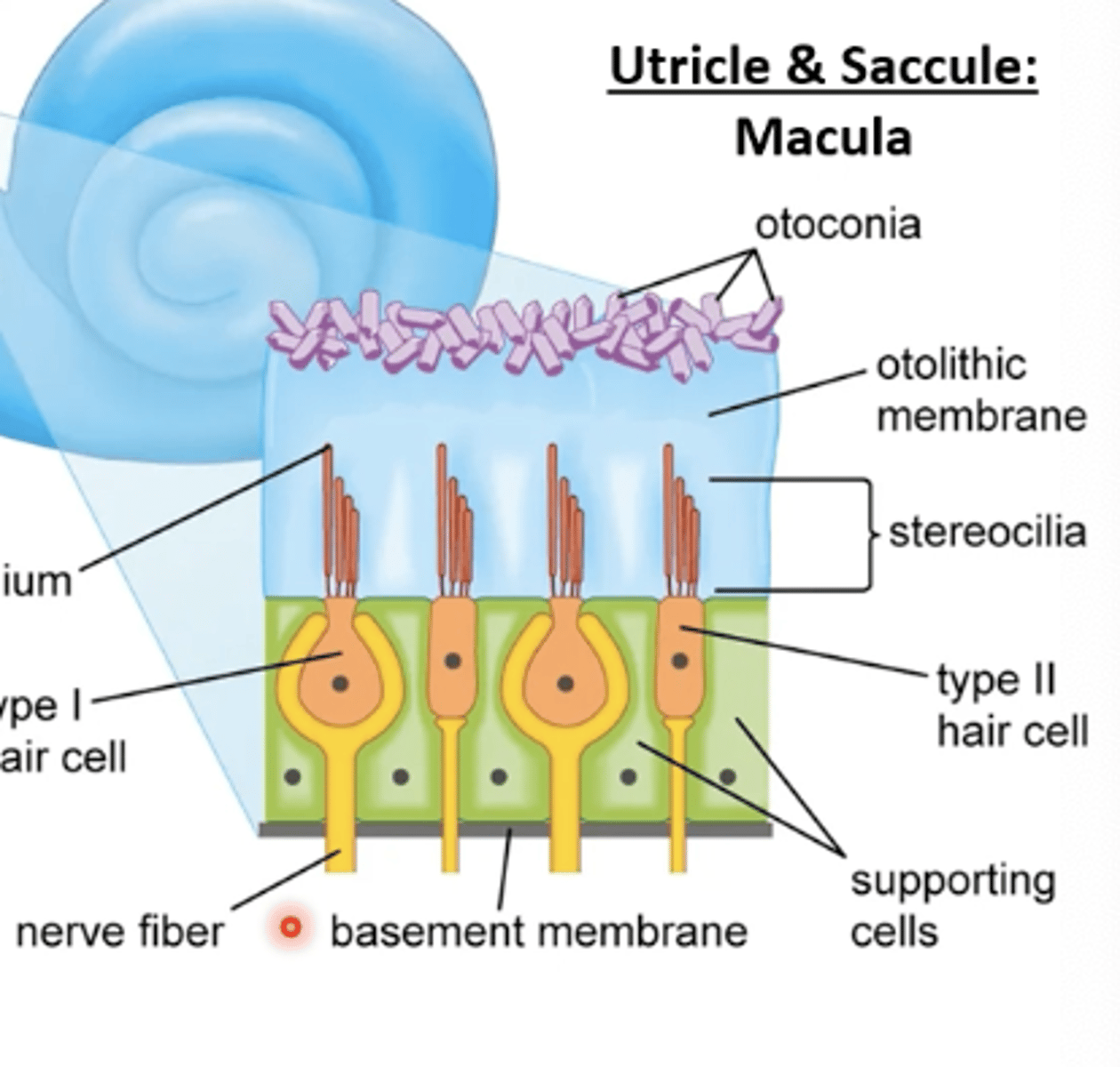
where are the hair cells located in the utricle and saccule located?
macula
the macula is the sensory epithelium of the utricle and saccule
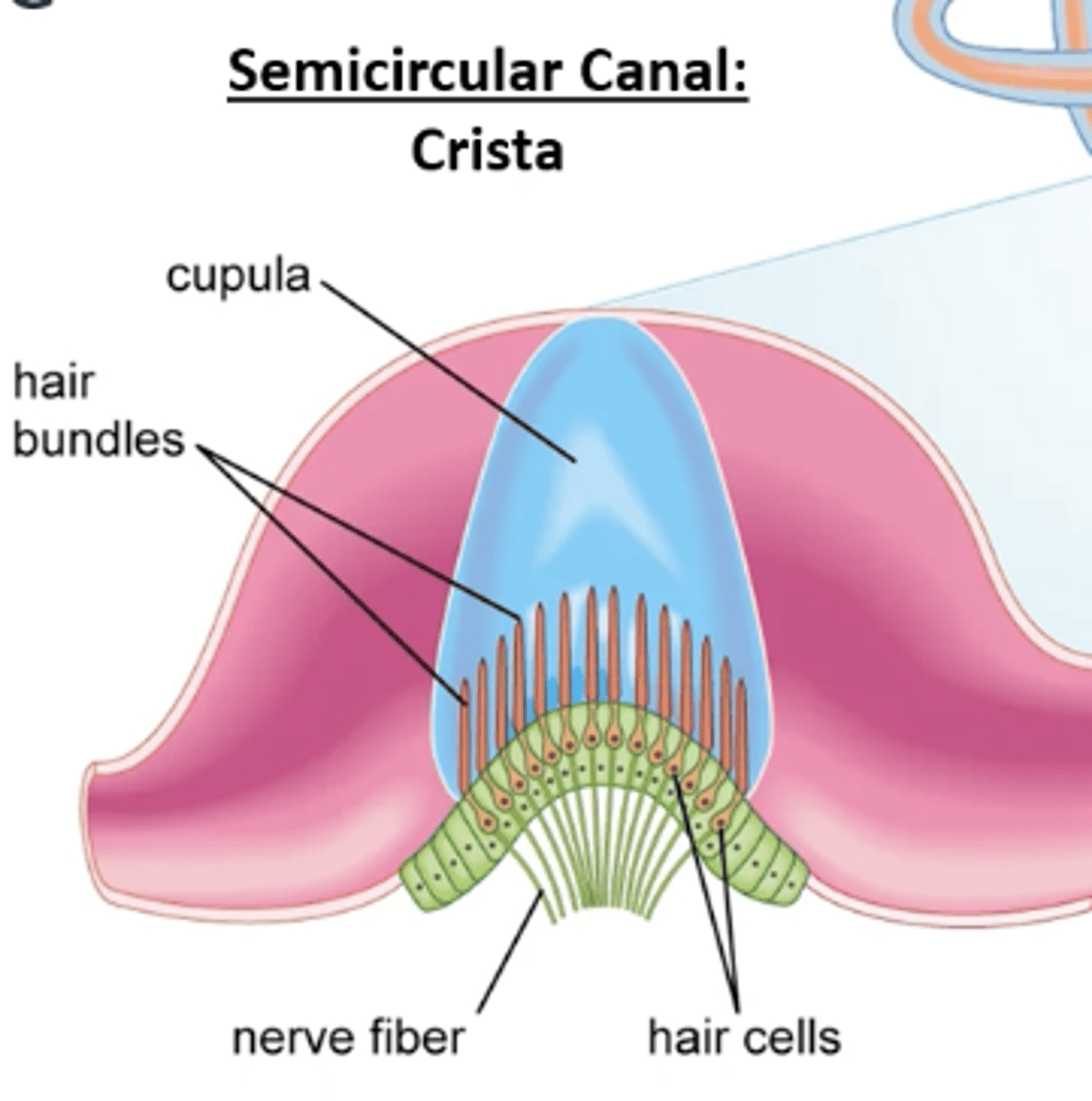
where are the hair cells located in the semicircular canals?
crista
the crista is the sensory epithelium of the semicircular canals
what is the function of the utricle and saccule?
utricle: detects horizontal linear motion (side to side)
saccule: detects vertical motion (up/down, back/forward)
what is the kinocilium?
tallest stereocilia in hair cell
what is the otolithic membrane?
the gelatinous matrix of the utricle and saccule that the cilia of the hair cells project into
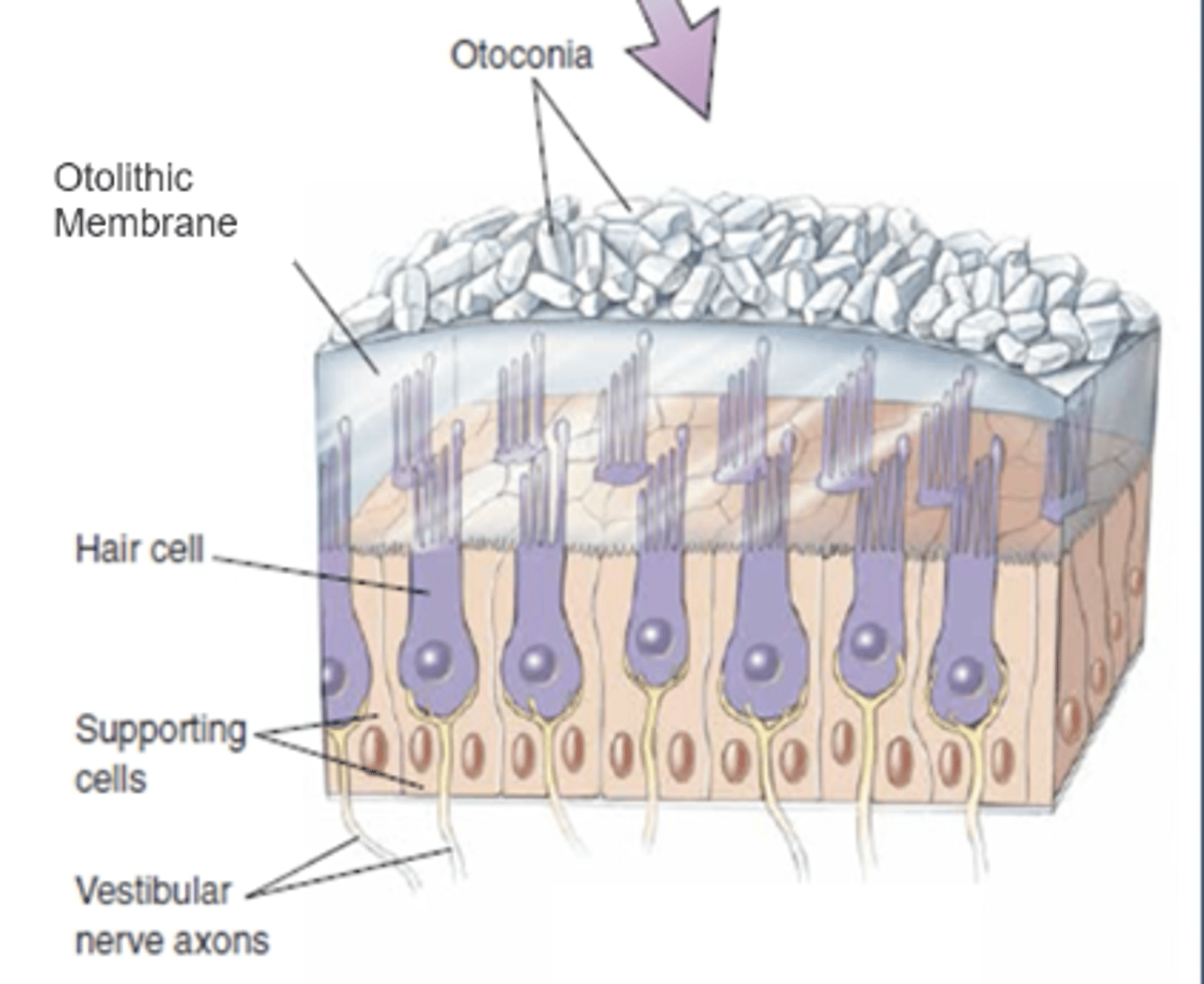
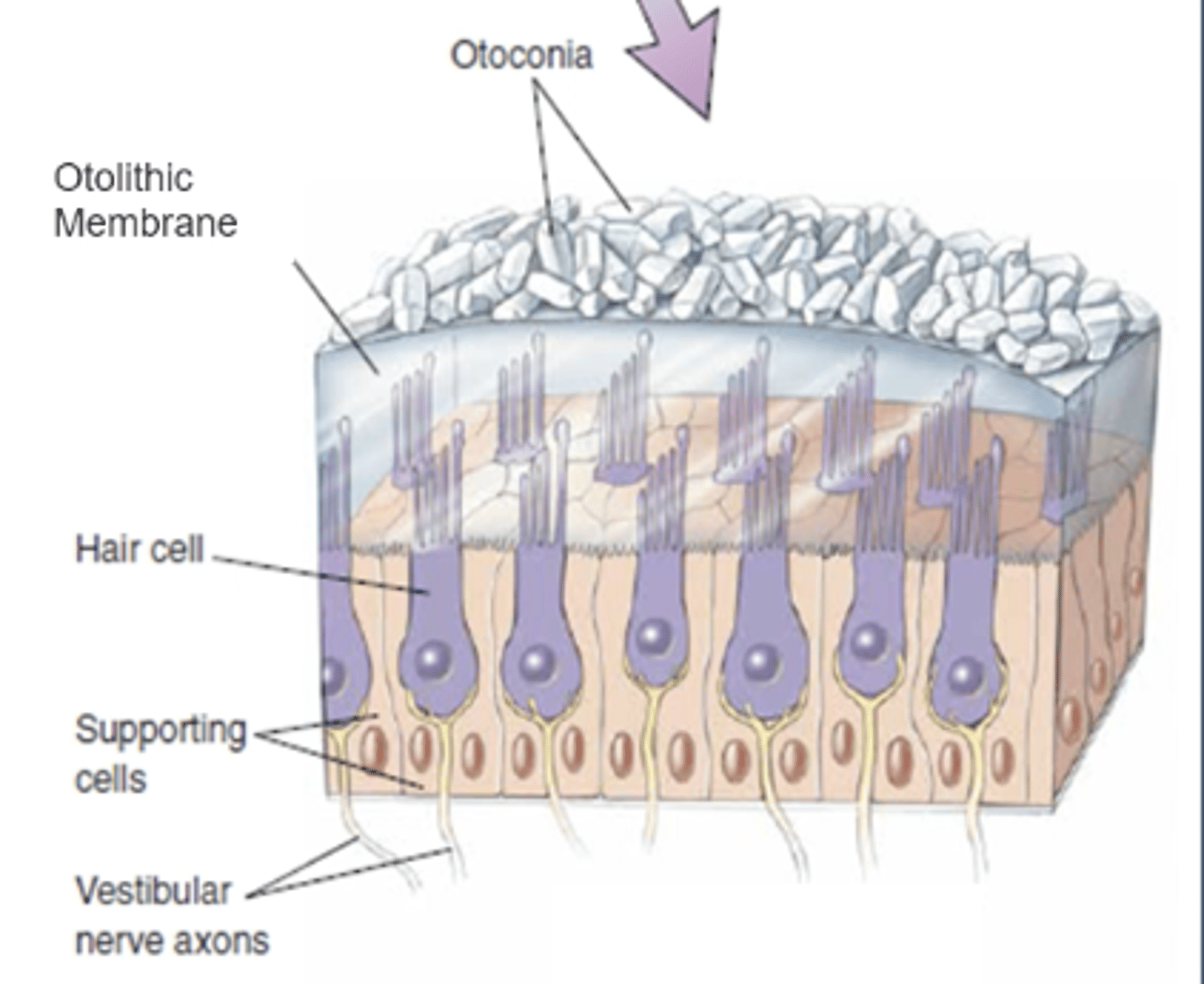
what is the otoconia?
layer on top of the otolithic membrane that is made of calcium carbonate crystals
this gives the otoconia-otolithic membrane complex more mass
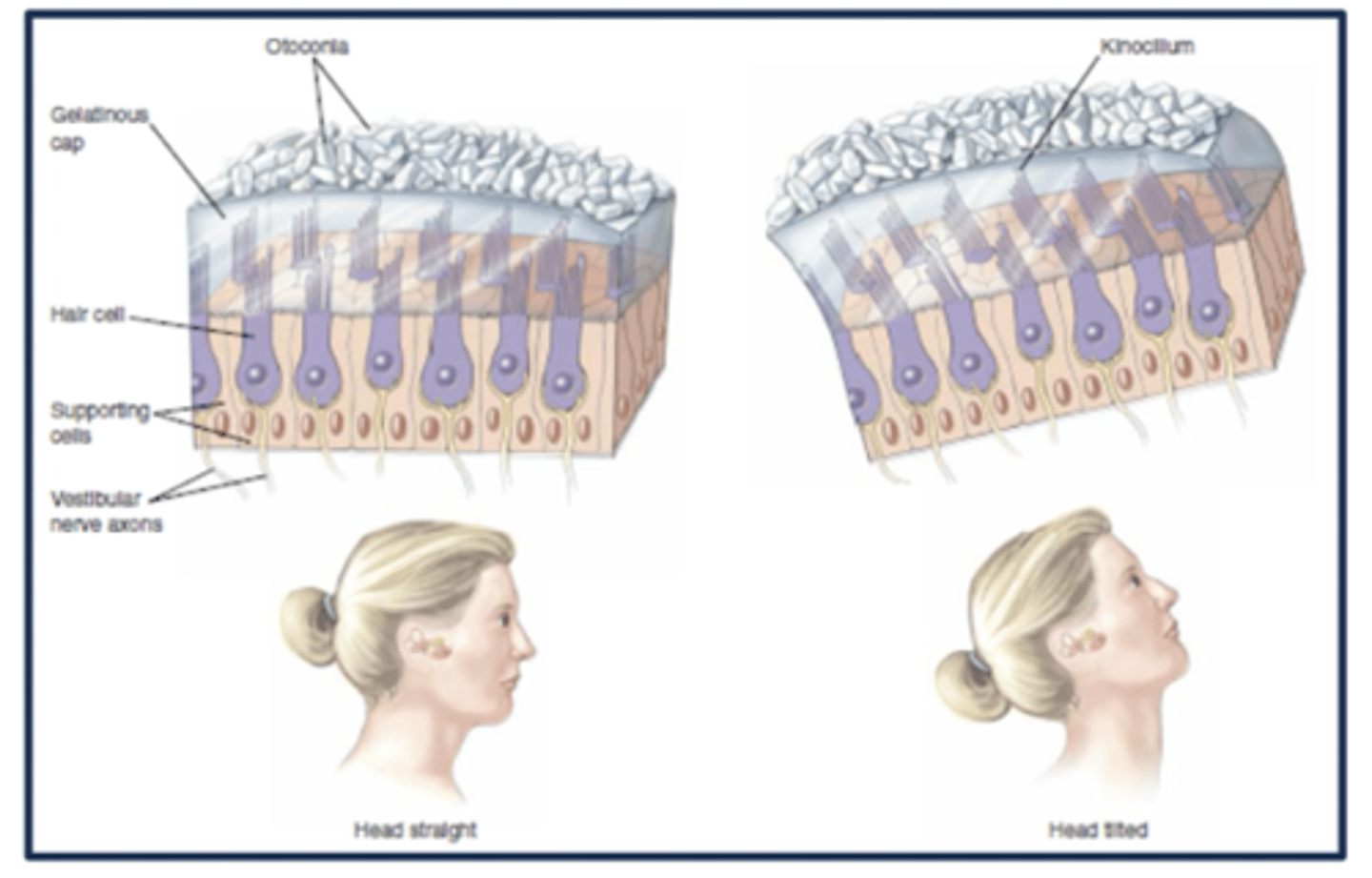
describe how the utricle and saccule are able to detect linear movement and tilt:
1. force causes the otoconia and otolithic membrane to move towards the direction of force
2. stereocilia bend towards kinocilium and causes depolarization
3. hair cells fire action potentials in CN VIII
describe the orientation of the saccule and utricle on opposite sides of the head (left vs right). why is this significant?
mirror-image orientation of the saccule and utricle on left and right
when there is excitation on one side of the head, there is inhibition on the other
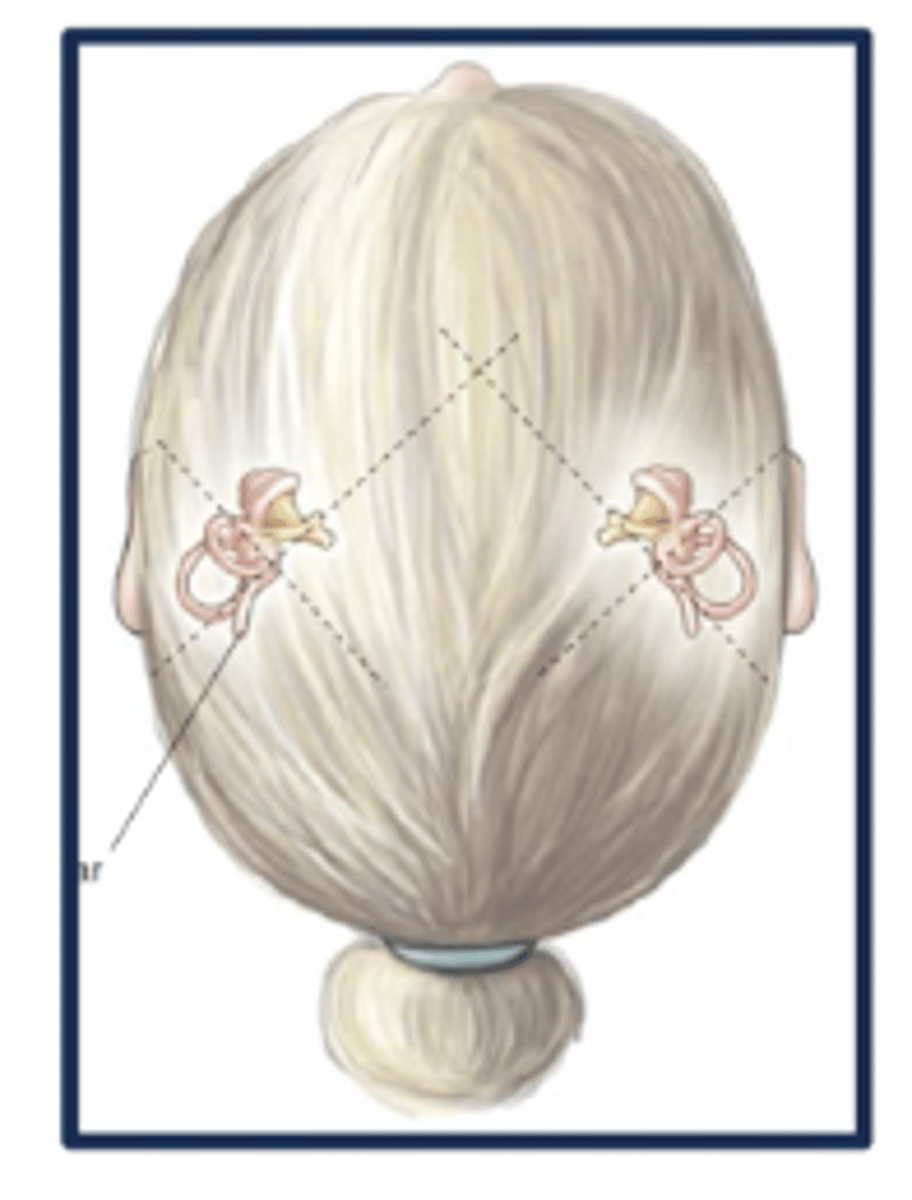
what is the function of the semicircular canals?
detect angular accelerations in 3 planes
1 semicircular canal per 1 axis (they are angled 90 degrees from one another)
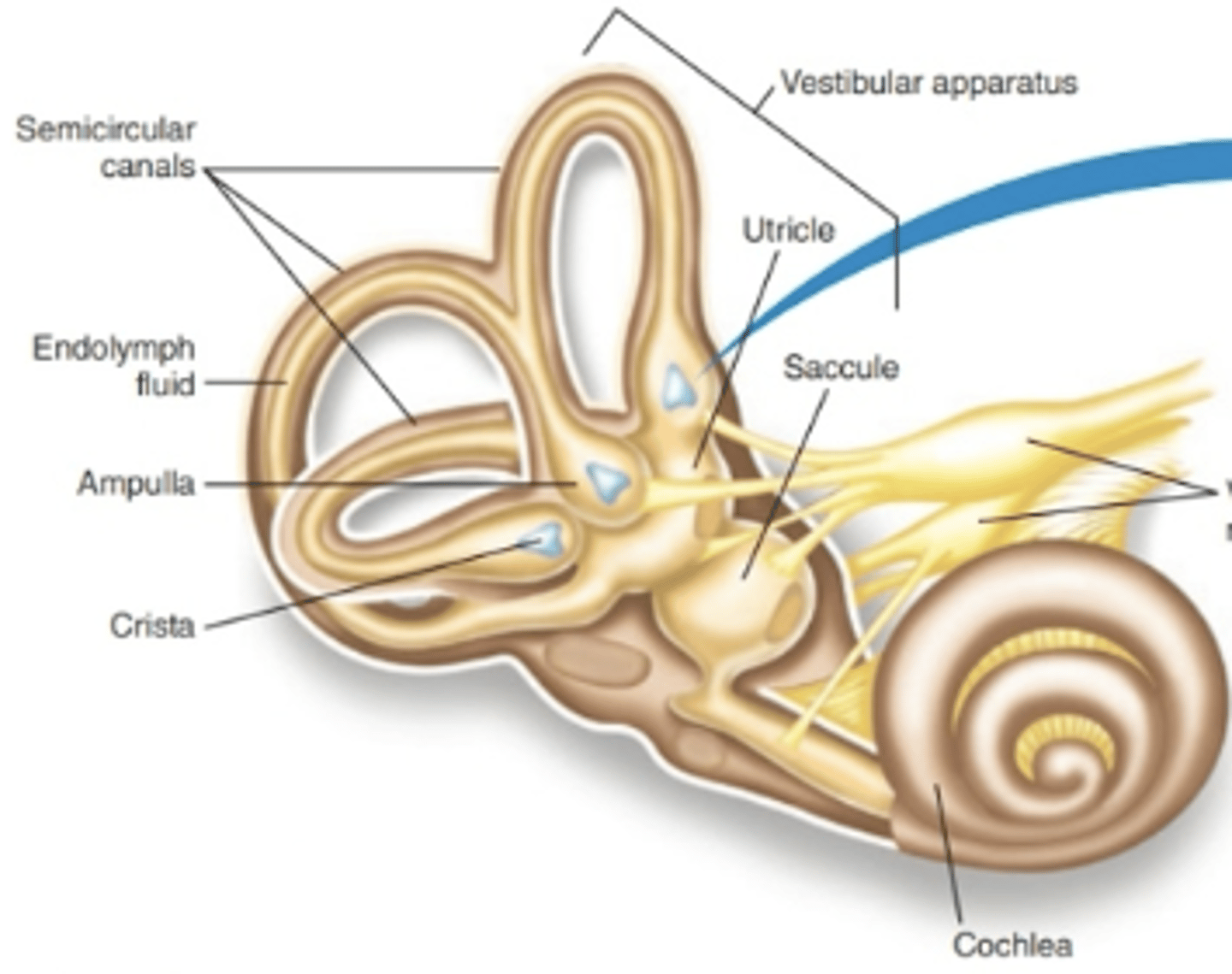
what is the ampulla?
bulbous expansion at the base of each semicircular canal
embedded within the apulla is the crista (sensory epithelium)
what is the cupula?
the gelatinous matrix of the semicircular canals that the cilia of the hair cells project into
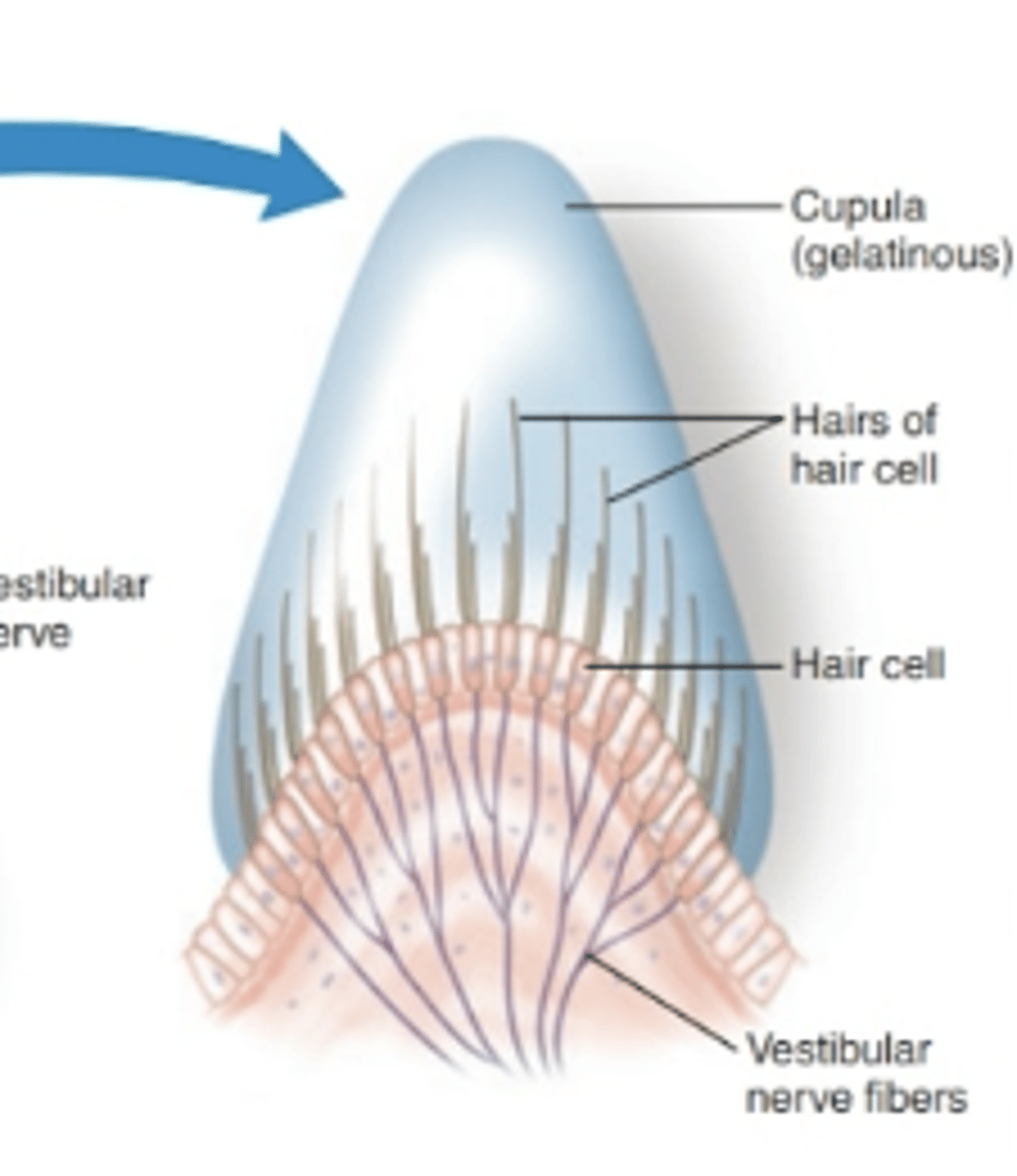
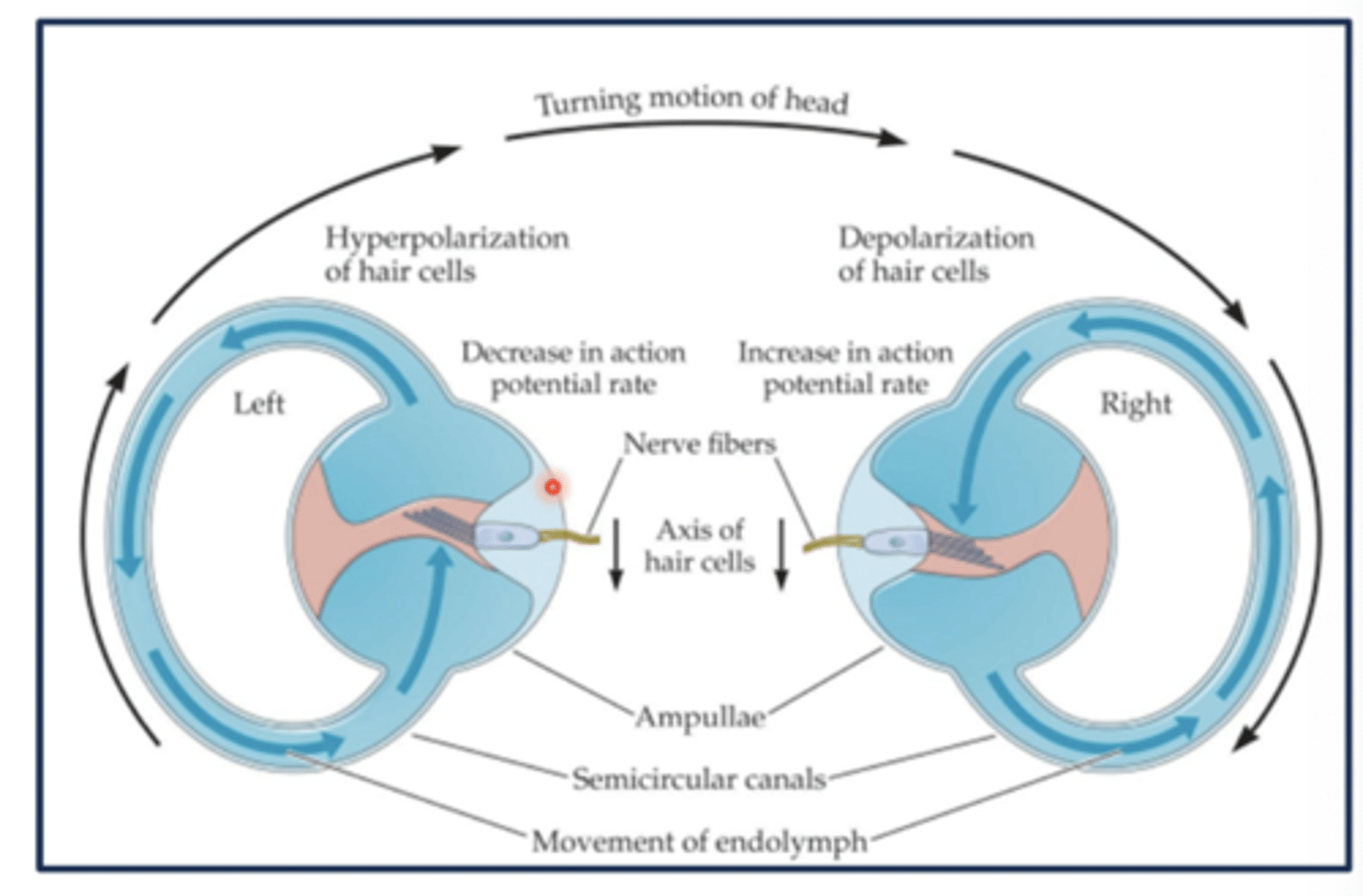
describe how the semicircular canals are able to detect angular rotation:
1. force causes the endolymph and cupula to move opposite the direction of head turn
2. stereocilia bend towards kinocilium and causes depolarization
3. hair cells fire action potentials in CN VIII
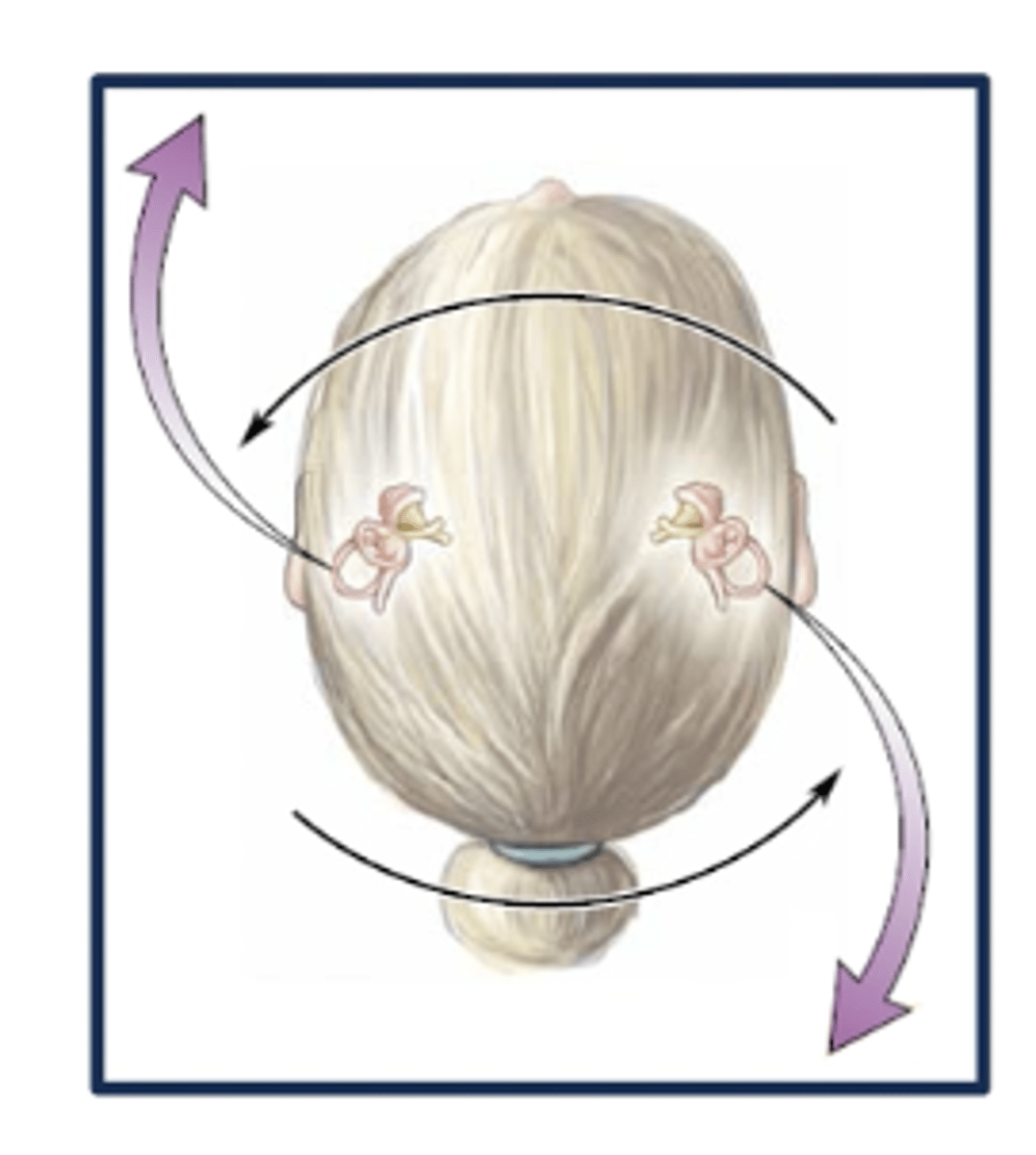
describe the orientation of the semicircular canals on opposite sides of the head (left vs right). why is this significant?
mirror-image orientation of the semicircular canals on left and right that are paired
when there is excitation on one side of the head, there is inhibition on the other
list the steps of the vestibular pathways:
hair cells --> CN VIII (vestibular portion) --> brainstem/cerebellum --> multiple regions

sound waves enter the auditory pathway __________, but quickly become ________ after entering the CNS at the medulla
ipsilaterally; bilateral
what is Heschl's gyrus?
the primary auditory cortex (superior temporal gyrus)
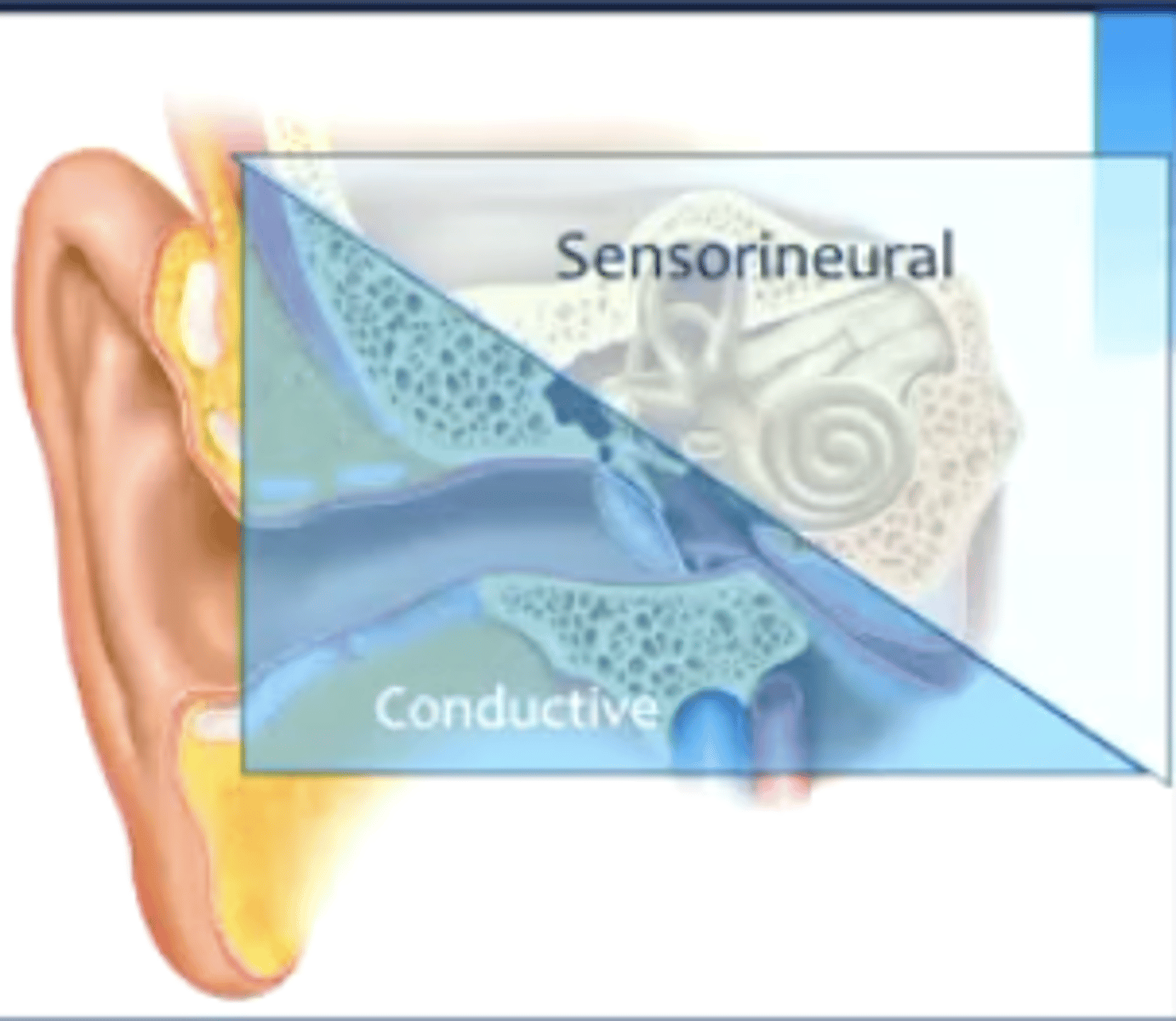
what are the 2 causes of acquired deafness?
1. conductive hearing loss
2. sensorineural hearing loss
what is the difference between conductive hearing loss and sensorineural hearing loss?
conductive: mechanical issue (injury to tympanic membrane)
sensorineural: damage/loss of hair cells
as we age, we begin to lose the functioning of hair cells in the (base/apex) of the basilar membrane, where (low/high) tones are encoded
base; high
what are the 4 vestibular pathways/tracts?
1. vestibulospinal tract
2. vestibulo-ocular reflexes
3. vestibulo-autonomic responses
4. vestibulo-thalamo-cortico tract
list the steps in the vestibulospinal pathway:
1. CN VIII projects to the vestibular nuclei and the cerebellum
2. cerebellum provides feedback back to vestibular nuclei
3. vestibular nuclei (upper motor neuros) project down into spinal cord
4. neck and trunk muscles are modulated for posture and balance
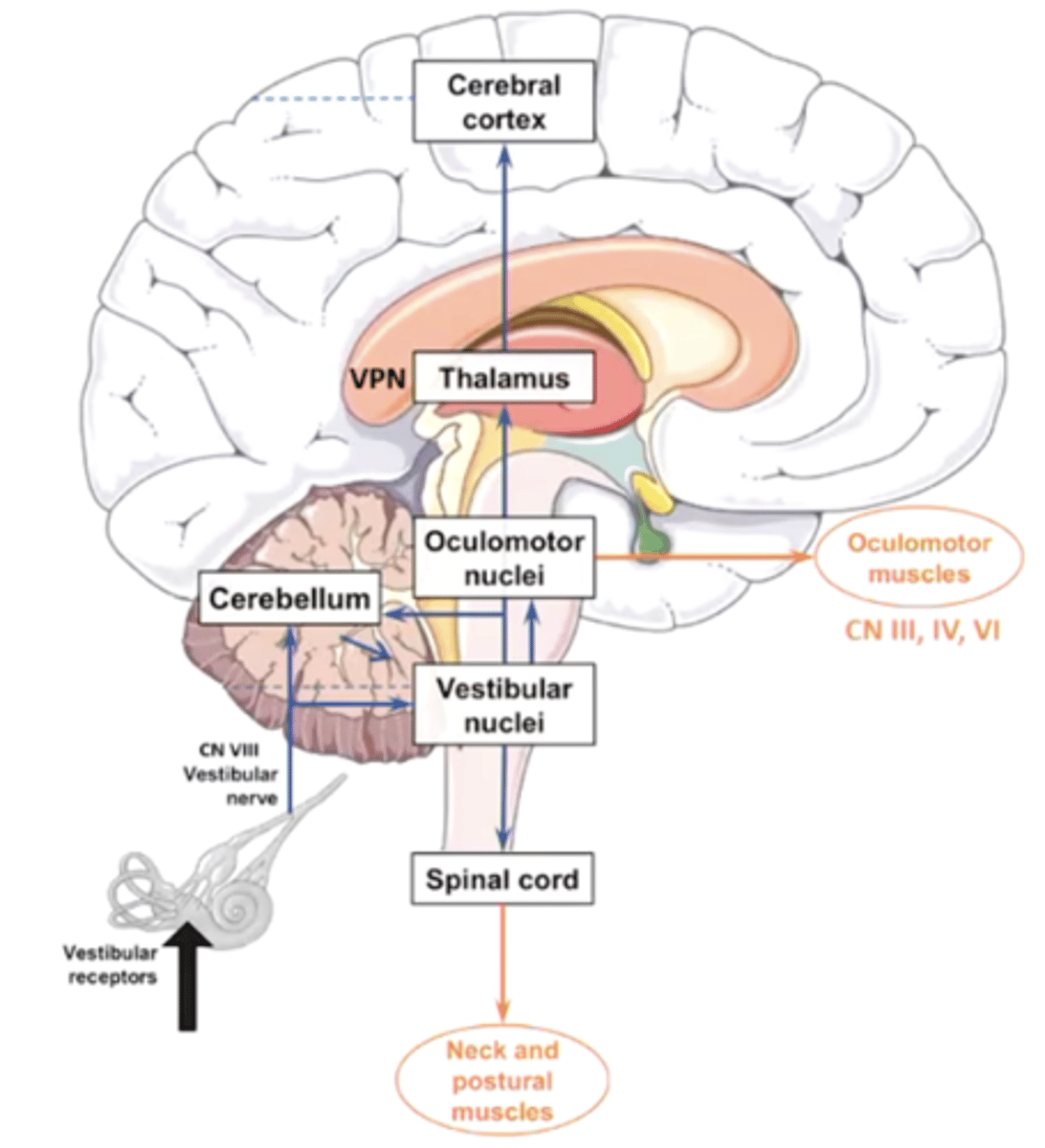
list the steps in the vestibulo-ocular reflex:
1. CN VIII projects to the vestibular nuclei and the cerebellum
2. cerebellum provides feedback back to vestibular nuclei
3. vestibular nuclei project upwards to oculomotor nuclei
4. information sent to oculomotor muscles to maintain a steady gaze as we move our head
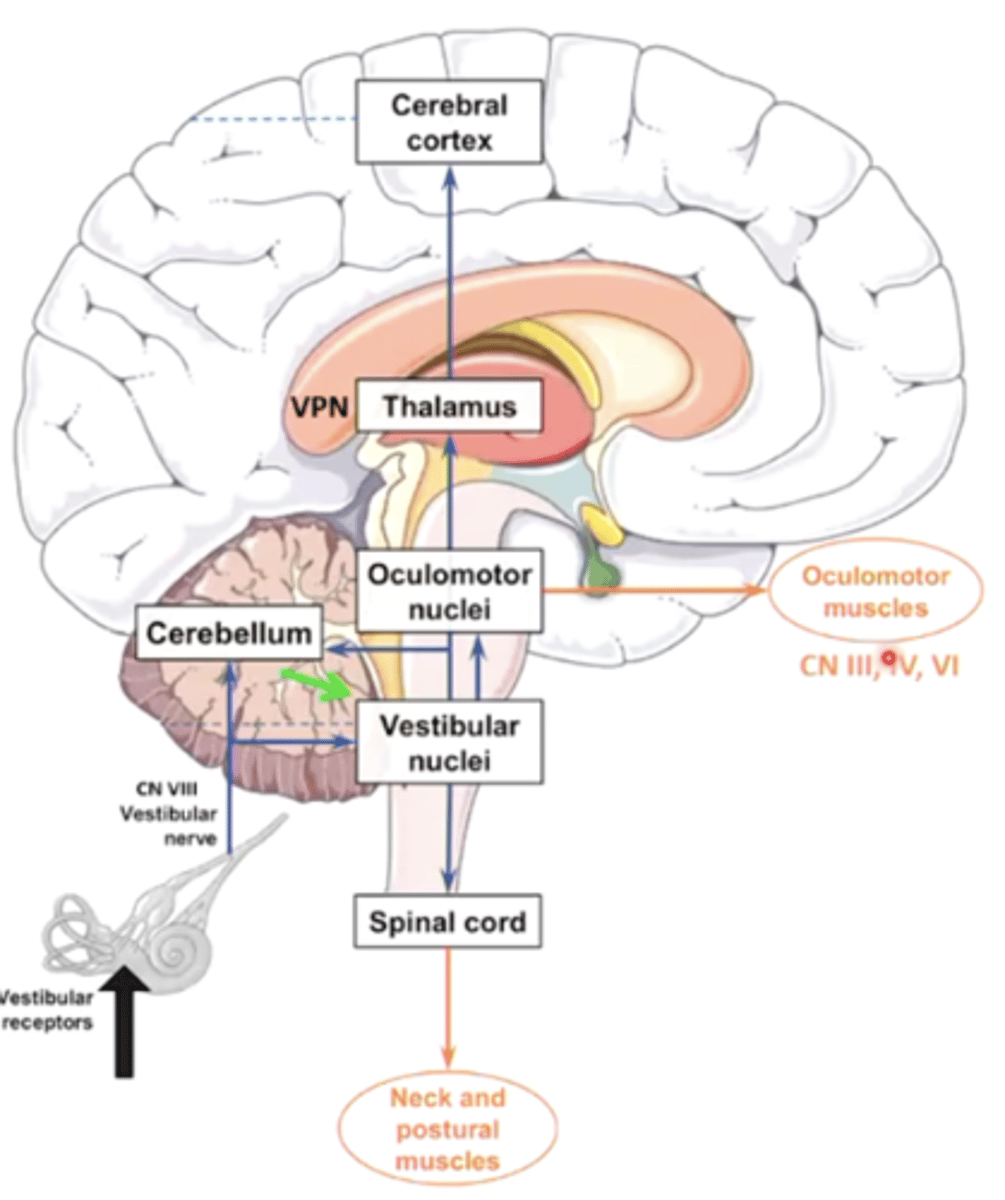
what is the vestibulo-ocular reflex?
reflexive eye movements that are equal in magnitude and opposite in direction to head motion
list the steps in the vestibulo-autonomic responses:
1. CN VIII projects to the vestibular nuclei
2. vestibular nuclei project to reticular formation and other brainstem areas
this regulates breathing, circulation, and blood pressure
list the steps in the vestibulo-thalamo-cortico tract:
1. CN VIII projects to the vestibular nuclei
2. vestibular nuclei project to ventral posterior nucleus (VPN) of thalamus
3. thalamus projects to vestibular cortex - MANY portions of the cortex
4. cortex projects back to vestibular nuclei
this allows for cognitive perception of motion, spatial orientation, and navigation through space
what are some symptoms associated with vestibular impairments?
1. spatial disorientation
2. dizziness
3. vertigo
4. imbalance
5. blurred vision
6. illusory self-motion
7. motion sickness
what is Mal de debarquement syndrome?
swaying, rocking, or tilting perceptions felt after spending time on a boat or in the ocean
what is menieres syndrome?
sudden dizziness, imbalance, and spatial disorientation
what is nystagmus?
abnormal eye reflex causing nodding of the eyes
this happens because the brain interprets a difference in signaling between the left and right semicircular canals

