Organisation of the human body
 Call Kai
 Learn
Learn Practice Test
 Spaced Repetition
 Match
Match Flashcards
 Knowt Play
1/12

There's no tags or description
Looks like no tags are added yet.
Name | Mastery | Learn | Test | Matching | Spaced | Call with Kai |
|---|
No analytics yet
Send a link to your students to track their progress
13 Terms
Organisation of the human body
Body is made up of approximately 30 to 40 trilion cells 0 of which there are 230 different types
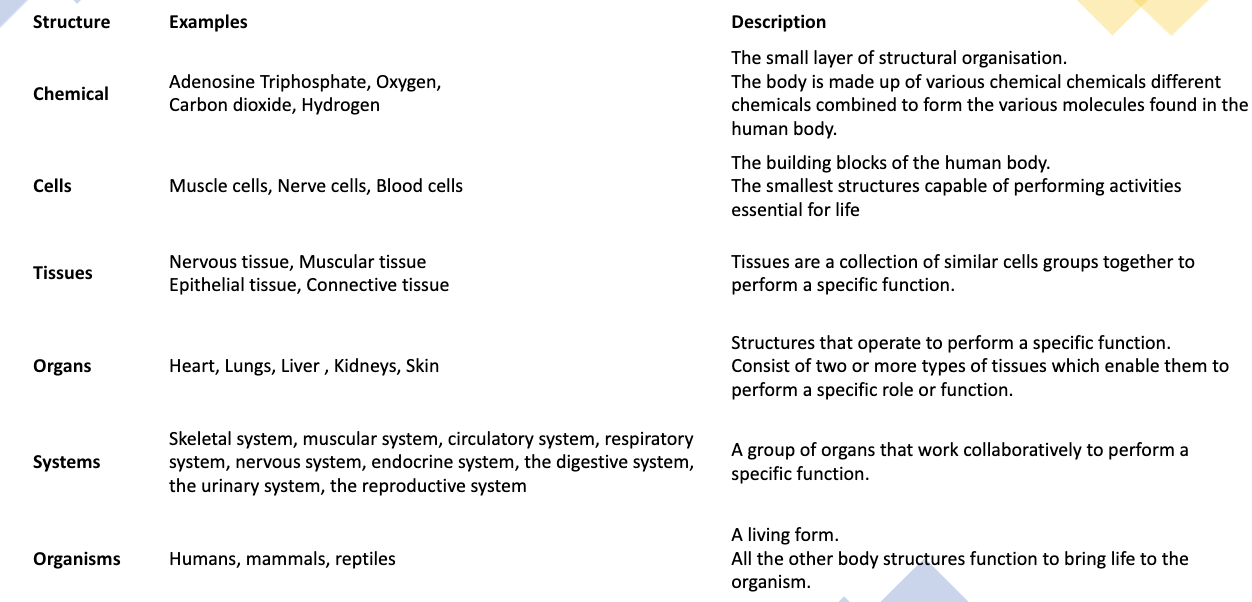
4 structural level: Cells → Tissues → Organs → Systems
Cells
Basic building blocks of all living things, and the human body is made up of triilions of them
All cells share some common features
Provide structure, take in nutrients, convert energy carry out specialised functions, contain hereditary material, able to make copies of themselves
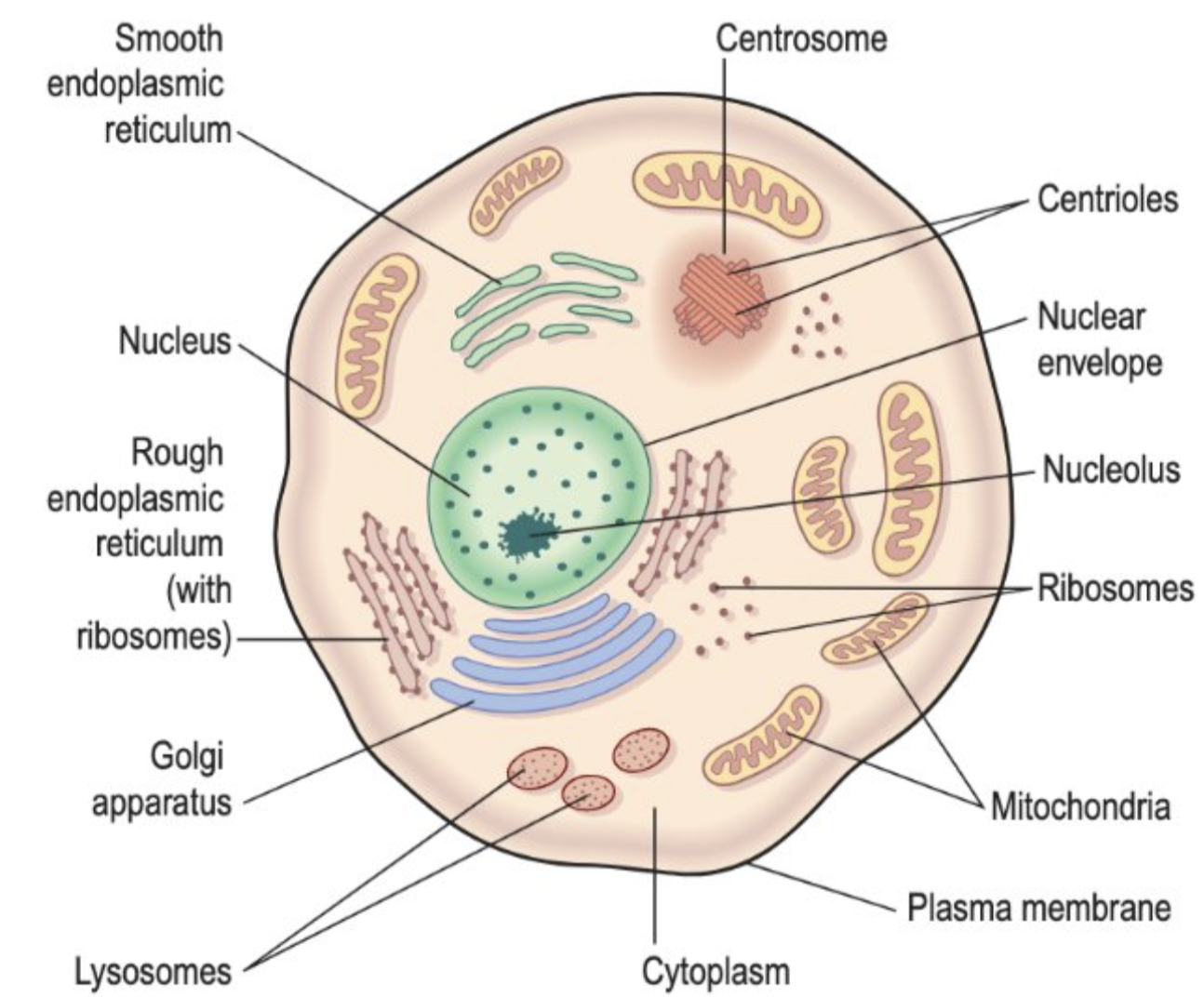
Cells also contain specialised parts called organelles, performs a specific function within the cell
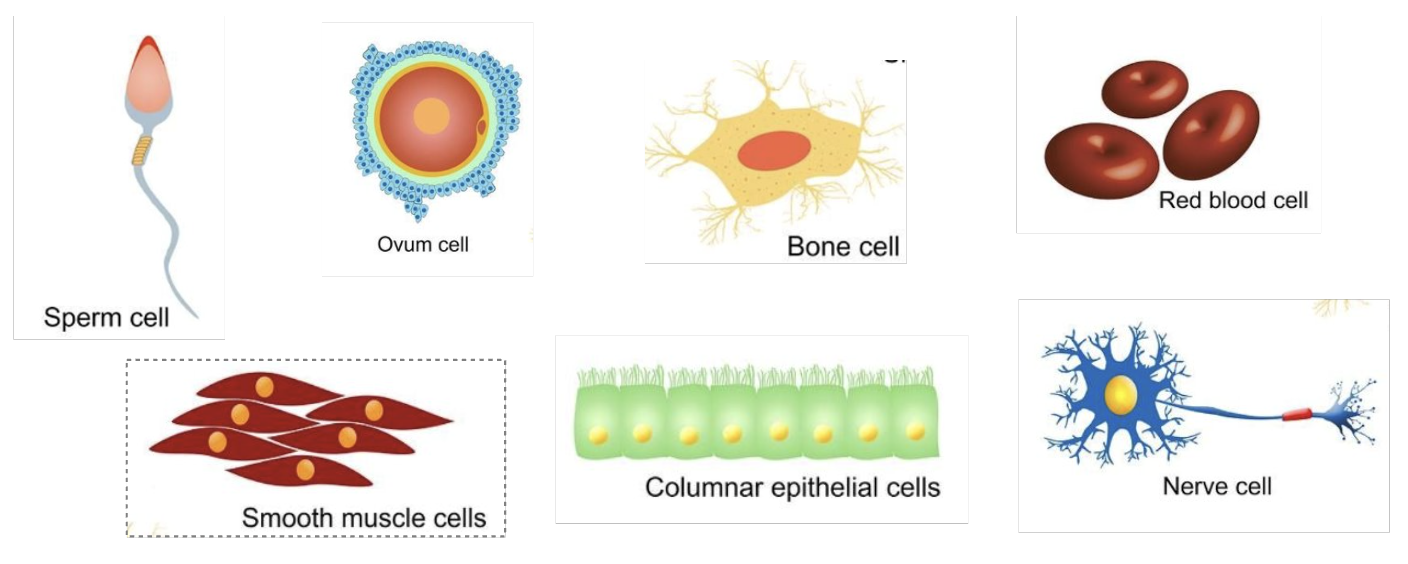
Different type of cells in the human body
Tissues
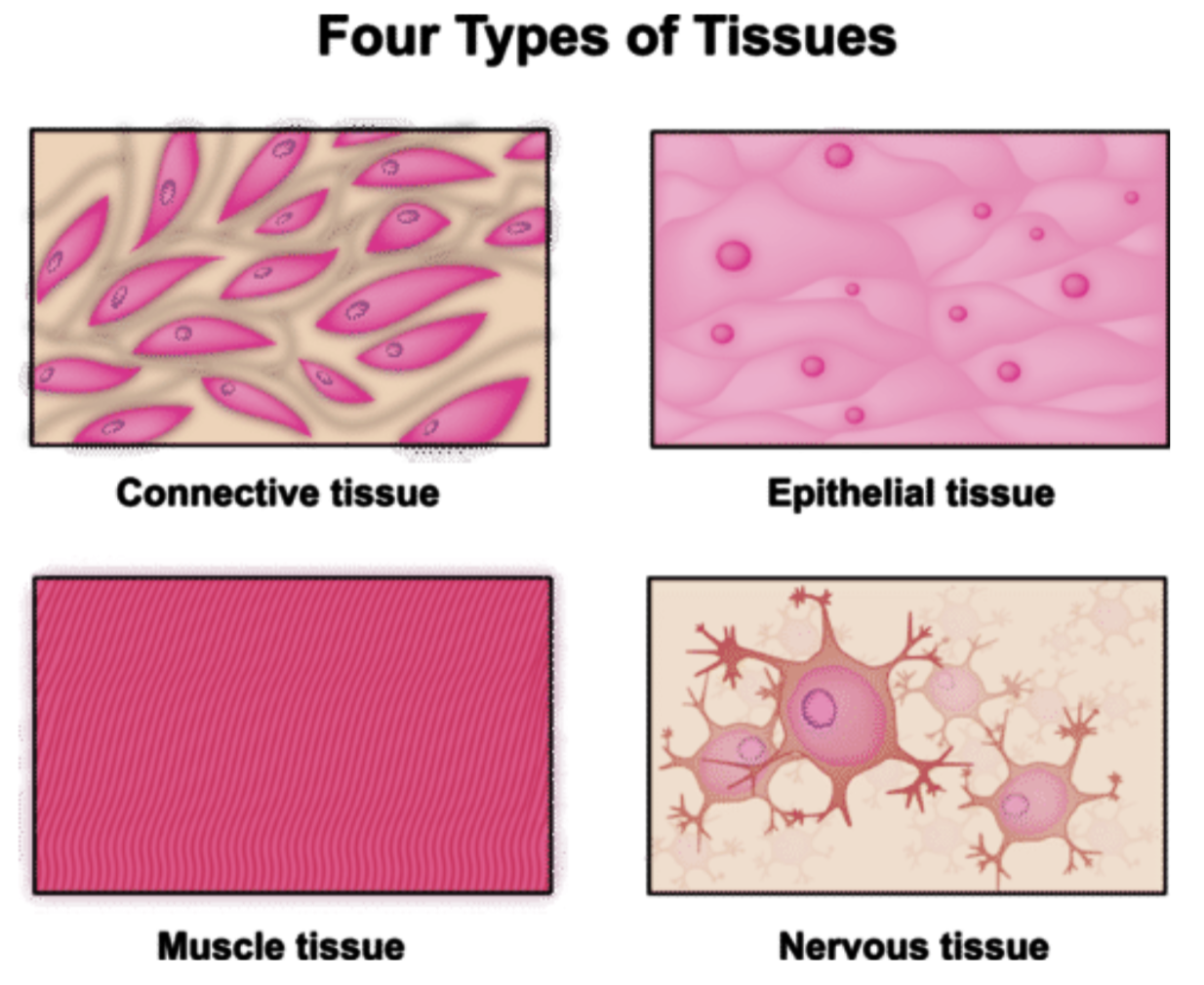
Consist of large numbers of the same type of cells and are classified according to the size, shape, functions of their cells
epithelial tissue/ epithelium
connective tissue
muscle tissue
nervous tissue
Epithelial tissue
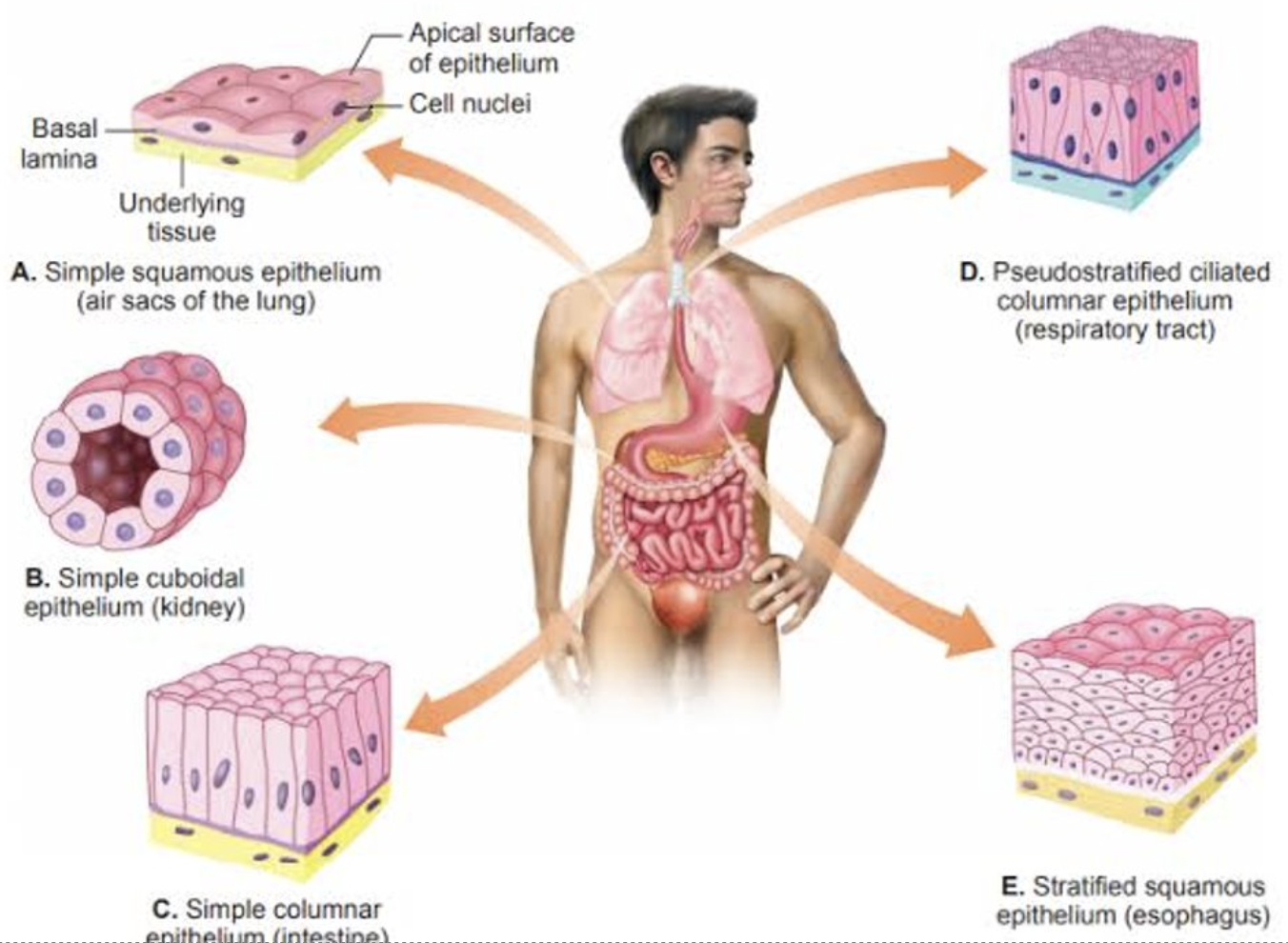
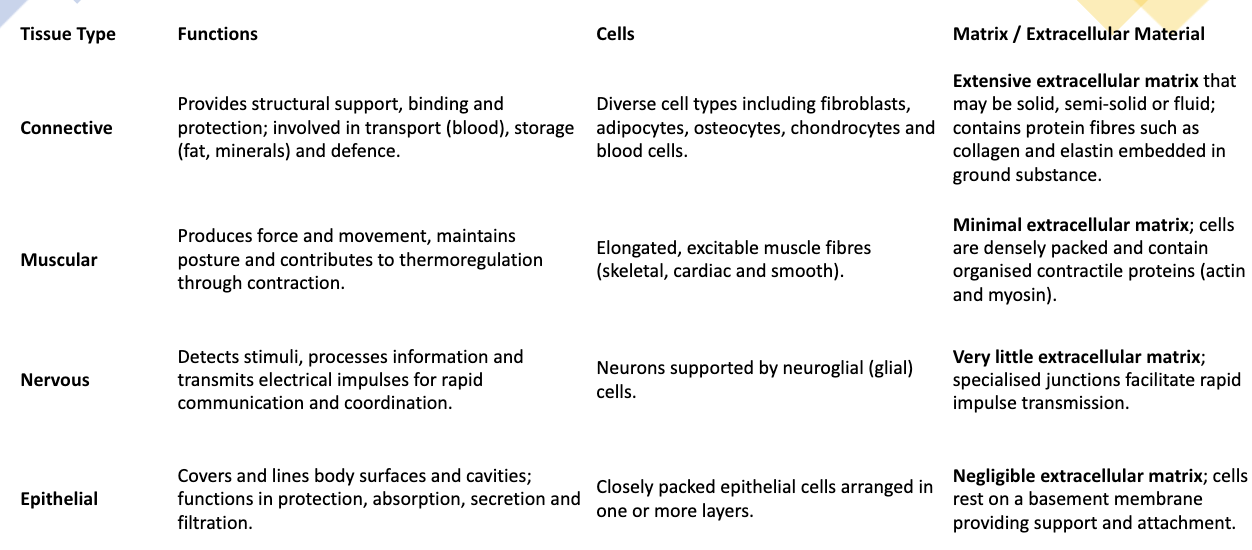
Covers the body and lines inner, outer body surfaces, hollow organs and tubes
Protects the body and its internal organs, secretes substances such as hormones, absorbs substance such as nutrients
The cell are very closely packed and the extracellular substance, the matrix, is minimal
Connective tissue
The most ubundant tissue in the body
The connective tissue cells are more widely separated from each other than in epithelial tissues, extracellular substance ( matrix )is present in considerably larger amounts
Fibers present in the matrix, form a supporting network for the cells to attach to
Connective tissue function
Binding and structural support
Protection
Transport
Insulation
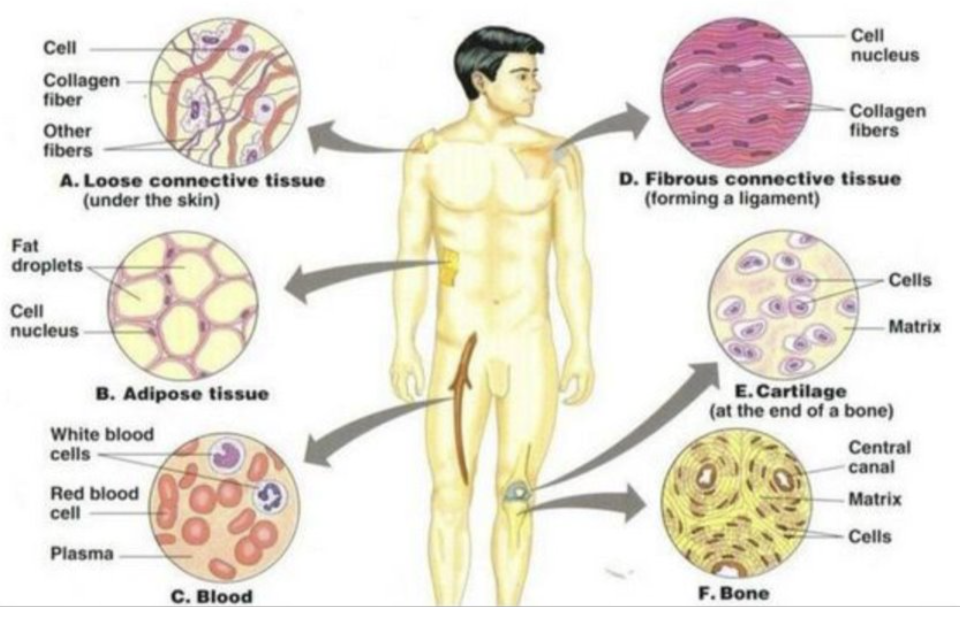
Types of connective tissue
Muscular tissue
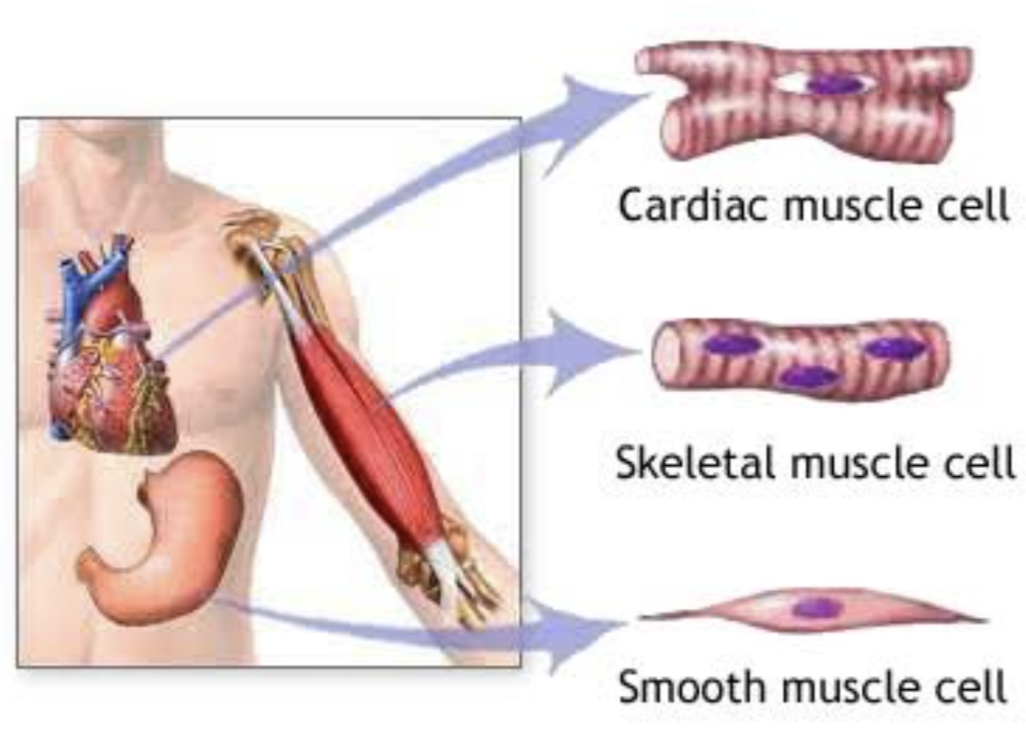
Can contract and relax, providing movement within the body and of the body itself
Cell are elongated
Cells are densly packed and contain minimal extracellular matrix
Skeletal muscle
Smooth muscle
Cardiac muscle
Nervous tissue
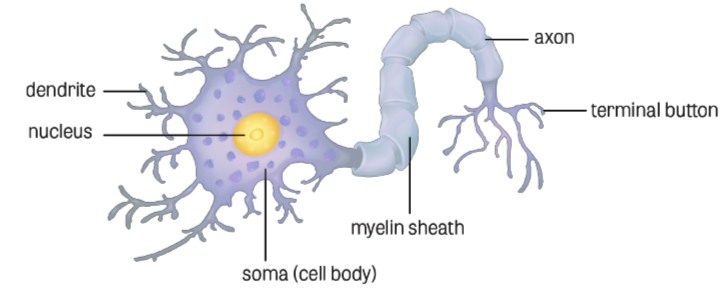
Made up of specialised cells called neurons that can carry electrical impulses
Very little extracellular matrix
Specialised junctions calles synapses facilitate rapid impulse transmission
Found in the brain and the spinal cord
Organs
A tructure in the body made up of different types of tissues that work together to perform a specific function
Contains around 78 organs
Systems
Groups of organs that work together to carry out major functions needed to keep the body alive
Each system has a specific role, such as breathing, digestion, transport, movement, all body systems work together to maintain a stable internal environment

