Chapter 13: Infectious Agent Particles - Part I: Viruses & Viral Replication
 Call Kai
 Learn
Learn Practice Test
 Spaced Repetition
 Match
Match Flashcards
 Knowt Play
1/38

There's no tags or description
Looks like no tags are added yet.
Name | Mastery | Learn | Test | Matching | Spaced | Call with Kai |
|---|
No analytics yet
Send a link to your students to track their progress
39 Terms
Characteristics of Viruses, Viroids, and Prions
Lake many of the characteristics of life: acellular
Lack of both nucleic acids → only one type, or none
no ribosomes
no metabolism
no growth → no division
no independent reproduction → requires a host cell
Host Range
Group of hosts a virus can infect
determined by viral receptors (and co-receptors) that are complementary to host cell surface proteins
Characteristics of Viruses
Host Range
Most infect a particular host only
some are generalist: infect several different hosts
Others infect only specific types of cells within one host type
affinity of viral receptors to cell surface proteins
obligatory intracellular parasites
Virus Classification
Based on:
Nucleic acid type and sequence
Morphology
Replication Strategy
Virion
complete, fully developed, infectious particle that is extracellular and inert
outside & NOT active, waiting to infect a cell
Virus
Any stage of infection, intracellular
INSIDE
Viral Structure
Nucleic acid: genome
Capsid
Envelope for enveloped viruses
Virus Nucleic Acid/genome
DNA or RNA
linear , circular, or in segments
ss or ds
Capsid
Capsomers: individual protein units
protect nucleic acid
viral receptors: attachment for non-enveloped (naked) viruses
enzymes
Capsomeres
individual protein units
Viral Receptors
attachment for non-enveloped naked viruses
Spike Proteins
receptors found on envelope NOT capsid
Enveloped Virus - Characteristics
phospholipid bilayer
stolen from infected cell as they exit
are easier to sterilize/disinfect
alcohols, heat, detergents
limited survival outside host env.
can avoid host immune response
Why can enveloped viruses avoid host immune response ?
They look similar to host → have a phospholipid bilayer
Envelope is made of
Membrane
phospholipid bilayer
How do enveloped viruses attach to host cell ?
Spike proteins → glycoproteins
allow virus to bind to cells
How do enveloped viruses enter host cell ?
fusion
How do enveloped viruses leave host cell ?
budding
Why are enveloped viruses an animal virus trait ?
Because plant cells and bacterial cells have cell walls made up of peptidoglycan and glucose. These cell walls are rigid and do not allow viruses to take a piece with them
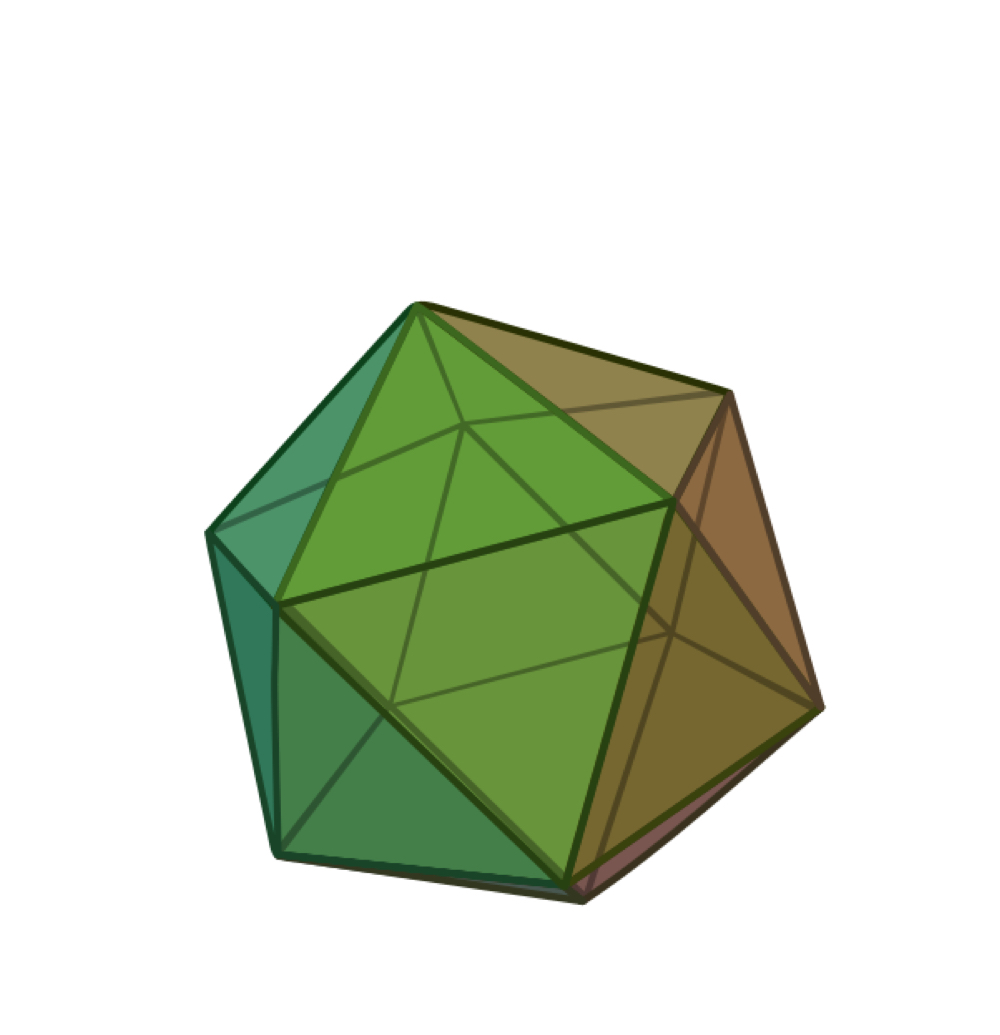
Name the shape of this virus
Polyhedral Virus
Formed by plane faces
some are near-spherical
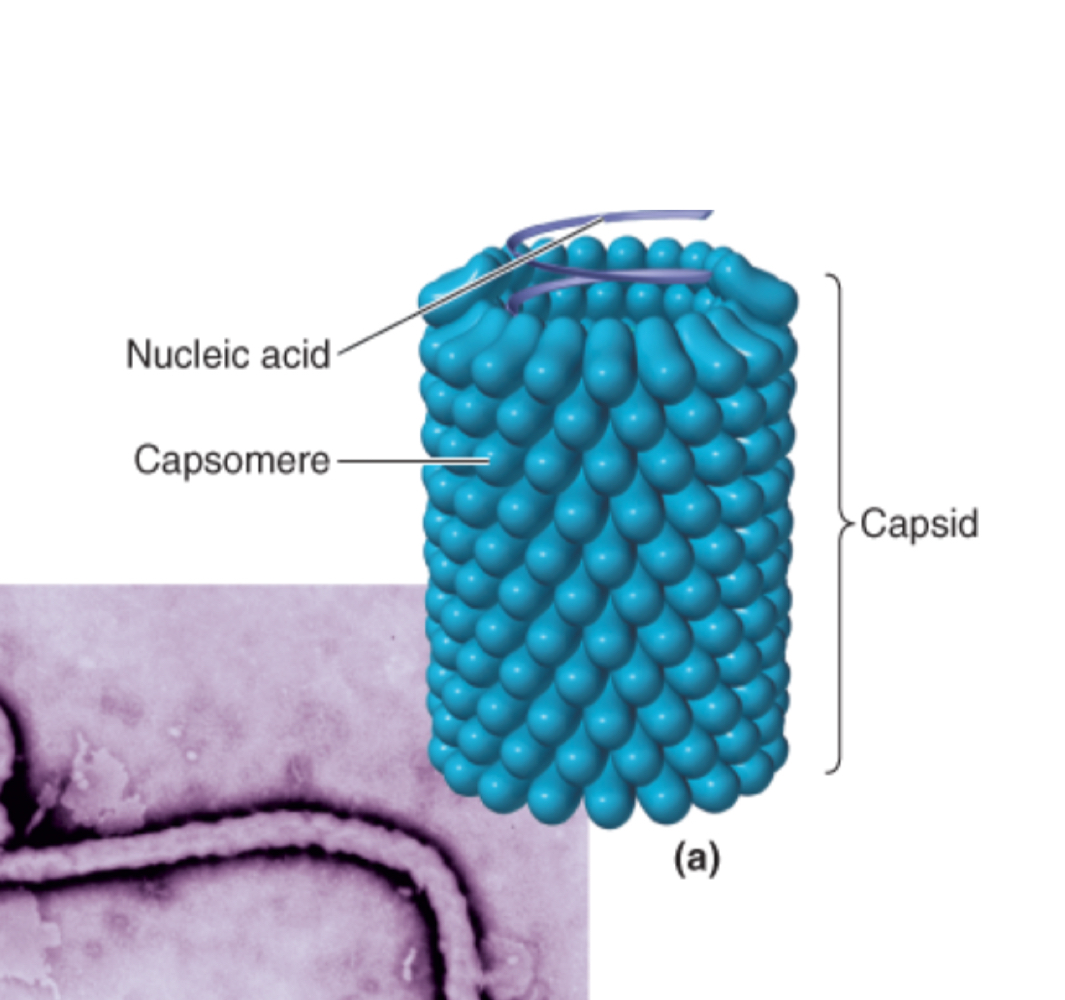
Name the shape of this virus
Cylindrical capsid with helical symmetry
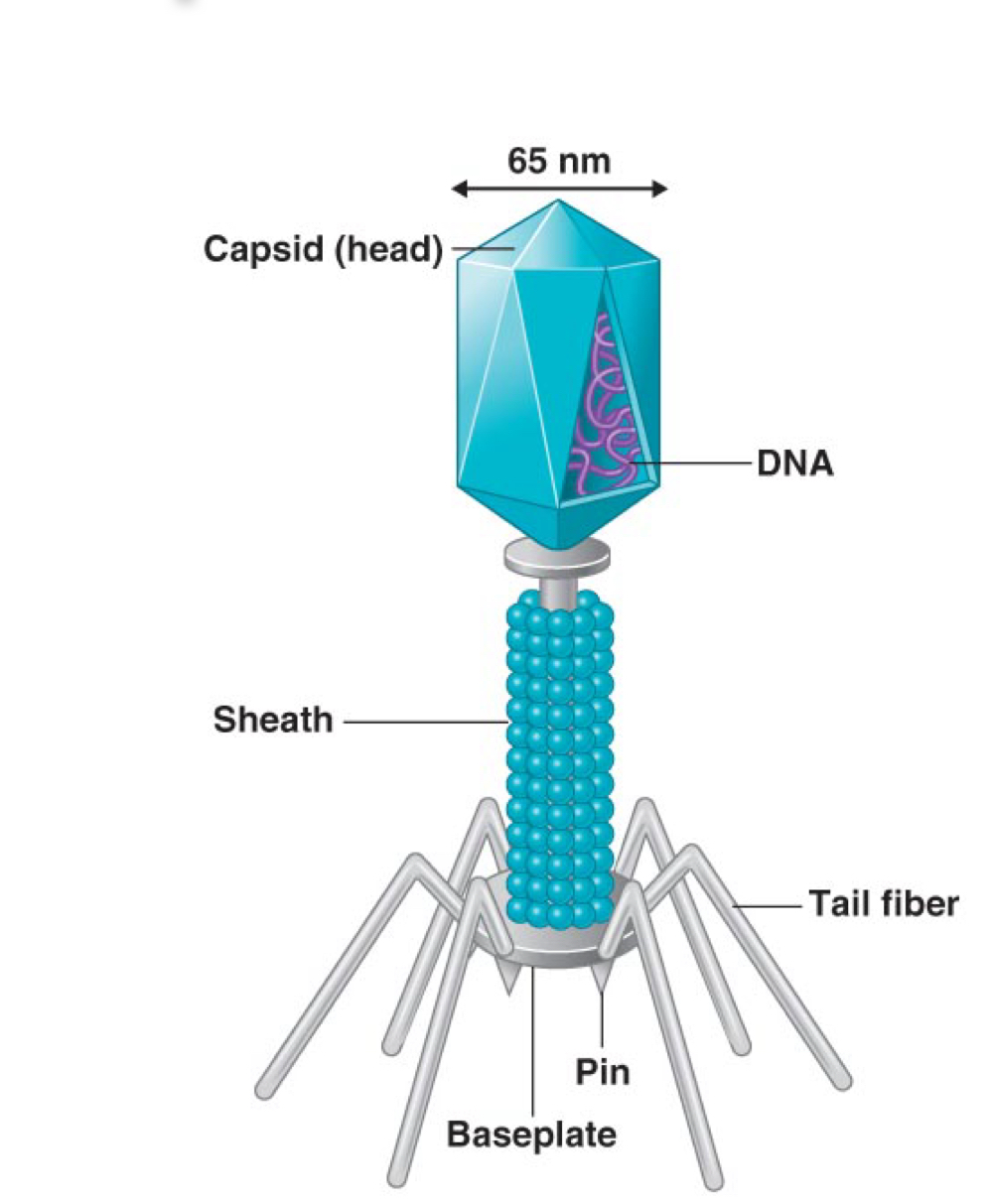
Name the shape of this virus
Complex Virus
extra structures such as protein tails
unusual morphologies
Virus Vs. Bacteria: Intracellular Parasite ?
Bacteria: NO
Viruses: YES
Virus Vs. Bacteria: Plasma Membrane ?
Bacteria: YES
Viruses: NO , but can aquire a portion - envelope
Virus Vs. Bacteria: Binary Fission
Bacteria: YES
Virus: NO
Virus Vs. Bacteria: Pass through bacteriological Filters
Bacteria: NO - larger than viruses
Viruses: Yes
Virus Vs. Bacteria: Possess both DNA and RNA
Bacteria: YES
Viruses: NO
Virus Vs. Bacteria: ATP- Generating metabolism
Bacteria: YES
Viruses: NO
Virus Vs. Bacteria: Ribosomes ?
Bacteria: YES
Viruses: NO
Virus Vs. Bacteria: Sensitive to Antibiotics ?
Bacteria: YES
Virus: NO
Growing Viruses in the Lab Requires
living host → do not grow on agar plates
Plaques
represent cell lysis , dead bacteria
CPE: Cytopathic Effect
Morphological changes and structural damage in cells due to infection
cell rounding
swelling or shrinking
detachment from surface
death by lysis or inability to reproduce
can lead to induction of apoptosis: cells avoid completion of viral replication to prevent spread of infection
Apoptosis
cell avoids completion of viral replication to prevent spread of infection
Lytic Cycle: Bacteriophages
Attachment
via viral receptors
Entry
do not enter cell, only injects DNA into the cell which circualarizes
Biosynthesis
hijacks bacterial cell components for replication, transcription, and translation to make viral proteins
Maturation
packages viral particles
Release
cell bursts - lysis
Lysogenic Cycle: Becteriophage
Lysogenic Phase
Attachment
Entry
DNA Integrates:
dna integrates into host chromosome - prophage
Bacteria replicate normally
binary fission making new infected cells
Re-Activation
prophage is excised from bacterial genome
Lytic Phase
Biosynthesis
Maturation /Assembly
Exit → lysis
Transduction
other bacteria benefit
must have bacteriophages
when bacteriophages integrate as prophages into bacterial genome, they are eventually excised. As a result along with the viral genome some bacterial genome is excised as well that when that bacteriophage infects another cell, can be integrated into a newly infected bacteria cell
Phage Conversion
benefits infected bacteria
phage gives bacterial gene that benefits bacteria ex. toxins
Consequences of Lysogeny
prophage can give bacteria viral genes that code for toxins
viral genes continue to be passes through generations through binary fission as long as lysogeny occurs

