Muscular Strength and Endurance Testing and Rx
 Studied by 0 people
 Call Kai
 Learn
Learn Practice Test
 Spaced Repetition
 Match
Match Flashcards
 Knowt Play
1/21

There's no tags or description
Looks like no tags are added yet.
Name | Mastery | Learn | Test | Matching | Spaced | Call with Kai |
|---|
No analytics yet
Send a link to your students to track their progress
22 Terms
-what characteristics of training should we consider?
-how can these be optimized?
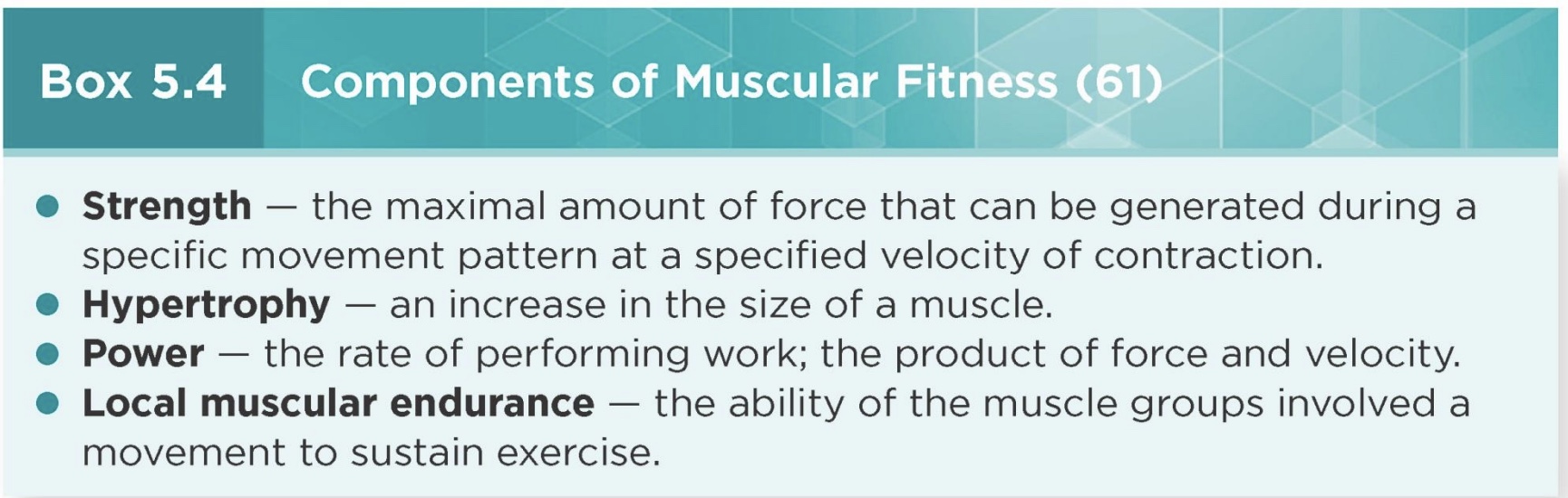
-Characteristics of strength, hypertrophy, power, and local muscular endurance
*Force; muscle size; W/t; create and utilize energy
-Optimized through the implementation of resistance training (free weights, machines, body weight, bands/tubing, or any other object that requires one to exert force against a resistance)
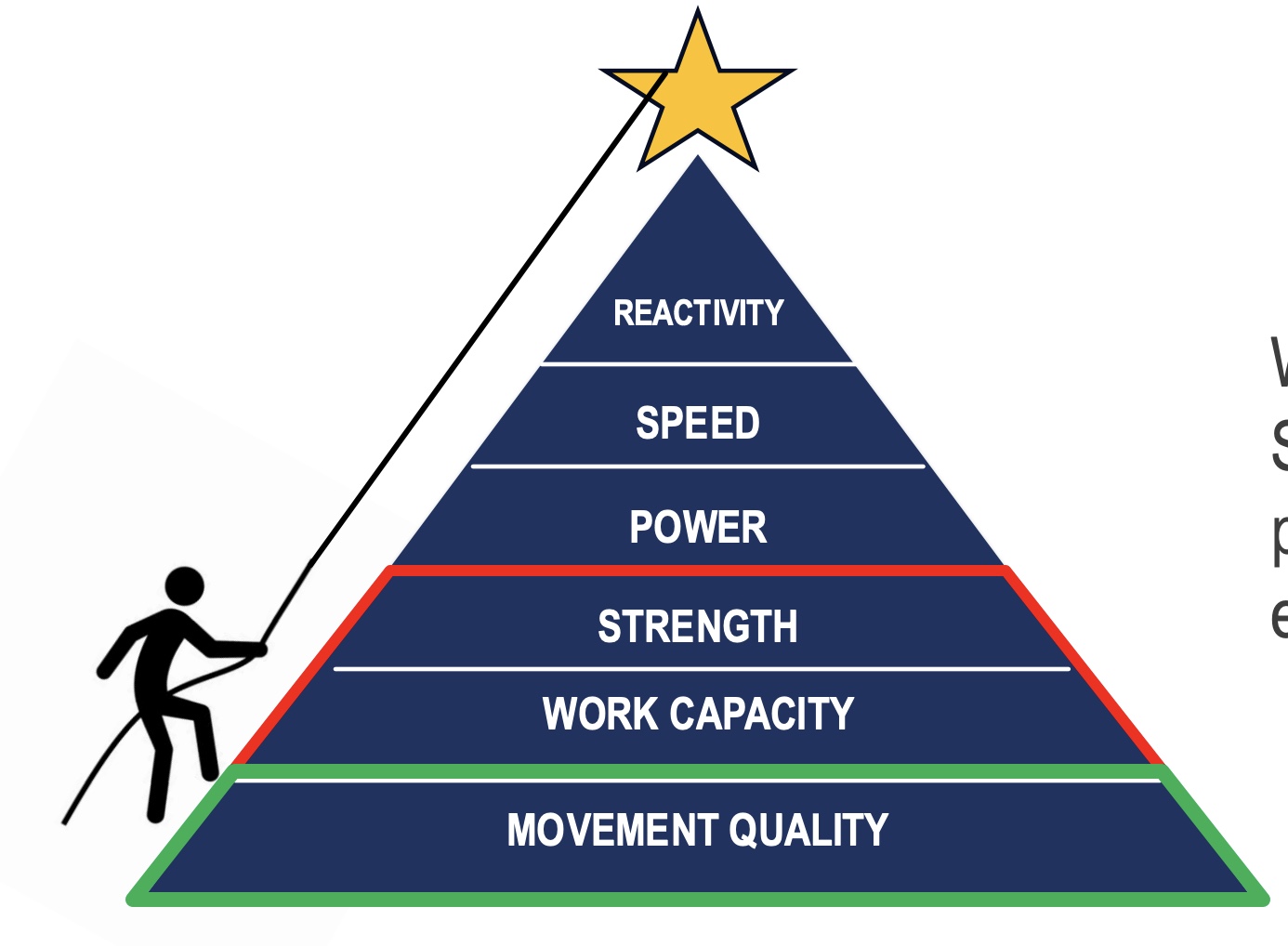
Components of building a S&C program (pyramid)
-start at movement quality; but how can we assess a person’s current ability level to most effectively program?…
what is quality movement?
-Movement quality reflects efficiency, control, and coordination of human motion.
Efficiency- conversion of energy into work (energetically and mechanically)
Control- precise regulation and management during the changing of position
Coordination- optimized organization of multiple joints and muscles working for maximal effect
*who are we to say whether a movement is quality or not?
assumptions when assessing quality
1. Poor movement patterns (quality) may increase injury risk and limit performance.
2. Proper technique will optimize stimulus application to attain goal adaptations both at tissue level and movement level
*to promote a safe training envionrment; but to do this we need some way to objectify movement…
The Functional Movement Screen (FMS)- history
-Late 1990s Gray Cook and Lee Burton (PTs and Strength Coaches)
-They noticed training and assessment focused on Strength, power, endurance (general maxes) rather than “quality” (so strong, but moving bad)
-Belief that “you can’t develop strength or power on dysfunction” – Gray Cook (*Michael don’t agree with this fully)
-Created a standardized and reproducible system to identify and quantify compensatory movement patterns
-An attempt to develop “common language” across providers and provide a structured method to evaluate fundamental movements.
*problem: dif definitions of functional movement
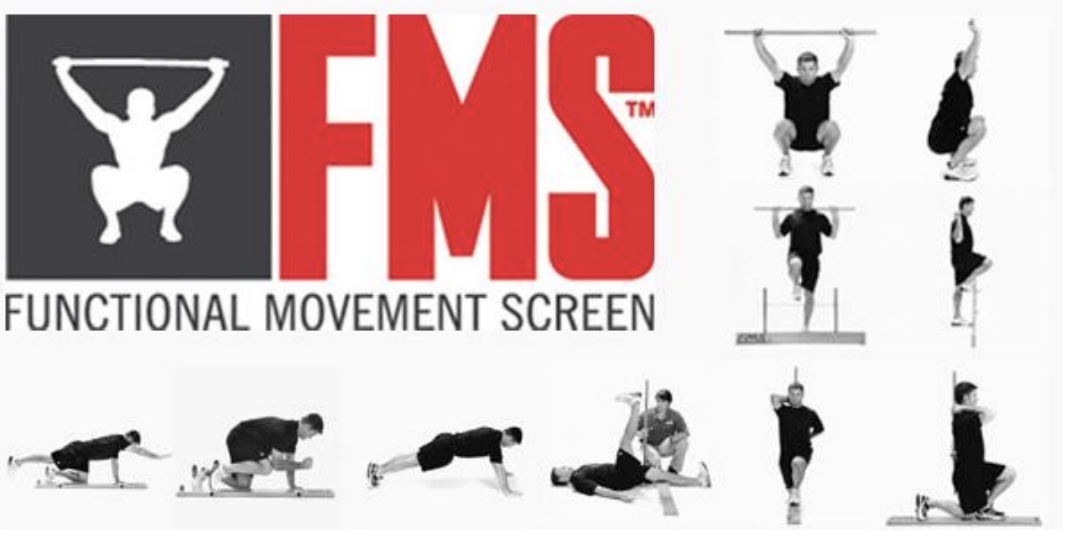
FMS 7 movement test + what & how generally measure
*measuring mobility, stability, and motor control
*scoring system
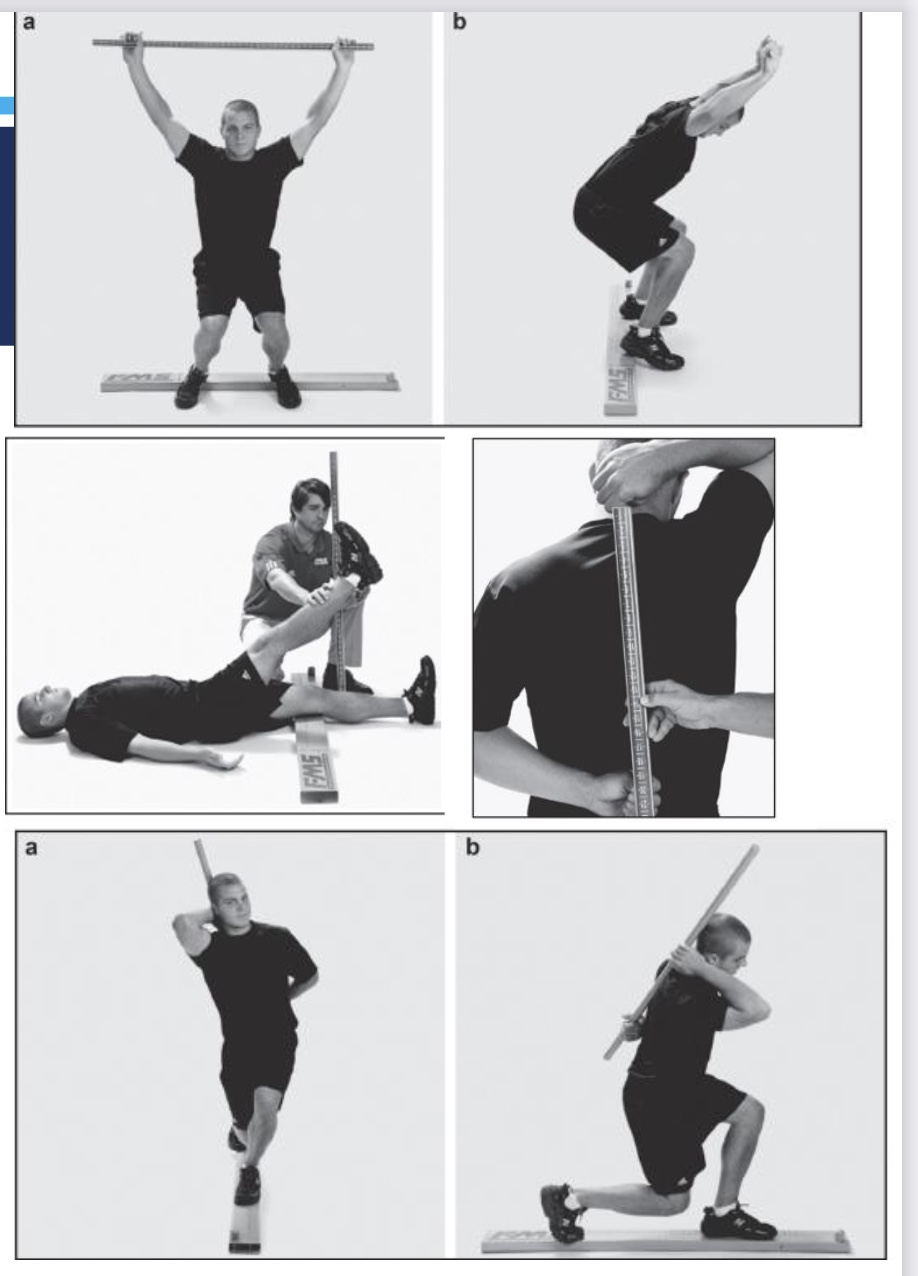
1. Deep Squat
2. Hurdle Step
3. In-Line Lunge
4. Shoulder Mobility
5. Active Straight Leg Raise
6. Trunk Stability Push UP
7. Rotary Stability
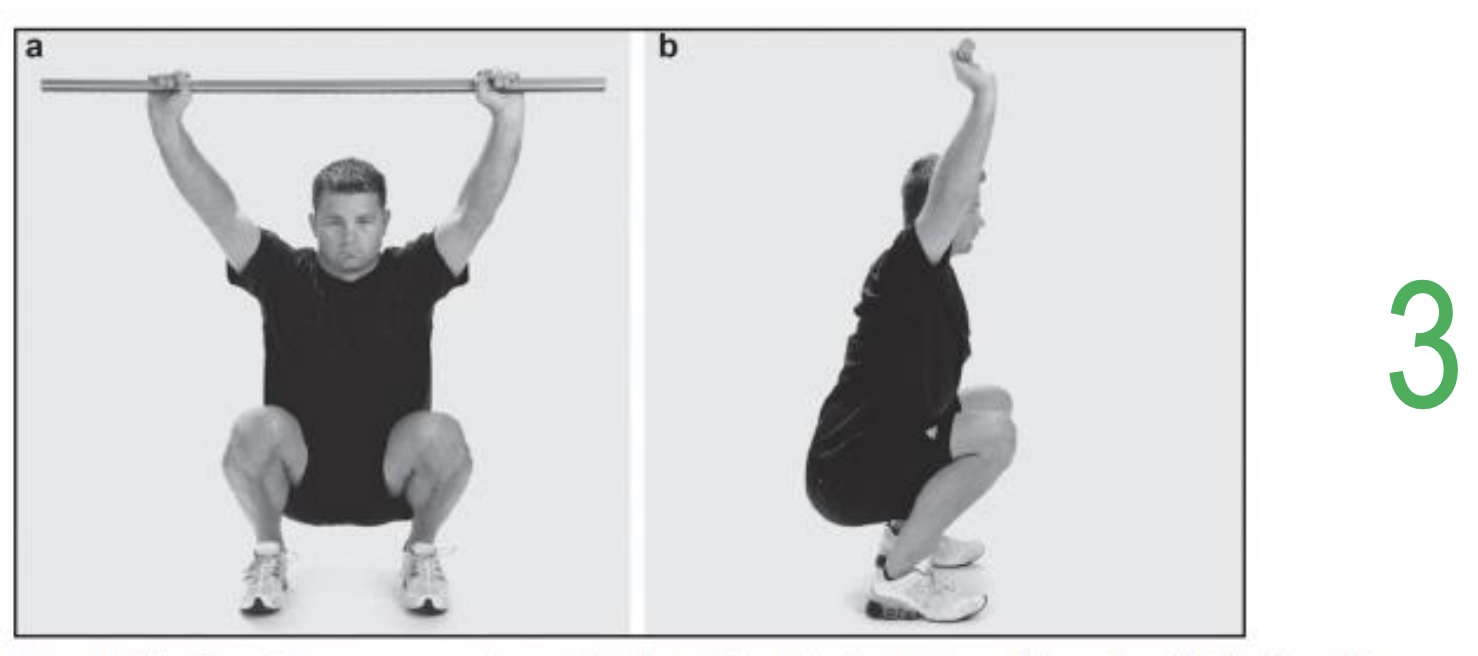
FMS scoring system
-3 = Perfect movement
-2 = Imperfect movement (some compensation)
-1 = Unable to perform
-0 = Pain during movement.
-Composite score (max = 21) reflects overall movement quality.; Scores <=14 indicate elevated injury risk
*higher score=better movement quality
FMS: Deep Squat (Purpose, key observations, common compensations)
-Purpose: Assess total -body mechanics, hip/knee/ankle mobility, and shoulder stability.
-Key Observations: Upright posture, Even weight distribution, Full squat depth with overhead bar.
-Common Compensations: Heels rise off ground, Forward trunk lean, Knees collapse inward.
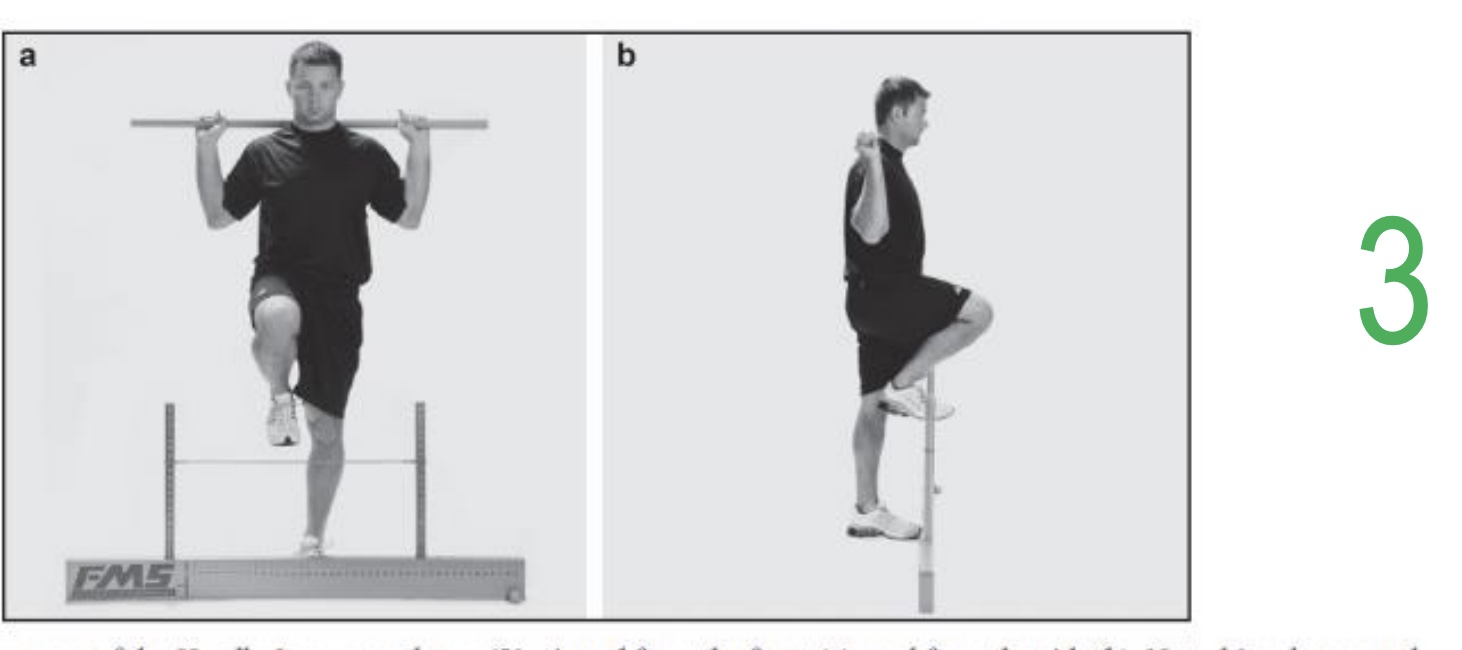
FMS: Hurdle Step (Purpose, key observations, common compensations)
-Purpose: Evaluate single -leg stability and stride mechanics.
-Key Observations: Hip flexion, ankle dorsiflexion, and trunk stability required
-Common Compensations: Pelvic rotation or drop, Balance loss, Knee deviation (valgus).
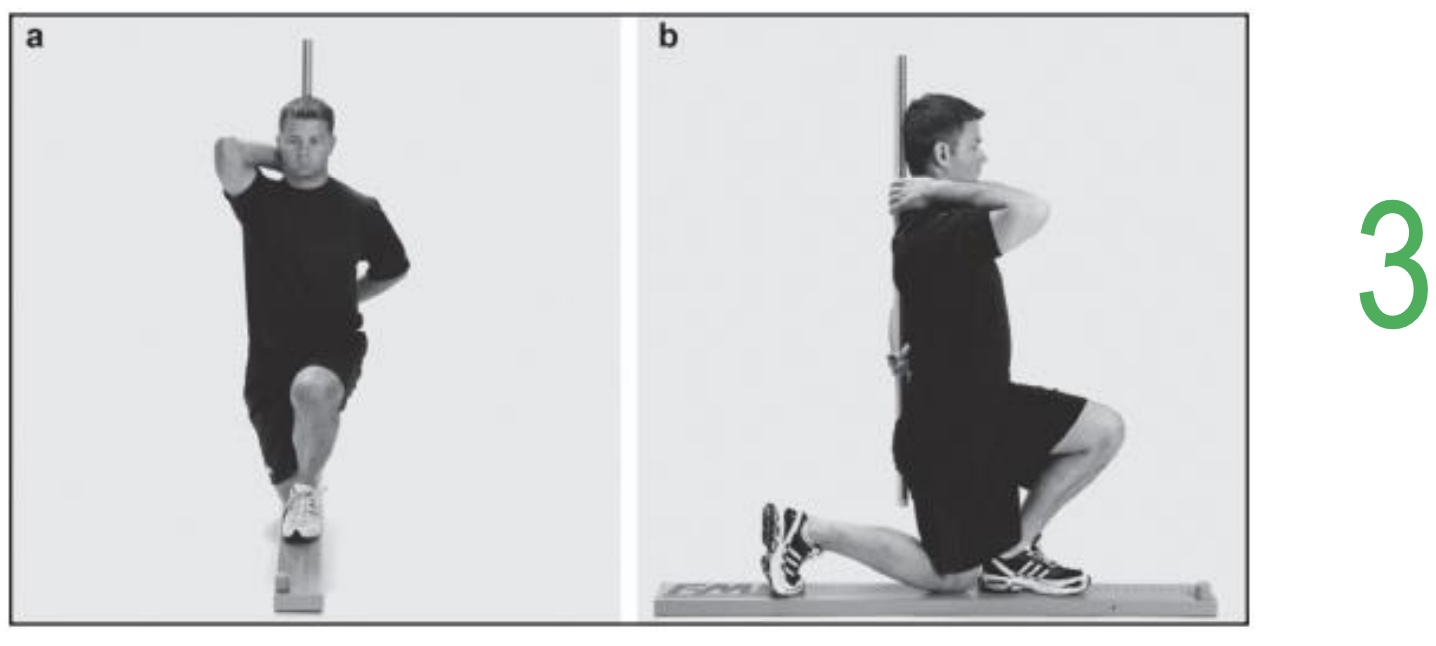
FMS: In-Line Lunge (Purpose, key observations, common compensations)
-Purpose: Assess torso, hip, knee, and ankle stability under load.
-Key Observations: Coordination between upper and lower body.
-Common Compensations: Trunk deviation, Loss of balance, Shallow depth.
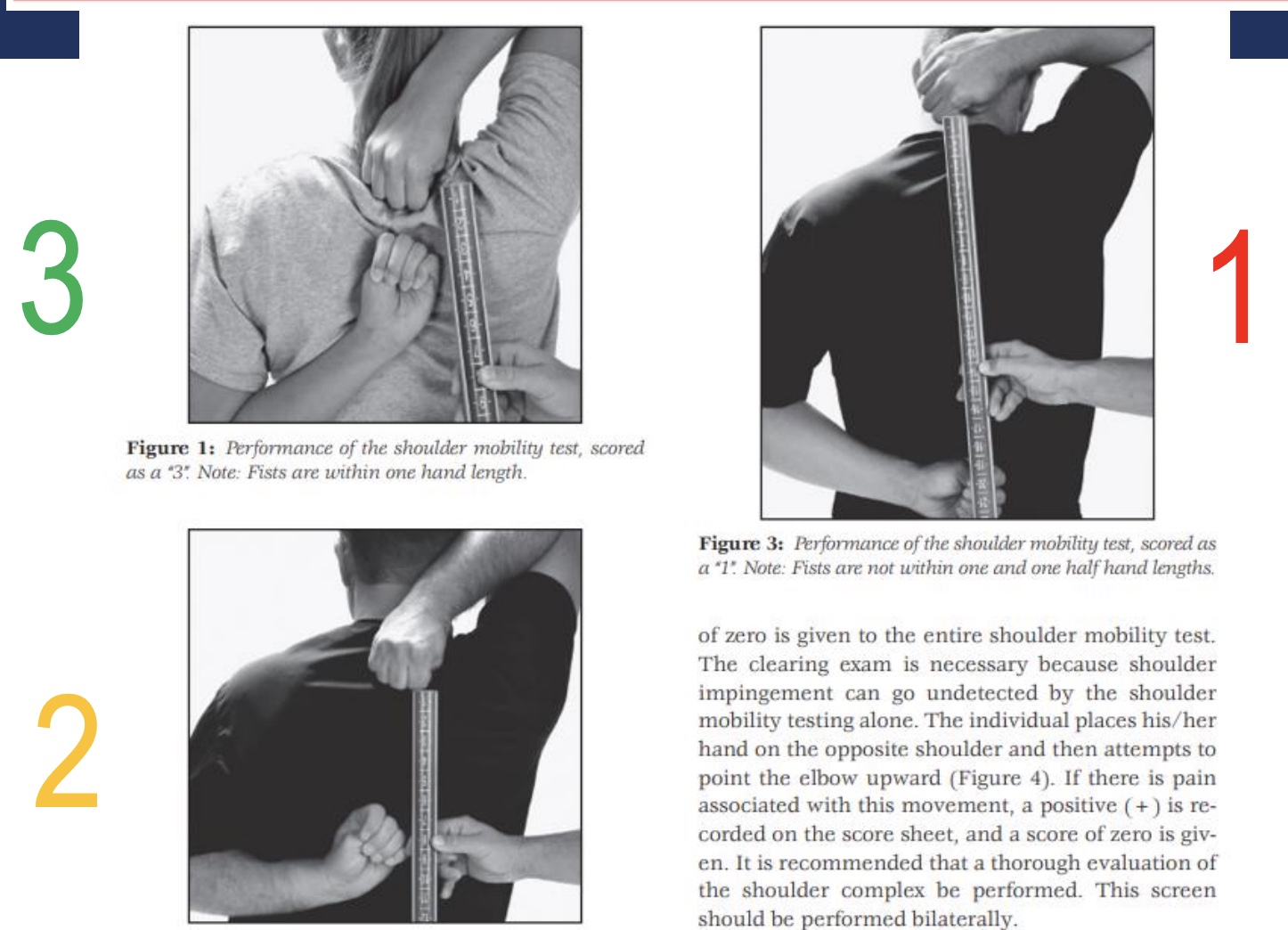
FMS: Shoulder Mobility (Purpose, key observations, common compensations)
-Purpose: Assess bilateral shoulder ROM and thoracic spine extension.
-Key Observations: Internal/external rotation symmetry
-Common Compensations: Lumbar extension or scapular winging. Asymmetrical reach distance.
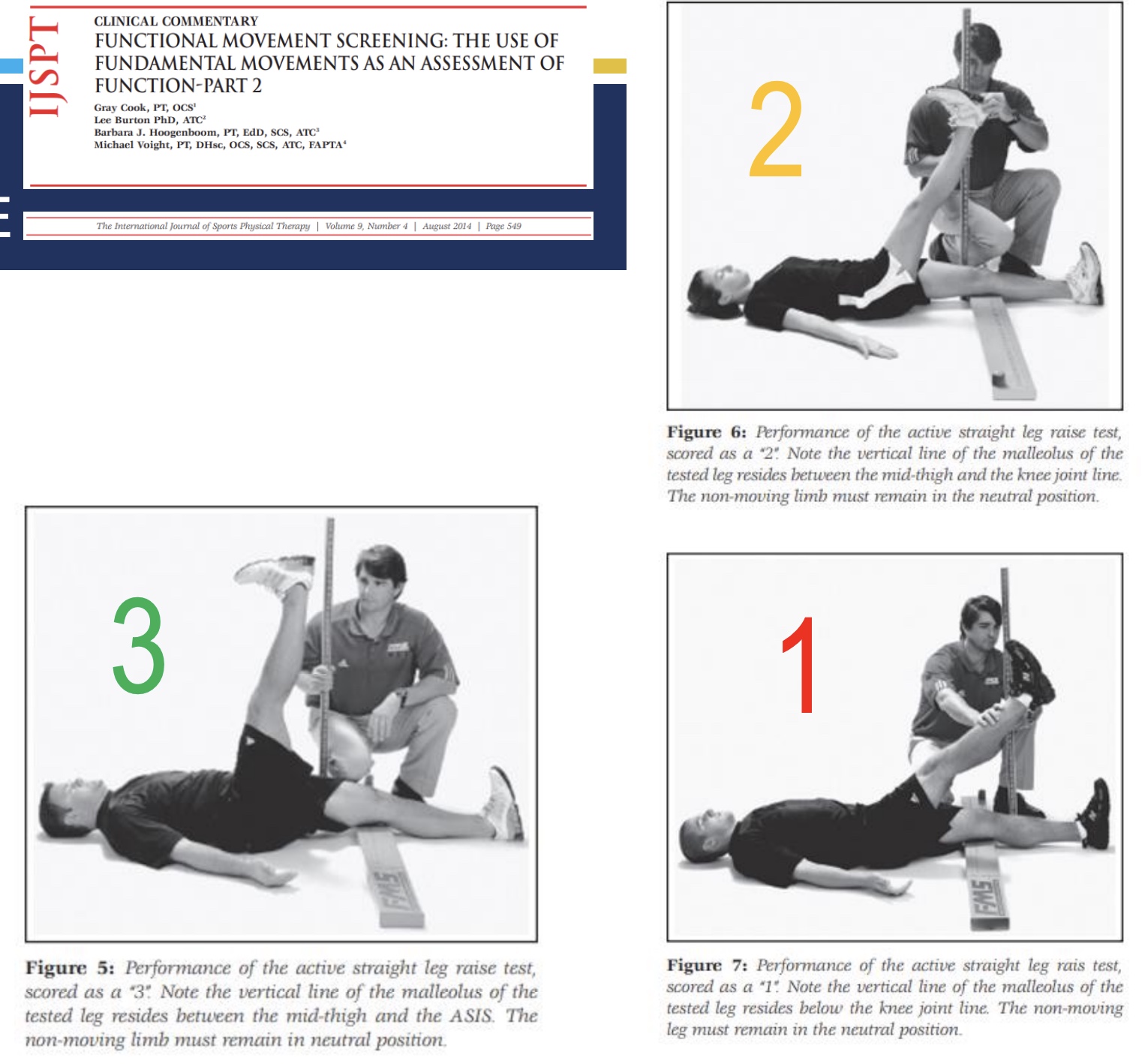
FMS: Active Straight Leg Raise (Purpose, key observations, common compensations)
-Purpose: Assess active hamstring/gastrocnemius flexibility while maintaining pelvic control
-Key Observations: Hip mobility independent of pelvic motion
-Common Compensations: Contralateral leg movement or pelvic tilt. Limited range of motion.
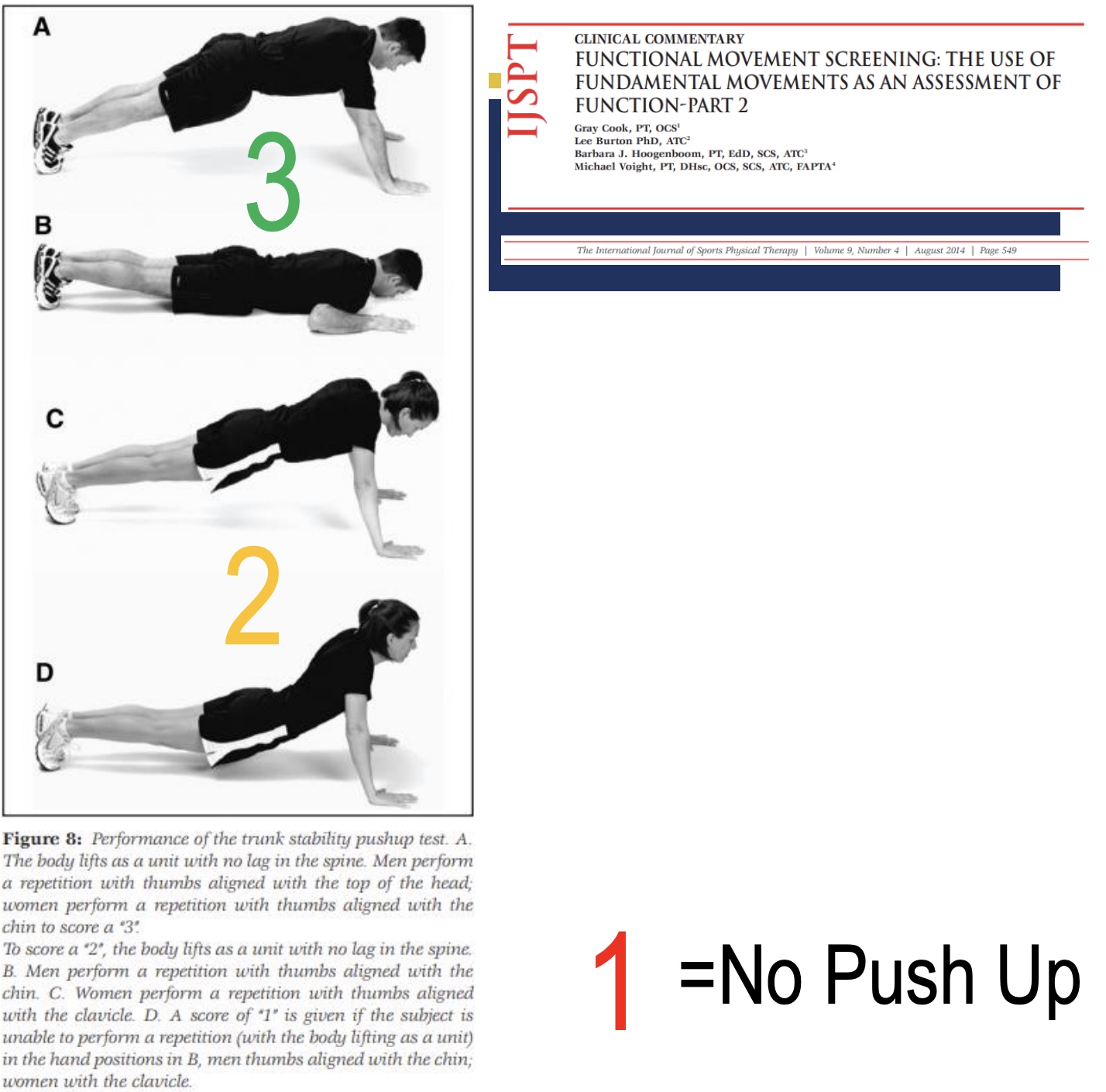
FMS: Trunk Stability Push-Up (Purpose, key observations, common compensations)
-Purpose: Assess core stability in sagittal plane during upper-body movement.
-Key Observations: Maintain neutral spine.
-Common Compensations: Sagging hips, lumbar hyperextension, uneven push
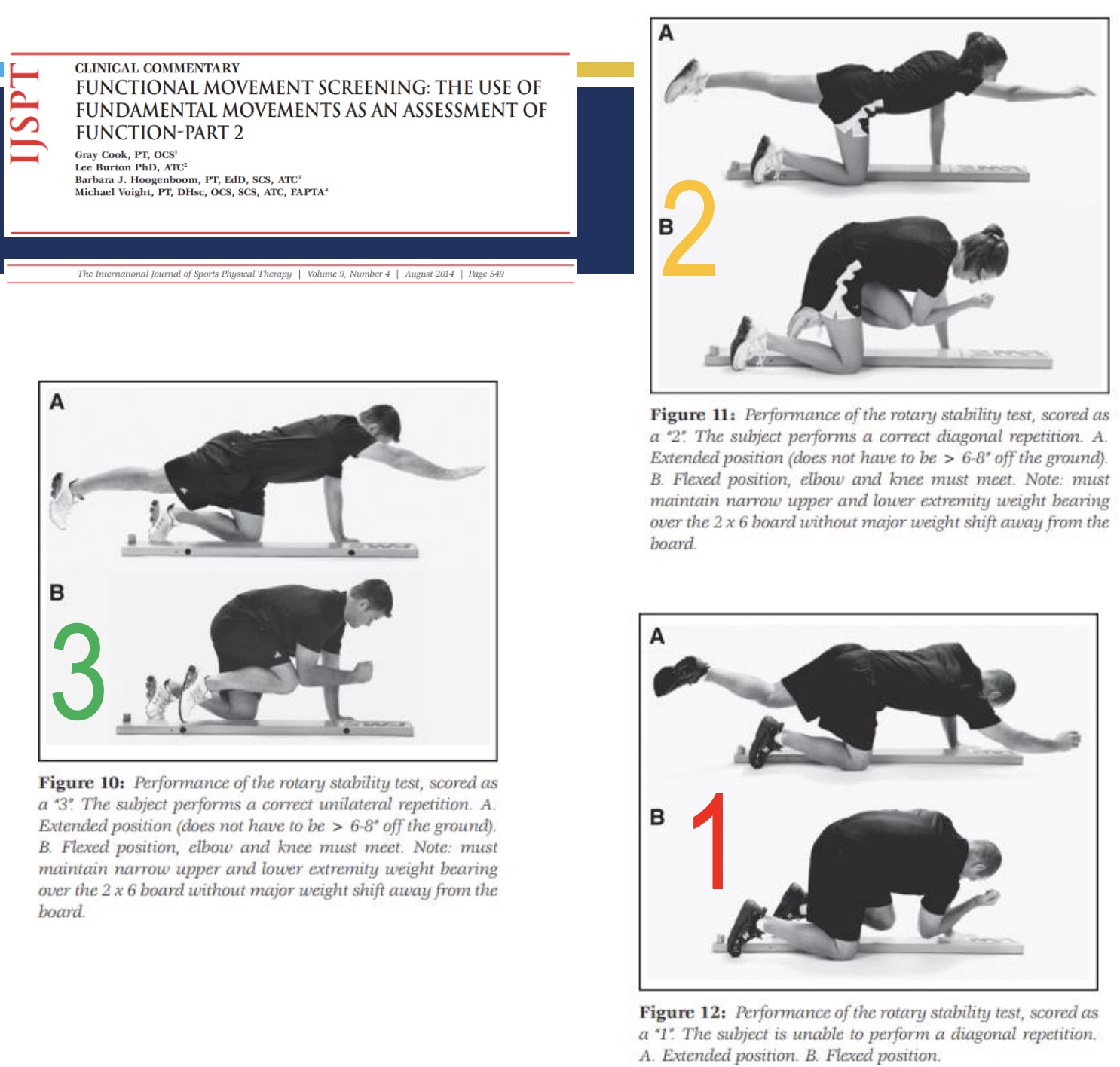
FMS: Rotary Stability (Purpose, key observations, common compensations)
-Purpose: Assess multi-plane trunk stability and cross-body coordination.
-Key Observations: Evaluate contralateral control and balance.
-Common Compensations: Trunk rotation, loss of balance, Incomplete movement.
FMS: Interpretation and Applications
-Interpretation: Identify asymmetries and prioritize corrective strategies.
-Applications: Injury prevention, Corrective exercise programming, Performance optimization
FMS: reliability and validity
-Reliability: relatively yes; reliable when performed by trained professionals
-Validity: Examine whether FMS scores accurately reflect movement quality and injury risk.
Construct Validity (Measuring what’s intended): Moderate correlation with mobility, stability, and performance tests.
Predictive Validity (Does it predict future outcome): Mixed evidence; low scores (≤14) may relate to injury but inconsistently.
Concurrent Validity (Compare to gold standard): Moderate correlations with biomechanical asymmetry measures..
study: FMS is reliable but…
not a standalone injury predictor
FMS: Implications
-Use as part of broader assessment including history, load, and performance metrics.
-This is a SCREEN not a DIAGNOSITIC (*things can work on vs. means at risk)
*lower scores don’t always correlate with higher injury risk
FMS: Cons
1. Subjective Objectivity
People see different things, takes time to get good at it
2. Scoring system insinuates that an improvement in score will result in an improvement in performance
Not necessarily true. High Level Athlete Case Example (might have low score)*
3. Movements in this test encourage people into a “form”
Movement variability is too great across individuals to place them into a “Good” or “Bad” category, IMO
FMS: Pros
1. Kickstarts a thought process for evaluation Efficiency, Control and Coordination in less demanding movement
Allows for identification of “where to begin”
2. Teaches us how to identify anatomical/kinesiological compensations
Leaks and Linkages
What structures are contributing to/restricting the motion?
Builds a problem identification procedure
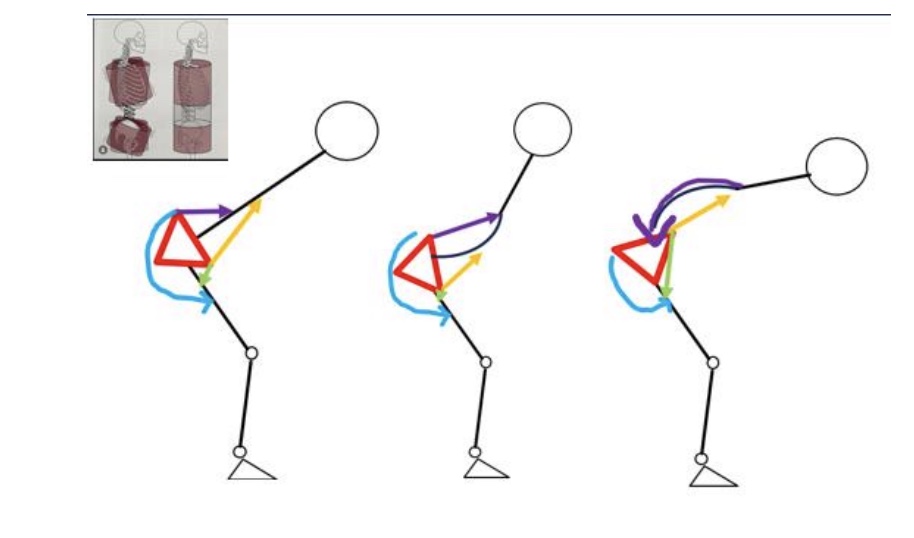
how did we help Terry?
identify main issues (shoulder mobility, hip stability, shoulder stability)
Decide which is the lowest hanging fruit (which one corrected gets most bang for your buck): core; isometric and anti-flexion/extension/LR
How does it need to be addressed?
Mobility
Stability/Basic Activation/Awareness
Movement Patterning (how improve quality?)
*exercise: side plank, bilateral goblet squat with band, semi-supported hinge
Program Design Steps (from S&C)
needs analysis
exercise selection
training frequency
exercise order
training intensity
training volume
recovery considerations
 Note
Note  Flashcards (56)