AP Psychology - Unit 2A Assessment
 Studied by 4 people
 Call with Kai
 Learn
Learn Practice Test
 Spaced Repetition
 Match
Match Flashcards
 Knowt Play
1/100

There's no tags or description
Looks like no tags are added yet.
Name | Mastery | Learn | Test | Matching | Spaced | Call with Kai |
|---|
No analytics yet
Send a link to your students to track their progress
101 Terms
(Perception) Two Types of Processing: Bottom-up Processing (data-driven)
Beginning with stimulation of our senses, we interpret sensory information with our brains (brain is gathering clues to make sense of what you’re looking at)
e.g. I see a furry, 4-legged creature with a tail and identify this as a dog
(Perception) Two Types of Processing: Top-down Processing (schema-driven)
Using our schemas, expectancies and past experiences, we interpret sensory information to construct deeper meaning
The dog is growling and foaming at the mouth and I realize it may have rabies so I will not approach it
(Perception) Perception
How do we integrate our sensory experiences into something meaningful?
Governed by Gestalt principles → how we organize the world
(Perception) Perception: What is GESTALT PSYCHOLOGY?
school of thought focused on perception (2 people can perceive the same situation differently) / whole is greater than the sum of its parts
(Perception) Selective Attention
focusing of conscious awareness on a particular stimulus since our senses are bombarded with stimuli and we can only focus on a small number of these stimuli
(Perception) Selective Attention: Cocktail Party Phenomenon
Certain stimuli may demand our attention (e.g. our name being spoken, vulgar/profane words)
experiment w/ confederates (actors in experiment, except one person) where everyone is talking in groups at a cocktail party and one group is talking across the room and says “John”; John from the other side hears his name and turns around
(Perception) Selective Attention: Accidents
“Walking Distracted” → more people die texting and walking than texting and driving

(Perception) Inattentional Blindness
Neisser (1979): showed that participants who focused on one of two overlapping video clips often failed to see unexpected events happening in the other clip
When we focus on one thing, we miss out on others
(Perception) Inattentional Blindness: Choice Blindness
failing to detect a mismatch in your original choice → choosing a face, proctor switches the faces and asks you why you chose that face, but it is actually the one that you rejected (especially when there are low stakes)
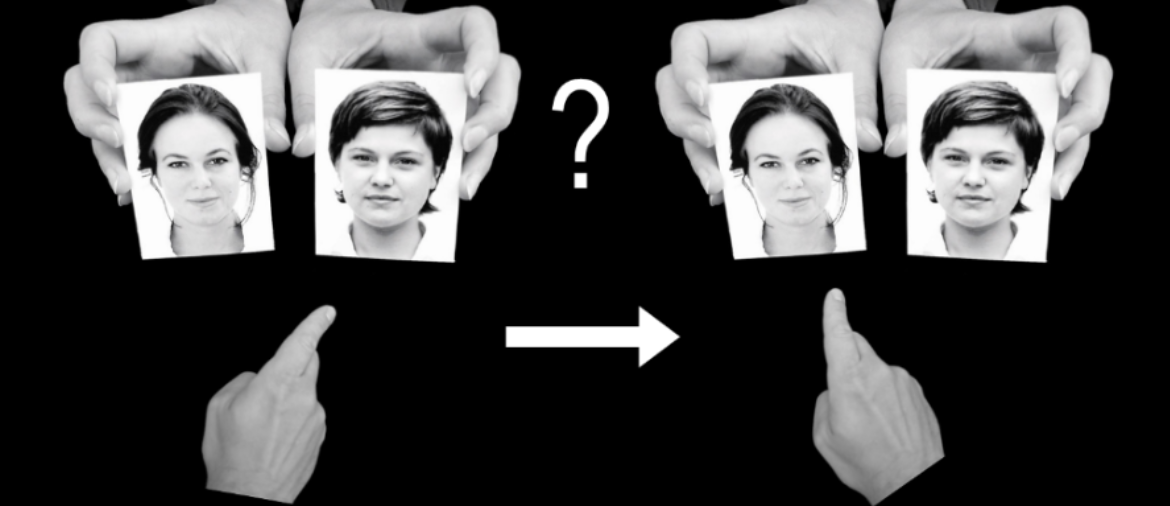
(Perception) Change Blindness
A form of inattentional blindness in which we fail to notice changes in the environment.
(Perception) Perceptual Organization: Figure-Ground
We perceive a foreground object (figure) against a background (ground)
in this image…
black = foreground + white = background → 2 faces
black = background + white = foreground → candle stick
Animals may look like the background they inhabit as a way of destroying figure-ground distinction

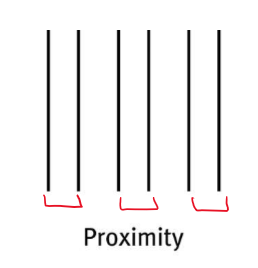
(Perception) Perceptual Organization: Grouping - Proximity
grouping based on closeness
→ we group first 2 lines into 3 columns instead of seeing 6 lines
Ex> we assume 2 people walking close together are friends/couple
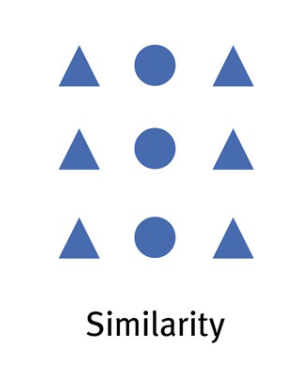
(Perception) Perceptual Organization: Grouping - Similarity
group things together that are similar
→ we see 3 columns, not 3 rows because the similar shapes are in columns
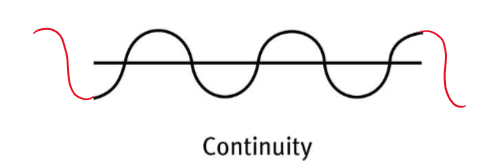
(Perception) Perceptual Organization: Grouping - Continuity
brain recognizes patterns and assumes it will continue
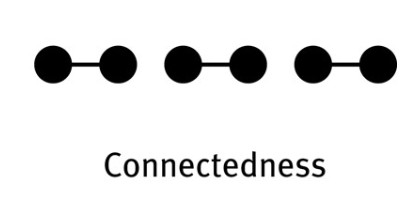
(Perception) Perceptual Organization: Grouping - Connectedness
things connected by a line are grouped together
→ we see 3 groups, not 6 circles
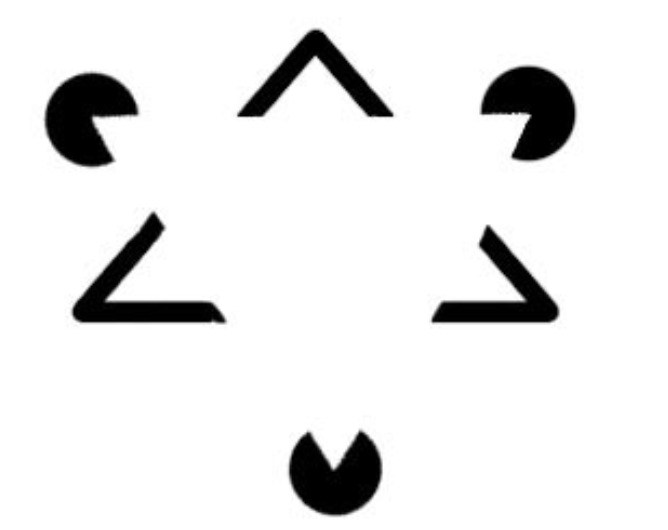
(Perception) Perceptual Organization: Grouping - Closure
brain fills in gaps for sense of closure, assuming boundaries when one doesn’t exist
→ we see an upside down triangle
(Perception) Perception of Distance and Depth: Visual Cliff (see case reading)
apparatus designed to measure depth perception → baby crawling over checkered tiles to get toy, mom smiles prompting baby to crawl over what looks like a drop or mom exhibits a fearful face prompting baby that it is dangerous to crawl over the drop
determined that depth perception develops early (6-12 months) → nature and nurture
(Perception) Perception of Distance and Depth: Binocular Cues
those that require both eyes
(Perception) Perception of Distance and Depth: Binocular Cues - Stereoscopic Vision
using both eyes to see world, which allows for depth perception
can work without both eyes, but depth perception will be hampered
(Perception) Perception of Distance and Depth: Binocular Cues - Retinal Disparity
brain averages what left and right retina see (rods and cones → retina, difference → disparity), allowing us to perceive depth
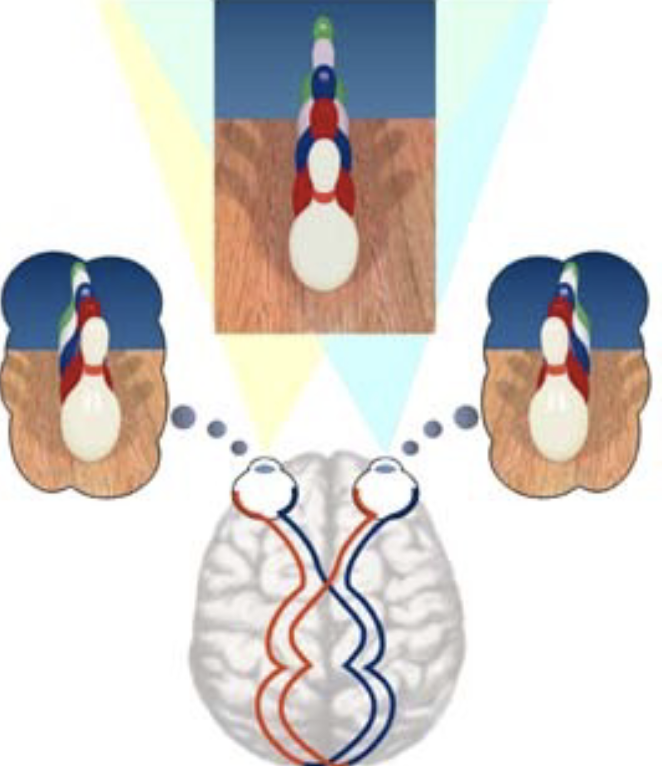
(Perception) Perception of Distance and Depth: Binocular Cues - Angle of Convergence
humans can’t focus on things so close to our face because pupils are so apart
Finger Demo! → pupils move towards angle of convergence with stimulus close to face
(Perception) Perception of Distance and Depth: Monocular Cues
those that require only one eye to perceive…
relative height
relative sight
interposition
linear perspective
relative motion
light and shadow
texture gradient
(Perception) Perception of Distance and Depth: Monocular Cues - Relative Height
noticing that something is taller in comparison to something else
(Perception) Perception of Distance and Depth: Monocular Cues - Relative Size
noticing that something is larger
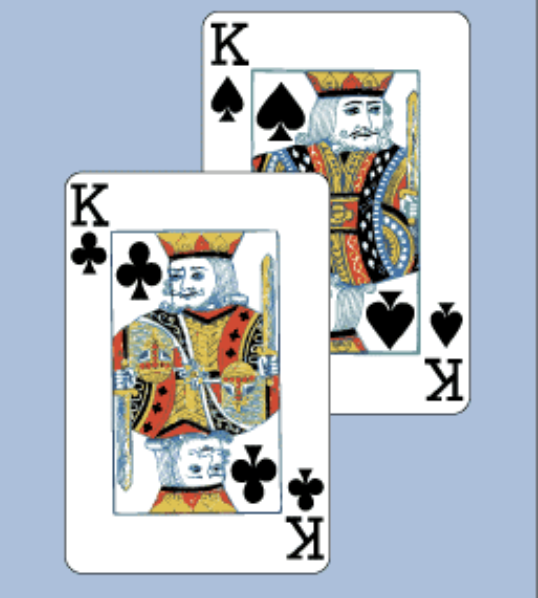
(Perception) Perception of Distance and Depth: Monocular Cues - Interposition
we assume that a partial image is behind the bigger/full image
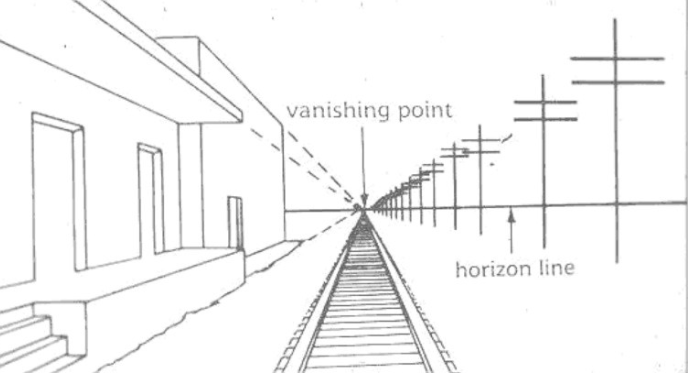
(Perception) Perception of Distance and Depth: Monocular Cues - Linear Persepctive
2 lines coming together are going farther away from you
2 lines going apart are getting closer to you
(Perception) Perception of Distance and Depth: Monocular Cues - Relative Motion (Motion Parallax)
when I am in motion, objects that pass my field of vision quickly must be close by
when I am in motion, objects that pass my field of vision slowly must be farther away
(Perception) Perception of Distance and Depth: Monocular Cues - Light and Shadow
something that appears dark might not actually be dark (due to shadows)
we can tell where a source of light is coming from by the direction of a shadow
(Perception) Perception of Distance and Depth: Monocular Cues - Texture Gradient
more textural details when you’re closer to the object
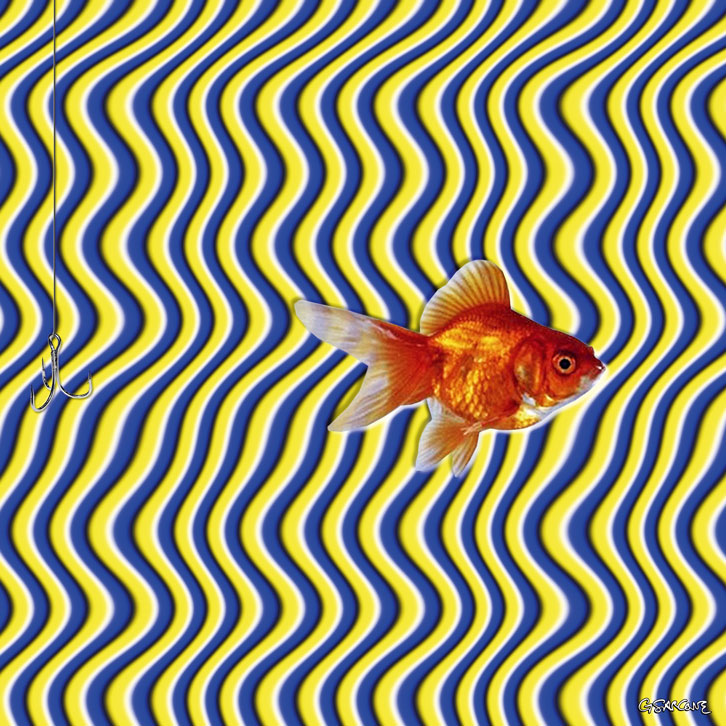
(Perception) Apparent Movement: Autokinetic Illusion
brain automatically perceives movement (sometimes when there is none) → due to background w/ opposing colors = blue-yellow, red-green, black-white (usually)
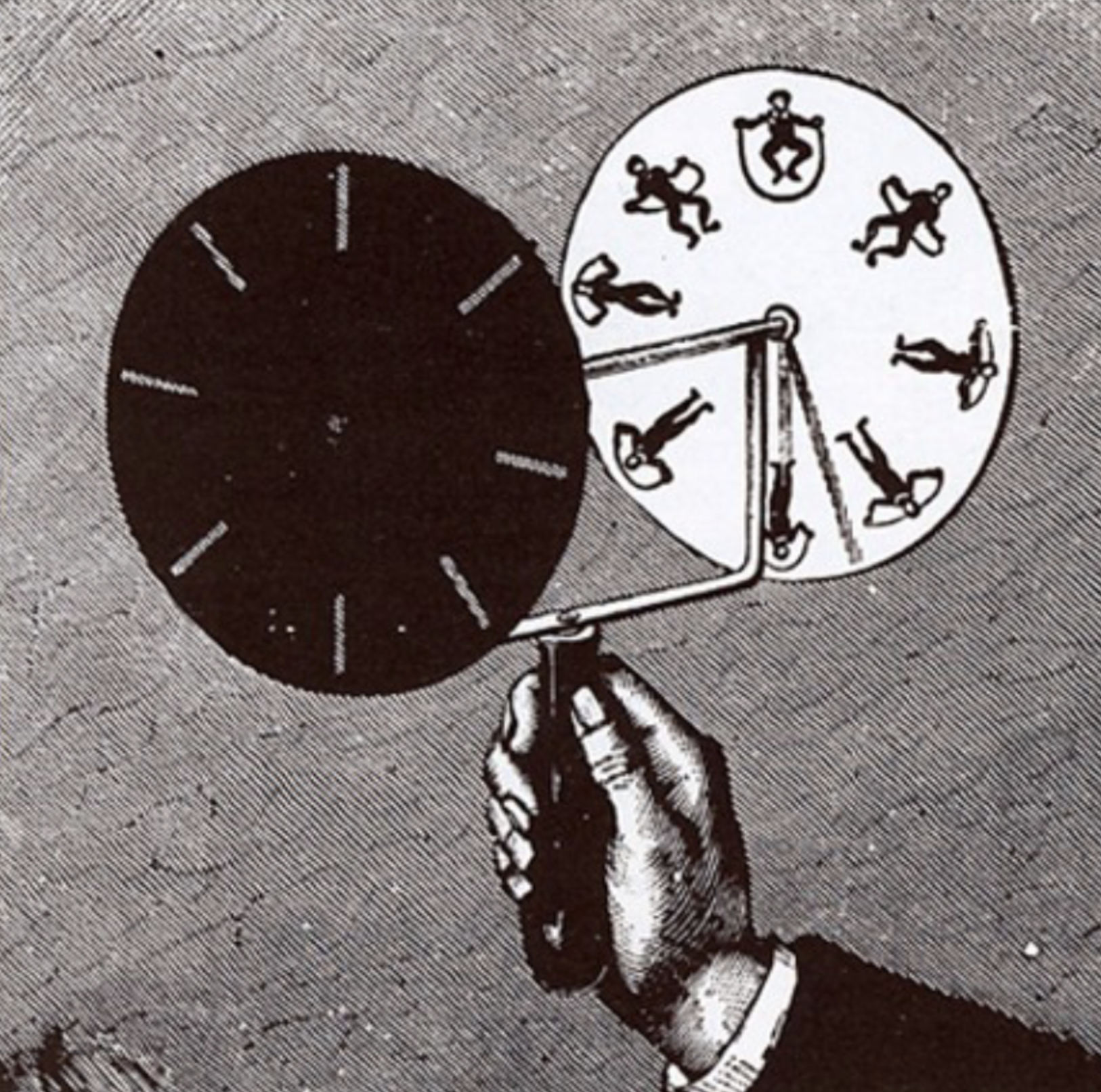
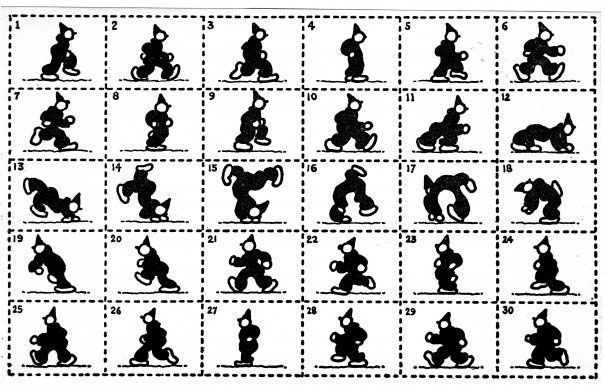
(Perception) Apparent Movement: Stroboscopic Motion
similar images in succession that are shown rapidly creates sense of movement
(Perception) Apparent Movement: Phi Phenomenon
circles each appear/disappear in succession and seems like movement in clockwise order
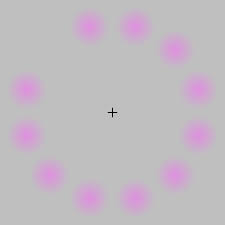
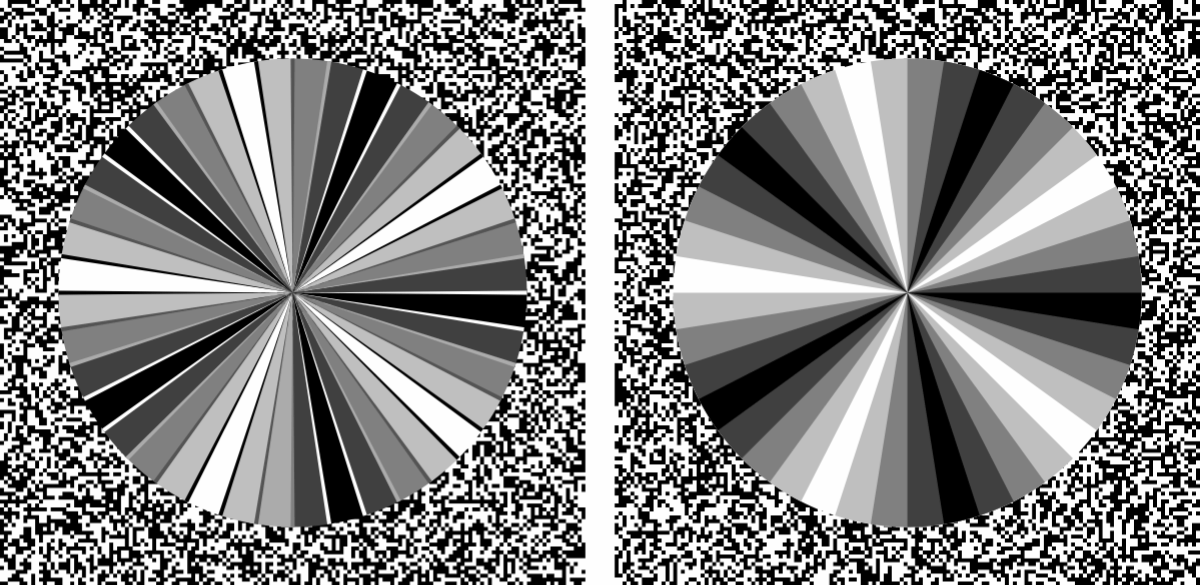
(Perception) Perception of Movement: Reverse Spoke Illusion
spinning wheel seems to rotate in the opposite direction of its actual movement because the light and dark spokes blend with the sections around them, tricking the brain into seeing reversed motion
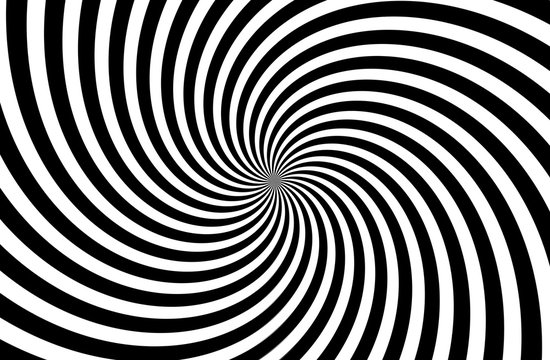
(Perception) Perception of Movement: Spiral Illusion
eyes become accustomed to movement and see movement even when there is none
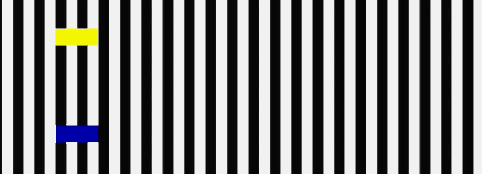
(Perception) Perception of Movement: Stepping Feet Illusion
movement is fluid/solid
(Perception) Perceptual Organization
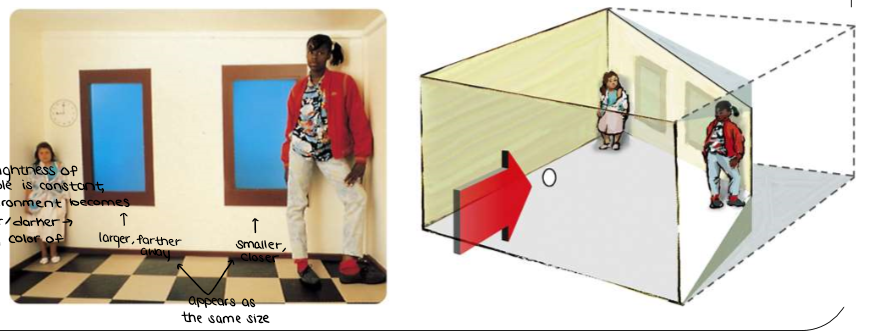
Perceptual Constancy
Our tendency to perceive objects as stable and unchanging despite changing sensory information
Ames Room Illusion: left window is larger and father away while right window is smaller and closer → both appear the same size, but person appears larger
Size Constancy: principle where I assume objects don’t change size
Turnbull’s research (naturalistic observation on people without size constancy to determine if size constancy is learned → nature or nurture?)
Shape Constancy
Lightness Constancy: brightness of apple is constant, environment becomes brighter/darker to change colors of the apple
Color Constancy
(Perception) Perceptual Interpretation: Sensory Deprivation and Critical Periods
Hirsch and Spinelli’s (1970) kitten experiment!
Our perception is the result of our senses and the environment…
cats had difficulty perceiving environment after living in box with just black and white lines → supports the idea that the environment you grow up in shapes perception
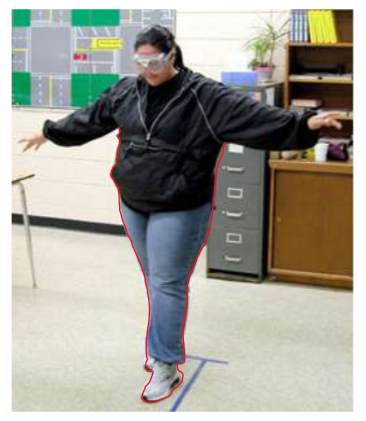
(Perception) Perceptual Interpretation: Perceptual Adaptation
Our ability to adjust to distorted perceptual circumstances
Distortion Goggles
(Perception) Perceptual Interpretation: Perceptual Set
Mental predisposition to perceive one thing over another → pre-disposition to perceive things a certain way due to our experiences
Can be influenced by motivation, schemas, emotions, and experience
Ex> hearing math test was hard → thinking it is harder than it actually was as you take the test
(Perception) Visual Illusions
Occur because of misleading cues in the stimulus
Give rise to false perceptions
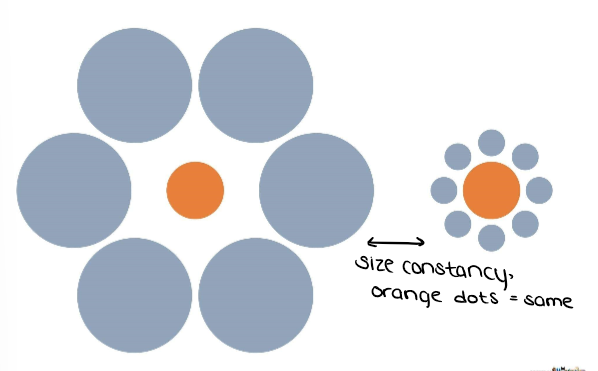
(Perception) Visual Illusions: What does this image show?
Size Constancy → orange dots = same
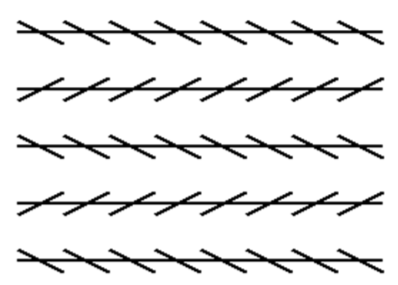
(Perception) Visual Illusions: What does this image show?
Café Wall Illusion → slash marks make us perceive converging/diverging lines that are actually parallel
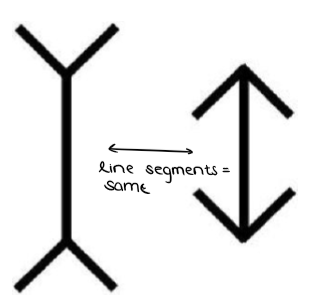
(Perception) Visual Illusions: What does this image show?
Müller-Lyer Illusion → edges of shape distorts lines of shape, curved walls vs. squared walls (line segments = same)
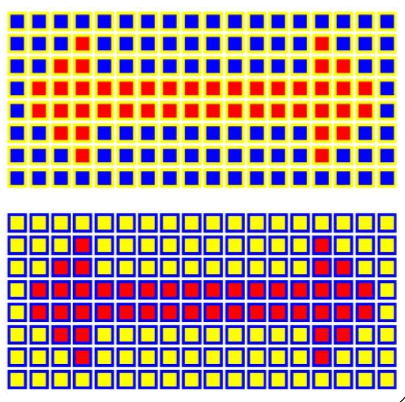
(Perception) Visual Illusions: What does this image show?
Color Constancy → top appears orange and bottom appears red when both are actually red and the colors around the arrows are changing
(Perception) Individual and Cultural Differences in Perception
Each of the following shapes our expectations because everyone perceives the world differently:
Motivation
We perceive what we are rewarded for!
Context
Values
Expectations
Cognitive Style
Experience and Culture
Personality
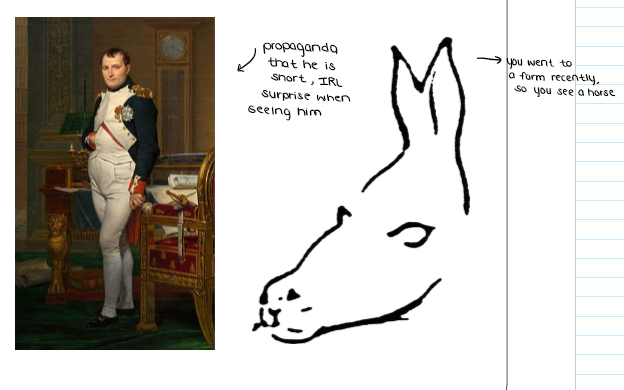
Is Napoleon tall or short?
What animal is on the right?
(Thinking, Problem-Solving and Decision-Making) Thinking: Cognition
all mental activities associated with thinking, including memory, knowing, communicating
(Thinking, Problem-Solving and Decision-Making) Thinking: What do COGNITIVE PSYCHOLOGISTS study?
Creating concepts
Solving problems
Making decisions
Forming judgements
(Thinking, Problem-Solving and Decision-Making) Metacognition
Thinking About Thinking: Awareness or understanding of one’s own thought processes and why
Ex> I just engaged in confirmation bias!
(Thinking, Problem-Solving and Decision-Making) Concepts
Mental category or label that represents a class or group of objects, people or events that share common characteristics or qualities.
Concepts help us organize our thinking
Concepts HELP but don’t provide all of the answers
(Thinking, Problem-Solving and Decision-Making) Concepts: Rosch Case Reading
Are concepts universal? Do all cultures understand redness?
Some languages don’t have a word for red, so do they understand redness?
(Thinking, Problem-Solving and Decision-Making) Concepts: Artificial Concepts
We organize concepts into category hierarchies (cars, cats, flowers, etc.)
Artificial concepts refer to those where each member of the concept has all of its defining properties while no non-member does, e.g. squares must have 4 corners and 4 right angles (rigid boundaries of membership).
(Thinking, Problem-Solving and Decision-Making) Concepts: Natural Concepts
We organize concepts into category hierarchies (cars, cats, flowers, etc.)
Natural Concepts have no set defining features but have characteristic features instead, e.g. birds where the object could be a chicken, sparrow or ostrich (beak, wings, feathers, laying eggs → don’t have rigid boundaries for membership)
Members of the concept have some characteristics of it (a bird w/o one of those characteristics is still a bird)
We compare possible members to prototypes
More common in nature!
Fuzzy concepts?
(Thinking, Problem-Solving and Decision-Making) Concepts: What are PROTOTYPES?
objects/events that typically represent the natural concept, example that easily comes to mind from that group
Ex> bird → pigeon, compare new animal to pigeon to see if it’s a bird
used to classify what we see w/ concepts
(Thinking, Problem-Solving and Decision-Making) Schema
mental framework → group of neurons communicating w/ each other
dynamic and can change over time when associating different ideas with topic
Ex> dog → 4 legs, furry my dog, memories w/ dogs; alphabet → ABCD, song, R (name), lowercase, uppercase, memory learning alphabet

(Thinking, Problem-Solving and Decision-Making) Problem Solving: Steps
Steps involved in problem solving:
Understanding the Problem
Planning a solution strategy
Carrying out the solution
Evaluating progress toward goal/results

(Thinking, Problem-Solving and Decision-Making) Problem Solving: Problem Representation
the first step in problem solving - can help or hinder how we frame or interpret the problem (what are the constraints?)
We can approach problems visually, verbally, mathematically and concretely with objects; we may create a matrix to keep track of all possible combinations
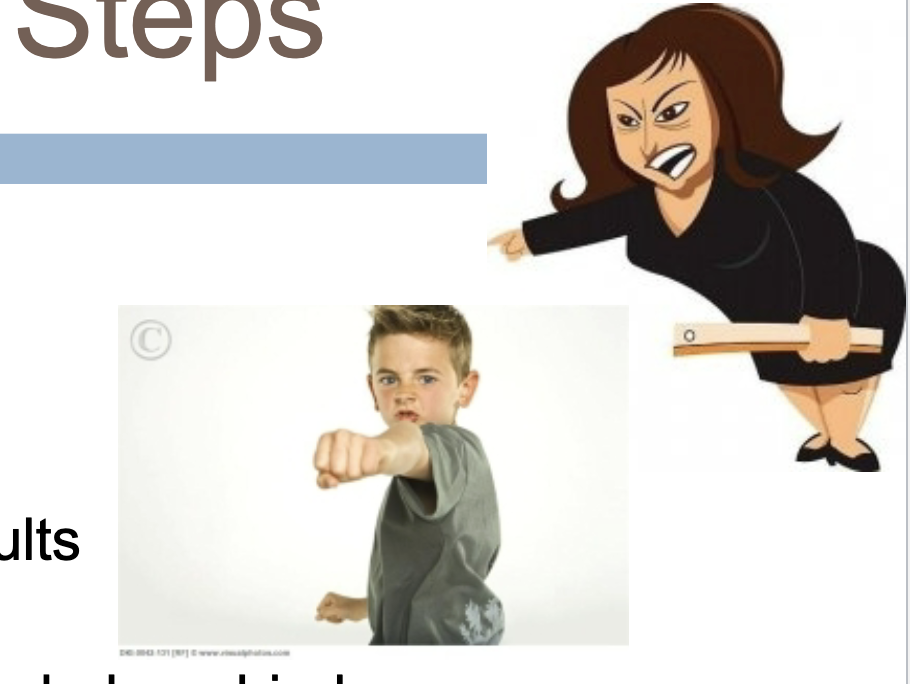
e.g. Little Arjun keeps getting yelled at by his 1st grade teacher for breaking the rules. Typical representation of problem - something is the matter with Arjun. But, what about the teacher’s rules, Arjun’s parents, etc.?
parent could be the problem by encouraging rule-breaking
teachers/classmates could be the problem (unfair no bathroom rule)
(Thinking, Problem-Solving and Decision-Making) Problem Solving Strategies: Algorithms
Step-by-step methods that guarantee a solution; can be tedious and time consuming
Ex> math formula, x # of days studying = good grade w/ certain method
(Thinking, Problem-Solving and Decision-Making) Problem Solving Strategies: Heuristics
Rules of thumb that may help simplify a problem but do not guarantee a solution
Ex> more words w/ r = 3 than 1, we don’t classify words by 3rd letter
(Thinking, Problem-Solving and Decision-Making) Problem Solving Strategies: Insight
“Aha!” moment → eurika, sudden realization
Ex> playing video games while thinking about unsolved math problem
(Thinking, Problem-Solving and Decision-Making) Problem Solving Strategies: Hill Climbing
Move progressively closer to goal without moving backward
(Thinking, Problem-Solving and Decision-Making) Problem Solving Strategies: Subgoals or Means-End Analysis
(engage in hill climbing)
break large problem into smaller, more manageable ones, each of which is easier to solve than the whole problem
Ex> goals by week
(Thinking, Problem-Solving and Decision-Making) Problem Solving Strategies: Working Backwards
Start with a solution/goal and figure out how to get there
(Thinking, Problem-Solving and Decision-Making) Problem Solving Strategies: Trial and Error
One solution after another is tested; time consuming
Ex> guessing digits of phone #
(Thinking, Problem-Solving and Decision-Making) Problem Solving Strategies: Incubation
Put problem aside and engage in an unrelated task before coming back
(Thinking, Problem-Solving and Decision-Making) Problem Solving Strategies: Expertise/Artificial Intelligence
Usually computer programs used to solve specific problems; however, sometimes this involves rigid sets that could hinder finding solutions
Ex> ChatGPT, Gemini, OpenAI
(Thinking, Problem-Solving and Decision-Making) Problem Solving Obstacles: Confirmation Bias
Tendency to only consider information that supports preconceived ideas rather than paying attention to contradictory evidence, leading to a faulty conclusion
e.g. “People who speak German are evil” - focuses to heavily on Nazis
(Thinking, Problem-Solving and Decision-Making) Problem Solving Obstacles: Mental Sets
Tendency to approach a problem in a particular way, sometimes based upon past experiences (nurture) - can help or hinder.
(Thinking, Problem-Solving and Decision-Making) Problem Solving Obstacles: Functional Fixedness
a type of mental set that typically hinders, since you can only see things objects in terms. of their customary usage
e.g. Copier only used to copy paper? (copy computer screen); psych textbook → hammer; friend → pillow
(Thinking, Problem-Solving and Decision-Making) Creative Problem Solving
generating solutions that are both unusual and useful
(Thinking, Problem-Solving and Decision-Making) Creative Problem Solving: Divergent Thinking
produces many different correct answers to the same question (often creative)
(Thinking, Problem-Solving and Decision-Making) Creative Problem Solving: Convergent Thinking
one correct answer is expected (typically not creative but linear thinking)
Ex> math problems
(Thinking, Problem-Solving and Decision-Making) Creative Problem Solving: Brainstorming
a way to get over sets where you use divergent thinking to come up with multiple ideas/possibilities to solve a problem
bouncing ideas off of each other, 2 minds are better than 1
(Thinking, Problem-Solving and Decision-Making) Creative Problem Solving: Remote Association Test (RAT)
one measurement of creativity
Requires divergent thinking
Modest correlation between creativity and intelligence
Highly creative people tend to have above average intelligence, but having a high IQ doesn’t guarantee creativity
(Thinking, Problem-Solving and Decision-Making) Creative Problem Solving: Torrance Test Demo
asked to draw using certain shapes to measure creativity w/ evaluation by experimenter
(Thinking, Problem-Solving and Decision-Making) Decision Making Models: Compensatory Model
making a decision by allowing attractive attributes to compensate for unattractive ones (e.g. “The car looks all banged up but gets great gas mileage”; 2 colleges, which one to choose?; move family for new job?)
AKA pros outweigh cons in making the decision
(Thinking, Problem-Solving and Decision-Making) Decision Making Models: Non-Compensatory Model
does not allow some attributes to offset others (e.g. “Dude, that girl is busted - I don’t care how nice she is I will not date her”; college doesn’t have intended major so you don’t go)
AKA don’t allow pros to compensate/outweigh cons
(Thinking, Problem-Solving and Decision-Making) Decision-Making Heuristics
Heuristic processes are used when decisions involve a high degree of ambiguity
(Thinking, Problem-Solving and Decision-Making) Decision-Making Heuristics: Representativeness Heuristic
(mental shortcut → Linda = feminist because she checks my boxes)
New information is compared to our model of the typical member of a category (prototype)
Could lead us to ignore other relevant information
If we see random events happening repeatedly, we unconsciously use the representativeness heuristic when judging likelihood of future events leads to gambler’s fallacy
(Thinking, Problem-Solving and Decision-Making) Decision-Making Heuristics: Representativeness Heuristic - What is GAMBLER’S FALLACY?
because event hasn’t happened recently, it’s more likely to happen now
(Thinking, Problem-Solving and Decision-Making) Decision-Making Heuristics: Availability Heuristic
(based on first data that pops into your mind)
Decision is based on information that is most easily retrieved from memory, even if incomplete
e.g. More words that start with “r” or have “r” as third letter?
→ third letter!
(Thinking, Problem-Solving and Decision-Making) Heuristic Demo: Linda the Bank Teller
Linda is 31 years old, single, outspoken, and very bright. She majored in philosophy. As a student, she was deeply concerned with issues of discrimination and social justice, and also participated in anti-nuclear demonstrations.
Which is more probable?
Linda is a bank teller.
Linda is a bank teller and is active in the feminist movement.
Linda is a bank teller.
in both options, in title, discrimination can mean many things
(Thinking, Problem-Solving and Decision-Making) Poor Decisions: Overconfidence
Our tendency to overestimate the accuracy of our knowledge and judgements
Overconfidence makes us vulnerable to…
Planning fallacy
Sunk-cost fallacy
(Thinking, Problem-Solving and Decision-Making) Poor Decisions: Overconfidence → Planning Fallacy (fallacy = false belief)
overestimating future leisure time & income
Ex> I have enough time to study for psych test on Friday when the test is on Tuesday, but you keep saying that until Monday night…
(Thinking, Problem-Solving and Decision-Making) Poor Decisions: Overconfidence → Sunk-Cost Fallacy (fallacy = false belief)
stick to original plan because we’ve already invested time/effort/money in it
Ex> buying the premium version of quizlet and continuing to use it despite bad test scores and the study method not working
(Thinking, Problem-Solving and Decision-Making) Poor Decisions: Belief Perseverance
Tendency to cling to our initial beliefs even after these decisions have been discredited (Ex> debate)
The more we justify our initial belief, the more difficult it is to let it go when proven wrong
To reduce BP, imagine the opposite perspective
(Thinking, Problem-Solving and Decision-Making) Decision Making: Intuition
Automatic “gut reaction” not involving explicit reasoning
(Thinking, Problem-Solving and Decision-Making) Decision Making: Intuition → Pros!
Pros:
quick, efficient decisions by relying on existing knowledge
huge and adaptive
(Thinking, Problem-Solving and Decision-Making) Decision Making: Intuition → Cons!
Cons:
leads us to overfeel and underthink
not as effective for bigger, challenging decisions
lot of biases in our intuition, which may lead to overconfidence due to the longing to always be right
(Thinking, Problem-Solving and Decision-Making) Decision Making: Framing
Priming can influence framing
Manner in which info is presented affects decision-making
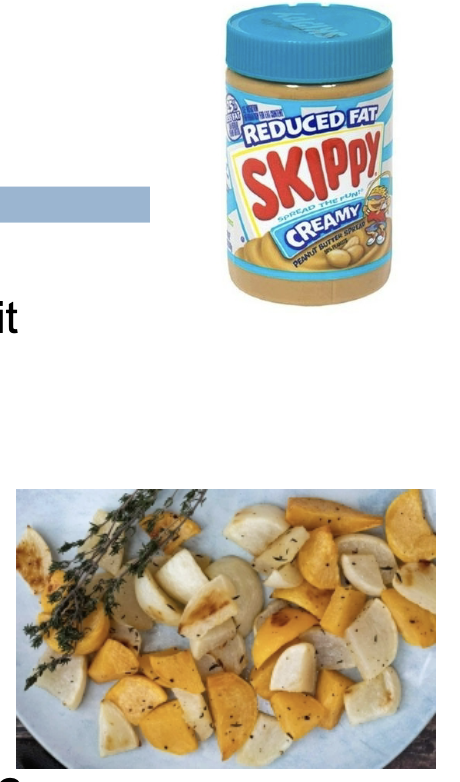
Ex> Beef: “85% lean” vs. “15% fat”
“Turnips” vs. “Herb n’ Honey Balsamic Glazed Turnips” → encourages people to make healthy decisions
University Dining Hall where kids wouldn’t eat veggies, so “Turnip” name → “Herb n’ Honey” so more kids ate turnips
(Thinking, Problem-Solving and Decision-Making) Decision Making: Framing → Priming
the activation, often unconsciously, of certain associations, thus predisposing one’s perception, memory, or response
(Thinking, Problem-Solving and Decision-Making) Decision Making: Framing → Nudging
framing choices in a way that encourages people to make beneficial decisions
(Thinking, Problem-Solving and Decision-Making) Decision Making: High Pressure
time pressure leads to worse decisions
(Thinking, Problem-Solving and Decision-Making) Explaining our Decisions: Hindsight Bias
Tendency to view the impact of our decisions as inevitable and predictable after we know the outcome
e.g. “We would have been miserable together” (after deciding to get a divorce)
(Thinking, Problem-Solving and Decision-Making) Explaining our Decisions: Counterfactual Thinking
Thinking about alternative realities and things that never happened
Often takes the form of “If only I had…”
e.g. “If only I hadn’t said, ‘Uh, not really’ when my girlfriend asked me is eh looked fat in that dress,” we would still be together.
(Module 2.1: Perception) What is DEPTH PERCEPTION?
the ability to perceive objects in three dimensions (length, width, and depth) and to judge the distance of those objects, even though the images on the retina are two-dimensional
(Module 2.1: Perception) What is RELATIVE CLARITY?
a monocular depth cue where hazy or blurry objects are perceived as being farther away than sharp, clear objects
(Module 2.1: Perception) What is APPARENT MOTION?
the perception of movement in a stationary object or scene caused by the rapid sequential presentation of static stimuli
(Module 2.2: Thinking, Problem-Solving, Judgments, and Decision-Making) What is ASSIMILATION?
interpreting our new experiences in terms of our existing schemas
(Module 2.2: Thinking, Problem-Solving, Judgments, and Decision-Making) What is ACCOMODATION?
adapting our current schemas (understandings) to incorporate new information
(Module 2.2: Thinking, Problem-Solving, Judgments, and Decision-Making) What are EXECUTIVE FUNCTIONS?
cognitive skills that work together, enabling us to generate, organize, plan, and implement goal-directed behavior
 Note
Note  Flashcards (25)