Minor Sunburns and Burns
 Call Kai
 Learn
Learn Practice Test
 Spaced Repetition
 Match
Match Flashcards
 Knowt Play
1/37

There's no tags or description
Looks like no tags are added yet.
Name | Mastery | Learn | Test | Matching | Spaced | Call with Kai |
|---|
No analytics yet
Send a link to your students to track their progress
38 Terms
Thermal burn
result from skin contact with flames, scalding liquids, hot objects, or smoke inhalation
chemical burns
occurs secondary to exposure to corrosive or reactive chemicals that cause tissue damage, ulceration, and sloughing
electrical burn
electricity flows through the body from an entry point to an exit point and the heat of the current damages the skin
sunburn
caused by too much UVA/UVB light produced from natural sunlight, commercial tanning beds, and tanning lamps
burns we can treat OTC only involve what layers of the skin?
epidermis and dermis
we can treat what stages of burns?
stage 1 and stage 2
we should refer what stages of burns?
stage 3 and stage 4
what are the 3 treatment goals for burns ?
- relieve pain
- provide physical protection
- provide favorable environment for healing that minimizes the chances of infection and scaring
during initial assessment of a burn what should we ask?
- has the burn occured in the last 3 hours
- is the patient experiencing pain
if the burn has occurred in the last 3 hours....
irrigate with tepid water for ~20 minutes
if the patient is experiencing pain....
use systemic analgesics
reassess in _________
24-48 hours after initial assessment
Exclusions for self-treatment of burns
- burn to BSA of >2%
- burns involving eyes, ears, face,or perineum
- chemical burns
- electrical or inhalation burns
- persons of advanced age
- patients with uncontrolled diabetes or multiple medical disorders
- immunocompromised patients
what should be done with a chemical burn?
use first aid measure then seek medical attention
Nonpharmacologic therapy of burns
- stop the burn
- cool the burn
- provide pain relief
- cover the burn
what should you avoid with burns?
ice and ice cold water
Rule of 9
- face / head = 4.5%
- torso= 18%
- genitals = 1%
- legs= 9%
- arms = 4.5%
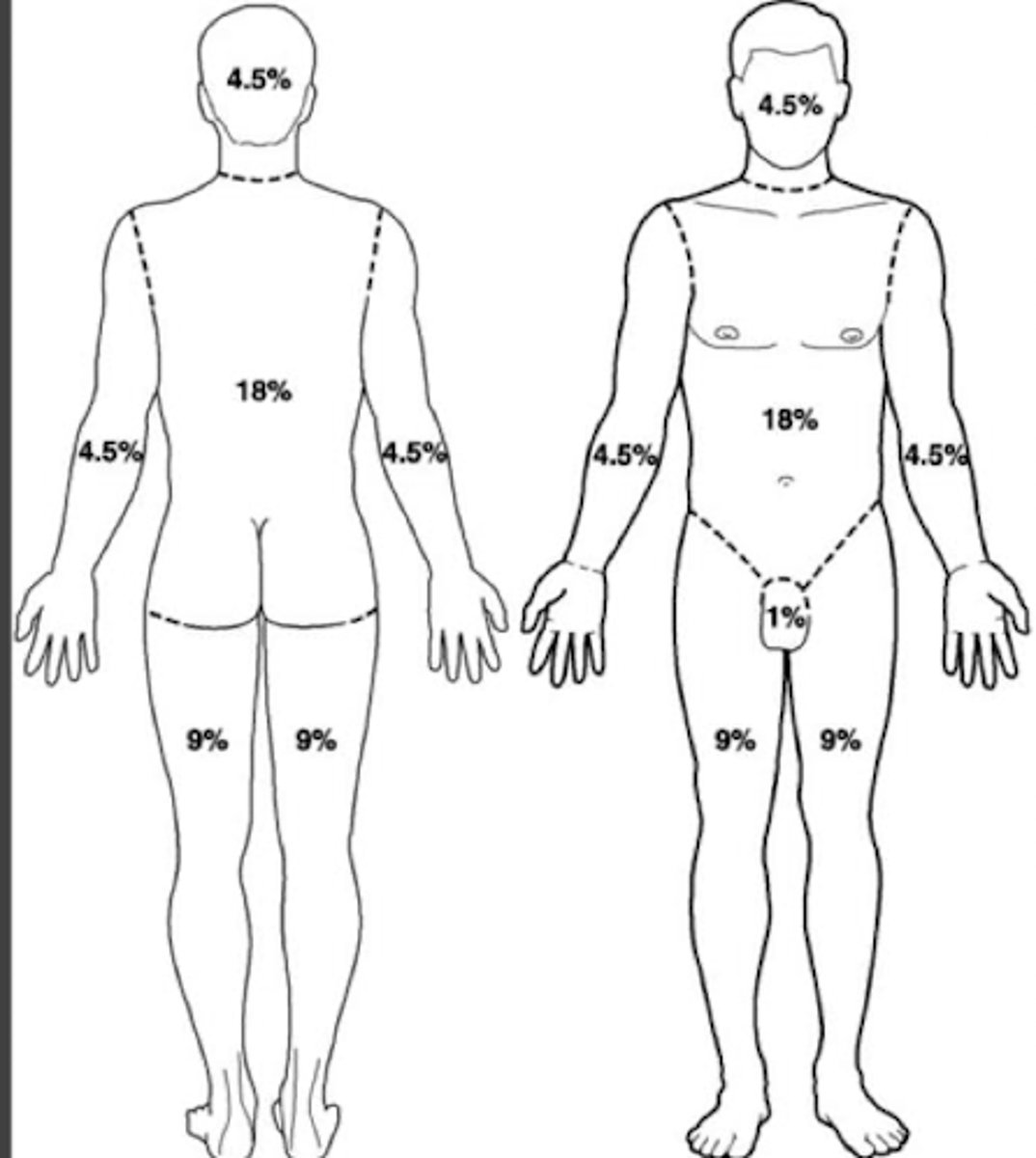
If burn is dry....
apply skin protectant ointment
If the burn is weeping ....
soak in cool tap water 3-6 times per day 15-20 minutes then apply skin protectant
All burns managed with self-care should be...
covered
Pharmacological therapy
- skin protectants
- systemic analgesics
- topical analgesics
- antiseptics
- antimicrobial
- vitamins
- complementary therapies
Ibuprofen (Advil, Motrin)
200-400 mg every 4-6 hours
Naproxen sodium
220 mg every 8-12 hours
Acetaminophen
325-400 mg every 4-6 hours
complementary therapy
- honey
- calendula officinalis
- aloe vera
ointments
oleaginous base, provides a protective film to keep skin from drying
when are ointments most appropriate?
minor burns and wounds when the skin is still intact
creams
water based emulsions
when are creamed prefered?
when the skin is broken
lotions advantage
spread easily and easy to apply to large area
some lotions produce powder, when should be we not use these lotions?
on the wound bed because they dry the area
sprays advantage
no need to physically touch the affected area
What is the prefered choice for burn/ wound irrigation?
saline
patient counseling for burns
- determine if the burn / wound is eligible for self treatment
- be sure the address immediate concerns
- counsel patient on timeline of burn / wound healing, potential aggravating factors, things to avoid
- reassessment of burn/ wound
Burns should be reassessed after....
24-48 hours after initial assessment
after reassessing the burn/wound, if worsening / progression is seen....
the patient should be referred
wounds/burns should be reassessed after
24-48 hours then again in 7 days
What are some warning signs for burns that need to be further evaluated ?
- foul odor
- worsened inflammation
- increased pain/ swelling
- cellulitis
- tissue infection

