DMV PERMIT TEST 2023
 Studied by 0 people
 Call Kai
 Learn
Learn Practice Test
 Spaced Repetition
 Match
Match Flashcards
 Knowt Play
1/225

There's no tags or description
Looks like no tags are added yet.
Name | Mastery | Learn | Test | Matching | Spaced | Call with Kai |
|---|
No analytics yet
Send a link to your students to track their progress
226 Terms
Beginning May 2025, Your ID and/or Drivers license must be REAL ID compliant to do what?
Board an airplane for domestic flights, Enter military bases, Enter most federal facilities.
True or False, ID cards permit you to drive?
False
How long do you need to have your permit before you can get your drivers license.
6 months
If you are under 18 years old, your drives license will have what word?
Provisional
As a provisional driver, you CANNOT drive:
Between 11 p.m. and 5 a.m. during the first 12 months of having your license.
With passengers under 20 years old, unless your Parent/Guardian or other driver (at least 25 years old) rides with you.
For pay or operate vehicles that require a commercial class A , B, or C license.
What are exceptions to the restrictions as a provisional driver?
Have a medical need and cannot reasonably find another way to travel. You must carry a note signed by your physician which states your medical condition, and the date you expect to recover.
Drive for schooling or a school activity. Also needing a note, signed by your principal, dean, or designee.
Must drive for work reasons. You must carry a note from your employer, and confirm you employment.
Must drive an immediate family member signed by your parent/guardian. The note also needs to state the reason you need to drive, the family member and date when it will end.
What are the 3 tests for your drivers license?
A vision test, a knowledge test, and finally a Behind the wheel test.
How can your vision affect your driving?
Can make it hard to notice hazards
How can your hearing affect your driving?
You must be able to hear horns sirens, and other potential hazards
How can Fatigue or Drowsiness effect your driving?
Can affect your vision and increase reaction time to reacting to hazards
How can your physical and mental health affect your driving?
Can change how quickly you can react to a hazard.
How can your medications affect your driving?
Medications can give you unwanted effects like, some can make you sleepy.
How can your current health conditions affect your driving?
Physicians are required to report patients, who are at least 14 years old, to the DMV if they believe they have medical conditions that can affect their ability to drive safely
Where on the steering wheel should your hands be?
9 and 3/ but more likely 8 and 4.
What are the types of steering?
Hand-to-Hand, Hand-Over-Hand, One-Hand steering.
When should you use Hand-Over-Hand steering?
When you are turning at low speeds, parking, or recovering from a skid.
What are the 2 situations you would use One-Hand steering?
When you are turning while backing up,( placing your hand on the 12 o'clock position)
When operating a vehicle that requires you to remove a hand from the steering wheel.
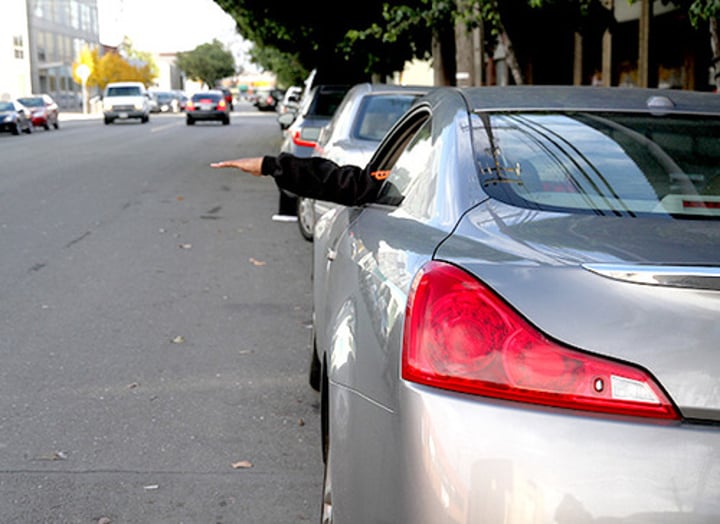
What does it mean if a driver is sticking there hand out the drivers side window horizontally.
It means they are turning left.
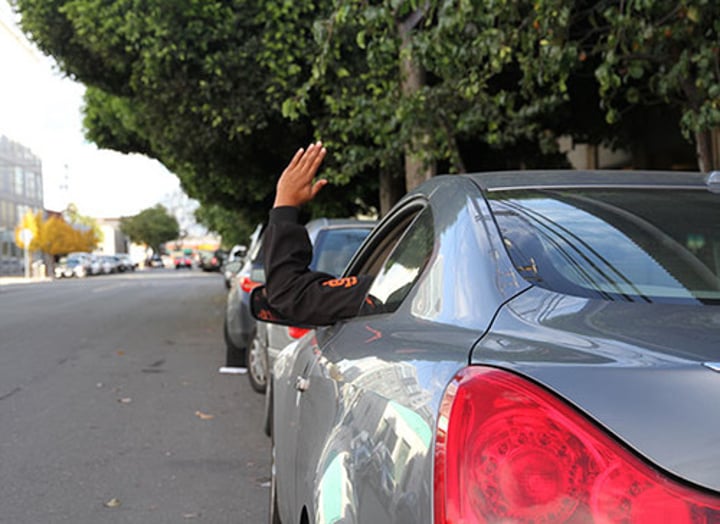
What does it mean if a driver is sticking there hand out the drivers side window and it is facing up?
It means they are turning right.
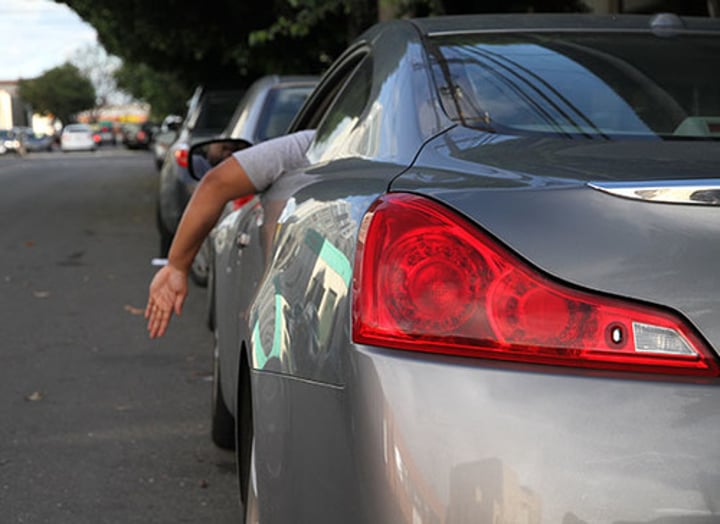
What does it mean if a driver is sticking there hand out the drivers side window and its facing down
It means they are stopping.
When should you signal?
At least 100 ft before you turn
Before EVERY lane change
At least five seconds before you change lanes on the freeway
When you are almost through an inter section.
(NOTES: Signal even if there are no other cars around, also you aren't allowed to change lanes when going through an intersection).
Why should you use your horn?
To warn others of a hazard
When should you use your horn?
Avoid collisions (when necessary).
Alert another driver of a hazard.
Alert oncoming traffic on narrow mountain roads where you cannot see at least 200 feet ahead of your vehicle.
When should you dim you headlights to low?
Within 500 feet of of an oncoming vehicle or within 300 ft of a vehicle you are following.
It it legal to drive with only your parking lights?
No, Its Illegal
When should you use your headlights?
When its too dark to see from 1000 ft away
Beginning 30 minutes after sunset
Beginning 30 minutes before sunrise
In adverse weather, (fog, snow, heavy rain), use your low beams.
When conditions such as, (clouds, fog, dust, and smoke,) prevent you from seeing other vehicles.
On mountain roads and tunnels (even on sunny days)
When a road sign states that headlights must be on
To help other drivers see your vehicle especially when the sun is low on the horizon.
When and why should you use your emergency flashers?
Why: To tell others on the road about hazards
When: To warn drivers behind you, or to stop if you need to stop your vehicle due to vehicle trouble.
What is a traffic lane
A section of road for a single line of traffic
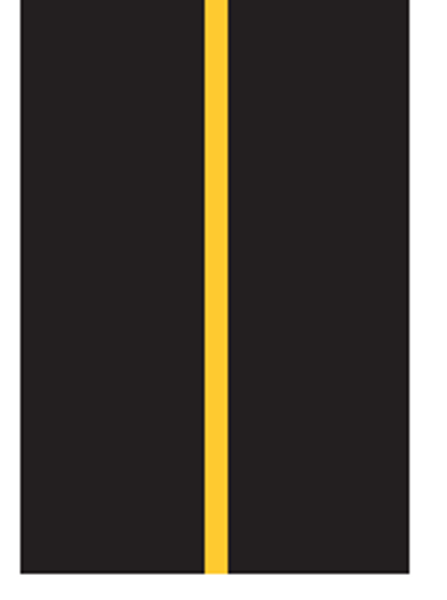
Single solid yellow line
The center of the road with two-way traffic.
Double solid yellow lines
Separate travel lanes moving in opposite directions; passing from either side of a double yellow line is PROHIBITED.
Exceptions are (High-Occupancy vehicles) HOV carpool lane that has a designated entrance on the left, Instructed by a construction worker, or to enter/exit an driveway, private road, and/or U turn.
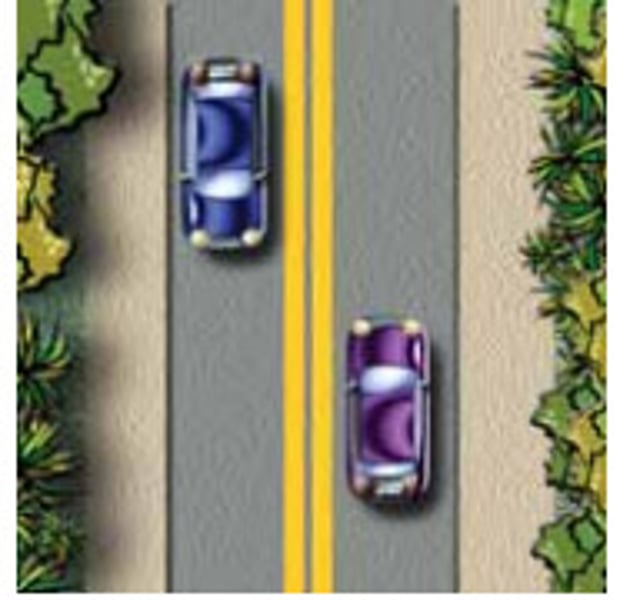
Two sets of double yellow solid lines that are 2 ft apart
A barrier, so No U turns, or left turns unless its to enter an designated opening.
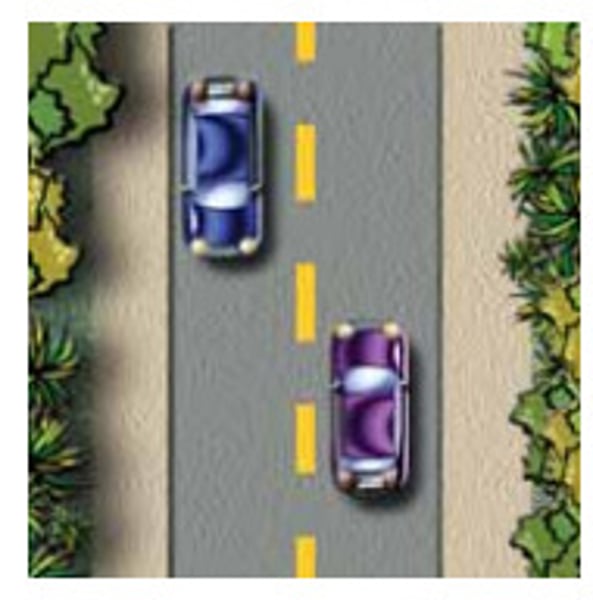
Broken yellow line
You may pass when safe
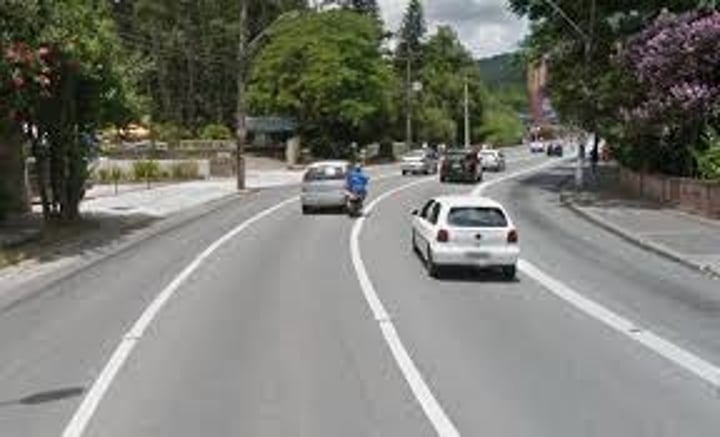
Single solid white line
Marks traffic lanes going in the same direction. This includes one-way streets.
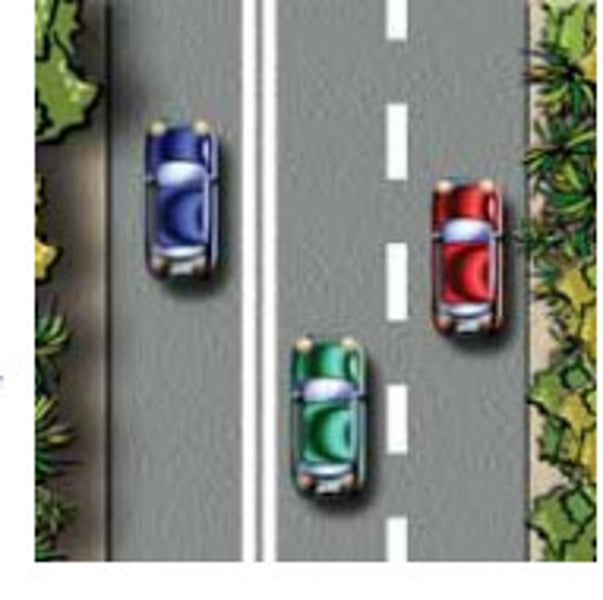
Double solid white lines
Separate lanes of traffic going in the same direction. Most often they are used to designate special use lane from conventional lanes, as when used to separate a High Occupancy Vehicle lanes from the other lanes of an expressway. You may not cross these lines. You may enter the designated special use lane only where signs and markings allow.
Broken white lines
Separate traffic lanes on roads with two or more lanes in the same direction
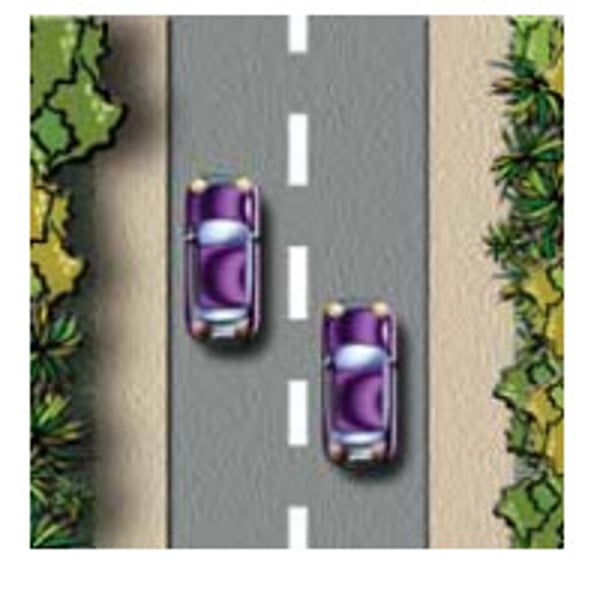
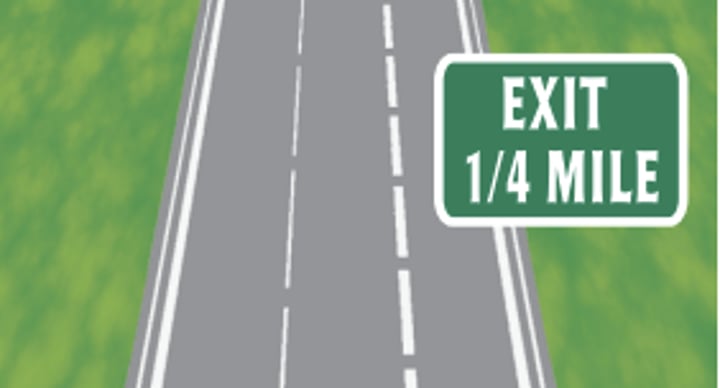
End of Lane Markings
Ending freeway and street lanes are usually marked with large broken lines. If you are driving in a lane marked with broken lines, be prepared to exit the freeway or for the lane to end. Look for a sign that tells you to exit or merge.
Yield line
A row of triangles in your lane, pointing toward your vehicle to indicate the point at which you are required to yield.
What is the fast lane?
The left lane or "number 1 lane"
What should you use the left lane for?
To pass or turn left
What should you use the right lane for?
To enter or exit traffic.
What happens if you try to last minute change lanes?
You increase your risk of collision.
Passing lane
On a multi lane road, the passing lane (far left lane) is the lane closest to the center divider, and is used to pass vehicles.
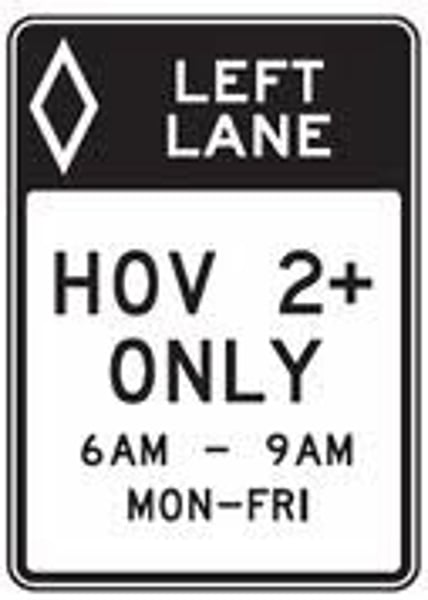
Carpool/High-Occupancy Vehicle (HOV) lanes
An HOV lane is a special lane reserved for carpools, buses, motorcycles, or low-emission vehicles with decals. Also, If you have a certain number of people in the car, some places will have signs telling you the minimum number of people, and what times the lane is in use.
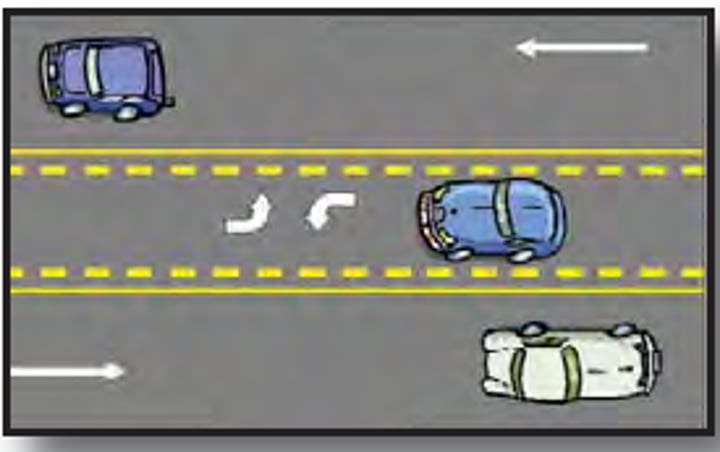
Center left turn lanes
A center left turn lane is located in the middle of a two-way street. It is marked on both sides by two painted lines. The inner line is broken and the outer line is solid. Use the center left turn lane to prepare for and make a left turn or U-turn. It is not a regular traffic lane or a passing lane. You may only drive for 200 feet in the center left turn lane.
Turnout areas or lanes
Some two-lane roads have special turnout areas or lanes. They are usually marked. Merge into these areas or lanes to allow cars behind you to pass. You must use a turnout area or lane to let other vehicles pass when you are driving slowly on a two-lane road where passing is unsafe, and there are 5 or more vehicles following you.
Bicycle lanes
Run along side vehicle traffic, typically marked by a single solid white line and signs. They are sometimes painted bright green to make them easier to see.
When is it legal to drive in a bicycle lane?
Parking(where permitted)
Entering or leaving the road
Turning (within 200 ft of an intersection)
Bike lane
Established along streets adjacent to vehicle traffic. Typically marked by a single solid white line that turns into a dash-line near an intersection.
Buffered bike lane
Uses chevrons or diagonal markings to provide greater separation from traffic and on-street parking.
Bike route
Uses bike route signs and/or shared road markings to designate a preferred route for bicyclists on streets shared with vehicle traffic
Bicycle Boulevard
Prioritizes bicycle travel on streets shared with vehicle traffic
Separated bikeway
For the exclusive use of bicyclists. Physically separated from vehicle traffic. Also known as a cycle track or protected bike lane. The separation may include flexible posts, grade separation, inflexible barriers, or on-street parking.
Shared roadway bicycle markings
Alert traffic that bicyclists can occupy the lane. When used appropriately, sharrows help bicyclists maintain a safe lane position.
Right turn
Drive closely to the edge of the road, If designated turn right at the opening. Signal 100 ft before turning, and you are allowed to be in the bike lane for 200 ft.
Right Turn Against a Red Light
You may turn right at a red light unless there is a "No turn on red" sign. Follow the same steps as a normal right turn.
Right Turn Against a Red Arrow
You may not turn right if you are stopped at a red arrow light. Wait until the light changes to green before making your turn.
Right Turn at a Public Transit Bus Lane
It is illegal to drive, stop, park, or leave a vehicle in an area designated for public transit buses. Signs will be posted to indicate the lanes are for "bus only" use. However, you may cross a bus lane to make a right turn.
Right turn onto a road with a dedicated lane
A dedicated right turn lane does not merge into another lane and allows you to make a "free right turn" without stopping first. You may make your turn even if there is a red light for vehicles going straight through the intersection. If there is a traffic light or sign on the right curb of the right turn lane, you must obey that light or sign. Always yield to pedestrians in a crosswalk when turning. If free right turns are not allowed, there will be a sign saying so
Left turn
Drive close to the center of the road, enter a designated left turn lane, if any. Don't cross any solid lines. Or enter a two-way center lane within 200 ft of the turn. Signal 100 ft from the turn.
Left Turn Against a Red Light
You may only turn left against a red light when you are turning from a one-way street onto a (left-moving) one-way street
U-turns
An 180 degree turn across a double yellow line. NEVER make a U-turn where a no U-turn sign is posted, at or on a railway, A divided highway, When you cant see clearly 200 ft in any direction, a one-way street in front of a fire station, Business districts.
Merging
Highway traffic has the right-of-way.
Exiting
Know and be aware of your exit, Plan steps to reach your exit, signal for 5 seconds when in the proper lane.
Crossing or Entering Traffic
When crossing or entering traffic from a full stop, signal and leave a large enough space to get up to the speed of other vehicles. It is important to know how much space you need for merging, crossing, entering, and exiting traffic. You need a space that is about:
• Half a block on city streets. (150 ft)
• A full block on the highway(300 ft)
Passing
When passing judge if conditions are safe to do so. Then signal, check for blind spots, drive into the passing lane, pass the vehicle, signal and return to your original lane.
DON'T Pass when...
You are approaching a hill or curve and can't see approaching traffic.Within 100 ft of an intersection, bridge, tunnel, railroad crossing, or other hazardous area.
When being pass you should do what?
Let the other vehicle pass you.
What are the steps to parallel parking?
1. Find a space
2. Pull up alongside the vehicle in front of the space
3. Check your blind spots
4. Begin backing up (at a 45% angle)
5. Straighten out (Turn the wheels 180%)
NOTE: Your wheels should be within 18 in of the curb.
6. Park the car
What are the steps of straight line backing
1. Traffic check
2. Signal
3. Check your blind spots
4. Begin to backup
5. Control (Be able to adjust the speed and steering.)
Parking on a Hill
Downhill: Turn front tires toward or into the curb or road shoulder
Uphill with curb: Turn front tires away from curb
Uphill and no curb: Turn front tires toward the road shoulder
Always set parking brake
Parking at colored curbs
Painted colored curbs have special parking rules.
Parking at a white curb
Stop only long enough to pick up or drop off passengers.
Parking at a green curb
Park for a limited time. The time limit may be posted on signs or painted on the curb.
Parking at a yellow curb
Load and unload passengers and freight. Do not stop longer than the time posted. If you drive a noncommercial vehicle, you are usually required to stay with your vehicle.
Parking at a red curb
No stopping, standing, or parking. Buses may stop at a red zone marked for buses
Parking at a blue curb
Parking for a disabled person or someone driving a disabled person. — To park here, you must display a placard or license plate for disabled persons or disabled veterans. Misuse of a disabled person parking placard or license plate will result in losing special parking privileges. It is punishable by a fine of up to $1000, imprisonment in county jail for up to 6 months, or both. — Disabled people with a placard or license plates may park in a parking zone with a time limit for any amount of time, regardless of posted time limits.
When/Where should you NEVER park or leave your vehicle?
Where a No Parking sign is posted.
On a marked or unmarked crosswalk.
On a sidewalk, partially blocking a sidewalk, or in front of a driveway.
Within 3 ft of a sidewalk ramp for disabled people.
In front of or on a curb that provides wheelchair access to a sidewalk.
In the crosshatch (diagonal lines area next to a designated disabled parking space.
In a space designated for parking of fueling zero-emission vehicles, unless you are driving a zero-emission vehicle.
In a tunnel or on a bridge, unless permitted by signs.
Within 15 feet of a fire hydrant of fire station driveway.
Between a safety zone and curb.
Double parked.
On the wrong side of the road or on the freeway, except
(In an emergency, When a law enforcement officer requires a stop, Where a stop is specifically permitted.)
How long on a freeway can a vehicle be parked, stopped, or left standing?
4 hours
Electric vehicle parking
Local authorities can reserve parking spaces for electric vehicles.
How can you drive green?
When speeding up and down do so smoothly.
Drive a steady speed.
Regularly inflate your ties, get oil changes, and check filters.
Get rid of extra weight on your vehicle.
What should you do in a law enforcement stop?
Turn on your right signal to acknowledge that you see the officer.
Move to the right shoulder, stop in a well-lit area when possible.
Turn off your radio.
Remain inside of your vehicle, unless told otherwise.
Roll down your window after stopping your vehicle and before the officer makes contact with you.
The driver needs to place their hands in a clear view on the steering wheel before making contact with the officer.
Do you have the right to say NO when an officer asks permission to do something?
Yes, but if they say there going to do it anyway you don't have the right to interfere with there actions.
In California who can ask about your immigration status?
A Federal law enforcement officer.
Are you allowed to record your interaction with law enforcement while in public.
Yes, you are protected by the first amendment.
NOTES:
If you are recording you HAVE TO IMMEDIATELY make it clear that you are recording.
You are NOT allowed to interfere with the officer's lawful duties.
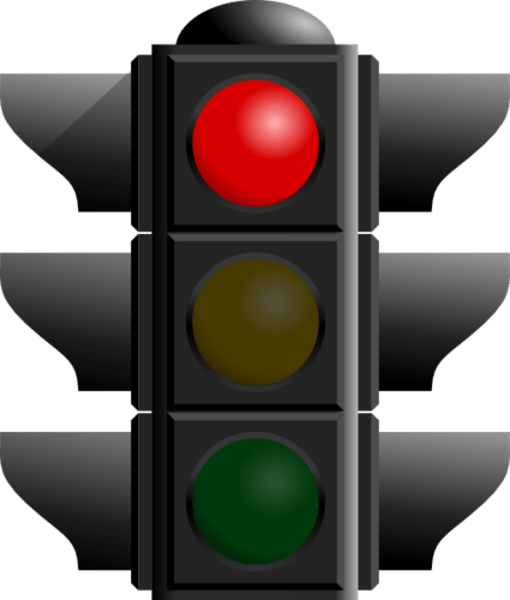
Solid red light
1. Stop
2. You can make a right turn after you stop and yield to pedestrians and traffic, and only when it is safe
3. You can't turn if a "No right thurn on Red" sign is posted.
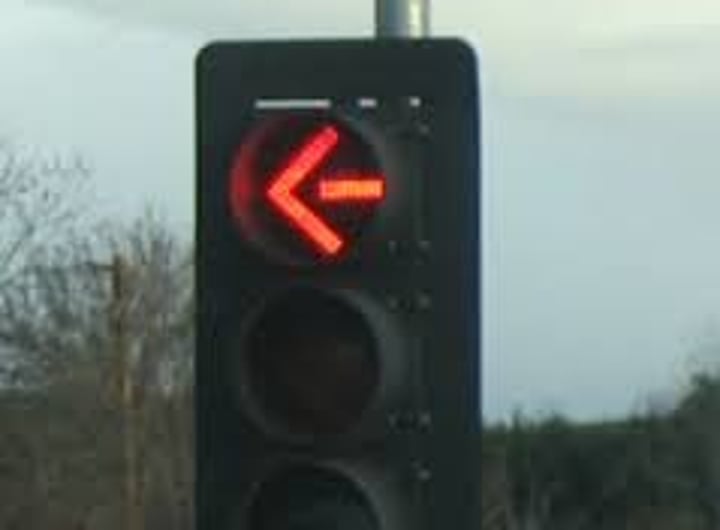
Red Arrow
A red arrow means STOP. Remain stopped until the green signal or green arrow appears. Do not turn against a red arrow.
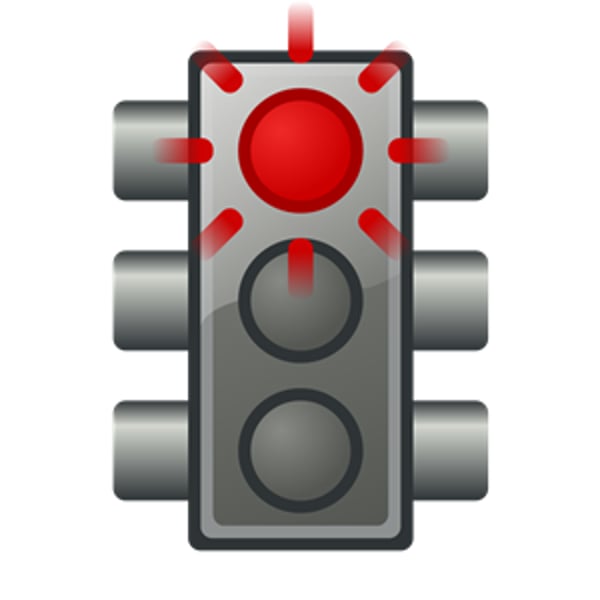
Flashing red light
Acts as a stop sign
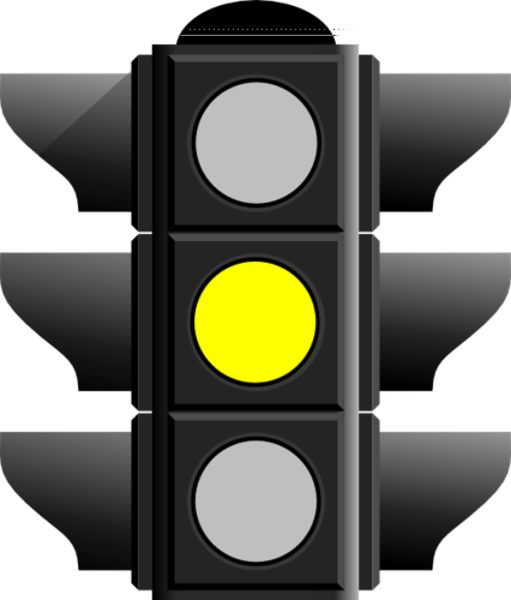
Solid yellow light
A yellow traffic signal means CAUTION.
The light is about to turn red.
If you see a yellow traffic signal light, stop, if you can do so safely.
If you are unable to stop safely cautiously cross the intersection.
Yellow arrow
The protected turning time period is ending. Cautiously complete your turn. Pay attention to the next signal.
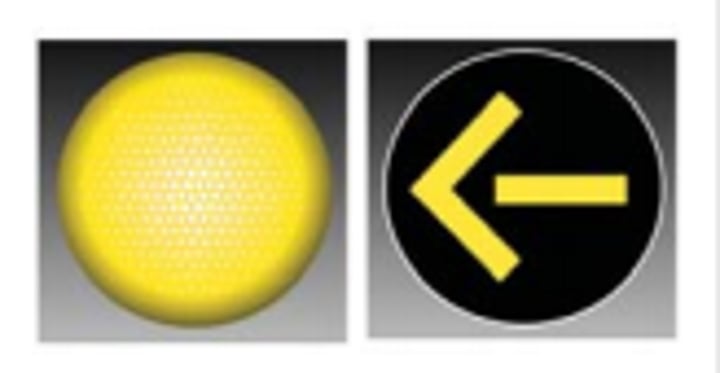
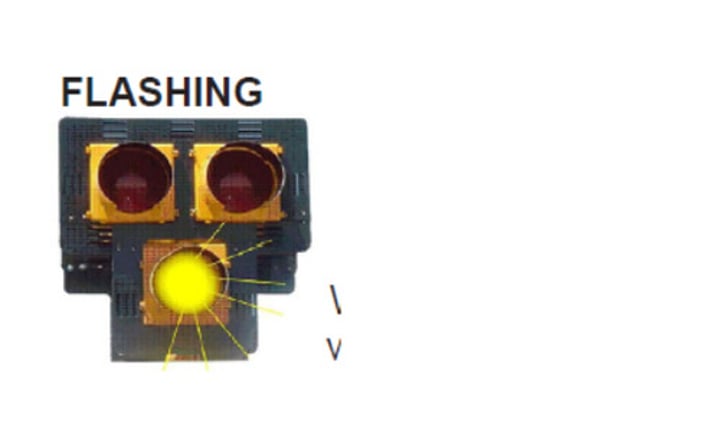
Flashing yellow signal
A flashing yellow traffic signal is a warning to PROCEED WITH CAUTION through the intersection. Slow down and be alert. YOU DON'T NEED TO STOP.
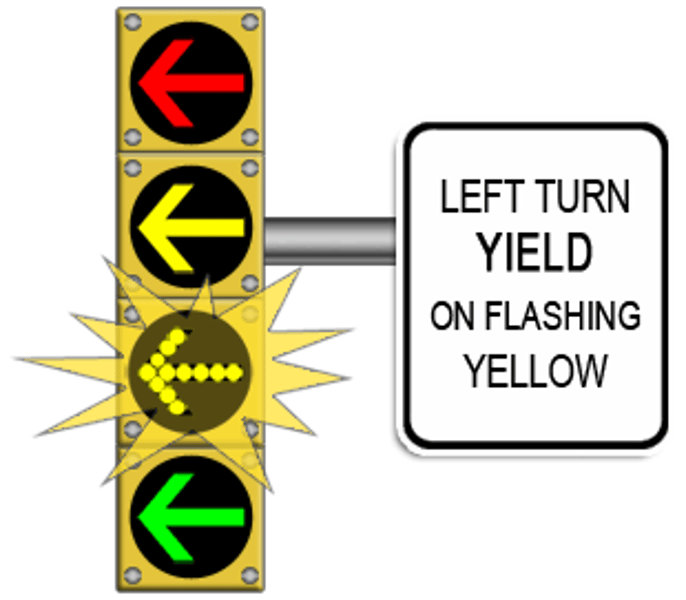
Flashing yellow arrow
You may turn in the direction of the arrow, if the way is clear. Yield the right-of-way to vehicles coming from the other direction and pedestrians in the intersection.
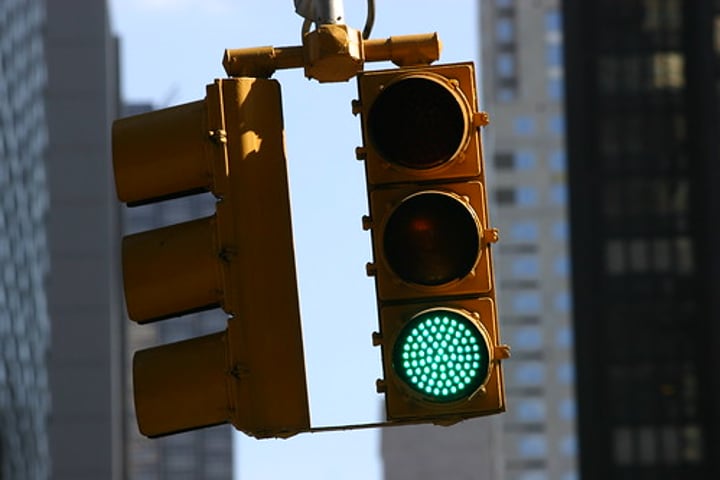
Solid green light
Green means GO. You should still stop for cars, people, and bicyclists already in the intersection.
Green arrow
A green arrow means GO, in the direction the arrow is pointing. It allows you to make a protected turn. ( Oncoming vehicles are stopped by a red traffic signal)
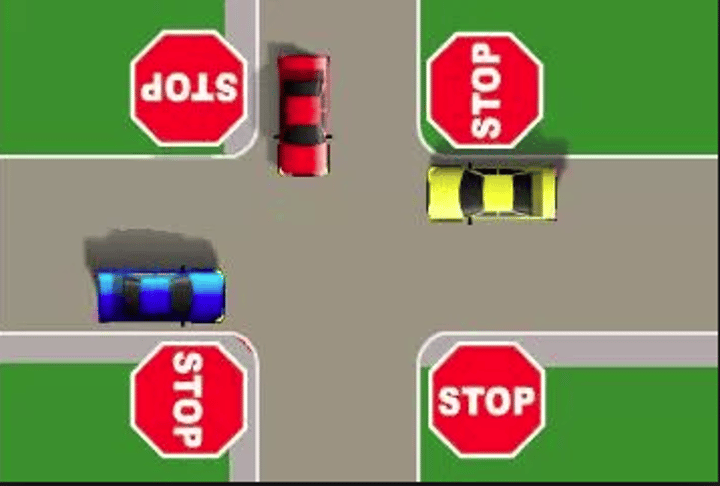
Traffic light not working
Stop before entering intersection, yield to any vehicles in intersection, give right of way to vehicles who arrive first or to your left, proceed with caution when clear.
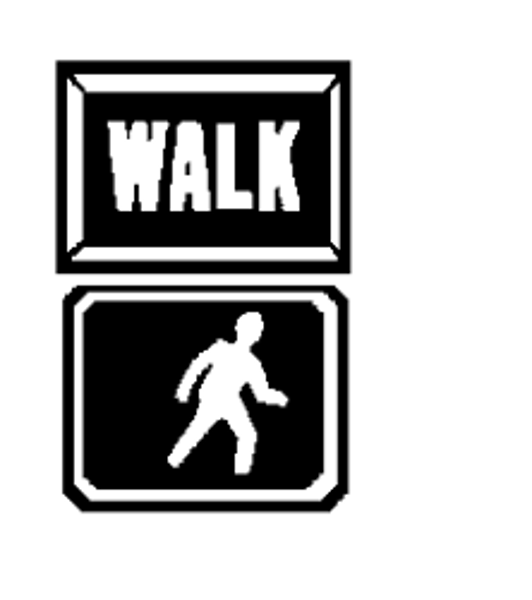
Walk or Walking Person
You may cross the street.
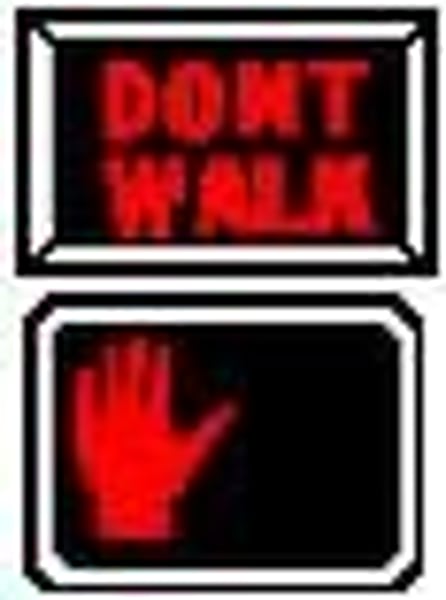
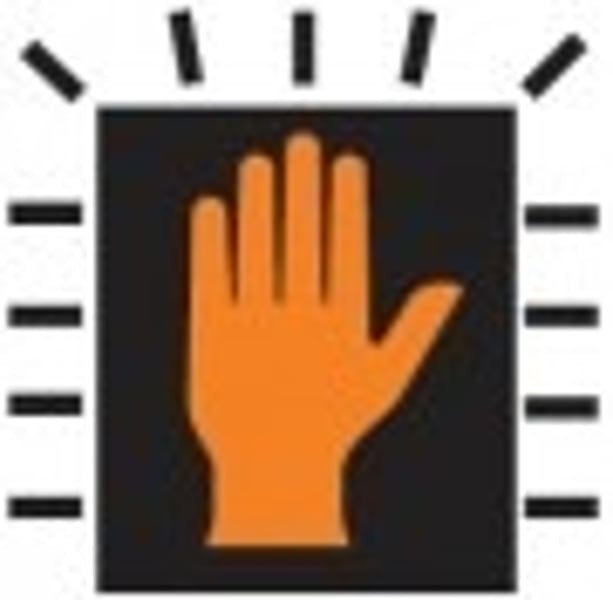
Don't walk or Raised hand
You may not cross the street
Flashing Don't walk or flashing Raised hand
Do not start crossing the street. The traffic signal light is about to change. Drivers must yield to pedestrians, even if the "Don't Walk" light is flashing.
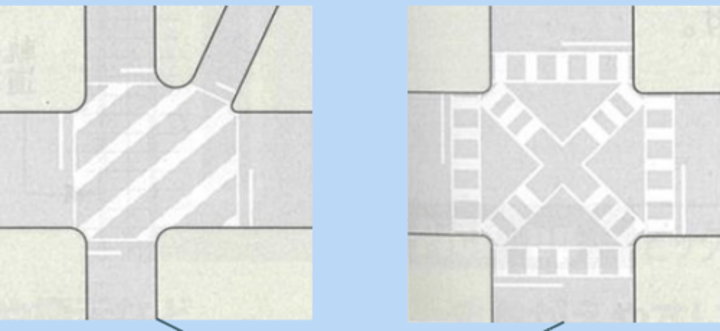
diagonal crossing
These are crisscross and diagonal crosswalks that allow pedestrians to cross the intersection in any direction at the same time. Cross only when the walk signal allows it.
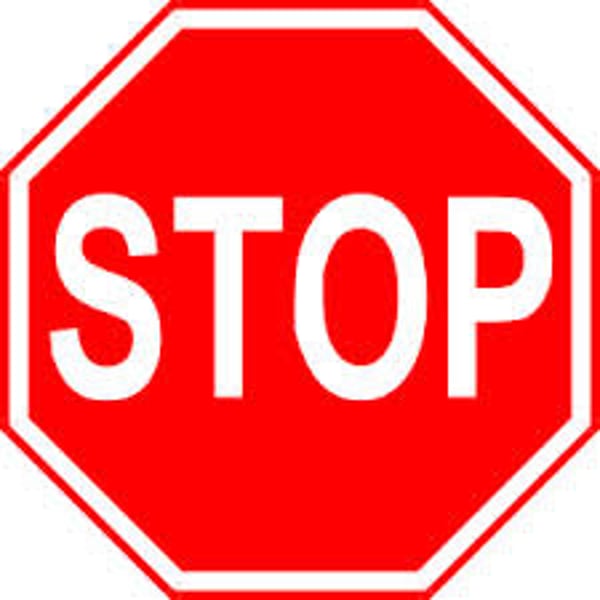
Stop Sign
Make a full stop before entering the crosswalk or at the limit line. If there is no limit line or crosswalk, stop before entering the intersection. Check traffic in all directions.
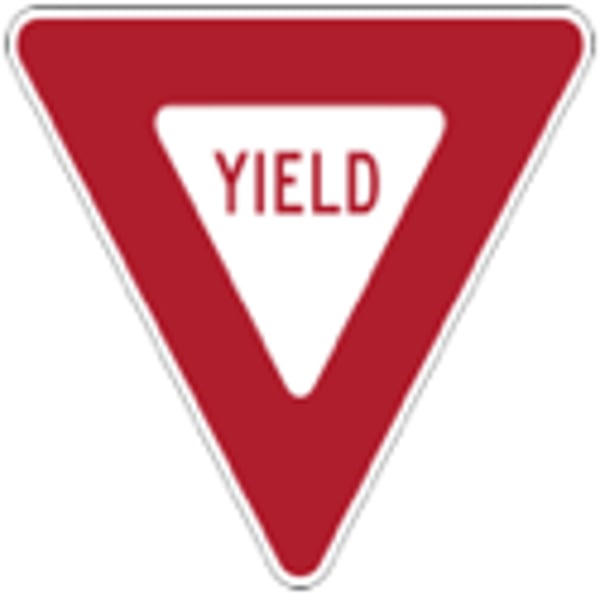
Red YIELD Sign
slow down and be ready to stop, if necessary, to let any vehicle, bicyclist, or pedestrian pass before you proceed
 Note
Note  Flashcards (45)