control of microbial growth
 Studied by 0 people
 Call Kai
 Learn
Learn Practice Test
 Spaced Repetition
 Match
Match Flashcards
 Knowt Play
1/49

There's no tags or description
Looks like no tags are added yet.
Name | Mastery | Learn | Test | Matching | Spaced | Call with Kai |
|---|
No analytics yet
Send a link to your students to track their progress
50 Terms
why is it important to control microbial growth ?
prevent food spoilage, infection, biofouling, contamination of medical equipment and ensure accurate lab identification
what are the four categories of microbes based on temperature preference ?
psychrophiles, mesophiles, thermophiles, extreme thermophiles
optimal temp for psychrophiles
0 - 20°C
optimal temp for mesophiles
12 - 45
optimal temp for thermophiles
40 - 80 hot springs
optimal temp for extreme thermophiles
65 - 113 deep sea hydrothermal vents
at what temp do most human pathogens grow best at ?
37°C (mesophiles)
what are acidophiles and where are they found ?
microbes that thrive in pH 0 - 5
found in volcanic soils and acid springs
what pH range do neutrophiles prefer ?
5 - 8
what kind of environment do alkalophiles thrive in ?
soda lakes and alkaline soils pH 9 - 11
what is pH ?
measure of conc. of H+ (hydrogen ions)
pH of ammonia ?
11 - basic
pH of sulphuric acid ?
1 - acidic
acidophile example
helicobacter pylori in stomach
obligate aerobes
microbes that require oxygen for aerobic respiration
obligate anaerobes
microbes that cannot survive in oxygen
rely on fermentation or anaerobic respiration
facultative anaerobe
can switch between aerobic and anaerobic respiration
aerotolerant
survive in oxygen but do not use it - rely on fermentation
do not change O2 conc. of solution
microaerophiles
require lower (than atmospheric) levels of oxygen for survival
osmotolerant
grows over wide range of osmotic conditions
halophile
requires high salt conc. to grow
xerophile
grows in extremely dry environments
the skin is rich in what ?
salt
what is decimal reduction time (D value) ?
time required to reduce viable population by factor of 10 (time to kill 90%) under defined conditions
what does thermal death time measure ?
time needed to kill all microbes at certain temperature
what does autoclaving do and how ?
uses moist heat under pressure to kill all microbes and endospores
15 - 20 mins
autoclave tape turns what colour when heated ?
black
what is pasteurisation ?
high temperature treatment for short time to kill pathogens, not all microbes
which pathogens does pasteurisation target ?
Mycobacterium tuberculosis, Coxiella burnetti, Salmonella, E. coli
what type of radiation breaks hydrogen bonds in DNA ?
non-ionising radiation like UV light
ionising radiation
x-ray and gamma
what does ionising radiation (e.g. gamma rays) do to DNA ?
destroys hydrogen and phosphodiester bonds in DNA
what is bacteriophage therapy ?
use of viruses that infect and kill specific bacteria
what are biofilms ?
microbial communities embedded in a self produced matrix (EPS) on surfaces
how does maggot therapy help in microbial control ?
maggots secrete proteolytic enzymes and antibacterial molecules that prevent infection and clean wounds
sterilisation
destruction/removal of all microorganisms
disinfection
destruction of microorganisms (pathogens) on surface
disinfectant
antimicrobial agent used on non living surface
antisepsis
destruction/inhibition of microorganisms in/on living tissue
preservation
prevention of multiplication of microorganisms in natural or formulated products eg. food
sanitation
removal of microorganisms from objects / environments to acceptable level
meets public health standards
antibiotics
severely toxic agents that kill/inhibit microorganisms
in what ways can different major antibiotic families disrupt cells ?
cell wall
DNA / RNA synthesis
plasma membrane
ribosomes
metabolic pathways
what are the 3 types of antibiotic actions ?
bacteriostatic: inhibits growth, cells remain alive
bacteriocidal: kills microbes, cells remain intact
bacteriolytic: kills and lyses cells, reducing total cell count
what factors affect chemical control agents ?
conc., exposure time, pH, presence of organic matter, microbial load
common antiseptics
alcohol (60-85%)
chlorhexidine
ammonium compounds
iodine
hydrogen peroxide
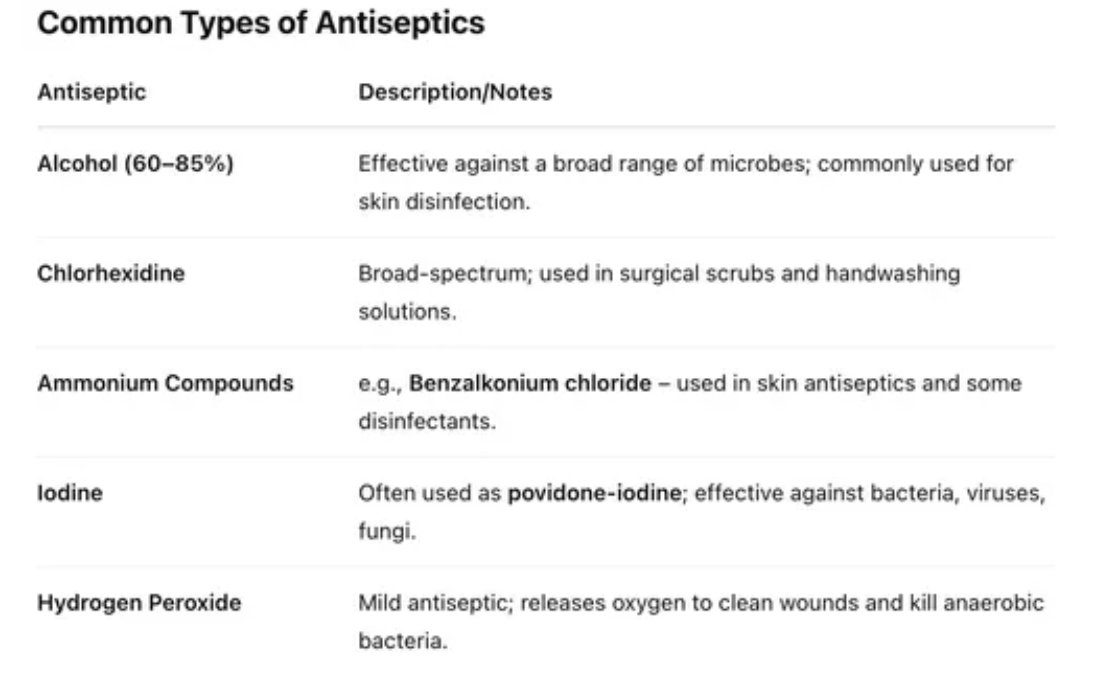
hydrogen peroxide is effective against
anaerobic bacteria
iodine is an effective antiseptic against
bacteria, viruses, fungi
common disinfectants
phenolics
quaternary ammonium compounds
aldehydes
halogens
common sterilising agents
formaldehyde
hydrogen peroxide
ethylene oxide
peroxyacetic acid
 Note
Note  Flashcards (22)