Plecoptera (Stoneflies)
 Studied by 0 people
 Call Kai
 Learn
Learn Practice Test
 Spaced Repetition
 Match
Match Flashcards
 Knowt Play
1/8

There's no tags or description
Looks like no tags are added yet.
Name | Mastery | Learn | Test | Matching | Spaced | Call with Kai |
|---|
No analytics yet
Send a link to your students to track their progress
9 Terms
Capniidae
“Small winter stoneflies.” Filamentous gills absent from thoracic and abdominal segments; hind legs do not reach end of the abdomen; 1-9 segment-long, membranous pleural fold; paraglossae and glossae about same length; postmentum small, not covering bases of maxillae
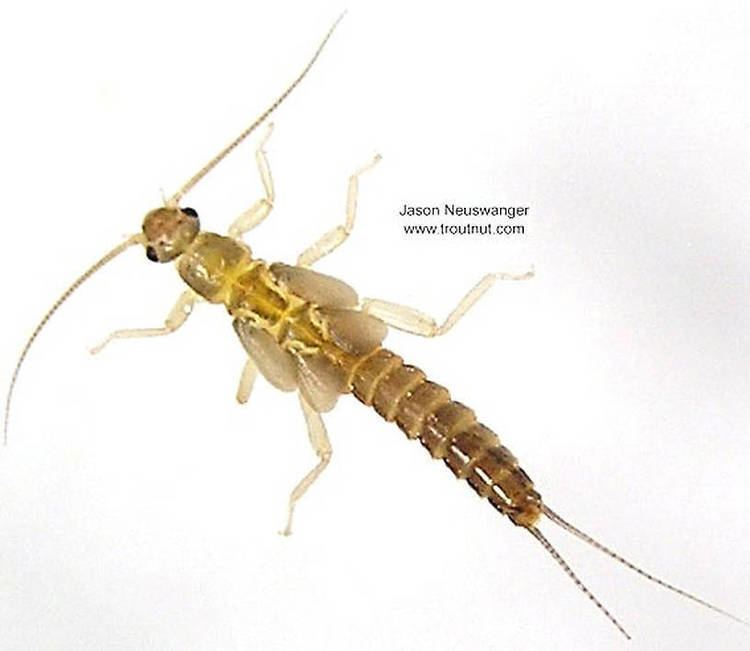
Leuctridae
“Rolled-winged stone flies, needleflies, willowflies.” Hind legs do not reach end of the abdomen; postmentum large, covering bases of maxillae; membranous pleural fold; hind wing pads more or less parallell
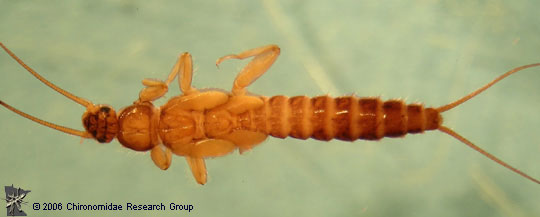
Nemouridae
“Spring stoneflies, forest flies.” Hind wing pads (2nd pair of wing pads) conspicuously divergent from body axis; hind legs reach about to the end of the abdomen; paraglossae and glossae about the same lengt; second tarsal segment of each leg is much shorter in length than the first
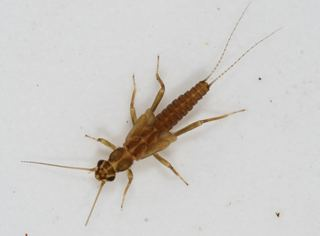
Taeniopterygidae
“Broadbacks, winter stoneflies.” Often slow-moving and covered in debris; paraglossae and glossae about the same length; divergent wing pads; second tarsal segment of each leg is about the same length as the first
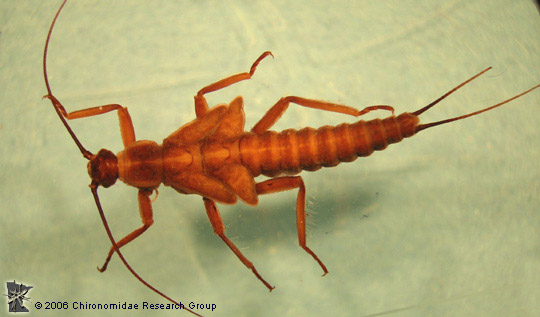
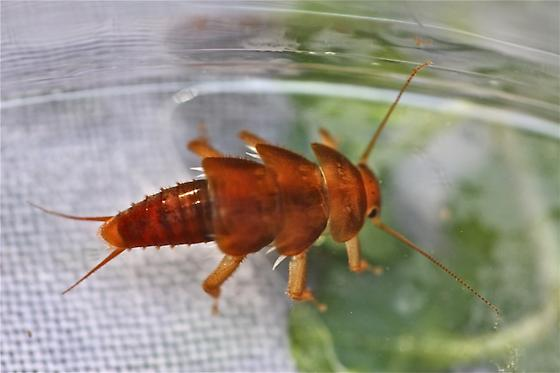
Peltoperlidae
“Roach-like stoneflies.” Small, stocky body with tapered and pointed gills that are partly hidden by the large, overlapping thoracic plates; thoracic gills conical in shape and occur singly or doubly; paraglossae and glossae about the same length; have a broad, roach-like body
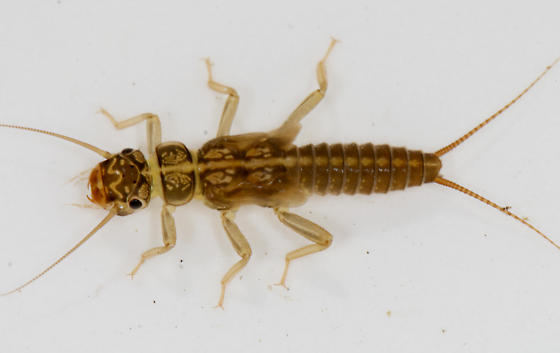
Perlodidae
“Stripetails, springflies, yellow stones, patterned stoneflies.” Patterned head and thorax and often longitudinal black and yellow stripes on the abdomen; filamentous gills absent from thoracic and abdominal segments; glossae much shorter than the paraglossae (looks deeply notched); cerci are about the same length as the abdomen
Chloroperlidae
“Green stoneflies.” Small, elongate and cylindrical body; filamentous gills absent from throacic and abdominal segments; glossae much shorter than the paraglossae (deeply notched); hind legs reach about to the end of the abdomen; cerci no more than ¾ as long as abdomen; thoracic terga (segments) without a dark pattern
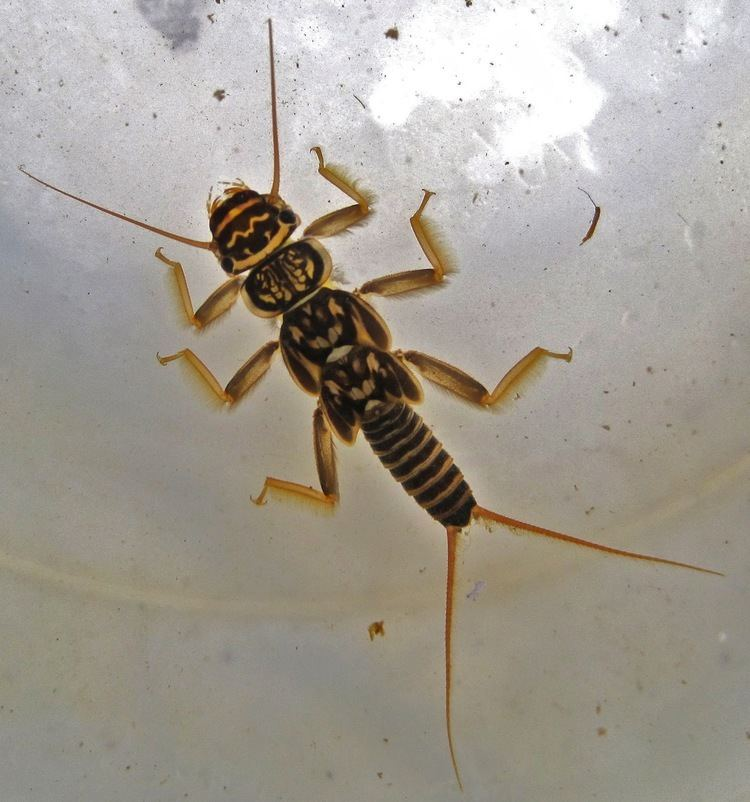
Perlidae
“Common stoneflies.” Glossae much shorter than the paraglossae; multi-branched, filamentous gills present laterally and ventrally on thorax, but not on abdomen; generally black and yellow larvae
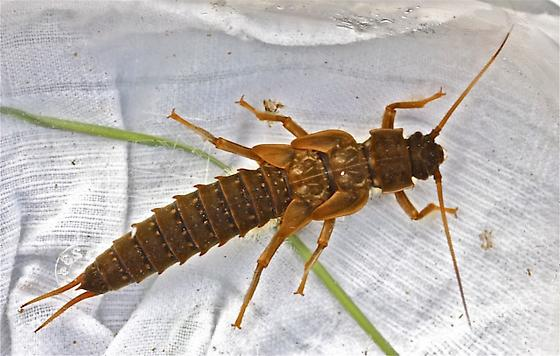
Pteronarcyidae
“Giant stoneflies.” Head to be tilted downward; tufts of filamenous gills on thorax and first two abdominal segments; paraglossae and glossae about same length
 Note
Note  Flashcards (46)