Age of Dinosaurs Exam 2
 Call Kai
 Learn
Learn Practice Test
 Spaced Repetition
 Match
Match Flashcards
 Knowt Play
1/62

There's no tags or description
Looks like no tags are added yet.
Name | Mastery | Learn | Test | Matching | Spaced | Call with Kai |
|---|
No analytics yet
Send a link to your students to track their progress
63 Terms
indeterminate growth
growth slows down over time (reptiles), usually ectothermic
determinate growth
reach adulthood and stop growing (birds and mammals), usually endothermic
estimating dino ages
using growth series, bone growth lines
skin impressions (dinos?)
usually look somewhat scaly or uniform in pattern with circular indentations
known from ornithopods, theropods, and ceratopsians
some have scales other have feathers/feather-like
dino eggs (oldest known, material, shape, size, dinos)
oldest known eggs: late triassic
early dinos: soft-shelled
later: organic matter, crystalline calcite (CaCO3)
could be spherical, oblate spheroid, semiconical, prolate spheroid
ranges from 3cm to 30 cm
eggs well known from theropods, prosauropods, sauropods, ceratopsians, ornithopods
egg microstructure
inner organic: eisospherite layer
external crystalline: exospherite layer
mammillary layer (most inner), column layer, cuticle layer (most outer)
pore conductance in dino eggs
8-16x faster than birds
eggs laid in a low O2 environment, high CO2, and high H2O environment (burying eggs or covering them with vegetation)
rotting vegetation provides extra incubation for eggs (need for ventilation in order to get air underneath vegetation)
ID dino eggs
eggs contain embryos
are closely associated with hatchlings or adults
mound nests
nest provides both protection and incubation through the decomposition of surrounding vegetation
decreases oxygen supply so increased pores of eggs to take in more oxygen
observed in modern alligators, crocs, birds
hole nests
excavation into sand
clutch size
2-35 (comparable to birds)
R selected nests
many eggs
no parental care
hole nests
ex: sauropods
K selected nests
fewer eggs
parental care
mound nests
ex: ornithopods
parental care evidence:
skeletons of hatchlings around nests
bones/footprints of adult dinos of same species
brooding behavior (oviraptor, psittacosaurus) sit the same way modern birds do
direct evidence for diet
stomach contents
dung
indirect evidence for diet
stomach stones
teeth and jaws
height and overall size
stomach contents
hardosaur mummies: conifer twigs and needles (have tooth battery to break down)
sinocalliopteryx: theropods and birds
dienocheirus: fish vertebrae and scales
coelophysis: lizard
coprolites
feces stone
difficult to link to species: look at size grooves, contents, and associated fossils
carnivore coprolites most common because phosphatic minerals in bone aid preservation
gastroliths
stomach stones that are swallowed and held in gizzard
function
grind food and aid in digestion
relieve hunger pangs
serve as ballast while swimming (to make them sink): modern crocs and alligators
must be found in chest region for more than one specimen to be considered valid
carnivore teeth
numerous sharp serrated blade-like teeth in powerful jaws, designed to stab, tear, and slice flesh
velociraptor: recurved and oval cross-section for slicing
t-rex: less/not recurved and circular cross-section for crushing
herbivore teeth
flatter, leaf-shaped teeth, sometimes arranged in dental barriers, massive jaws and skulls
designed to tear, slice, pulp, or grind
footprint record (when, where, important)
upper triassic to upper cretaceous
all continents except antarctica
important: provide information about posture, gait, foot structure, speed, soft anatomy, and social behavior
footprint
results from interaction between living dino’s foot and substrate upon which it walked
trackway
sequence of consecutive footprints
pace angle
measurement to determine gait or posture (angle between left and right footprints)
trackways (interpretation, hypotheses)
interpretations:
migration
predator/prey interactions
herd or pack behavior: multiple trackways of the same dinosaur, in the same direction, at the same speed, in the same layer
hypotheses: must be tested by estimating the speeds and spacing of tracks
group behavior evidence
trackways: multiple trackways of the same dinosaur, in the same direction, at the same speed, in the same layer
mass death assemblages: must be differentiated from environmental accumulation
parental care
display structures: recognition of mates or opponents
gender dimorphism: recognition of males vs. females, provides males with display/defense structures
change in shape during growth: recognition of juveniles vs. adults
ectotherm
regulate temperature using external sources
endotherm
regulate temperature internally
poikilotherm
fluctuating temperatures
homeotherms
stable temperatures
pros and cons of endothermy
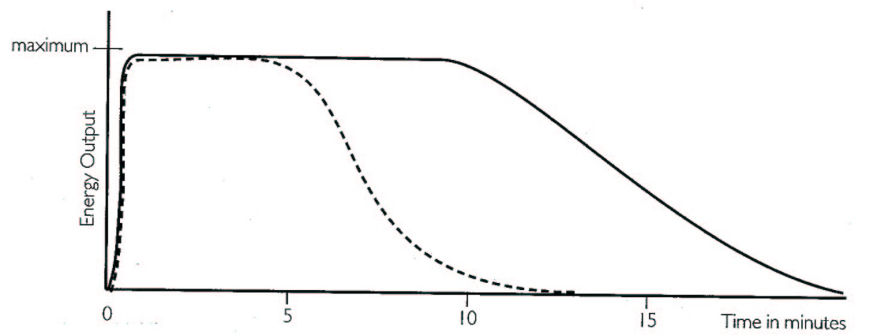
pros: oxygen consumption and energy output of endotherms is greater than ectotherms (higher levels of activity of activity sustained)
cons: endothermy much more costly in terms of energy use than ectothermy (depends on life habits/environment if its worth it)
solid line: endotherms
ectotherms: dotted line
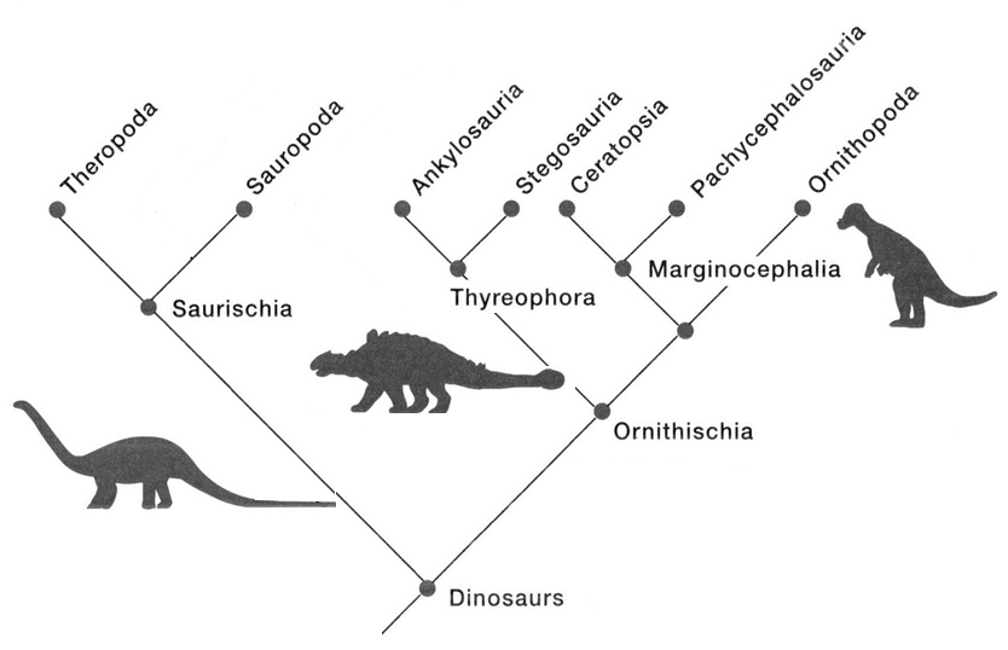
evolutionary tree for major lineages
stegosaurs (name, pedal, diet, fossils)
roof lizard
quadrupedal
herbivore
trace fossils: trackways of adults and babies, no eggs or nests (leathery eggs?)
Ankylosaur (name, pedal, diet, fossils)
fused lizard
quadrupedal
herbivore
trace fossils
trackways from N and S america, europe, asia
hatchlings, but no nest or eggs
arbour (research question, organism, data, conclusion)
research questions: the goal of this study was to reconstruct tail club function in ankylosaurs through the use of bone descriptions, CT scans of clubs, muscle reconstructions and math modeling
organism: dyplosaurus, eupophealus
data she collected: muscle mass and bone mass using CT imaging, calculated inertia, cross-sectional area, vertical flexibility and angle of tail swing
conclusions:
move 100 degrees laterally
larger tail clubs could break bone
tail swinging behavior is feasible, but unclear whether it was used for defense against predators, combat within the same species, or both
pachycephalosaurus (name, pedal, diet, fossils)
thick head
bipedal
herbivore and omnivore
trace fossils: none known! majority of specimens are cranial only
ceratopsians (name, pedal, diet, fossils)
horned face
bipedal/quadrupedal
herbivore
trace fossils: nests, eggs, and embryos, and trackways
griffin (origin, region/people, evidence, protoceratops vs. griffin)
explanation of origin: ancient people mistook fossils for mythical beasts
region and people: saka-scythian nomads told the greeks (800 BC)
supporting evidence:
historical: including writing by Greek authors that describe griffin as an actual animal, as opposed to being associated with a god or with supernatural powers
archaeological: including Scythian mummies that show tattoos of griffins that predate greek writings; also ceramics that provide illustration of griffins that can be compared to protoceratops
geological: including fact that protoceratops skeletons and nests occur in the same geographic area as gold and the scythian peoples
similarities and differences between protoceratops and griffin
similarities curved beak, nests, shoulder blade (mistaken for wing), broken frill (mistaken for ears)
difference: talons (no sharp, curved claws in protoceratops)
dinosaur color
melanosome: pigments that determine color
important: certain colors more likely to be preserved, confirm different colors or feathers of certain dinos (countershading and camouflage)
found in: microraptor, psittacosaurus (a ceratopsian)
predation evidence for T-rex
o Speed: t-rex were slower, but larger metatarsals than prey and fast enough to catch them (use tail to propel) – why have an adaptation for speed if they’re only scavenging
o Catching dinner: evidence of failed predation attempts on duck-billed dinosaurs (healed bite marks on fossils suggesting they were attacked by a t-rex and survived)
o Strong arms: stress fractures present on the arms so t-rex could have grappled with prey with its arms
scavenging evidence of t-rex
olfactory lobes of t-rex are really enlarged in tyrannosaurs
testing hypotheses of feeding behavior in t-rex:
compare most similar current environment to the cretaceous and how much prey on average the t-rex would be able to scavenge and do mathematical analysis for whether that would be able to sustain them
use physics and mathematical models to estimate the speed t-rex can reach and compare it with its prey
ID footprints
determined by size, shape, number of toes, substrate, and associated body fossils (footprints get their own names)
problems: many footprints cannot be matched to dinos
ectothermy evidence
o Nasal adaptations: lack respiratory turbinates (thin bones in nasal cavity designed for reducing moisture/heat loss) absent in current ectotherms
o Growth rings in teeth: similar to crocodiles (crocodiles are ectothermic and hints at the inability to regulate their temperature on their own)
endothermy evidence
o Upright posture: only found in dinos, birds and mammals (linked to modern endotherms)
o Presence of feathers: similar to birds (linked with modern endotherms)
o Locomotion: running activity in bipedal dinosaurs (endotherms can sustain longer/harder levels of activity)
o Parental care: more common in endotherms (parental care requires lots of energy, that ecotherms don’t have)
o Metabolic chemistry: oxygen byproducts (oxygen consumption higher in endotherms)
endothermic dinos
theropods followed by ornithopods
long legs, bipedalism, feathers (in theropods), running, locomotion, parental care, and large EQ both of these groups have which are all endothermic evidence
how to test endothermic v. ectothermic
o En: look at trackways and bone structure to see if upright posture
o Ec: look at growth rings in teeth
o En: testing for presence oxygen byproducts in bone
walking with dinos (estimating dino speed based on trackway)
Problems: guy who did the study gave a random group of animals (humans have completely different hip structure), did not calculate the equation of the line and calculated with eyeball line (stride length to DS)
ceratopsian special (function, how to test)
function of frills:
defense
display for sexual selection
how to test:
compare skeletons and see if frills only develop in adults (display)
3D digitization or CAT scans to reconstruct muscle
identify: large horns on face (brows, nostrils, top of frills), frills on top of head
pachycephalosaurs special (function, evidence)
function of thickened skull:
head butting, intraspecific competition, interspecific defense, sexual dimorphism
evidence for it:
head butting/defense: 22% of domes have lesions consistent with bone infection
some argued it was for species recognition, disproven later
identify: big dome and horns surrounding it, bipedal
ankylosaur special (function, how to test)
functions of tail club: defense against predators, combat within species
how to test functions: muscle reconstruction, mathematical modeling to see what force it would withstand/exert
identify: dermal armor, wide and flat bodied, shaped like a flattened soda can
stegosaur special (function, how to test)
thagomizer: tail spikes (used for defense against predators or offense when being territorial or protecting eggs)
function of plates
protection: armor
peer recognition: mating displays, sexual dimorphism
thermoregulation: maintain thermoregulation of stegosaurs (heavily vascularized)
how to test functions:
thermoregulation: experimental model for how fast a surface heats or cools downs
display: compare plate size and shape of adult and juvenile fossils
how to identify: thagomizer and plates on spine
stegosaur novelties
large and block-like wrist bones
no bony tendons down back and tail (flexible)
ridge of bone that sticks out near the scapula
ankylosaur novelties
tail vertebrae fused to hip vertebrae and hip bone
development of shield along their back of symmetrically placed bony plates and spines
closure of antorbital and upper temporal fenestrae
ceratopsian novelties
larger premaxilla
widely flared cheekbones
rostral bone in skull
pachycephalosaur novelties
thickened skull roof
longer hip ribs
bony tendon in the tail
ectothermic dinos
sauropods, ankylosaurs
quadrupedal, no feathers, slow-moving
testing hypotheses (general)
- Using modern analogs to compare
- CT scanning (looking at internal structures)
- 3D for external structures
- Mathematical models
- Look for damage on dinosaur or their competitors/predators
stegosaur: where and when
mid jurassic → early cretaceous
northern and southern americas, europe, asia, africa, australia
ankylosaur: where and when
mid jurassic to late cretaceous
all continents
ceratopsian: where and when
late jurassic to cretaceous
north america, europe, asia
pachycephalosaur: where and when
early to late cretacoues
north america and asia
Explore top notes

Explore top flashcards
