IB Biology : neural signalling C2.2
 Call Kai
 Learn
Learn Practice Test
 Spaced Repetition
 Match
Match Flashcards
 Knowt Play
1/52

Earn XP
Description and Tags
done, but did not do saltatory conduction
Name | Mastery | Learn | Test | Matching | Spaced | Call with Kai |
|---|
No analytics yet
Send a link to your students to track their progress
53 Terms
Stimuli
a change in the environment
sensory imput
stimuli which are perceived by our senses, like smell, sight, touch, taste and hearing
nervous system
organised network of neurons in the body which transmits nerve impulses between parts of the body.
parts of nervous system
central nervous system
peripheral nervous system → somatic nervous system (voluntary control) and automic NS
autonomic NS: sympathetic (fight, flight or freeze), parasympathetic (rest and digest)
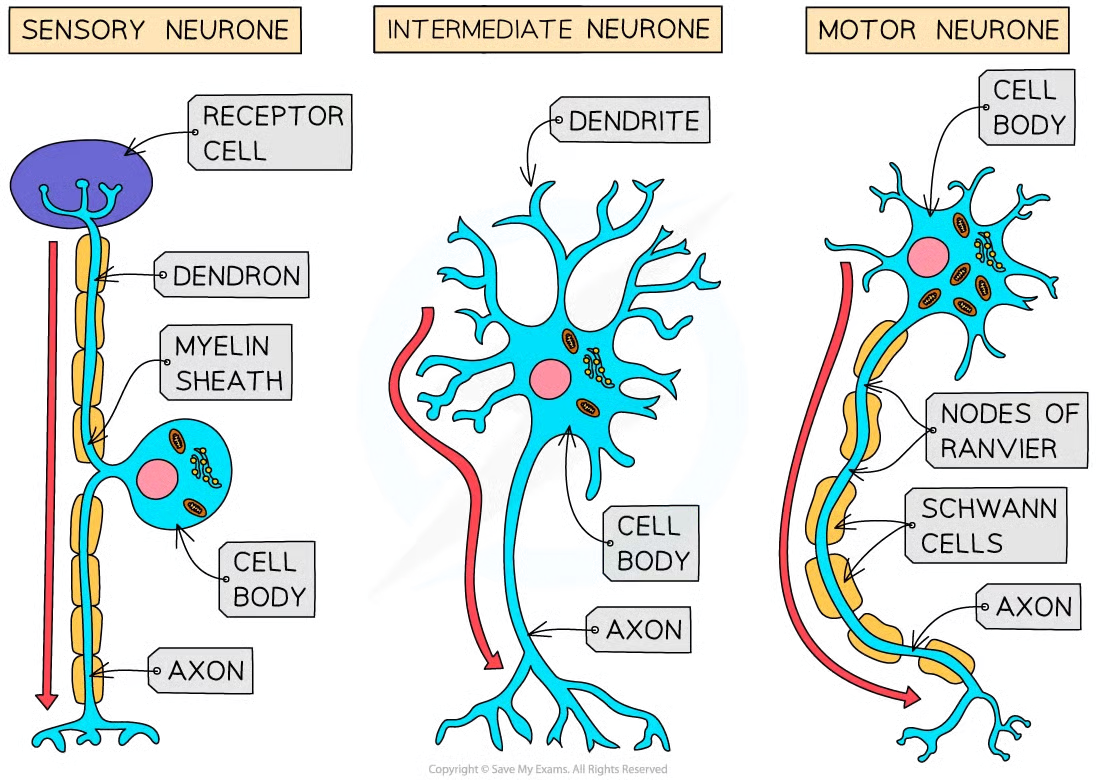
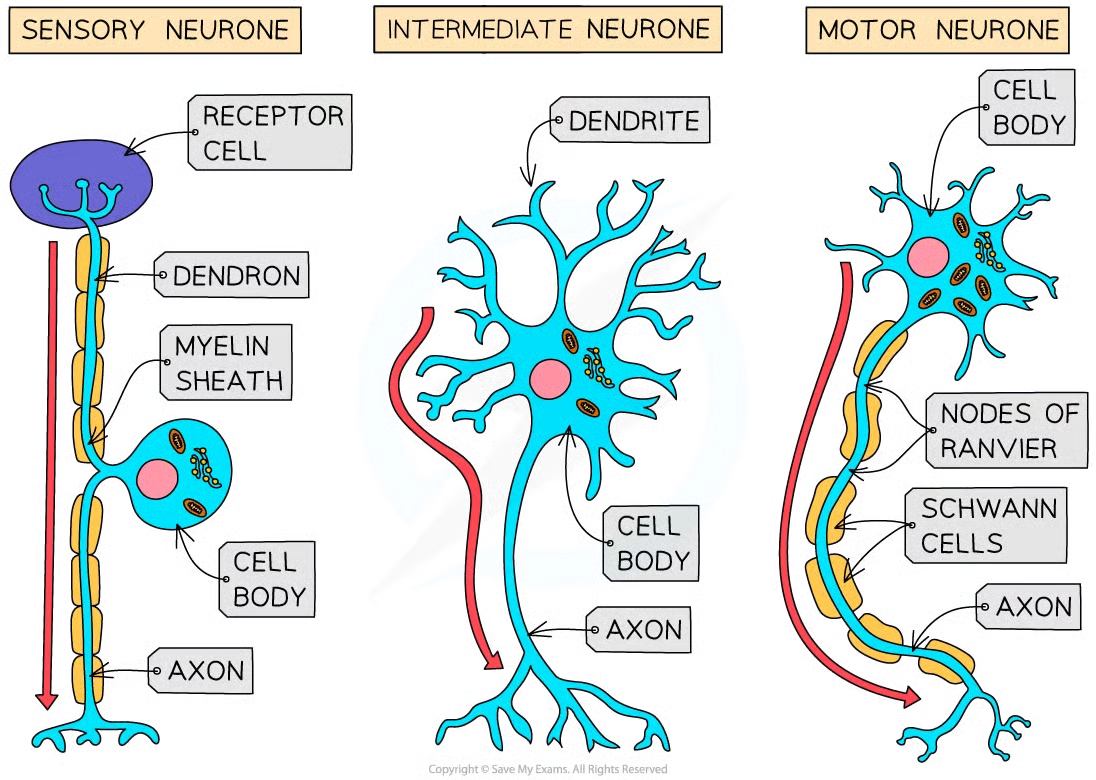
structure of a neuron
contains nucleus, but no centrioles as it doesn’t reproduce
dentrites are small, branched extentions of axon head
synaptic knobs
cell body = soma
the thing connection the neuron body and the long thing (axon) is the axon hillock
action potential
a rapid, temporary change in the electrical membrane potential of a neuron or other excitable cell
schwann cell
type of glial cell that separates and insulates nerve cells. in the peripheral nervous system, schwann cells secrete myelin
myelin sheath
a protective, insulating layer around the axon, made up of 75% lipids and 25% proteins
Oligodentrites
secrete myelin in the central nervous system
name of spaces without myelin in schwann cells
nodes of Ranvier
types of neurons
sensory neurons
intermediary/relay neurons
motor neurons
Resting potential ration of Na, Cl, organic anions and K ions
Sodium and chloride ions greater concentration outside
Potassium, and organic anions greater concentration inside
causes potential difference between inside and outside
inside negative, outside positive
resting potential
potential of the cell when not stimulated, -70mV, disturbed when neuron conducts signals
nerve impulse
temporary reversal of electrical potential in membrane → the signal transmitted along a nerve fibre, which is transmitted to another neuron or effector cell
sodium potassium pump
takes 3 sodium ions out of cell, and 2 potassium ions inside of cell using ATP
causes a negative charge to build up inside of cells. neuron is polarised
resting potential
potential difference across neuron cell membrane when cell isn’t stimulated
Action potential
sudden depolarisation and polarisation of the electrical potential across a plasma membrane, as a nerve impulse passes through a neuron.
factors which generate an action potential
sodium potassium pump
leakage of ions back across the membrane by simple diffusion
negatively charged proteins inside the nerve fibre
process of depolarisation
stimuli/ neurotransmitter binds to receptor
sodium channels opens
sodium ions diffuse inside of cell
reverses polarity of axon fiber and depolarises it ( positively charged ions charge in )
this travels as a wave throughout the entirety of the axon
factors for nerve conduction velocity
amount of myelination: more myelin, faster the action potential moves
diameter of axon: larger diameter, faster propagation. this is because less SA for leakage of ions
temperature: the warmer, the faster the transmittion
proper term for speed at which a nerve impulse travels down
nerve conduction velocity
squid axon
no myelin sheath, but because half a mm thick still have reasonably fast nerve impulse
what are synapses ?
they are junctions between neurons and effector cells. neurotransmitters can only go in one direction
synaptic knob
end part of axon terminal
synaptic cleft
space between two neurons
neuromuscular junction
specialised synapse betwen a motor neuron and muscle fiber
the motor neuron releases acetylcholine, which binds on receptors of sarcolema, and causes depolarisation of sarcolema → release of calcium from sarcoplasmic reticulum
speed variation of nerve impulse with and without myelin sheath
myelin sheath, faster
types of neurons and their characteristics
motor neuron : many fine dentrites, and a single fine long axon. Carry impulses from CNS to a muscle (effector)
sensory neuron: cell body is partway thought the axon
relay neuron: numerous short fibres and no myelin sheath. Occur in the CNS, connect sensory and motor neurons
leakage
the membrane of the axon is much more permeable for potassium that for sodium
so potassium can more easily leak out
neuroglandar junctions
junctions between neurons and glandural cells (glands)
two types of neurotransmitters
small molecules ( synthesised in axon terminal and stored in membrane bound molecules )
large peptide molecules ( synthesised by ribosomes and transported by the vesicles)
How to measure changes in membrane potentials
Using an oscilloscopes, with miliseconds and millivolts
action potentials during nerve impulses, the steps
resting potential, -70mV
Threshold is reached
depolarisation, sodium flows in, peaks at 40mV
repolarisation, decreases again, as potassium goes in
hyperpolarisation (temporarily goes under -70mV)
goes back to resting potential
release of neurotransmitters
action potential travels down presynaptic neuron,
the action potential causes the voltage gated calcium ion channels to open
calcium ions flow into the presynaptic neuron
the ions induce exocytosis in the vesicles, go in synaptic cleft
vesicules fuse with the membrane and release the neurotransmitters into synaptic cleft
neurotransmittors bind to receptors on postsynaptic neuron or effector cell
(easy, always say it) a postsynaptic response is initiated
what happens after neurotransmitter binds
neurotransmitter ( acetylcholine ) diffuse through synaptic cleft, bind to receptors. Acteylcholinesterase breaks it down
sodium ion channels open and sodium goes into neuron, causing depolarisation
potential goes from -70mV (resting potential), to -50mV (threshold potential)
the sodium ions flood the axons, making local current, causing voltage gated sodium channels to open and enter the axon, causes action potential
diffusion both inside and outside axon can cause action potential to be reached
the potential goes up to +40mV, in a positive feedback loop
sodium channel closes, voltage gated potassium channels to open, making potassium ions diffuse out, briefly causing hyperpolarisation
this causes depolarisation of the membrane, eventually closing potassium channel
sodium potassium pump restarts , leading to resting potential of -70mV
refractory period neuron
period after repolarisation where cell is unable to generate action potential, allowing action potential to move in an unidirectional manner along the axon
quick overview of sodium potassium channel
requires atp
3 sodium ions out
2 potassium ions out
causes negative charge inside the cell
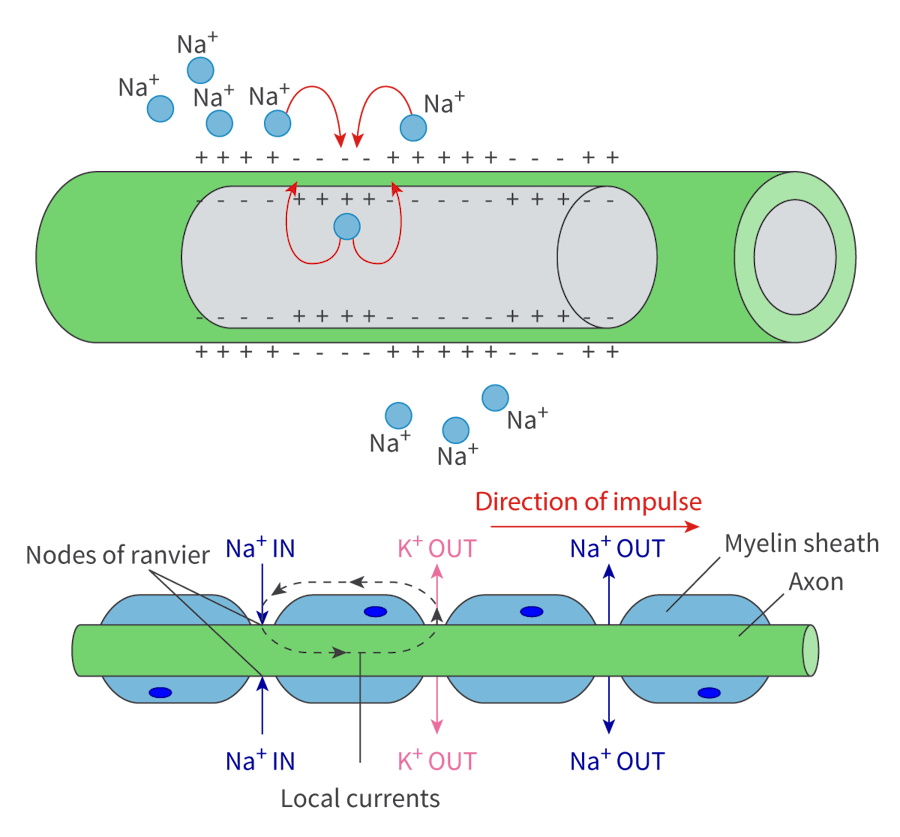
how does myelination increase speed of conduction of action potential
myelinated: action potential jumps from one node of ranvier to the next
unmyelinated: continusly propagates only length of axon
oscilloscope
graph displaying device which can be used to measure the membrane potential across an action membrane
can be used to record and display voltage changes
electrodes are placed on both sides of the membrane
horizontal is time in ms and vertical is membrane potential in mV
saltatory conduction
sodium-potassium pumps and channels are clustered at nodes of Ravier
myelin sheath covering provides electrical resistance to leakage of ions, and prevents depolarisation of the membrane
exogenous chemicals
act as agonists for receptors
mimic the effect of the actual (endogenous) neurotransmitters
neural communication pathways are altered
originate from outside the body
neonicotinoids effects on bees
class of chemicals similar to nicotine
completely block synaptic transmition by irreversibly binding to the acetylcholine receptors
acetylcholine cannot bind to receptors and transmition is prevented
causing paralysis and death
bad as oftentimes used in pesticides
cocaine effects
binds to the synapse of the dopamine receptor re-uptake pumps, which causes it remain the in synaptic cleft
binds to dopamine transporter protein
prevents dopamine from binding to dtp, causing it to build up in the synapses
amplifies the signal
it will bind to the dopamine receptor constantly
inhibitory neurotransmitters
certain neurotransmitters bind to the membrane, and cause a more negative membrane potential, making action potential reaching threshold unlikely
example: GABA → binds to receptors on cell membrane, activate negative ion channels which flow in
membrane is even more negative, more difficult to depolarise
hyperpolarisation
when the membrane potential of a neuron is more negative than it’s resting potential
can occur when potasium ion channels open, causing many potassium ions to diffuse out
or when chloride ion channel open, leading to influx of negative ions
this makes action potential more difficult to achieve
summation
combined effect of the excitatatory and inhibitory stimuli such as K^+ ions going out and Na^+ ions going in
inhibitory synapse activates at the same time as excitatory synapse
effects cancel out so action threshold is not reached and no action potential is generated
prevent random impulses from being sent out
all-or-nothing principle
when a stimulus is generated, either it is transmitted in the form of action potential or nothing is transmitted at all
perception of pain
nociceptors: nerve endings responsible for detecting pain
free nerve endings: spread throughout the skin and detect many things, such as pain, temperature and itching
nerve endings have positive ion channels, which can be triggered by factors such as high temperature, acid or capsaicin.
when they open, the positive ions cause threshold potential for nerve impulses to be reached, which are communicated to the brain
differences between neuron with or without myelin
presence of myelin
conduction speed 10x faster with myelin
more energy efficient, less energy required due to insultaed jumping signal
nodes of ranvier in myelin, none in myenliness
rapid signal transmittion over long distances, vs slower signal transmission for short distances
myelin is while, non myelin is grey
myelin = less vulnerability to damage
both use action potential, both have dentritesd
receptor for capsaicin
Transmembrane receptor protein V1 (TRPV1) → respond to temperatures over 43C°
consciousness
a state of being aware and responsive to ones surroundings
how does consciousness emerge
from the interactions of individual neurons in the brain → doesn’t emerge from one neuron exactly, isn’t controlled by ani ndividual component alone
comes from “cerebrum” part of the brain
example of the consequences of interactions

