11 Bio - T1 Assessment Task
 Call Kai
 Learn
Learn Practice Test
 Spaced Repetition
 Match
Match Flashcards
 Knowt Play
1/7

Earn XP
Description and Tags
Enzymes
Name | Mastery | Learn | Test | Matching | Spaced | Call with Kai |
|---|
No analytics yet
Send a link to your students to track their progress
8 Terms
Overall definition
Biological catalysts which increase the rate of reactions within the cells.
Enzymes speed up chemical reactions within organisms and are unchanged at the end of reactions and can be reused multiple times.
They control all metabolic reactions in living organisms.
Without enzymes reactions would occur to slowly or wouldn’t occur at all.
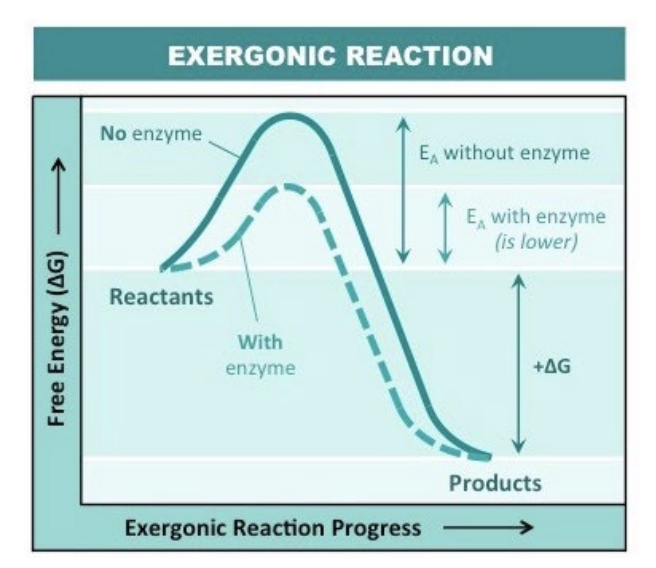
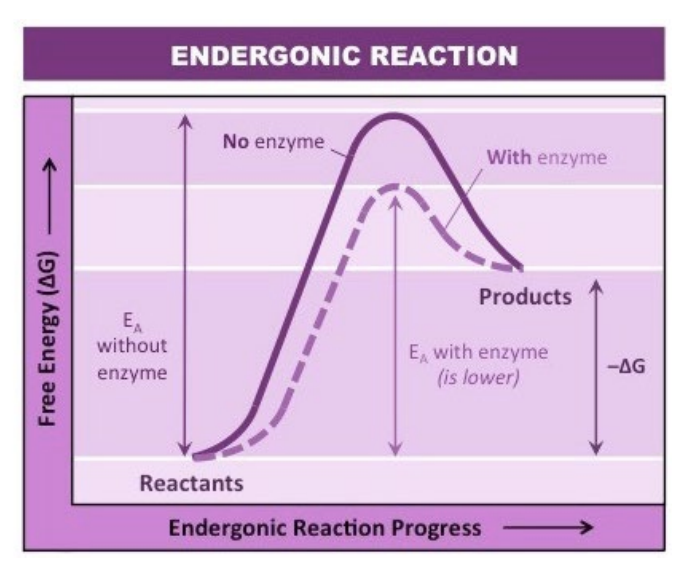
The amount of energy required to start the reaction is known as the activation energy, enzymes reduce the amount of activation energy required and therefore speed up the reaction.
They combine with the reactants (substrate) and hold them in a specific way which makes them more likely to react.
Properties of Enzymes
Enzymes are composed of protein molecules which are folded to a particular chemical ‘shape’.
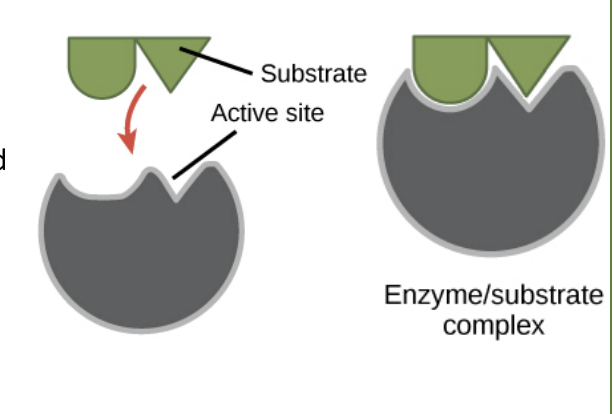
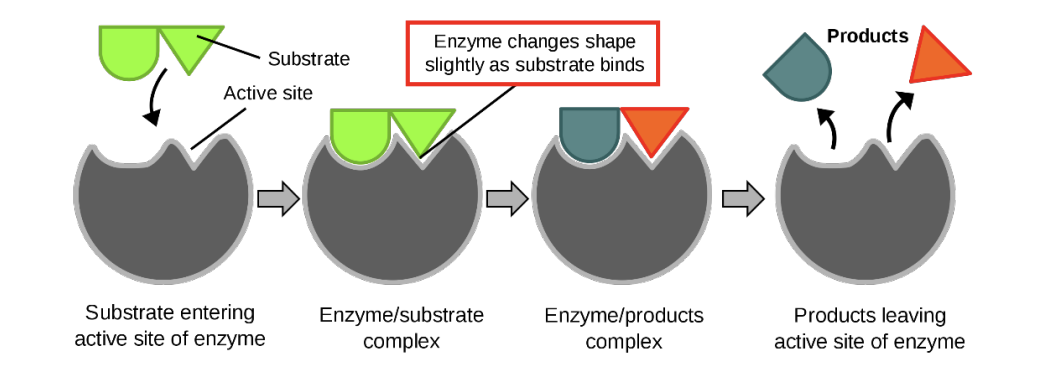
The surface of an enzyme is the active site, reactants attach here temporarily during the reaction.
A enzyme-substrate complex is the temporary structure formed when the enzyme and reactants attach.
The products are then released at the end of the reaction, the enzyme remains unchanged and the process repeats.
The shape of an enzyme is specific as the shape of the active site will determine which substances attach.
When an enzyme denatures the active site changes shape meaning it can no longer complete its function.
Models of Enzyme Activity
There are two models created to show the process of the substrate binding to the active site, forming the enzyme/substrate complex.
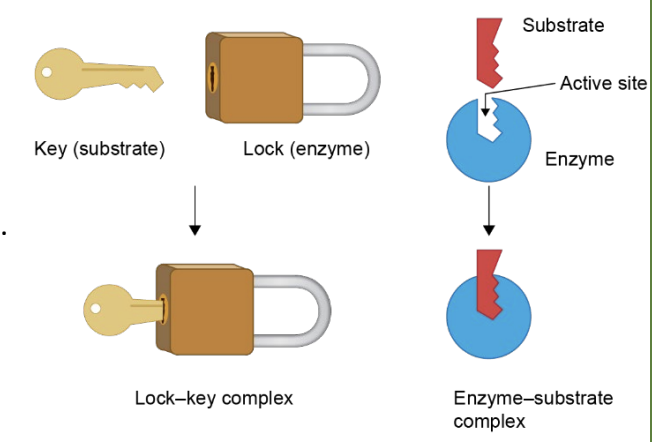
Lock And Key Model:
States that the active site is rigid
The substrate is specifically shaped to fit into the active site (a lock and key).
Once the enzyme/substrate complex is formed, the close proximity of the molecules allows for the reaction to occur quickly.
After testing this model, a few changes were made leading to the amended version, the Induced Fit Model.
Induced Fit Model:
This model is based on the realisation that the active site is not rigid.
When a substrate binds to the active site, it will undergo a conformational change to the shape of the substrate.
This has two advantages: Shows how some enzymes exhibit specificity e.g lipase can bind to a variety of lipids, it also explains how catalysis occurs as the conformational change stresses the bonds in the substrate and increases reactivity.
Catabolic Reactions
Reactions that break down larger molecules into smaller ones.
They release energy in the process and generate ATP.
These reactions are also known as exergonic as the reactants contain more energy than the products. The free energy is released into the system, released from the broken bonds within the molecules.
e.g complex food particles, polymers, are broken down into smaller molecules known as monomers such as proteases which break down proteins.
Anabolic Reactions
Reactions that synthesise larger, complex molecules from smaller units.
These require energy and consume ATP during the process.
These reactions are also known as endergonic as the reactants contain less energy than the products. The free energy is lost to the system, as it is required to form bonds between moleucles.
e.g linking amino acids together to form proteins with enzymes such as DNA and RNA polymerase.
Temperature - Effect On Enzyme Activity
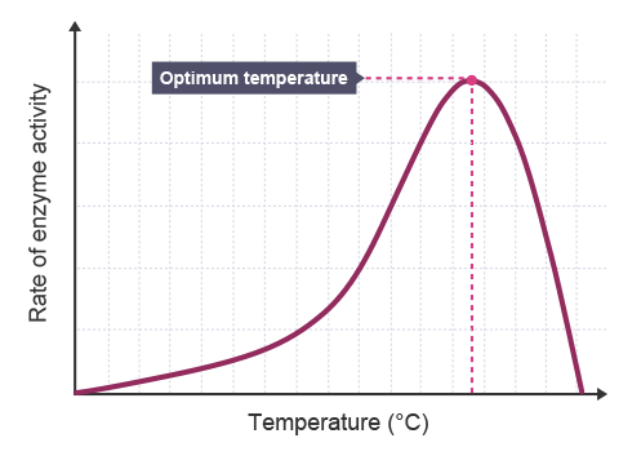
The rate of a enzyme-catalysed reactions increases as the temperature increases.
However at temperatures higher than its optimum temperature, the rate of activity decreases and the enzyme denatures and can longer function.
The optimum activity is reached at the optimum temperature.
When the temperature is lower than the optimum level the rate of activity decreases.
The optimum temperature depends on the area where the enzyme is working.
pH - Effect On Enzyme Activity
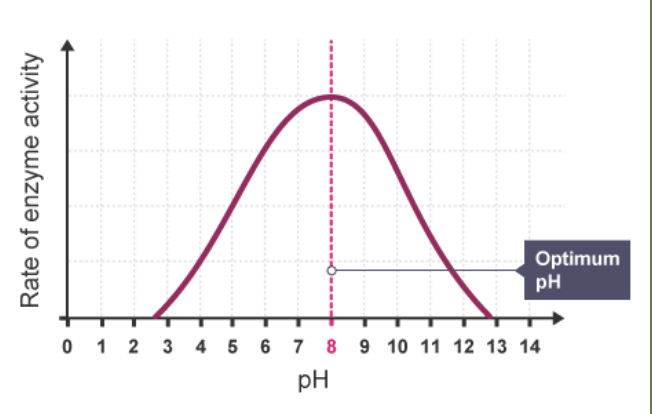
Changes in pH levels can later the shape of an enzyme’s active site.
The optimum pH depends on the area where the enzyme is working.
The optimum activity is reached at the optimum pH.
A continued increase in the pH leads to a rapid decrease in activity, as the active site changes shape, and the enzyme denatures.
At a lower pH than its optimum level the enzyme also denatures.
Substrate Concentration - Effect On Enzyme Activity
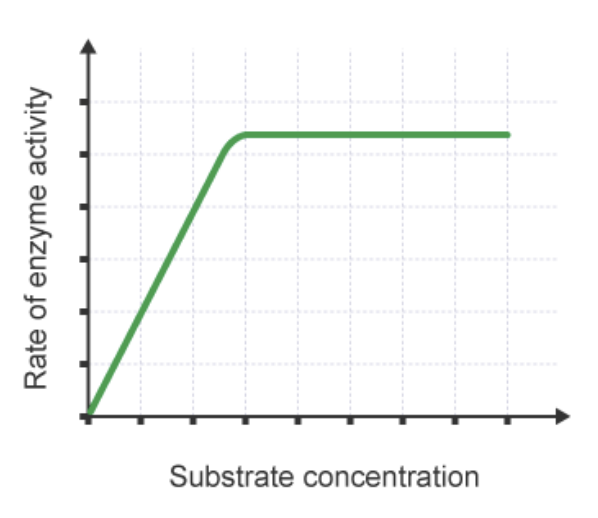
Enzymes work well when there is a lot of substrate (reactants).
As the concentration of the substrate increases, the enzyme activity increases with it.
However when enzymes become fully saturated and no more substrates can fit at any time even though there are more substrates available.
The enzymes cannot work any faster and there are no more enzymes available so when substrate saturation is reached, the rate of activity remains the same.

