PS 3.1 Wave Basics and Energy
 Call Kai
 Learn
Learn Practice Test
 Spaced Repetition
 Match
Match Flashcards
 Knowt Play
1/13

There's no tags or description
Looks like no tags are added yet.
Name | Mastery | Learn | Test | Matching | Spaced |
|---|
No study sessions yet.
14 Terms
wave
a disturbance that transfers energy from place to place
electromagnetic wave
a wave that can move through matter or empty space (light wave)
mechanical wave
a wave that can travel only through matter. (sound wave)
medium
type of matter a wave travels through (solid, liquid, gas) changes the speed of a wave
transmit
to send on, pass along, send out
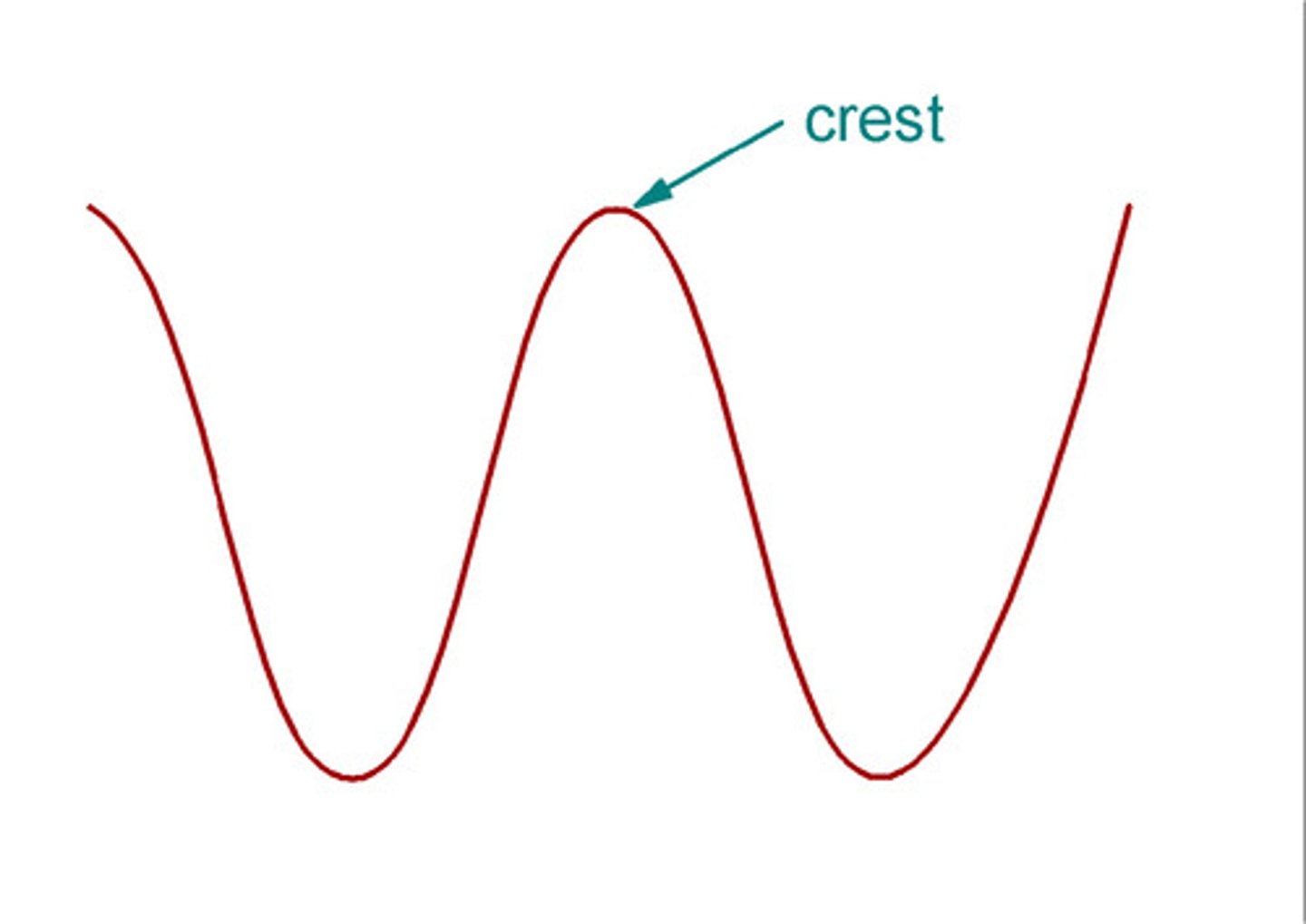
Crest
Top point of a wave
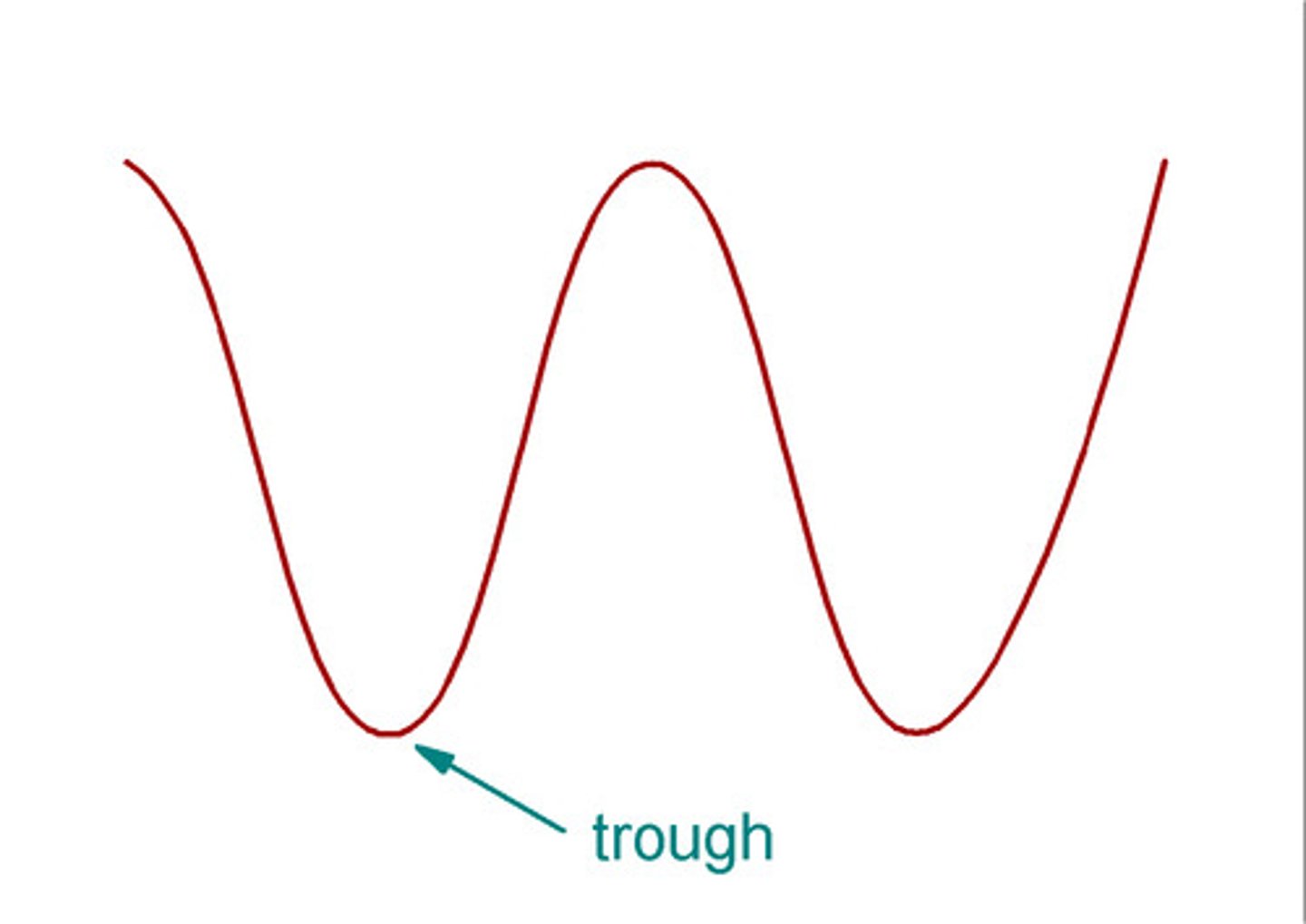
Trough
Lowest point of a wave
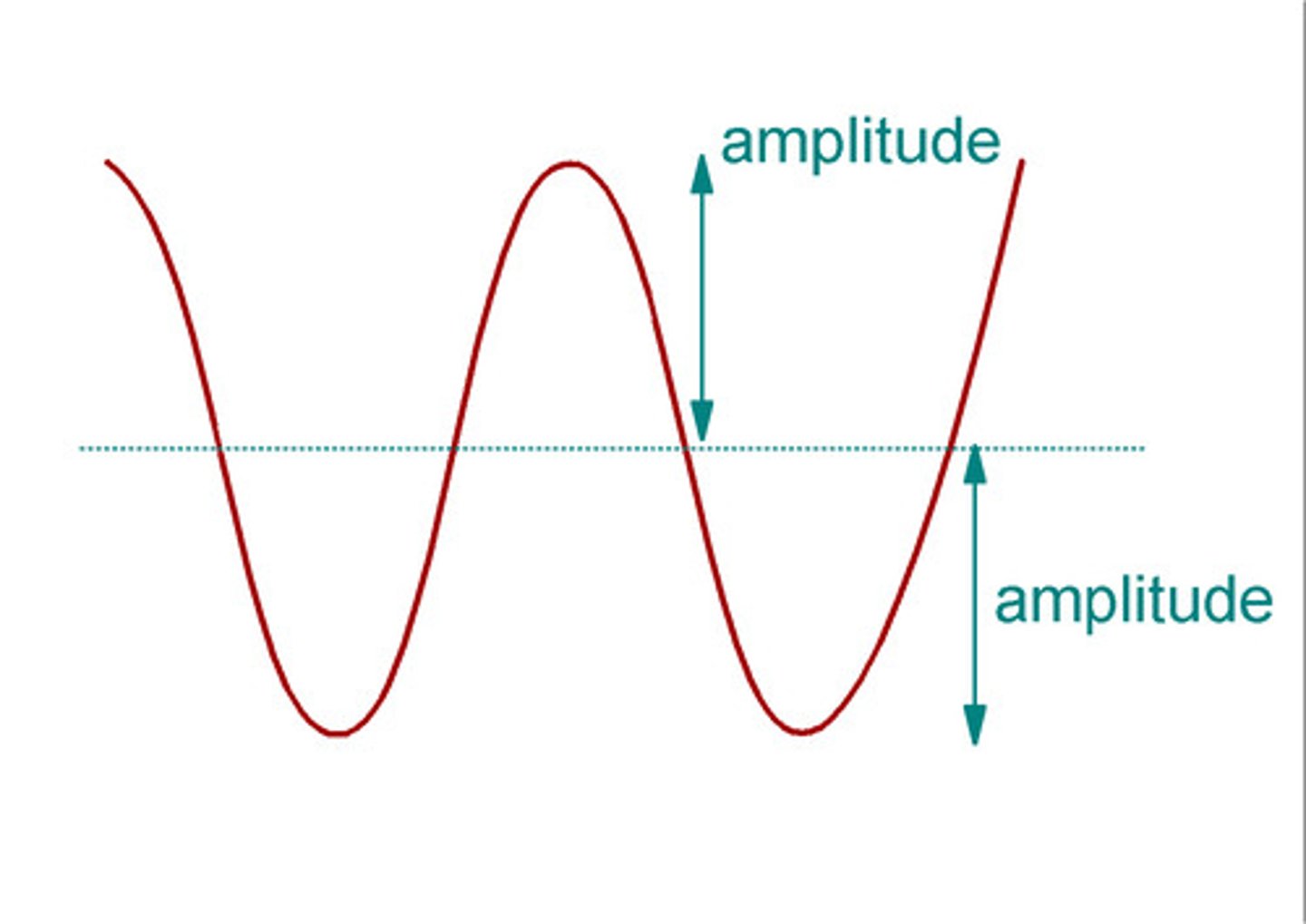
Amplitude
the height of a wave measured from the middle to the top of the wave -higher waves mean more energy
frequency
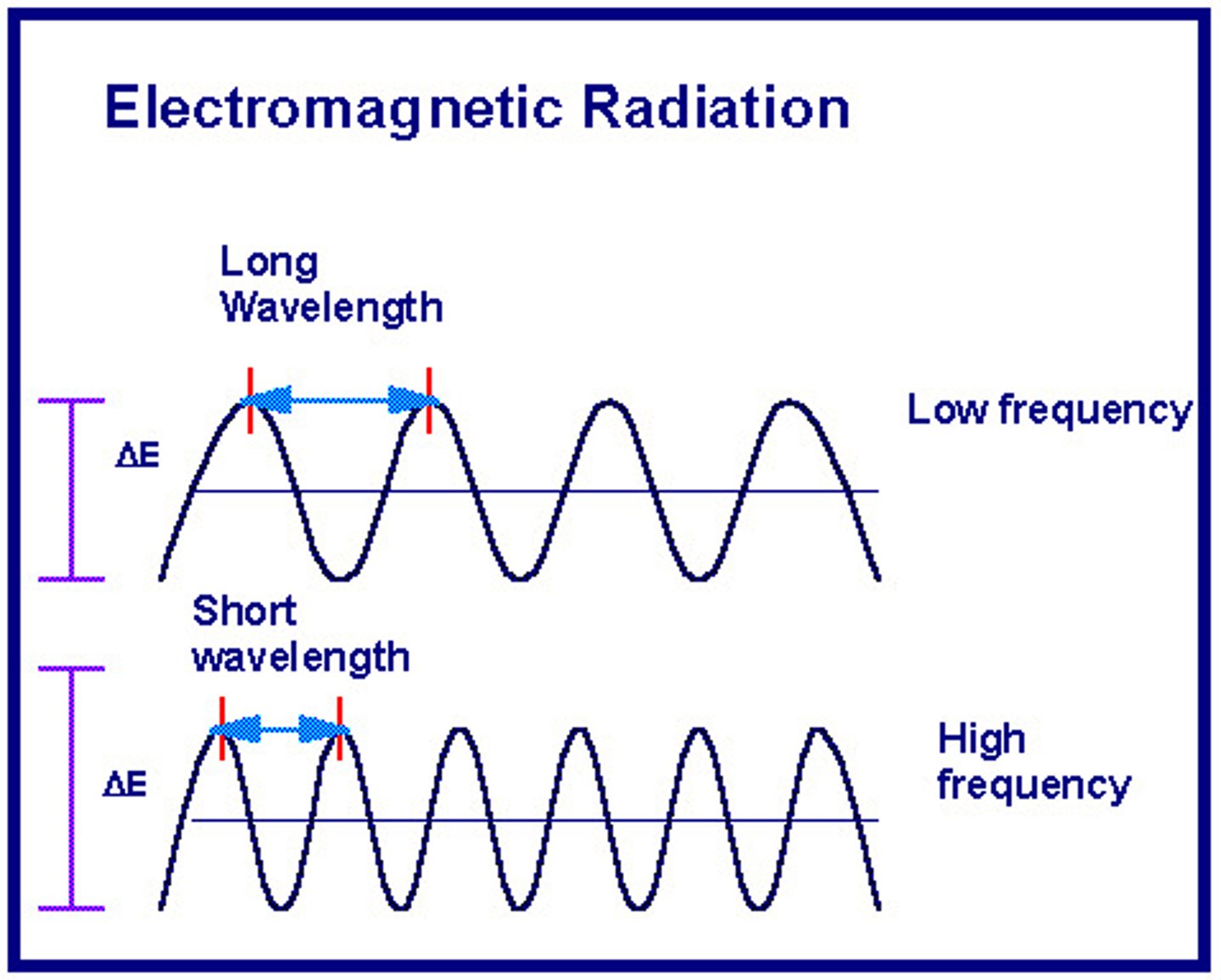
How many wave crests that pass a certain point in one second
More frequency - more energy
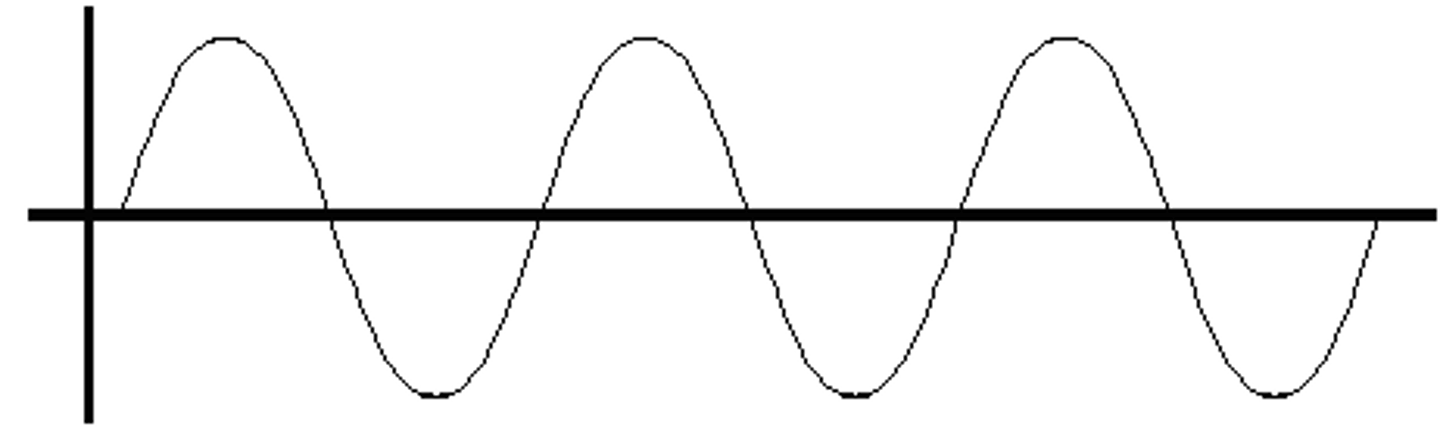
transverse wave
The wave particles move perpendicular (up and down) to the direction the energy is moving - light waves
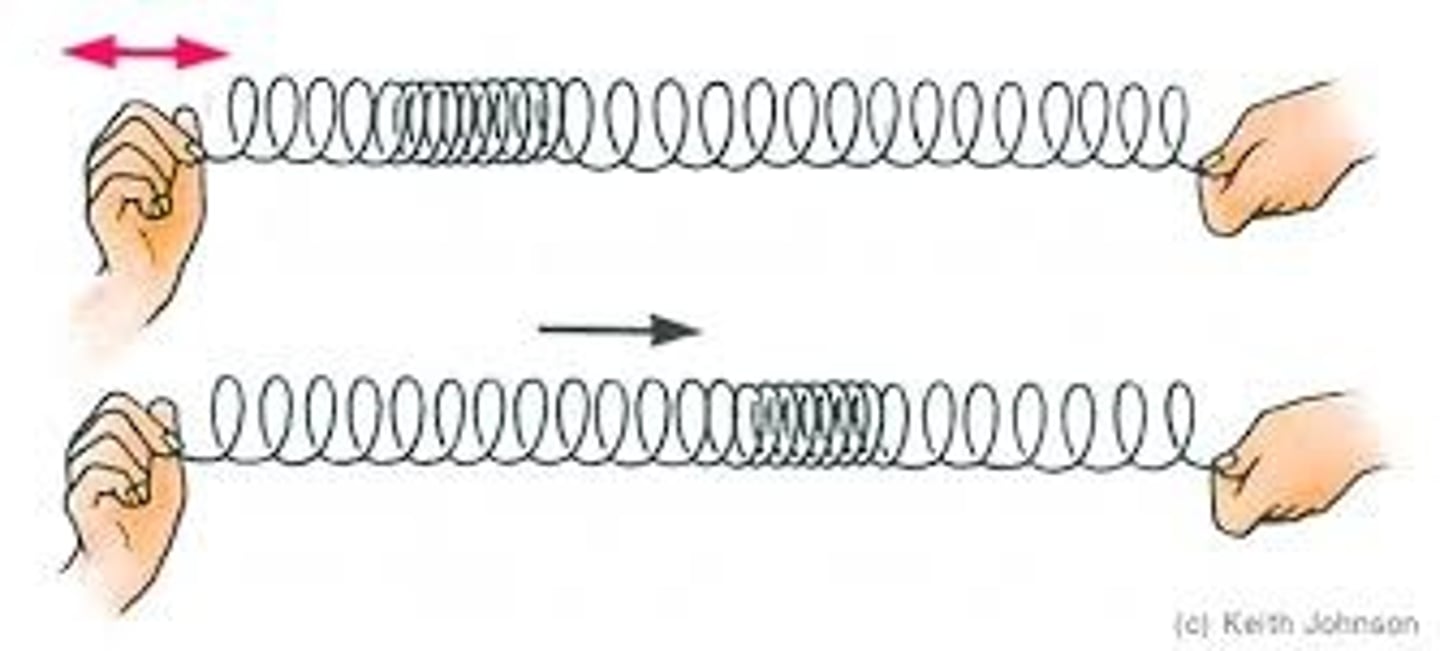
longitudinal wave
The wave particles move parallel or in the same direction as the energy is moving - sound waves
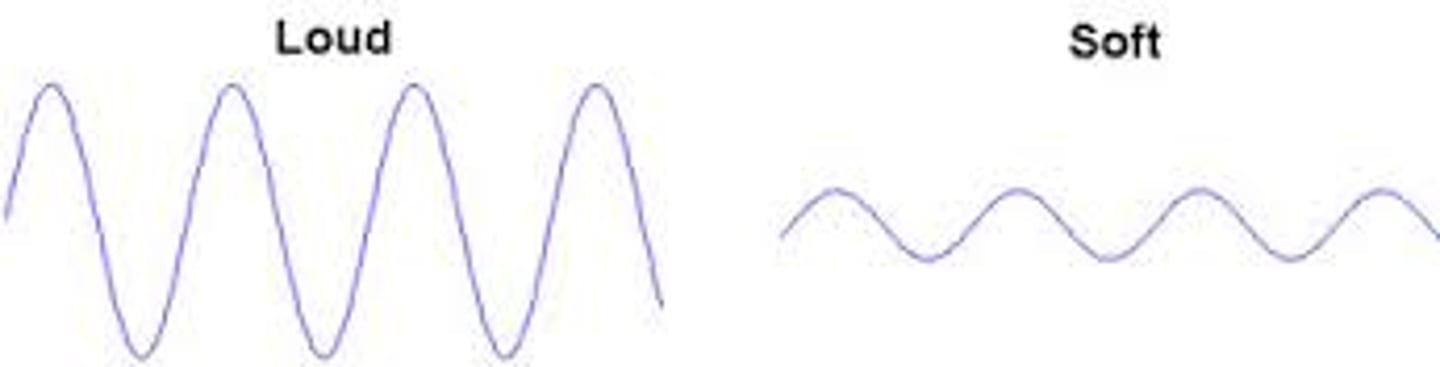
Relationship between amplitude and energy
More energy = higher amplitude; less energy = lower amplitude
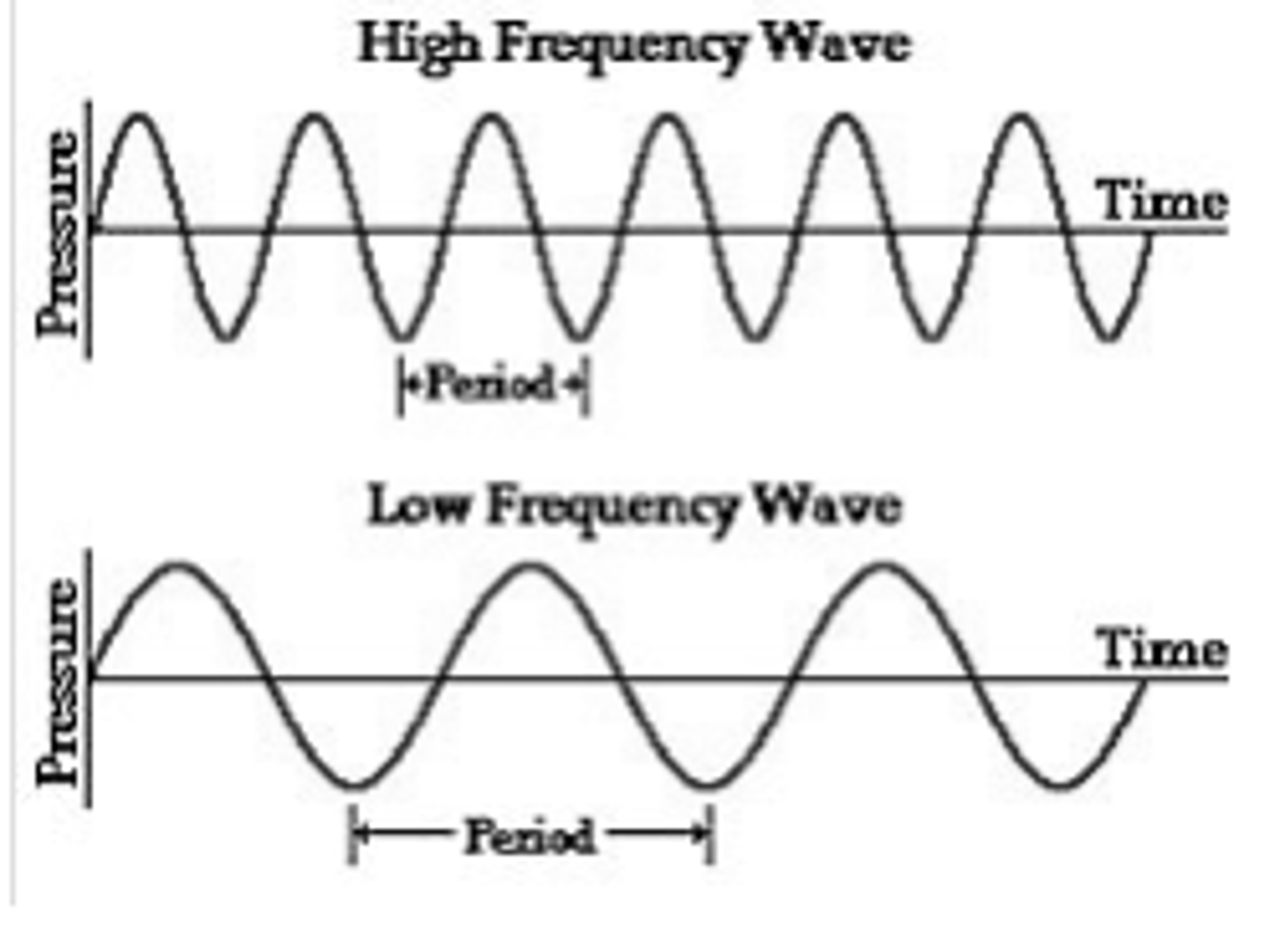
Relationship between frequency and energy
The more frequency the more energy- directly proportional
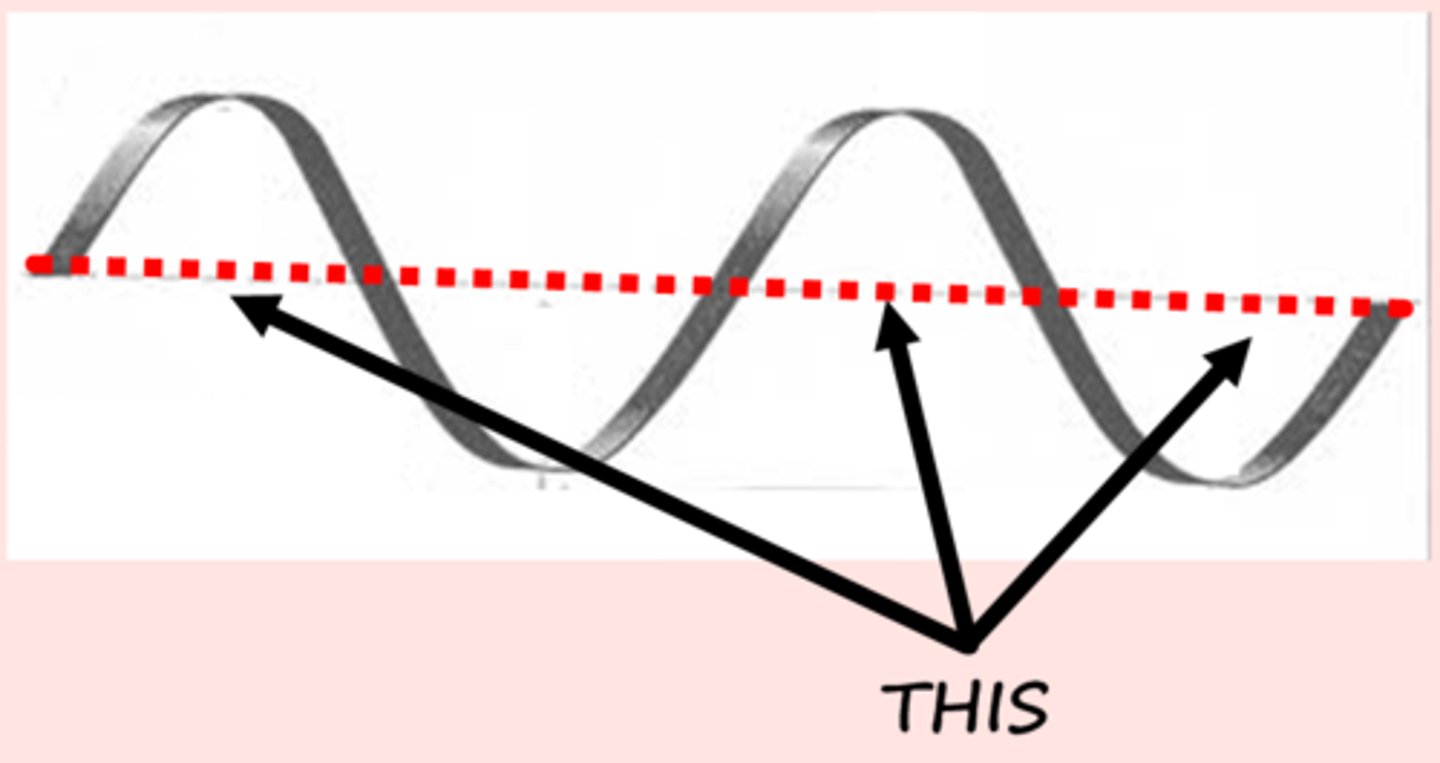
Resting Position
the middle of a wave - equilibrium line
 Note
Note  Flashcards (137)