Intro to Interior Design Final
 Studied by 1 person
 Call Kai
 Learn
Learn Practice Test
 Spaced Repetition
 Match
Match Flashcards
 Knowt Play
1/74

There's no tags or description
Looks like no tags are added yet.
Name | Mastery | Learn | Test | Matching | Spaced | Call with Kai |
|---|
No analytics yet
Send a link to your students to track their progress
75 Terms
What does FF&E stand for?
Furniture, furnishings, and Equipment
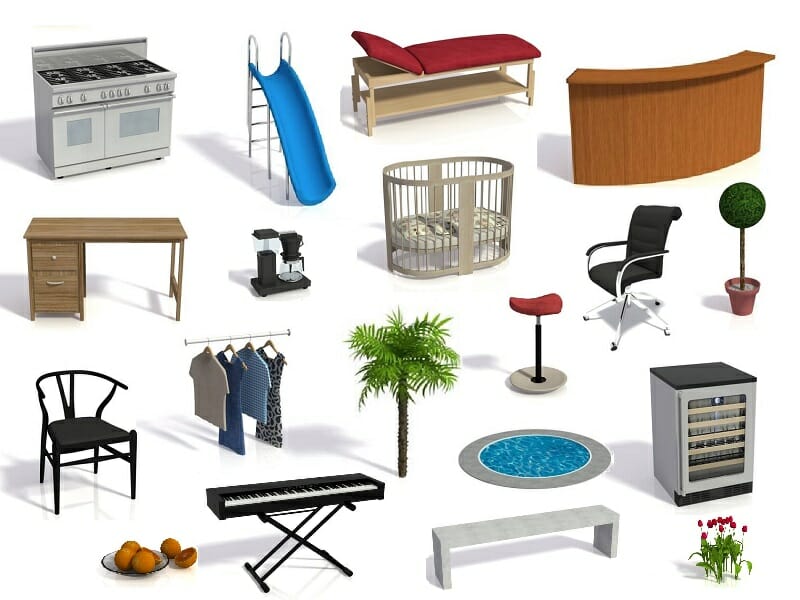
What is equipment?
Equipment consists of the specialized items that are necessary in a project for occupants to carry out their daily activities but are not apart of the building system.
What makes an item part of FF&E?
It is not movable, not permanently attached to the building, and supports function or design
What is an example of equipment and its purpose?
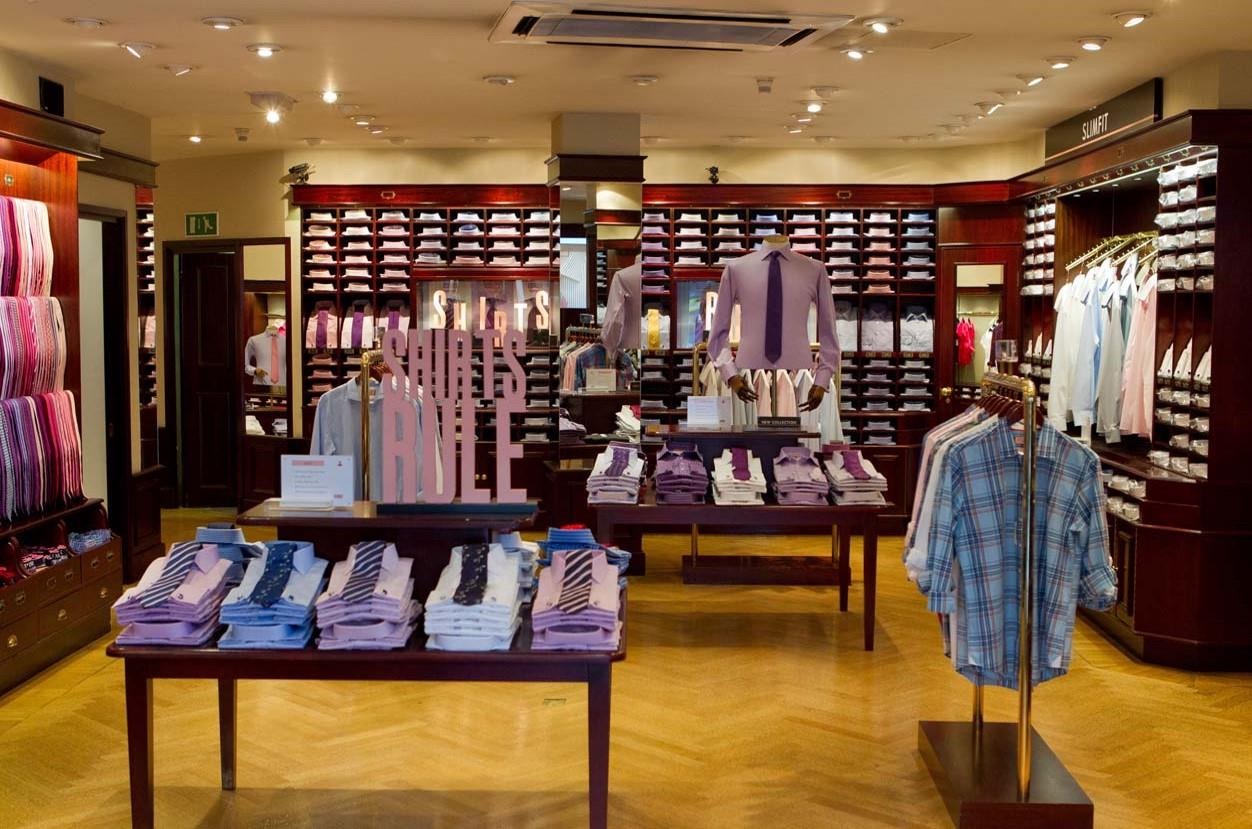
Selecting equipment for interior design projects involves items either physically attached to a building or freestanding, including equipment for restrooms, kitchens, libraries, and laboratory spaces. For example equipment in retail facilities is designed and made in a variety of ways to store and display merchandise.
What is the purpose of Furnishings?
Furnishings not only serve user needs and aspirations but add the finishing touches to an interior. Furnishings can impart a person’s personality and and individual character to a space.
Examples of Furnishings in residential spaces
Include accessories like: Figurines, baskets, personal collections, or clocks; artwork; plants; signage; and graphics.
Examples of Furnishings in commercial and non resedential spaces
Usually there is a theme in spaces that helps with furnishing, for example in a retail space, Egyptian motifs can be a theme
What are accessories and what are they used for ?
Accessories are used for adornments and ornament and generally are helpful, but not essential to a space, whether residential or non residential.
Functional and decorative accessories examples
Functional accessories : lamps, glassware, coat racks, and tea pots. Can be creatively incorporated.
Both functional and decorative: umbrella stand, clandclock or wastebasket.
Purely asthetic accessories
serve no function, such as wall hanging
Decorative Accessories
Accessories include both non utilitarian objects, such as rocks and shells, and purely decorative objects, such as sculptures or other pieces.
Furnishings are?
are the functional, movable items that make a space usable.They are part of the foundation of a room.
Decorations are ..?
are the aesthetic elements added after the furnishing phase. They add style, personality, mood, and visual interest.
Decorations Vs. Furnishings
Furnishings = the base structure
Decoration = the finishing touches
How is art used?
Art can be an integral part of interiors, used to enrich the design of a space and satisfy our needs for artistic expression and
aesthetic delight.
Name the three main types of art used in interiors
Fine art, decorative art, and functional art.
Two - and Three Dimensional Artwork
Works of art are produced in many mediums and sizes. They
can be mounted on a wall, occupy small niches or shelves, sit on desktops, or occupy large amounts of floor space.
What is the purpose of art in interior spaces?
To communicate meaning, creat atmosphere, support theme, and add visual interest
WHat rolde do plants play in interior spaces?
They improve air quality, add biophilic elements, soften spaces, and enhance well being.
How can art influence the mood of a room?
Through color, style, scale, and placement.
Painting
Paintings are one-of-a-kind works executed with colored pigments carried in various vehicles to canvas or other backings. These vehicles include oil, watercolor, tempera, and acrylics.
Printmaking
Printmaking involves producing prints (often called multiples) on paper by processes such as silk screening (serigraphy),etching, wood cutting, drypointing, engraving, and lithography.
Sculpture
Sculpture is three-dimensional art
that can be large, freestanding
pieces or small items placed on a
shelf, table, or display unit.
How is art used?
decorative arts can be utilitarian or purely aesthetic displays. Interior designers work with the clients to create placements that satisfy both functional and visual compositions.
How are plants used in interior design?
Plants have become as important as artwork for interior design elements.
What do plants serve as in the interior?
Plants are living art, like sculpture. They
bring color, texture, and a variety of forms
and shapes into our interiors.
What are the benefits of having Plants in the interior ?
Plants return vital oxygen to the air and raise humidity levels by combining expelled water vapor with air.
Light requirements for plants
Both the placement of plants and the amount of light available are key factors in a design scheme.
artificial Plants
artificial plants are generally not acceptable to designers, but silk plants and flowers of high quality are a good alternative to using either live plants
Cut flowers
Cut flowers can add sparkle, warmth, and lively color to an interior space, whether on tables in an executive dining room or on a desk.
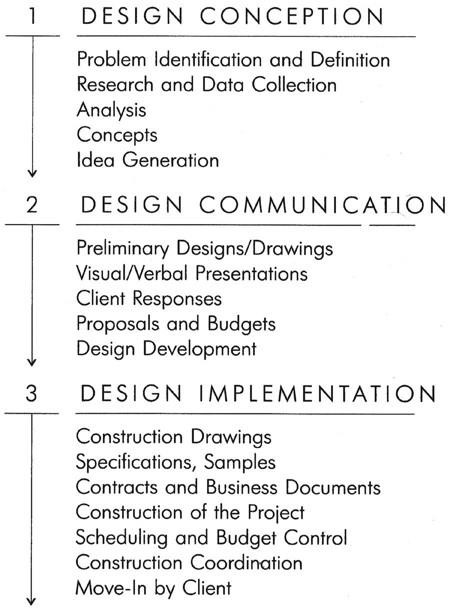
How is design communicated ?
Designers communicate their ideas through a
process that can be divided into three phases:
design conception, design communication, and
design implementation
What is the purpose of design communication?
To show clients and contractors the design intent clearly
What is a designer Poster presentation?
Presentations commonly convey spatial relationships, elements, Materials colors, furniture, plants, etc.
Name three common methods of communicating design
Drawings, digital models and verbal/written presentations
Drafting
Drafting is a form of drawing that consist of formal rules of visual abstraction, such as legends and symbols that are accurate to a scale and serve as a pattern for building something for example like elevations.
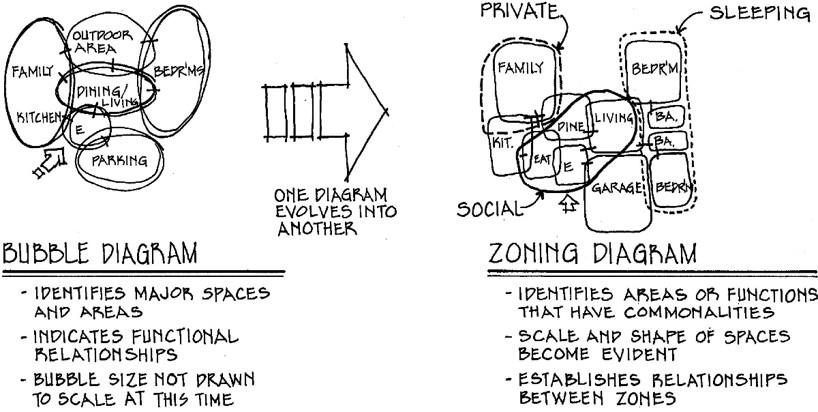
Bubble diagram
Identifies major spaces and areas
Indicate functional relationships
Size not drawn to scale at this time
Architectural drawings
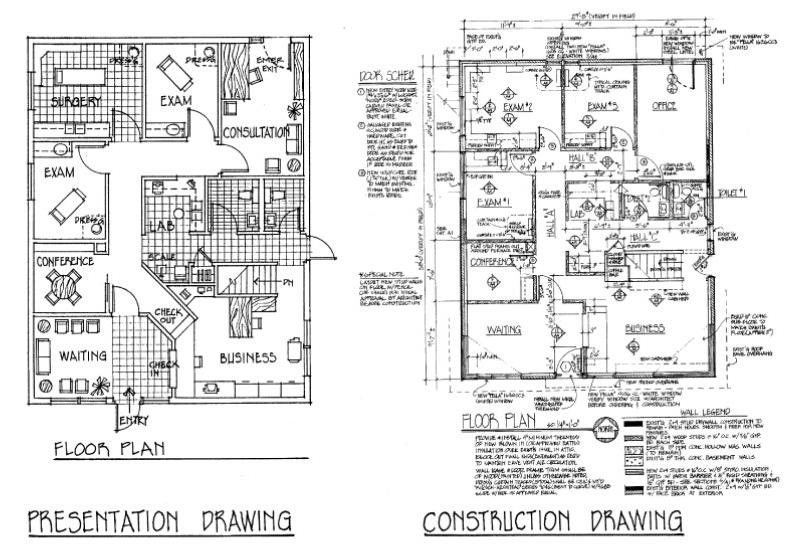
Architectural drawings are done as design or presentation drawing and as construction or “working” drawings
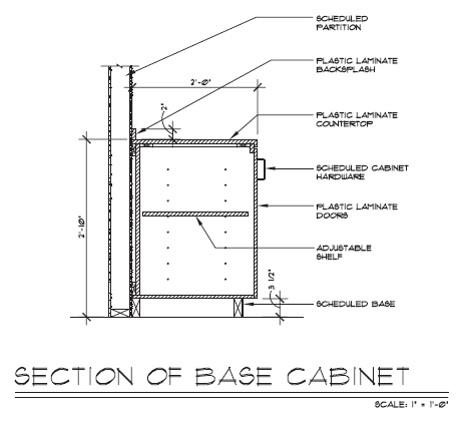
Sections
Sections are drawings representing a view of an object and its interior after making an imaginary vertical cut through it.
Elevations
Elevations are straight on views of specific exterior or interior walls or a related elements, such as cabinetry
Ceiling Plan
Is usually drawn as if the viewer were looking down through transparent ceiling at the floor this image of the ceiling is referred to as reflected ceiling fan, and the strong so that it has the same orientation as a floor plan
What is a perspective drawing?
A drawing that shows depth, making the space look 3D and realistic.
Drawing as design communication
Designers develop ideas and communicate them through drawing. design drawing is a process or means to an end not necessarily the finished product.
What is an RCP
Reflected Ceiling Plan- shows lighting, ceiling materials, and mechanical elements above.
What are schedules used for in design?
Listing materials, finishes, fixtures, and detailed specifications
What is the purposed of a design presentation?
To sell the concept, explain choices and confirm client understanding
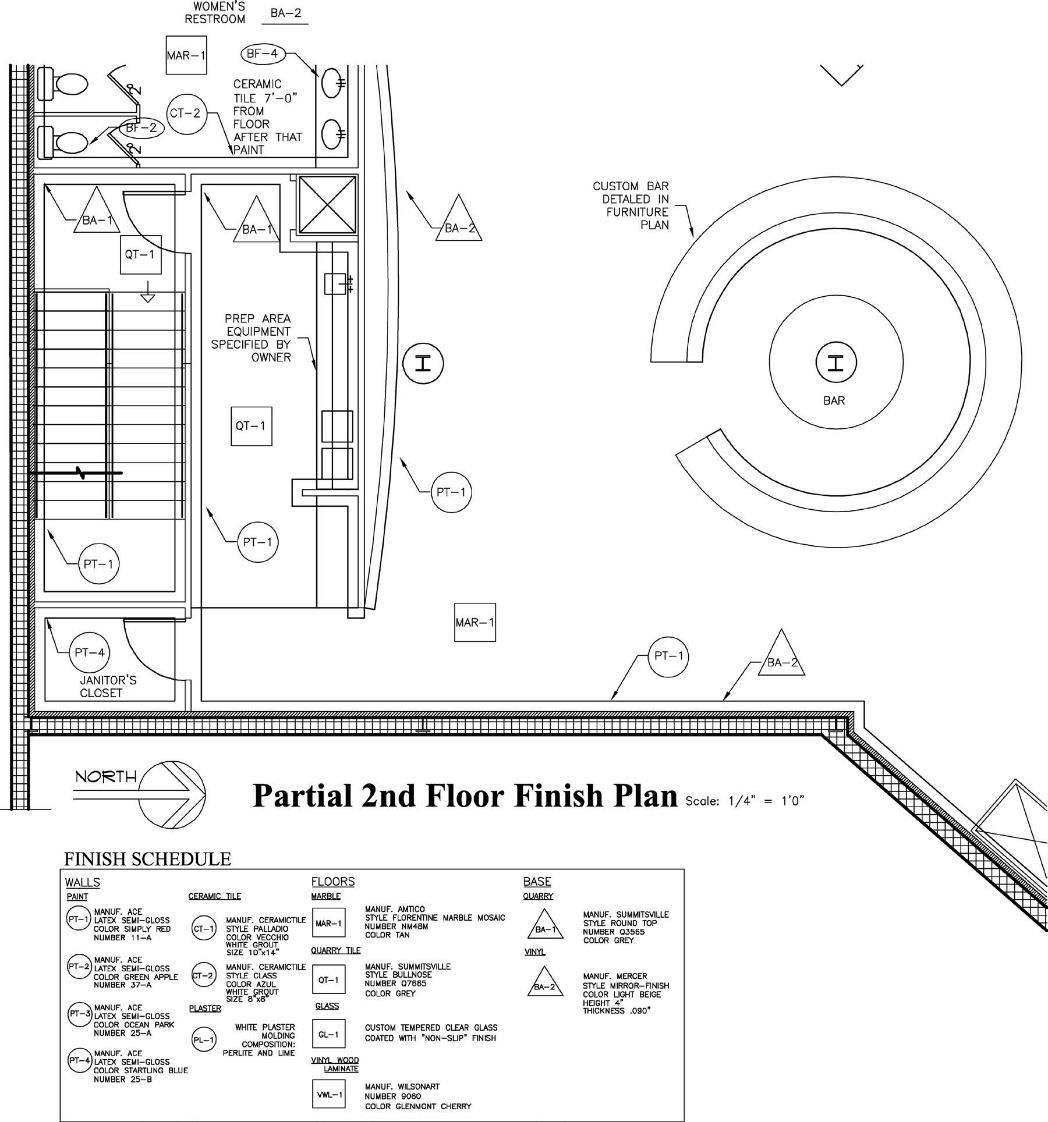
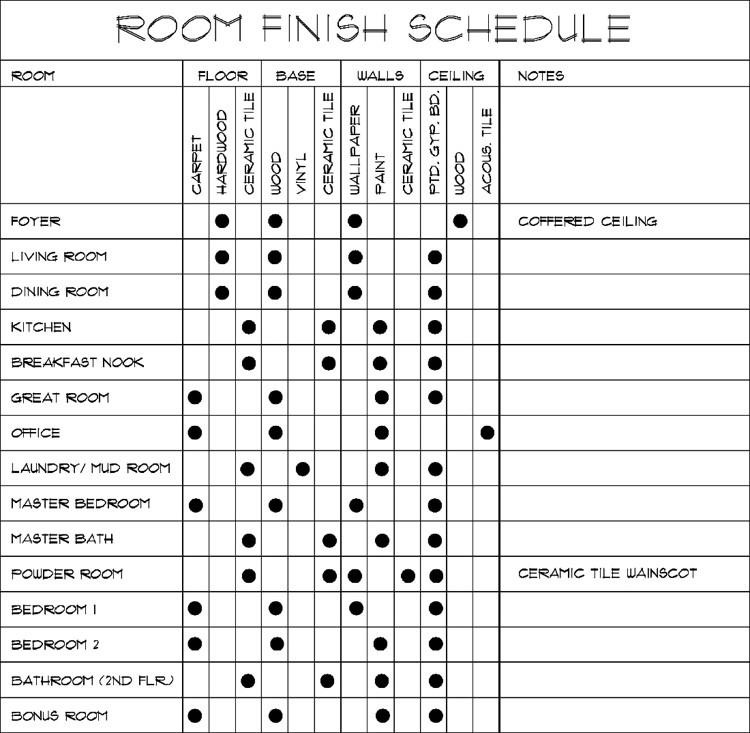
What ways are furnishing details specified?
Finishes in a project can be specified in a chart/schedule schematic form or as a Finnish plan in plan
What floor plan is more commonly created by interior designers?
Furniture Floor Plan
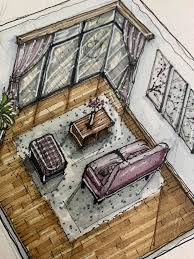
Paraline Drawings
Categorized according to axonometric and oblique methods of projection used to develop them
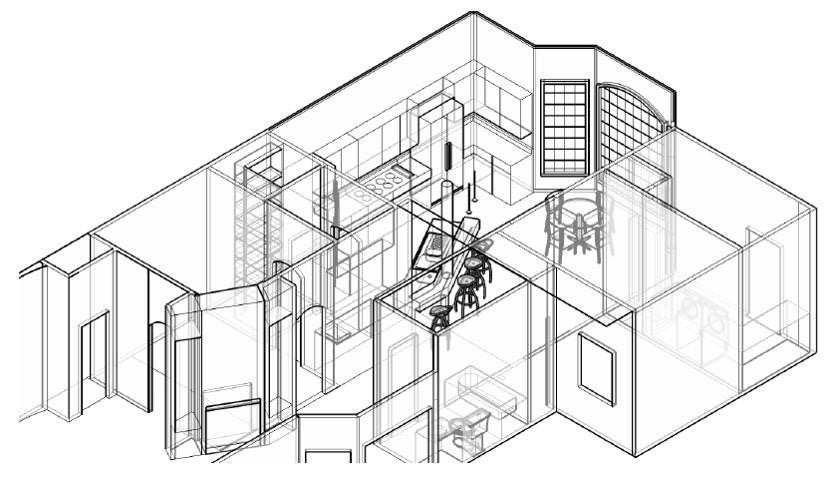
Isometric drawings
Based on 30 degree angles their three principal axes of measurement are two ground- plan axes and a vertical axis for height
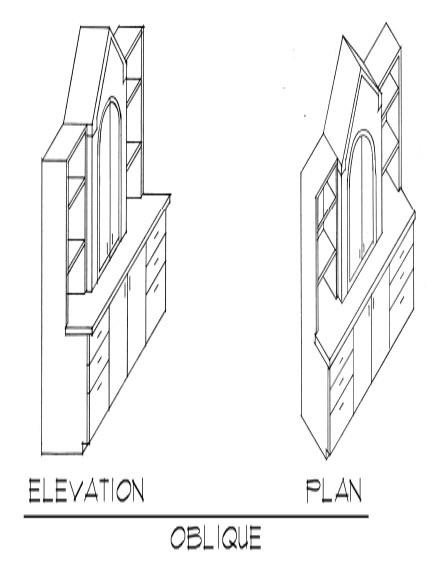
Oblique drawings
Oblique drawings consists of 90 degree angles between two adjacent planes or walls.
Perspective drawings importance
The are on of the most realistic types of representational design drawing used in interior graphics. Method of illustrating three dimensional space on a two-dimensional plane.
Three- point perspective
Three point perspectives have three major vanishing points, and all lines converge at three points
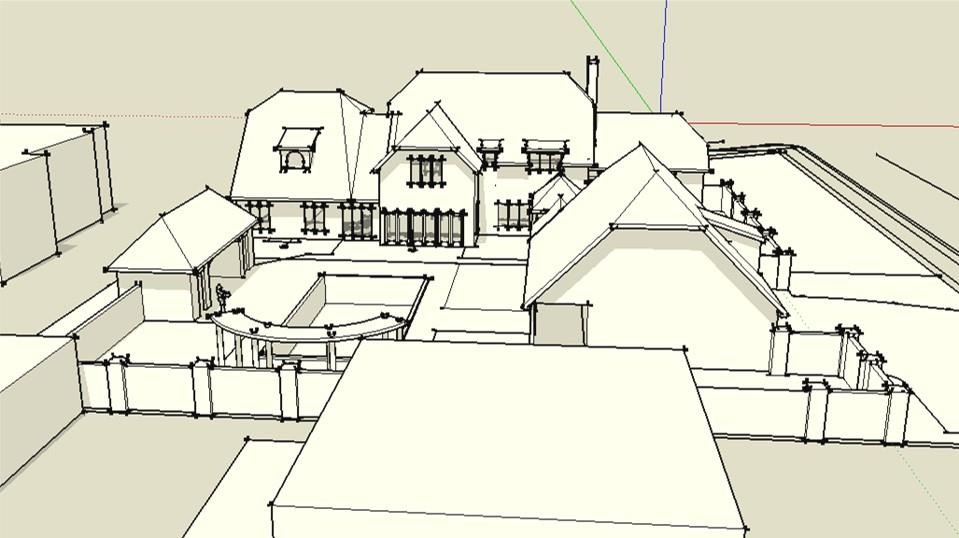
Presentation Models
A presentation or finished model is a realistic scaled representation of the completed project
What are design services?
Professional tasks like space planning, selecting finishes, construction documentation, and project management.
How is the interior design practice divided
Residential or nonresidential ( contract or commercial) design
What is the specialists?
They seek projects involving specific types of interiors, such as hospitality or healthcare.
What is a generalists
Works with a variety of projects types, sometimes including both residential and commercial work
Name a common type of design business structure
Sole proprietorship, partnership, or corporation
Sole proprietorship
The simplest business formation for the small design firm is that of sole proprietorship.
Partnership
A partnership is made up of two or more persons (co-owners) who operate a business enterprise for profit, sharing both the risks and the financial rewards.
Corporation
The third type of business organization is a corporation established as a legally distinct entity.
Fixed, Flat, or Stipulated Fee
When the designer agrees to do the work for a specified amount of money, this is called a fixed, flat, or stipulated fee.
Cost Plus Fee
The cost plus fee involves buying furniture and other merchandise at the designer's cost, then
reselling them to the client at a marked-up fee.
Area or Per Square Foot Fee
The area or per square foot fee is used in the specialized field of tenant development—planning spaces in office buildings.
Contractual Agreements
Contractual agreements are needed between two or more parties involved with interior design projects to indicate each party's responsibilities and to serve as a legal agreement and to bind the relationship for those who enter it.
Designer/Consultant and Other Related Contracts
Designers might use a letter of intent agreement when making a written proposal for services
Design Teams and Staff Organization
Generally, design firms use two basic approaches to organizing their staffs: vertical or horizontal
Construction Documents
• Once the design is complete and approved by the client, the designer is Ready for the construction documents phase, which
details what is to be constructed and installed, and how and where that will occur with construction drawings, specifications, and construction contracts.
Selection Of Contractors
Either contractors bid competitively for
construction work or the designer assigns
one after negotiating a fair price for the
work.
• When bidding a project among various
contractors, the owner and designer are
typically looking for the lowest price to do
the construction
Construction and Contract Administration
During construction and installation, the designer acts as the agent for the client by visiting the
building site, keeping abreast of the work, and reporting to the client on the quality and progress
of the work; this is typically referred to as Contract Administration
Substantial completion
used to determine whether the project is complete
enough for the client to move in. If the area is not completely finished, the designer compiles a punch list to indicate which items need to be finished or corrected before the owner makes final payment to the contractor.
Post-Occupancy Evaluation
After the installation is complete and the client has occupied the project for a specified length of time, the designer should go back and assess the performance of the new environment and his or her own work.
Why are contracts important in interior design?
They define responsibilities, scope, fees, and expectations.
List one step in the project-finishing process.
Final walk-through, punch list completion, or client handoff.
What is a project punch list?
A list of issues or corrections needed before project completion.
 Note
Note  Flashcards (81)