Neurons and stimuli response
 Call Kai
 Learn
Learn Practice Test
 Spaced Repetition
 Match
Match Flashcards
 Knowt Play
1/3

There's no tags or description
Looks like no tags are added yet.
Name | Mastery | Learn | Test | Matching | Spaced | Call with Kai |
|---|
No analytics yet
Send a link to your students to track their progress
4 Terms
Nervous system:
The organs responsible for a fast response to immediate environmental stimuli, danger, and internal changes through nerve impulses.
FOR EX:
fight-or-flight scenarios (increased heart rate/breathing),
reflex actions (e.g., pulling away from heat),
rapid sensory processing like light, sound, or pain detection.
Reflex vs. Conscious response
Reflex:
rapid, automatic, and involuntary protective responses that bypass the brain by traveling through the spinal cord.
pulling your hand away immediately from extreme heat to prevent burning
instantaneous to prevent harm
Conscious:
voluntary, slower actions initiated by the brain after processing information.
Deciding to pull your arm away from heat
slower due to brain processing
voluntary and under control
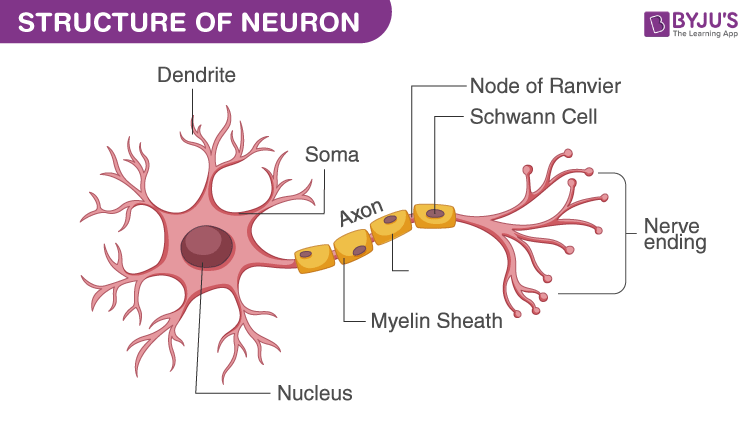
Nerve Cell (Neurons)
SPECIFIC ABILITIES AS A SPECIALISED CELL
sends electrical signals to the body.
the long axon reduces the number of cells needed for transmission, so makes the transmission of a nerve impulse much faster to another cell or neuron.
Dendrites are adapted for the ability to receive multiple signals at the same time.
The myelin sheath insulates the axon which enables faster signals (no signal is lost)
Axon terminals transfer the signals (nerve endings)
Node of ranvier is the gap between the schwann cells which allows the signal to jump, increasing the speed of transfer of nerve signals across the axon.
What is a specialised cell?
In multicellular organisms, generic cells can transform into specialized cells meant to do specific tasks in the body. For example: A nerve cell, white blood cells, and muscle cells.
In the cell growth process, it is after the simple cell growth process of mitosis where the cell functions normally – INTERPHASE.

