Mod 1: Catalyst for Change
 Studied by 0 people
 Call Kai
 Learn
Learn Practice Test
 Spaced Repetition
 Match
Match Flashcards
 Knowt Play
1/72

There's no tags or description
Looks like no tags are added yet.
Name | Mastery | Learn | Test | Matching | Spaced | Call with Kai |
|---|
No analytics yet
Send a link to your students to track their progress
73 Terms
computers, networks
Two Principal Catalysts
• Low-cost ________
• High-speed communication ______
tablet
Simply having a tablet to write down the numbers being manipulated is a great help
ancient
erasable clay and wax tablets served this purpose
middle ages
Europeans often used erasable slates
19th century
Paper tablets became common
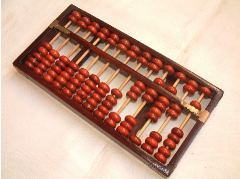
abacus
is a computing aid in which a person performs arithmetic operations by sliding counters along with rods, wires, or lines
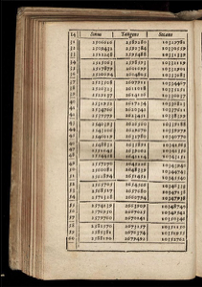
table of logarithms
time savers to anyone doing complicated math because they allowed them to multiply two numbers by simply adding their logarithms
JohnNapier and Johannes Kepler
publishers of table of logarithms
income tax tables
people who compute their income taxes “by hand” make use of tax tables to determine how much they owe
pascal’s calculator blaise pascal
built-in 1640, was capable of adding whole numbers containing up to six digits
step reckoner gottfried leibniz
a handcrafted machine that can add, subtract, multiply, and divide whole numbers
arithmometer charles thomas de colmar
the first commercially successful calculator
scheutz difference engine georg scheutz and edvard
the world’s first printing calculator
a machine capable of calculating mathematical tables and typesetting the values onto molds
burroughs adding machine william burroughs
devised a practical adding machine
james and john ritty
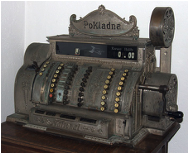
they designed an adding machine capable of expressing values in dollars and cents
herman hollerith
he developed an electromechanical tabulating machine for punched cards to assist in summarizing information and in accounting
small-scale experimental machine
was the first operational, fully electronic computer system that had both programs and data stored in its memory
ferranti ltd
they introduced the world’s first commercial computer in 1951
ferrantimark 1
a descendant of research computers constructed at the University of Manchester
remington-rand
· Completed UNIVAC in 1951
· Delivered to U.S. Bureau of the Census
· Predicted winner of 1952 Pres. Election
IBM
· Larger base of customers
· Far superior sales and marketing organization
· Greater investment in research and development
· Dominated mainframe market by mid-1960s
assembly language
- Symbolic representations of machine instructions
- Programs just as long as machine language programs
fortran 1957
First higher-level language (shorter programs)
Designed for scientific applications
cobol 1959
- U.S. Department of Defense standard
- Designed for business applications
time-sharing systems
- Divide computer time among multiple users
- Users connect to a computer via terminals
- Cost of ownership spread among more people
- Gave many more people access to computers
basic
- Developed at Dartmouth College
- Simple, easy-to-learn programming language
- Popular language for teaching programming
transistor
- Replacement for vacuum tube
- Invented at Bell Labs (1948)
semiconductor
- Faster
- Cheaper
- More reliable
- More energy-efficient
integrated circuit
Semiconductor containing transistors, capacitors, and resistors
before system/360
o IBM dominated the mainframe market in the 1960s
o IBM computers were incompatible
o Switch computers ® rewrite programs
system/360 1964
o Series of 19 computers with varying levels of power
o All computers could run the same programs - Compatible
o Upgrade without rewriting programs
microprocessor
· Computer inside a single semiconductor chip
o Invented in 1970 at Intel
o Made personal computers practical
telegraph 1844
a machine used to transmit messages in the form of electrical impulses that can be converted into data
telephone 1876
invented by Alexander Graham Bell
christopher sholes, carlos glidden, samuel soule
they patented the first typewriter
late 1873
Remington & Sons Company, famous for guns and sewing machines, produced the first commercial typewriter
1908
the year the typewriter was modified to print a message transmitted over a telegraph line; the inventors called the invention, a teletype
paul nipkow
invention of an electromechanical television in 1884
philo farnsworth
first completely electronic television transmission was made in 1927
remote computing 1940
George Stibitz demonstrated remote computing to members of the American Mathematical Society who were meeting at Dartmouth College in New Hampshire. He typed numbers into the teletype, which transmitted the data 250 miles to the calculator in New York City. After the calculator had computed the answer, it transmitted the data back to the teletype, which printed the result
advanced research projects agency network 1969
In 1967 ARPA initiated the design and construction of the ARPANET
first wide-area packet-switching network with distributed control and the first network to implement the TCP/IP protocol suite
ray tomlinson
In March 1972, he wrote the first software enabling email messages to be sent and received by ARPANET computers
lawrence roberts
created the first “killer app” for the network: an email utility that gave individuals the ability to list their email messages selectively read them, reply to them, forward them.
internet 1983
network of networks communicating using TCP/IP
broadband
o High-speed Internet connection
o At least 10x faster than a dial-up connection
o Enhanced by fiber-optic networks
o South Korea is the world leader in broadband networking.3/4 of homes have broadband connections
newspapers
The first English-language newspaper appeared in Great Britain in the 1600shyp
hypertext
refers to a linked network of nodes containing information
ted nelson
in 1965, he coined the word hypertext
douglas engelbart
created a research lab called the Augmentation Research which developed a hypermedia and groupware system called NLS (oNLine System) Center
nls system
was the first to employ the practical use of hypertext links, the mouse, raster-scan video monitors, information organized by relevance, screen windowing, presentation programs, and other modern computing concepts
engelbart
invented several new input devices, including the computer mouse
xeros palo alto research center (parc) 1970
a new facility dedicated to performing research into digital technology
alto
a small minicomputer designed to be used by a single person. incorporated a bitmapped display, a keyboard, and a mouse
lisa 1983
apple released the first commercial computer with a GUI, or Graphical User Interface
• The price tag was too high, the processor was too slow, and the Lisa was not commercially successful
macintosh 1984
apple release a faster computer with a graphical user interface
may 1990
Microsoft released Windows 3.0 for IBM PCs
tim berners lee
completed the first Web browser on the NeXT Computer (1990) - called his browser WorldWideWeb
mosaic
The first widely used Web browser, developed at the University of Illinois, Urbana-Champaign
search engine
a program that accepts a list of keywords from a user, searches a database of documents, and returns those documents most closely matching the specified keywords
crawler-based search engines
such as Google and AltaVista, automatically create the database of information about Web pages.
human-powered search engines
relies upon humans to build the database of information about various Web pages
information technology
refers to devices used in the creation, storage, manipulation, exchange, and dissemination of data, including text, sound, and images
allows anyone to send email to anyone else with an email address
spam
most email traffic, unsolicited, bulk, commercial email
world wide web
has provided an unprecedented opportunity for individuals and nongovernmental organizations to have their points of view made available to billions
computers
are now embedded in many devices on which we depend, from traffic signals to pacemakers
software errors
have resulted in injury and even death
innovators 2.5%
the first individuals to adopt an innovation. Innovators are willing to take risks, youngest in age, have the highest social classLinks to an external site., have great financial lucidity, very social and have closest contact to scientific sources and interaction with other innovators.
Risk tolerance has them adopting technologies which may ultimately fail. Financial resources help absorb these failures
early adopters 13.5%
the second fastest category of individuals who adopt an innovation
These individuals have the highest degree of opinion leadership among the other adopter categories
typically younger in age, have a higher social status, have more financial lucidity, advanced education, and are more socially forward than late adopters
More discrete in adoption choices than innovators. Realize judicious choice of adoption will help them maintain central communication position
early majority 34%
adopt an innovation after a varying degree of time.
significantly longer than the innovators and early adopters
tend to be slower in the adoption process, have above average social status, contact with early adopters, and seldom hold positions of opinion in a system
late majority 34%
will adopt an innovation after the average member of the society
approach an innovation with a high degree of skepticism and after the majority of society has adopted the innovation
typically skeptical about an innovation, have below average social status, very little financial lucidity, in contact with others in late majority and early majority, very little opinion
laggards 16%
the last to adopt an innovation
show little to no opinion leadership
typically have an aversion to change-agents and tend to be advanced in age
tend to be focused on “traditions”, likely to have lowest social status, lowest financial fluidity, be oldest of all other adopters, in contact with only family and close friends, very little to no opinion
 Note
Note  Flashcards (31)