Temperate and Tropical Freshwaters
 Studied by 0 people
 Call Kai
 Learn
Learn Practice Test
 Spaced Repetition
 Match
Match Flashcards
 Knowt Play
1/7

There's no tags or description
Looks like no tags are added yet.
Name | Mastery | Learn | Test | Matching | Spaced | Call with Kai |
|---|
No analytics yet
Send a link to your students to track their progress
8 Terms
Prey Subsidies
The interaction between terrestrial and aquatic organisms.
Prey Subsides example
In Everglades National Park, seasonal/interannual variation in prey biomass (sunfishes, Lepomis spp.) was analysed to see its affect on the body condition of Common Snook. Results indicated that snook body condition was best explained by a combination of factors, increasing with higher sunfish biomass, lower water levels, during the transition between wet/dry seasons, and with fish size.
Autochthonous
Inputs (nutrients, food, resources) from upstream
Allochthonous
Inputs (nutrients, food, resources) from terrestrial sources
Physiological optimum of cold, cool and warm water fish species
Some broad patterns of climatic influences are apparent in fish communities:
-Cold water species have a physiological optimum of <20 ℃ (e.g., Pike)
-Cool water species have a physiological optimum of 20-28 ℃ (e.g. Carp)
-Warm water species have a physiological optimum of >28 ℃ (e.g. Channel Catfish)
Recruitment
The process by which fish proceed from their emergence from the egg up to sexual maturity (usually the first year of life of the fish)
Recruitment rates vary year to year: some years good, some bad. We can determine this using an index called year class strengths
Case study detail on the ecologically informed conservation of tropical freshwaters in Lake Naivasha, Kenya
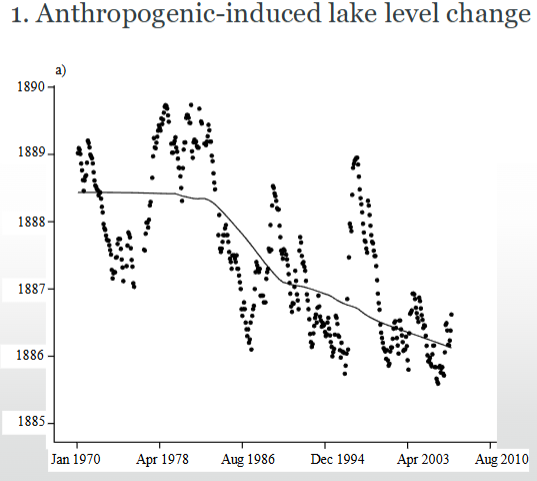
1 of only 2 freshwater lakes in the Rift Valley of Kenya (150km2). The Ramsar site is a globally important wetland and has an important horticultural industry with its main export of roses generating US$141 million in revenues for the country in 2016. There are more than 60 flower farms in the Lake Naivasha area, together employing 50,000 workers. However, this also comes with social issues of poor working conditions, as well as the environmental concern of increased irrigation leading to overextraction, with people are utilising this water, as well as upstream management leading to less water in the lake (the lake level is up to 4 m lower than it should be naturally).
The loss of water through abstraction has had a direct impact on the lake's fishery (provisioning ecosystem service). After dominating the fish community and fish catches for >40 years, it has finished the O.leucostictus fishery (tilapia fishery) as it didn’t matter how much effort the fisheries put in, the tilapia catch rate was too low.
Papyrus can also act as a natural pollution filter, but is cut down to allow for people to access the lake.
Case study detail on the conservation of temperate freshwaters in the River Frome, UK
The River Frome is designated as a Site of Special Scientific Interest (SSSI) between Dorchester and Wareham. It is a chalk river, fed by chalk aquifers and is therefore mineral rich. It has a relatively stable flow regime and temperature with little suspended matter. The example biodiversity Action Plan (BAP) for fish species includes the Atlantic Salmon and Sea Lamprey.
Possible reasons for global decline of Atlantic Salmon:
• global warming
• changes in oceans currents
• exploitation at sea
• exploitation in rivers
• silting up of river beds
• habitat degradation
• barriers to migration
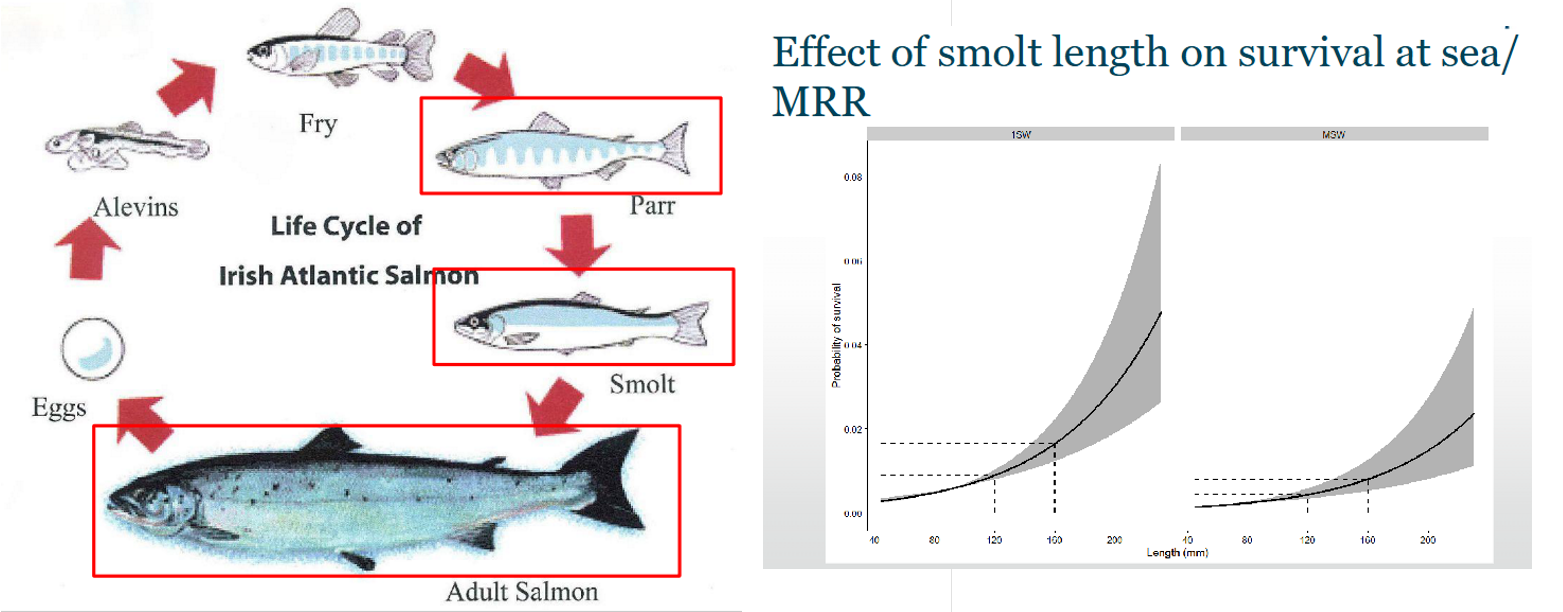
The long-term programme of salmon research involves individual marking (tagging) of juveniles and their detection on their return to the river as spawning adults. This determines marine return rates (MRRs) of Atlantic salmon. In research they are currently testing the influence of smolt size on MRR. The smolt stage in a salmons lifecycle occurs when the fish are ready to enter saltwater.
Research in Smolt lengths show a decrease in universal pattern, resulting in decreased MMR and population abundances. Multiple uses of freshwater makes conservation & management difficult (provisioning ecosystem services) as well as impacts of degradation from human uses (e.g. hydropower, fish farming, flood defence & sewage disposal) creating issues.
 Note
Note  Flashcards (35)