Psychology - Genetics and Mutation
 Call Kai
 Learn
Learn Practice Test
 Spaced Repetition
 Match
Match Flashcards
 Knowt Play
1/31

There's no tags or description
Looks like no tags are added yet.
Name | Mastery | Learn | Test | Matching | Spaced | Call with Kai |
|---|
No analytics yet
Send a link to your students to track their progress
32 Terms
What is DNA?
double stranded molecule
Portions of DNA are genes
Tightly wound chromosomes in the nucleus
CAN’T leave the nucleus
DNA structure
double helix with alternating base pairs
Adenine + Thymine
Guanine + Cytosine
Relationship between DNA, chromosomes and genes
Genes are segments of DNA that carry the instructions for making proteins and determine specific traits. Chromosomes are long strands of DNA that contain many genes; they organize and package the DNA in a compact form within the nucleus of a cell. Therefore, DNA is the molecule that contains genetic information, genes are specific sequences within that DNA, and chromosomes are structures composed of tightly coiled DNA containing numerous genes.
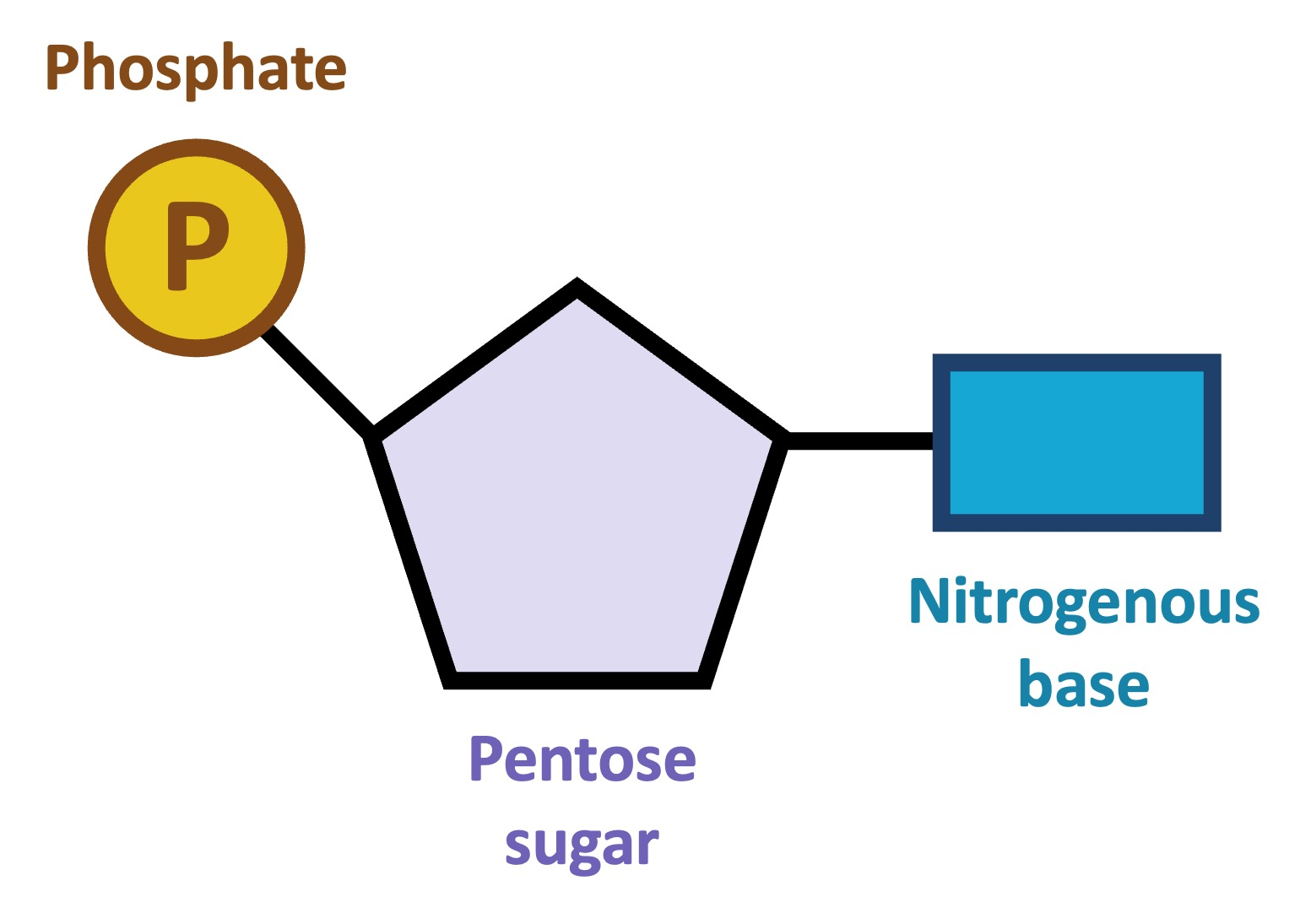
What is a nucleotide?
What is RNA?
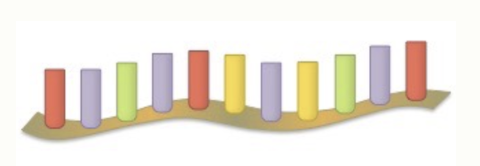
Ribonucleic acid is a single stranded structure
Builds proteins
Not found in chromosomes - reads DNA code
CAN leave the nucleus
DNA and RNA
Similarities
Contain nucleotides
Differences
RNA contains Uracil instead of Thymine
RNA is single stranded while DNA is double stranded
DNA gives instructions for making proteins while RNA reads DNA coding
Types of RNA - mRNA
Messenger RNA - Copies the DNA code and delivers it to the ribosomes to build proteins
Types of RNA - tRNA
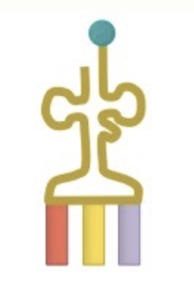
Transfer RNA - Delivers the amino acid to the growing protein chain
Types of RNA - rRNA
Ribosomal RNA - Makes up ribosomes, where proteins are built
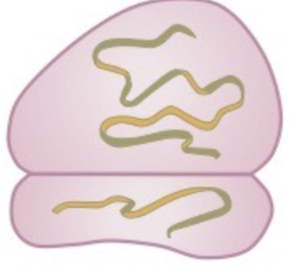
What is protein synthesis?
The process of translating genetic information from DNA into an amino acid chain
2 steps of protein synthesis
Transcription and translation
Transcription - Nucleus
Initiation - when RNA polymerase attaches to a section of the DNA, causing the DNA to unwind in that section
Elongation - Complementary nucleotides attach to the pre mRNA strand
Termination - When RNA polymerase crosses a termination sequence in the gene and detaches when it fills the gap
Translation - cytoplasm on ribosomes
The mRNA moves through the nuclear pore to the cytoplasm
The mRNA attaches to the ribosome. The ribosome moves along the mRNA strand, reading 3 nucleotides (codon) at a time - translation begins at the START codon (the start codon is always AUG)
Transfer RNA (tRNA) molecules deliver the amino acids to the mRNA at the ribosome
tRNA links with the ribosome and matches the anticodon with the codon of the mRNA
A peptide bond forms between the adjoining amino acids, forming a protein chain. Another tRNA brings the next amino acid, depending on the next codon
The protein production stops when a stop codon is reached. The mRNA breaks away from the ribosome.
What is mRNA?
The role of mRNA is to take the DNA code to ribosomes.
Pre mRNA and mRNA
Pre mRNA contains introns and exons
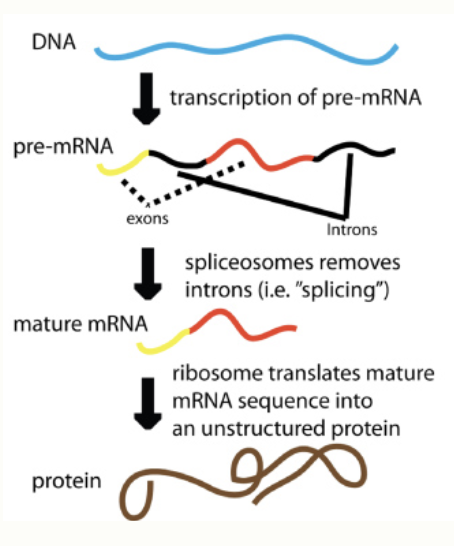
Introns and exons
Pre mRNA contains introns and exons
Introns - non coding sections of mRNA
Exons - coding sections of mRNA
The introns are removed and the exons are spliced together, creating mRNA
What is the role of the ribosome?
Act as the site of protein synthesis (translation), facilitating the pairing of mRNA codons with transfer RNA (tRNA) to assemble polypeptides.
What is a codon?
A sequence of three consecutive nucleotides in DNA or mRNA that acts as a unit of genetic information, coding for a specific amino acid or signaling the start/stop of protein synthesis
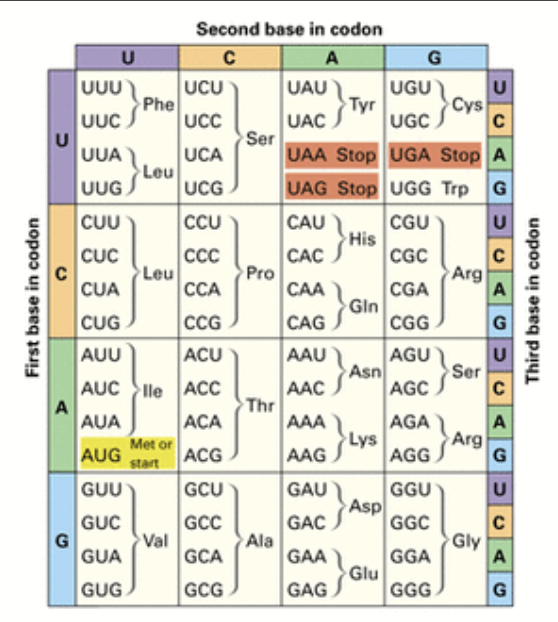
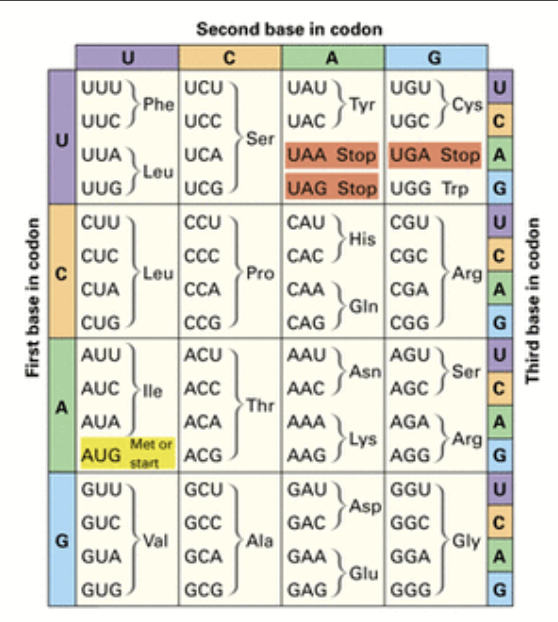
Using mRNA coding table
Each codon codes for an amino acid. There are 20 amino acids, so some are coded for by multiple codons.
What is a polypeptide chain? How is this different to a protein?
A polypeptide chain is a linear polymer consisting of a large number of amino acids linked together by covalent peptide bonds. As the building blocks of proteins, with the sequence of amino acids determining the protein's final 3D structure and function.
What is tRNA? What is the role of tRNA?
Transfer RNA - Molecules deliver the amino acids to the mRNA at the ribosome.
What is a triplet, codon and anticodon?
A codon is a three-nucleotide sequence on mRNA that codes for a specific amino acid, while an anticodon is the complementary three-nucleotide sequence on tRNA that binds to the codon during translation
Be able to transcribe DNA to mRNA.
DNA to mRNA
Cytosine pairs with Guanine
Adenine pairs with Uracil
Thymine pairs with Adenine
Be able to translate mRNA to amino acids using the codon table.
What is a mutation?
Mutations are not always seen. The affected gene may still be able
to function.
Mutations may be:
Harmful (benign or malignant)
Beneficial or have (examples include HIV resistance, and
lactose tolerance).
No effect on the organism (silent)
When do mutations occur? What causes them?
Causes
x rays, radiation
chemicals, poisons
UV light
Viruses
How is a point mutation different from a deletion/addition mutation?
A point mutation swaps one base for another (substitution), affecting at most one amino acid, while deletion/addition mutations remove or add bases, typically causing a frameshift that alters every downstream amino acid
How do mutations impact protein synthesis?
Protein synthesis is interrupted as the frame of codons can’t be read, meaning most amino acids following the mutation will be incorrect.
What are some diseases that are caused by genetic mutations? Causes and
symptoms.
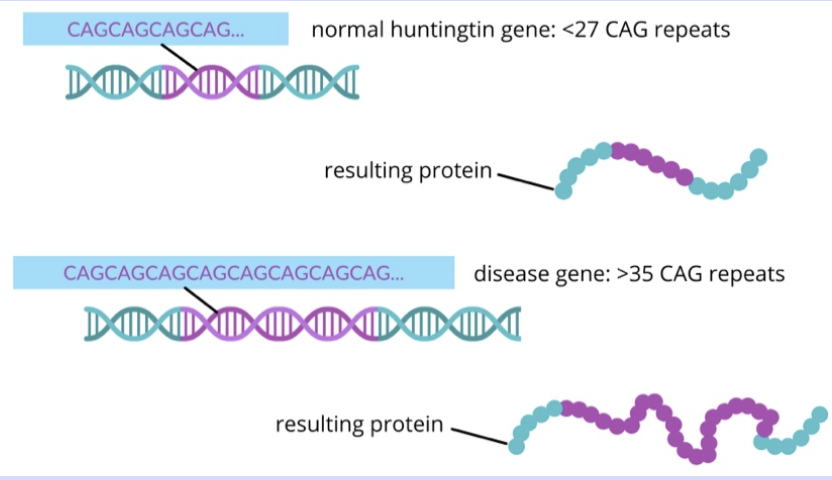
Huntington’s disease - Frameshift - addition mutation
Cystic Fibrosis - Frameshift - deletion mutation
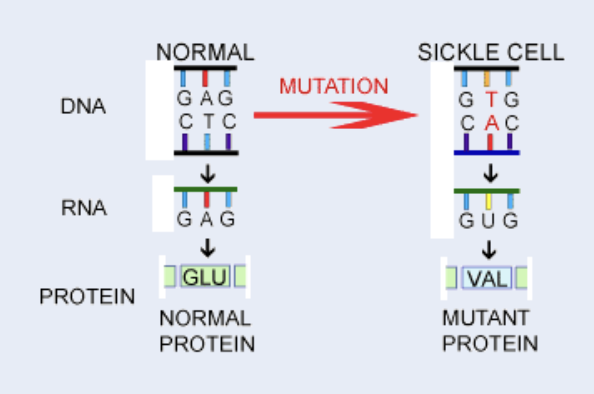
Sickle cell anaemia - substitution DNA mutation
Huntington’s Disease
Huntington’s is a progressive brain disorder that affects the central area of the brain.
Movement, mood and thinking skills are affected as a consequence.
normally, CAG is repeated 10 to 35 times
With Huntington’s, it is repeated more than 120 times
Cystic Fibrosis
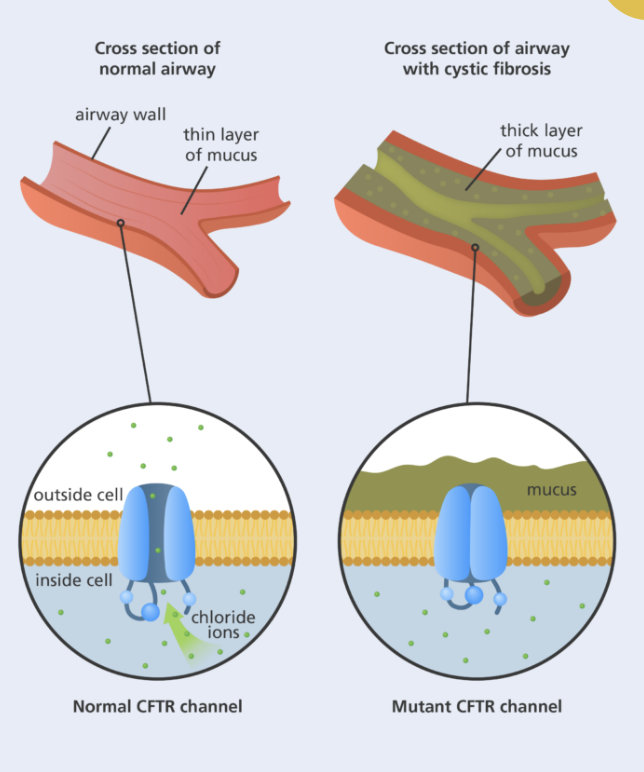
Cystic Fibrosis can be caused by a deletion of a single base, causing a frameshift OR by
the deletion of the whole codon on chromosome number 7.
In people with Cystic Fibrosis (CF), mutations in the cystic fibrosis transmembrane
conductance regulator (CFTR) gene cause the CFTR protein to become dysfunctional.
When the CFTR protein to becomes dysfunctional, patients experience excess mucus in the lungs and digestive system.
Cystic fibrosis is a recessive trait, meaning both alleles must be passed on to the child for the disease to be present.
Sickle Cell Anaemia
Only one amino acid is substituted in the haemoglobin
The haemoglobin still functions but it folds differently, changing the
shape of the red blood cell
This affects the way the haemoglobin can carry the oxygen
The substitution causes a missense mutation, where the codon now codes for a different amino acid.