Lipid Digestion & Absorption
 Call Kai
 Learn
Learn Practice Test
 Spaced Repetition
 Match
Match Flashcards
 Knowt Play
1/11

Earn XP
Description and Tags
week 12, lesson 3
Name | Mastery | Learn | Test | Matching | Spaced | Call with Kai |
|---|
No analytics yet
Send a link to your students to track their progress
12 Terms
Lipids
triglycerides make up the majority of the calories as they are the primary lipid food source
chemical digestion of triglycerides serve a major challenge since the enzymes are hyrdophilic and are soluble in water secretions found thruout the digestive tract
However, lipids are hydrophobic, and will form large fat droplets as they float through the digestive tract.
Triglyceride Structure
they are hydrophobic
They are made up of a molecule of glycerol which contains three attachment sites for fatty acids
Three fatty acids can attach to a glycerol backbone, making a triglyceride.
Although this image shows that the fatty acids are all the same length, they can be different lengths. Each bend of the fatty acid represents a carbon. The fatty acids shown here are 12 carbons in length. Most fatty acids are between 12 - 20 carbons in length.
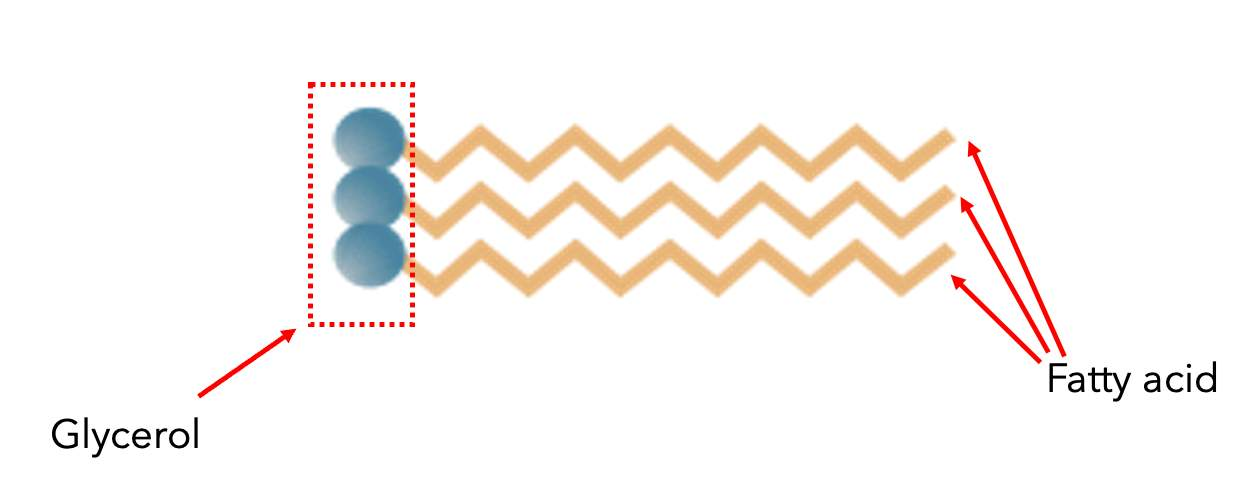
Fatty acids
Fatty acids can also have double bonds connecting carbon molecules to each other, making them unsaturated,
Fatty acids that have no double bonds are called saturated fatty acids.
Regardless of the type of attached fatty acid, triglycerides are all chemically digested by the lipases; lingual, gastric and pancreatic.
triglyceride + lipase
Lingual lipase, Gastric lipase and pancreatic lipase will all first remove one fatty acid from a triglyceride, leaving behind
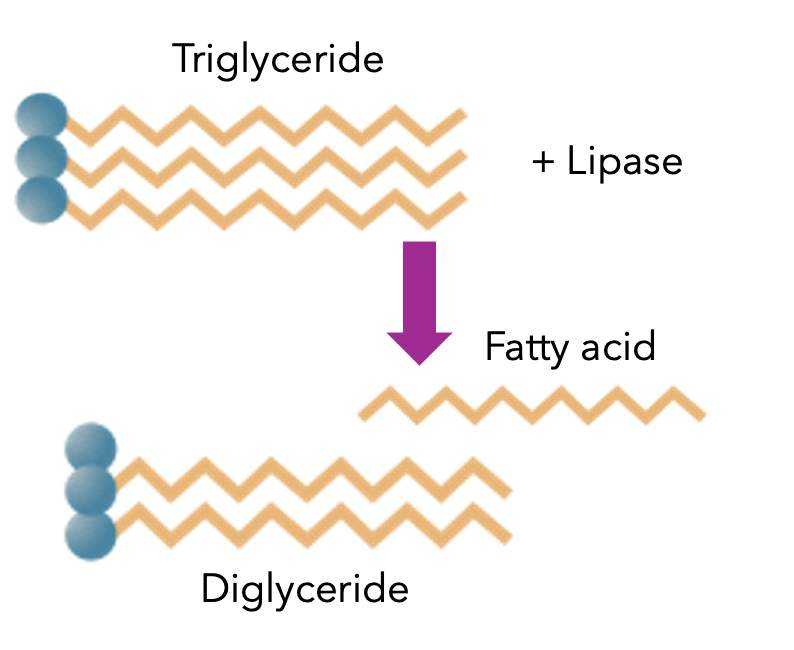
diglyceride + lipase
Further activity of the lipase will remove another fatty acid from the diglyceride, leaving a monoglyceride and another fatty acid.
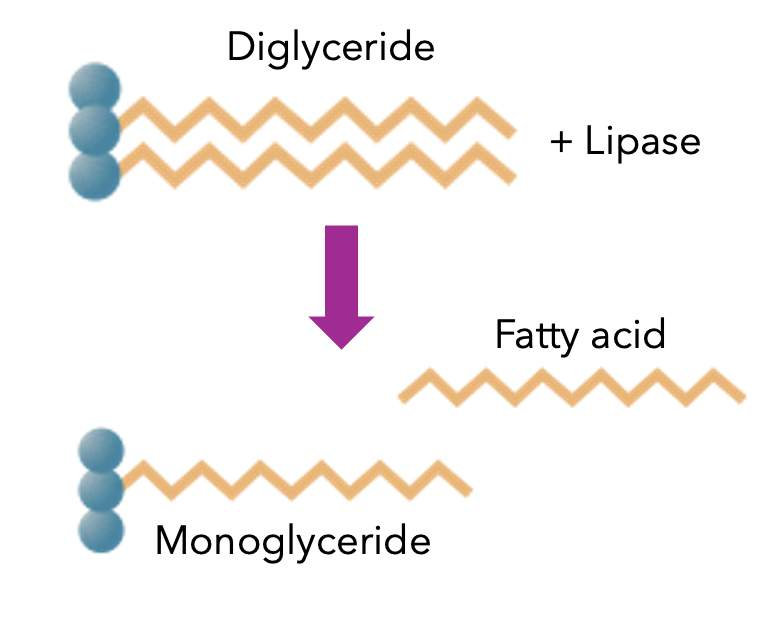
challenges of lipid chemical digestion
it is challenging for enzymes to digest lipids bc enzymes are hydrophilic, while lipids are hyrdophobic. within the aqueous environment of the digestive tract, lipids will form large lipid droplets. enzymes can digest lipids at the surface of lipid droplets, but if lipid droplets remain large, only a small fraction of lipids can be chemically digested. within the stomach, the mixing motility patterns can temporarily cause lipid droplets to break apart. when the motility patterns stop, the lipid droplets will reform. the challenge of preventing lipid droplets from reforming into larger droplets is overcome with the addition of bile salts.
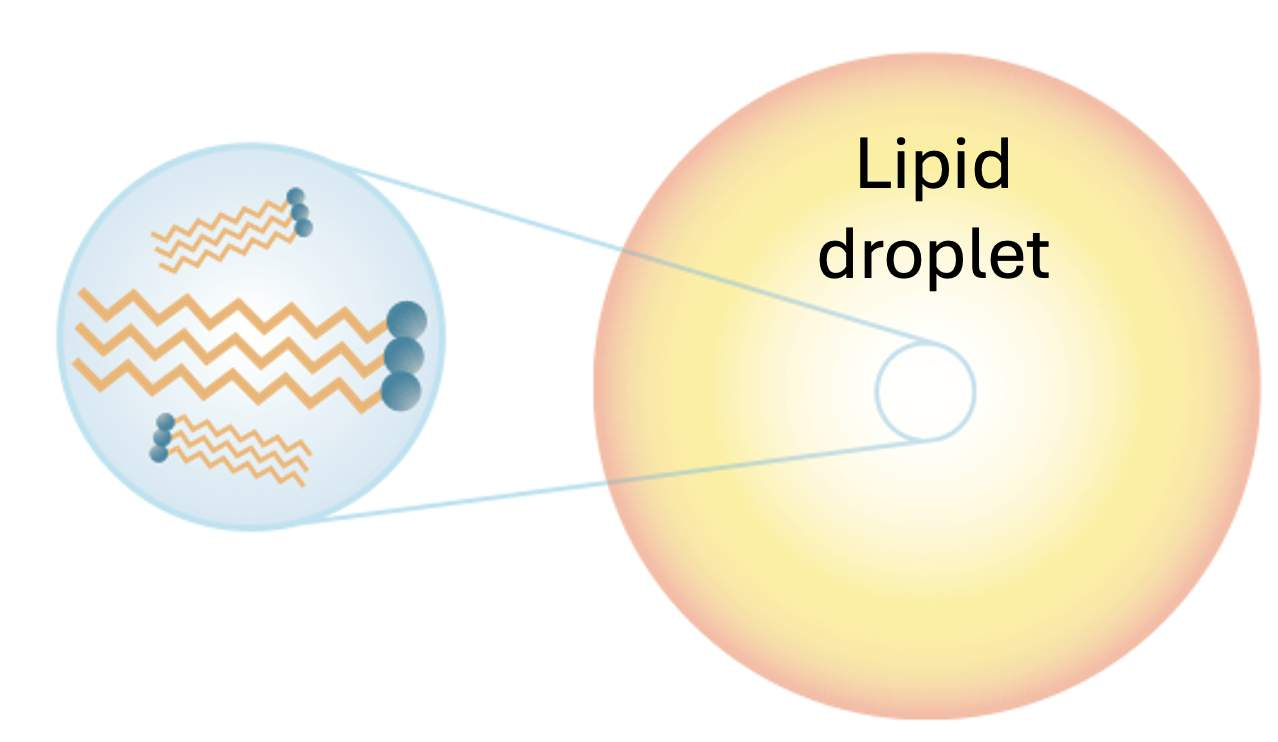
bile salts
they are amphipathic molecules that can interact with the lipid droplets and make soluble in aqueous solutions.
during the motility pattern of segmentations in the small intestine, fat droplets are made smaller
since bile solution is secreted into the small intestine, the bile salts in the solution then cover these smaller lipid droplets
keeping them from reforming into larger droplets after segmentations have slowed down
the creation of a stable mixture, where the small lipid droplets do not reform into larger droplets, and stay soluble in solution, is called emulsification.
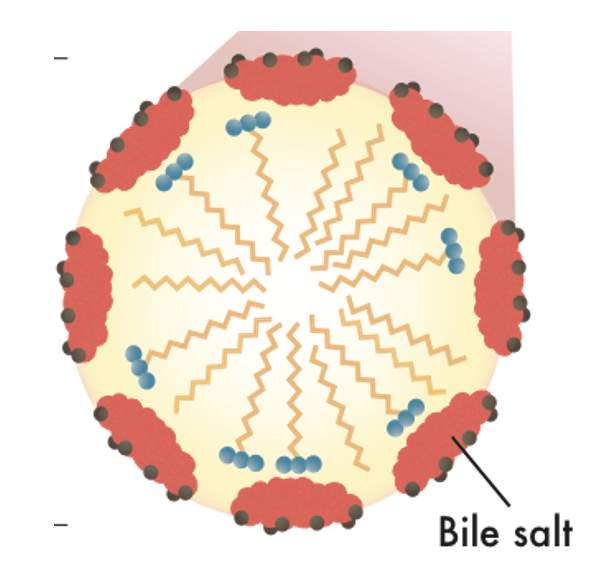
within the lipid droplets, now called micelles
triglycerides are reduced to diglycerides, the removal of one fatty acid, and then to monoglycerides by the removal of a second fatty acid by the action of pancreatic lipase and the assistance of the coenzyme, colipase. these mixed micelles also contain ingested phospholipids as well as cholesterol, another important lipid found in our diets
lipid absorption
once micelles get closer to the apical membrane of enterocytes
the free fatty acids and monoglycerides that flux in and out of micelles can diffuse across the membrane
although diffusion of both fatty acids and monoglycerides occurs, the rate at which they are absorbed cannoted be explained by diffusion alone
protein carriers can move fatty acids and monoglycerides across the enterocyte membrane
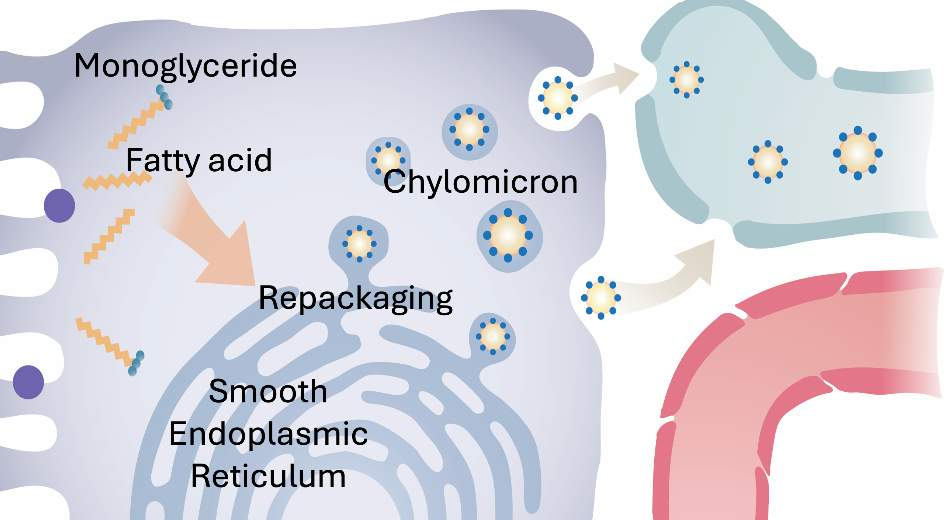
lipid transport
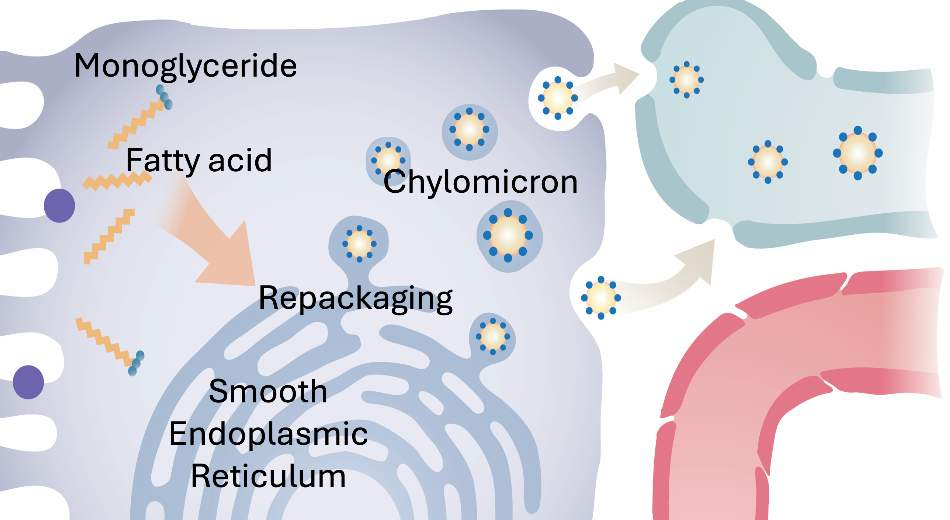
absorbed fatty acids and monoglycerides are bound to carrier proteins in the cytosool and transported to the smooth endoplasmic reticulum. there, they are recombined into triglycerides once more. with the absorbed cholesterol, the triglycerides are packaged into protein coated package called a chlomicron. there carriers are so large that they have to be exocytosed across the basolateral membrane. the large size of them prevents the movement into capillaries. so they instead are first absorbed into small lymphatic vessels. chlyomicrons pass thru the lympathic system and finally enter the venous blood jus before it flows into the right side of the heart
our digestive tract doesnt just absorb macronutrients, but also
ions, minerals, water and vitamins found within our food. vitamins can be categorized into two groups, water soluble vitamins and fat soluble vitamins thery are absorbed differently, due to these properties
vitamin absorption
water soluble vitamins include the b vitamins and c
the fat soluble vitamins are a, d, e and k. the water soluble vitamins are absorbed by a variety of protein carriers found in the plasma membrane of absoptive intestinal cells
vitamin b12 is the largest vitamin and requires assistance from a protein carrier, intrinsic factor.
instrinsic factor is secreted by parietal cells of the stomach, and binds to vitamin b12 helping to deliver to the ileum and theres a special transporter to absorb it
the fat soluble vitamins are hydrophobic so it will transport within large lipid droplets and micelles, with the other dietary lipids that are ingestsed
when the micelles come near to the plasma membrane of intestinal cells, these vitamins can cross the plasma membrane without the assistance of protein carrier.
These fat-soluble vitamins will then be exported to the body in the same chylomicrons that transport triglycerides and cholesterol, for distribution to the tissues.

