developmental 2nd half
 Call Kai
 Learn
Learn Practice Test
 Spaced Repetition
 Match
Match Flashcards
 Knowt Play
1/48

There's no tags or description
Looks like no tags are added yet.
Name | Mastery | Learn | Test | Matching | Spaced | Call with Kai |
|---|
No analytics yet
Send a link to your students to track their progress
49 Terms
genotype
specific dna that hold information for building and maintaining cells and can be passed on to offspring
environment
factors that affect the phenotype without changing genetic expression
phenotype
expression of both genes and environment
polygenic misconception
many genes contribute to complex phenotypes, rare to see a single gene
density misconception
having a predisposition does not mean you will express it, and can be modified by epigenetic influences
range of reaction
genes code for a potential phenotypic range, environmental influences impact where in the range the trait will be expressed
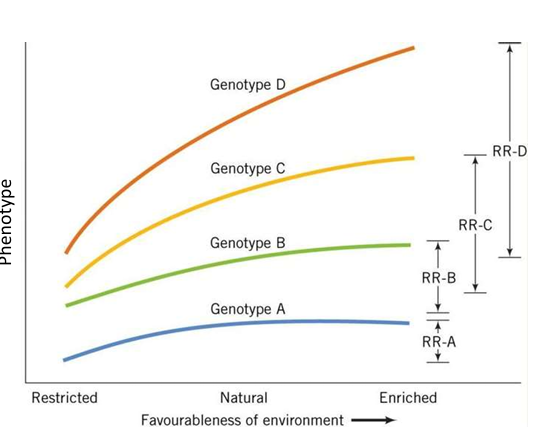
what is an example to explain this diagram
imagine the phenotype is height with diet on the x axis. if diet is restricted, height may not be impacted significantly. if diet is enriched, then height may be enhanced. the influence of the environment impacted the expression of the phenotype
what is the inheritance concordance rate of depression in twins
identical 60%
fraternal 20%
can one single gene cause depression
no but many have been identified to increase the risk
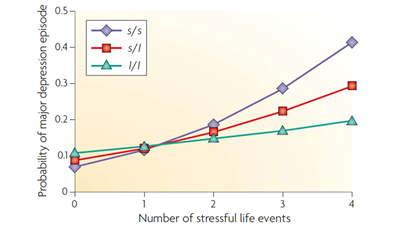
explain what is happening in the diagram
people who were homozygous s/s showed increased risk for depression with increased maltreatment/stress
people who were homozygous l/l showed a less pronounced risk, with the l allele acting as a predisposition to resilience
what is the concordance rate of schizophrenia for identical twins
48%, points to a genetic factor in heritablity
neuregulin 1 (NRG1) in schizophrenia
impairs cell-cell signaling, axon guidance, synaptogenesis, glial differentiation, myelination, neurotransmission
disrupted in schizophrenia 1 (DISC1)
impairs cell proliferation, differentiation, migration, neuronal axon and dendrite growth, mitochondrial transport, and cell-cell adhesion
catechol-o-methyltransferase (COMT) in schizophrenia
impairs dopamine metabolism, glutamatergic activity (G72 metabolism)
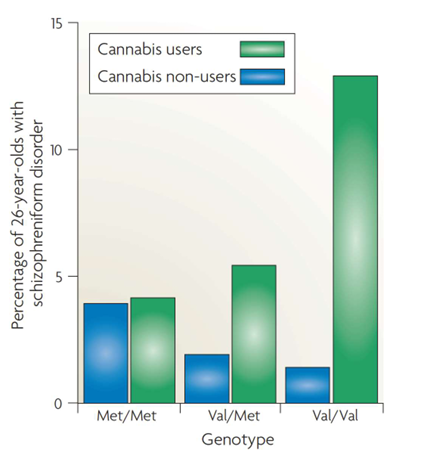
explain what is happening in this diagram and what does it imply
carriers of the val/val allele that use cannabis were most likely to develop schizophrenia, but val/val carriers that did not use cannabis have the lowest risk. implies that COMT gene alone does not create risk
epigenetics
study of mechanisms that cause changes in gene expression but not to the dna sequence
explain the packing of a genome
dna wraps around histones to create a nucleosome. nucleosomes folds into chromatin fiber. chromatin compacts into chromosomes
dna methylation
when a methyl group is added to a cytosine. genes become inactivated and can no longer pick up transcription factors to express the gene
histone methylation
methyl groups added to histone tails makes it harder for dna to unwrap from histones, making them too tight and inaccessible to transcription factors to express, off switch
histone acetylation
acetyl group added to histone tails loosens the wrapping of histones, making it more accessible to be expressed, on switch
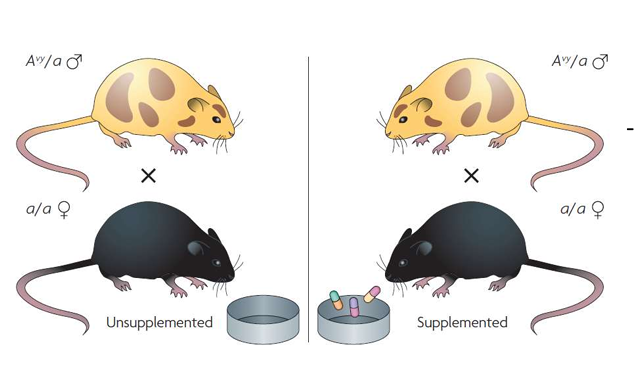
explain the findings from the agouti mice
diets of mother mice supplemented with methyl-donating nutrients reared more unexpressed agouti (yellow coat) gene, yielded more brown coats and were healthier mice (not predisposed to obesity, heart problems)
what does dohad stand for
developmental origins of health and disease
history of dohad
series of epidemiological studies that identified strong links between birth measures like weight, height and gestational age, and adult health
environmental influences on development
alcohol/drugs, maternal nutrition and health, toxins, stress
what was the dutch hongerwinter
winter and spring of 1944-1945 the nazi’s blocked off food and fuel shipments, rations of 400-800 calories a day, all social classes were affected
what did they learn from the dutch hongerwinter
timing of insult affects outcomes. when exposed early, children had elevated rates of obesity, cardiovascular disease. when exposed later, children had growth stunting and lower rates of obesity
developmental programming hypothesis
environmental conditions during embryonic and fetal development are linked to the risk of diseases later in life
what have air pollutants been linked to
pre-term brith, lower birth weight and height, smaller head circumference, low bsid scores, reduced verbal iq, delayed psychomotor skills
how do air pollutants impact the mother
the action of the agent itself, increases maternal inflammatory response, increases maternal stress response
stress during pregnancy has been linked to
reduced birthweight, temperament, fearfulness, impaired cognitive development, altered immune function
HPA axis of stress
when stress hits the hypothalamus, it releases corticotropin-releasing hormone (CRH). CRH reaches the anterior pituitary, it responds by releasing adrenocorticotropic hormone that travels to the adrenal glands. the adrenal glands respond by releasing glucocorticoids like cortisol to cope with stress. once there is enough cortisol, the negative feedback loop sends message to hypothalamus and pituitary to say we have enough, stop the stress response to prevent the system from being active for too long
how does chronic stress disrupt the HPA axis
it alters the cortisol secretion so there is no negative feedback loop to tell the hypothalamus and pituitary we don’t need more stress, instead creates a constant state of stress
how does maternal stress impact the placenta
maternal stress causes blood to contain much higher levels of active cortisol, the 11β-HSD2 barrier becomes less effective and can’t convert cortisol into cortisone, allowing more active cortisol to leak through. too much cortisol to the fetus influences developmental factors
adverse environments are linked to __ of mental health disorders
45% child-onset and 30% adult-onset
how does elevated cortisol impact brain structures
damages hippocampus and hippocampal learning - the binding of information
functional atrophy as receptors become less sensitive to increased cortisol
atrophy in amygdala and frontal lobe
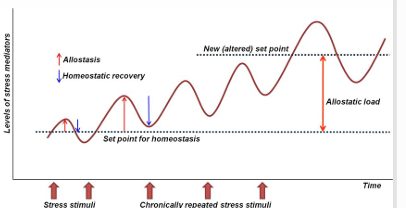
explain allostatic load
long term result of failed adaptation to chronic stress. every time a stressor hits, we spike then have relief. as we continue to have chronic stressors, homeostasis becomes less regulated and eventually ceates a new altered where there is higher resting cortisol and incomplete recovery
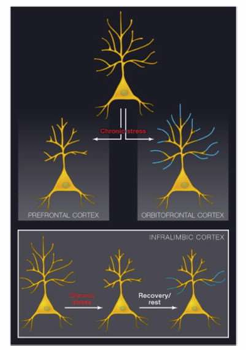
explain dendritic changes due to stress
shrinking of prefrontal cortex neurons. growth in orbitofrontal cortex. shrinkage in infralimbic cortex can regrow during recovery
what is the amygdala’s role in the HPA axis
detects potential danger, turns HPA axis on
what is the hippocampus and pfc role in the HPA axis
inhibitory, hippocampus encodes context and pfc evaluates cues
how do the hippocampus and pfc work together but stay vulnerable
by deciding a threat is actually dangerous and turn off HPA axis when threat is over. stay vulnerable as they are the first regions to be damaged when cortisol stays high
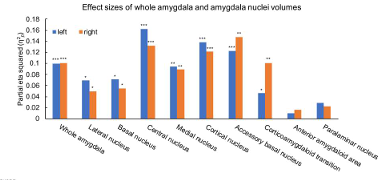
project ice storm
in utero during quebec ice storm. had larger whole amygdala volumes. had lower resting state functional connectivity between the right amygdala and pfc
why would there be a lower functional connectivity between right amygdala and pfc in project ice storm
inadequate integration of fear acquisition, when the amygdala overactivates the pfc underactivates
what was the setting of romanian institutions
100,000 children raised in institutions, had little interactions with peers and adults and were not able to form selective attachment. lack of psychological investment, 15:1 kids to caregiver, rotating shifts to not form bonds. infrequent language exposure, lack of visual stimulli, highly routinized
findings of bucharest early intervention project
blunted circadian rhythm in orphan children
how is circadian rhythm associated with hpa function
cortisol follows circadian rhythm, peaks at awakening and lowest at early sleeo cycle
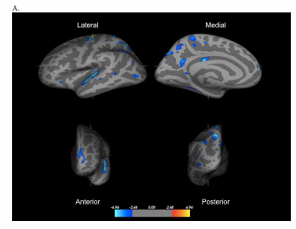
how did institutionalization impact brain development
reduced gray matter volume, causing increased amygdala volume (anxiety and inattention), smaller total white matter
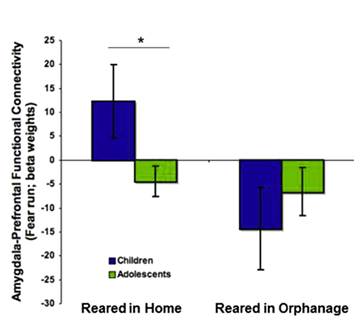
explain this diagram
negative functional activity between the amygdala and pfc suggests a more mature connectivity pattern where the regions weren’t ready to be connected and underwent inadequate pruning, lack of plasticity because connecttions are already made in childhood
why is accelerated brain maturation problematic
faster development at the expense of adaptability, the amygdala can’t teach the brain, may percieve all environments to be unpredictable, lose ability to respond flexibly
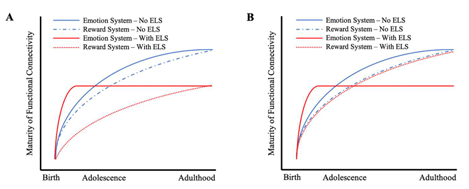
contrast these diagrams
graph A suggests how accelerated maturation of one system impacts how the other matures, which is typically in concert. in graph B it is unlikely that the emotion system is blunted and the reward system develops typically because those processes talk to each other.

