Heredity - Part I
 Call Kai
 Learn
Learn Practice Test
 Spaced Repetition
 Match
Match Flashcards
 Knowt Play
1/64

There's no tags or description
Looks like no tags are added yet.
Name | Mastery | Learn | Test | Matching | Spaced | Call with Kai |
|---|
No analytics yet
Send a link to your students to track their progress
65 Terms
Asexual Reproduction
process of using a single parent organism or cell to create offspring that are genetically identical to the parent
Sexual Reproduction
process by which two different parent cells produce genetically diverse offspring
Genetic Diversity
occurs when there is a variety of genes within an organism or group of organisms
Binary Fission
form of asexual reproduction in unicellular organisms where one cell divides to form two genetically identical cells
Mitotic Cell Division
process that involves the duplication and separation of DNA to form two new cells cells that are genetically identical
Meiotic Cell Division
form of cell reproduction where one cell divides to form 4 genetically diverse daughter cells after two rounds of cell division
Fertilization
process during sexual reproduction in which haploid male and female cells join to form a new diploid cell
1n
symbol for haploid number of chromosomes in a cell
2n
symbol for the diploid number of chromosomes in a cell, which occurs when chromosomes all have a homologous partner
Germ Cells
reproductive cells that undergo meiosis to develop into sperm and ova
Primary Sex Cell
diploid cell that undergoes meiotic cell division to produce monoploid gametes
Testes
male gonads where sperm cells and androgens are produced
Ovaries
female gonads that produce eggs and release reproductive hormones
Oocyte
type of cell in an ovary that may undergo meiotic division to form an egg
Spermatocyte
cell produced in the formation of sperm cells, formed from a spermatogonium and dividing by meiosis into a mature sperm cell
Oogonia
immature female reproductive cell that gives rise to ova by meiosis
Spermatogonia
diploid cells in a testis that can give rise to sperm cells after meiosis
Gametes
haploid reproductive cells that may undergo fertilization to form a zygote
Puberty
period of sexual maturation, during which a person becomes capable of producing reproductive hormones and gametes
Hypothalamus
brain structure that directs maintenance activities (eating, drinking, body temperature), helps govern the endocrine system via the pituitary gland, and is linked to emotion and behavior
Pituitary Gland
endocrine gland at the base of the brain that releases hormones to control the activity of other glands
Sex Chromosomes
final pair of chromosomes that determine the sex of an individual; typically X and Y
Spermatogenesis
production of sperm cells in the testes, which includes meiosis
Acrosome
region at the head of a sperm cell that contains digestive enzymes to penetrate the egg, as well as glycoproteins for recognition during fertilization
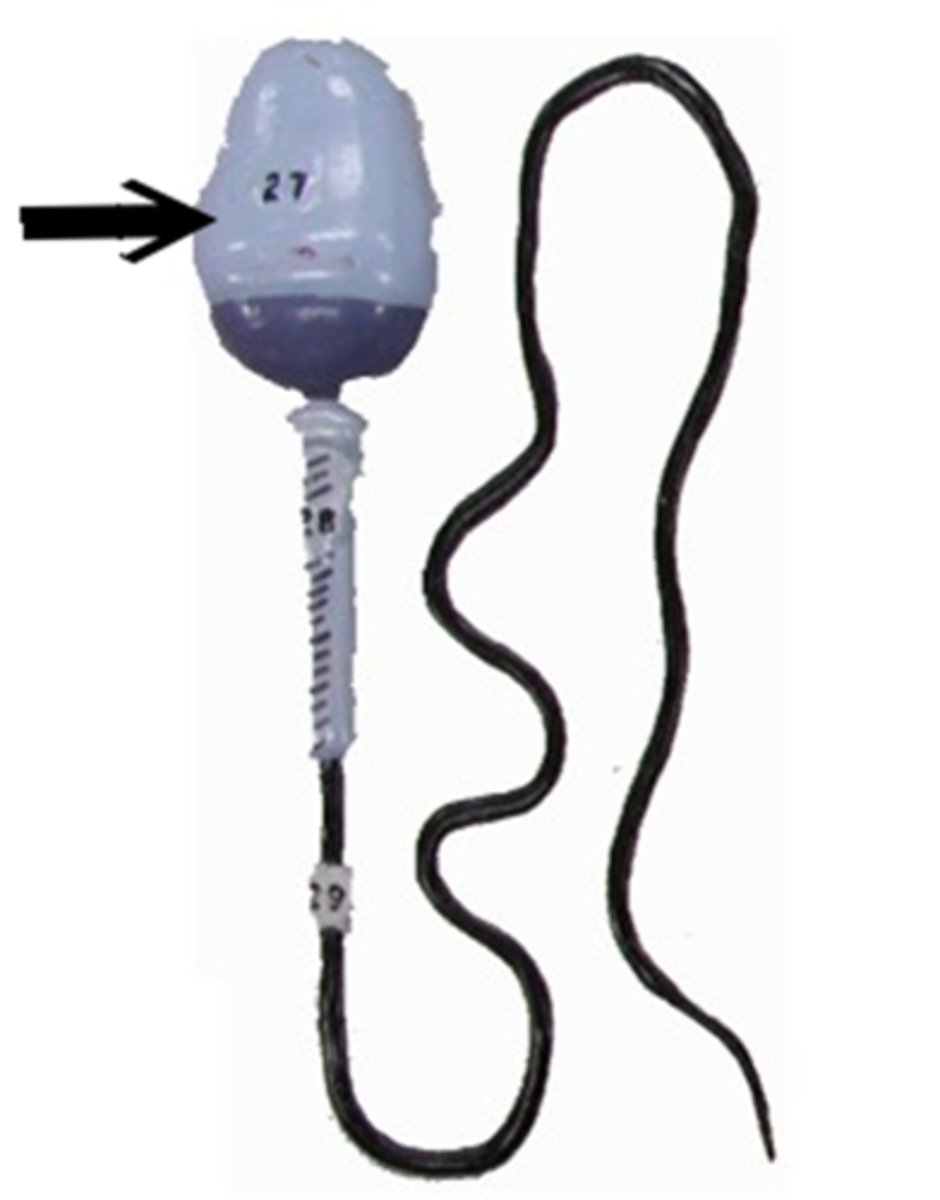
Flagellum
tail-like structure on the sperm cell that provides movement
Vas Deferens
tubes within the male reproductive tract that transfer sperm cells to the glands that provide supporting fluids
Seminal Vesicle and Prostate Gland
Structures in the male reproductive system that secrete fluids to support sperm cells with energy and proper pH
Epididymis
small pouch found within the male reproductive tract for the storage of mature sperm cells
Ovum
mature egg cell that contains 1/2 of the female's genetic information
Mitochondria and Chloroplast
organelles that are found in the mature ovum, which are only contributed by the mother
Cortical Granules
small vesicles found next to the cell membrane, which are used to "seal" the egg once it is fertilized and prevent fertilization by multiple sperm cells
Zona Pellucida
outer layer of the mature ovum that contains many glycoproteins for identification and compatibility with the sperm cell
Internal Fertilization
process in which eggs and sperm cells meet inside the female's body, protected from the outside environment and improving the likelihood of forming a zygote
Internal Development
growth and maturation of the embryo within the body of the female, which increases the likelihood of survival for offspring
Fallopian Tube
female structure that connects the ovary to the uterus, which is also the site of fertilization
Uterus
female organ of reproduction used to provide nutrients and remove waste during development of the fetus
Endometrium
inner lining of the uterus where the fertilized egg implants and attaches at the start of pregnancy
Ovulation
process of releasing a mature ovum into the fallopian tube each month, providing an opportunity for fertilization
Zygote
diploid cell resulting from the fusion of two haploid gametes
Gametogenesis
process by which gametes are produced through the combination of meiosis and other structural changes
Equation Division
second division of meiosis where the chromosome number is not altered, but double chromosomes become single chromosomes
Reduction Division
occurs during Meiosis I, when homologous pairs of chromosome separate and the chromosome number is reduced by half
Ploidy
number of sets of chromosomes in a cell, ex. 1n, 2n, 3n
Diploid
organism or cell having two sets of chromosomes, or twice the haploid number
Homologues
two chromosomes that code for the same traits; typically creating a pair of paternal and maternal copies
Haploid
organism or cell having only one complete set of chromosomes
Monoploid
similar ploidy as a haploid cell or organism
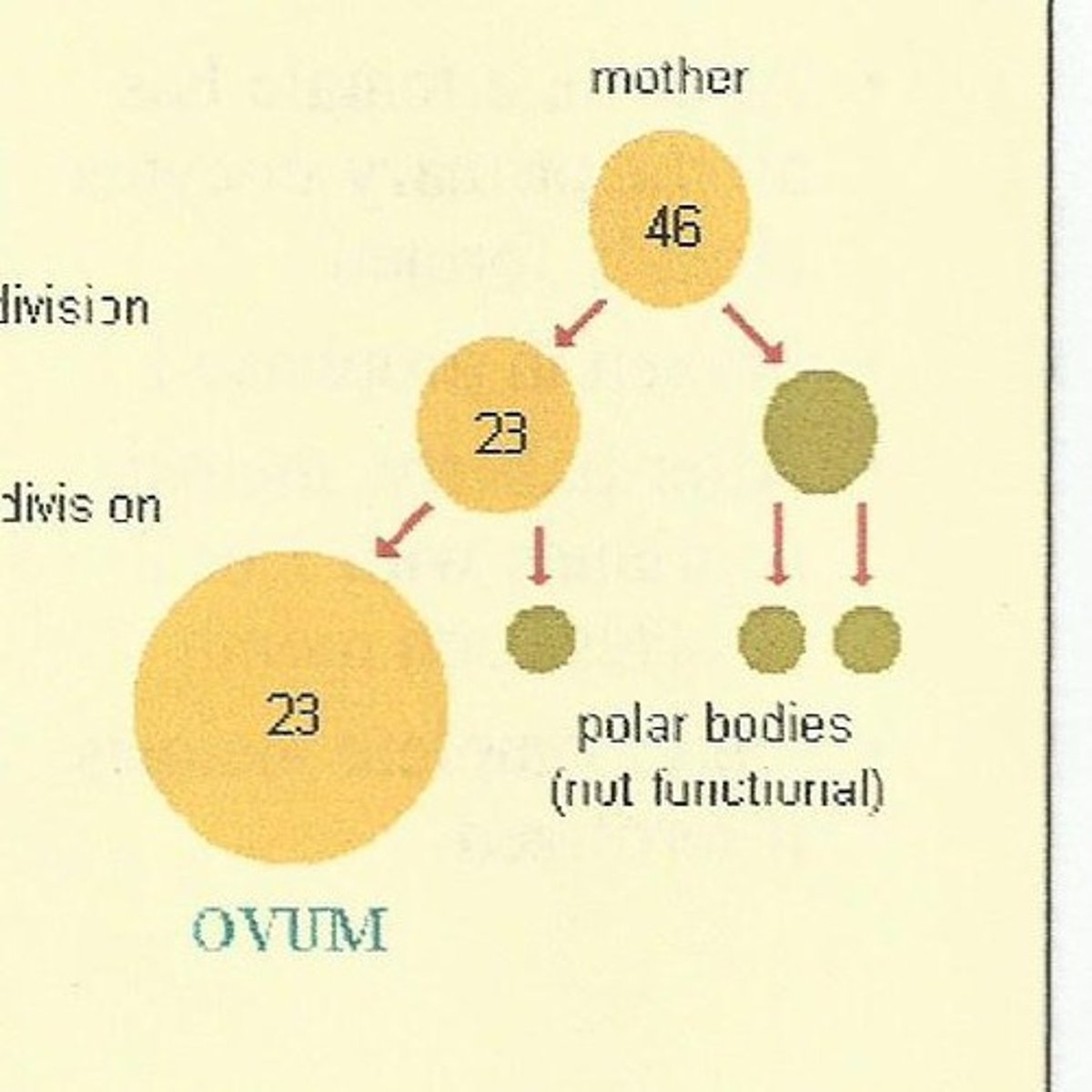
Oogenesis
process including meiosis that leads to the production, growth, and maturation of an egg, or ovum
Polar Bodies
cells produced in females that do not complete maturation during oogenesis and do not participate in reproduction
Tetrads
paired homologous chromosomes that attach to one another during Prophase I of meiosis
Synapsis
attachment of chromatids from homologous chromosomes during Prophase of Meiosis I
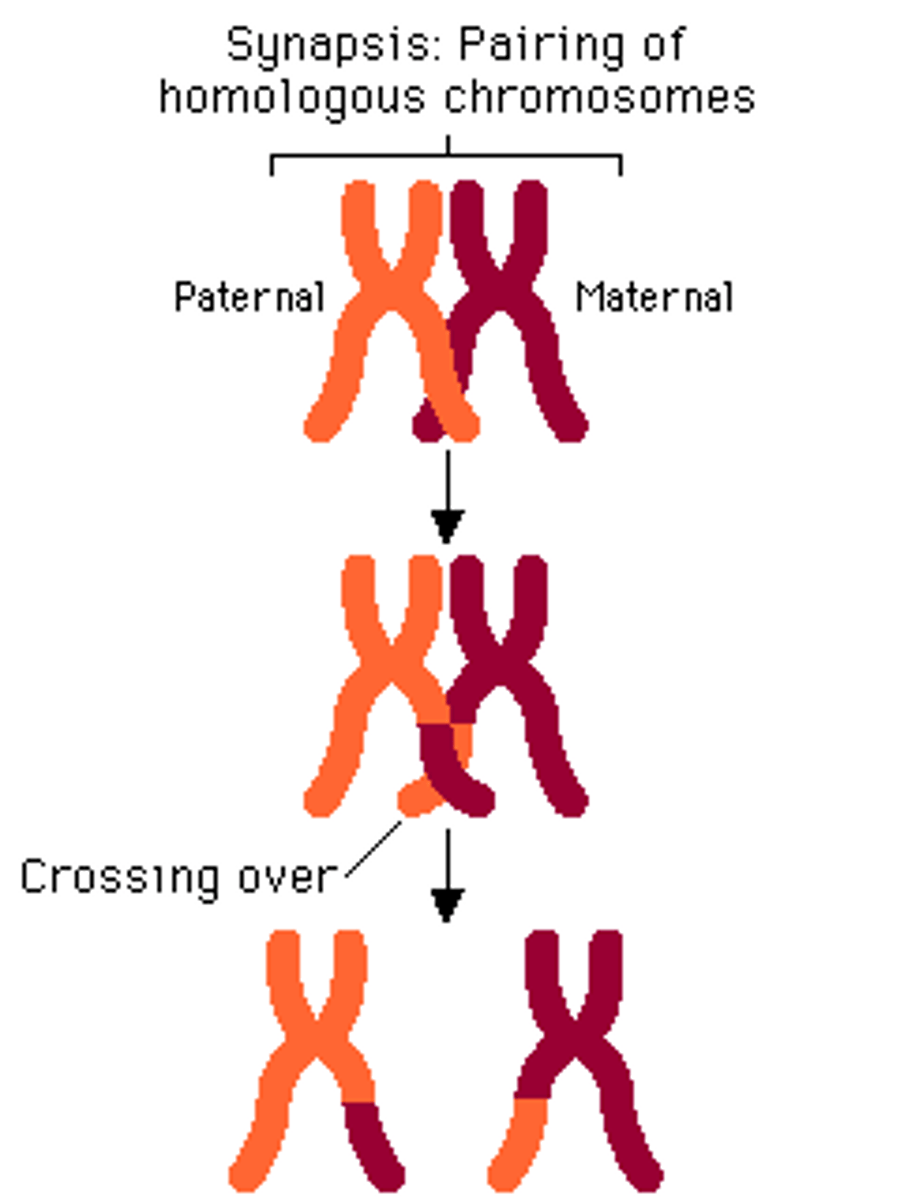
Crossing Over
exchange of genes between homologous chromosomes, resulting in a mixture of parental characteristics and recombinant chromosomes
Homologous Chromosomes
chromosomes that have the same size, shape, and genes, which are the only types of chromosomes that can undergo Crossing Over
Recombinant Chromosomes
chromosomes that carry genes from each parent, which are formed as a result of Crossing Over
Independent Assortment
random distribution of alleles to the gametes during meiosis, which increases the number of allele combinations in gametes
Crossing Over and Independent Assortment
processes that occur during meiosis to increase genetic diversity in gametes and the resulting offspring
Meiotic Cell Division
form of cell division that is used to create
genetically diverse cells and reduce ploidy
Mitotic Cell Division
form of cell division that is used to create
genetically identical cells and maintain ploidy
Sporophyte
diploid organism that uses meiosis to create haploid spores for reproduction
Gametophyte
haploid organism that uses mitosis to create haploid gametes for reproduction
Estrogen
primary hormone that is responsible for the development of the uterus during the menstrual cycle
Menstrual Cycle
regular sequence of events in which an egg is prepared for fertilization and the uterus is prepared for fetal development
Progesterone
female hormone that maintains the uterine lining for potential implantation of the zygote
FSH and LH
hormones that are responsible for the maturation of gametes, such as sperm and ova, in males and females
Testosterone
most important of the male sex hormones that stimulates the production of sperm cells in reproductive males, as well as the determination of sex of the fetus during development

