Cell Communities: Tissues
 Studied by 0 people
 Call with Kai
 Learn
Learn Practice Test
 Spaced Repetition
 Match
Match Flashcards
 Knowt Play
1/25

There's no tags or description
Looks like no tags are added yet.
Name | Mastery | Learn | Test | Matching | Spaced | Call with Kai |
|---|
No study sessions yet.
26 Terms
what surrounds cells. the stuff outside of it
and how do cells connect to eachother
extracellular matrix
and cell junctions
what does the extracellular matrix contain a lot of. and what is it the building block for. and what does it do for the cells
collagen, that holds cells together. it is one of the main proteins in the extracellular matrix.
it is the building block for connective tissue
its supportive for the cells, and can help the layers of cells stick together.
what do cell junctions do
they help form tissue by holding cell together as a unit to give structural support.
in animals extracellular matrix what is the main component. and what
collagen,
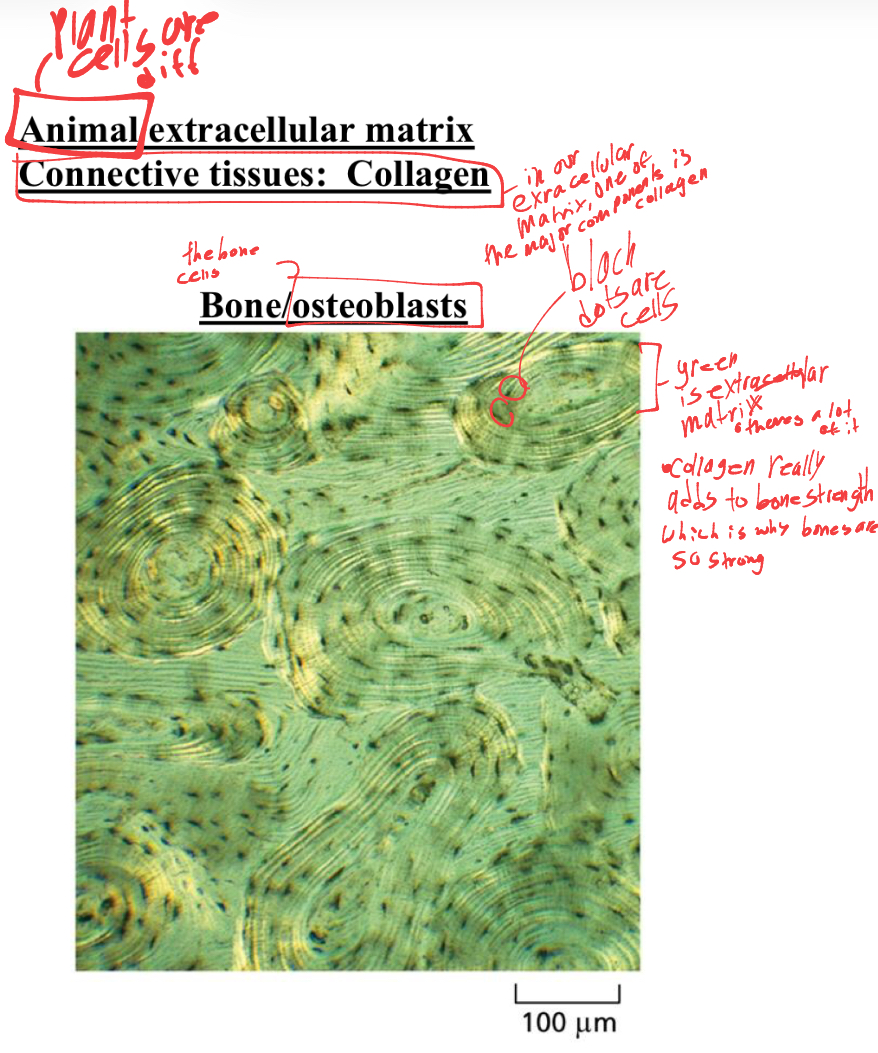
what are the bone cells called in animals and what is there an abundance around the bone cells , and how does this help the bones.
its called, OSTEOBLASTS and
theres a lot of extracellular matrix around bone cells,
meaning collagen adds to bone strength, making it the reason why bones are strong.
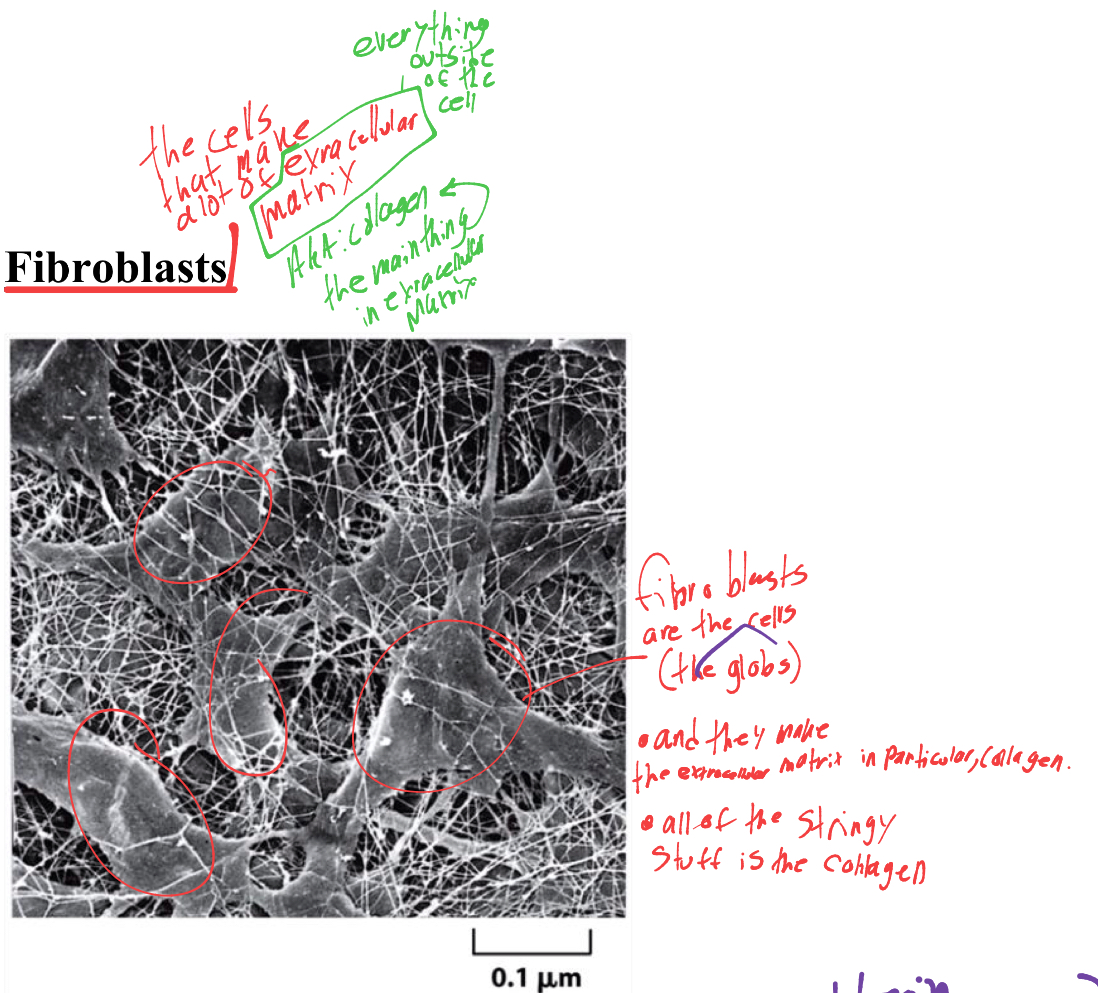
what are the cells that make a lot of extracellular matrix
fibroblasts, aka they make the immense amount of collagen.
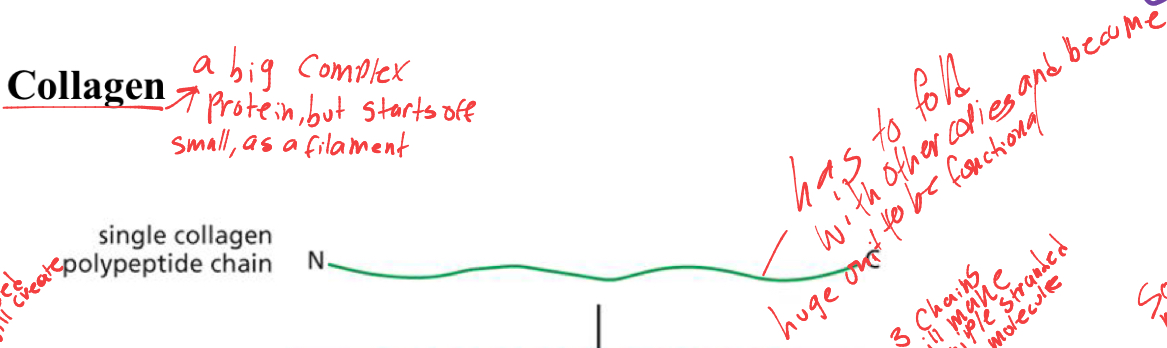
what type of protein is collagen, and what does it start out as
it is a big complex protein, but it begins with a single collagen peptide chain that must fold with other protein copies to be functional.
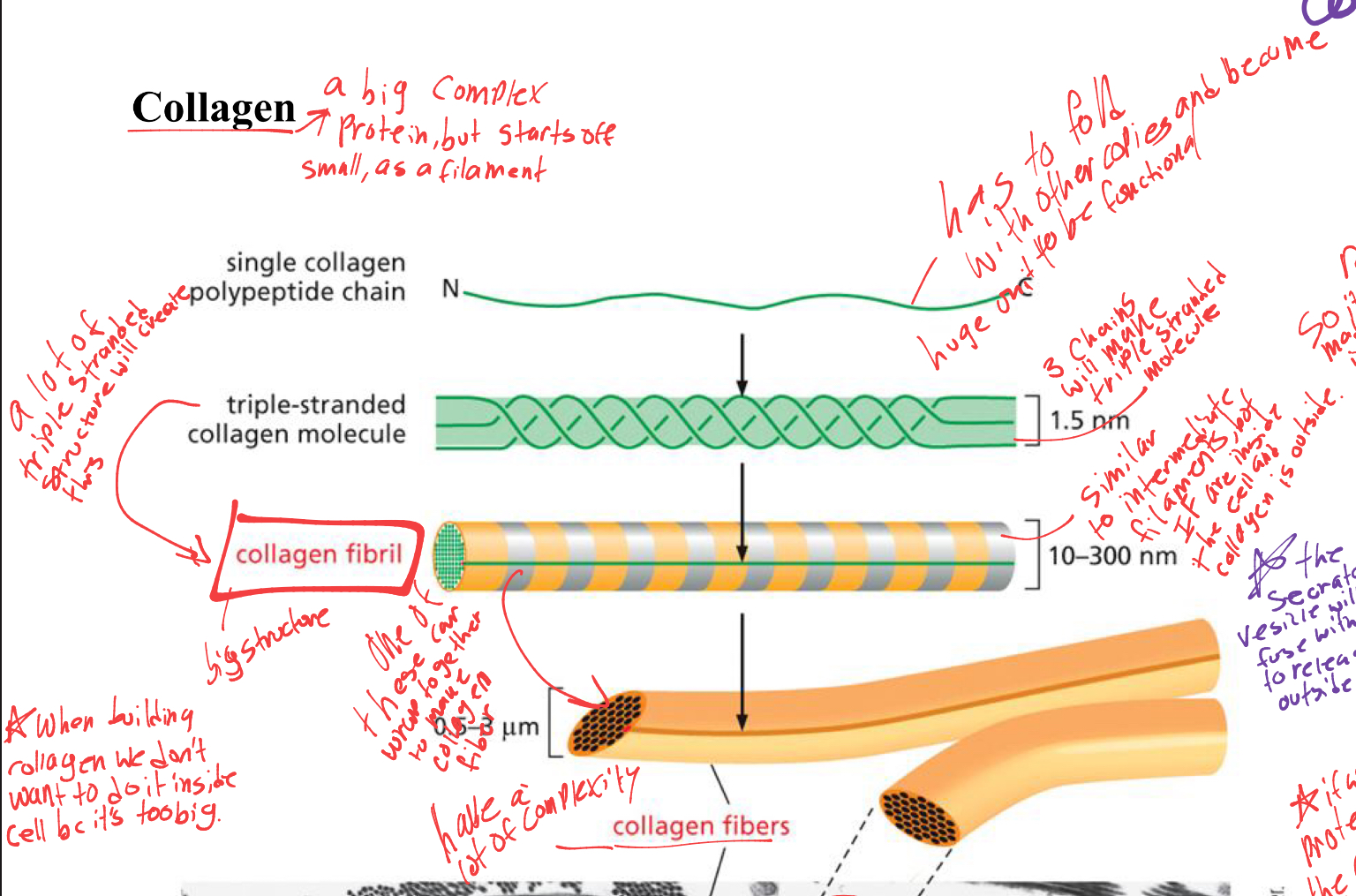
what are the next 3 steps in forming collagen
3 chains will make a triple stranded molecule
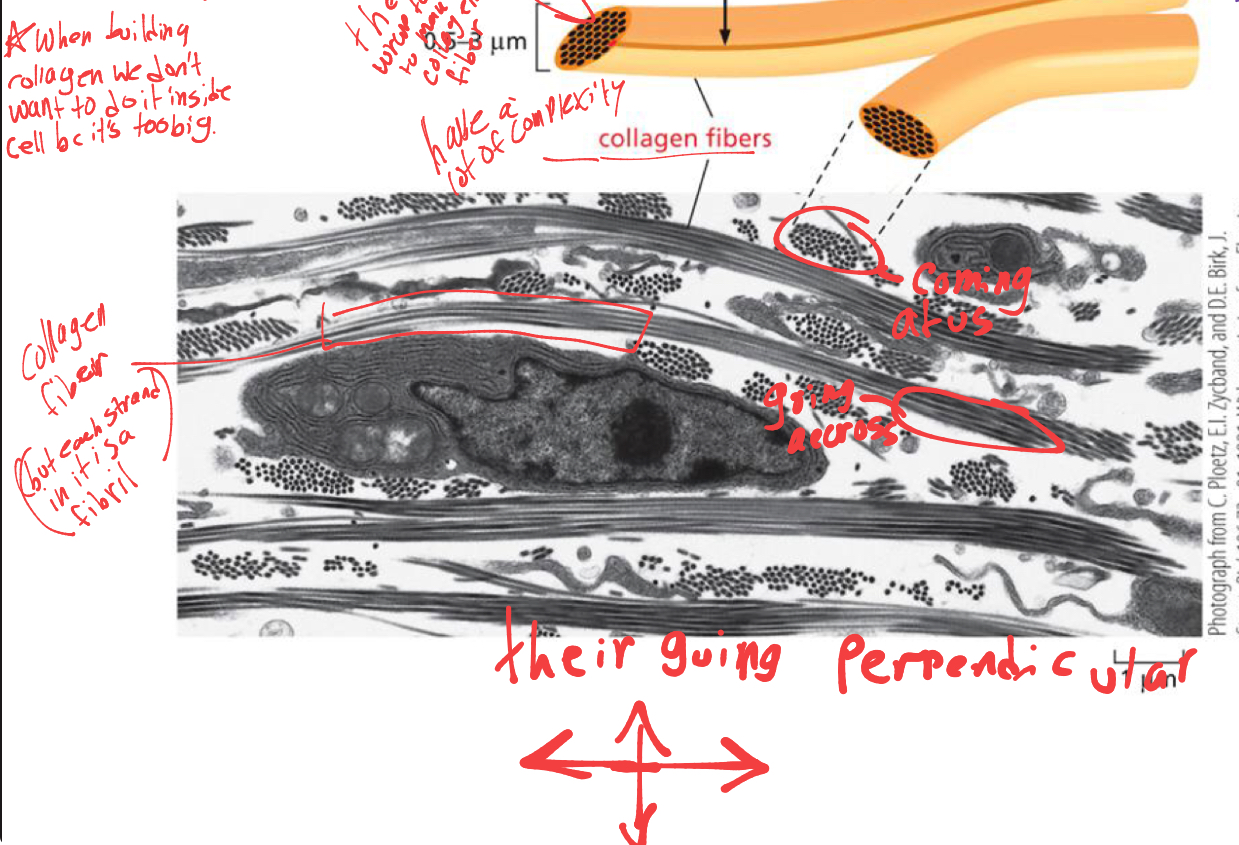
then multiple triple stranded molecules will create a collagen fibril,- this is similar structure to intermediate filaments except this is on the outside of a cell and Intermediate filaments are on the inside of a cell.
then collagen firbils will wrap together and form a collagen fiber.
what are some characteristics about the collagen fibers
we don’t want to build collagen inside the cell bc its too big, so up until the triple stranded molecule forms, it will be pushed out the cell.
collagen fibers are very complex
they move perpendicular inside the cell.
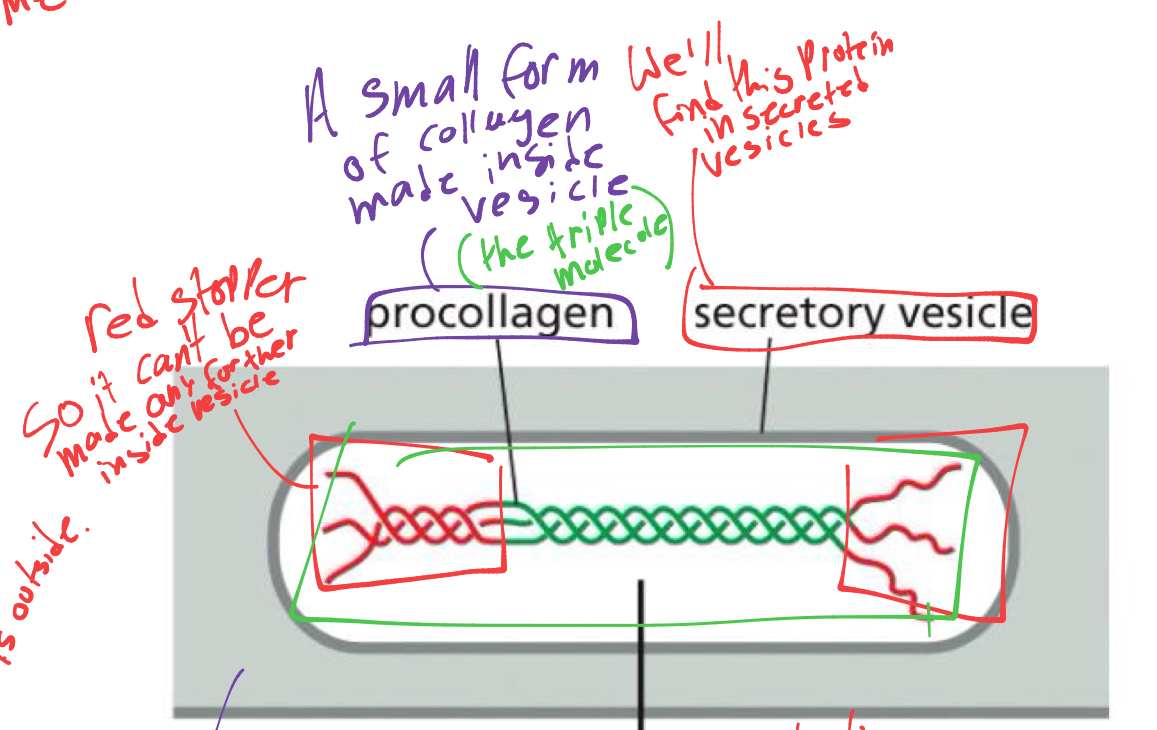
where does collagen begin its formation, why. and what is this form called.
in a SECRETORY vesicle inside the cell bc we need the ribosomes inside the cell to make the protein for it'
the form is going to be called pro collagen (its a pre version of the triple molecule)
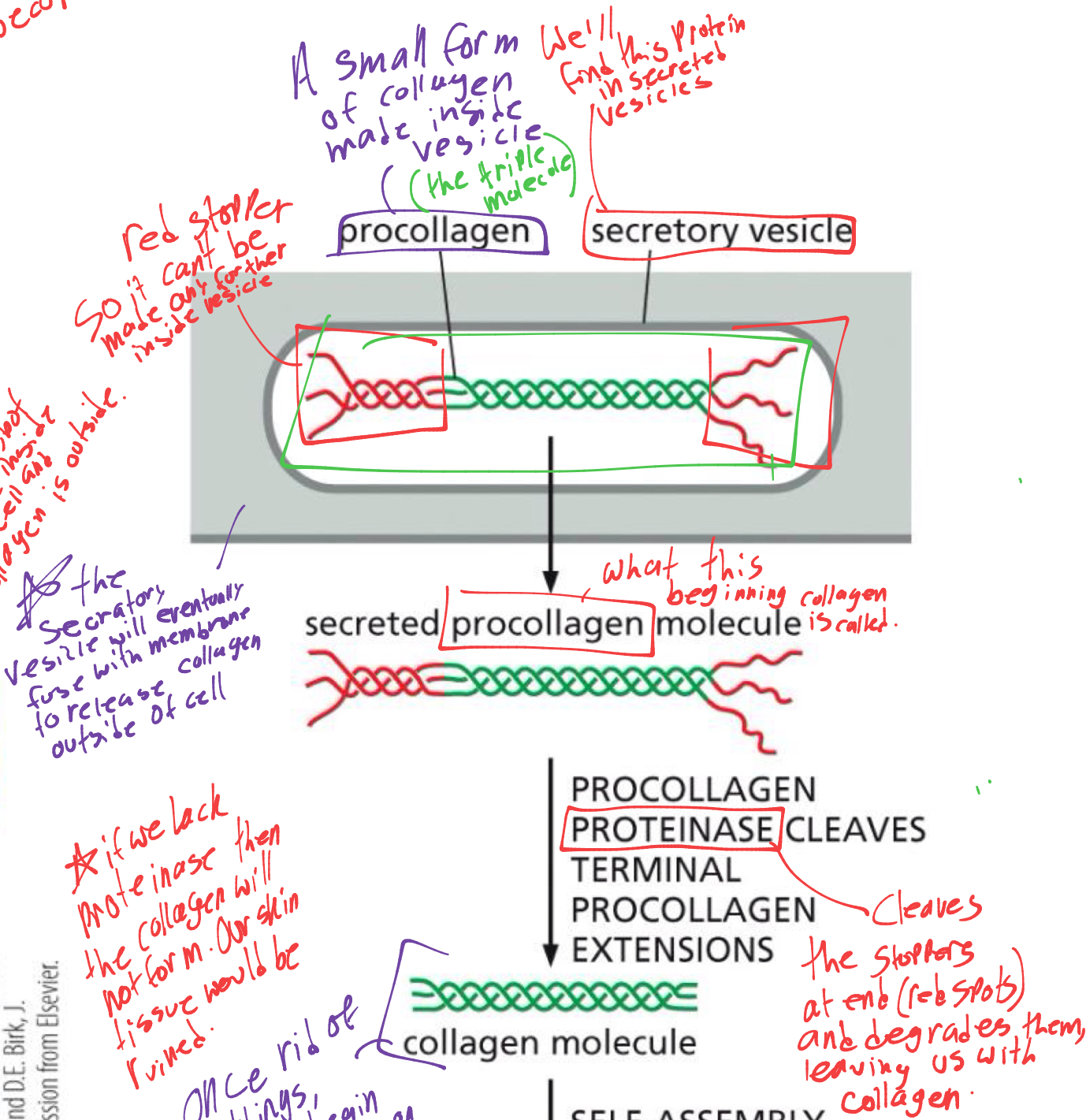
what is unique about the pro collagen and how does this change later
it has red stoppers on the ends of it, to prevent it from growing further inside the vesicle.
when the secretory vesicle fuses with the membrane to release collagen outside of cell, the enzyme PROTEINASE cleaves the red stoppers and leaves us with collagen.
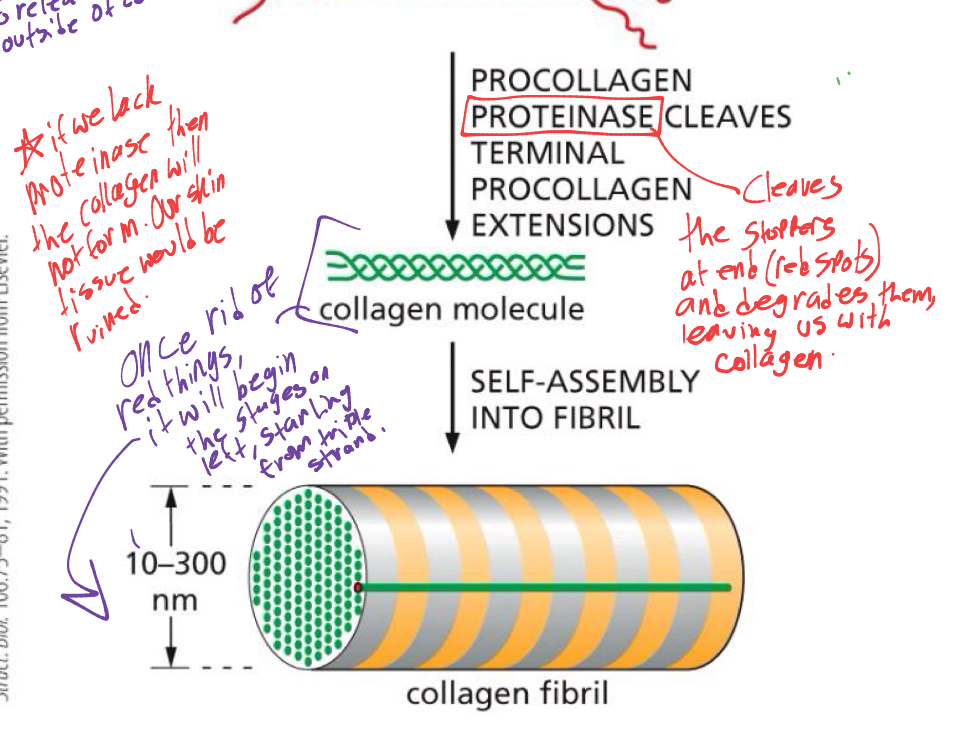
once red stoppers are cleaved what occurs, and what could occur if we lacked proteinase
the collagen would continue to form into a collagen fibril
if we didnt have proteinase then the collagen would not form and our skin tissue and other things like bones would be ruined.
what are the characteristics with cells and collagen and what will cells sometimes do
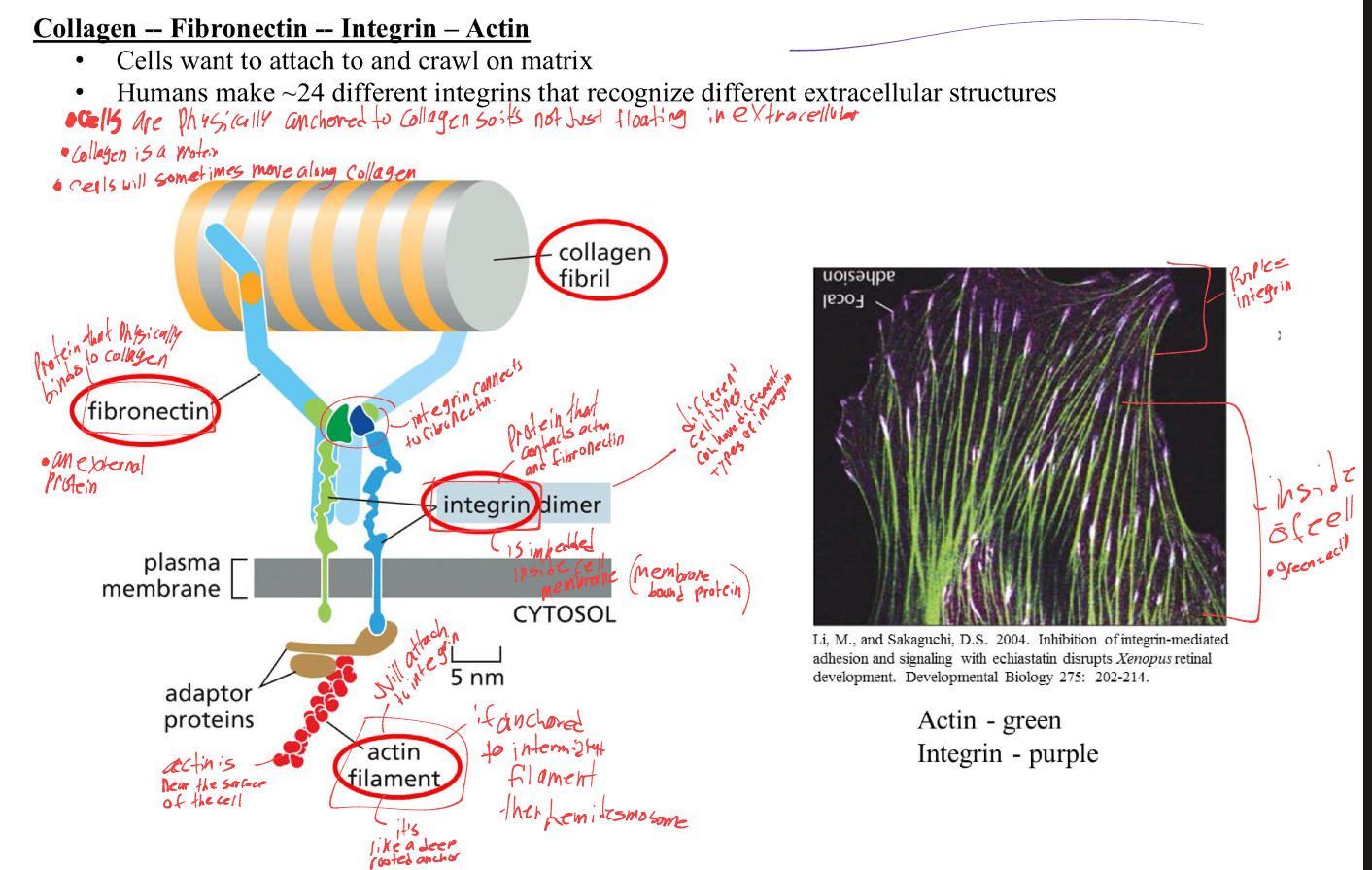
cells are physically anchored to collagen so that, their not just floating around.
cells will even sometimes move around collagen.
what are the proteins needed for cells to anchor onto collagen. and what do they do.
actin filament- acts as a deep rooted anchor, as it is near the surface of the cell, just beneath the membrane. it will attach to intergrin
intergrin dimer - the protein that makes contact with actin and fibronectin. is a membrane bound protein and can be different depending on the cell.
fibronectin- physically binds to collagen. Is an external protein.
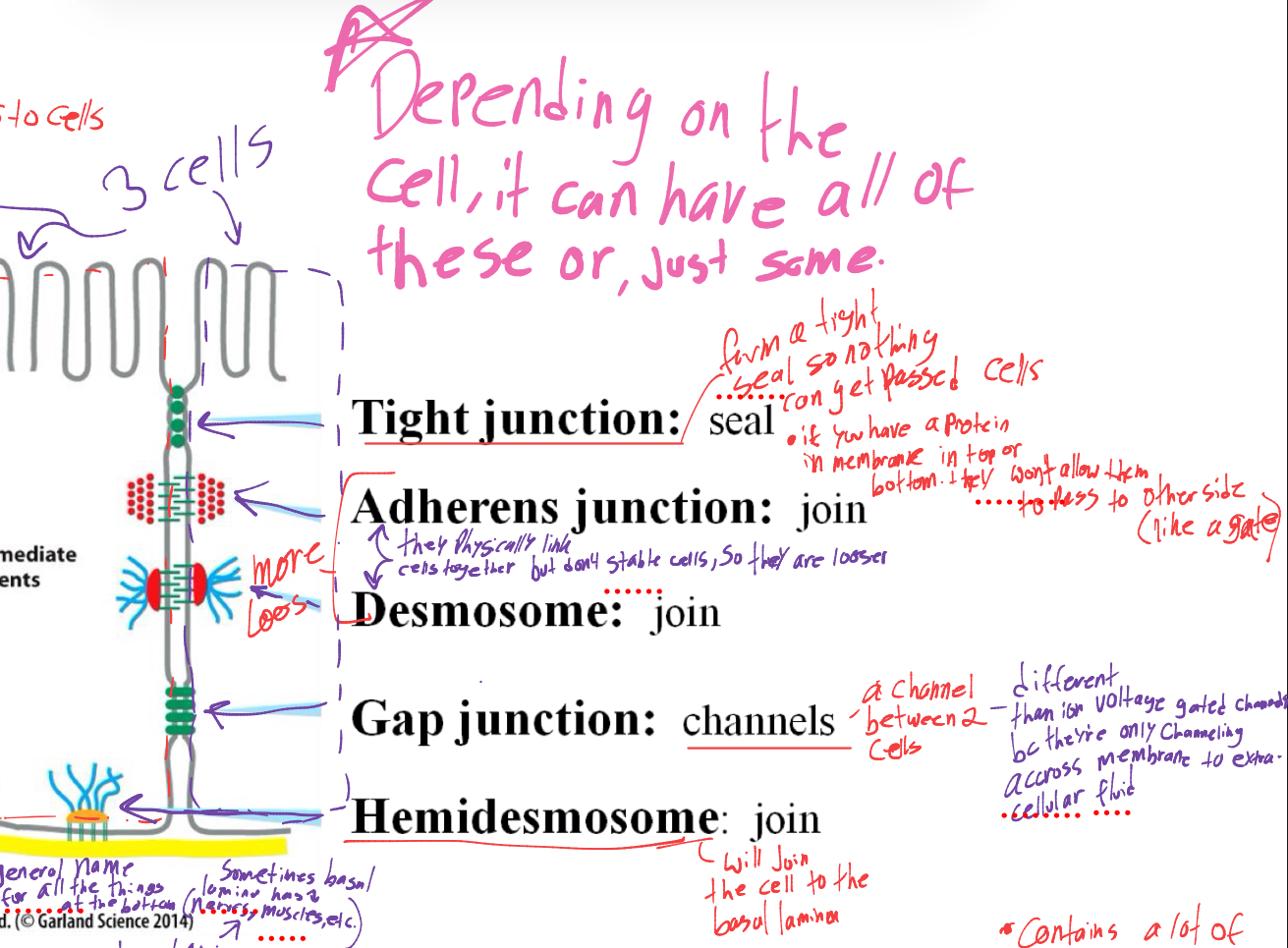
what are the 5 different types of cell junctions AND how they work
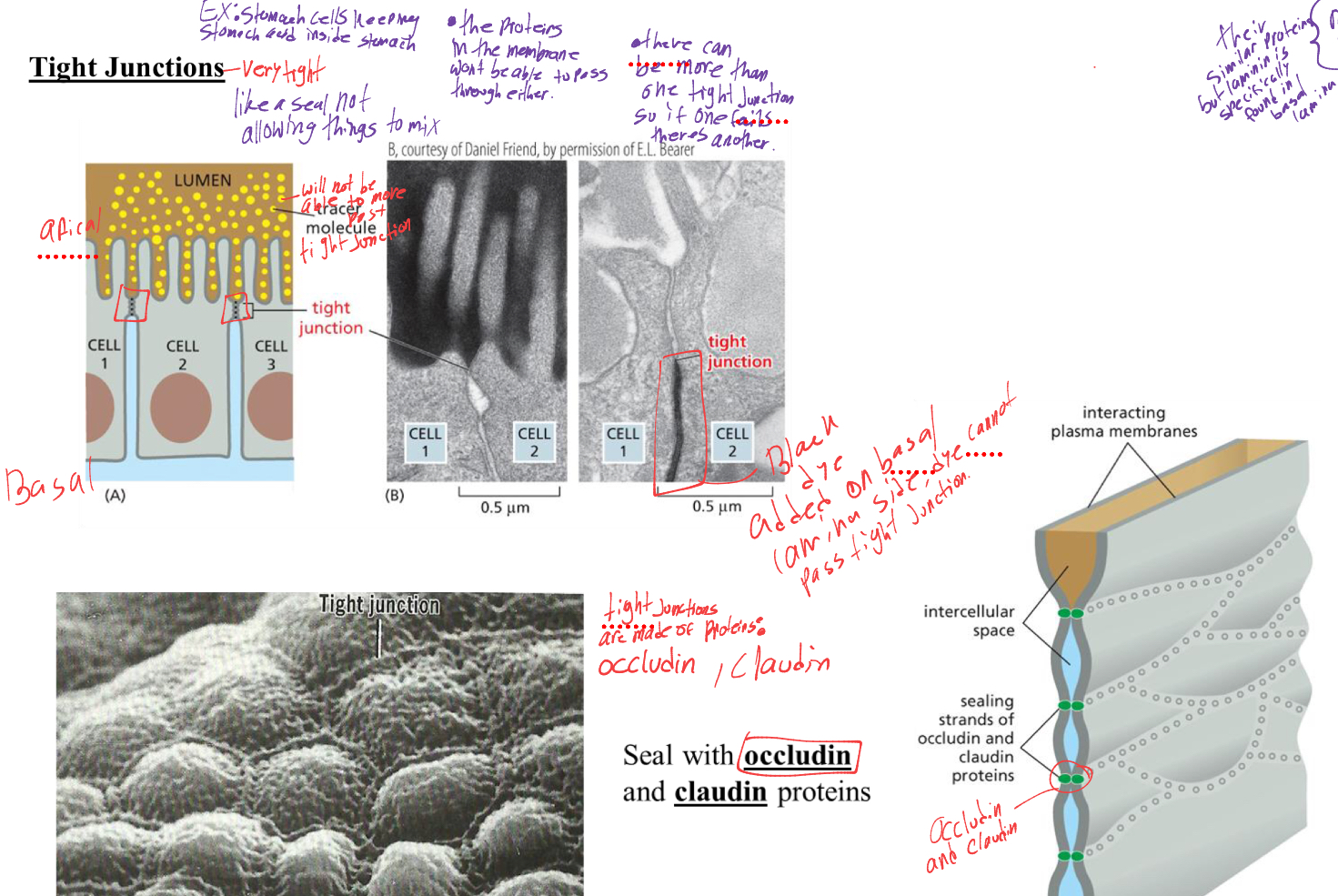
tight junctions- form a tight seal so nothing gets past junctions
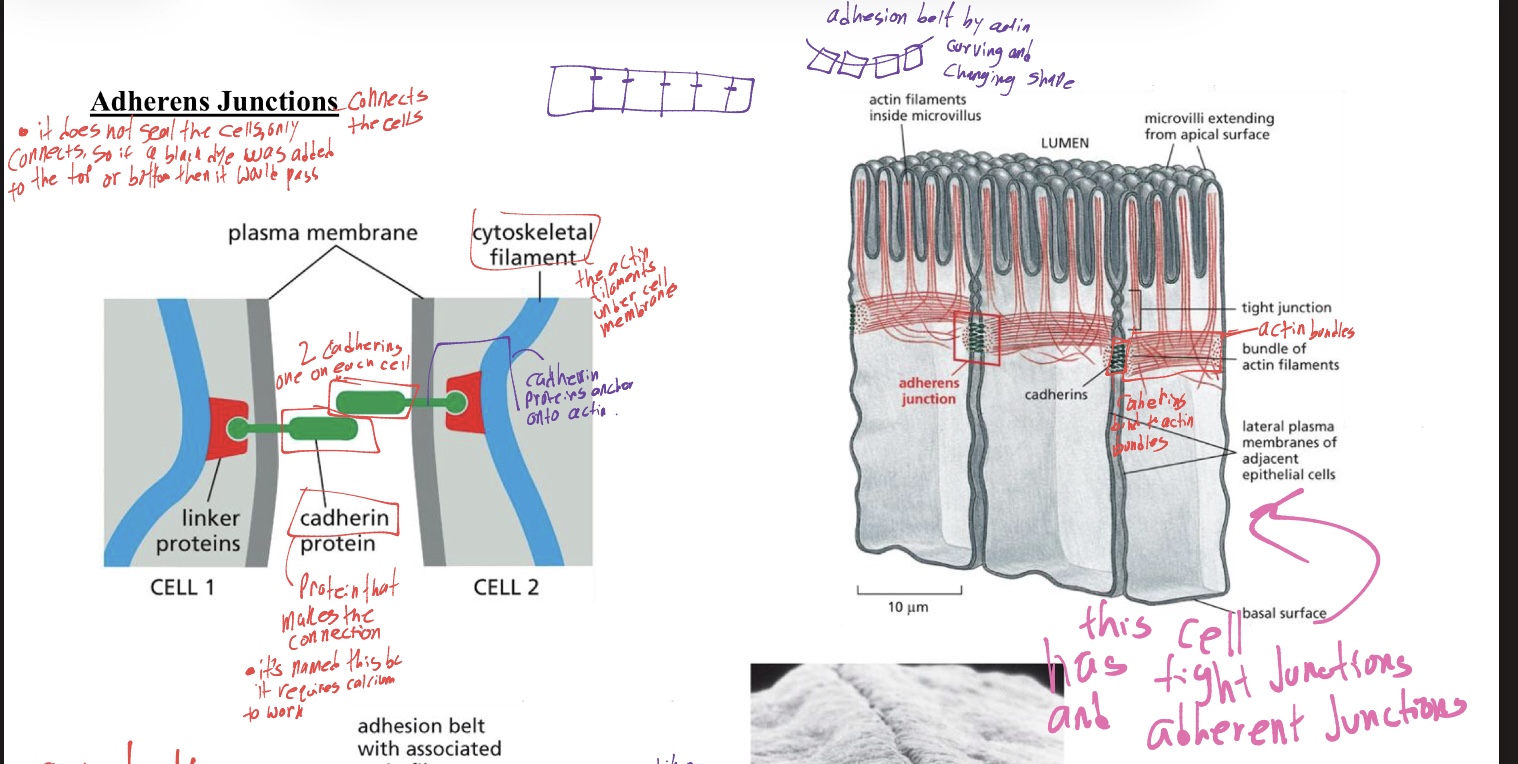
adherens junction- physically link cells together
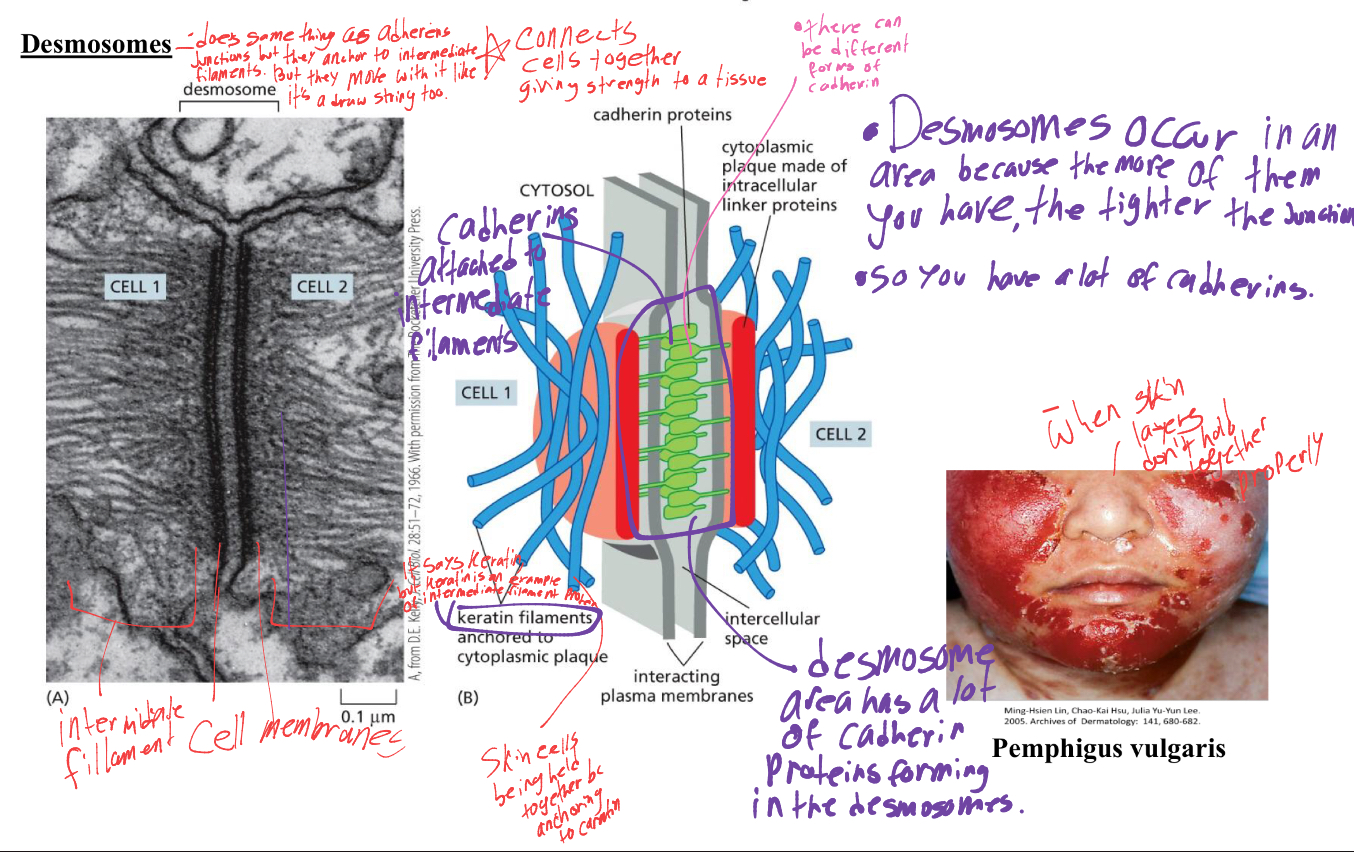
desmosome- also links cells together
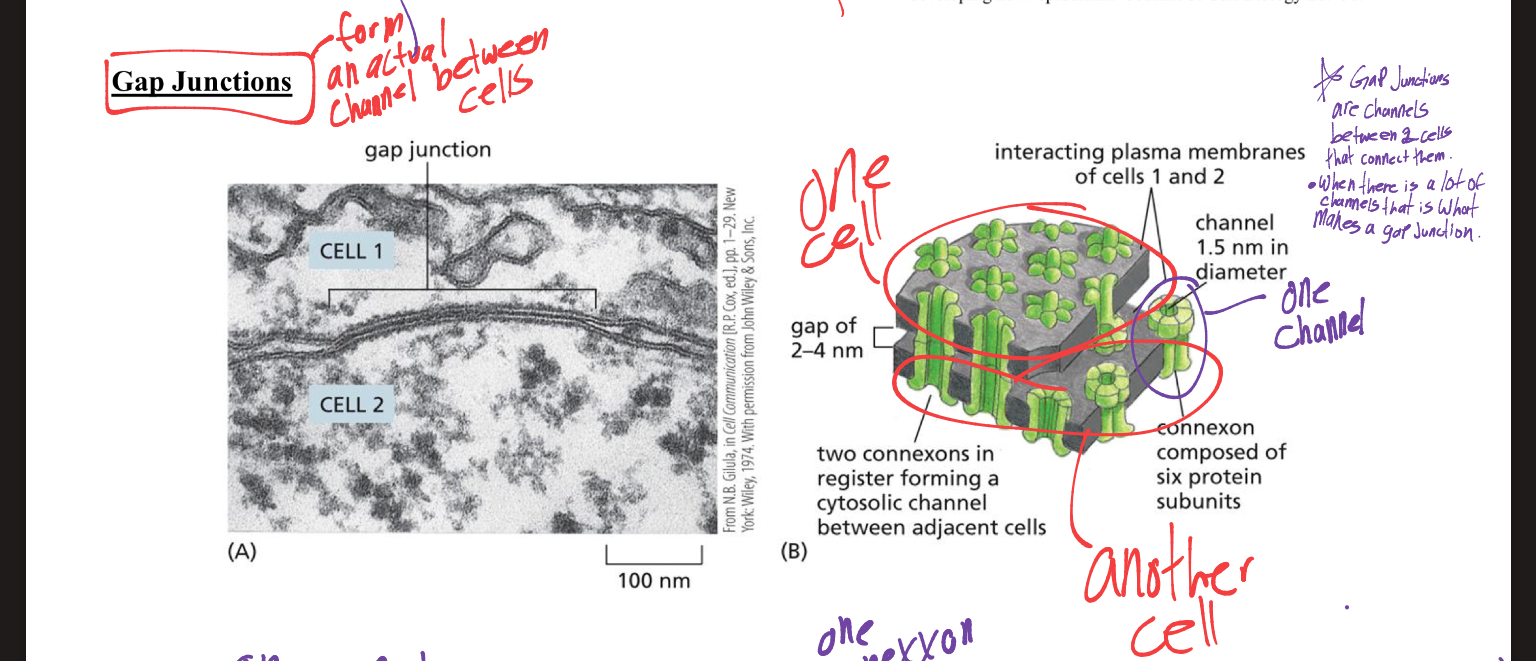
gap junction- a channel between 2 cells (not the same as ion channels bc instead of channeling from cell to cytoplasm, its channeling cell to cell)
hemidesmosome- will join the cell to the basal lamina
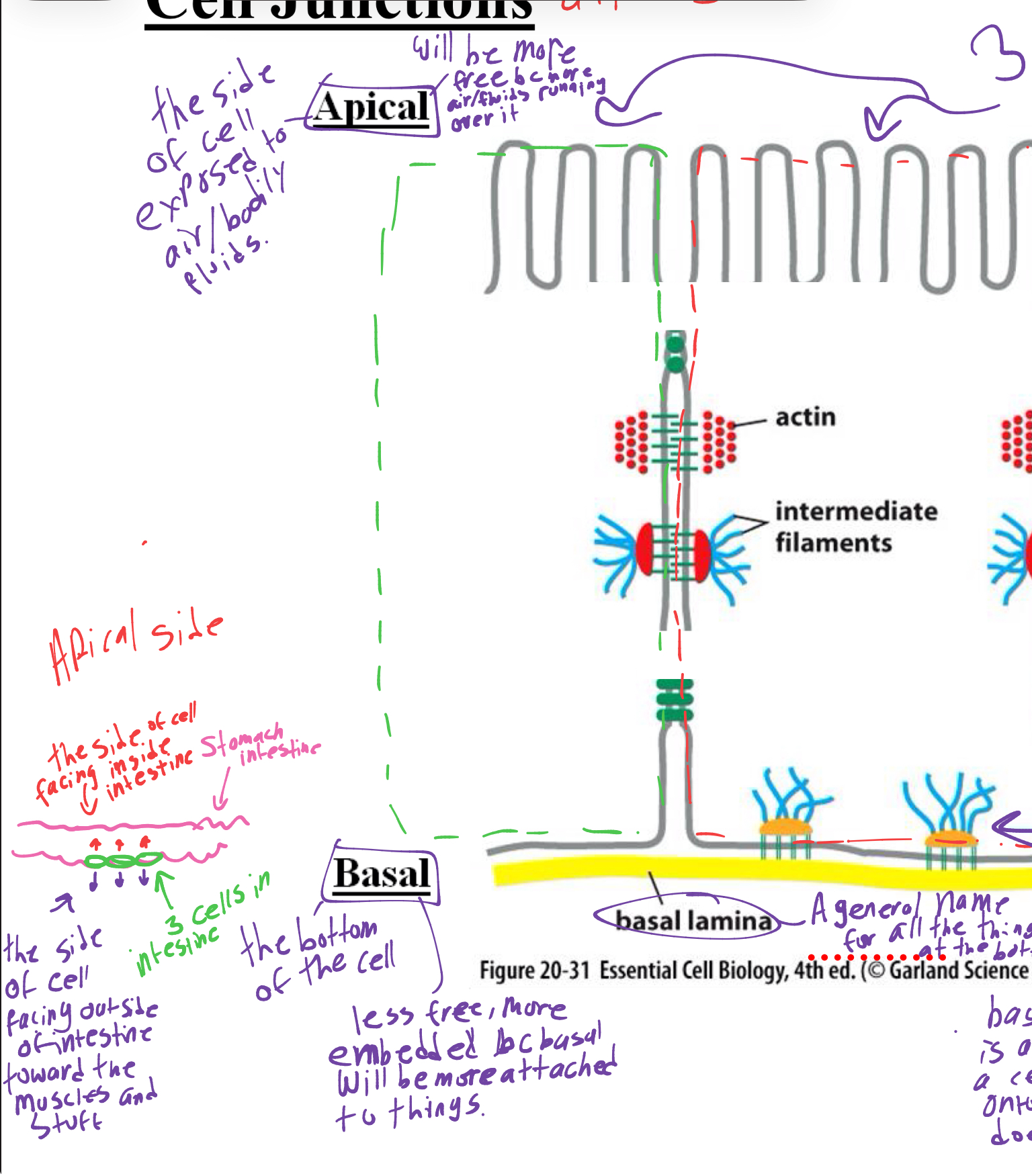
what are the top and bottom of a cel called, and what are some decription for them.
top- Apical:the side of the cell exposed to air and bodily fluids
bottom- Basal: less free and more embedded bc basal will be more attached to things.
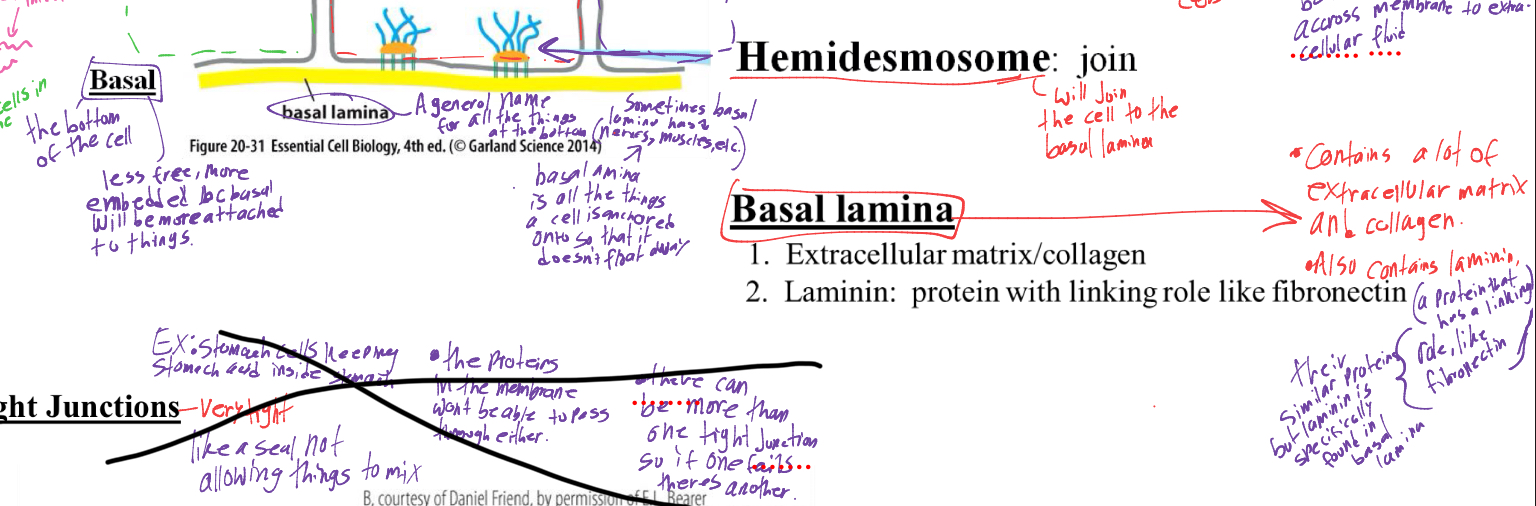
what is the basal lamina and its characteristics. including what it can contain
it is all the things at the bottom of the cell (bone, muscle etc.) it is the extracellular matrix.
its also contains LAMININ a protein that is similar to fibronectin except its only found in basal lamina. (links to things)
the cell binds to the things (collagen, laminin) in the basal lamina so it doesn’t fly away.
what are the characteristics of tight junctions in more detail, and what are the 2 proteins that make them up.
they are junctions that hold cells together tightly and do not let ANYTHING in-between them. there can be multiple on a cell so if one fails theres more.
the 2 proteins that make it up are
occludin
Claudin
what are the characteristics of Adheren junctions
what are the 2 main proteins in these junctions and how do they function, and what do one of the proteins need to function
connects the cells but don’t seal them like tight junctions, things can flow through these junctions.
2 proteins are
cadherins: the protein that makes the actual connection, it connect with cadherin on other cell. it also requires calcium to work
actin filaments: as it is under the cell membrane, cadherins anchor onto this filament,
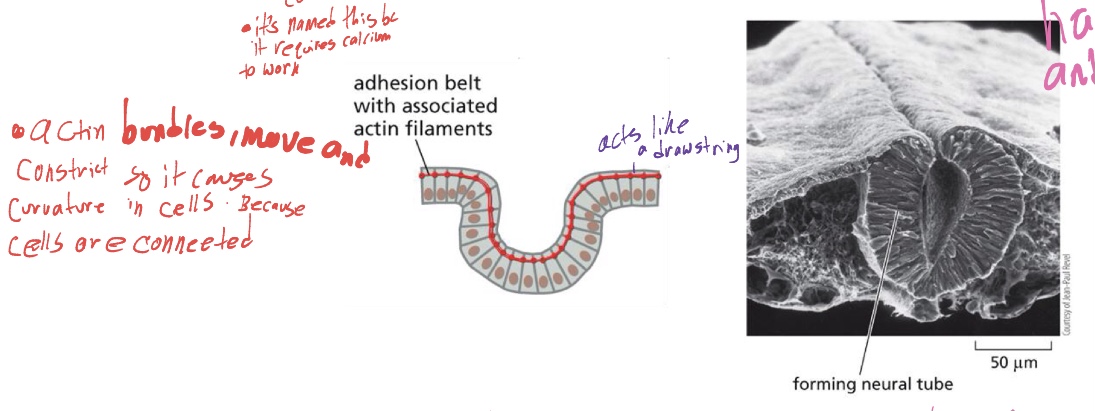
what is a result of cadherins anchoring to actin filaments
as actin filaments move, so do the cells, causing it to bend and things.
what are the characteristics of desmosomes
does the same thing as adherins, except instead of cadherins anchoring to actin, it anchors onto intermediate filaments.
it connects cells together more strongly, giving strength to a tissue.
what is the structure of desmosomes
desmosomes areas contain a lot of cadherins, hence why their called areas, bc the more you have the tighter the junction will be.
and there can be different types of cadherins depending on the cell.
its like a weld spot.its strong and essential for things like skin
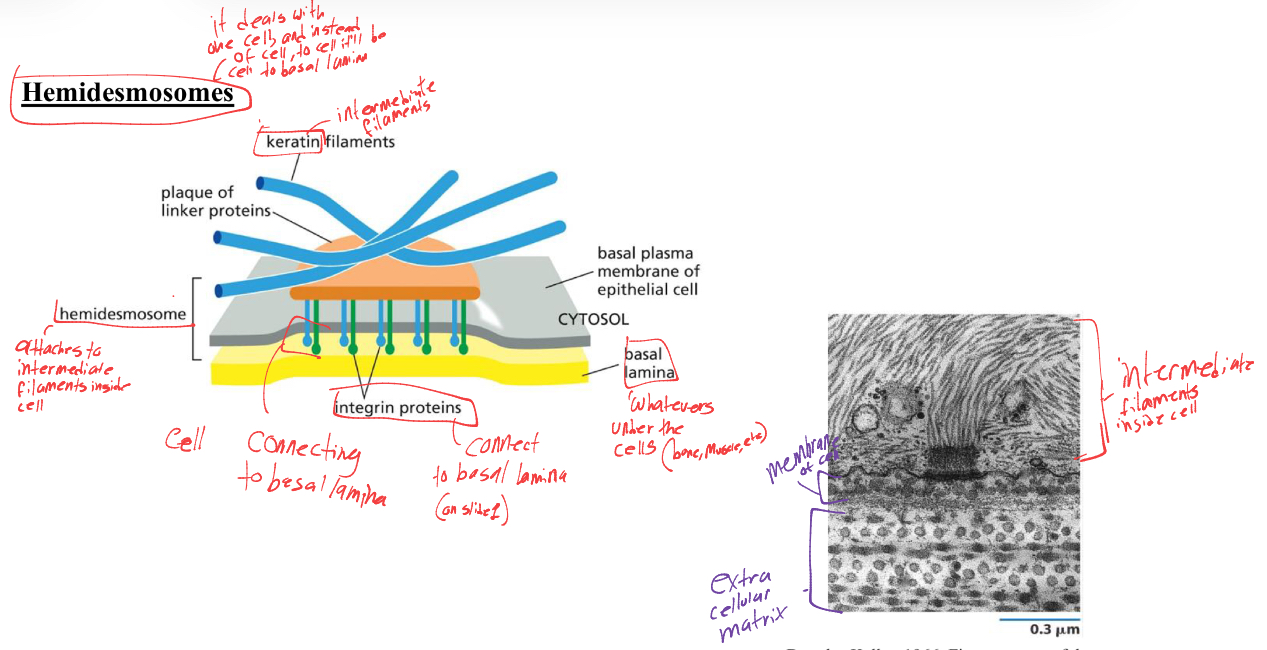
what are the characteristics of hemidesmosomes
it deals with only one cell, and instead of cell to cell junction, its cell to basal lamina.
this junction is what keeps the cell from floating around because it anchors it to things in the extracellular matrix.
what are the proteins used in hemidesmosomes
intermediate filaments- hemidesmosome attaches to intermediate filaments inside cell
intergrin proteins-connect to the basal lamina
basal lamina- whatever protein the intergrin binds to.
what are characteristics of gap junctions
they are channels connecting 2 cells,
when there are a lot of channels that is what makes a gap junction.
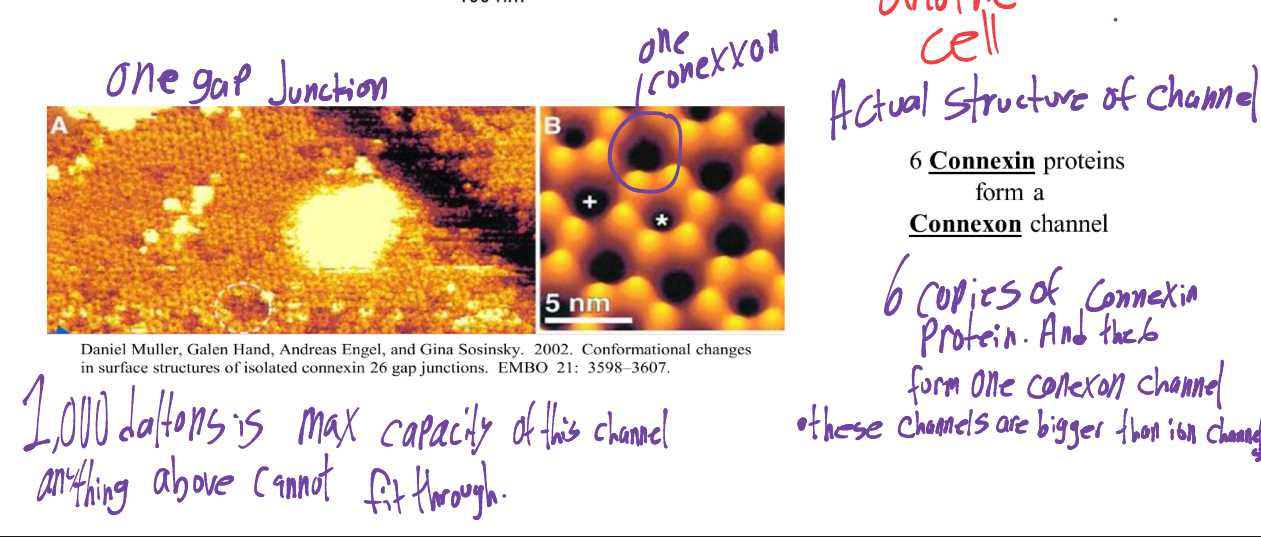
what is the actual structure of the channels in gap junctions
6 copies of CONNEXIN protein form 1 CONNEXON channel. these channels are bigger than ion channels
the max capacity of a connexon channel is 1,000 daltons, anything bigger cannot fit through.
 Note
Note  Flashcards (182)