5- Membrane Potentials
 Studied by 0 people
 Call Kai
 Learn
Learn Practice Test
 Spaced Repetition
 Match
Match Flashcards
 Knowt Play
1/21

There's no tags or description
Looks like no tags are added yet.
Name | Mastery | Learn | Test | Matching | Spaced | Call with Kai |
|---|
No analytics yet
Send a link to your students to track their progress
22 Terms
Explain potential, current, and resistance in neurons
potential - the difference in charge between 2 points (caused by movement between)
current - flow of electrical charge (ions) from one point to another
resistance - the opposition to the flow of ions from one point to another (membrane)
How is the resting membrane potential in neurons generated?
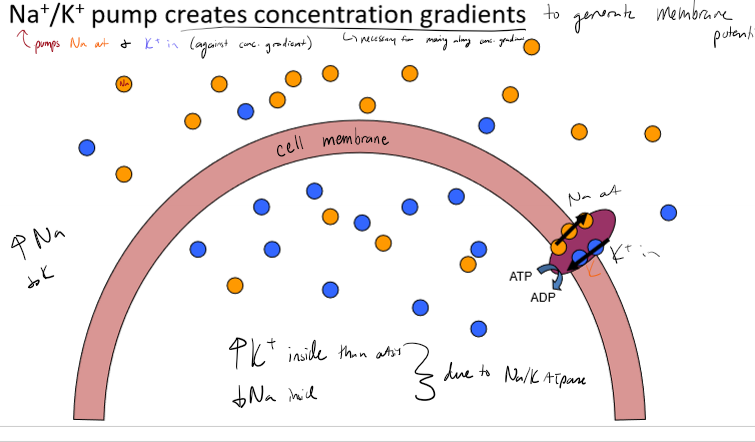
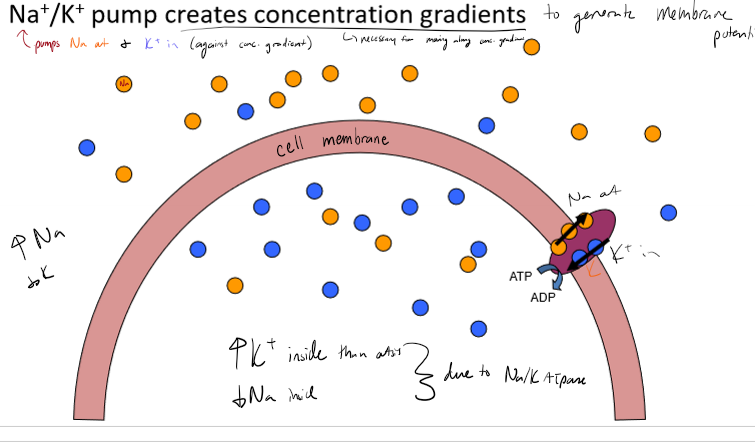
more K inside than outside
more Na outside than inside
cell membranes create a barrier
channels create permeability to allow ion flow, with more K going out than Na going in (creating a comparatively negative inside)
Na/K pump maintian sconcentration gradient, pumping Na out and K in against their concentration gradient
movement of ions acorss membrane generates potential
What happens to resting membrane potential when postively charged ions like Na+ flow in?
membrane potential becomes more positive (compared to outside cell)
Which way does sodium want to move and which way does potassium want to move in cells?
lots of sodium outside cell, so sodium wants to move in
lots of potassium inside cell, so potassium wants to move out
What happens to resting membrane potential when postively charged ions like Na+ flow out?
gets more negative inside (and more positive outside)
What causes the negative resting potential energy in cells?
cells more permeable to K than Na, so more K moves out than Na moves in, making the inside less positive than the outside
What channels in cells are always open for K/Na and why?
leaky channels
allow Na/K to move down concentration gradient
What is depolarization and hyperolorization in regards to membrane potential?
depolarization = less negative
hyperpolarization = more negative
What do changes in membrane potential cause in cells?
send signals in/between cells
What happens to membrane potential when you
increase extracellular potassium?
increase extracellular sodium?
decrease extracellular potassium?
decrease extracellular sodium?
depolarization (more positive)- less K leaving cell, less negative inside
depolarization - more Na going into cell, more positive inside
hyperpolarization (less positive) - more K leaving cell, more negative inside
hyperpolarization - less Na going into cell, more negative inside
How can you change membrane potential?
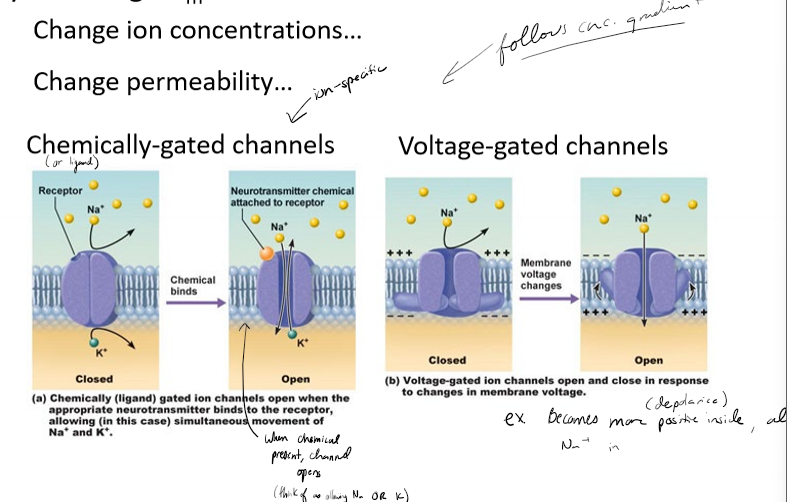
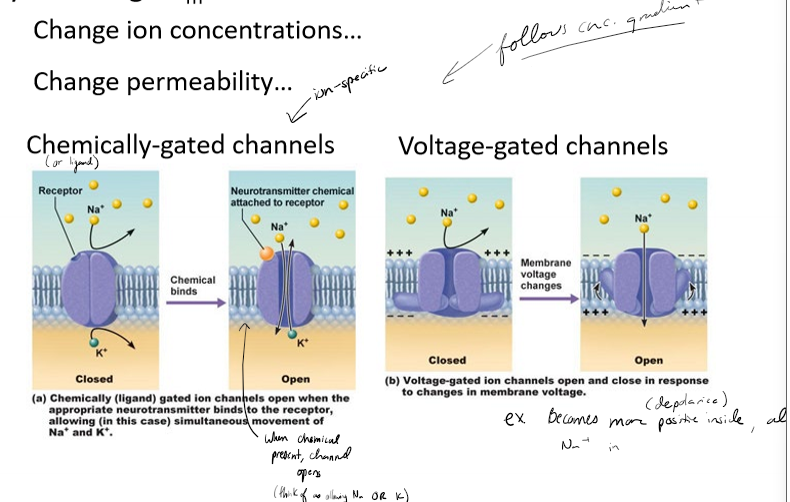
change ion concentrations (due to a pathological condition)
change permeability
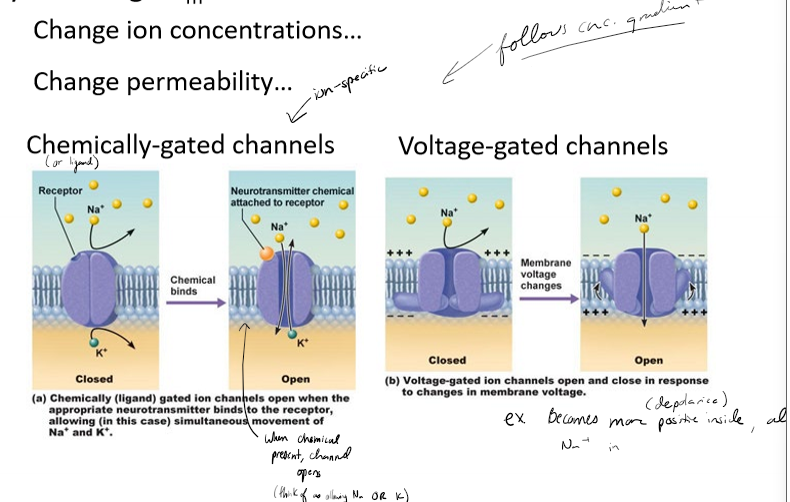
What are chemically-gated channels and when are they used in neurons?
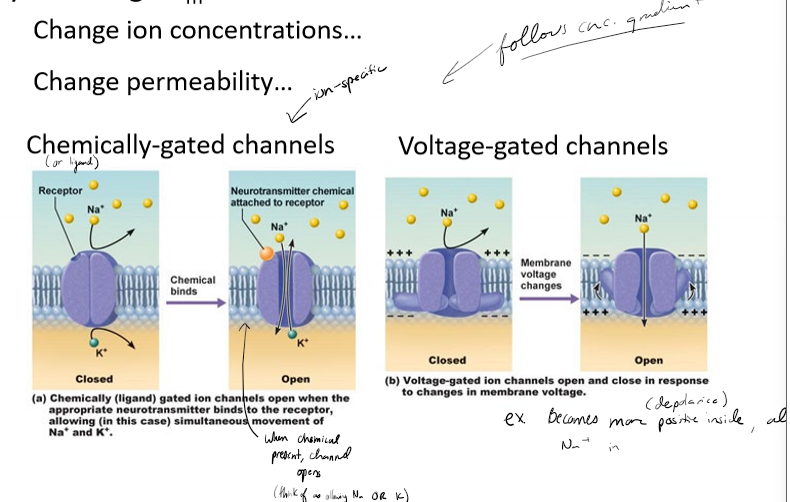
when a chemical/ligan arrives, channel opens up to allow a specific type of ion through
opening/closing causes local potentials
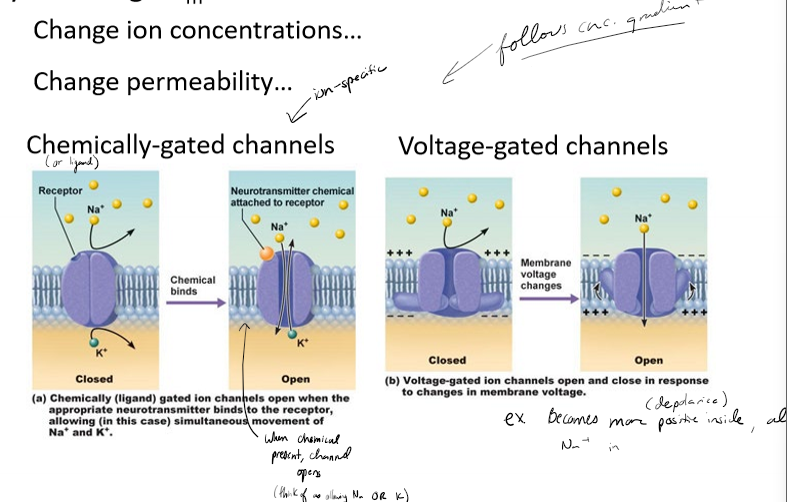
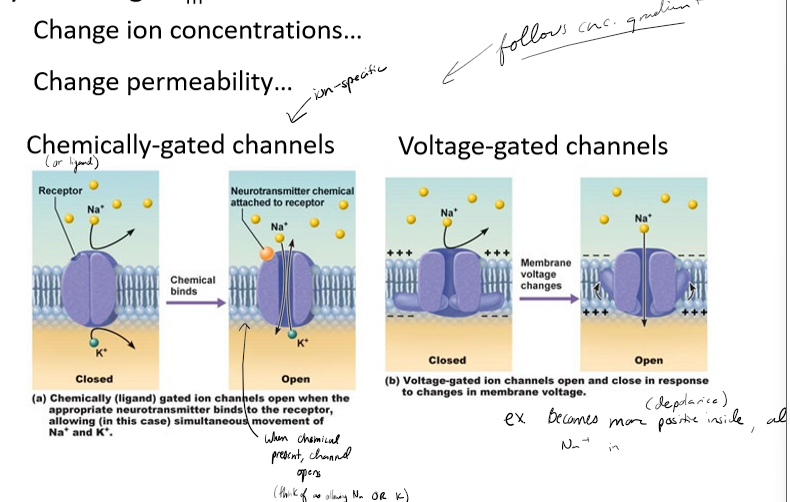
What are voltage-gated channels and when are they used in neurons?
channels open/close to allow ions through in response to changes in membrane potential
used to generate action potentials and repolarize action potentials
What two types of signals do changes in membrane potential produce?
local/graded potentials (incoming signals)
action potentials (outgoing signals)
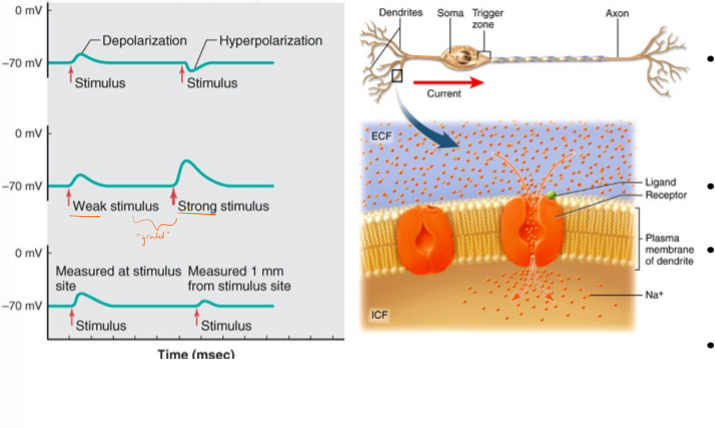
Describe the rules for local/graded potentials
caused by an incoming signal from another cell that opens/closes chemically gated ion channel
occurs in the dendrites/cell body
can be depolarizing (due to sodium channels opening) or hyperpolarizing (due to potassium channels opening)
can be weak or strong (due to lots of channels opening or staying open longer)
strength decreases over distance
due to the opening or closing of chemically gated ion channels
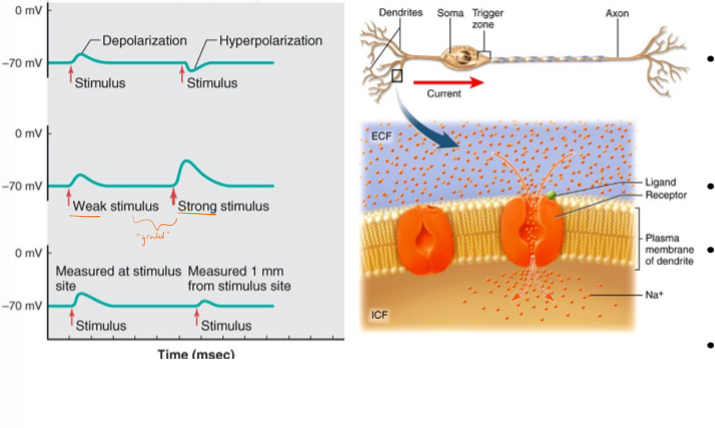
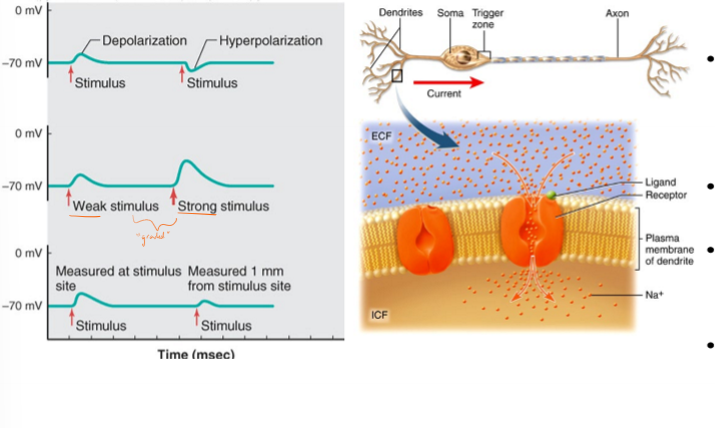
What does a chemically-gated potassium channel opening cause in the cell body of a neuron? What does a chemically-gated potassium channel opening cause in the cell body of a neuron?
potassium - more potassium can leave, causing hyperpolarization
sodium - more sodium can enter cell, causing depolarization
result in local potential
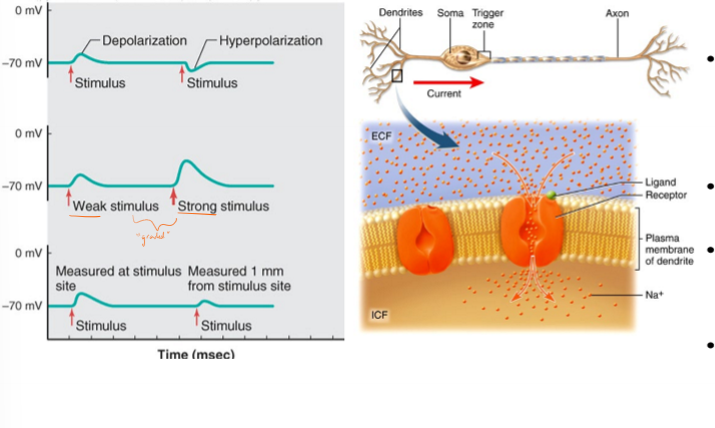
Describe the rules of action potentials
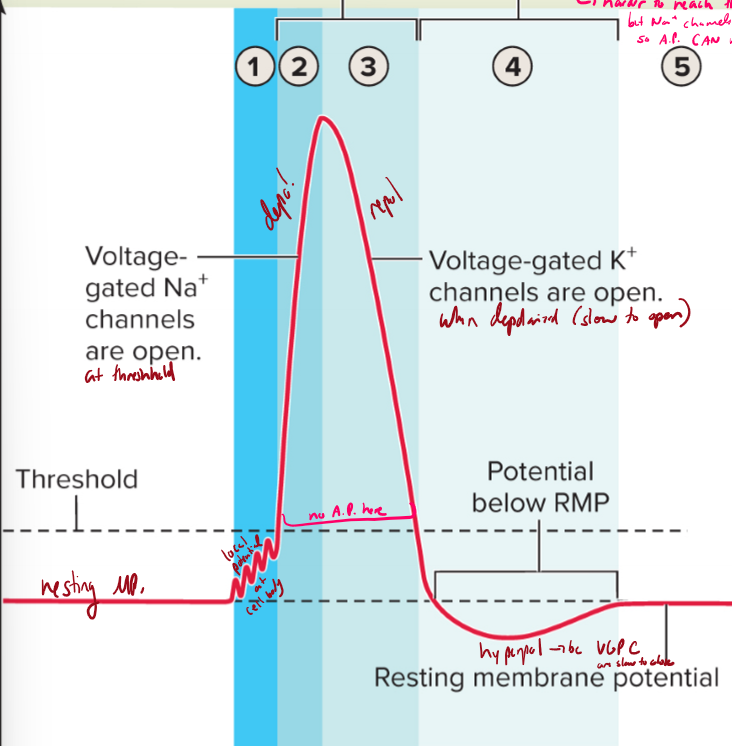
caused by depolarization at axon hillock from a local potential that makes membrane potential reach threshold
occurs down axons
all or nothing
self propogating
due to opening of voltage-gated channels
Describe the changes in permeability of sodium and potassium inside neurons that cause action potentials
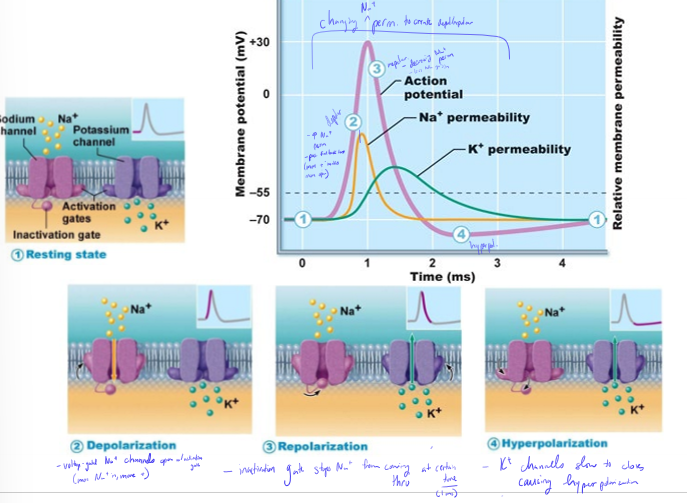
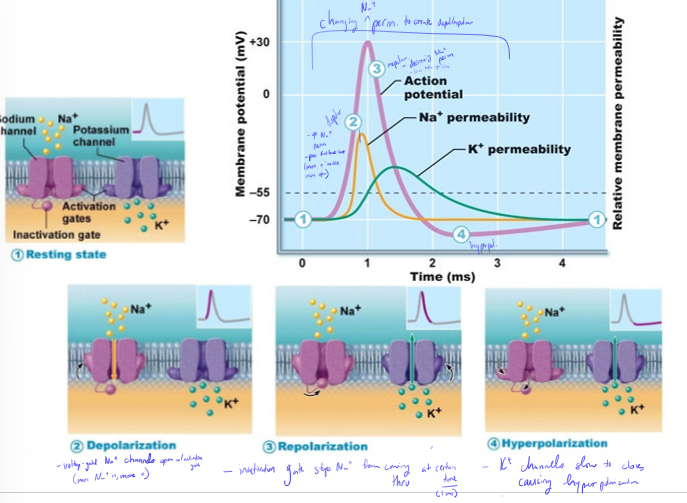
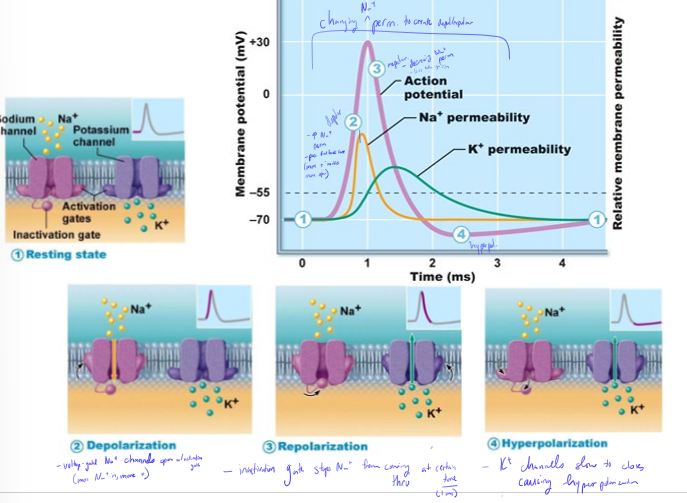
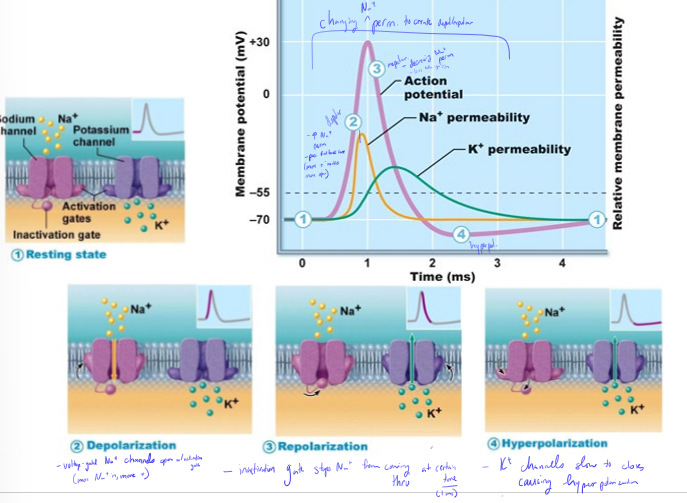
resting state - activation gates on Na/K voltage gated channels closed
depolarization - membrane potential at axon hillock depolarized to threshood, voltage-gated Na channels open with activation gate, causing more depolarization
repolarization - inactivation gate closes after a millisecond, stopping Na from entering cell through the; K+ channels open slowly at threshold to repolarize
4. hyperpolarization - K+ channels slow to close, causing hyperpolarization
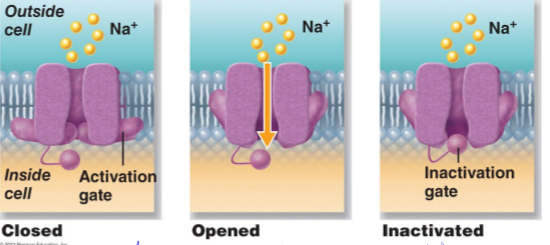
Describe voltage gated sodium channels
allows Na+ into cell
used in action potentials to cause more depolarization once threshold is reached
has activation gate thats closed at rest and opens with depolirization aboe threshold
has incativation gate that blocks channel shortly after opening
must reset after AP
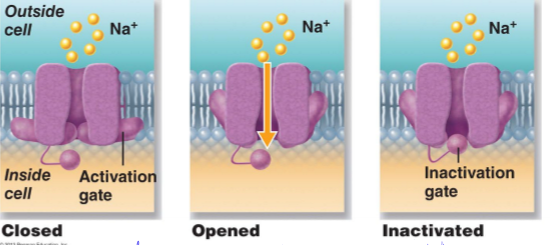
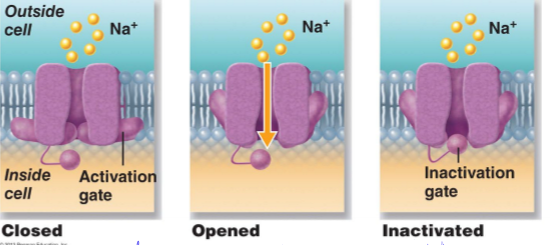
Describe voltage-gated potassium channels
allow K to flow out of cell to repolarize cell during action potentials
closed at rest
opens slowly with depolarization above threshold
closes slowly after repolarization
workds through negative feedback; depolarization causes channels to activate, which makes things less positive
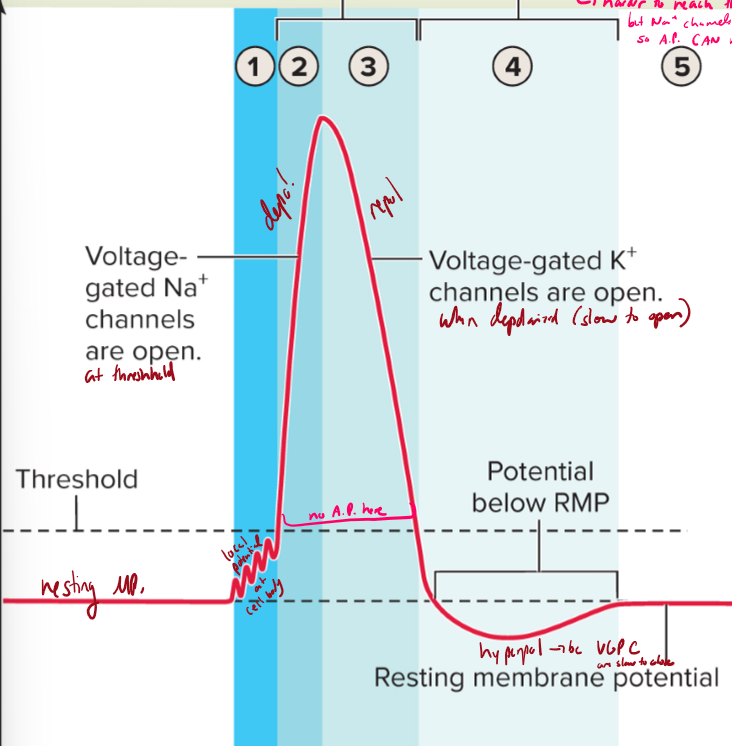
What is the absolute refractory period and relativerefractory period in action potentials?
absolute - no new action potential can occur, voltage-gated Na+ channels already open or blocked by inactivation gate
relative - membrane potential is hyperpolarized after action potential, need very strong signal to reach threshold
What affects the speed of action potential propagation?
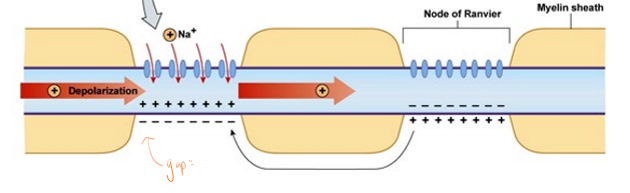
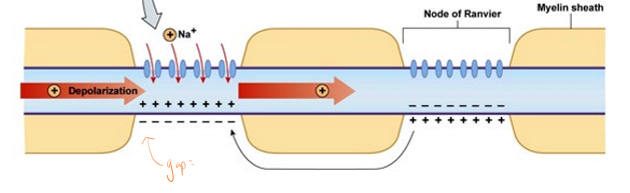
axon diameter - larger has less resistance and faster action potential
myelination - allows action potential to skip through myelinated areas to gaps where channels are, speeds up action potentials
 Note
Note  Flashcards (223)