ROMANESQUE ARCHITECTURE
 Studied by 13 people
 Call Kai
 Learn
Learn Practice Test
 Spaced Repetition
 Match
Match Flashcards
 Knowt Play
1/33

There's no tags or description
Looks like no tags are added yet.
Name | Mastery | Learn | Test | Matching | Spaced | Call with Kai |
|---|
No analytics yet
Send a link to your students to track their progress
34 Terms
ROMANESQUE ARCHITECTURE
A medieval style that flourished in Europe between the 11th and 12th centuries, characterized by thick walls, round arches, sturdy piers, and vaulted ceilings
In the Roman manner
The term Romanesque means "__________"
Roman engineering
Byzantine art
Christian monasticism
Feudal society and invasions
Influences
Thick load-bearing walls and semi-circular arches
Small windows
Vaulted ceilings
Round towers and heavy buttresses
Decoration with zigzag, chevron, and animal motifs.
Architectural Characteristics
Portal
This is the part of a Romanesque church plan, a monumental like and a elaborately carved doorway to a church, fortresses or courtyard serving as grand entrance
Nave
This is the part of a Romanesque church plan, the central, main body of a church during the Romanesque period, characterized by a long, central aisle
Aisle
This is the part of a Romanesque church plan, a side walkway or passage parallel to the main central nave
Tower
This is the part of a Romanesque church plan, a tall, imposing structure known for its heavy, solid appearance with thick walls, round arches and stone construction
Choir
This is the part of a Romanesque church plan, The area of a church where the clergy and choir members sit, located between the nave and the sanctuary
Crossing
This is the part of a Romanesque church plan, The four-sided area where the nave and transept intersect forming the cross shaped of the floor plan
Transept
This is the part of a Romanesque church plan, The part of a cross shaped (cruciform) church that lies across the main body, or nave.
Auxiliary Altars
This is the part of a Romanesque church plan, subsidiary altars are usually located within the transept.
Pillars
This is the part of a Romanesque church plan, a sturdy pillars, often with elaborate decorations, to support massive vaulted ceilings
Apse
a semicircular or polygonal extension to a building
Alter
The central religious structures typically located at the east end within the apse
Ambulatory
a covered passage around a cloister or the processional way around the east end of a cathedral on large church and behind the high altar
Radiating chapels
These are the small semicircle or polygonal chapels extended from the main body of the church, typically behind the altar, after or around the ambulatory.
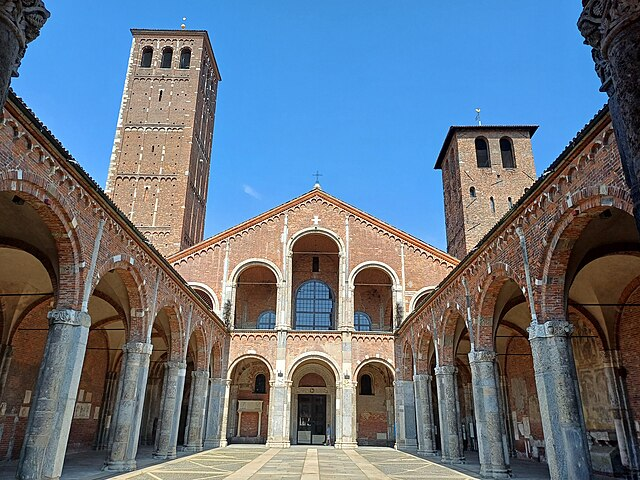
BASILICA OF SANT'AMBROGIO
is one of the earliest and most important Romanesque churches in northern Italy.
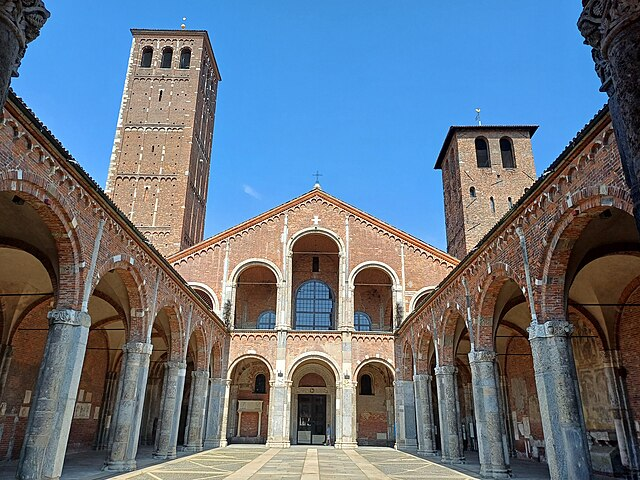
Milan, Italy
Where is the Basilica of Sant’Ambrogio located?
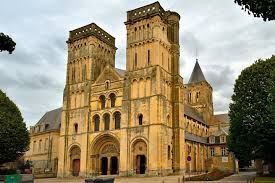
Abbey of Sainte-Trinité
Commissioned by Queen Matilda of Flanders, wife of William the Conqueror, the abbey was part of a political and religious effort to secure papal support for the Norman conquest of England
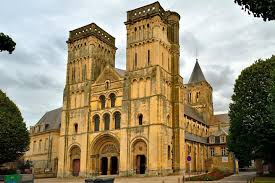
Caen, Normandy, France
Where is the Abbey of Sainte-Trinité located?
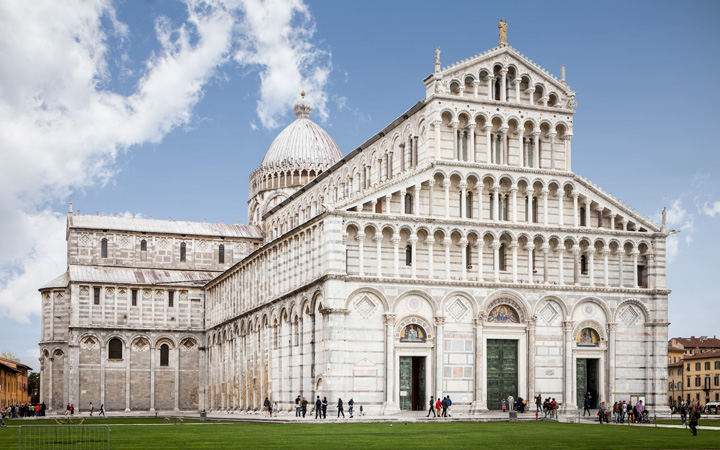
PISA CATHEDRAL
Designed by Buscheto and later expanded by Rainaldo, It forms the heart of the Piazza dei Miracoli alongside the Baptistery and the Leaning Tower.
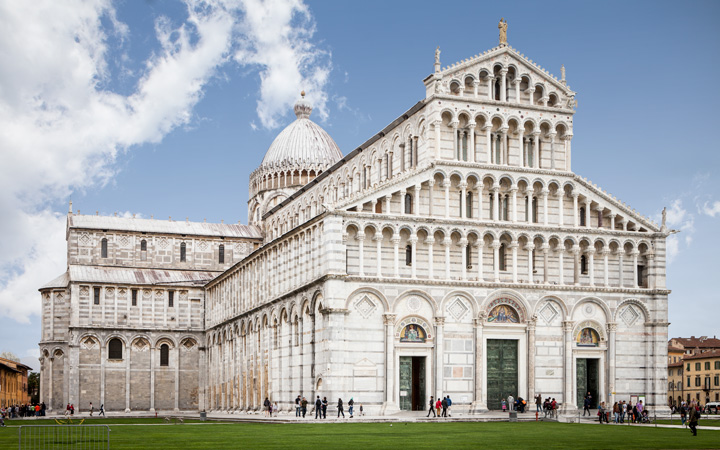
Buscheto
Who design the PISA CATHEDRAL
Rainaldo
Who expanded the design of the PISA CATHEDRAL?
Pisa, Tuscany, Italy
Where is the Pisa Cathedral located?
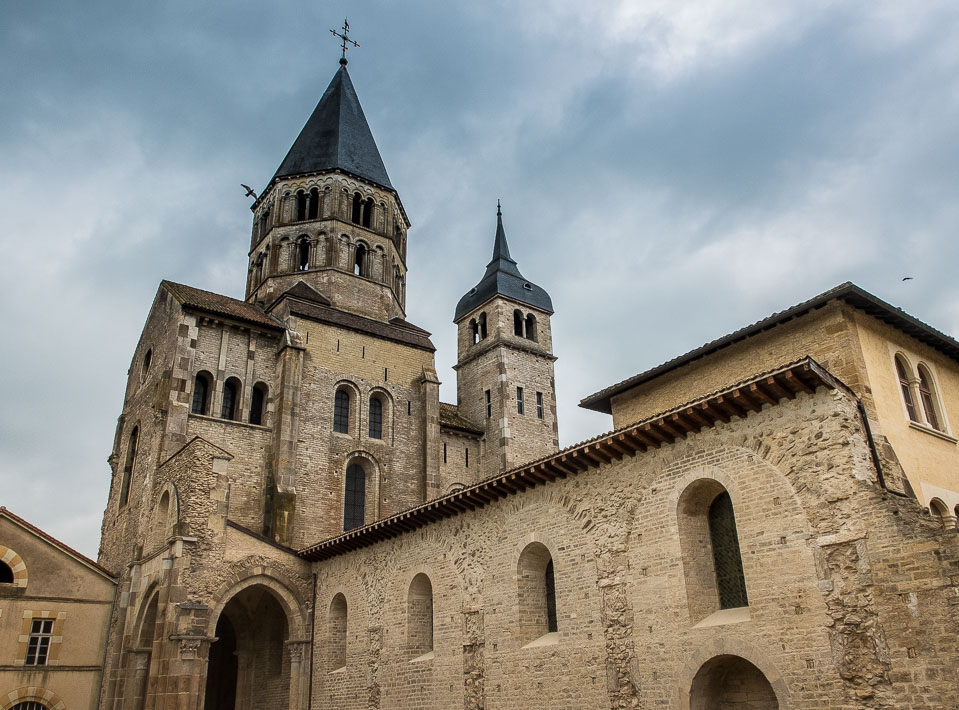
Cluny Abbey
the most monumental Romanesque church ever built until the Renaissance., the abbey was a religious and political center of the Benedictine monastic network and the Cluniac reform movement.
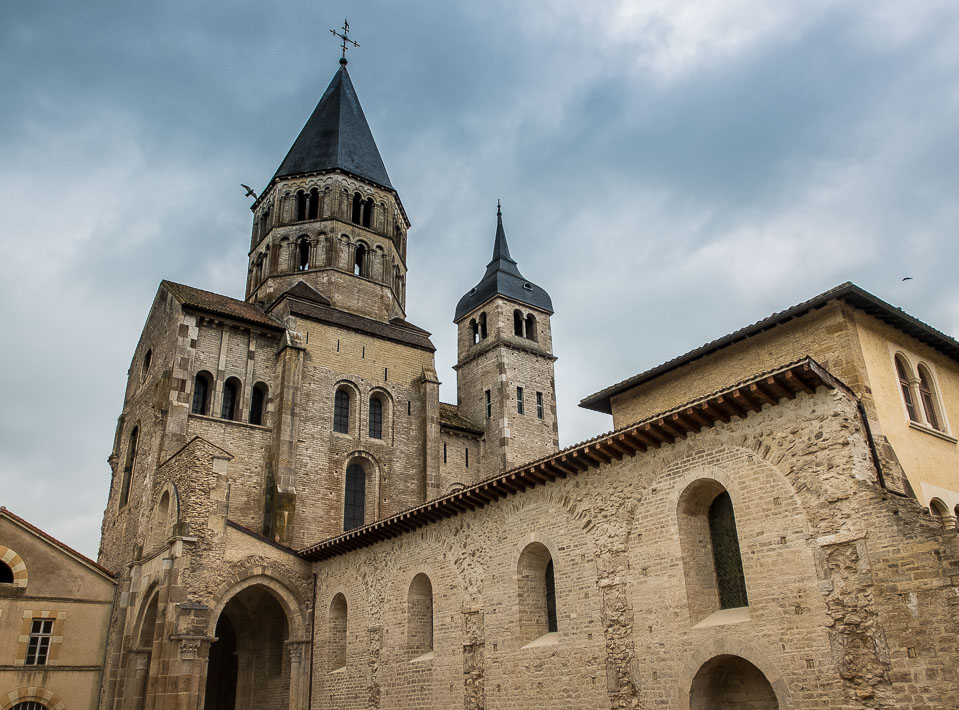
Cluny, France
Where is the Cluny Abbey located?
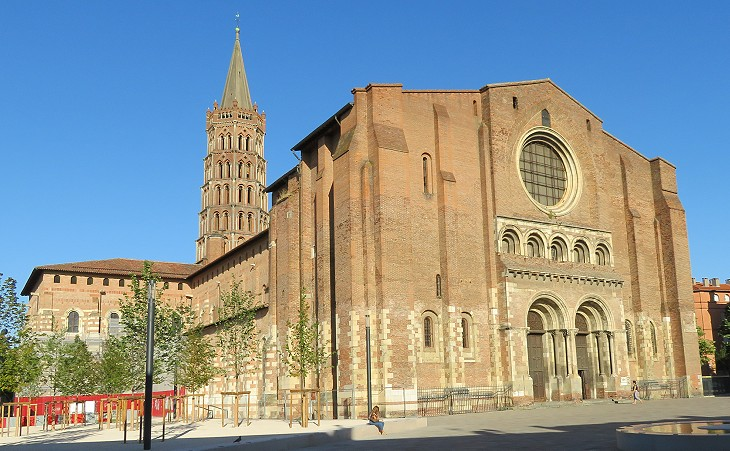
Basilica of Saint-Sernin
one of the most complete and best-preserved Romanesque pilgrimage churches in Europe.
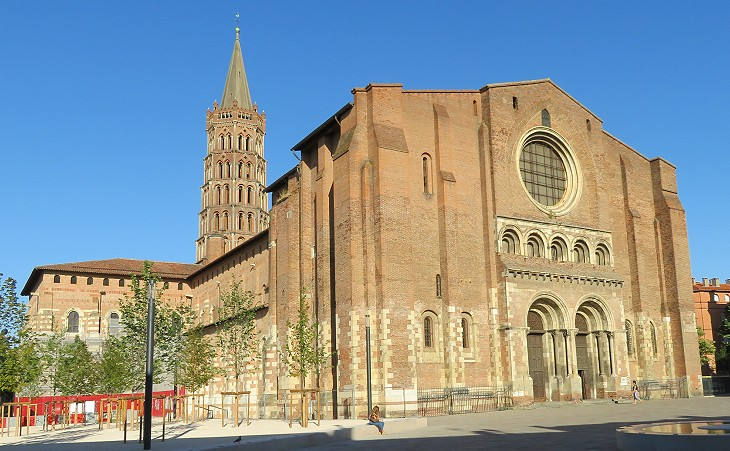
Toulouse, France
Where is the Basilica of Saint-Sernin located?
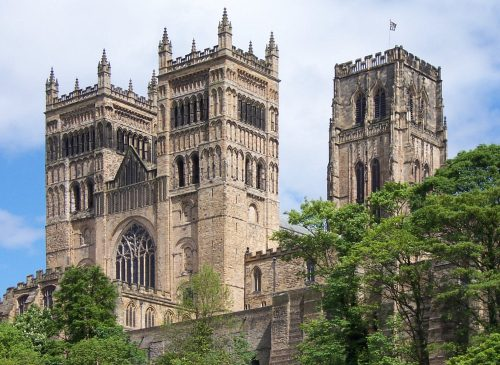
Durham Cathedral
a masterpiece of Norman Romanesque architecture and a landmark in the development of medieval architecture in England.
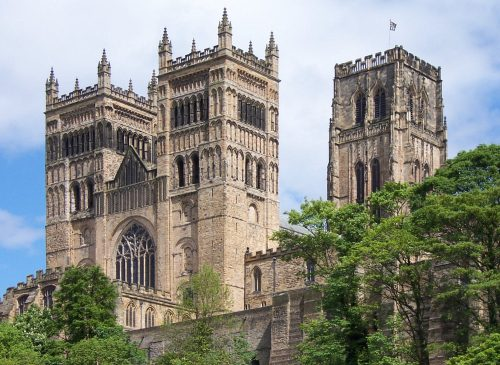
Durham, England
Where is the Basilica of Saint-Sernin located?
Manila Cathedral
the premier church of the Philippines and the seat of the Archbishop of Manila.
Fernando H. Ocampo
Who is the architect of the Manila Cathedral
Intramuros, Manila
Where is the Manila Cathedral located?
 Note
Note  Flashcards (74)