Longitude and Latitude and Important Lines on the Globe
 Call Kai
 Learn
Learn Practice Test
 Spaced Repetition
 Match
Match Flashcards
 Knowt Play
1/14

There's no tags or description
Looks like no tags are added yet.
Name | Mastery | Learn | Test | Matching | Spaced | Call with Kai |
|---|

15 Terms
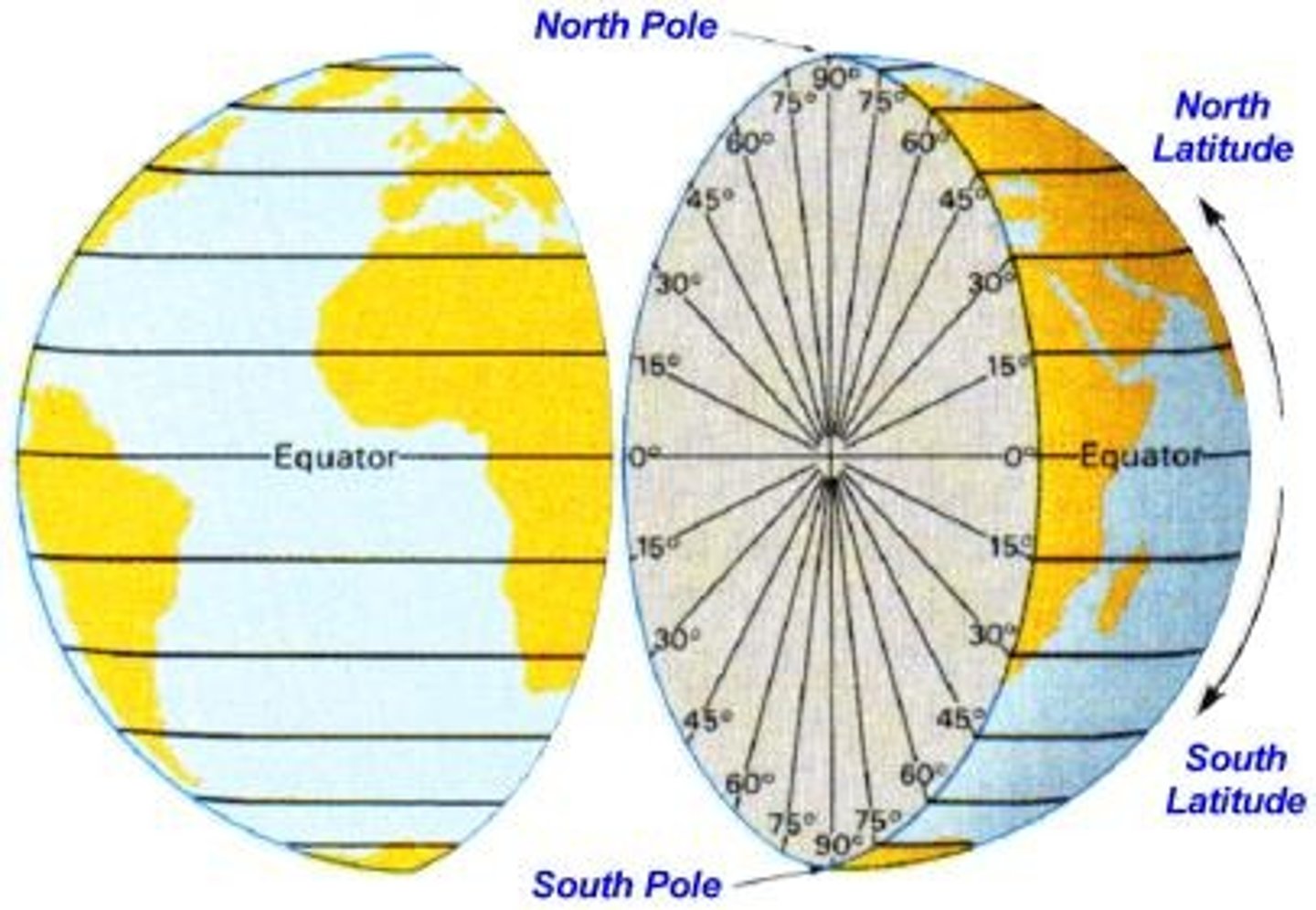
latitude
measures distance in degrees either north or south of the equator. All latitude lines are parallel to the equator and each other. They never cross or meet.
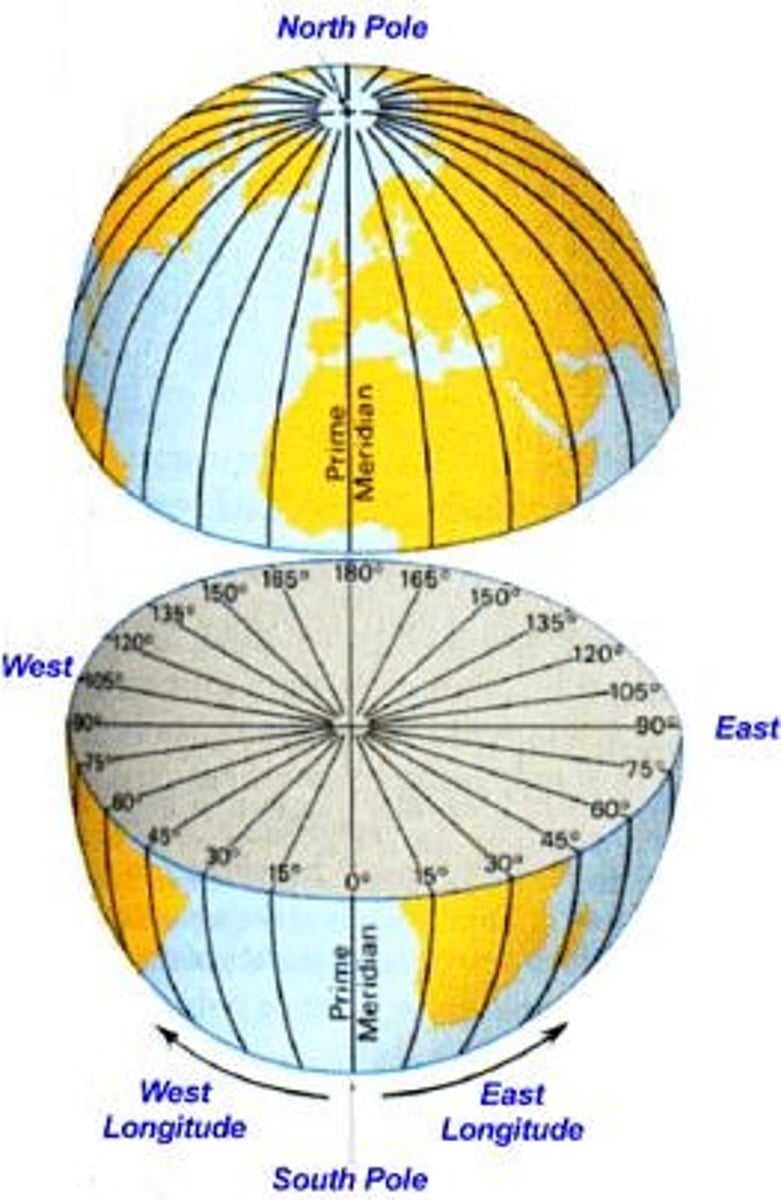
longitude
measures distance in degrees either west or east of the Prime Meridian. All longitude lines are NOT PARALLEL and they meet at the two poles.
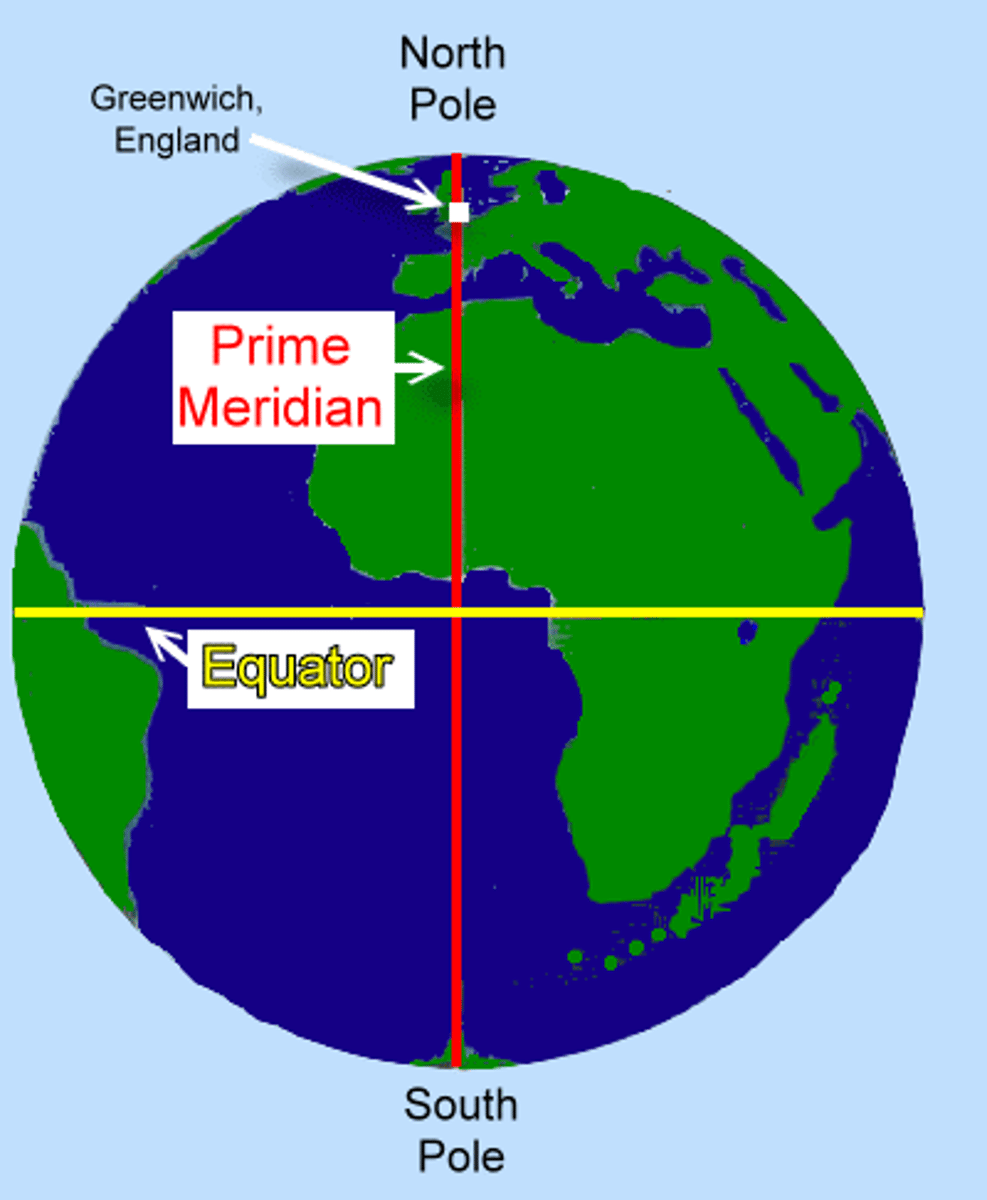
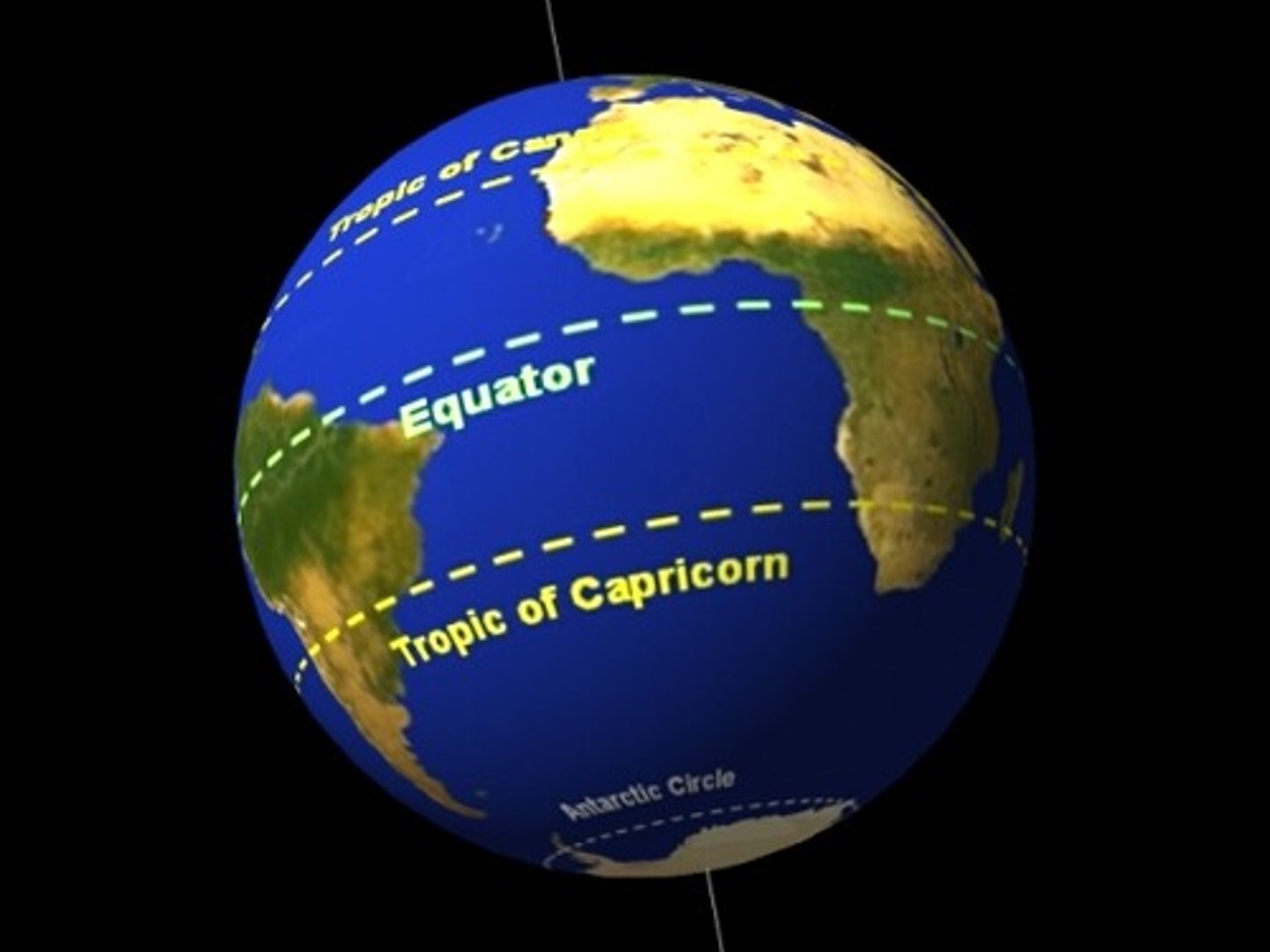
Equator
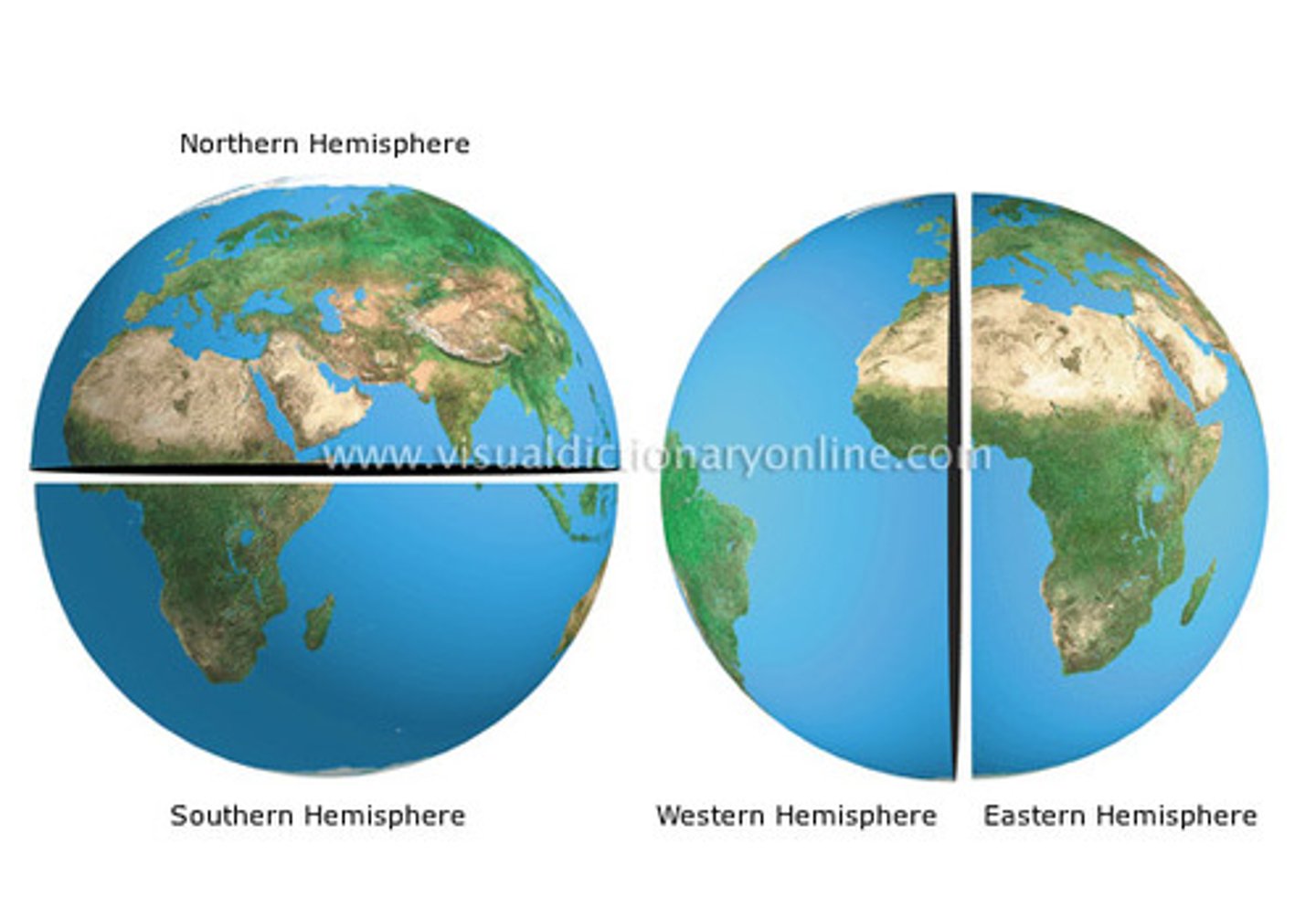
an imaginary line drawn around the Earth equally distant from both poles, dividing the Earth into northern and southern hemispheres and representing the latitude of 0°. (See image from Prime Meridian.)
Prime Meridian
an imaginary line passing through the Royal Observatory in Greenwich, England, which marks the 0° line of longitude. It divides the Earth into eastern and western hemispheres
Tropic of Cancer
a line of latitude at 23.5° North of the equator. Marks the northern edge of the Tropics.
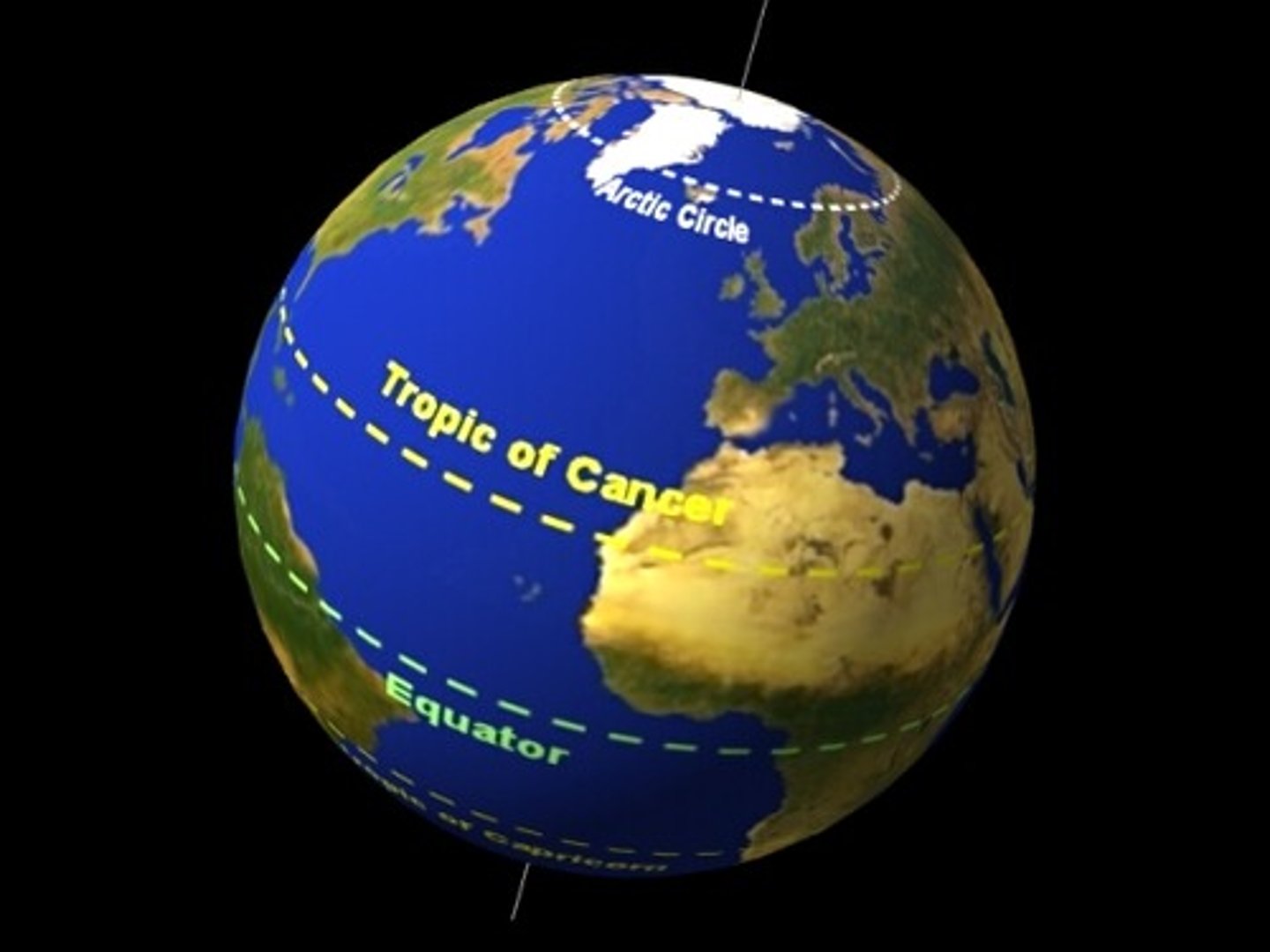
Tropic of Capricorn
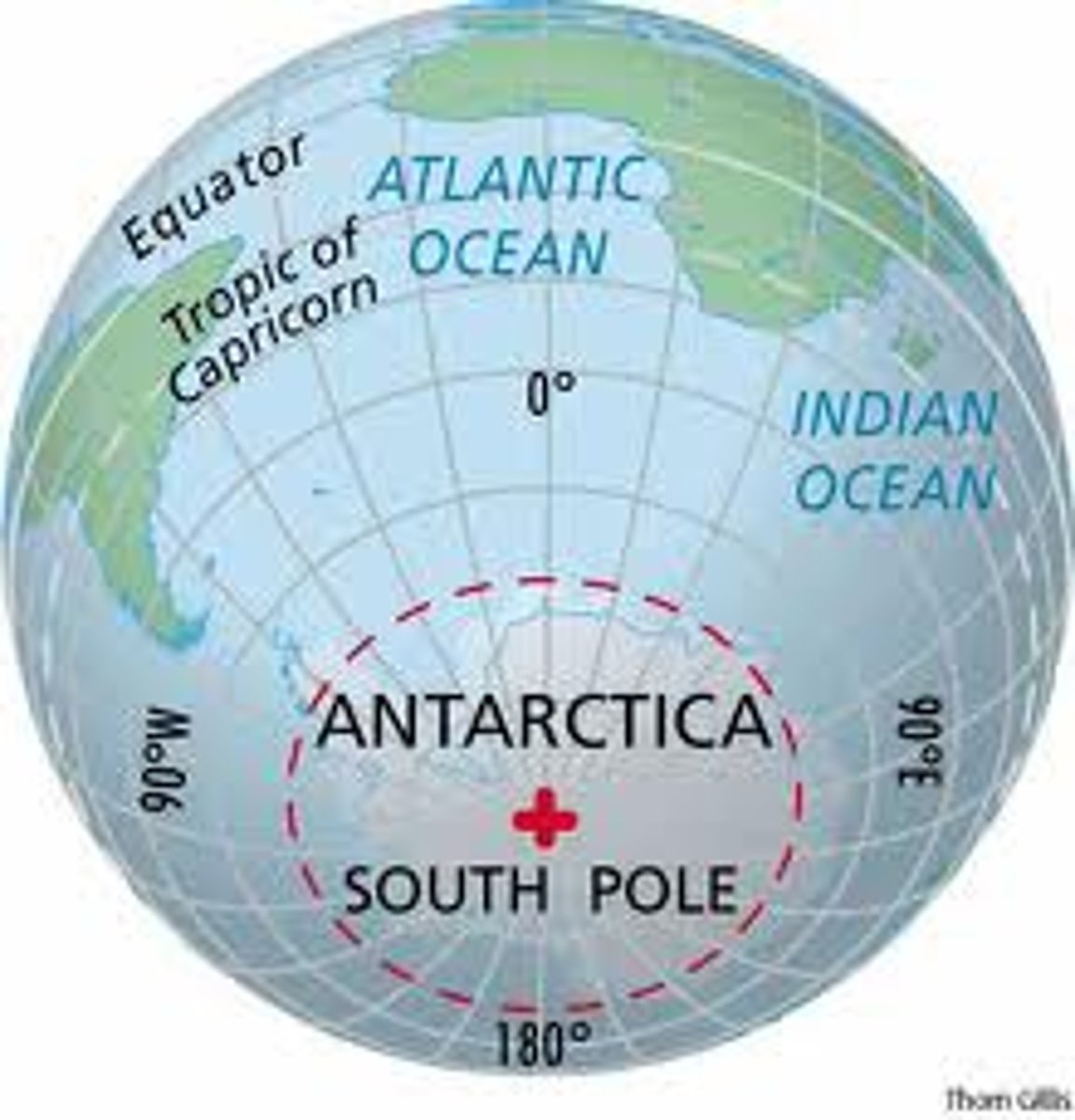
a line of latitude at 23.5° South of the Equator. (Marks the southern edge of the Tropics.)
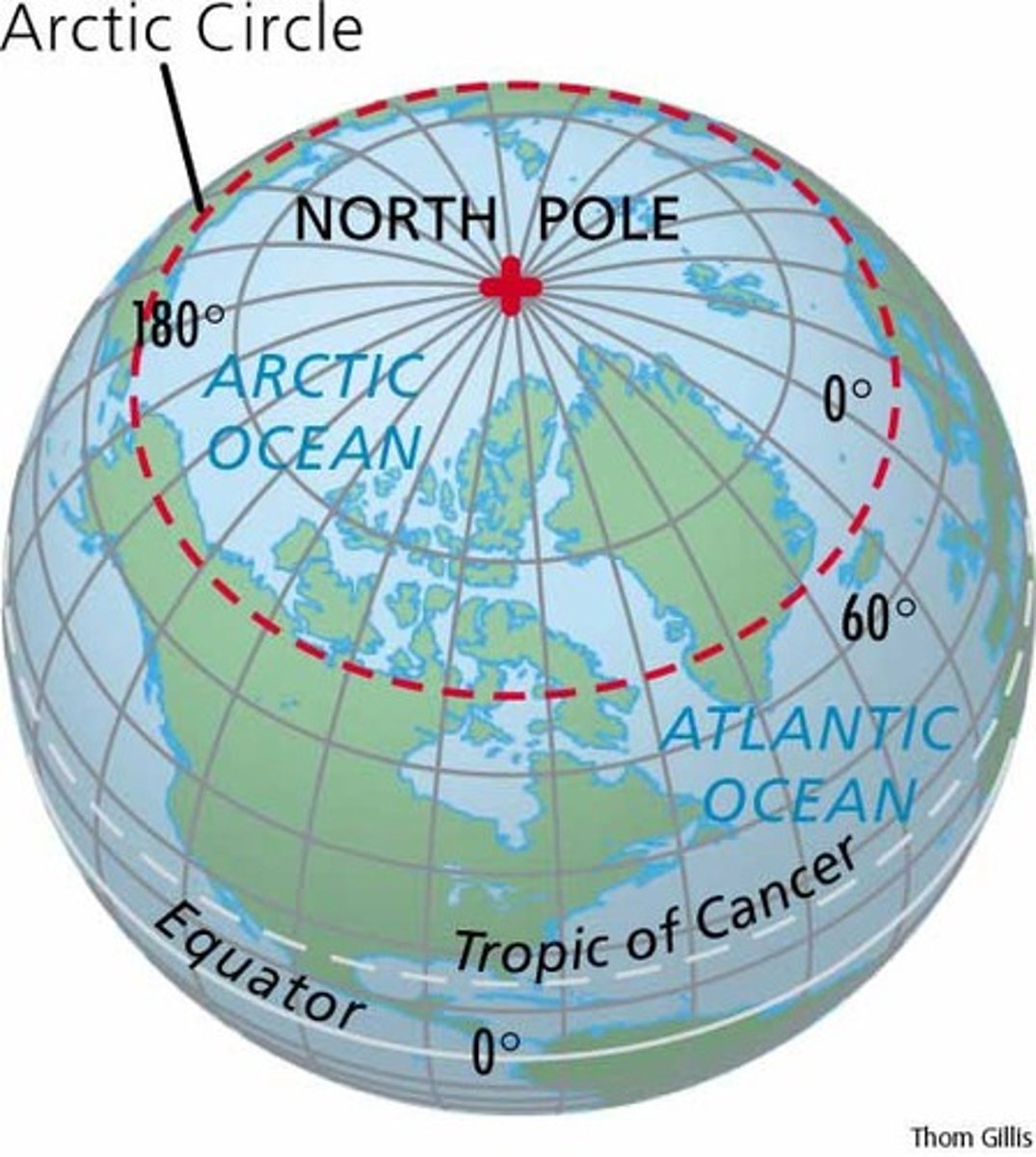
Arctic Circle
a line of latitude at 66.5° North of the Equator. (Marks the southern edge of the Arctic zone.)
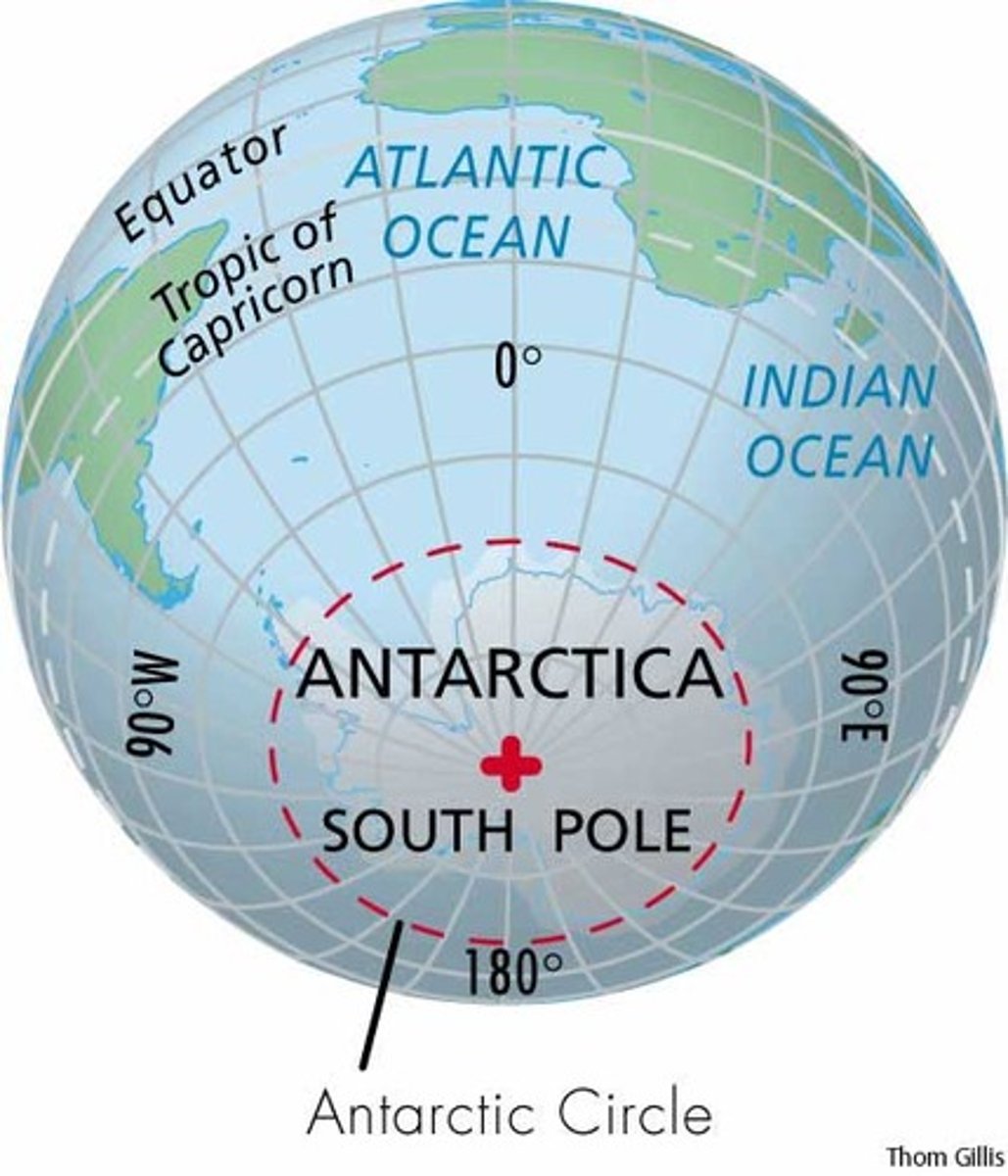
Antarctic Circle
a line of latitude at 66.5° South of the Equator. (Marks the northern edge of the Antarctic zone.)
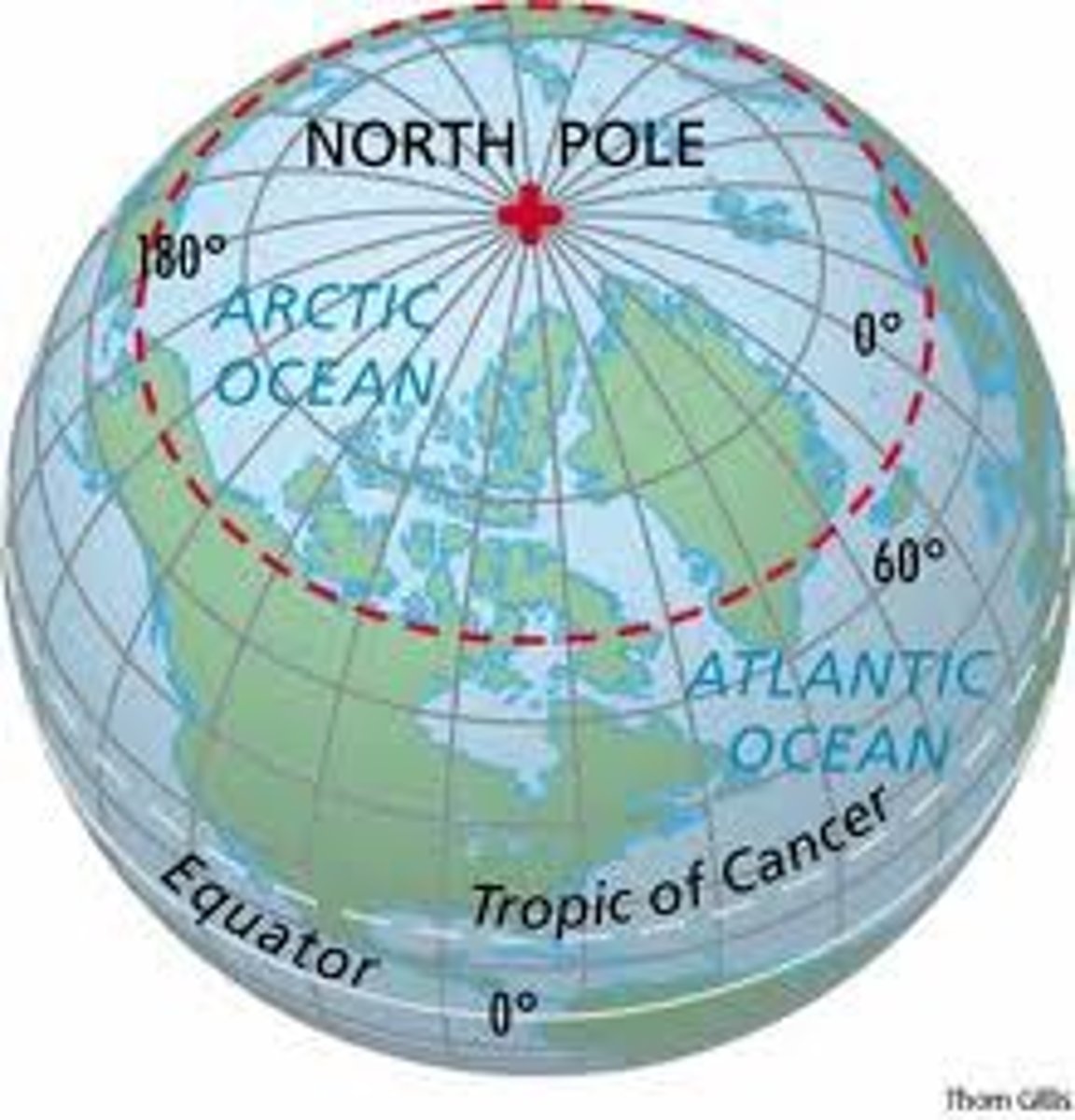
North Pole
the northernmost point of the Earth's axis; 90° north of the Equator
South Pole
the southernmost point of the Earth's axis; 90° south of the Equator
coordinates
the latitude and longitude "address" of a place on a map. Used for all ABSOLUTE LOCATIONS
absolute location
Exact location of a place on the earth described by global coordinates (example - Andover is at 43° North and 71° West)
relative location
The position or situation of a place relative to the position of other places (example - Andover is located along Routes 495 and 93, north west of Boston in the northeastern part of Massachusetts, east of Lawrence.
hemisphere
one of the halves of the earth as divided EITHER by the Equator (northern and southern hemispheres) or the Prime Meridian (western and eastern hemispheres
Not studied (14)
You haven't studied these terms yet!
 Note
Note  Flashcards (33)