39. Urinary System
 Call Kai
 Learn
Learn Practice Test
 Spaced Repetition
 Match
Match Flashcards
 Knowt Play
1/24

There's no tags or description
Looks like no tags are added yet.
Name | Mastery | Learn | Test | Matching | Spaced | Call with Kai |
|---|
No analytics yet
Send a link to your students to track their progress
25 Terms
1. produce urine by filtration, secretion, reabsorption, and concentration
2. produce renin and erythropoietin hormones in kidneys
general function of urinary system
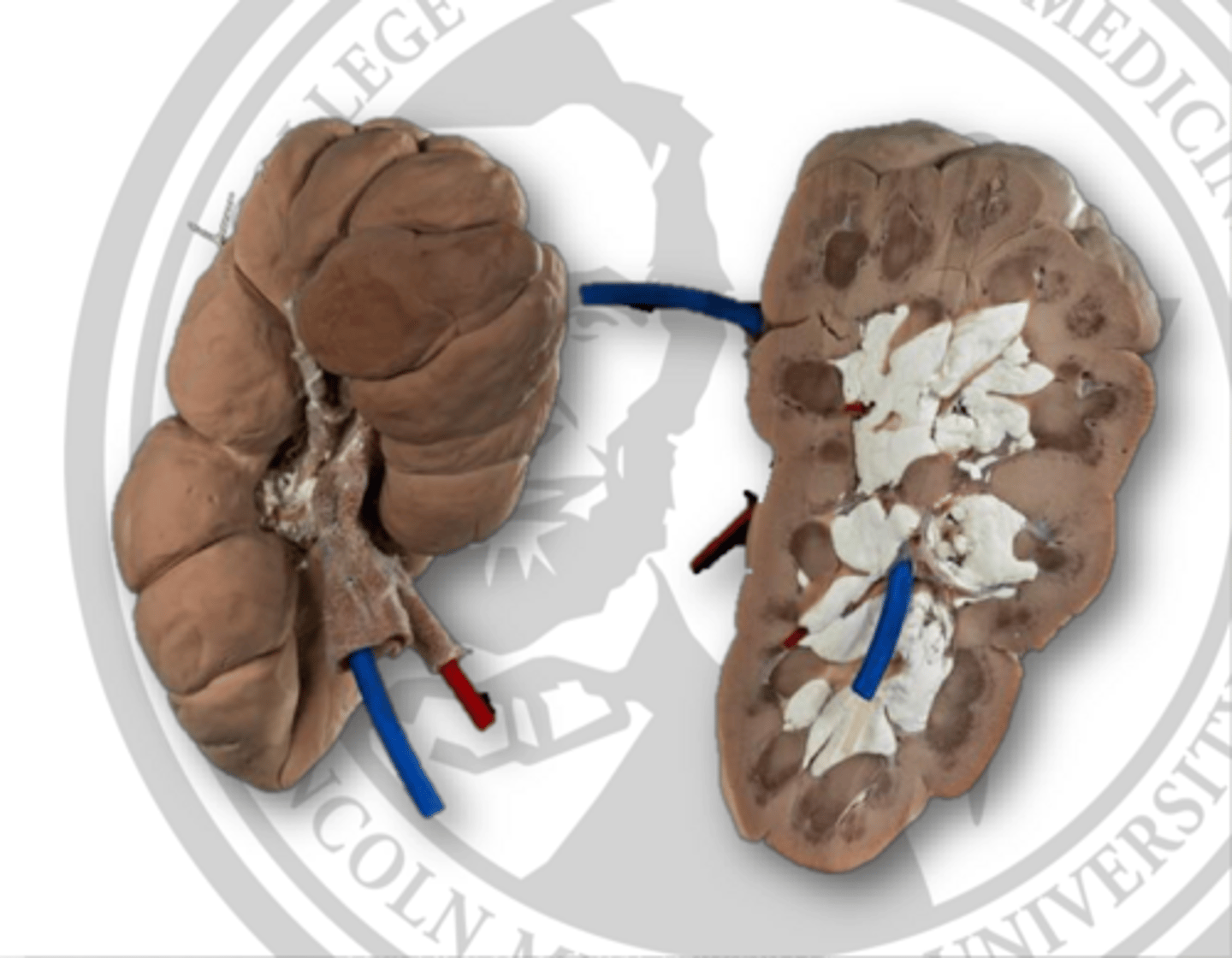
renal a., renal v, ureter, lymphatics, and nerves
what structures are involved with the renal hilus
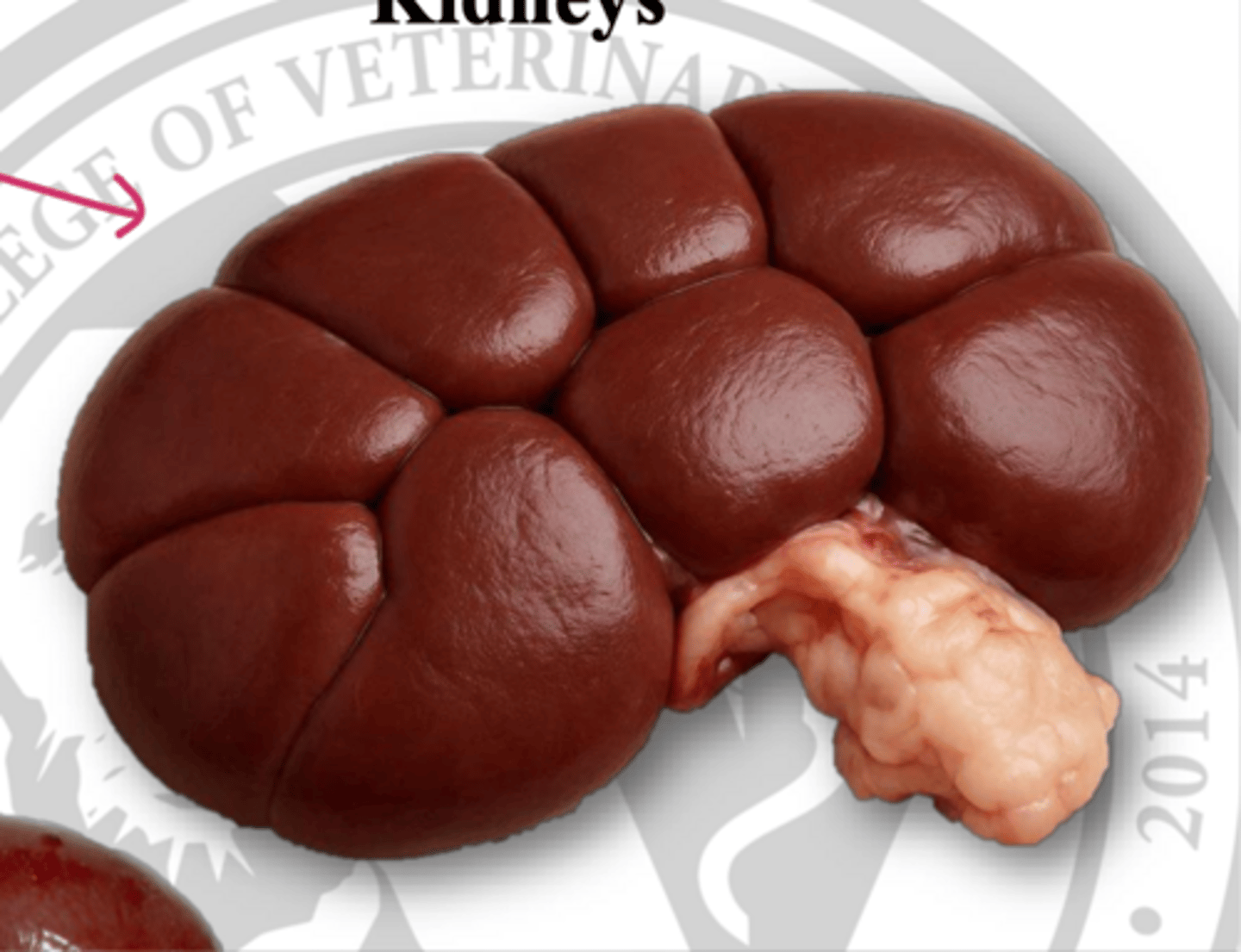
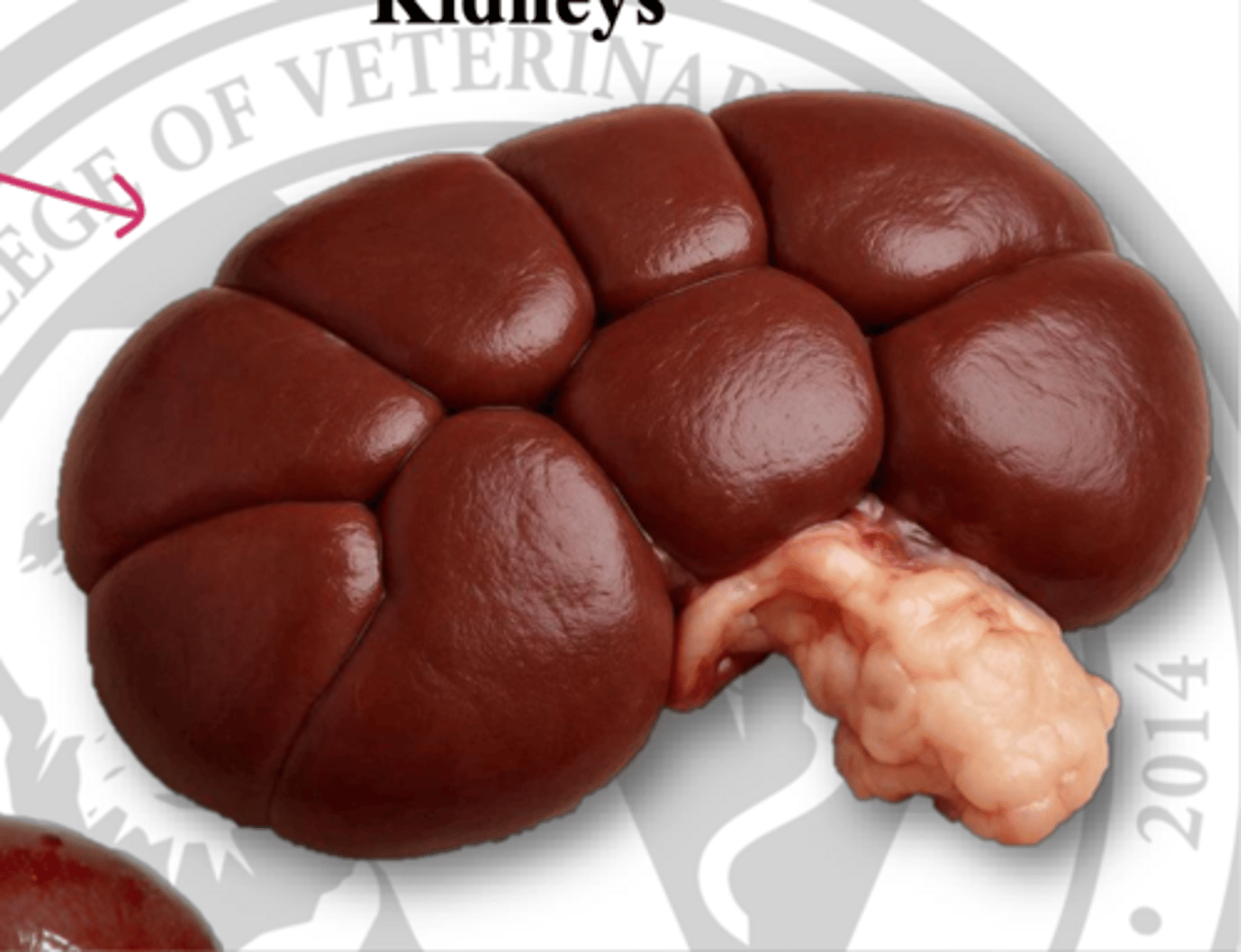
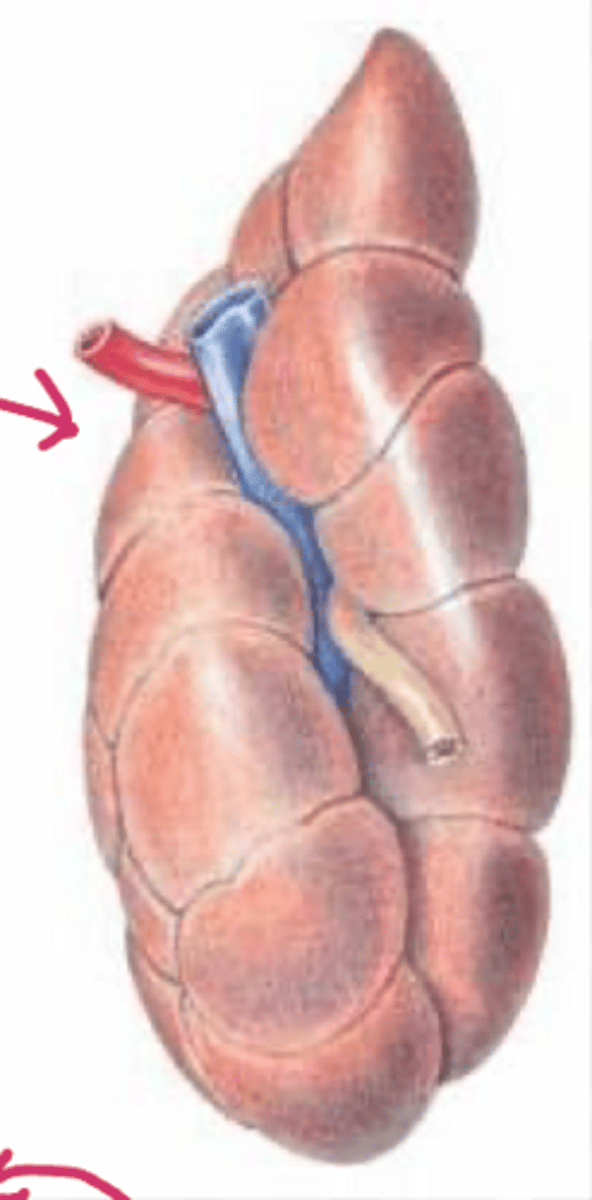
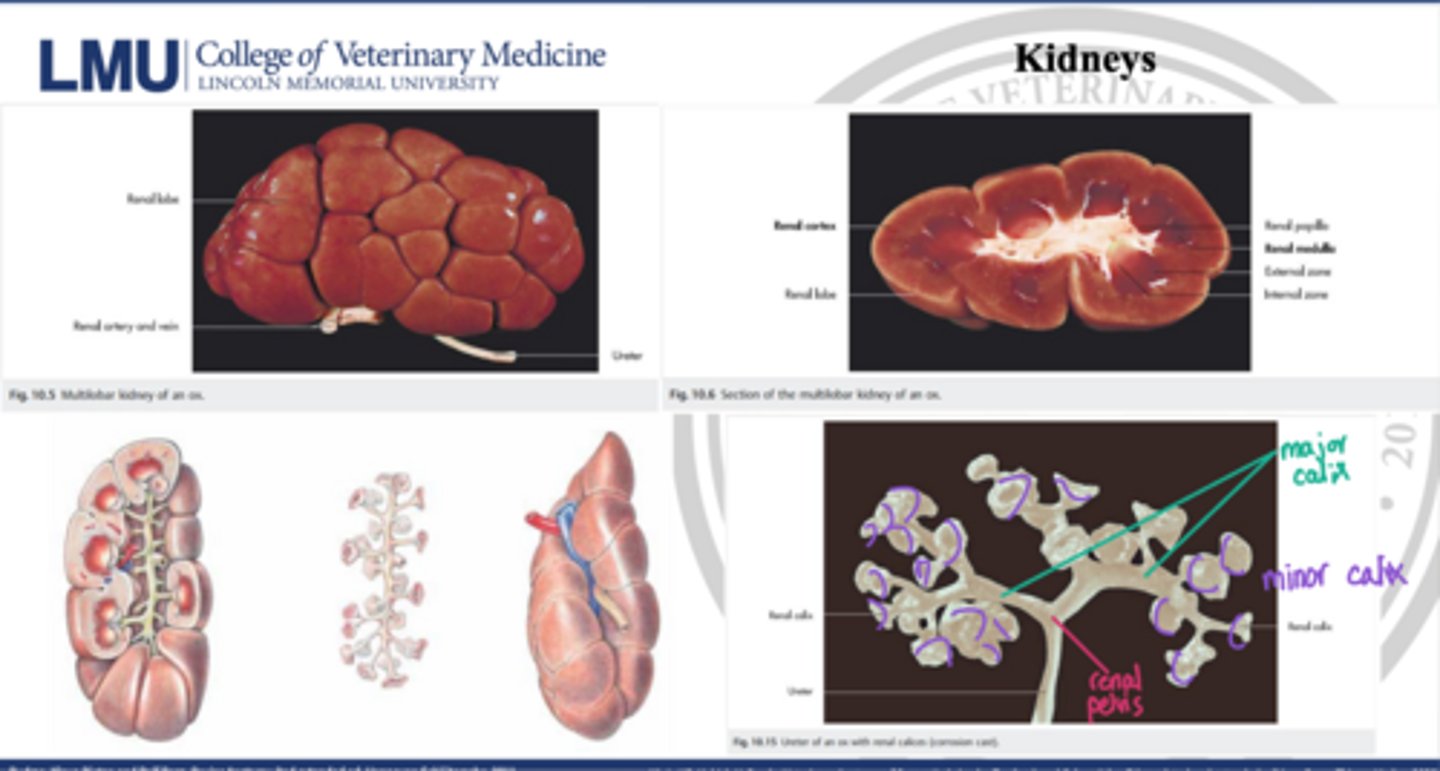
bovine...multilobar/multipyramidal
the kidney of what species is shown here...how do we know
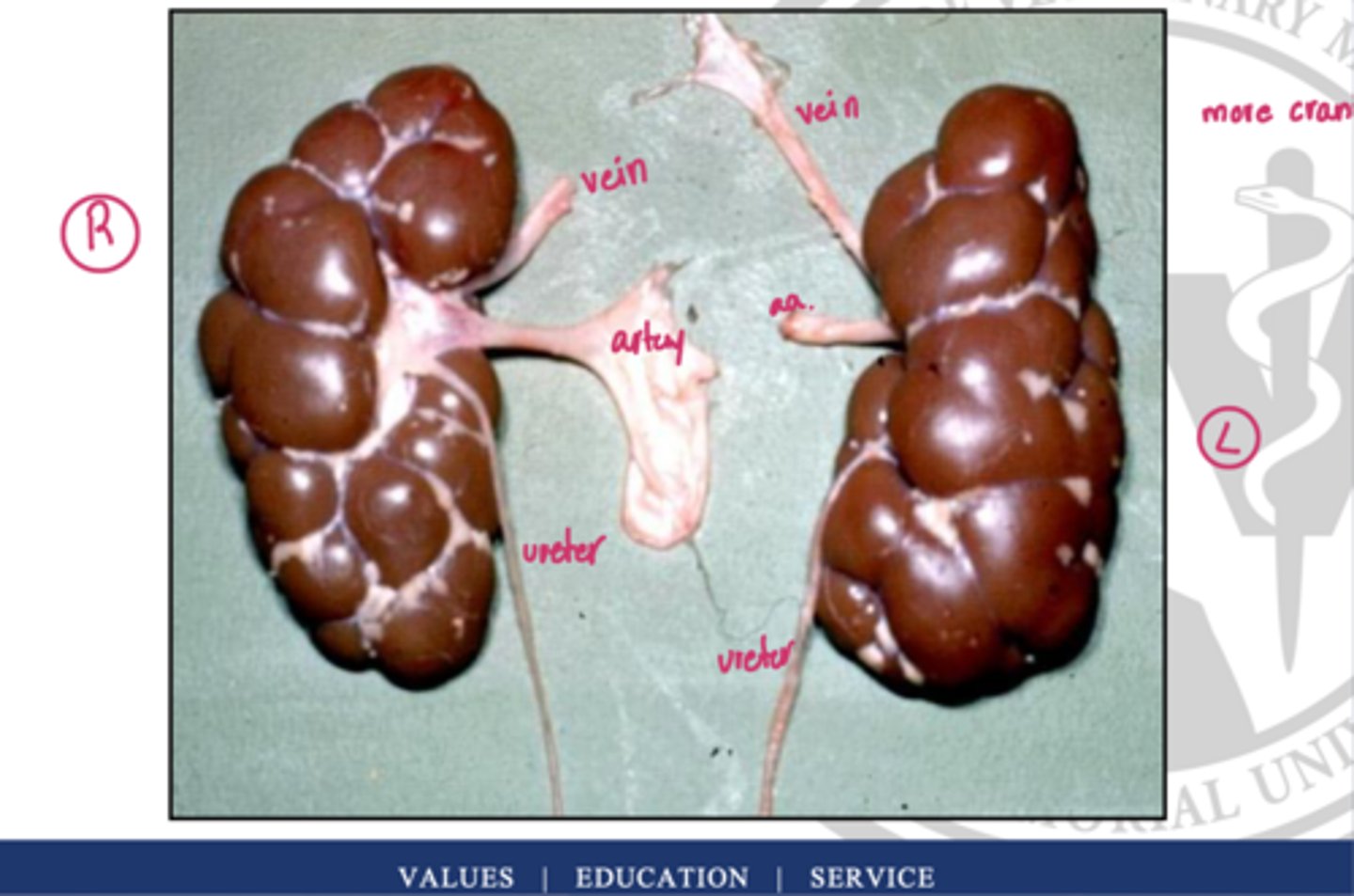
L kidney sharper at cranial extremity
describe the difference in the L vs the R shape kidney in bovine
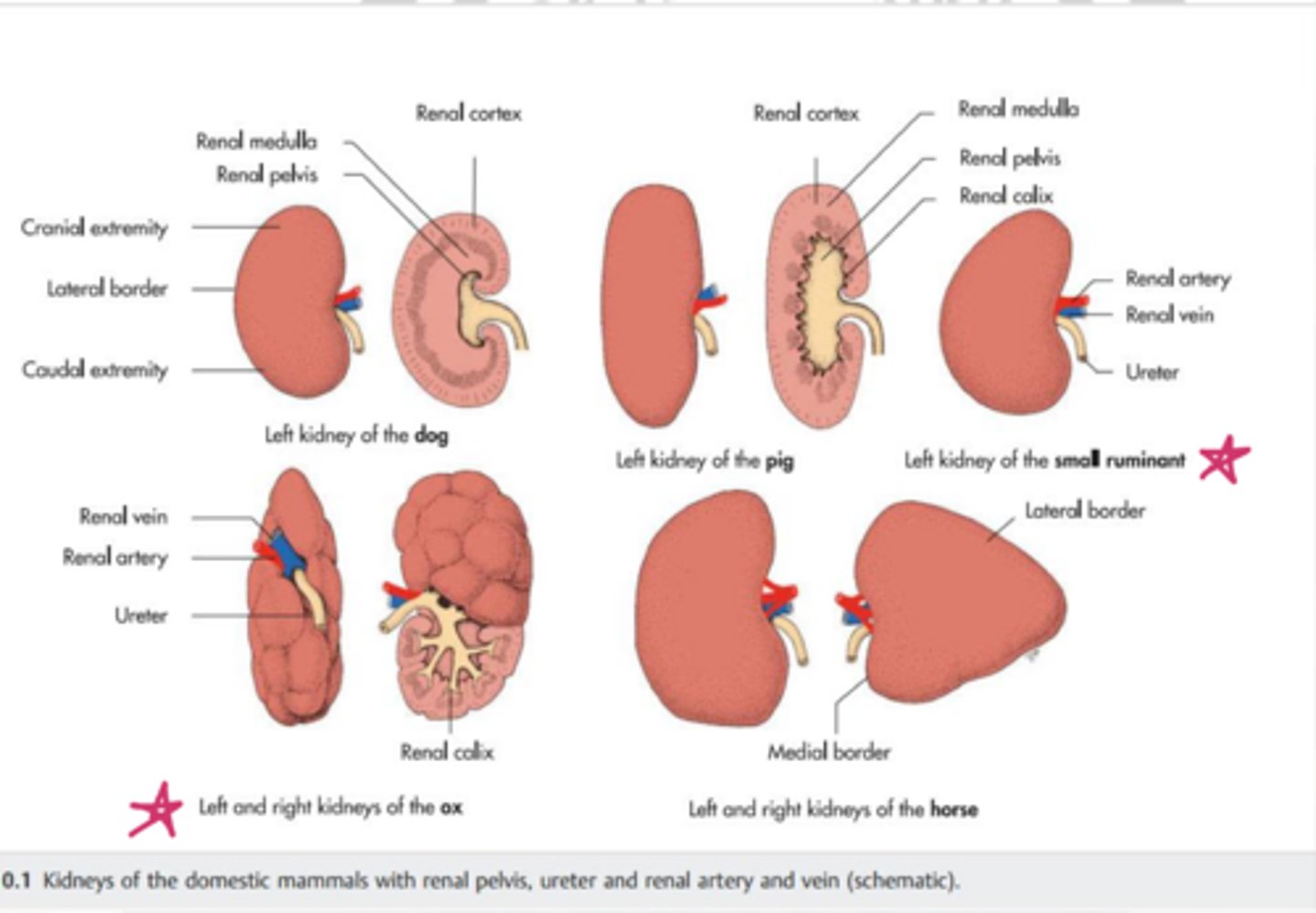
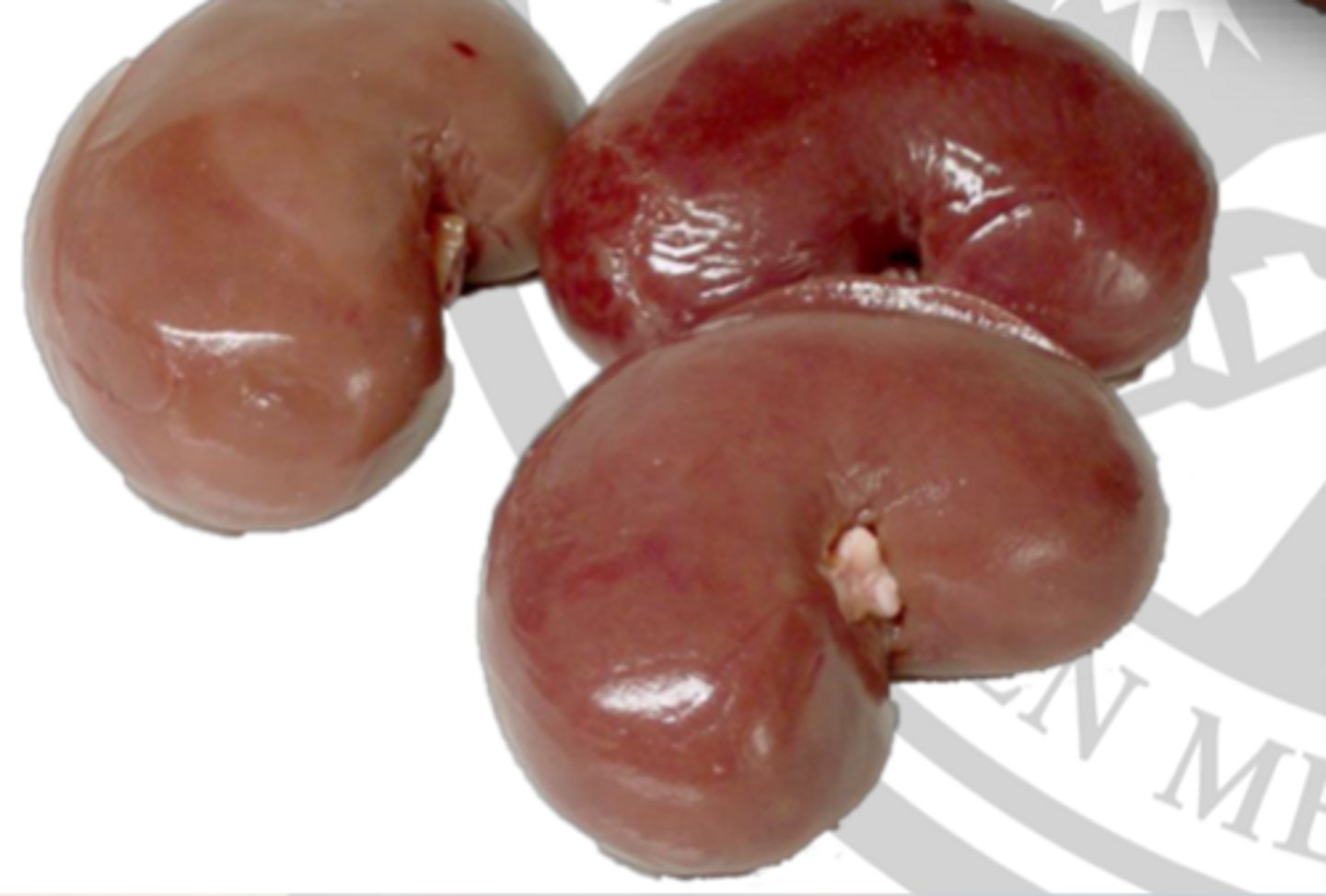
bean shaped and unilobar/unipyramidal
describe the shape of the small ruminant kidney
dorsally
the left hilus is _____ directed due to displacement by the rumen
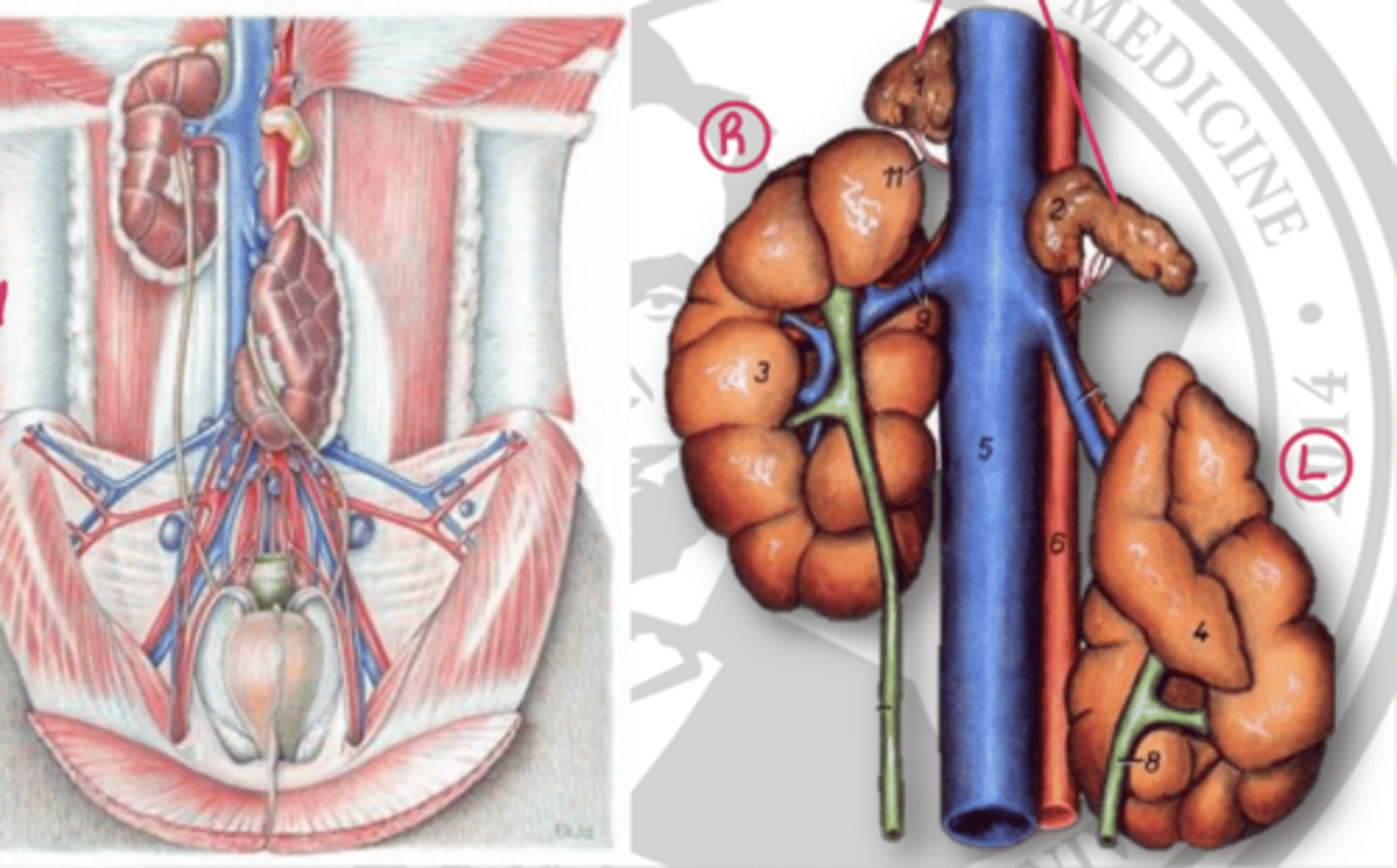
two faces....dorsal and ventral/parietal and visceral
the R kidney is elliptical shaped and more flattened w/ ____ faces
three faces...parietal, visceral, and ruminal
the L kidney is cranially pointed and caudally twisted with _____ faces
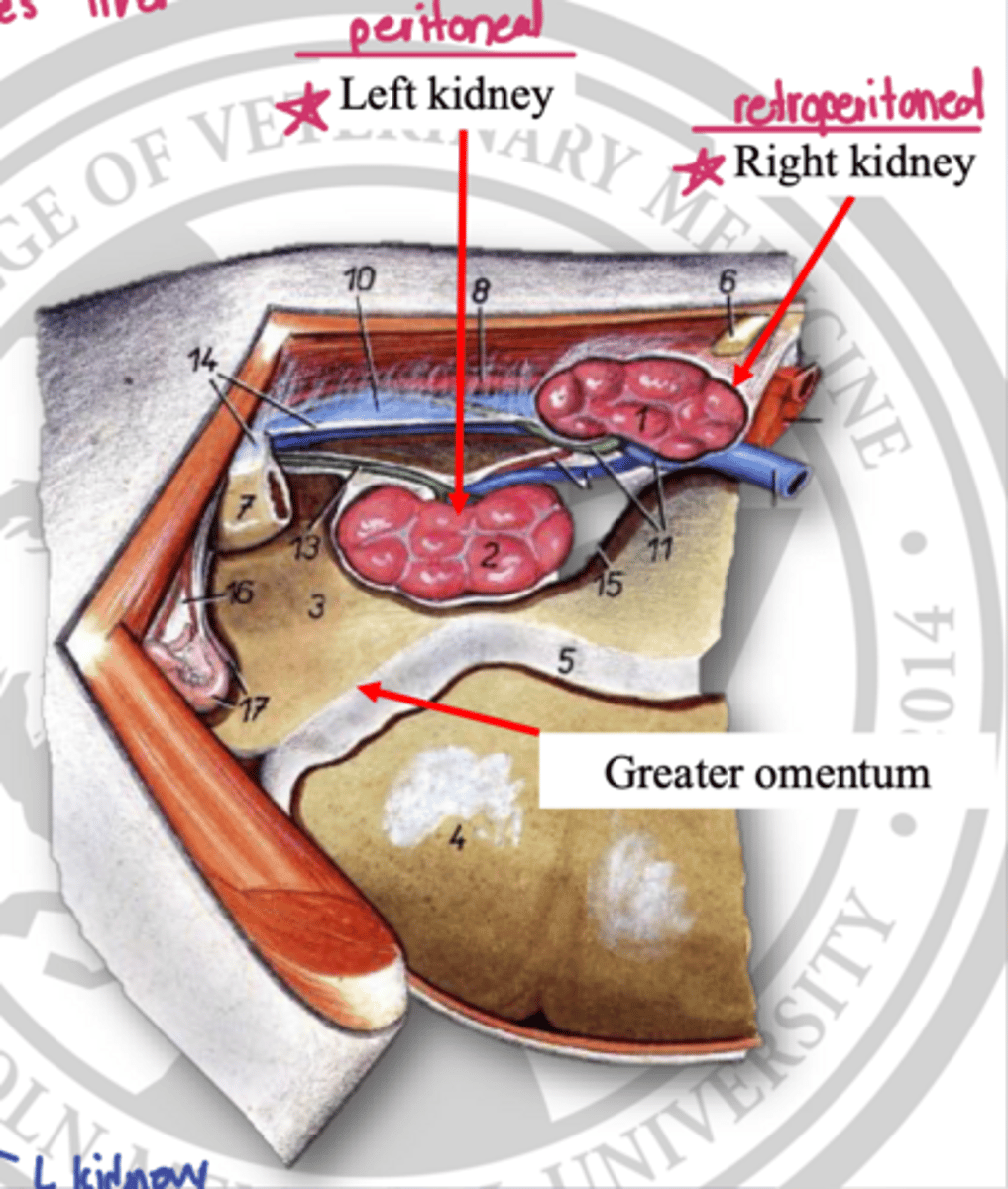
displaced to R found caudal and ventral to R kidney
what side is the L kidney found on
reviewed
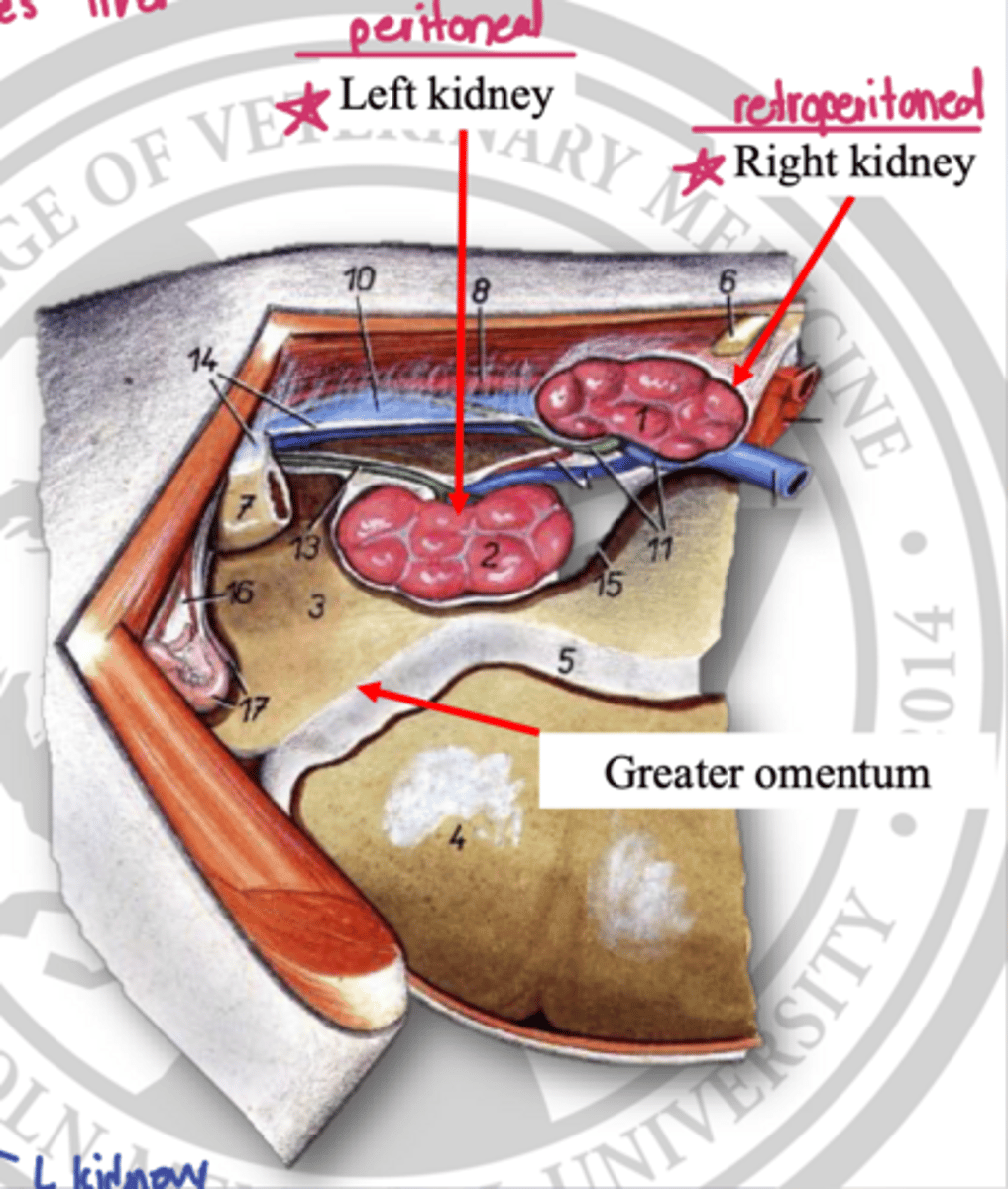
review this image of the bovine kidneys
peritoneal organ/floating kidney
the R kidney is considered a retroperitoneal organ but due to the mobile and pendulous nature of the L kidney it is considered a _____ and covered in mesonephros
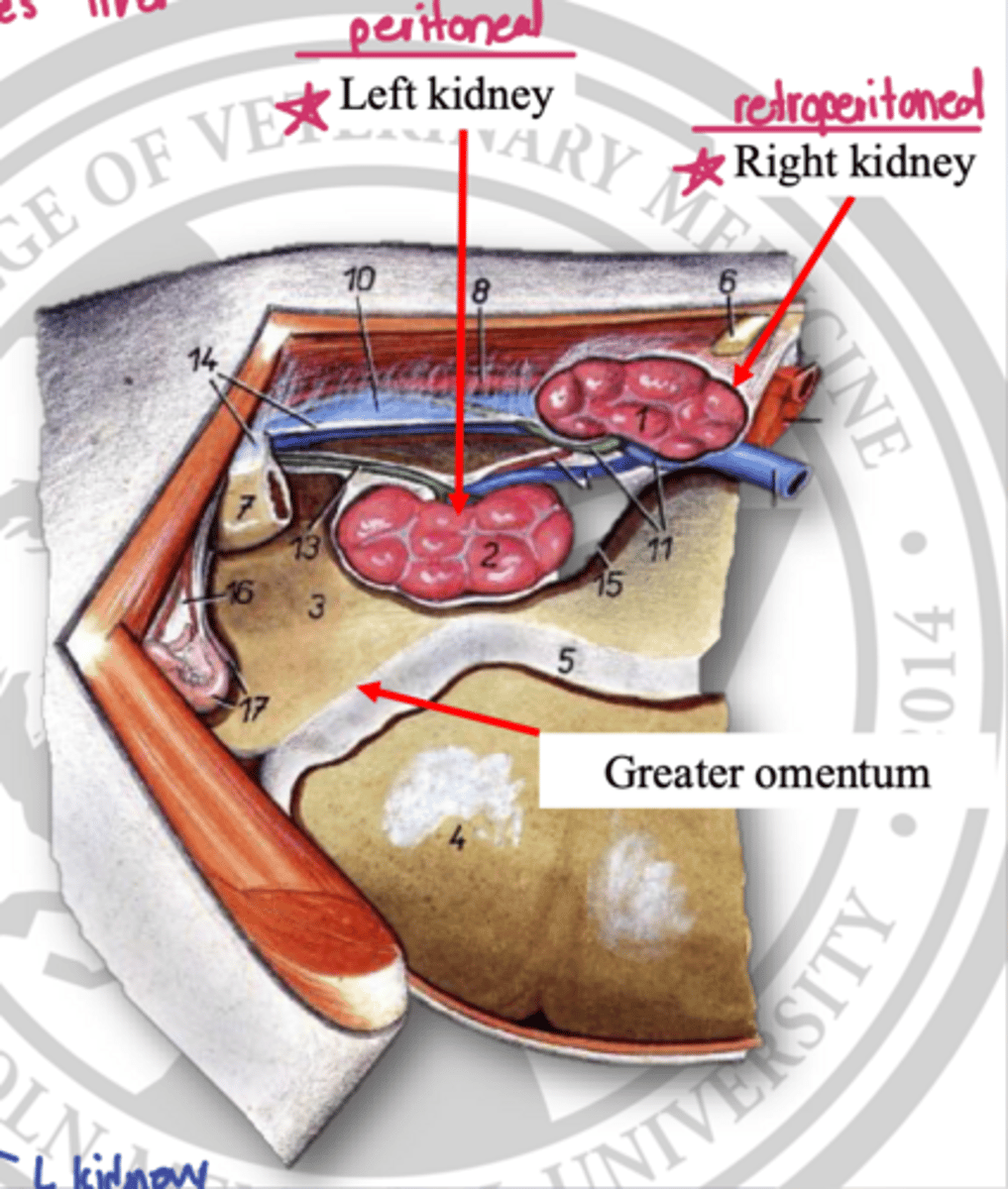
T12/13-L3
the ruminant right kidney is found at what location
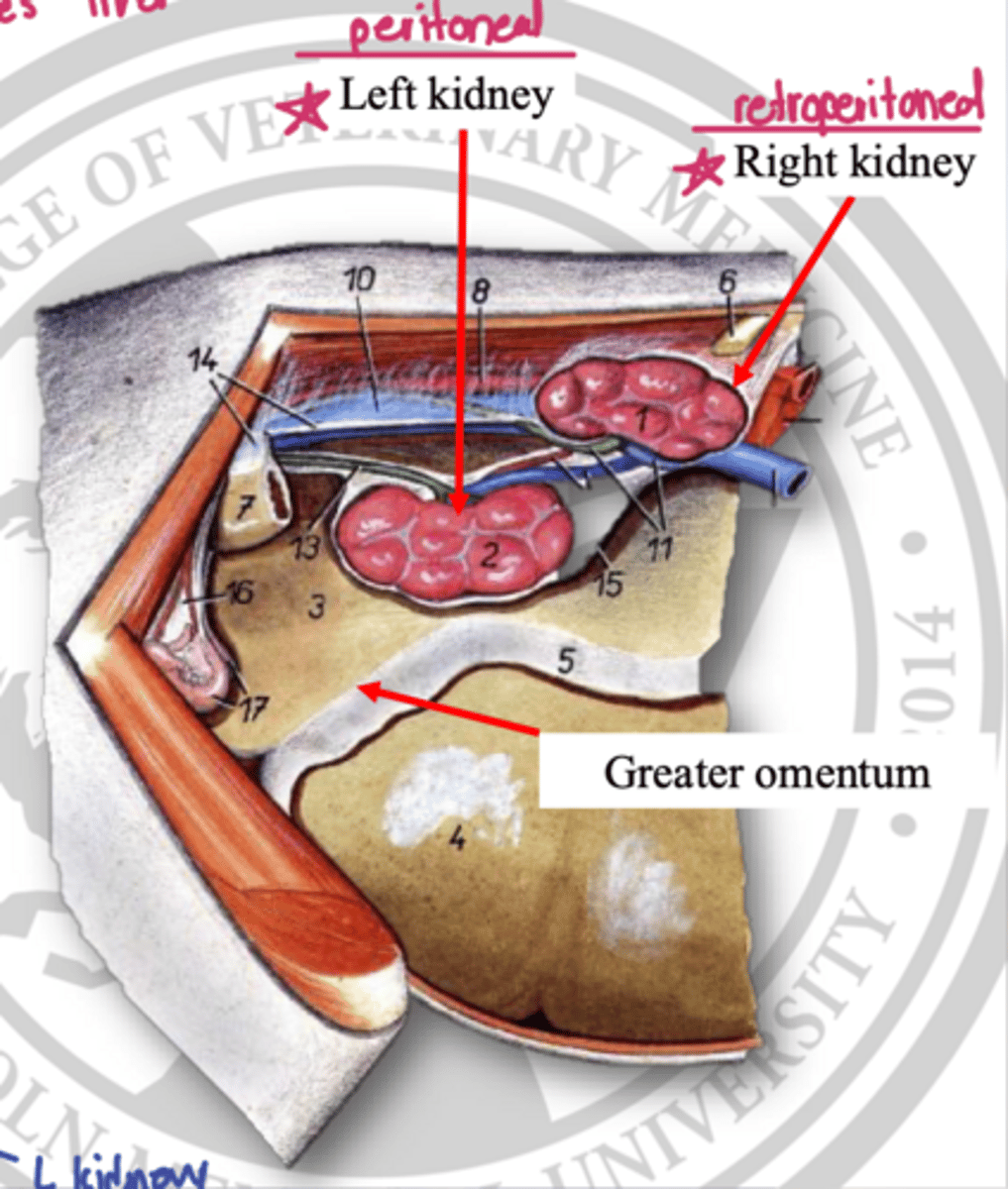
L2-L4
the ruminant left kidney is found at what location
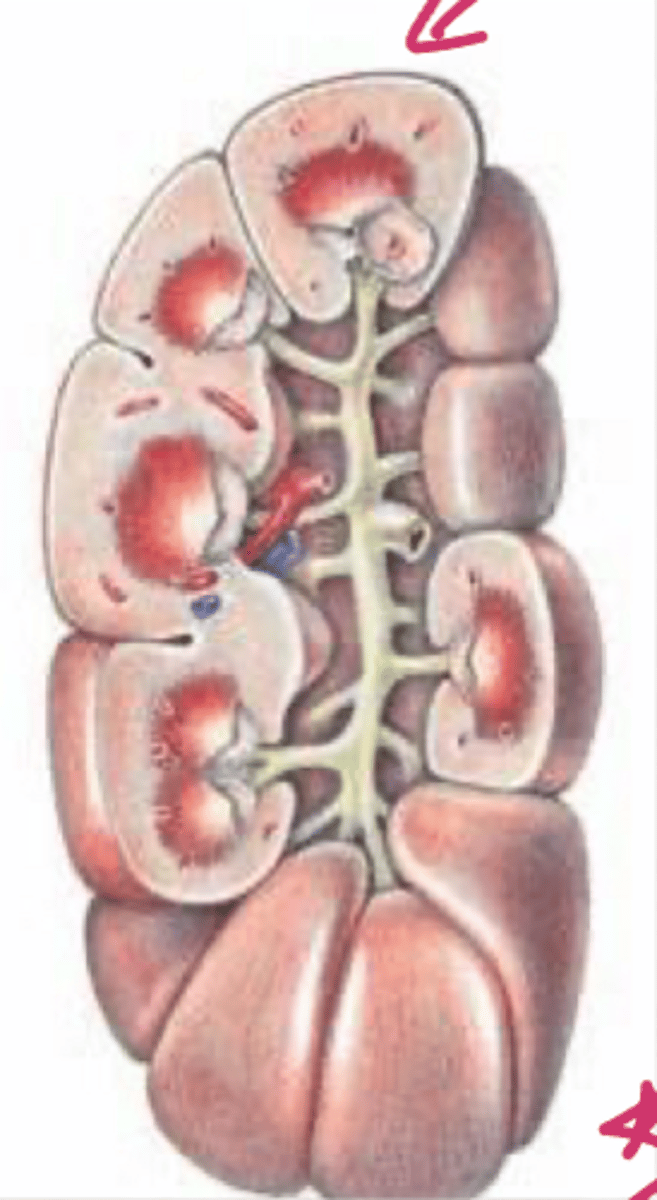
calices...cup-like expansions
in bovine the kidney is arranged in lobes and have divided renal papilla, urine is collected via _____ as there is no renal crest formed
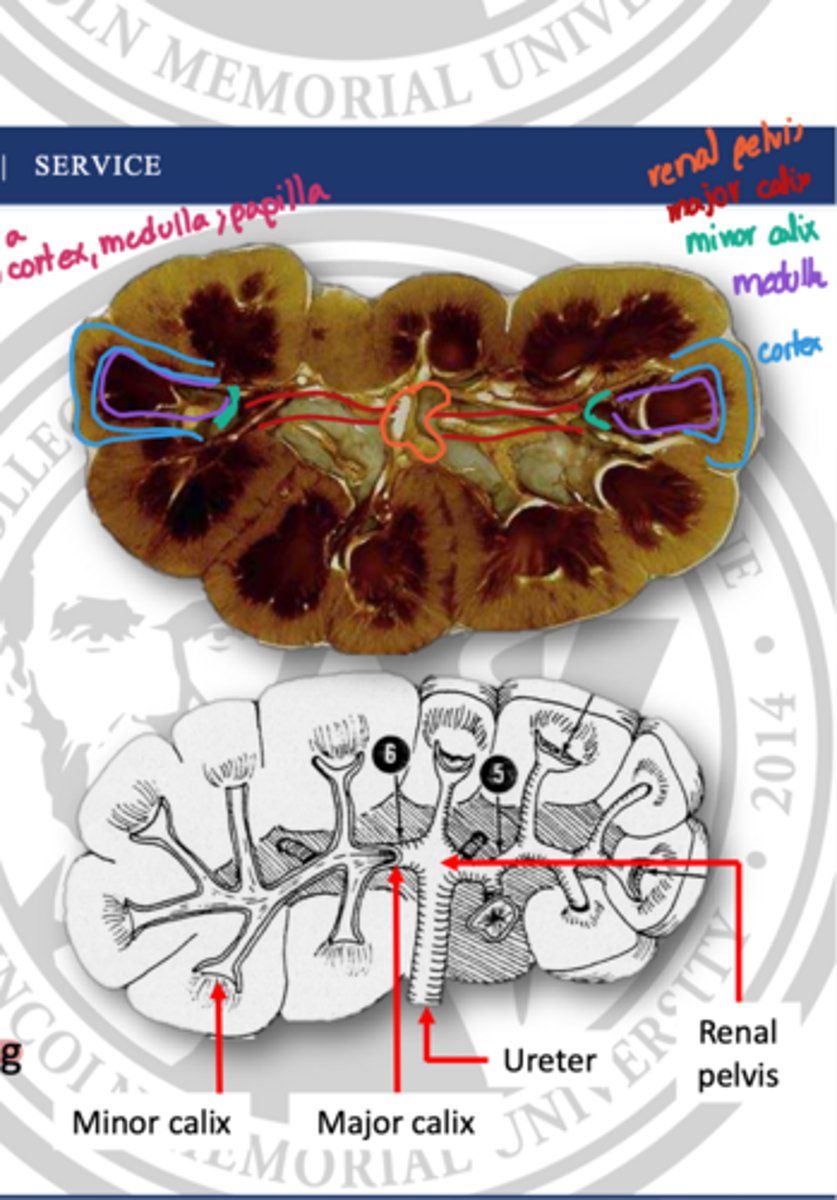
minor calices
the ______ collects urine directly from renal papilla within the medulla of the bovine kidney
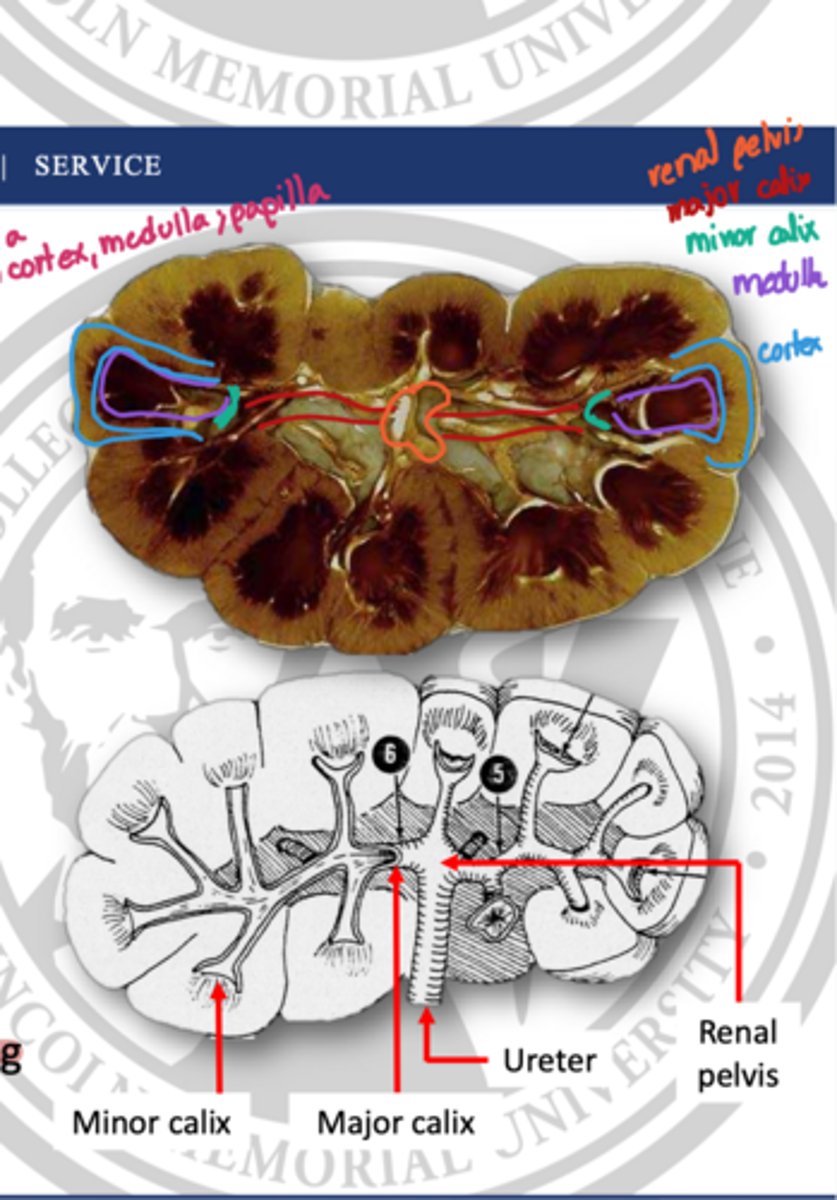
major calix
several minor calices form a _____ that then drain into the renal pelvic
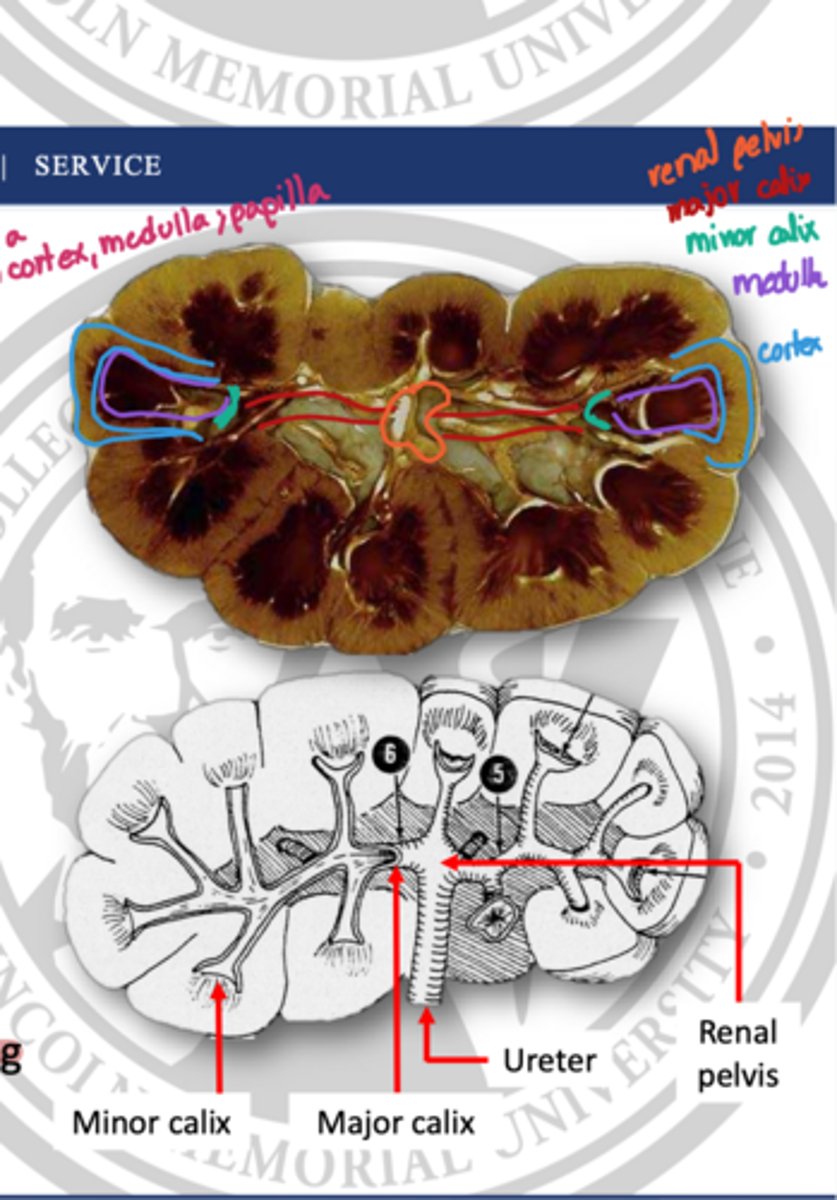
reviewed
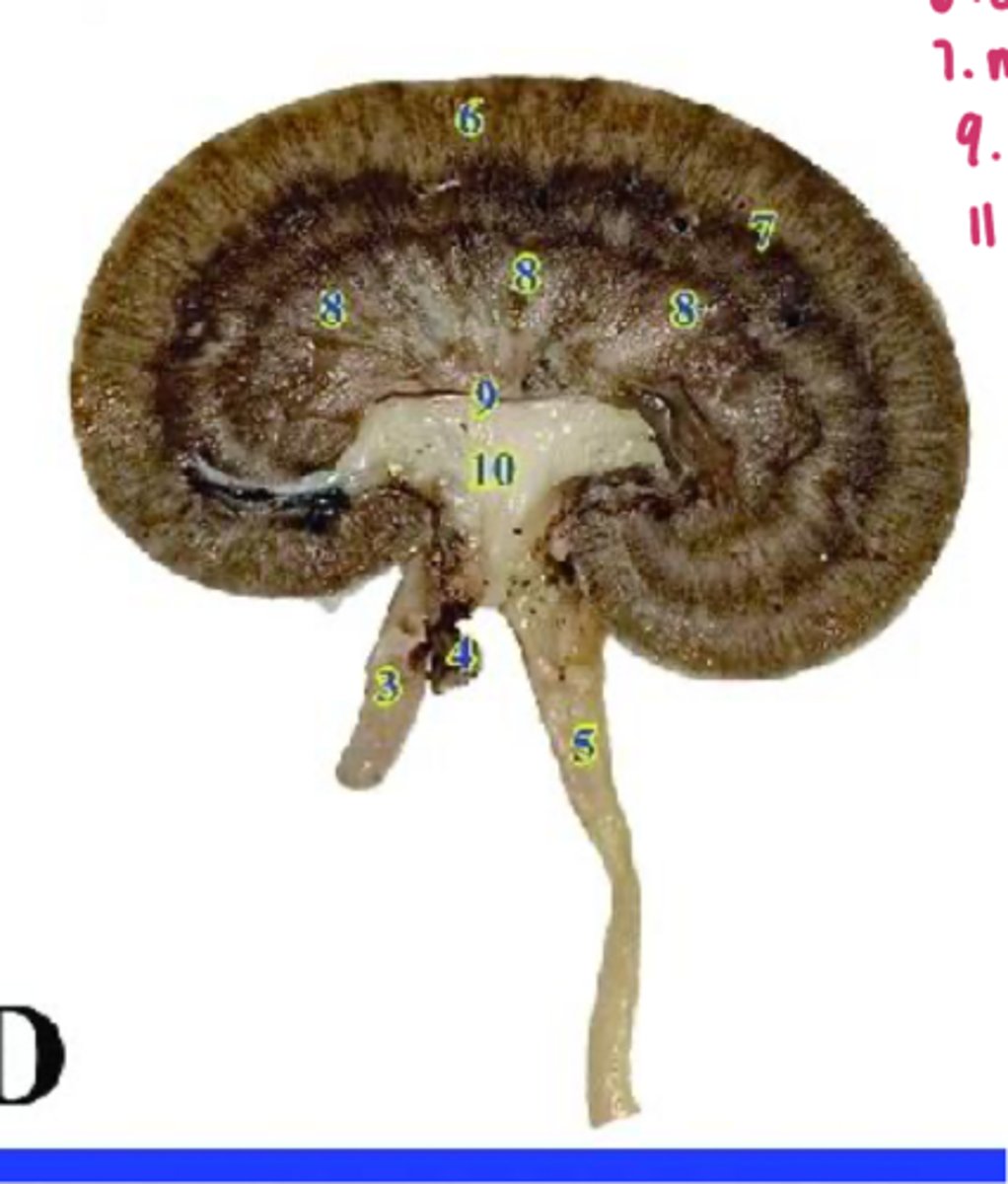
review the kidney
cortex
6
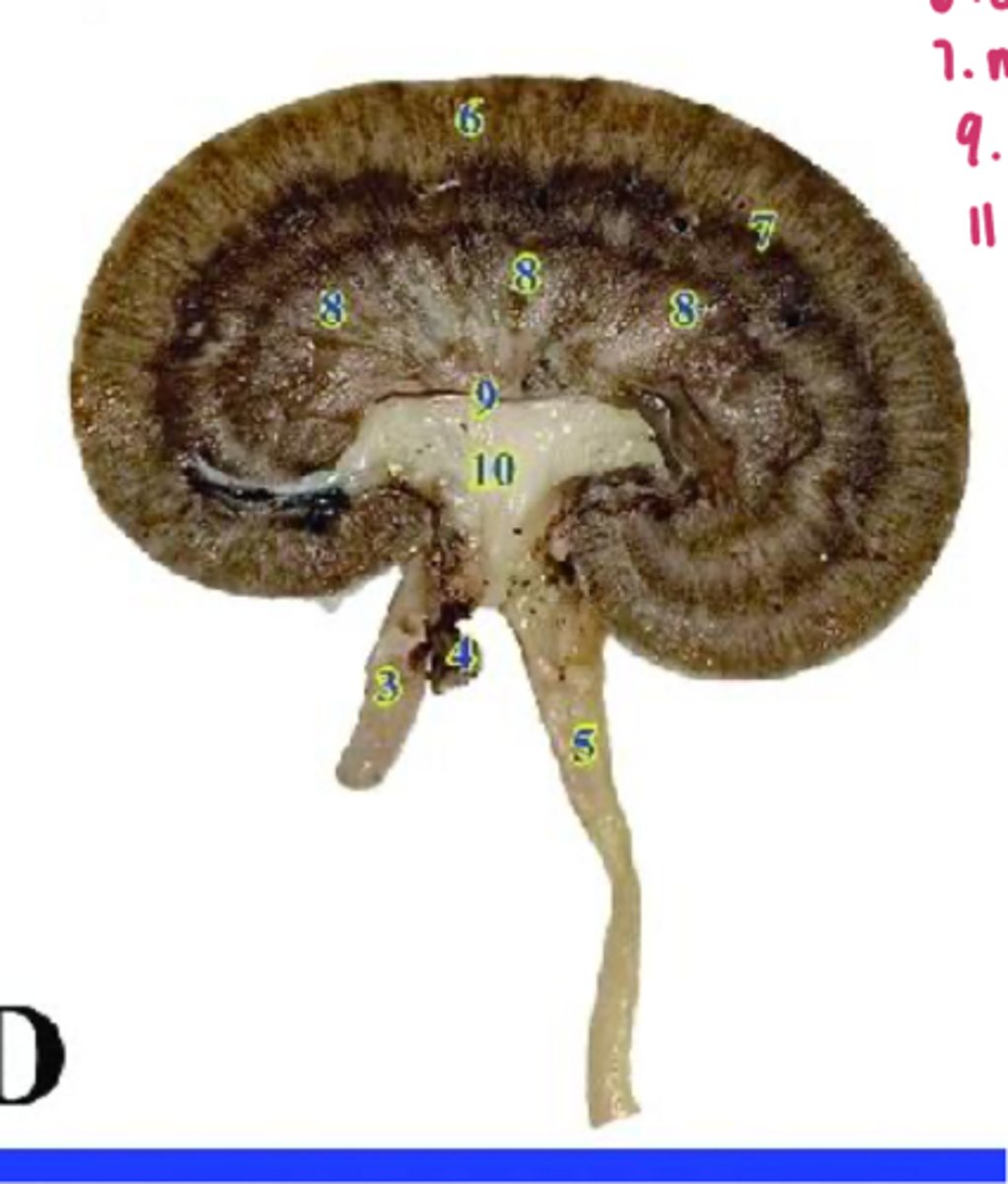
medulla
7
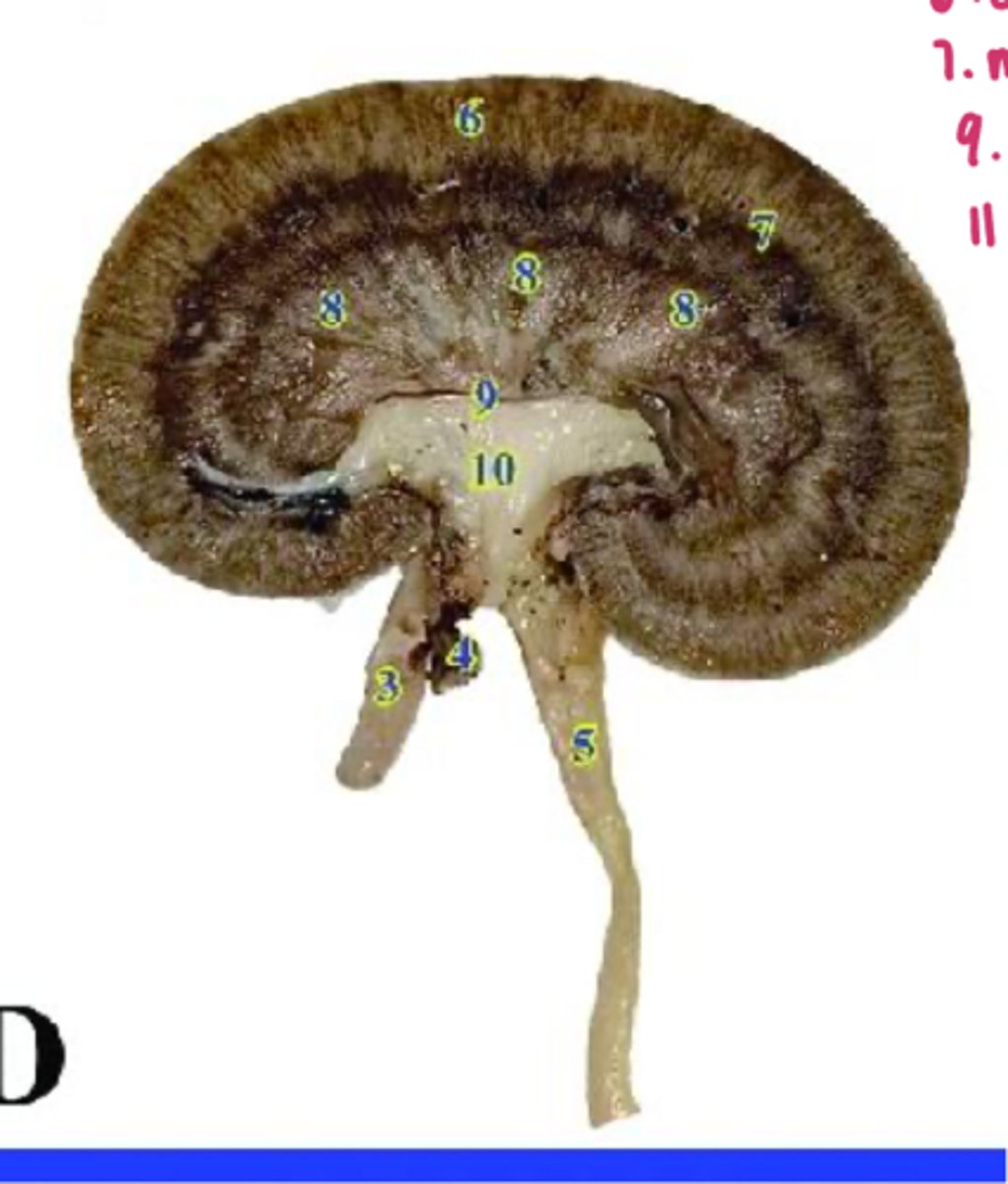
renal crest
9
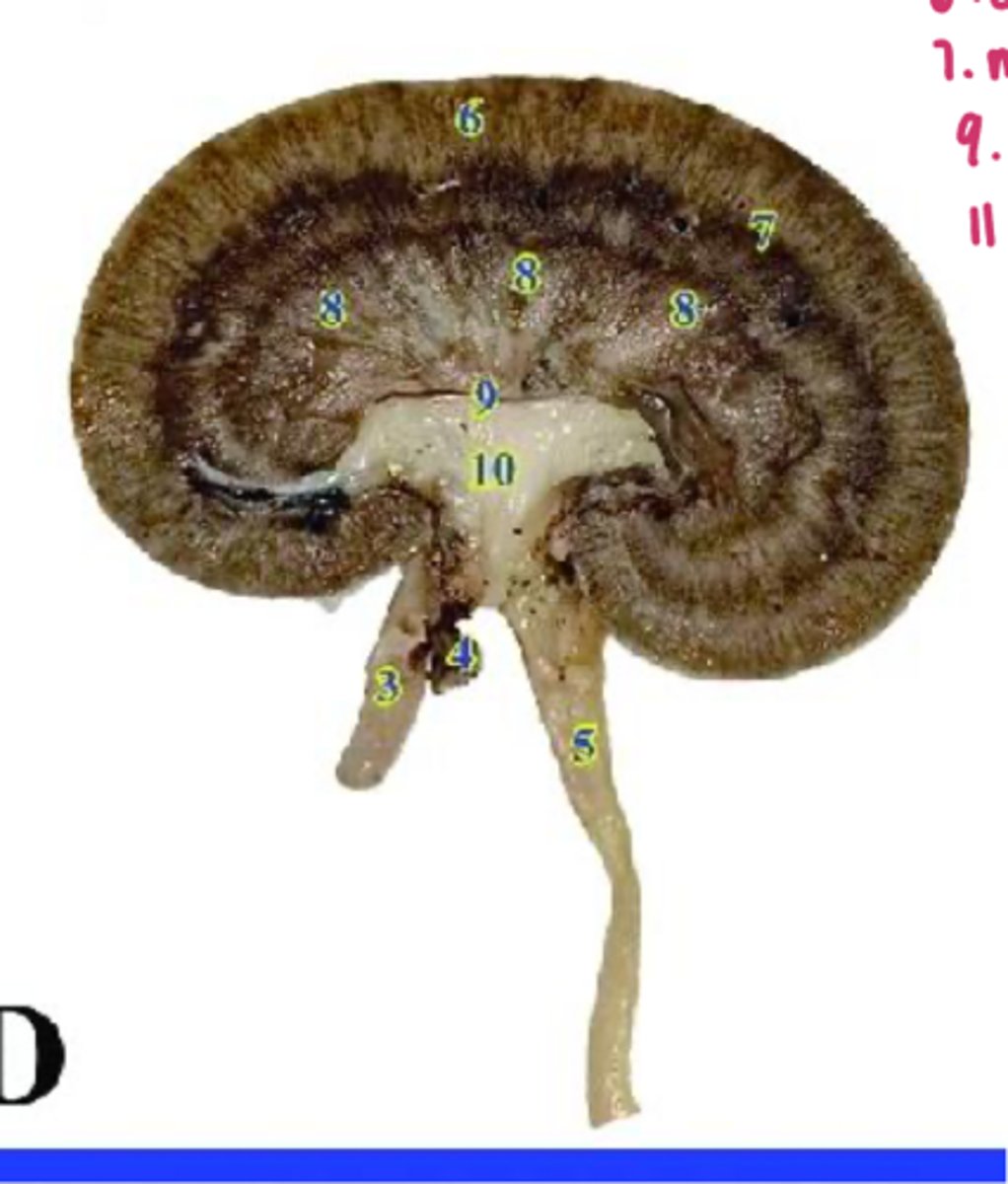
renal pelvis
11
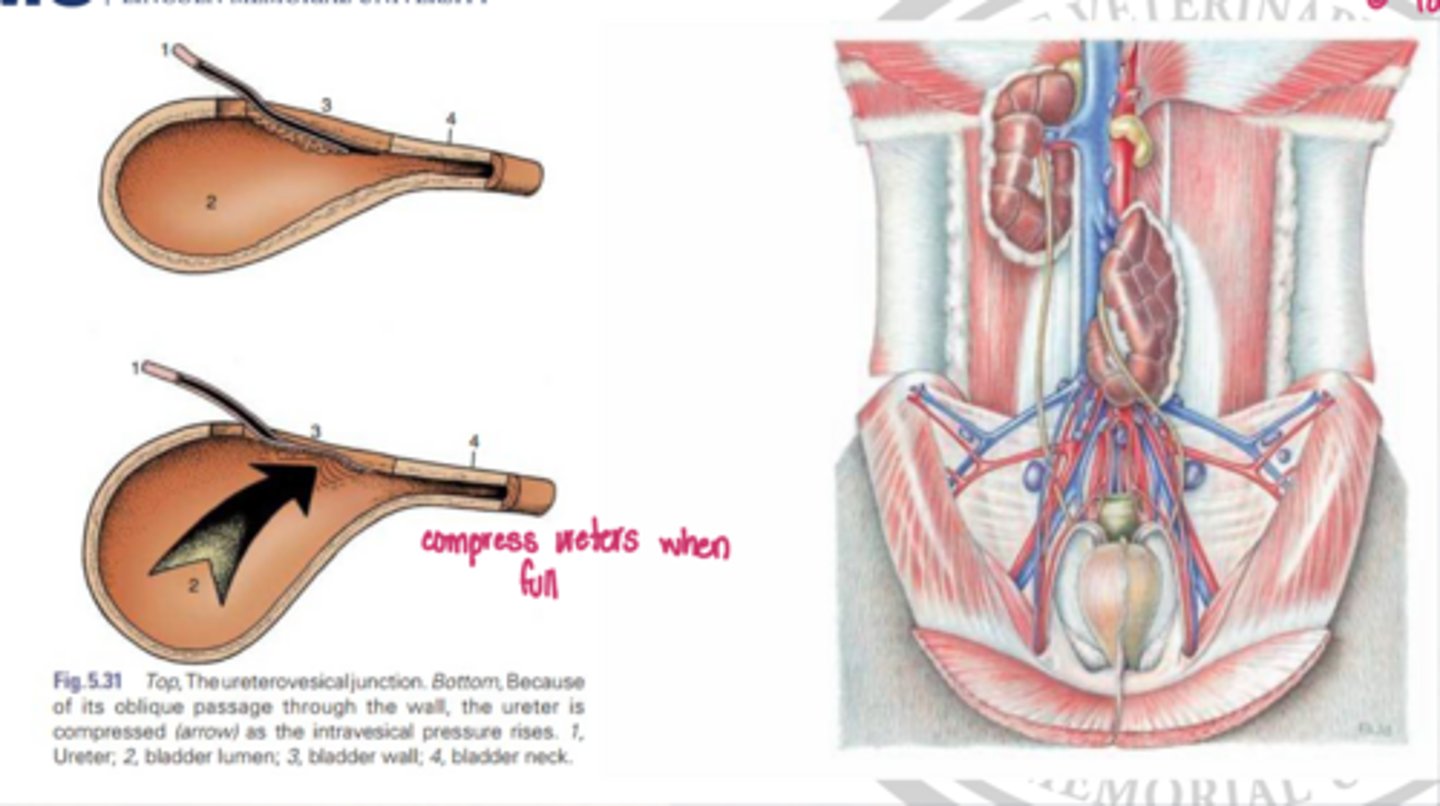
enter at dorsal wall at a low angle which is compressed when full
how do you describe the entrance of the ureters into the bladder
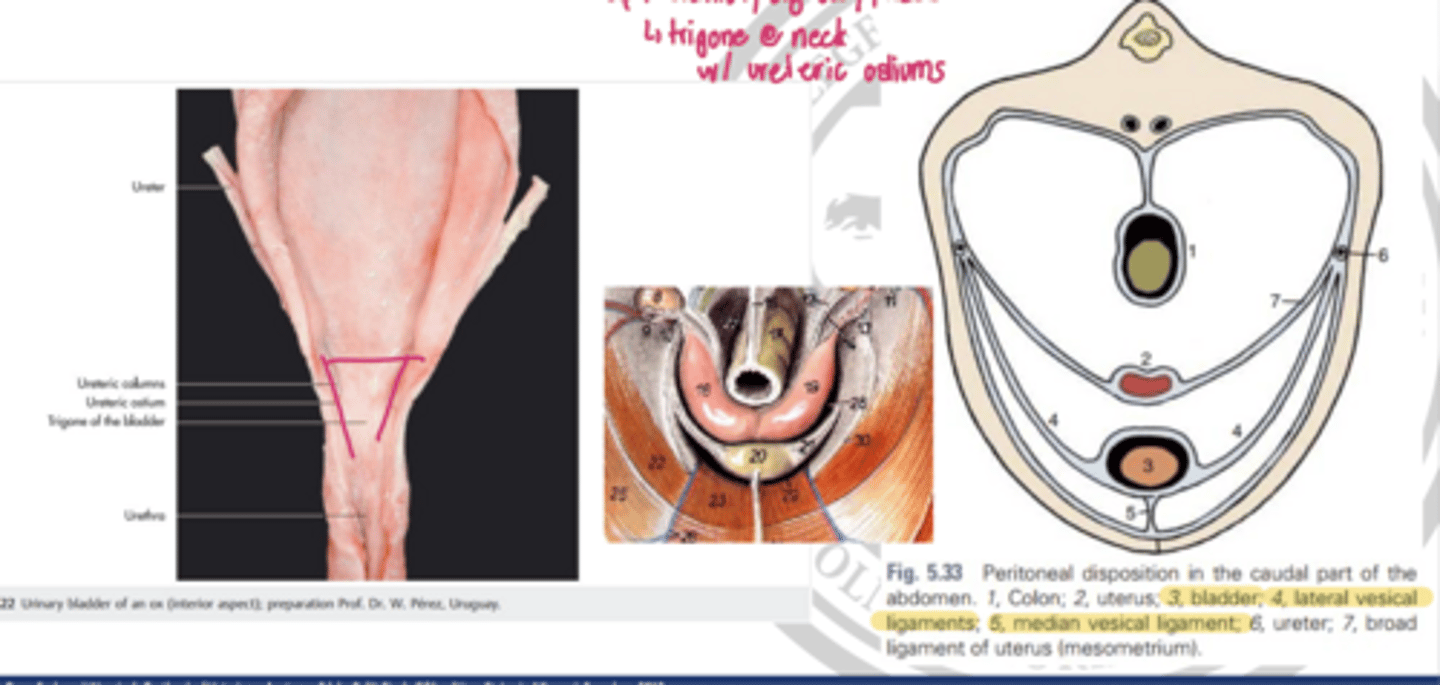
1. apex cranially, big body, and neck caudally
2. trigone at the neck containing ureteric ostiums
3. 2 lateral ligaments and 1 median ligament to hold the bladder in place
describe some of the important structures of the bladder
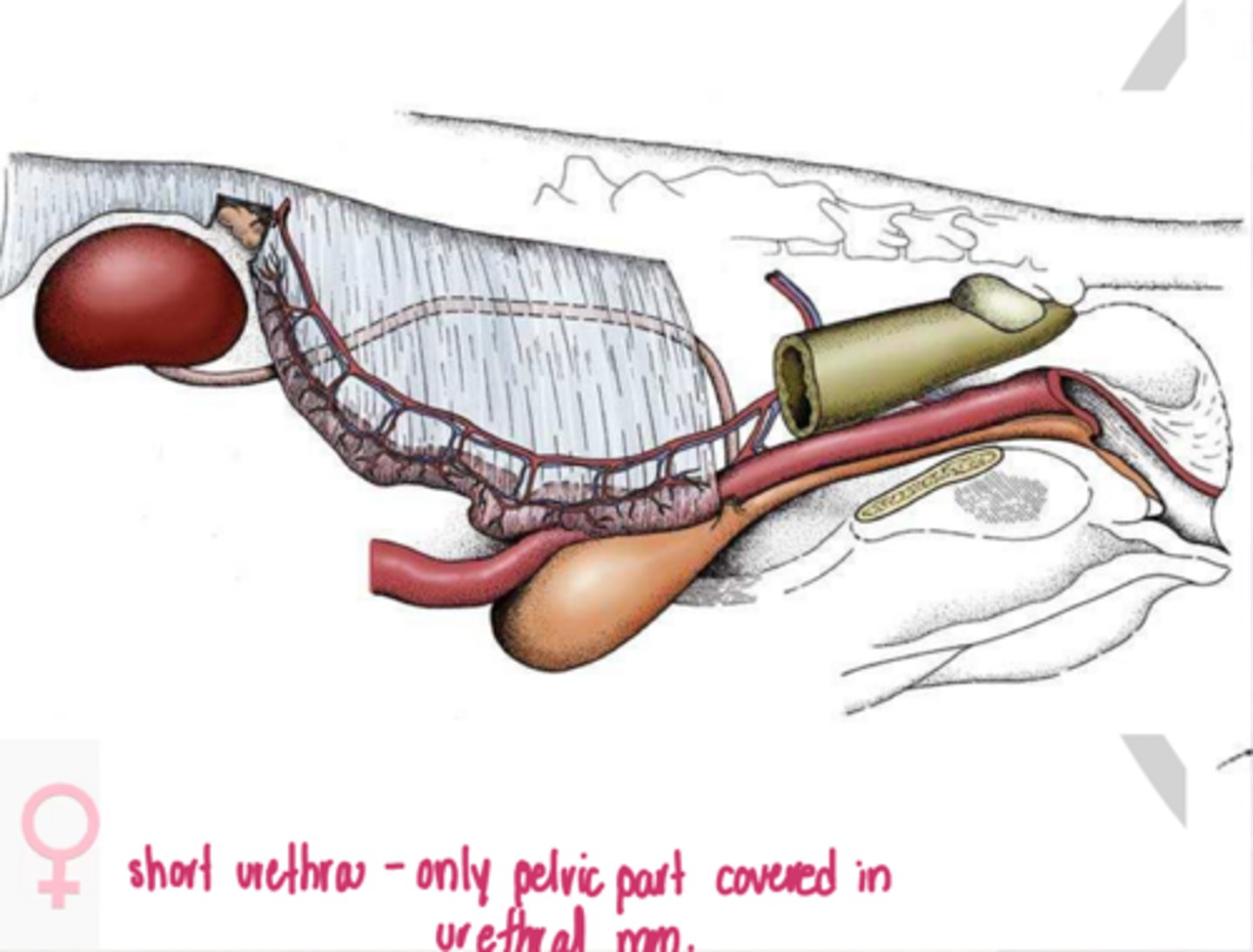
short urethra only in pelvic part
describe the urethra of the female
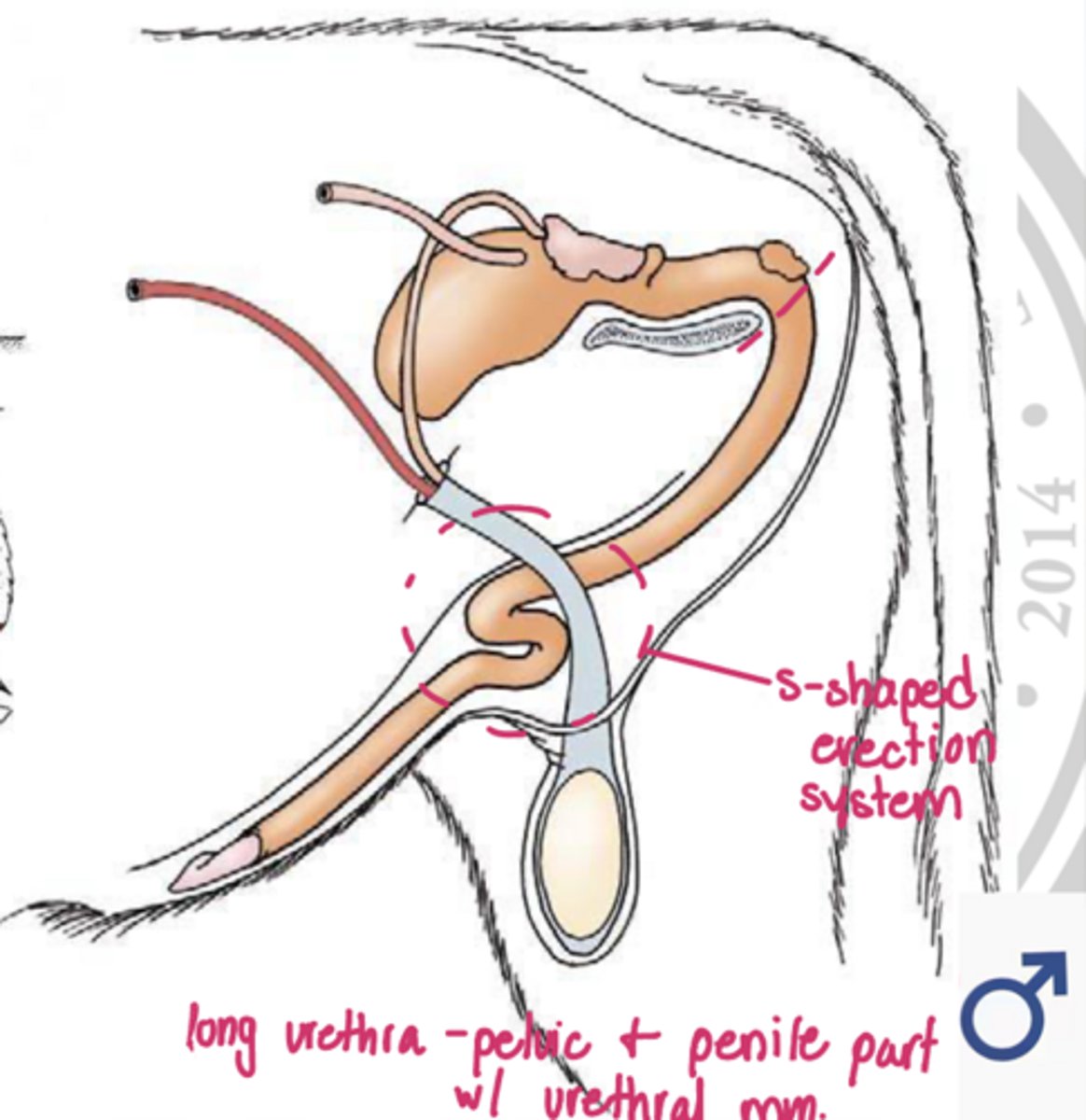
long urethra with an S shaped erection system in the penile part
describe the male urethra