History
 Studied by 7 people
 Call Kai
 Learn
Learn Practice Test
 Spaced Repetition
 Match
Match Flashcards
 Knowt Play
1/84

There's no tags or description
Looks like no tags are added yet.
Name | Mastery | Learn | Test | Matching | Spaced | Call with Kai |
|---|
No analytics yet
Send a link to your students to track their progress
85 Terms
Urbanization: Growth of cities led to
Led to more female and child workers
Often led to unsafe working and living conditions in cities
Americanization:
Process of preparing foreign born citizens to become U.S. citizens
Who went through the process of Americanization
German immigrants went thru this process
Assimilation of Native Americans:
Initial discussions held around 1900 to improve the situation of Native Americans.
Progressivism
Spirit, desire, action, to reform or change mostly done by those who have been to higher education.
Labor
Goals were to achieve less work hours, better pay, better work conditions. **Government rarely supported workers in most labor situations.
Housing
Need building codes to have/make sure tenements/housing was safe and healthy
Prohibition
Banning of consumption, production, sale of alcohol (18th amendment, which banned alcohol,targeted at some immigrants groups)
Muckraking
Media reporting that ‘raked up’ and exposed the filth of society, mainly through newspapers.
AFL: American Federation of Labor
Represented skilled workers
Booker T Washington
African Americans should focus on improving their own lives, avoid too much conflict and that will improve the position of minorities in America. Do not “Rock the boat.”
WEB Dubois
Fight for African American/minority rights, do what it takes to achieve equality. Educate the best and let them lead us to the promised land
Guinn Vs. United States
Guinn v. United States struck down the "grandfather clause" in Oklahoma's Voter Registration Act of 1910 because the clause discriminated against blacks and, therefore, violated the Fifteenth Amendment.
Buchanan Vs. Warley
The Buchanan decision marked a victory in the battle against racial segregation; however it focused only on upholding property rights, not affirming equal protection under the law.
What problems would industrialization cause on urbanization:
Overpopulation with health and safety issues in the cities
What problems would rapid urbanization cause to city infrastructure - design of tenement buildings for immigrants and poor and how many lived in them:
Poorly done, overcrowded, unhealthy, and unsafe
What were multiple issues that progressives and muckrakers would bring up in what should be talked about/fixed with child/women workers, wages, hours:
Do not let kids work, increase wages for women (and all others), reduce hours worked
Which groups were not in favor of (and felt targeted by) the 18th (Prohibition) Amendment -and why:
Immigrants (example: Germans) did not like this as this was a part of their culture, gatherings, celebrations, etc.
Which side of industry did government usually side with, even during Progressivism:
Owners - almost always
What European regions did most immigrants come from and what occupations were they capable of taking on:
Southern and Eastern Europe: Farmers and Laborers
How did industrial production changed the way America functioned socially, at home, and how it affected cities(tenements, muckrakers, unions, Americanization)
Muckrakers like Jacob Riis worked to expose the living conditions of people in tenements and slums. This was possible because many immigrants that came to the US had to work in factories for little pay and live in crowded areas of poverty due to the scarce income, and worked to increase the industrial production causing the living conditions to be so poor that Riis was able to expose them.
Explain the specific success Progressivism (must use supreme court cases given in notes) had on the freedom and equality of minority groups.
The case Guinn vs.The United States gave people of color the right to vote, taking a step closer to equality and allowing them the freedom to have a say in their representation for their state.This was a huge success because in the past even though they had been allowed to vote their had been many workarounds to try to prevent them and in this case the supreme court settled the matter.
Describe the most important reform movement of the Progressive Era by showing the impact it had on individuals, communities, and institutions.
During the Progressive Era, prohibition/moral reform impacted individuals like people who manufactured, sold, and transported alcohol and some communities like the German and Irish immigrants' lives mostly revolved around alcohol and was a way of celebration.
Explain how much the government got involved in fixing the problems created by the growth of industry, monopolies, rapid growth of cities, and corrupt politics.
The government sided with the business owner at the city level for the issue of unsafe working conditions. When it came to fixing the problems, of unsafe work with long hours from the rapid industrialization was hard to fix due to the immense political corruption and the growing necessity for mass produced products against the protests of the populist party.
Gilded Age/Gilded Age Presidents
Described with words such as Corruption and Greed; ‘Hands Off’
Progressive Presidents
Described with words such as Reform and Problem-Solving ‘Hands On’
Suffrage
The right to vote
Initiative, Recall, Referendum
Examples of election reforms used to reduce or eliminate political corruption - often through the use of petitions the citizens signed to bring these ideas into action.
Trust busting
The action of reducing, or eliminating, the ability of one person/group taking over an entire industry (controlling it completely and eliminating its competitors - AKA: Monopolies).
Roosevelt
(conserved resources)Created the United States Forest Service (National Parks, animal reserves, etc), he focused on misconduct not accumulation of wealth, progressive president
Taft
(conserved resources)Removed millions of acres of land from being sold to public (to protect/conserve it), he accumulated 90 antitrust suits, Progressive president
Wilson
(Did not conserve resources), Clayton Antitrust Act (1914): New law to stop monopolies, Progressive president
Provide an example of an industry or monopoly that Roosevelt targeted with his ‘trust busting’
James J Hill, E.H Harriman and J.P Morgan combined their railroads stockings in a “holding company” a type of trust.
Use one of the election reform terms (referendum or initiative) in a sentence that explains how it would attempt to eliminate/or limit the power of political machines.
The presidents took initiative to limit the power of political machines and used trust-busting to eliminate monopolies. Using referendums to attempt to eliminate monopolies completely by taking a hands on presidency and being really hands on.
Use the word ‘petition’ in a sentence showing how it was used in a recall.
People used petitions to eliminate political corruption during a presidency and kick them out of their presidency if the candidate has not been fulfilling their promised duties in office
What region of the U.S. saw women’s suffrage (voting) first/earliest?
The West saw women's suffrage the earliest.
Provide one specific example that Taft or Roosevelt did to preserve the environment as president.
Roosevelt created the United States Forest Service (National Parks, animal reserves, etc) which manages 193 million acres of public lands in forests and grasslands, also working to preserve the wildlife population on the lands.
Provide one specific example that Taft did in his trust busting work as president.
Filled 90 antitrust lawsuits ,and in 1910 his justice department filed a suit against US steel which monopolized half of all steel production and nearly 80% of iron-ore reserves in the country to try to prevent them from monopolizing that industry.
The Socialist party collected 900,000 votes in the 1912 election. Explain how their opinions and ideas connect with Progressive reform.
President Roosevelt used the sherman antitrust act to regulate and break up a number of American Businesses such as Standard Oil. He also created the Square Deal which included the regulation of railroad rates and pure foods and drugs and saw it as a fair deal for both the average citizen and the businessman
Explain President Wilson’s opinion of lobbyists and big business/monopolies.
Instead of regulating monopoly, he proposed to establish and enforce strict rules of competition. Wilson believed that big businesses could be controlled not by direct government regulation, but by making rules that would make it impossible for them to abuse their power.
What is the general term used to name the organization politicians, businesses, and connected the citizens were a part of?
Political machines
Which region of the United State gave the right to vote females first?
West
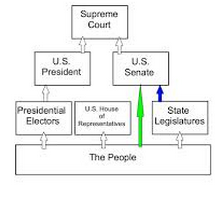
Which voting reform represented in the visual?
The 17th amendment and direct primary
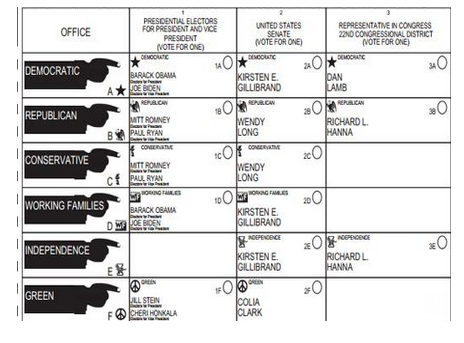
Which voting reform is represented by this image?
It is in black and white so people had to be able to read and is a secret ballet
With petitions being signed by individuals, what political reforms could be applied with enough signatures?
Initiative, referendum, recall
What was Theodore Roosevelt’s campaign promise to voters?
Square deal
Did Woodrow Wilson support monopolies?
No
Which of the following would be considered Progressive reforms?
US Forest Service Established, Meat Inspection Act, Pure Food and Drug Act, Dept. of Labor established
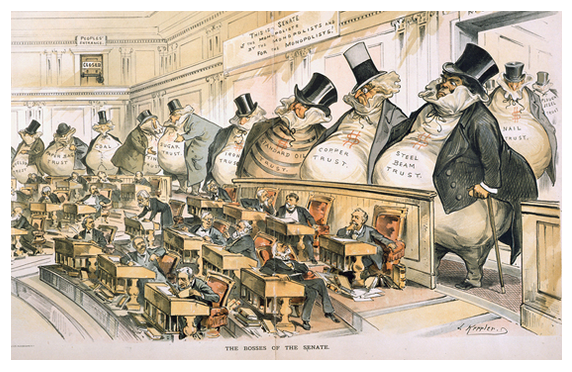
Specifically name something in this picture that Progressive would be opposed to
The big fat guys in the back and monopolies which are represented by trusts in the photo.
Who was an example of a Progressive
Roosevelt
Taft
Imperialism
The quest for colonial empires.
Monroe Doctrine (1823)
Europe/others stay out of the affairs of the western hemisphere
Roosevelt Corollary (1904)
US will intervene in European interactions (in our region).
Dollar Diplomacy (1909-1913)
Exchanging U.S. dollars/resources (business) for allowing the U.S. to intervene in Latin America when needed.
Yellow Journalism
journalism/media that sensationalized—and sometimes even made up—dramatic events
What two regions of the world were the United States very active, through imperialistic activities, around 1900?
Puerto Rico and the Philippines
How did Dollar Diplomacy ‘allow’ the U.S. to intervene in Latin America
Allowed US to intervene in Latin America and by using leverage to guarantee economic loans
List 4 specific locations of the world the U.S. was imperialistic in
Hawaii, Japan, Philippines, Cuba
What is one example of ‘yellow’ journalism (U.S. exaggerated reporting) to promote the idea of imperialism
Sinking of the USS Maine and blaming Spain
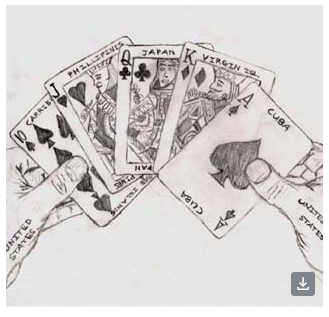
Which term describes this cartoon and our interaction in different regions of the world?
Imperialism
What technique was used in the media to get American opinion in favor of the Spanish-American War?
Yellow Journalism
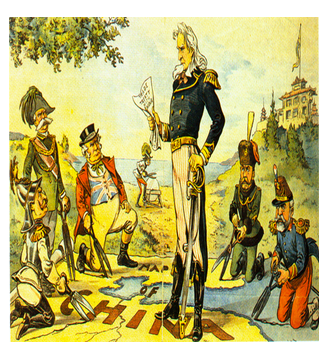
Many countries were involved in what concept shown in this image?
Open door policy
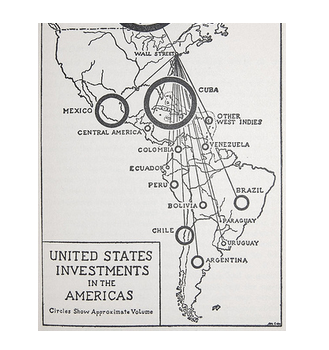
This map and data discuss what US policy in Latin America
Dollar diplomacy
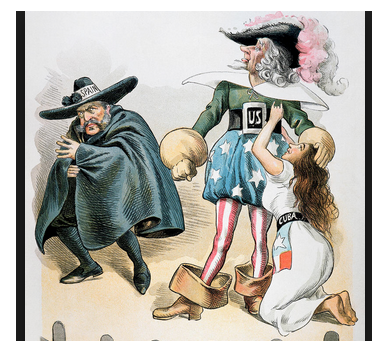
Which conflict is being referred to?
Spanish-American War
Nationalism
The concept of 1 group of people demanding/fighting for the ability to control and determine their own future.
Militarism
Building up military size and supply to be stronger than rivals
Alliances
Agreements often made between nations to protect and support one another economically, militarily, etc.
Self Determination
decision by the people of a territorial unit on their own future political status
Wilson’s Declaration of Neutrality
To distance the US from WWl
Lend-Lease
Huge economic boost due to war supply production for European countries.
Sinking of the Lusitania
Passenger ship sunk by the Germans (without warning) and killed 120 Americans.
Sinking of the Sussex
Sunk by Germans
Reason to join/ally with a side in the war
Desire for raw resources.
Self determination
A country determines its own statehood and forms its own allegiances and government
How is self determination, and being involved in the war, beneficial to the United States imperialistic aspirations?
We could take advantage of the groups and force European countries to stop controlling colonies because every group of people can control their own land allowing us to sweep in and take their resources and ¨help¨ them.
What were issues inside the U.S. that split opinions on which side of World War I to join if we did
High german population could potentially be a factor in them joining the other side
When World War I started, what role/position/side did the United States play initially
They were neutral and then they joined the allies
What is an example of the impact WWI had on the American economy
Lend Lease (benefited the economy)
How did President Wilson believe the U.S. could benefit by entering WWI
To gain alliances and imperialistic ambitions and raw resources
What events occurred and led to the U.S. entering the war
there was a telegraph (zimmerman) intercepted from Germany saying they were gonna start submarine warfare against the US and telling Mexico to attack the US
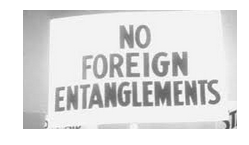
WHat policy did the American public promote with posters such as this?
isolationism/Wilson's declaration of neutrality
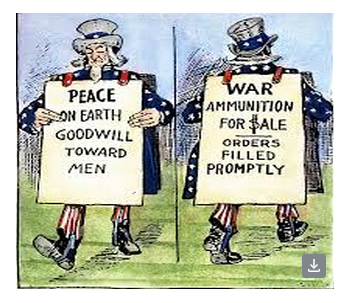
What two key points about Lend-Lease Policy are emphasized in this image?
Anti-war but willing to make money off of it
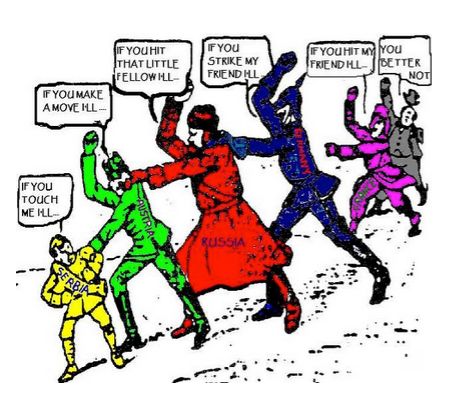
Describe how image 3 applies to WWl
alliances
What specific impact, significant to WWl, did this telegram have on America?
It forced the US to join the war

How does the compass and the term self determination apply to Wilson’s 14 points?
we didn't sign Wilson 14 points which allowed us to maintain self determination/ let everyone decide their own future
 Note
Note  Flashcards (64)