GEOL 1303.002 - Lectures Part 2: Weathering, Sediments & Soils
 Studied by 3 people
 Call Kai
 Learn
Learn Practice Test
 Spaced Repetition
 Match
Match Flashcards
 Knowt Play
1/164

Earn XP
Description and Tags
Exam November, 8th
Name | Mastery | Learn | Test | Matching | Spaced | Call with Kai |
|---|
No analytics yet
Send a link to your students to track their progress
165 Terms
What is Weathering
The physical breakdown and chemical alteration of Earth's materials as they are exposed to the atmosphere, hydrosphere, and biosphere.
Parent Material
The original rocks and minerals that are weathered
Erosion
The removal of weathered material away from the location of the original parent material
Differential Weathering
Rocks are not homogeneous, therefore they may weather at a varying rate
Mechanical Weathering
Physical forces break apart Earth materials to make smaller fragments
The product is different sizes and shape but same composition as the parent material
Mechanical Weathering: Chemical Weathering
• Decomposition and alteration of the composition of Earth materials Decomposition and alteration of the composition of Earth materials
• Product is a different composition than the parent material
Mechanical Weathering: Fluvial weathering
• Water volume
• Water velocity
• Water composition
• Terrain slope
Mechanical Weathering: Eolian weathering
• Wind Velocity
• Wind Density
• Moisture content of sediment
Mechanical Weathering: Coastal (tidal / wave) weathering
• Wave amplitude
• Wavelength
• Water composition/density
Mechanical Weathering: Crystal wedging
• Frost Wedging
• Salt Wedging
• Gypsum Wedging
Mechanical Weathering: Expansion / Contraction weathering
Pressure Release
• Sheet joints
• Exfoliation domes• Thermal
• Hydration
Mechanical Weathering: Biological weathering
• Animals (burrowing, digging, etc.)
• Plants (roots)
• Lichens
• Bacteria
Mechanical Weathering: Anthropogenic weathering:
• Construction
• Mining
• Recreation
Chemical Weathering: Mineral Stability
• Minerals are in equilibrium with the environment in which they are formed.
• Quartz is stable at Earth's surface conditions.
• Olivine is unstable at Earth's surface condition
Chemical Weathering: Solution weathering:
• The dissociation of elements in water to produce ions
• Carbonates (CaCO3, CaMg(CO3)2)
• Evaporites (CaSO4, NaCl)
Chemical Weathering: Oxidation:
• The addition of oxygen to a compound in an oxic environment
• Iron (Fe) plus oxygen (O2) react to form hematite (Fe2O3)
Chemical Weathering: Reduction
• The removal of oxygen from a compound in an anoxic environment
• Sulfate (CaSO4) is reduced to form sulfide (H2S)
• Hematite (Fe2O3) is reduced to form pyrite (FeS2)
What is Sediment?
• solid material that has settled down from a state of suspension in a liquid
• solid fragmental material transported and deposited by wind, water, or ice, chemically precipitated from solution or secreted by organisms, and that forms in layers in its unconsolidated form.
Sediment Size
Surface area determines the rate of weathering
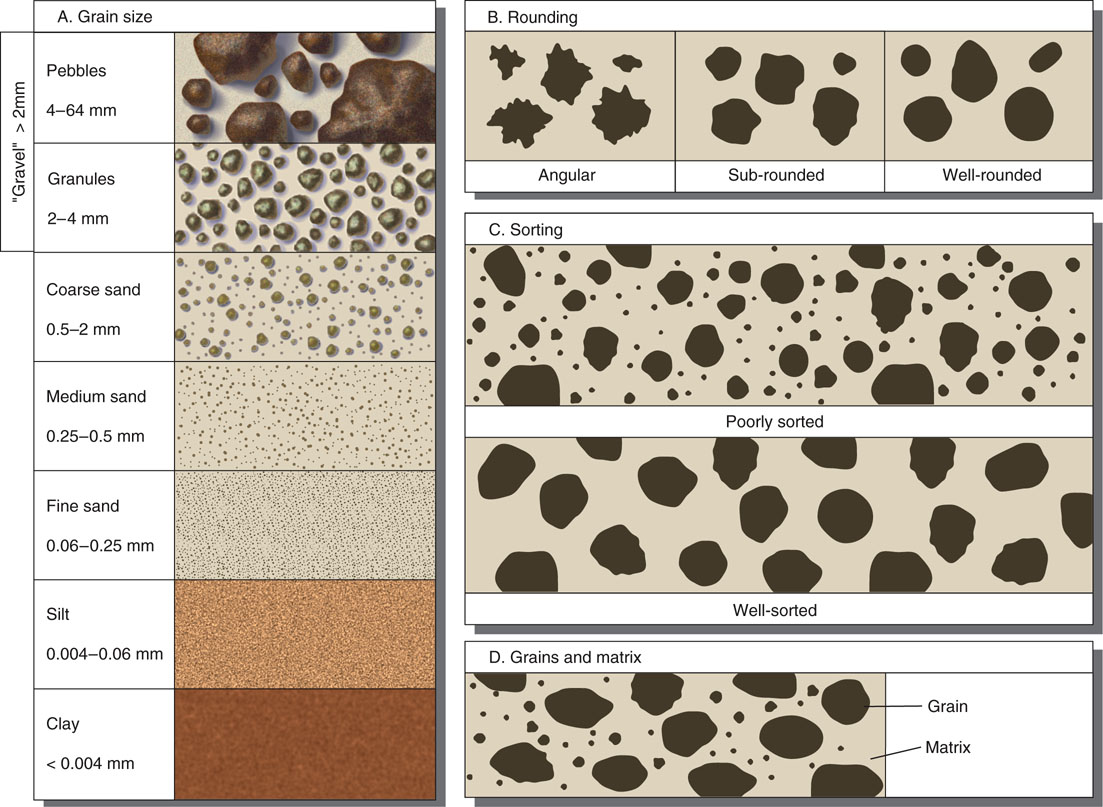
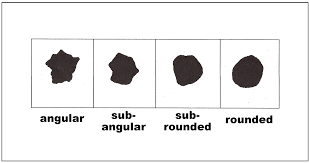
Sediment Shape
• Angular
• Subangular
• Subrounded
• Rounded
Sediment Transport
Mechanisms of transport are effectively the same as the mechanisms that induce mechanical weathering, including:
• Fluvial
• Eolian
• Wave
• Wind
• Gravity
• Biological
• Anthropogenic
What is Soil?
Unconsolidated association of regolith, humus, and water
Regolith
• Weathered bedrock
Humus:
• Carbon derived from the decay of organic material
Residual Soils
• Soil that forms in place by the decomposition of the underlying bedrock
Transported Soils:
Soils that form from sediments that have been transported away from the area of their source bedrock
Controls on Soil Formation
• The primary driver of soil formation is climate
• Factors that control soil development, include:
• 1) Host rock composition, 2) Moisture, 3) Temperature, 4) Fluid Content, 5) Biology, 6) Topography (Slope & Orientation)
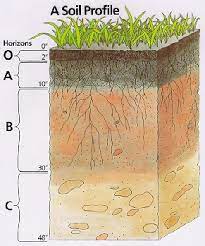
Soil Horizons
• Not all soil horizons are present in every soil profile
• The degree of development is dependent upon physical and environmental parameters
• Climate is the major driver behind development of individual soil horizons
Pedalfer Soil
• Develops in moist climates
• Moderate O horizon
• Moderate A horizon, well-leached
• Dispersed B horizon, because most leached material is transported out of the system
• Extensive C horizon
Laterite Soil
• Develops in tropical climates
• Well-developed O horizon
• Extensive A horizon that is completely well-leached
• Extensive B horizon, but most material is leached out of system completely
• Extensive C horizon, with accumulations of Fe and Al
Physical Deterioration Erosion:
The loss of soil from vegetation change can cause significant degradation, by both wind and water
Physical Deterioration Sheet Erosion
Thin, uniform layers are removed from the entire surface
Physical Deterioration Rill Erosion
Soil is removed along preferential, channelized flow paths
Rills
small-scale erosion
Gullies
large-scale erosion
Physical Deterioration Compaction
cattle and machinery
Chemical Deterioration Degradation
of soils by the alteration of the composition such that they can no longer sustain desired vegetation
• Overuse depletes soils of nutrients
• Salinization from saline waters used in irrigation
• Chemical pollution – accumulation of industrial and agricultural products
Prevention:
• Crop rotation
• Contour plowing
• Terrace construction
• No-till farming
• Environmental regulations
• Location, Location, Location
What is Soil?
Unconsolidated association of regolith, humus, and water
Controls on Soil Formation
• The primary driver of soil formation is climate
• Factors that control soil development, include:
• 1) Host rock composition, 2) Moisture, 3) Temperature, 4) Fluid Content, 5) Biology, 6) Topography (Slope & Orientation)
Soil Horizons
• Not all soil horizons are present in every soil profile
• The degree of development is dependent upon physical and environmental parameters
• Climate is the major driver behind the development of individual soil horizons
Pedalfer Soil: Soil types 1
• Develops in moist climates
• Moderate O horizon
• Moderate A horizon, well-leached
• Dispersed B horizon, because most leached material is transported out of the system
• Extensive C horizon
Pedocal Soil: Soil types 2
Develops in arid climates
• Thin O horizon
• Thin A horizon, poorly leached
• Moderate B horizon, with dense colic (caliche) and gypsic deposits.
• Moderate C horizon
Laterite Soil: Soil types 3
• Develops in tropical climates
• Well-developed O horizon
• Extensive A horizon that is completely well-leached
• Extensive B horizon, but most material is leached out of the system completely
• Extensive C horizon, with accumulations of Fe and Al
Soil Degradation I Physical Deterioration:
• Erosion:
• The loss of soil from vegetation change can cause significant degradation, by both wind and water
• Sheet Erosion:
• Thin, uniform layers are removed from the entire surface
• Rill Erosion:
• Soil is removed along preferential, channelized flow paths
• Rills – small-scale erosion
• Gullies – large-scale erosion
• Compaction: cattle and machinery
Soil Degradation II: Chemical Deterioration:
Degradation of soils by the alteration of the composition such that they can no longer sustain desired vegetation
• Overuse depletes soils of nutrients
• Salinization from saline waters used in irrigation
• Chemical pollution – accumulation of industrial and agricultural products
Soil Degradation III: Prevention
• Crop rotation
• Contour plowing
• Terrace construction
• No-till farming
• Environmental regulations
• Location, Location, Location
What is a Sedimentary Rock?
1. solid material that has settled down from a state of suspension in a liquid;
2. solid fragmental material transported and deposited by wind, water, or ice, chemically precipitated from solution or secreted by organisms, and that forms in layers in its unconsolidated form
Sediment Size
• Clay: <0.002 mm
• Silt: 0.002 mm to 0.0625 mm
• Sand: 0.0625 mm to 2 mm
• Pebble: 2 mm to 64 mm
• Cobble: 64 mm to 256 mm
• Boulder: >256 mm
Conglomerate
composed of rounded clast
Breccia
composed of angular clasts
Lithification
• Sedimentary Rocks are created through lithification/consolidation.
• Process through which unconsolidated sediments are converted into a consolidated mass, through various processes, generally associated with burial diagenesis.
• Compaction
• Dewatering
• Cementation
Clastic Sedimentary Rocks
sedimentary rocks composed primarily of fragments derived from the weathering of preexisting rocks and transported to their place of deposition
Sandstone
• Quartz Sandstone – >50% Quartz
• Arkose Sandstone – >50% Feldspar
• Lithic Sandstone – >50% Lithics
Mudrock:
• Mudstone – Clay content ≈ Silt content
• Claystone – Clay content > Silt content
• Siltstone – Silt content > Clay content
• Sandstone – >90% Sand
• Shale = mudstone & claystone
Gravel
clast size > pebble
Conglomerate Gravel
composed of rounded clasts that are pebble size or larger
Breccia Gravel
composed of angular clasts that are pebble size or larger
Clastic Rocks Aqueous Sedimentation
clastic sediments deposited in a liquid environment as a result of fluid flow; subaqueous deposition (rivers, streams, and oceans)
Clastic Rocks Eolian Sedimentation
clastic sediments deposited and modified by wind processes; subaerial deposition
Clastic Rock Glacial Sedimentation
clastic sediments resulting from glacial modifications to the Earth surface
Clastic Rock Gravitational Sedimentation
clastic sediments, subaerial or subaqueous, deposited primarily as a result of collapse or slope failure
Coal
A readily combustible rock that contains >50% by weight and >70% by volume of carbonaceous material, formed from the compaction of altered plant materials such as peat.
Peat
compressed organic material containing ~50% carbon
Lignite
low-grade coal containing~70% carbon – dull black or brown coloration.
Bituminous
mid-grade coal containing ~80% carbon – dark coloration.
Anthracite
metamorphosed coal containing >90% carbon – dark black coloration.
Biochemical Sedimentary Rocks:
sedimentary rocks formed by direct secretion from organisms or as a result of changes in the environment resulting from environmental modification by organisms
Aragonite
CaCO3 : limestone
Calcite
CaCO3 : limestone
Dolomite
Ca0.5Mg0.5CO3 : dolomite
Biochemical Sedimentary Rocks: General Terms:
• Skeletal grain – shells of calcareous organisms
• Carbonate Mud – clay-size particles
• Coquina – shell hash
• Ooid – concentrically banded, spherical grains
• Peloid (pellet) – spherical grains (usually feces)
Carbonate Reefs:
a ridge-like or domal structure built by the accumulation of calcareous organisms, which generally exhibits High biodiversity
Carbonate Mound
a domed structure built by the accumulation of calcareous organisms, which generally exhibits low biodiversity.
Carbonate Shoals:
calcareous deposition in relatively shallow water forming a ridge, bank or bar of unconsolidated material
Chert
Chert / Microcrystalline Quartz – SiO2 :
• Accumulation of siliceous shells, usually in deep water
• Carbonates dissolve at ~1.8 km depth
(carbonate compensation depth)
Chert Types
• Flint: dark coloration due to organics
• Jasper: red coloration due to iron oxides
Dunham Carbonate Rock Classification
Mudstone, Wackestone, Packstone, Grainstone and Boundstone
Chemical Sedimentary Rocks
sedimentary rocks formed by direct chemical precipitation from solution.
Chemical sed. Rocks
• Calcite – CaCO3 : limestone
• Dolomite – Ca0.5Mg0.5CO3 : dolomite
• Potash – K2CO3
• Halite – NaCl : rock salt
• Sylvite – KCl : bitter salt
• Gypsum (Anydrite) – CaSO4·2H2O (CaSO4)
Sabkha
supratidal environment of deposition in arid or semiarid regions, characterized by high evaporation rates and evaporate deposit
Salina:
environment of deposition with restricted circulation and high evaporation rates; salt pond or playakake
Secondary Precipitates:
broad group of minerals that precipitate inorganically as a result of changes in the physical and chemical environment.
Strata / Beds
distinct layers of sediment / sedimentary rock representing:
• Consistent sedimentation
• Periods of environmental stability
• Individual storm events
Ripple Marks
small ridges separated by small trough
Current ripple marks:
asymmetrical features formed by flow in one direction
Wave ripple marks
symmetrical features formed by flow in two directions
Cross-Bedding
layers angled downward from the surface they were deposited in, which indicates the direction of flow (fluvial or eolian layers angled downward from the surface they were deposited in, which indicates
direction of flow (fluvial or eolian
Graded Bedding
upward decrease in grain size as a result of deposition
Mudcracks:
Desiccation features formed by the contraction of sediments during dewatering
Imprints
Indentations on surfaces created by objects walking, crawling, or being drug across the surface, including both animate and inanimate objects.
Sedimentary Facies I
Sedimentary Facies represent environments of deposition, which are characterized by distinct physical, chemical, and biological attributes
Marine Transgression
• Relative rise in sea level related to subsidence, rise in sea level or a combination
• Inland shift in facies environments
Marine Regression:
The relative drop in sea level related to uplift, drop in sea level, or a combination
• Seaward shift in facies environments
Fossil:
the remains or traces once living organisms preserved in rock
Modes of Preservation
• Unaltered Remains
• Freezing
• Desiccation
• Permineralization
• Replacement
• Carbonization
• Molds & Casts
• Trace fossils
Natural Resources I
Aggregate:
• All rocks can be used as sources of building materials
• Unconsolidated sediments are often used in concrete as aggregate filler Building Stone:
• Many sedimentary rocks naturally break along bedding planes making them ideal for construction
Ceramics:
• Pure clays are mined as source material for ceramics and bricks
Natural Resources II
Hydrocarbons:
• Petroleum (both liquid and gas) is associated with the maturation of organic molecules trapped in sedimentary rocks during deposition and diagenesis
• Source rocks contain the original organic carbon
• Reservoir rocks store the mature hydrocarbon products
• Oil Shale contains tightly sealed hydrocarbons
• Tar Sand contains highly viscous hydrocarbon
Natural Resources III
Coal:
• Coal has been mined for millennia as a source of energy
• Most electricity in the United States is generated from the combustion of coal (primarily lignite)
Coke:
• Fused ash from coal combustion that is used in steel refining
Natural Resources IV
evaporites:
• Halite: mined for salt, both table and deicing salt for roadways
• Sylvite & Potash: mined for phosphates that are used as fertilizers
Phosphates:
• Apatite: mined like some evaporites for phosphates that are used as fertilizers
 Note
Note  Flashcards (100)