Lecture 9: Colour
 Call Kai
 Learn
Learn Practice Test
 Spaced Repetition
 Match
Match Flashcards
 Knowt Play
1/36

There's no tags or description
Looks like no tags are added yet.
Name | Mastery | Learn | Test | Matching | Spaced | Call with Kai |
|---|
No analytics yet
Send a link to your students to track their progress
37 Terms
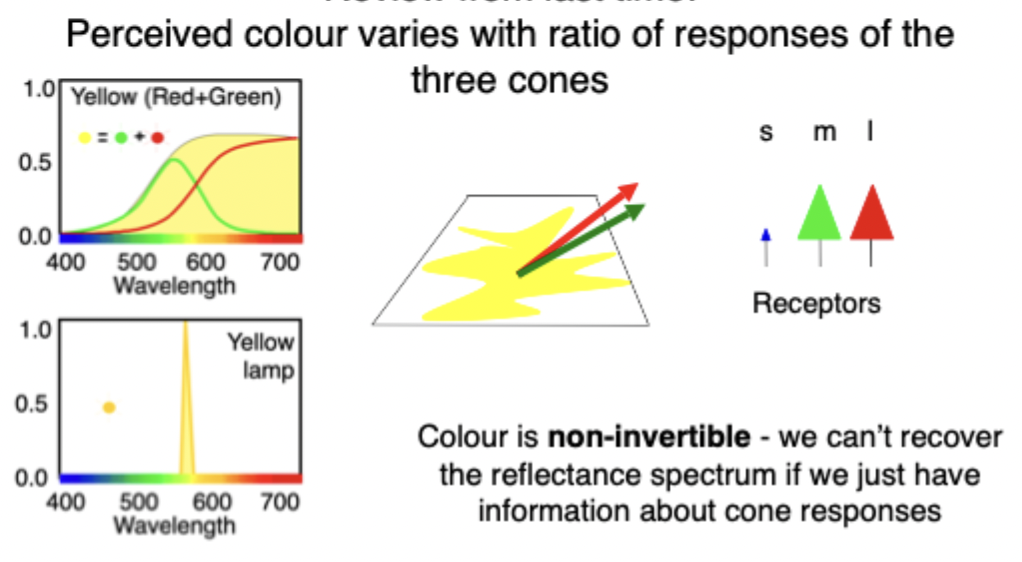
Colour is non-invertible
Have a spectrum that’s produced by the combination of a red & green light together
I have another light that’s purely emitting just a single wavelength, yellow.
Both of these have very different spectra but both driving responses of both my long wavelength cones & my medium wavelength cones. Not so much my short wavelength cones
Can’t tell based on cone responses alone which of spectra produces this pattern of responses
If we just have information about the cone responses, there is no way we can recover that complete spectrum
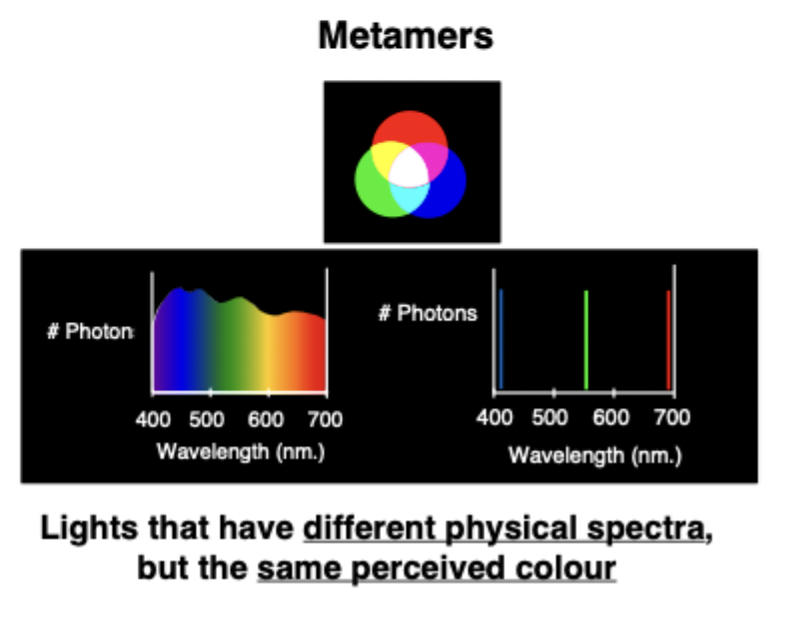
Metamers
Can stimulate S, M and L cones in different ways to produce the same colour
If I spout up a 4th type of cones, would I end up with more metamers or would I have fewer metamers?
Metamers are like confusions, metamers occur when I’m confusing one spectrum, I can mix up this spectrum with another
So if I have more different cone types will have fewer metamers
If have 4th cone type, I would have fewer metamers, have fewer confusions, able to make more of these distinctions between these different spectra
Any colour see produced by 3 numbers (how much ‘blueness’, ‘redness’ and ‘greenness’ and how much ‘redness’ that you have. That is sufficient to recreate any kind of colour that you see.
Many ways can get white light as well, by mixing blue, red and green light together can fuse together perception of white. Stimulating cones equally, get white light
Metamers are lights that have different physical spectra but the same perceived colour.
Colour addition
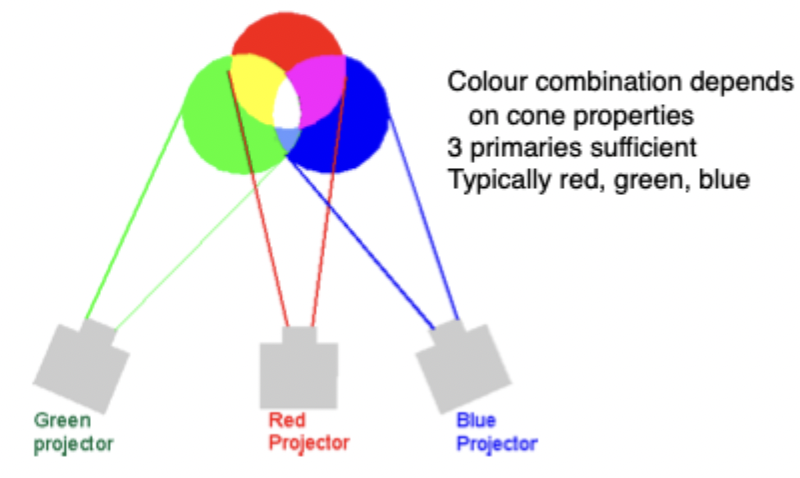
Colour combination depends on cone properties
3 primaries sufficient to recreate any colour in environment
Typically red, green, blue
By combining all 3 of these get white light.
If put red with green, yellow
red with blue get magenta
green with blue get cyan
Colour addition
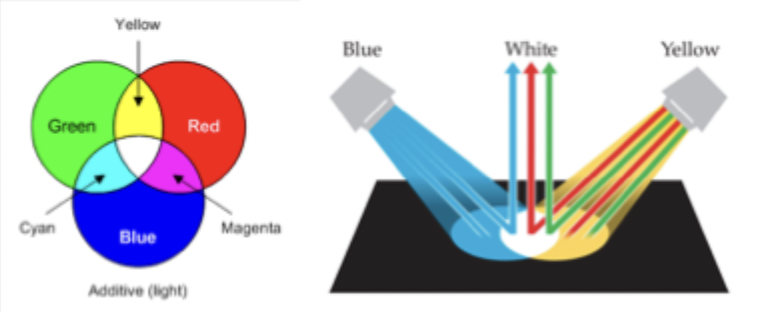
Combining light sources adds the wavelengths together
The perfect blend of yellow (which is composed of green and red) and blue results in white light
Adding light to light, summing photons together.
Young-Helmholtz Trichromatic Theory
Based on experiments where addition of 3 lights (R, G, B) can be added to produce any colour percept. No electrodes. No microscopes.
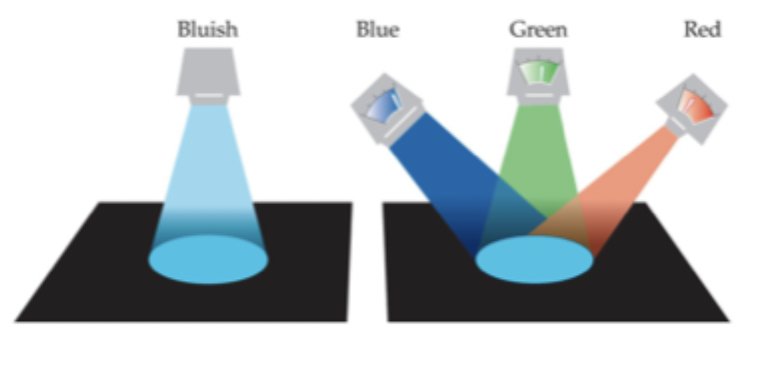
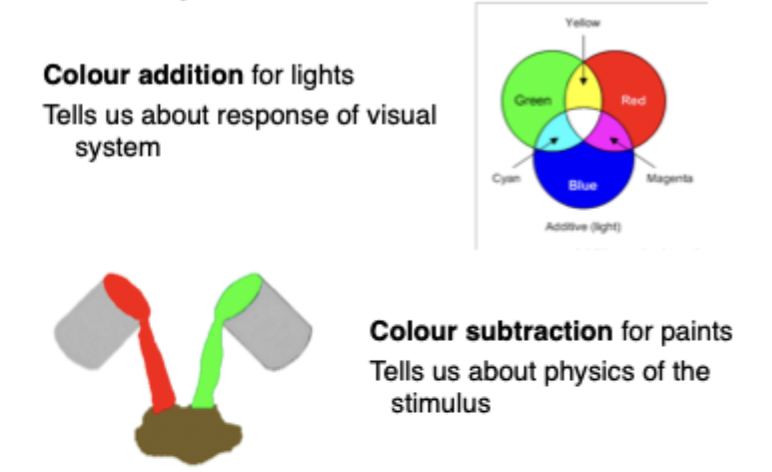
What is colour addition? What is colour subtraction?
Visual system sensitive to additive colours
Colour addition for lights: tells us about responses of visual system
Colour subtraction for paints. Tells us about physics of the stimulus.
Mixing pigments together, if have bucket of red, that red paint is going to reflect long wavelengths, its going to absorb medium & short wavelengths. Green paint reflect medium, absorb the other to. By mixing the pigments together, mixing the absorption properties of the paint, more light absorbed than reflected. The paint that I get out is going to reflect the absorption properties of the red, the absorption properties of the green, so overall result is going to be darker
With red & green paint get brown. With red & green light get yellow. Light brighter because adding photons to photons.
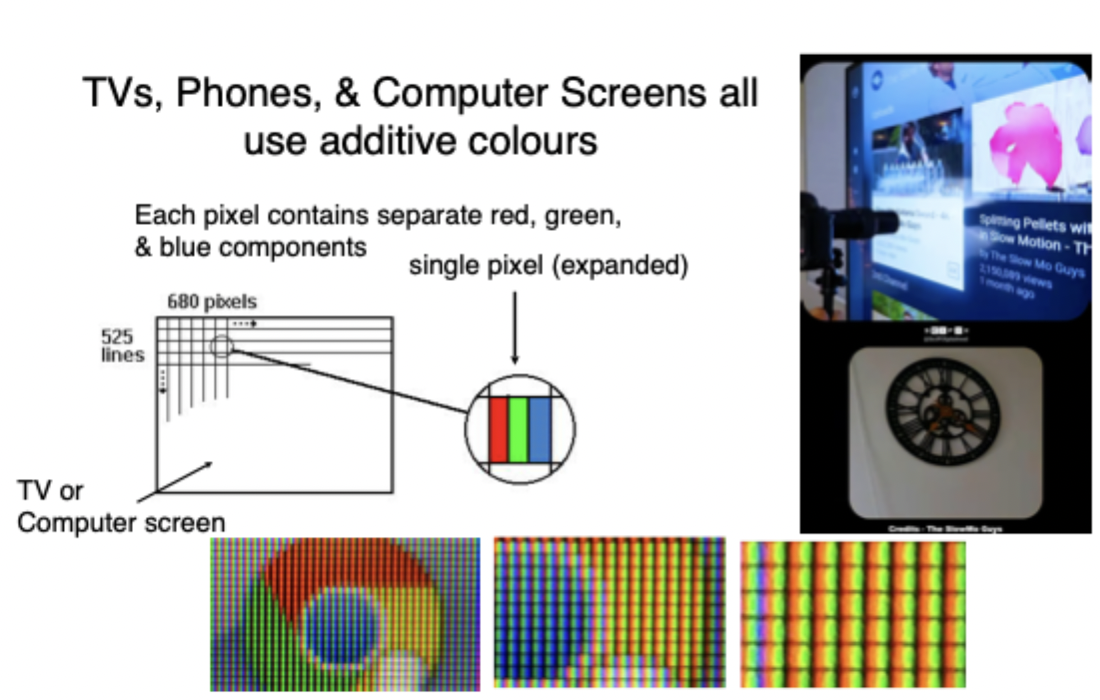
TV, Phones & Computer Screens all use additive colours
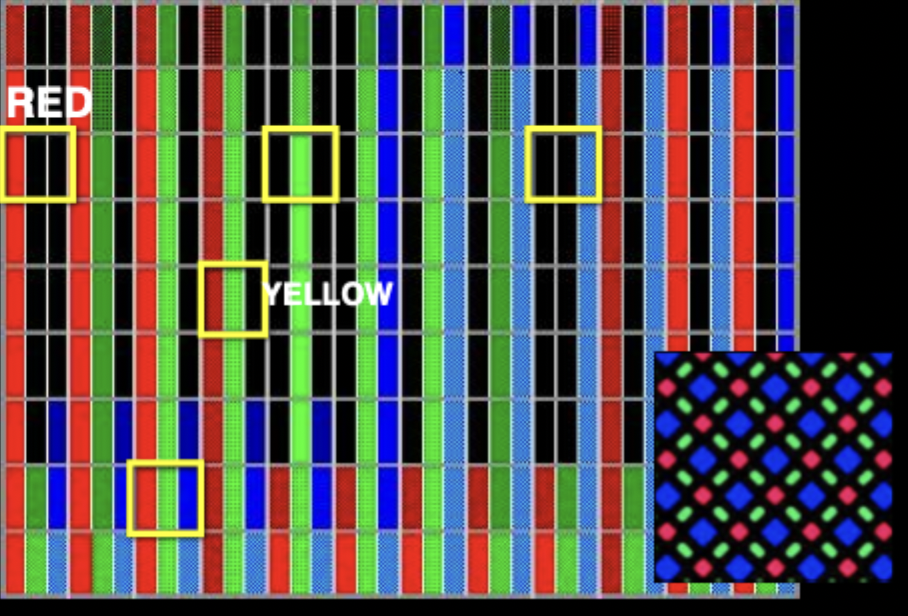
Each pixel contains separate red, green & blue components (when looking at ‘white’ screen’
Yellow red & green pixels
Used in paintings
Some art can use additive colour
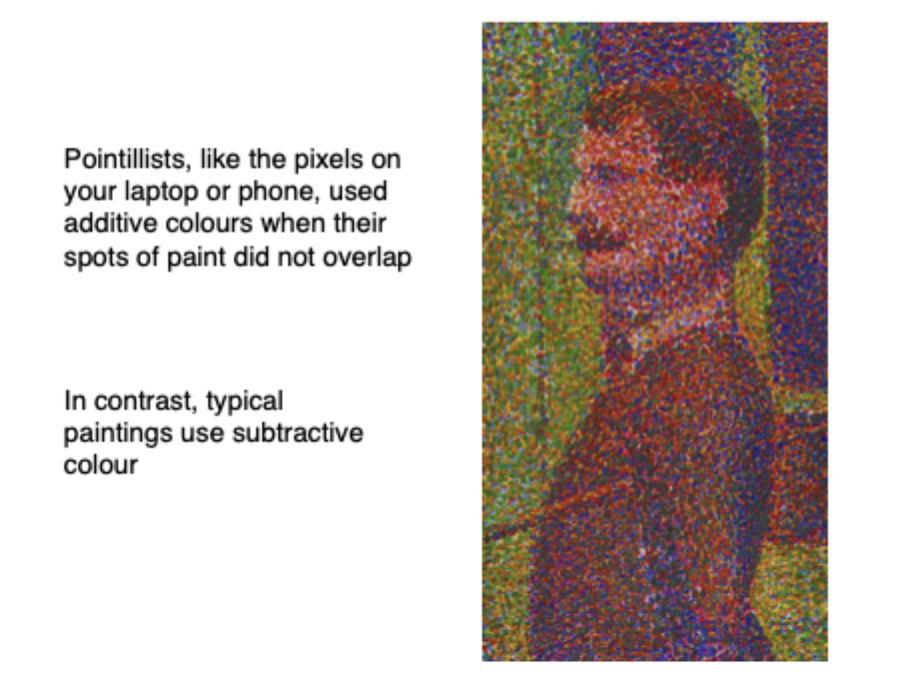
Interim Summary
Colour is a psychophysical property
Trichromatic theory: perceived colour varies with ratio of responses of the three cones
This also means that we can’t recover the wavelength distribution if we just know the responses of the 3 cone types
Colours that look the same but have different spectra are called metamers
Our visual system (& our electronic devices) use additive colour mixture
How is colour coded?
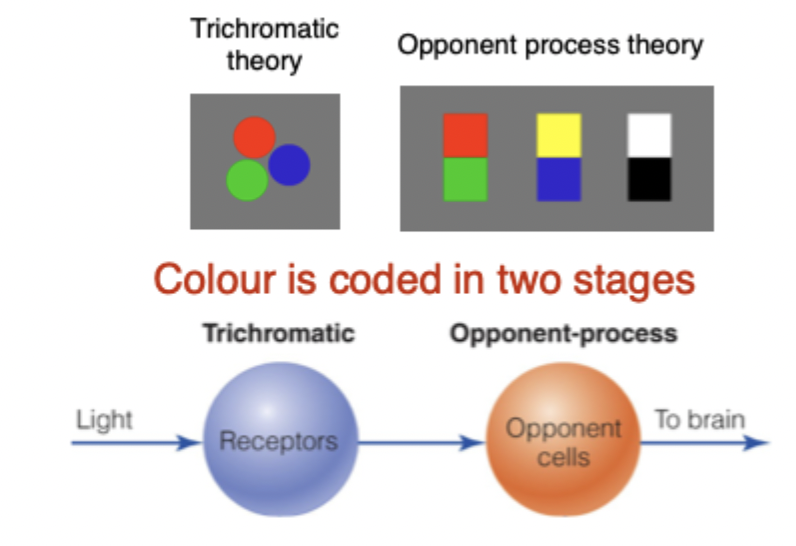
Trichromatic theory
Opponent process theory
Implemented at different stages, both correct, work together.
What is Opponent Colour Processing?
Hering’s theory of opponent colour processing
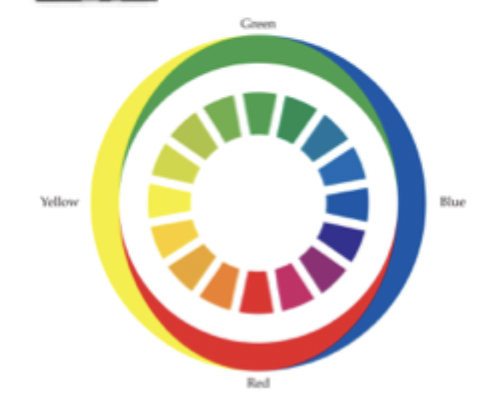
R, G, B are not independant but organized in pairs of opponent colours
Red, Green
Blue, yellow
Evidence for opponent colour processing
Certain colours are impossible (reddish-green)
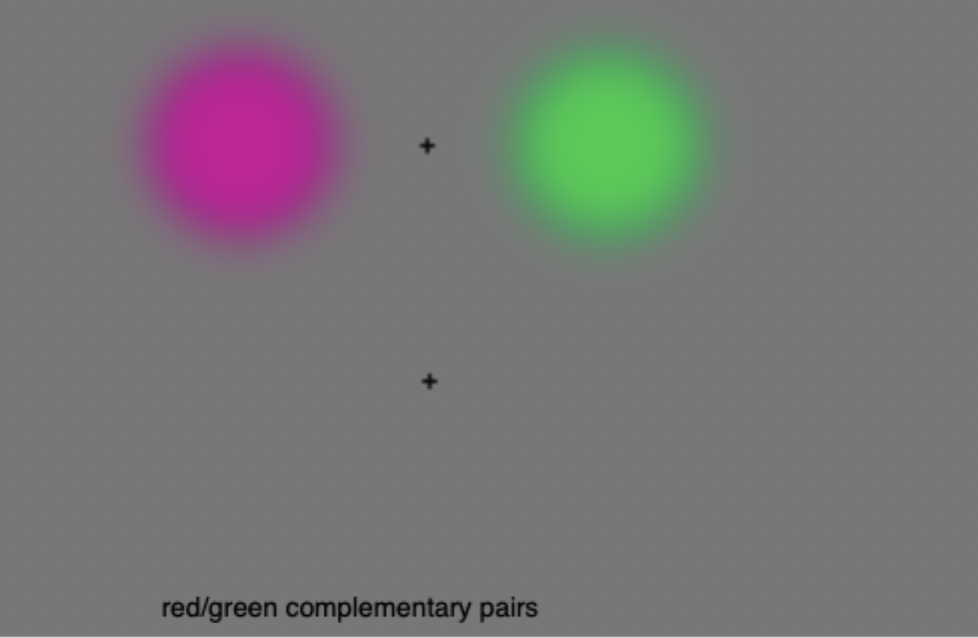
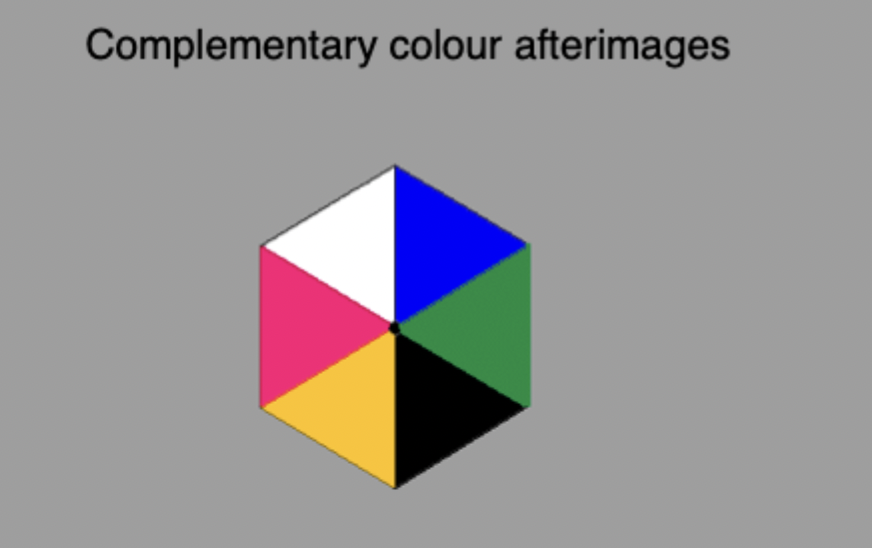
Negative colour afterimages
Red/Green Complementary Pairs
See opposite, colours flip
Trichromatic theory alone cannot account for that afterimage.
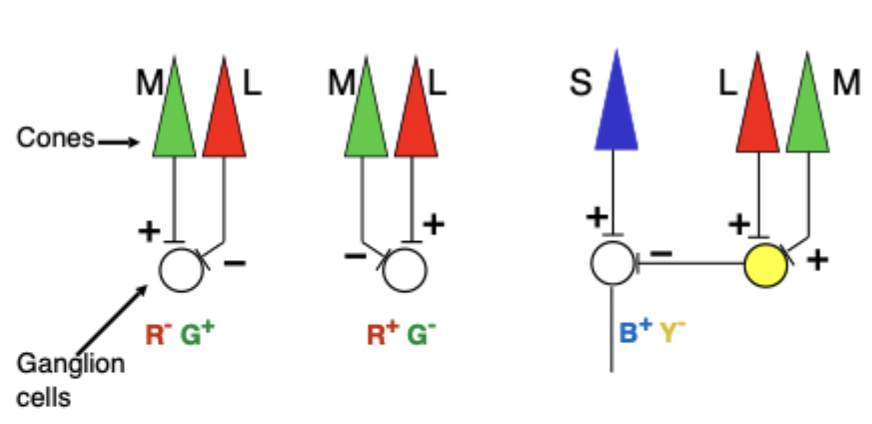
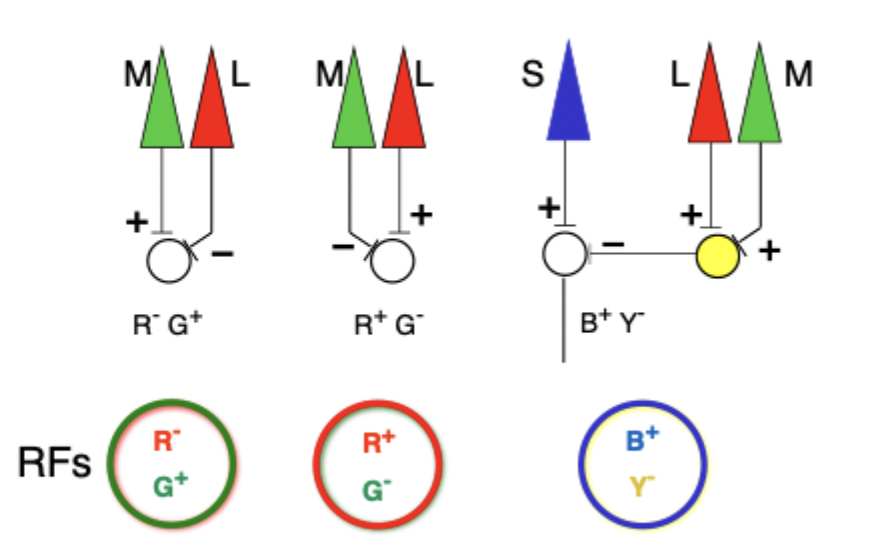
Response of Ganglion cells that code opposing colours
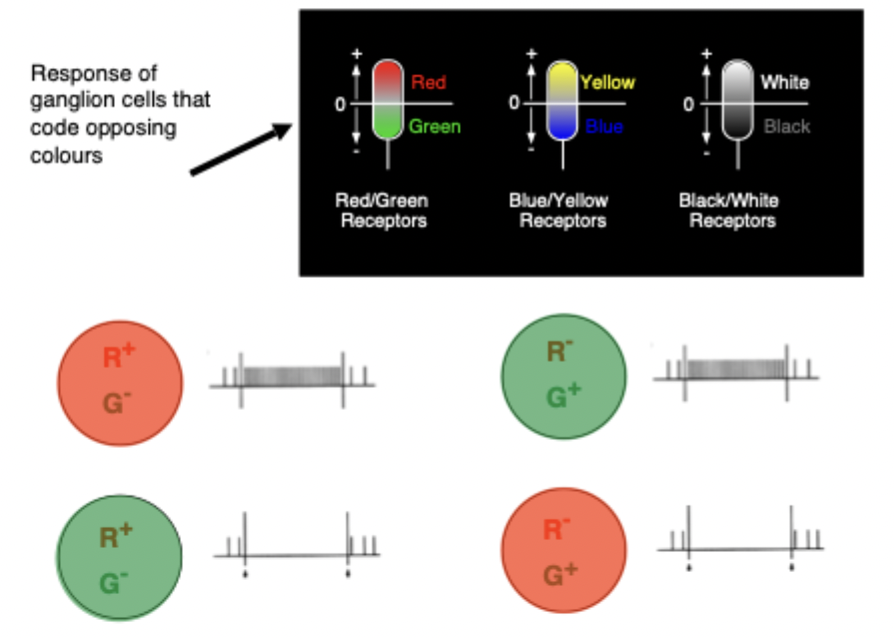
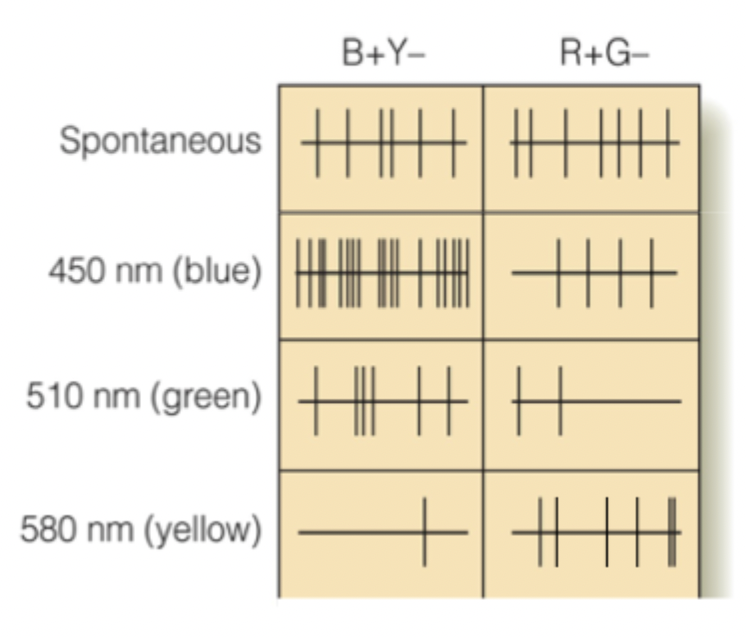
How does opponent colour processing explain colour afterimages?
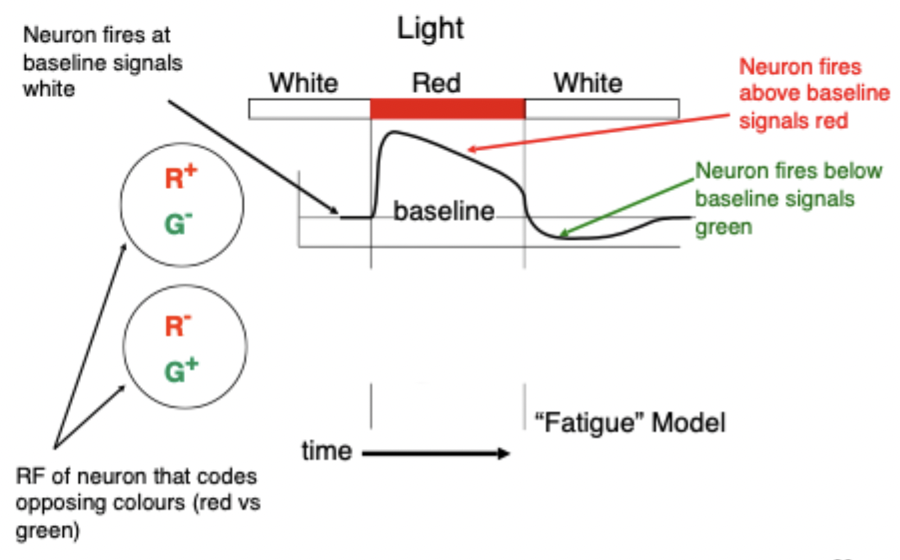
How does opponent colour processing explain colour afterimages?
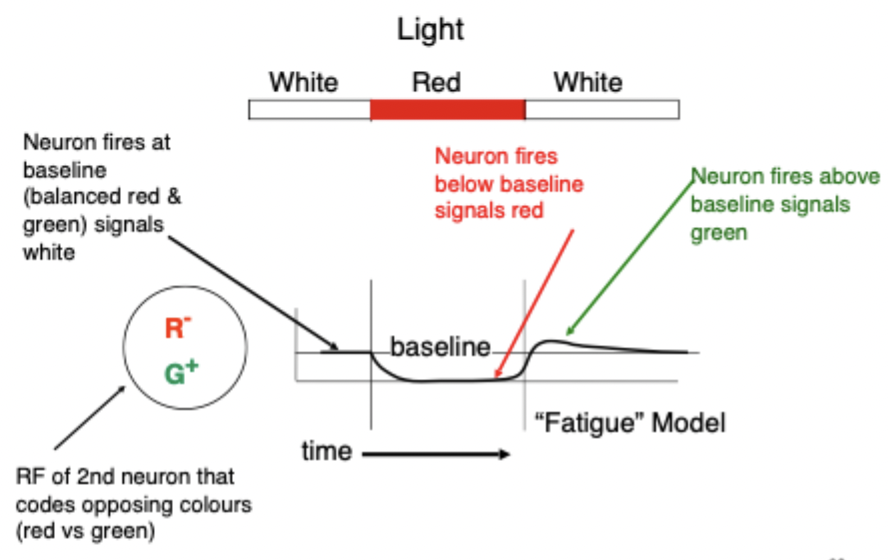
Lilac Chaser Illusion
Single green dot
Negative afterimage
Apparent motion
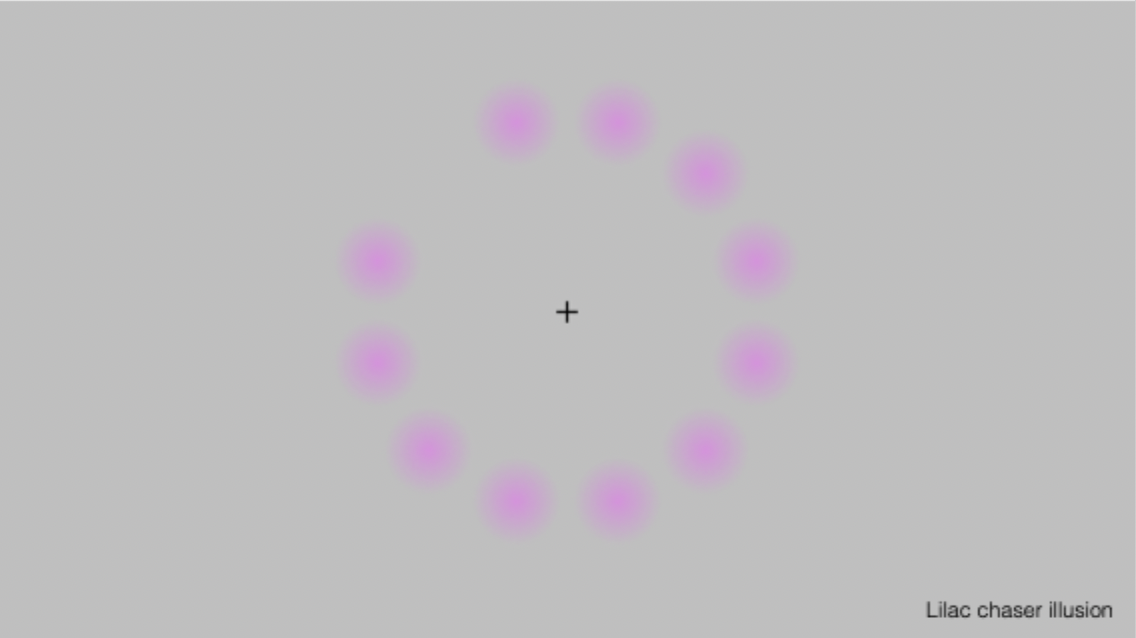
Two different codes at different levels
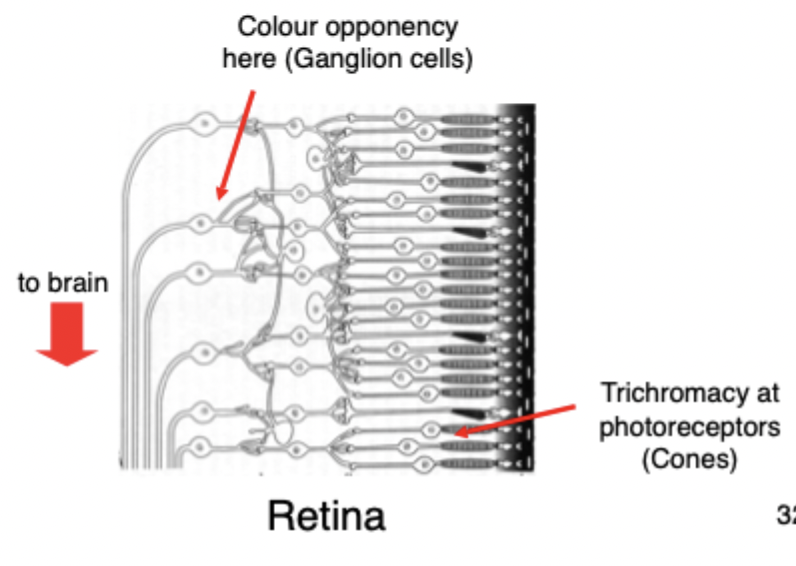
How is colour codes?
Colour is coded in two stages
Colour Opponent Combinations at Retina
Colour Opponent Combinations at Retina
Complementary Colour Afterimages
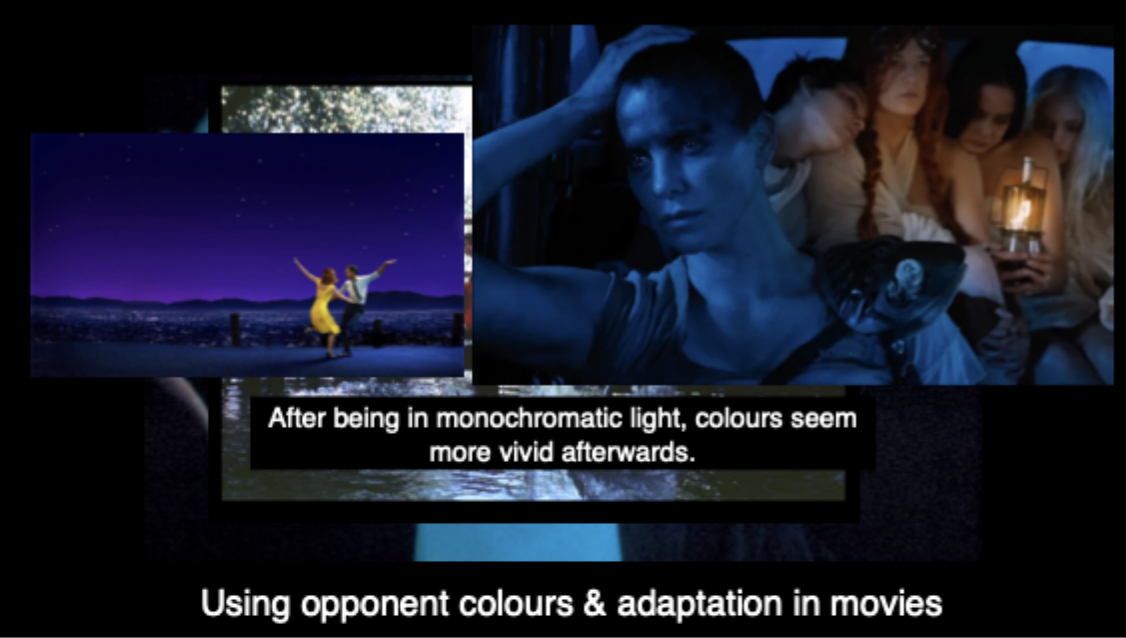
Using Opponent Colours & Adaptation in Movies
How is colour coded?
Trichromatic (cones)
Opponent Process (ganglion cells)
Interim Summary
Trichromatic theory: colour is coded by 3 types of receptors
Opponent Process theory: colours are coded as opposite pairs
Our visual systems implement both
Trichromatic stage at the photoreceptors
Opponent processing by the ganglion cells
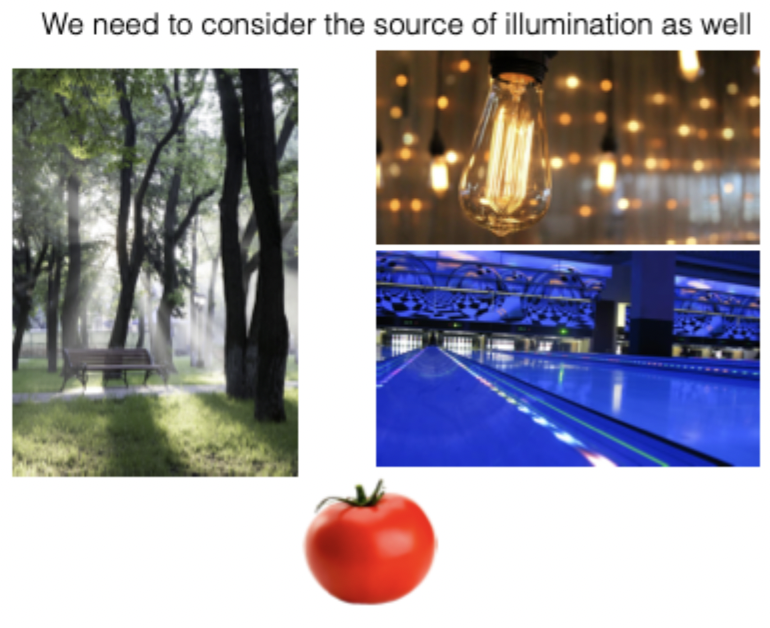
Objects Reflect Light at different wavelenghts
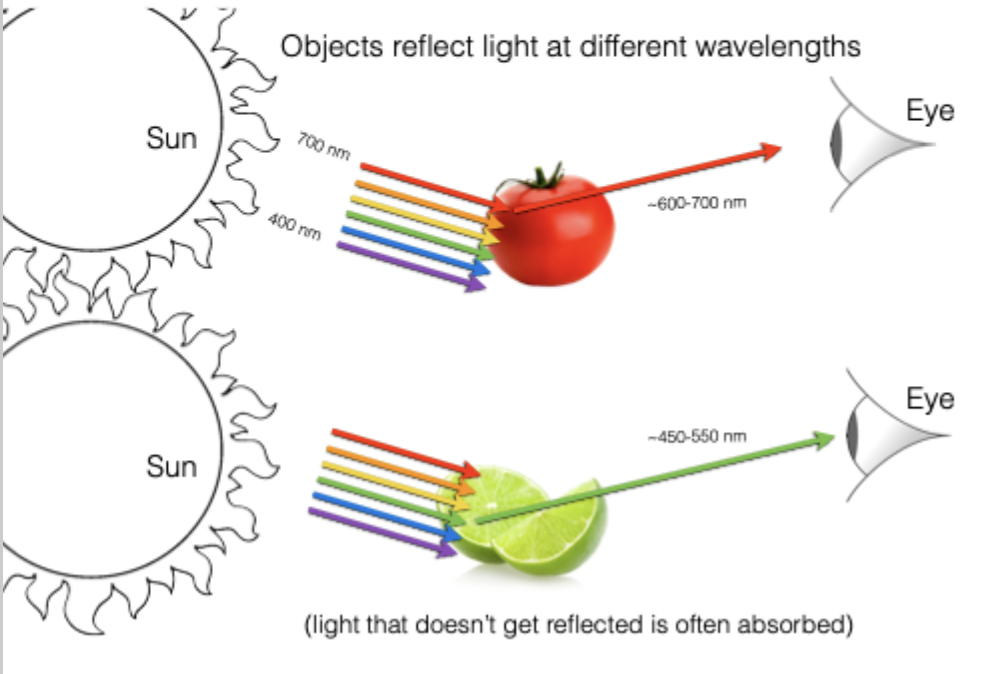
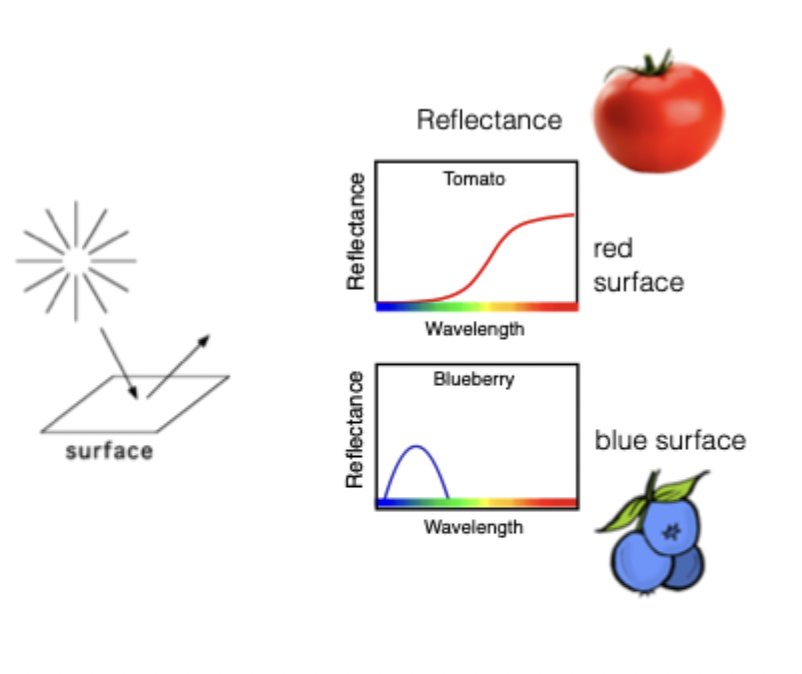
We need to consider the source of illumination as well
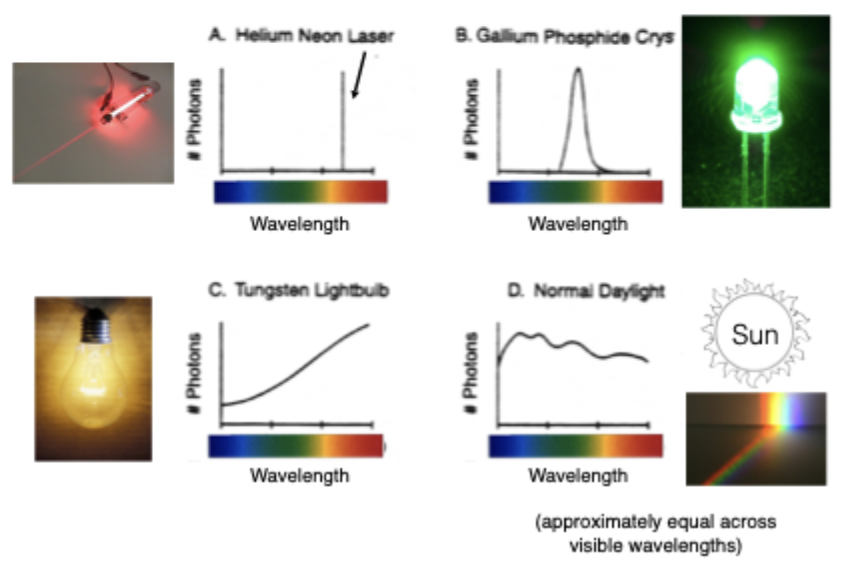
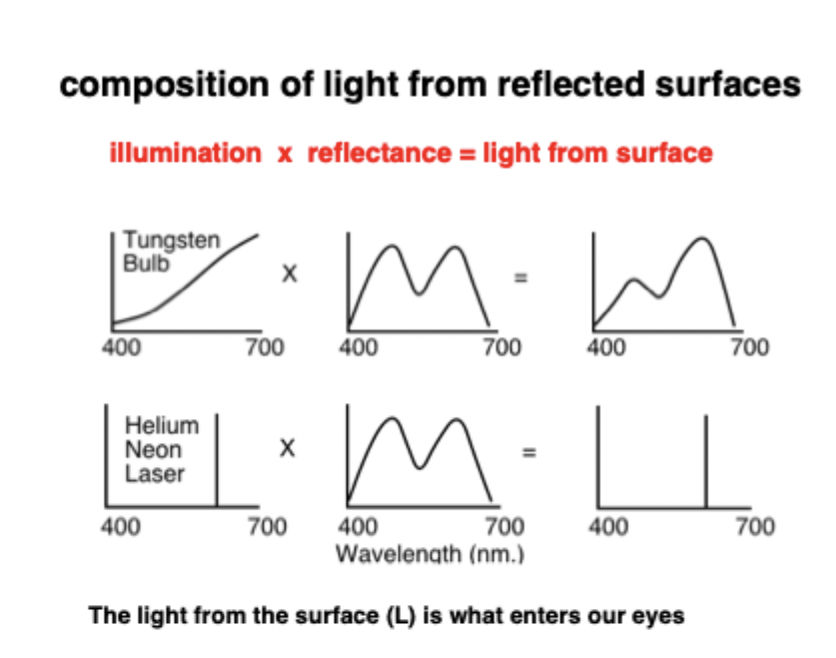
Different Sources of Illumination emit different wavelengths
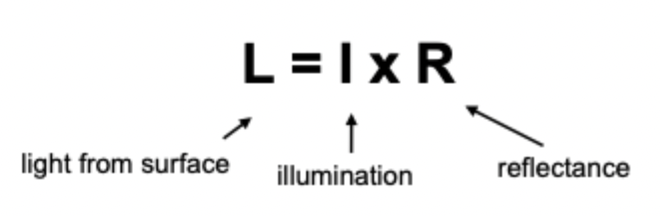
Source of Illumination & Reflectance of Surface Determine the Light that Hits Your Eye
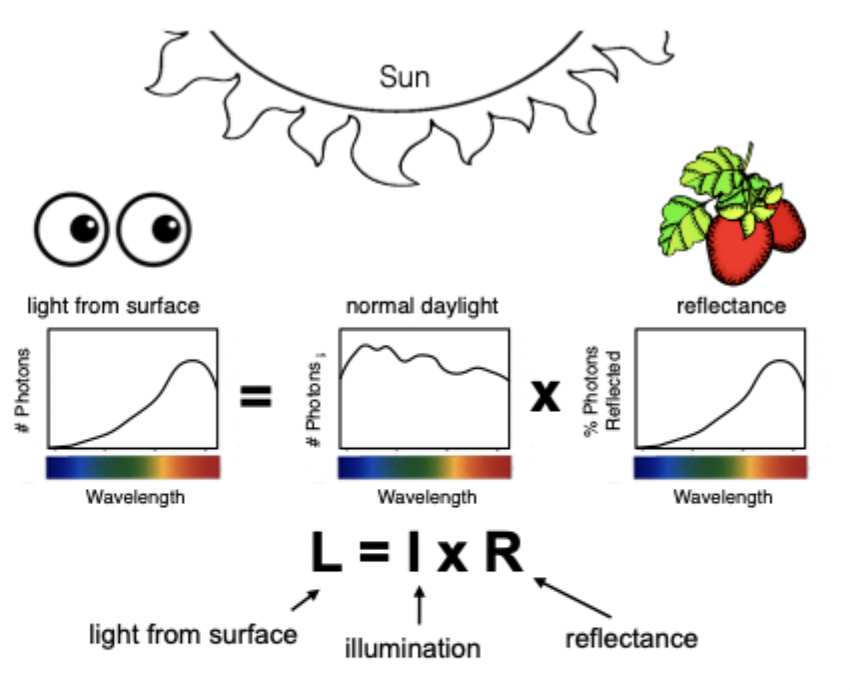
Composition of Light From Reflected Surfaces
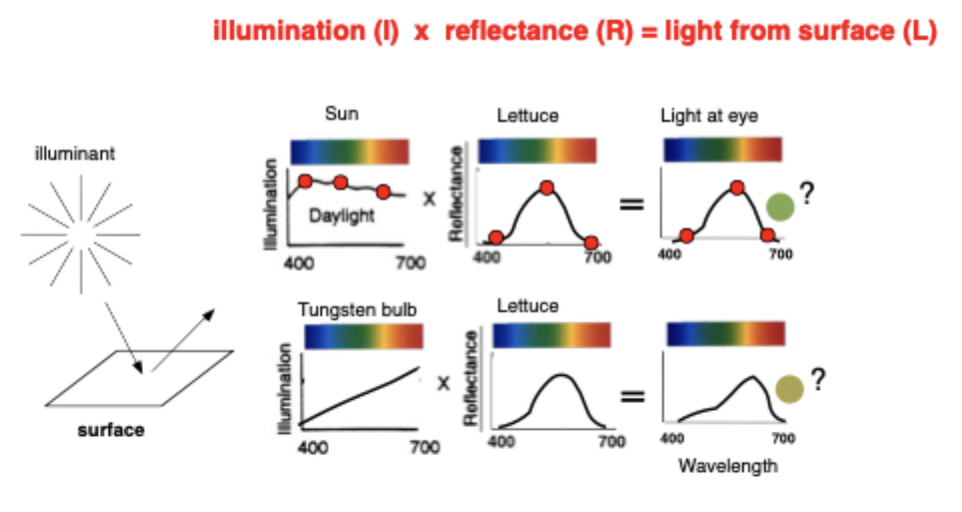
Illumination x reflectance = light from surface
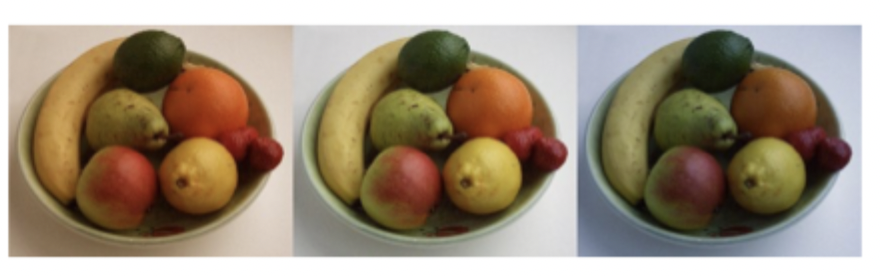
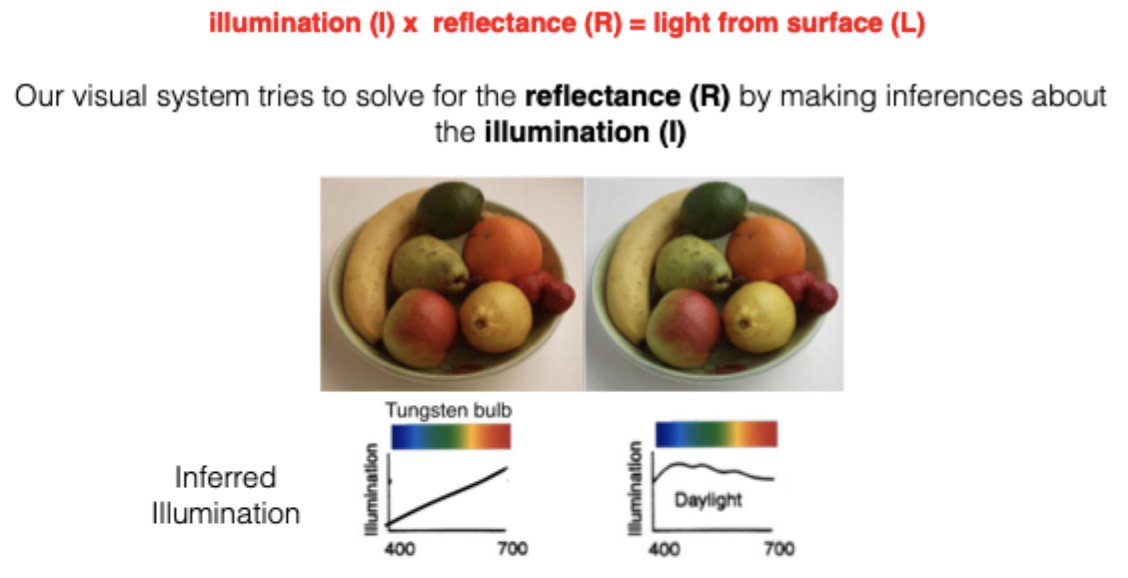
Discounting the illuminant
The visual system takes into account these different sources of illumination.
We want to see the pear as green regardless of the illumination source
Result: the perceived colour of objects stay constant under different illumination conditions. This is known as colour constancy.
Another Problem with two unknowns
Our

