Topic 10 - Memory
 Studied by 0 people
 Call Kai
 Learn
Learn Practice Test
 Spaced Repetition
 Match
Match Flashcards
 Knowt Play
1/46

There's no tags or description
Looks like no tags are added yet.
Name | Mastery | Learn | Test | Matching | Spaced | Call with Kai |
|---|
No analytics yet
Send a link to your students to track their progress
47 Terms
Blue Whale Study
probably have a good long-term memory to remember migration routes for reproduction or tracking resources for foraging - must attend to more than just proximate cues
study looked at whether they track phytoplankton blooms, which fluctuate as a function of temperature by studying migration patterns vs. randomly simulated paths to changes in surface temperature and green-up → whales track green-up
Proximate Cues
an immediate, observable environmental or social trigger that influences its behavior or physiology
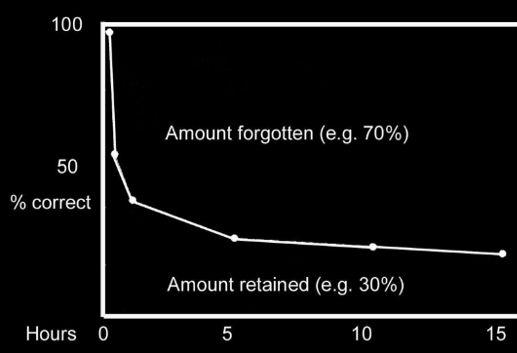
Ebbinghaus
first to look at memory, but did it on himself with nonsense syllables above the capacity of our memory using a metronome for pacing
image shows forgetting cureb
William James
came up with 2 memory systems: primary and secondary
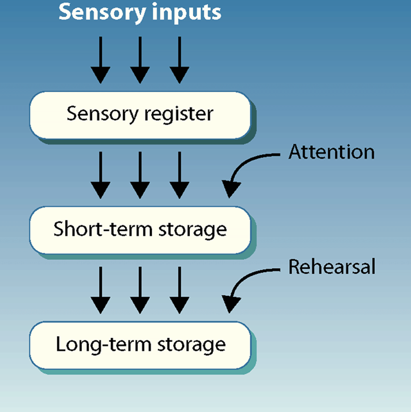
primary memory is information in current conscious awareness, the current sensory experience that is initially vivid then fades quickly unless captured by attention
secondary memory: former state of mind that has dropped out of consciousness (bringing a copy of the original event to mind)
Broadbent
important guy for attention, said that information flows through sensory channels where it can be filtered out and lost or selected for further processing
also has primary and secondary memory systems:
primary has S-system for pre-attentive memory store (sensory buffer) and P-system, a limited capacity memory store constituting conscious awareness
secondary memory is permanent storage
What do we take from historical ideas?
memory is not monolithic in a mechanistic or anatomical sense (there are different forms)
short-term (primary) stores are capacity limited
going from short to long-term memory takes more processes to consolidate the memory (aka rehearsal according to Broadbent)
Short-term Memory
aka working memory
refers to limited capacity to hold information in mind for short periods of time, from seconds to minutes
Long-term Memory
storage of information that can be retrieved over longer periods of times (minutes to years) - is actually a collection of stores
episodic: you were the actor
semantic: knowledge of things about the world
procedural: abilities like riding a bike
Learning
a form of memory referring to changes in behaviours in the nervous that are brought about through experience - basically memory as a function of experience
How long does echoic memory last?
3-4 seconds
this is a large capacity store that decays rapidly that allow us to access only very recent sensory information
Which lasts longer - echoic or iconic memory?
echoic memory since it lasts 3-4 seconds, iconic (visual information short-term memory store) lasts about 500ms
Partial Report Task
an array of stimuli are shown that are more than what short-term memory capacity can handle (7 ± 2)
participants are asked to report on one row of that array but they are not told which row beforehand → people are able to accurately recall cued information even when they don’t know which row it’ll be
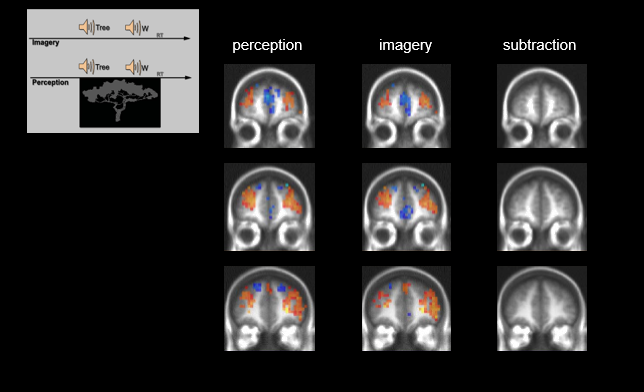
Imagery and Perception Task (Ganis)
control condition - in the dark with eyes closed, people heard the word “tree” and asked to make a mental image of the item
experimental condition - presented with a low contrast lime image of similar items
brain activation was compared between the perception and imagery (control) conditions → subtracting the two showed basically no difference in activation
this means you recreate the thing you’re trying to remember in the mind, therefore activating the same brain areas you used when you first made the memory
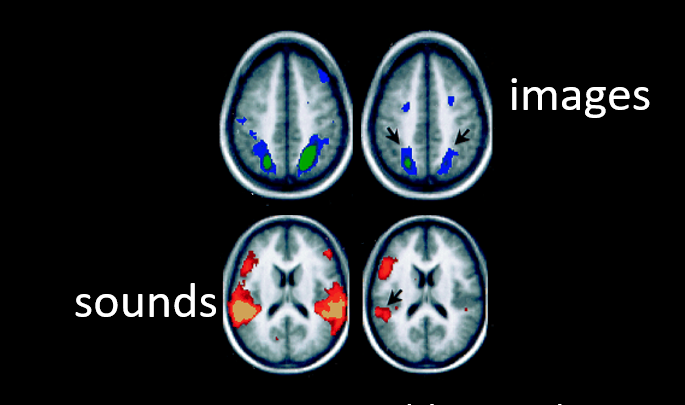
Successful retrieval of words that were paired with ____ was associated with ____ ____ activation, while words paired with ____ were associated with ____ ____ activation.
images; visual cortex; sound; auditory cortex
this suggests that memory needs some activation of perceptual areas → evidence that memory is a recreation process that uses the same neural networks that were engaged when we first encountered that thing
Tom James Perceptual Learning Study
similar to priming study, people were shown things that were hard to see because of noise or it is gradually revealed
when you show the sequences multiple times, fusiform gyrus shows peak of activity diminishing overtime (less brain activity is evidence of learning and better efficiency at recognizing the object → priming)
key was that the gradually revealed objects were shown many times to compare first vs. fourth viewing
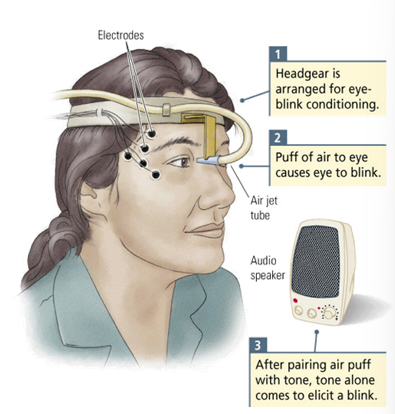
Classical Conditioning
unconditional response (UR): response/reflex with no association to secondary stimulus e.g. blinking to a puff of air
unconditioned stimulus (US): stimulus that produces unconditioned response e.g. blinking puff of air to eyelid
conditional stimulus (CS): stimulus closely in time with US e.g. tone paired with air puff
conditioned response (CR): response to the CS, without the US e.g. blinking at the tone with no air puff
Operant Conditioning - Skinner
more direct stimulus response mapping - pairs specific behaviours with specific outcomes
used pigeons with specially designed boxes, you can show that the bird will learn to peck a lever to get food reward
rewarding stimulus reinforces a behaviour since it leads to something the organism wants
behaviour can be reinforced if it is paired with unpleasant outcome
negative reinforcement: positive outcome is removed to extinguish a behaviour
Operant Conditioning Overview
stimulus-response conditioning using:
reinforcing stimuli (perceived as positive)
punishing stimuli (perceived as negative)
reinforcement/punishment occurs after the response
Variable Reward Schedule
one method that Skinner used since he found to be stronger than giving consistent rewards associated with behaviours
Transference
Little Albert tested by James Watson (behaviourist)
Albert was classically conditioned to fear rats when paired with a loud noise, then just seeing the rat was enough for a fear response, then similar stimuli (anything white and furry) would make the response
extinguishing: conditioned response for him was showing him enough rats without the loud sound attached
Elisabeth Phelps Extinguishing Conditioned Response
done by pairing conditioned stimulus without associated negative outcome in early parts of extinction protocol
red square shown with electric shock
eventually, you exhibit fear (measured by galvanic skin response) by just seeing the red square
extinguish fear response with either a reminder that red square no longer comes with a shock or given no reminder
reminder group did not show any return of fear response
To have something in short term memory that you can use, you have to be able to ______.
pay attention to it
Working Memory
aka short-term memory
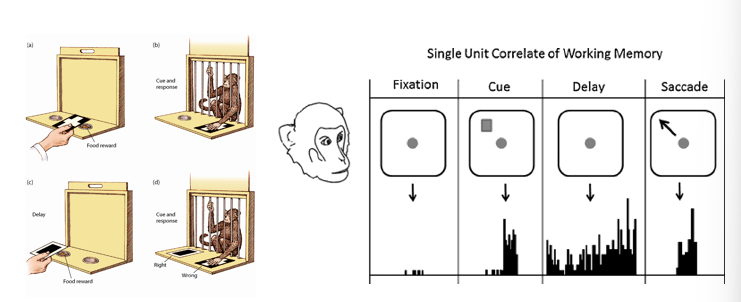
delayed match-to-sample task with monkeys:
monkey learns the rules where food reward is under the card with a cross on it
delayed non-match-to-sample:
switch the rule to make sure the monkey isn’t just responding to what he saw last - monkey learns the food is at the location that ISN’T cued
delay period had nothing on the screen
results showed regions of prefrontal cortex had neurons that the monkey needed to remember were still firing in the delay
Miller
7 ± 2 persecuting integer is for verbal memory
visual memory span is likely around 4 items but that could be because humans are language-bound since we talk a lot
we can push past this number with various techniques such as chunking
Method of Loci
used to break through the 7 ± 2 number by creating a memory palace for a familiar route
for example, put grocery list items in certain locations as you walk to the store and you can recall walking that way and which item was where → helps because you don’t need to remember the path itself since you’re already familiar with it
What happens to information that is forgotten?
2 possibilities:
decay - without rehearsal, memory diminishes and remembering it gets worse
interference - new things get in the way of the old
Primacy
relies on the ability to rehearse things over and over
rehearsal transfers info from short to long term memory (consolidation)
memory system has the resources to put items from the beginning of a list to long term memory
presenting items interferes with primacy
Recency
depends on short term/ working memory
don’t need rehearsal since items at the end of a list are still in short term memory
adding a distractor task at the end would interfere with remembering the later things but not the earlier
Baddeley’s Working Memory Model
mentions visuospatial sketch path and phonological loop which are domain-specific stores
visuospatial sketch pad is for visual information, things you can manipulate and work with in relation to space
phonological loop is more for word information - maintained and manipulated auditory information
even when presented with the visual letters P and T vs O and Q, we are worse at disambiguating P and T since they sound the same even if they look different
central executive - not specific to modality, important for interrupting routine behaviours to direct resources to new circumstances
dorsolateralprefrontal cortex is important for working memory, left STG for verbal and right for visual information
If asked to do a visual task and an auditory task, your ____ memory is not affected by the ____ task, and vice versa.
visual; auditory
evidence for these being separate is from studies with interference, where it is only observed when two tasks are in the same domain
Declarative Memory
knowledge that you’re conscious of:
episodic/autobiographical - things about yourself in episodes for example a day at a time; you are the actor
semantic - conceptual knowledge, understanding facts about the world
Forms of Long-term Memory
declarative memory
episodic/autobiographical
semantic
non-declarative
procedural learning
conditioning
Non-declarative Memory
experience dependent changes in the brain and behaviour (learning) that we do not have conscious access to
procedural memory like learning to ride a bike involves conscious processes early on but done without conscious guidance once mastered
classical conditioning
priming: alteration of responding based on prior exposure
non-associative learning - systemic desensitization for phobias (teaching relaxation to cure phobia)
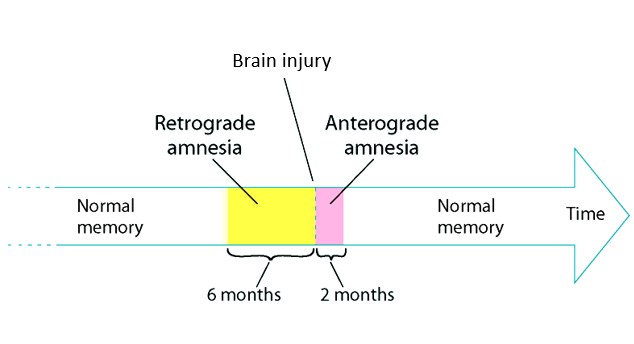
Retrograde Amnesia
loss of memories prior to brain injury, about 6 months of effects
Anterograde Amnesia
inability to make new memories after the brain injury, about 2 months of effects
Post-traumatic Amnesia
period of time after a traumatic injury for example concussion or acceleration-deceleration injuries after car crashes
this patient is usually disoriented in time and place, tested by asking standard questions like what year is it, where are you, etc
HM
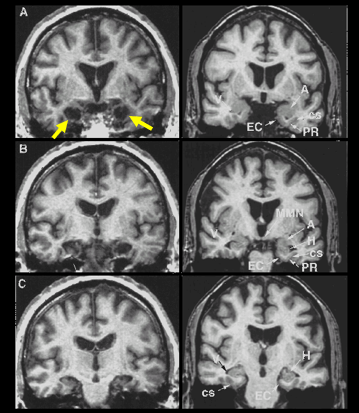
had severe intractable epilepsy that did not respond to medication so had surgery to remove his bilateral medial temporal lobes (where they thought the seizures came from)
structures removed include hippocampus, entorhinal cortex, amygdala - these regions give context to the memories we want to create
he now had anterograde amnesia and couldn’t form new memories but personality didn’t change and ability to learn new information of certain kinds stayed, just not autobiographical
also had some retrograde amnesia
What remained for HM?
patient with medication-resistent seizures who had hippocampus taken out, among other structures
semantic memory stayed
procedural memory
remote memories from childhood - the older the memory, the more robust to brain injury it is since it’s been consolidated and re-remembered
language/social skills
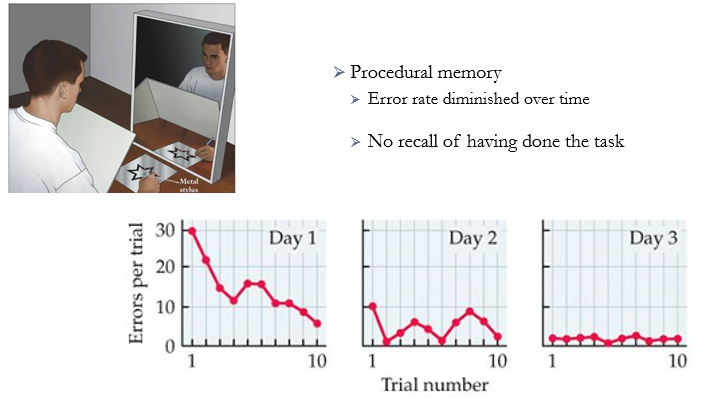
Mirror Drawing Task
done on HM to see if he could make new procedural memories
he has to trace the image of a star by looking at his hand in a mirror, not at it directly (essentially a visuomotor transformation)
he did pretty poorly on day 1 but got better and maintained this improved performance across a number of days → couldn’t even remember doing the test but was performing it well
could also show implicit learning like with a stem word completion but not with free recall
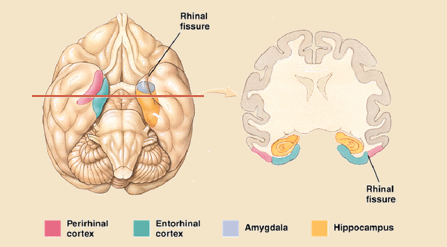
Which brain regions are important for memory?
hippocampus - builds a map of the distributed brain regions that are engaged when first encoding a new memory
parahippocampal cortex - contextual and spatial information
perihrinial and entorhinal cortices give context to the new memories we want to create
amygdala - giving emotional colour
Dissociative Fugue
rare; complete loss of memory for personal identity (don’t remember who you are)
could be psychogenic in nature
Korsakoff’s Syndrome
for chronic alcoholics
severe anterograde amnesia
temporally graded retrograde amnesia - recent memory is very bad but older memories are easier to remember
confabulation: filling in the gaps of memory by making a story rather than acknowledging the loss of memory (not delusions) - this sets amnesics apart from Korsakoff’s
alcoholism combined with vitamin B deficiency leads to degradation of the mammilothalamic tract is thought to be responsible for the memory deficits
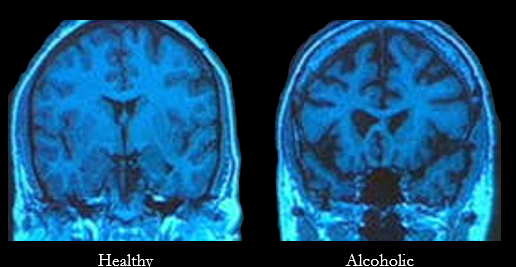
Alcoholic Brains
big spaces and loss of tissue - sulcal widening (spaces between gyri), enlarged ventricles
Hemispheric Encoding-Retrieval Asymmetry (HERA)
this model says retrieval of episodic memories is a mostly in the right hemisphere whereas the left was involved in encoding episodes and retrieving semantic information
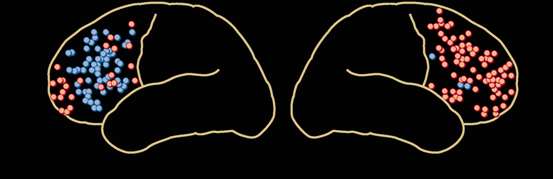
There is ____ activity in the prefrontal and medial temporal cortices for successfully recalled items.
higher; there is still some activity in the same regions when we recall them unsuccessfully, just less of it
prefrontal activations tend to be material specific with verbal information activating the left and visual information the right
hippocampus doesn’t differentiate between what you think you saw and what you actually saw, but shows a difference in activation for new items
parahippocampal gyrus surrounds the hippocampus and it accurately distinguish between old and new items
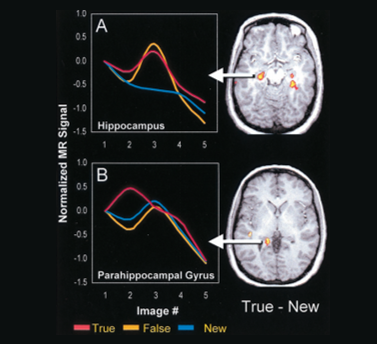
London Cabbies
a morphometry study about shape and size of brain regions on London cab drivers showed they had larger posterior hippocampi in the right hemisphere vs. non-cab drivers
they need to pass a really hard test and not use a map
follow-up study showed more experienced cab drivers had larger hippocampi than those are new
greater density of synapses (synaptogenesis) comes from experience
Working memory dysfunction in delusional disorders: an fMRI investigation
we think we see everything we open our eyes, but we don’t really have a full and complete representation
setup: working memory is a foundational skill and people with delusional disorder have non-bizarre delusions and may have executive function deficits
WM represents core function that executive functions are built on
method had 2 groups: deluded and control with a block design of a 2-back task in fMRI
delusional guys were worse behaviourally, even at the 0-back task
activations that are higher in delusions than in controls: superior temporal gyrus, PCC, left MTG, right amygdala
results left us with more questions since hyperactivity in posterior areas or hypoactivity in the frontal part could prevent you from putting things in order
 Note
Note  Flashcards (45)