Examples of Italian Renaissance Architecture
 Studied by 1 person
 Call Kai
 Learn
Learn Practice Test
 Spaced Repetition
 Match
Match Flashcards
 Knowt Play
1/18

There's no tags or description
Looks like no tags are added yet.
Name | Mastery | Learn | Test | Matching | Spaced |
|---|
No study sessions yet.
19 Terms
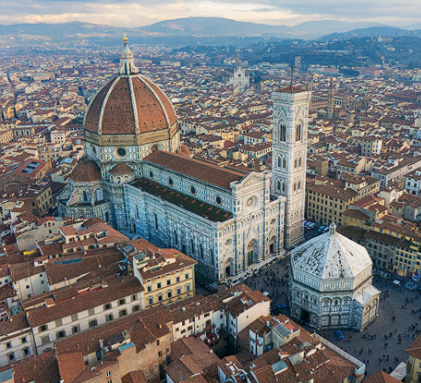
Quattrocento Architecture, Florence
The Dome of the Duomo
Florence Cathedral (Santa Maria del Fiore / Duomo)
Designed by Arnolfo di Cambio
Dome completed later by Filippo Brunelleschi
Gothic cathedral + Renaissance dome
Octagonal plan; no flying buttresses
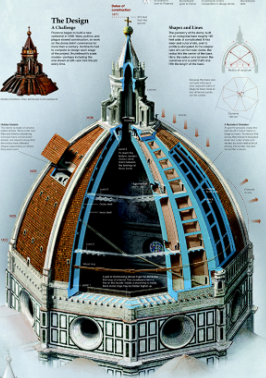
Quattrocento Architecture, Florence
Brunelleschi’s Dome
Double-shell brick construction
Herringbone brick pattern for stability
Supported by interlocking rings of stone and wood
Largest brick dome ever built
Added exedras and lantern to reduce outward thrust
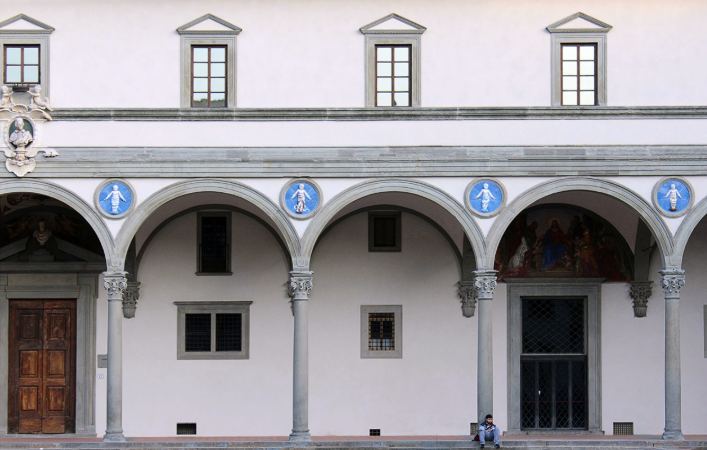
Quattrocento Architecture (Florence)
Ospedale degli Innocenti (Hospital of the Innocents)
By Brunelleschi
First Renaissance building in Florence
Loggia with semicircular arches + Composite columns
Grey pietra serena against white walls
Modules used → each bay forms a cube
Glazed blue tondi in spandrels (Andrea della Robbia)
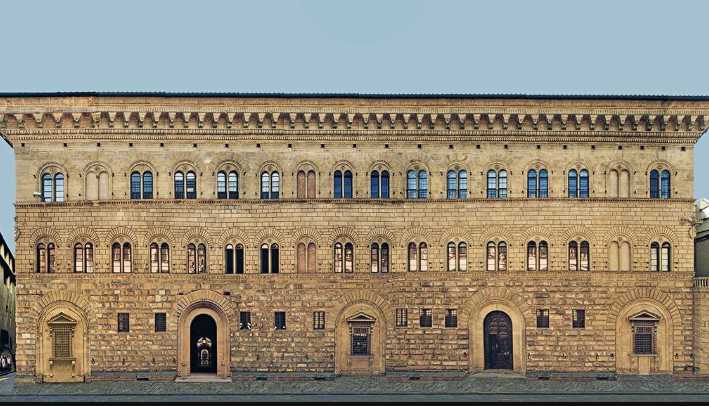
Quattrocento Architecture (Florence)
Palazzo Medici Riccardi
By Michelozzo di Bartolomeo
Strong, fortress-like rusticated base
String courses divide stories
Piano nobile on second level
Cortile inside
Massive cornice crowns façade
Kneeling windows by Michelangelo
Quattrocento Architecture (Florence)
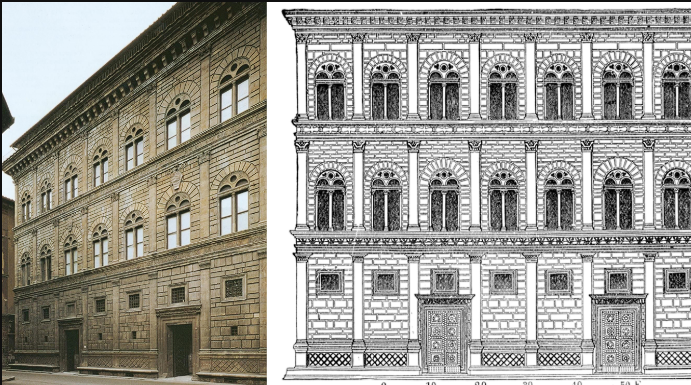
Palazzo Rucellai
By Leon Battista Alberti
First façade to apply classical orders correctly:
Tuscan (base)
Ionic (middle)
Corinthian (top)
Pilasters + entablatures in perfect proportion
Ground = business / 2nd = piano nobile / 3rd = bedrooms / hidden attic = servants
Tuscan
base
Ionic
middle
Corinthian
top
Ground
Business
2nd
piano nobile
3rd
bedrooms
hidden attic
servants
Cinquecento Architecture (Rome)
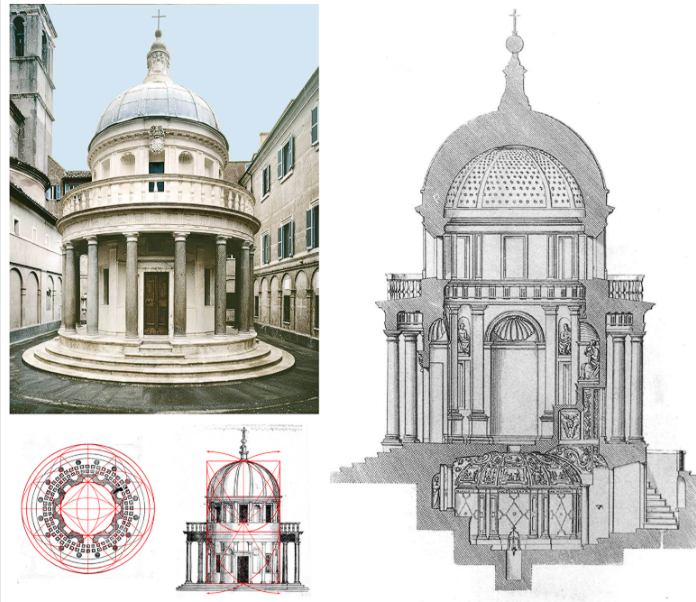
Tempietto di San Pietro in Montorio
By Donato Bramante
Symbolic spot of St. Peter’s martyrdom
Perfect centralized plan
Tuscan order peristyle on stepped base
Hemispherical dome over drum
Contrasts of light/shadow with deep niches
Cinquecento Architecture (Rome)
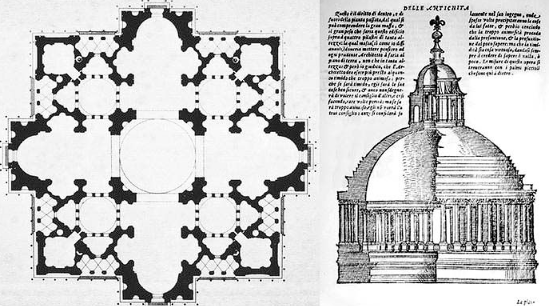
Renovation of St. Peter’s Basilica
Commission by Pope Julius II
Bramante’s original: Greek cross plan + dome like Pantheon
Many architects altered design over time (Raphael, Sangallo, Peruzzi, Michelangelo)
Cinquecento Architecture (Rome)
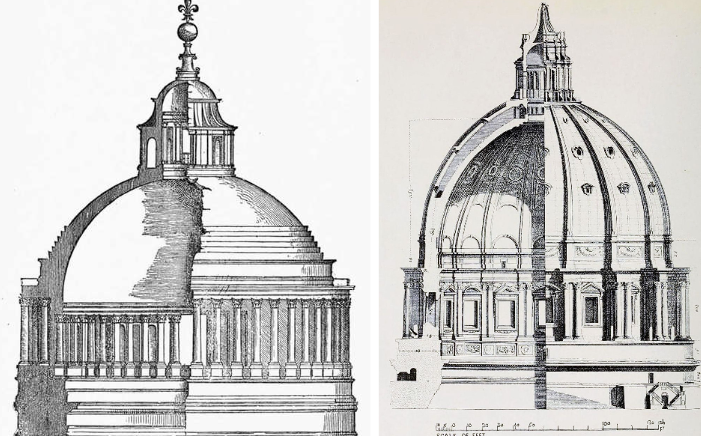
Michelangelo’s Dome of St. Peter’s
Double-shell, like Brunelleschi’s concept
Ovoid outer dome, hemispheric inner dome
High drum with pedimented windows
Tall lantern inspired by Tempietto
Tallest dome in the world today
Based on Bramante's designs
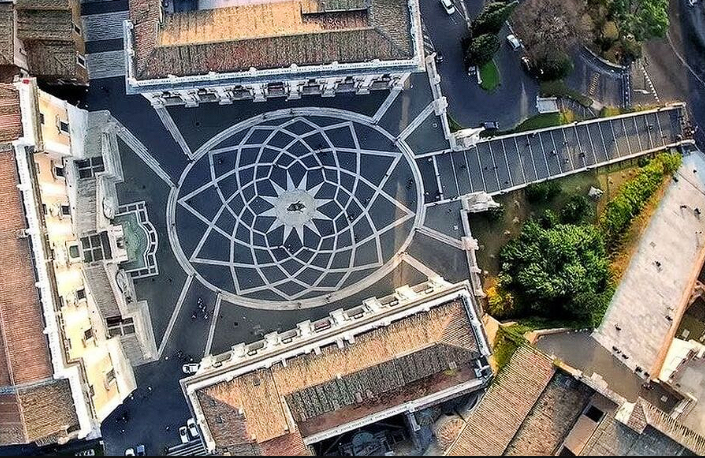
Cinquecento Architecture (Rome)
Renovation of the Piazza del Campidoglio
Redesigned by Michelangelo
Symbol of Rome as caput mundi (center of the world)
Reflects both church + civic power
Monumental public square with geometric harmony
Mannerist Architecture
Reaction against High Renaissance classical perfection
Features:
Visual trickery
Unusual proportions
Broken classical rules
Surprises and contradiction
Mannerist Architecture
Laurentian Library Vestibule
By Michelangelo
Bold, dramatic, sculptural interior
Grey pietra serena on white walls
Famous dynamic staircase:
Central convex steps
Side rectangular steps
Bottom elliptical steps
Showcases Mannerist creativity
Mannerist Architecture
Palazzo del Té, Mantua
By Giulio Romano
Leisure villa with central court
Classical-looking but full of intentional “errors”:
Misaligned pediments
Slipped triglyphs
Odd rhythms
Playful, surprising, humorous architecture
 Note
Note  Flashcards (47)