PHA 339 - Lecture #12 (Nitrogen Metabolism)
 Call Kai
 Learn
Learn Practice Test
 Spaced Repetition
 Match
Match Flashcards
 Knowt Play
1/123

There's no tags or description
Looks like no tags are added yet.
Name | Mastery | Learn | Test | Matching | Spaced | Call with Kai |
|---|
No analytics yet
Send a link to your students to track their progress
124 Terms
Nitrogen disposal and waste products
Three nitrogenous waste products are urea (amino acid and pyrimidine catabolism), creatinine (creatine phosphate metabolism in muscle), and uric acid (purine catabolism)
Creatinine metabolism and anabolism
Arginine and glycine form guanidinoacetate, which is methylated to form creatine
• In muscle, creatine is phosphorylated to form phosphocreatine
• Phosphocreatine is used as an energy source to regenerate ATP
• Creatinine is formed spontaneously (non-enzymatically) as a byproduct and is renally
cleared through glomerular filtration
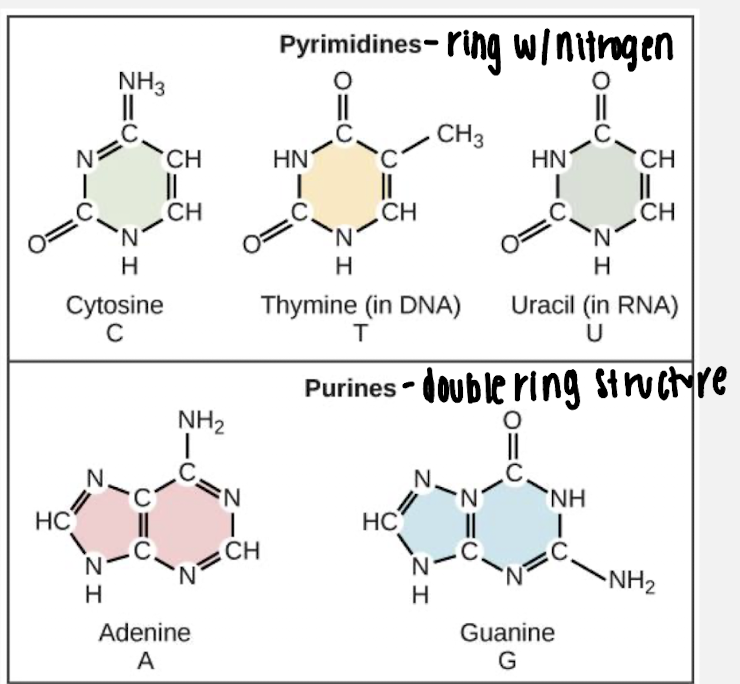
Purines vs pyrimidines
Purines = adenine, guanine; Pyrimidines = cytosine, thymine, uracil
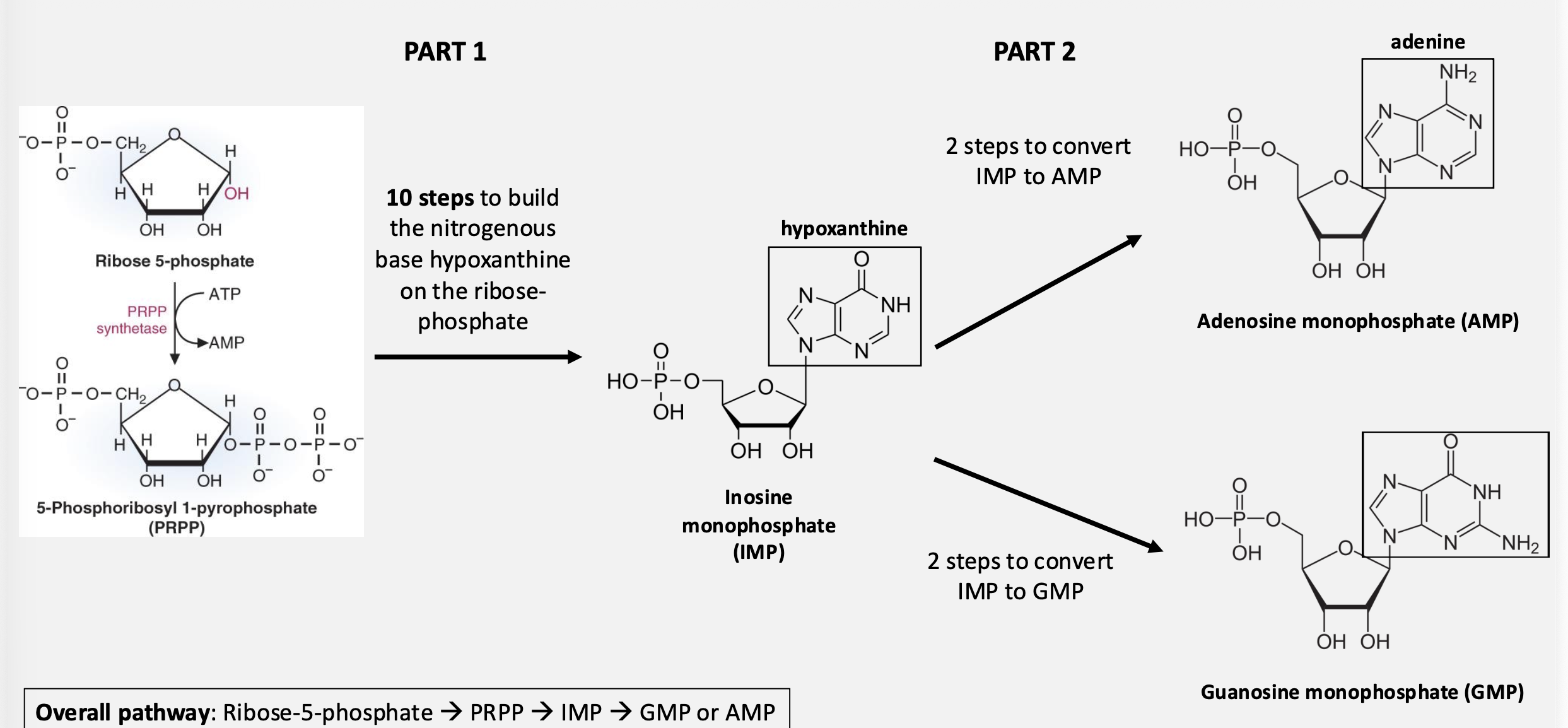
Factors increasing uric acid production
PRPP synthetase overactivity, tumor lysis syndrome from chemotherapy, high purine diet
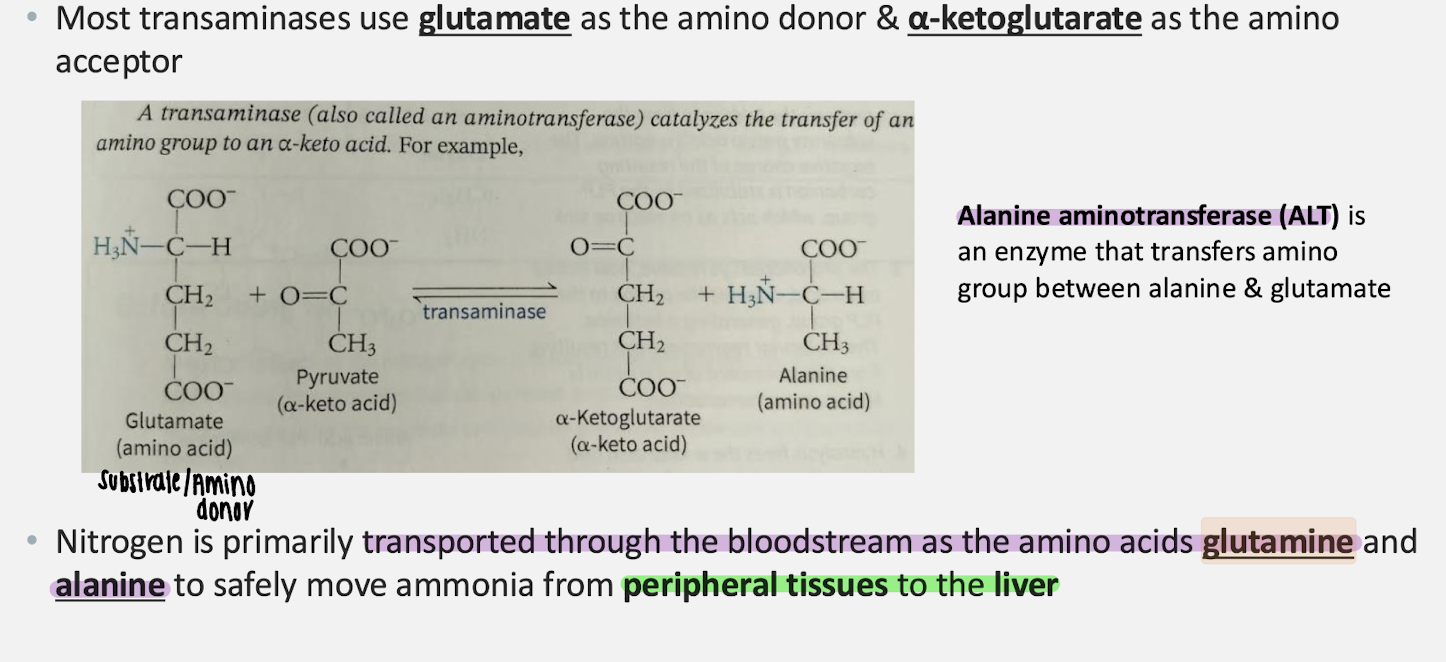
Which of the following best describes how nitrogen is transported from peripheral tissues to the liver through the bloodstream?
As amino groups on alanine or glutamine
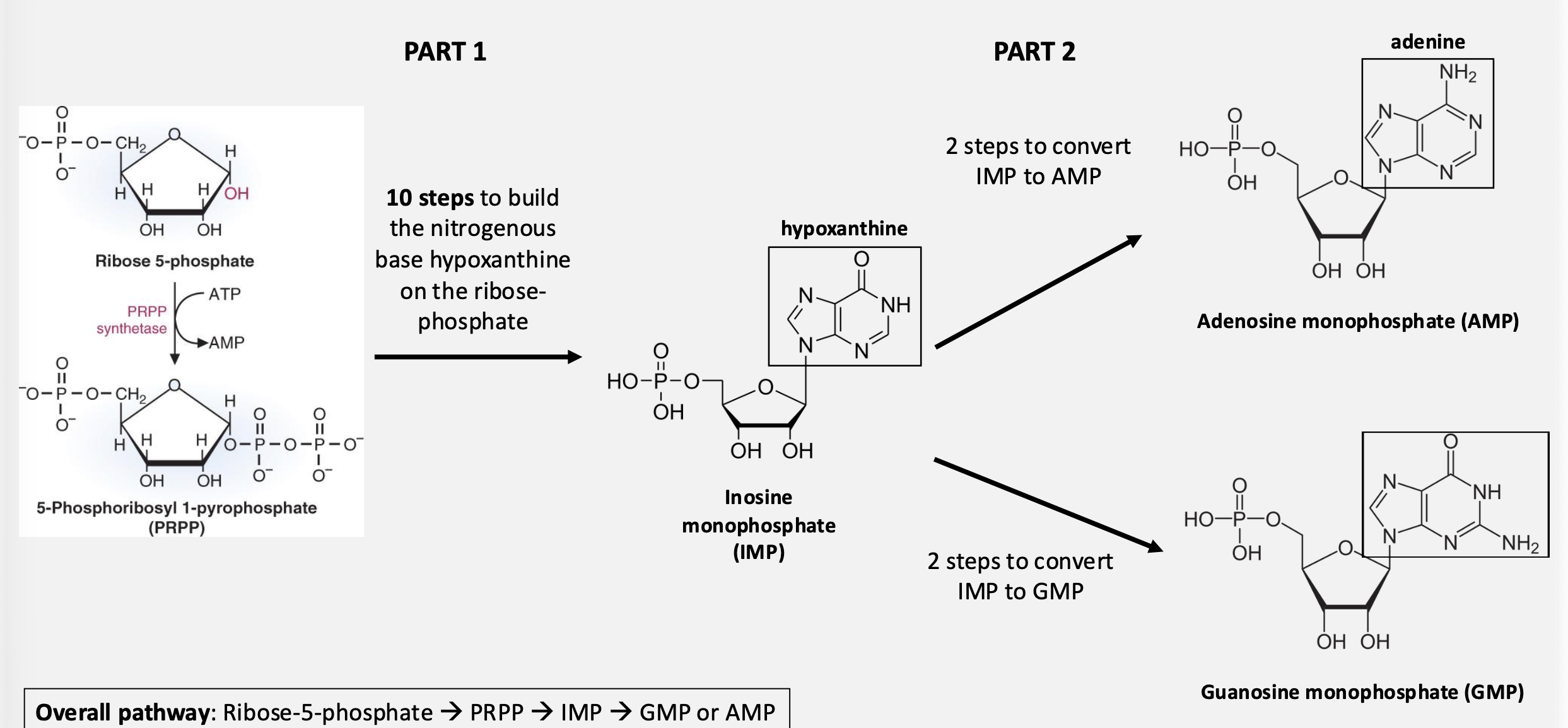
Inosine monophosphate (IMP) serves as a precursor for
GMP and AMP
Urea
Byproduct of amino acid and pyrimidine catabolism; produced in the liver via the urea cycle
Nitrogen
transported as the amino acids alanine and glutamine

