2.3 -LISTENING - TASK FEEDBACK CIRCLE
 Call Kai
 Learn
Learn Practice Test
 Spaced Repetition
 Match
Match Flashcards
 Knowt Play
1/26

There's no tags or description
Looks like no tags are added yet.
Name | Mastery | Learn | Test | Matching | Spaced | Call with Kai |
|---|
No analytics yet
Send a link to your students to track their progress
27 Terms
Let’s look at how to use a modified version of the
.
Task Feedback Cycle
.
that is specific to LISTENING lessons.
In every lesson we use the Task Feedback Cycle.
.
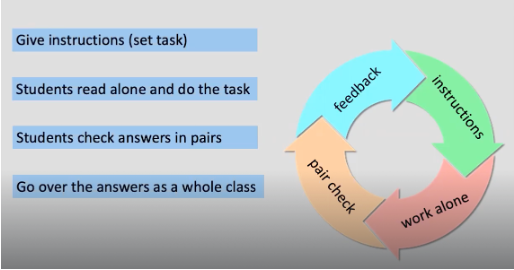
But LISTENING lessons require a more detailed version of this, called the
TASK FEEDBACK CIRCLE.
.
This allows Ss to listen and re-listen to audio as many times as they need.
Always set the context before listening to the audio. Why?
.
Set the Task (give instructions eg: Choose best headline)
Give Ss a minute to read through the questions.Play audio
Reasons why it’s good practice to give Ss a minute to read through the questions before listening to the audio:
.
Context Clues: Help Ss make sense of unknown words.
.
Less intimidating: Takes pressure off - Ss realise they don’t need to understand every word, only enough to complete the task.
Setting the context of the audio helps comprehension.
.
How do you set the context of the audio?
You set the context by using a task (eg: Gist Task = choose the best title).
.
Ss will listen to the audio and choose the title that best fits with the overall theme (Gist Task).
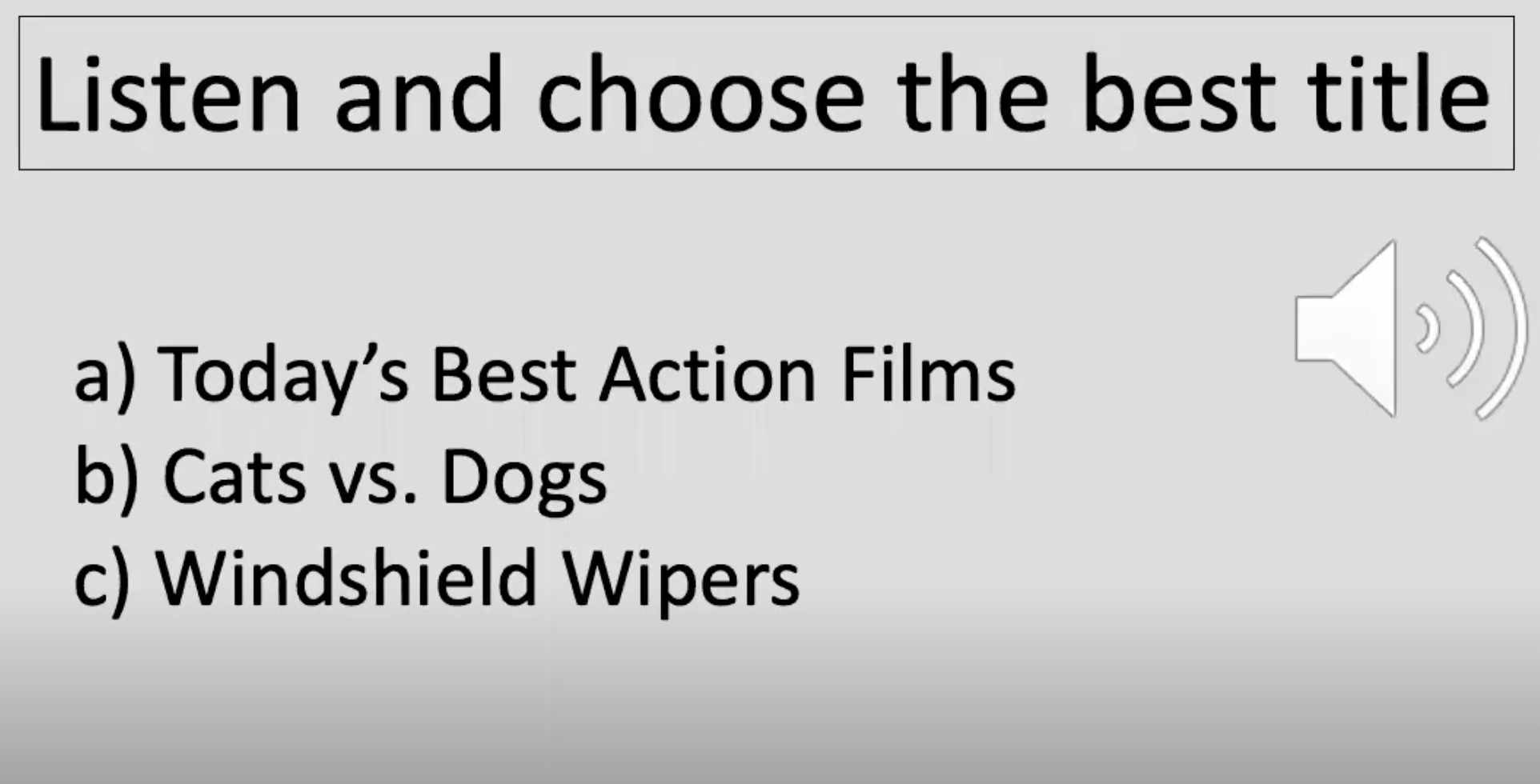
Step 1 in the Task Cycle: Set the Task (ie: give instructions).
.
In this example, the teacher asks Ss to
choose the correct title while they listen.
.
This gives them context for the audio and
the questions make more sense.
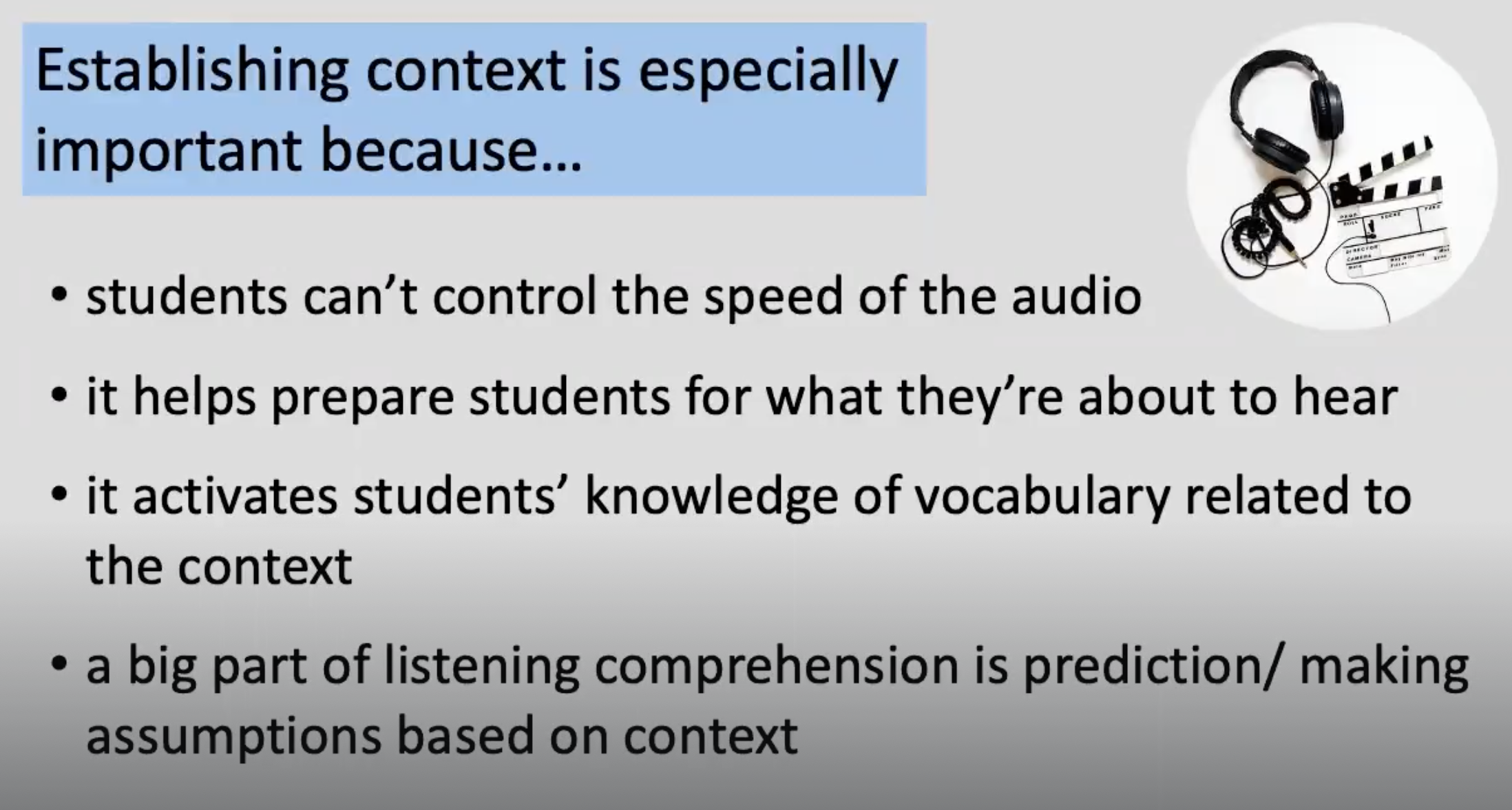
Why is setting the context especially important for a Listening lesson?
Ss can’t control the speed of the audio so setting the context is crucial to comprehension.
.
Setting context helps things make sense
It activates schemata
It helps Ss make predictions about what is going to happen
Setting Context helps Ss make PREDICTIONS about the text.
.
We make predictions based on context every day
eg: a waiter at a restaurant approaches a table and speaks to the customers.
Prediction: He will be asking what they want to order.
.
Notice how we can infer from context, even if we don’t know what the actual words mean.
What if, by the end of the lesson,
Ss don’t understand all the words in the audio?
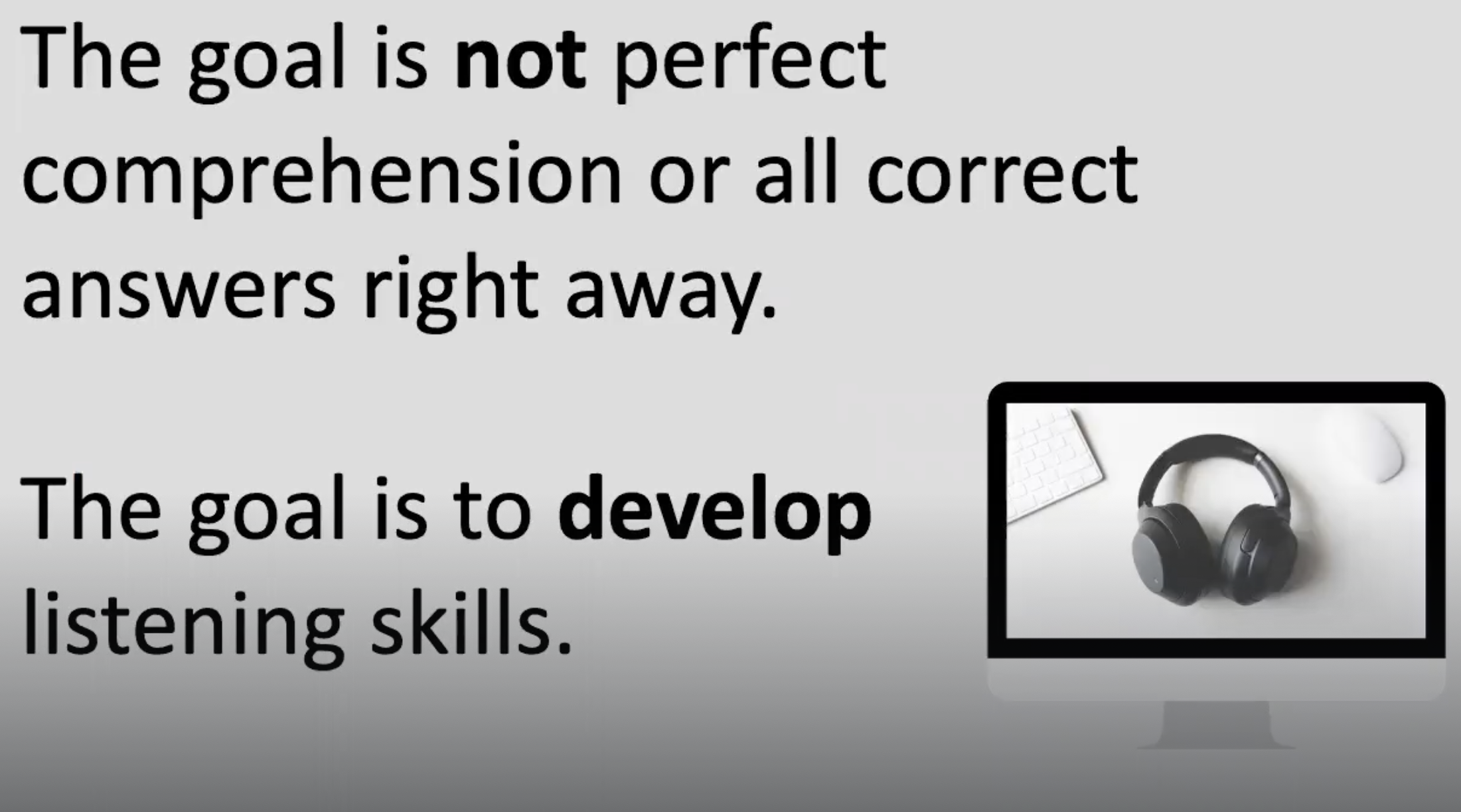
That’s ok. That is not the aim of the lesson.
.
The aim is to improve listening comprehension
through the process of listening and re-listening to the audio.
.
» As long as Ss are understanding more each time they listen,
that’s a sign of success. «
Do we use the Task Cycle in Listening lessons?
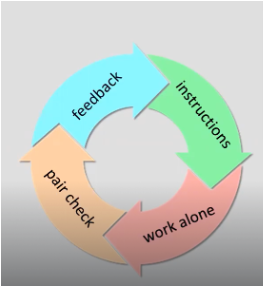
We use a slightly more detailed version called
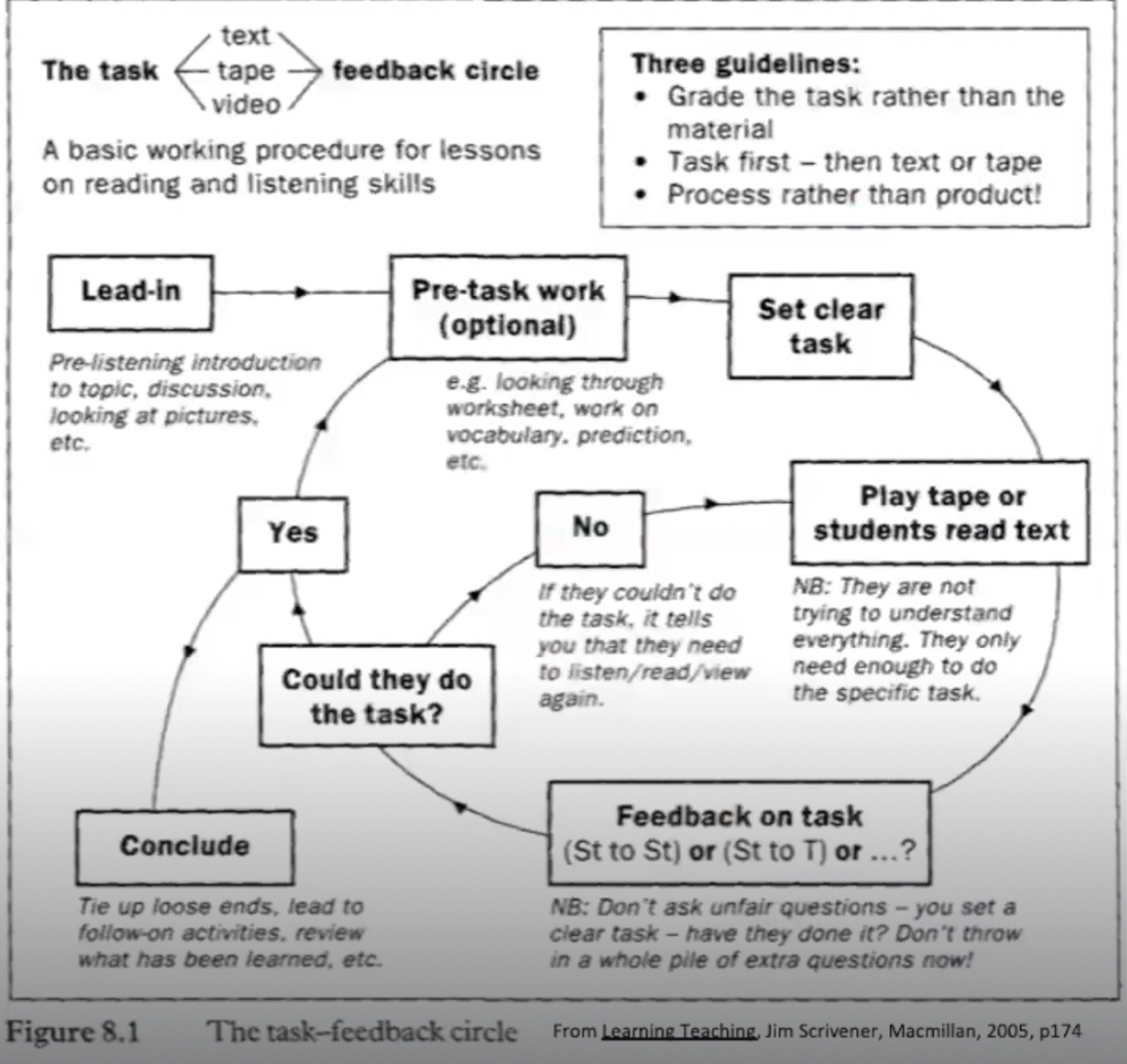
The Task Feedback Circle.
.
It allows us to increase Ss overall comprehension of the audio.
Why do we use Task Feedback Circle for listening lessons?
The Task Feedback Circle means that Ss can go through the cycle
of listening to and discussing the audio as many times
as they need to comprehend it.
.
Repeated listening allows Ss to hear and understand
more and more each time.
Do Ss need to listen to the whole audio each time?
No. They only need to listen to the segments in question (ie: where there is confusion, or disagreement on what was heard).
.
The act of listening 2,3,4 or 5 times to the same audio (or just the segment in question) allows Ss the opportunity to hear more and understand more each time.
How many times should you allow Ss to listen?
As many times as they need in order to gain clarity.
For example: 2-5 times.
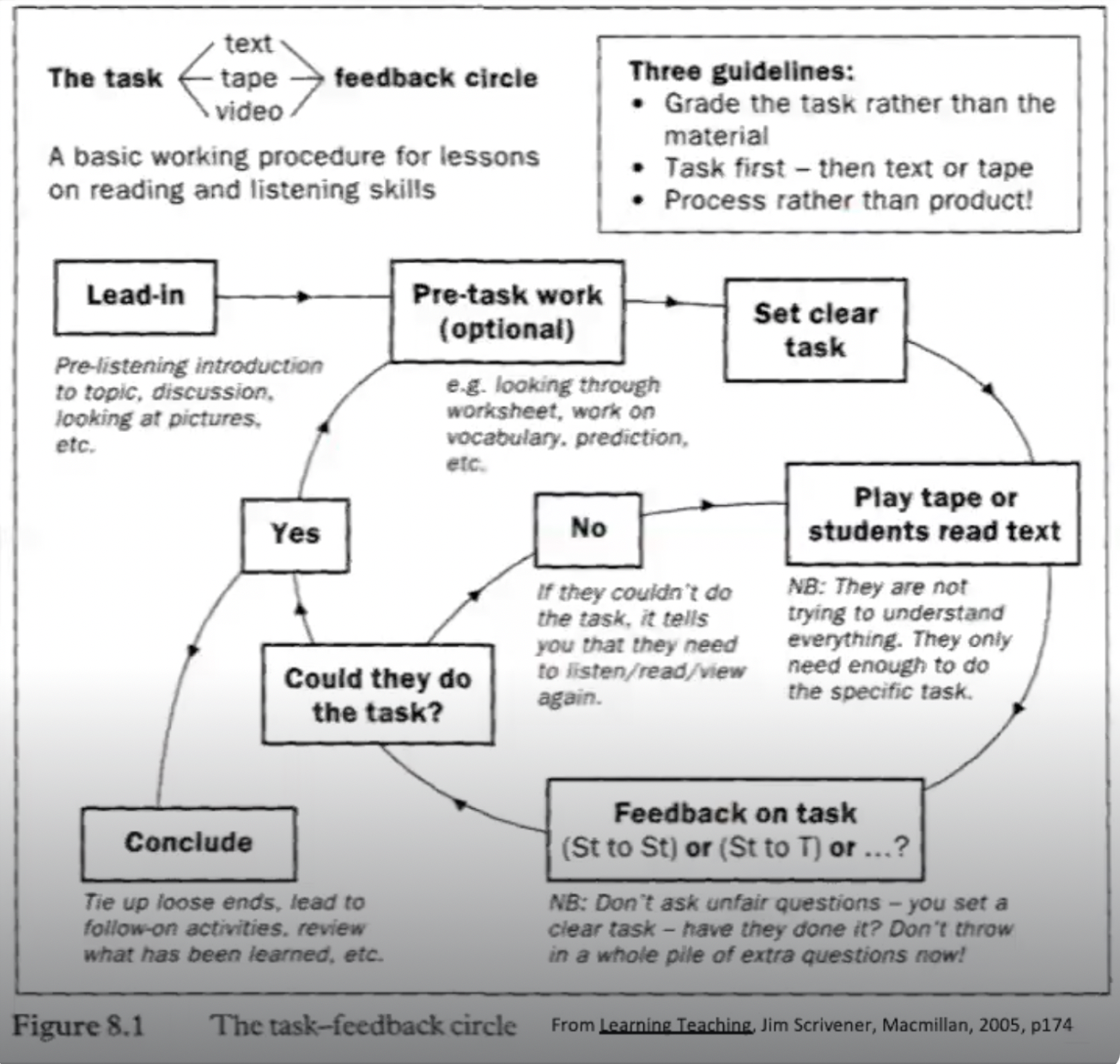
The Task Feedback Circle appeared in
Jim Scrivener’s book, “Learning Teaching”.
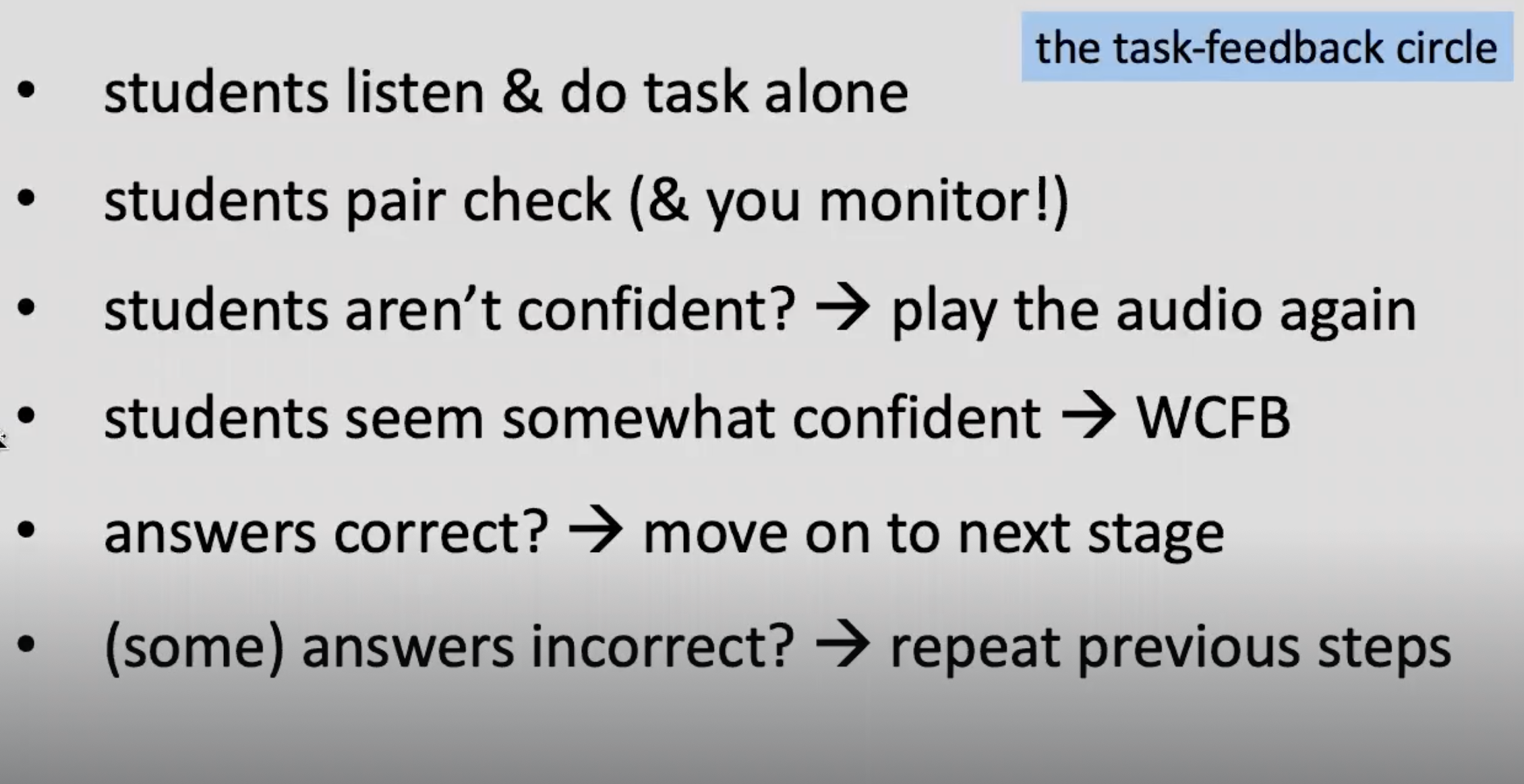
Task Feedback Circle explained
.
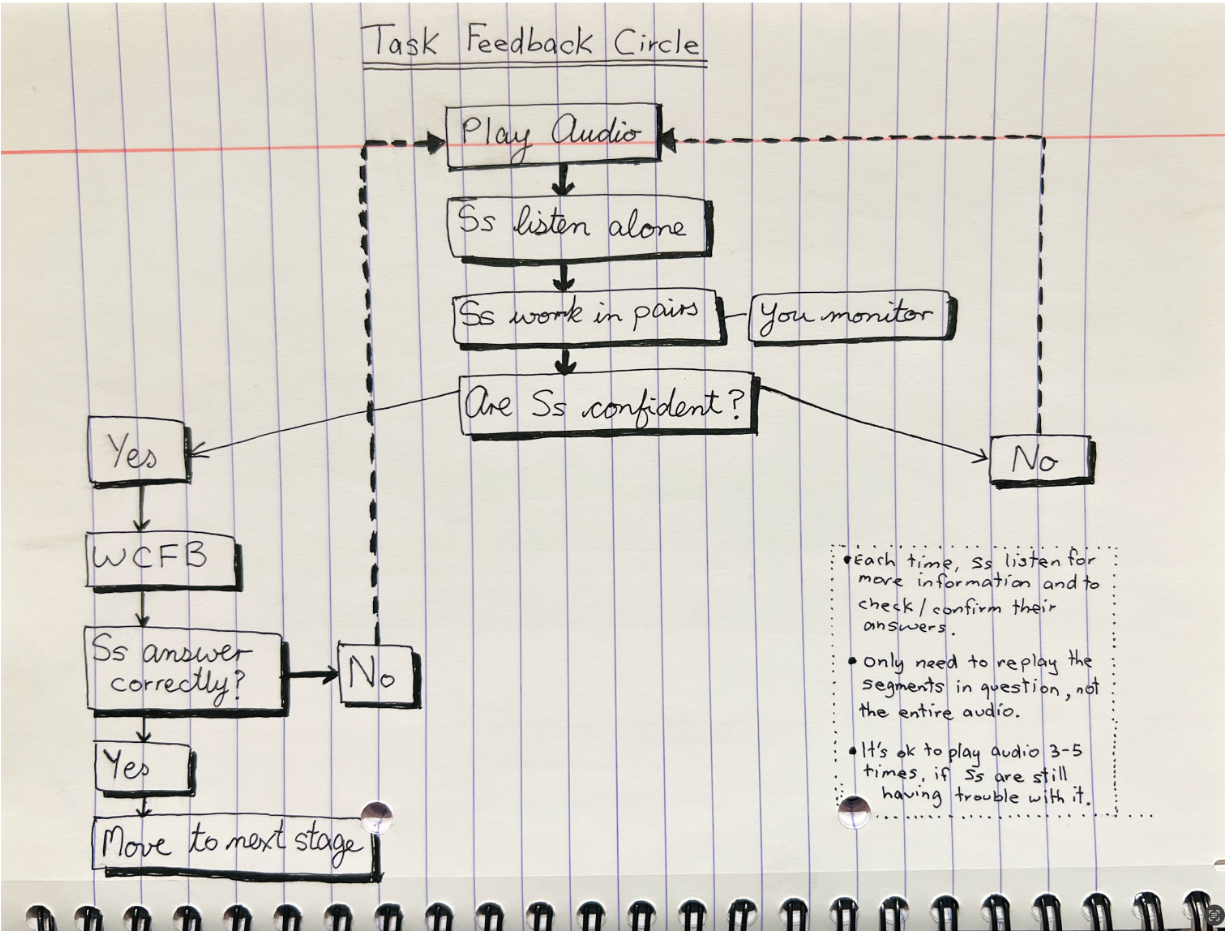
Ss listen and do task alone
Ss pair check - you monitor.
.
As you monitor, you’ll get a sense of
whether or not Ss are confident.
(eg: “I didn’t understand that, did you?”)
Ss pair check - you monitor. —> Are Ss confident?
.
No? Then repeat process:
Bring Ss back from BORs.
No need for feedback yet.
Tell them “Ok let’s listen again so we can hear a bit more.”
Play audio - you monitor
Ss pair check - you monitor. —> Are Ss confident?
.
Yes? Go to Whole Class Feedback
Bring Ss back from BORs.
Whole Class Feedback
Elicit answers and write them down for the Ss
If some answers are wrong, repeat process.
If right answers, move on to next stage.
How does pair checking increase comprehension?
Ss discuss what they’ve heard.
They can help each other with anything they have missed.
.
They basically help each other to PREDICT
what they will hear in the next round.
Why is Whole Class feedback important?
That’s where we go over the answers and
see how much the Ss understood.
If Ss get some answers wrong, why do we let them listen again?
Why don’t we just tell them the answers?
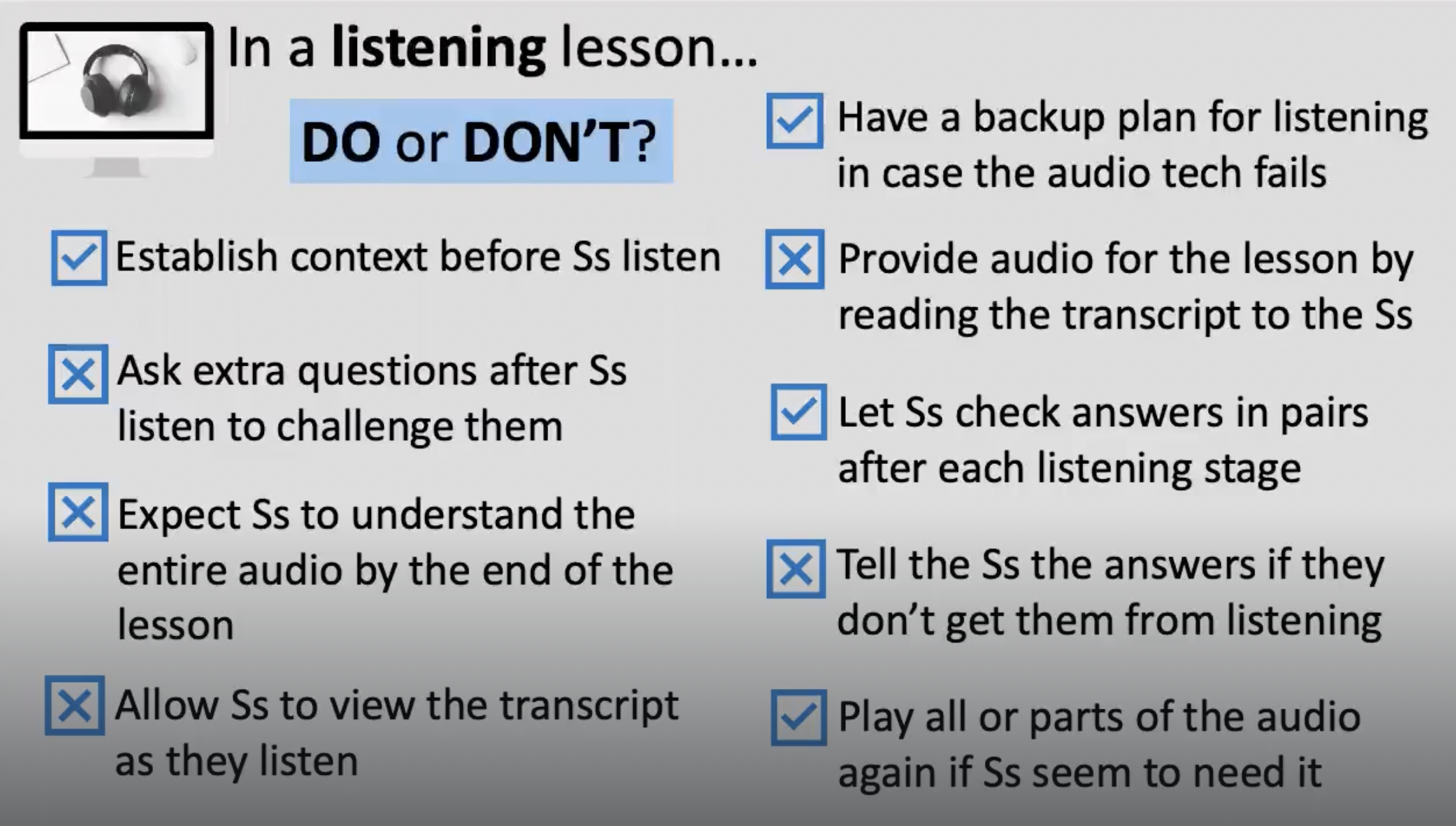
Telling them the answers doesn’t benefit the Ss.
It does nothing to further their listening comprehension.
Ss develop their listening skills through the process of listening.
In fact, it may frustrate the Ss who are trying hard to complete the task.
If Ss don’t know the answer, what should you do?
As you’re writing their answers on the powerpoint slide, leave incorrect answers blank or with a ‘?’ to signify that we will be coming back to fill in the correct answer.
.
Play the relevant part of the audio again.
“Ok let’s listen one more time for numbers 3 and 4. Those are the ones we’re not sure about.”
What if, after several rounds, they’re still not getting that one answer and are becoming frustrated?
As a very last resort, when the task is becoming frustrating, when they’ve listened to the audio upwards of 5 times and still can’t figure it out?
That’s when you can show Ss the written transcript of the audio text.
.
But only at that point.
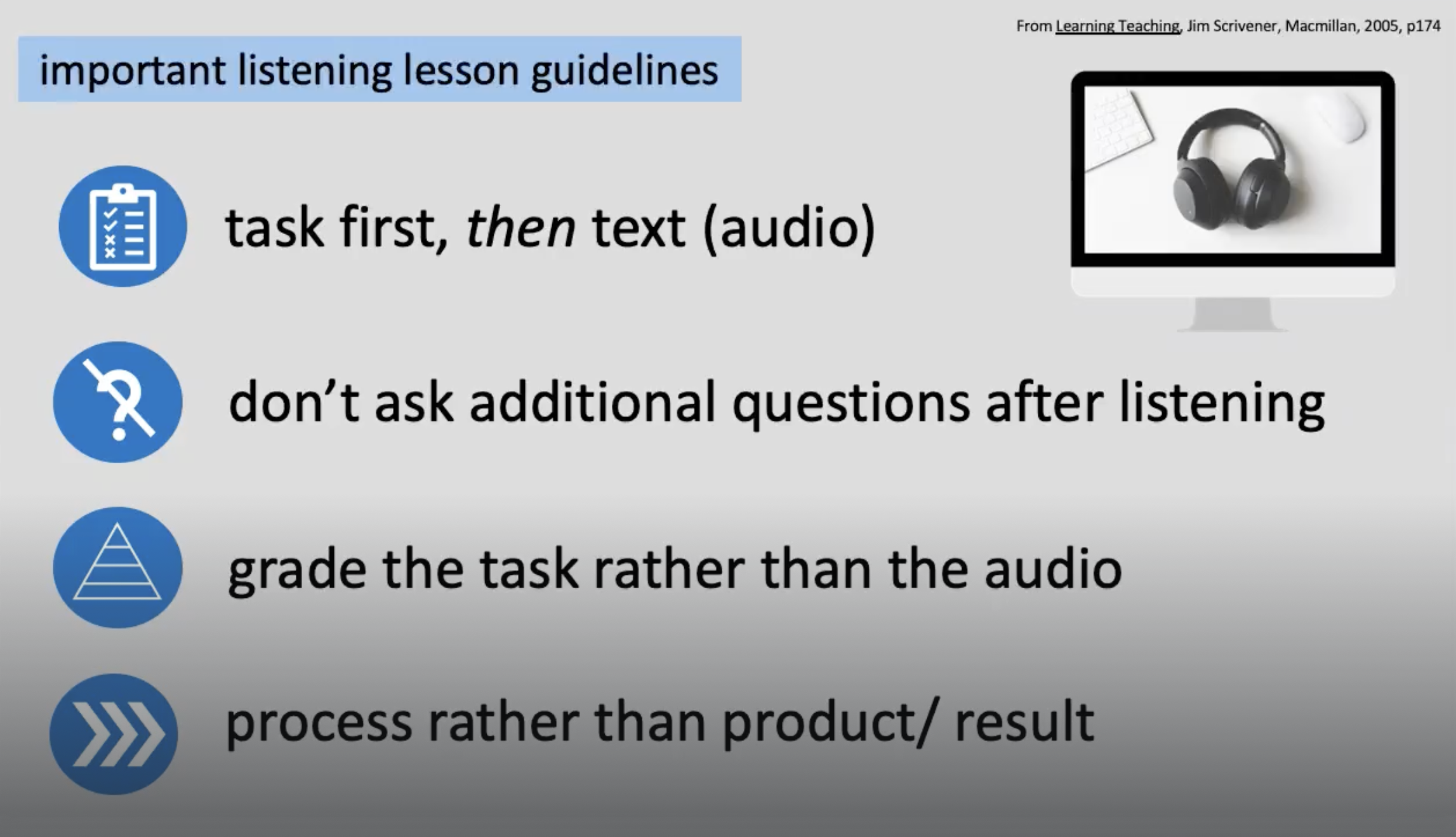
After you have set the task (eg Gist Task), should you randomly ask questions you hadn’t already included in the task?
No. It’s not fair on the Ss. They went into the task with certain questions in mind and listened for those specifically.
“Grade the task rather than the audio.” What does this mean?
We can’t make the audio less difficult. It is what it is.
.
However, we can make the questions easier/ harder depending on the Ss’ level of ability.
.
We can set easier tasks at the start, and more challenging tasks at the end.
“Grade the task rather than the audio.”
.
How would you do this in a lesson?
Give a Gist Task first = easier and more general
.
Then a more complicated task eg: Scanning for specific information or a Detailed Task.
.
A progression of difficulty with tasks is helpful so Ss become familiar with the audio and can discern more information each time.
If you think the audio will actually be really difficult, should you still progressively make the questions more difficult?
No. For a really challenging audio, keep the questions simple.
.
The Ss will have more success and feel less frustrated.
Is a listening lesson more about the process or the result?
Listening lessons are about the process.
.
It is through the process of listening and re-listening that Ss slowly build their listening comprehension skills.
.
The results - eg: ticking off the right answers that someone else gave you or understanding every word - are not helpful or realistic.