Plane Mirror [Part 1]
 Call Kai
 Learn
Learn Practice Test
 Spaced Repetition
 Match
Match Flashcards
 Knowt Play
1/49

There's no tags or description
Looks like no tags are added yet.
Name | Mastery | Learn | Test | Matching | Spaced | Call with Kai |
|---|
No analytics yet
Send a link to your students to track their progress
50 Terms
Plane Mirror
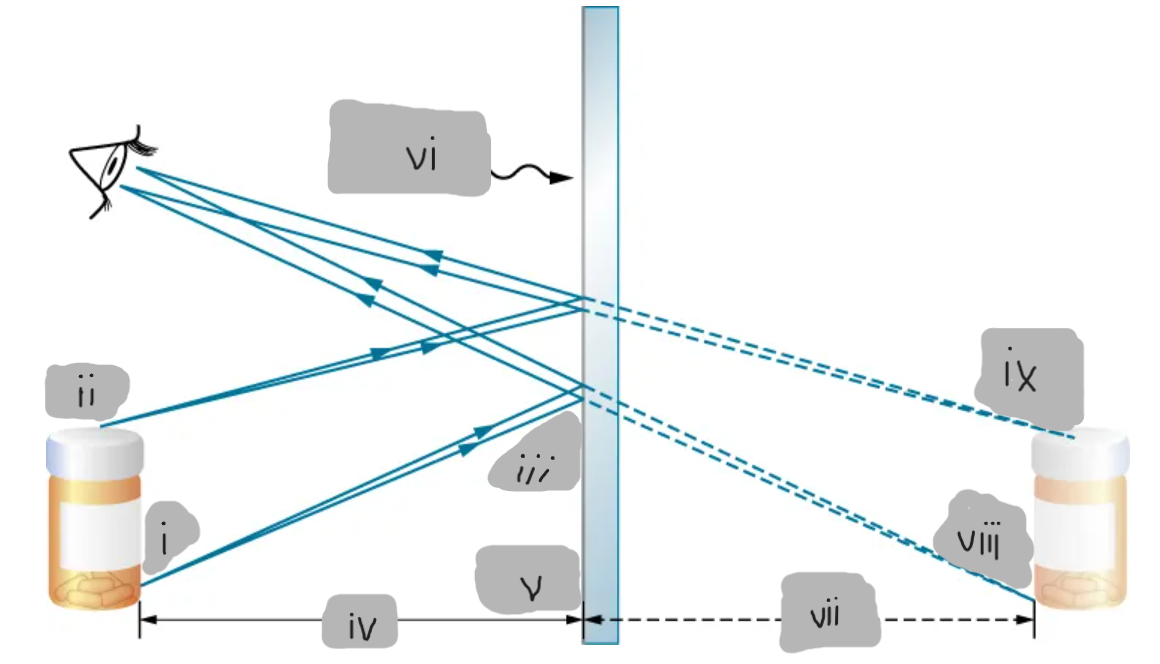
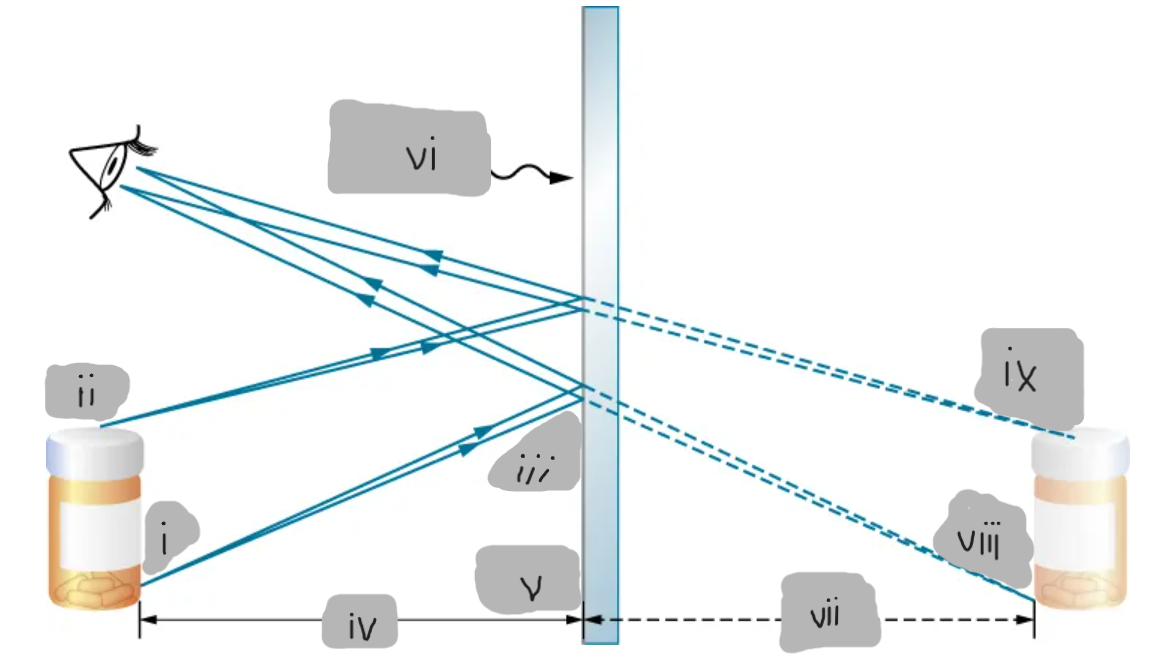
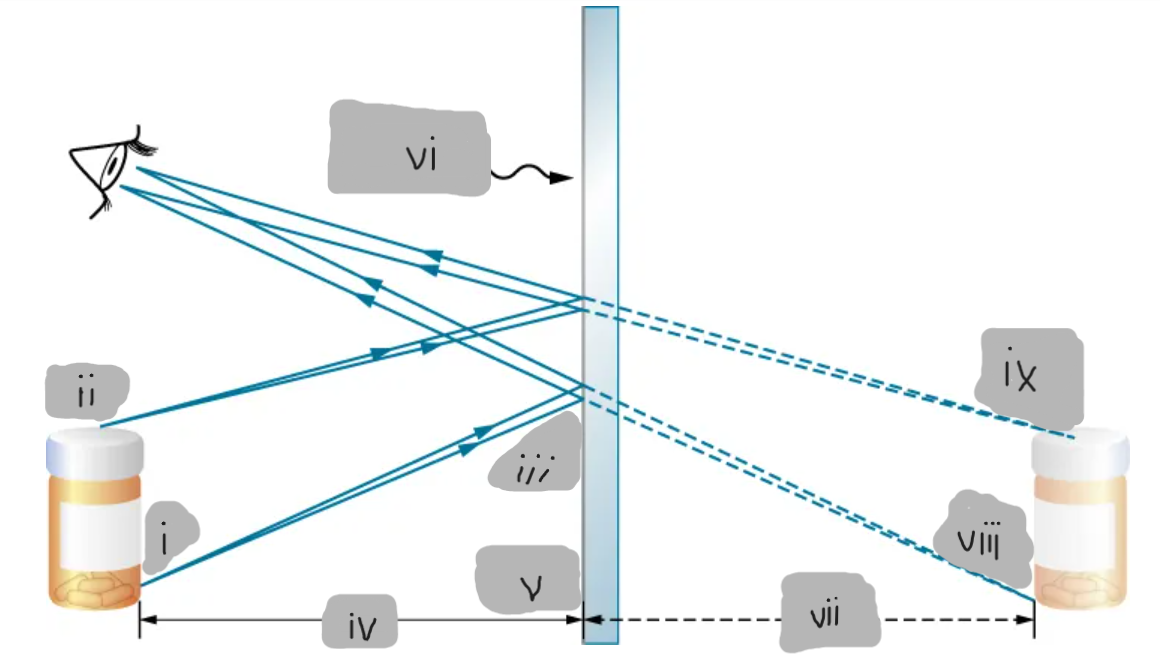
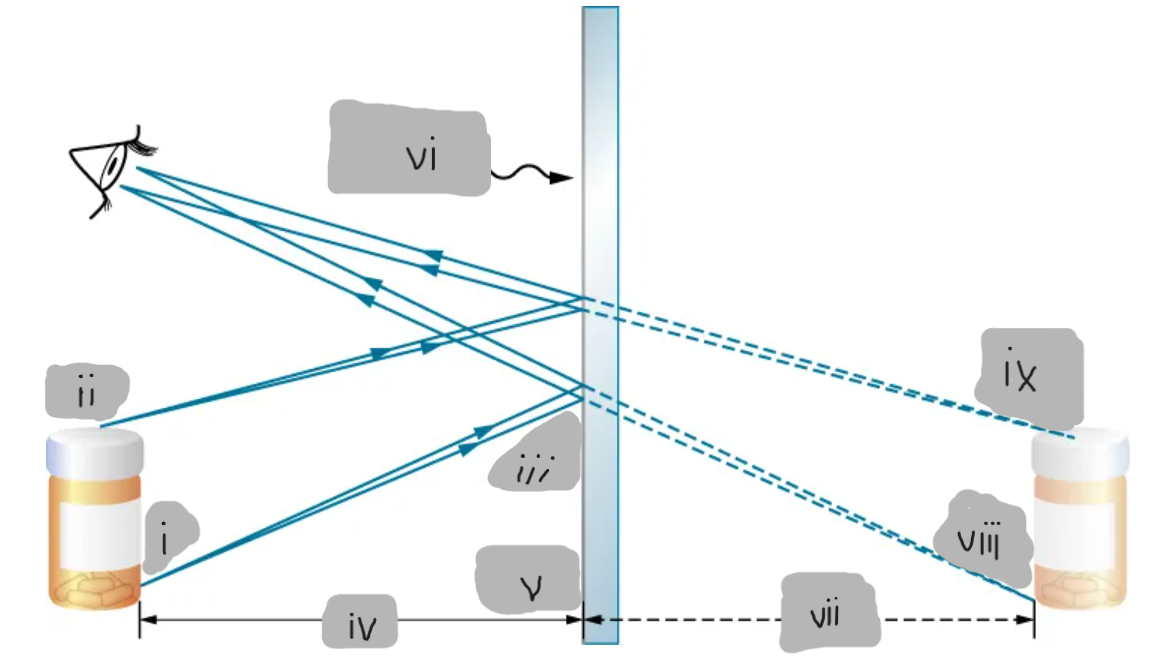
A flat reflective surface that forms images using the law of reflection.
Image in a Plane Mirror
An image that is the same size, upright, and located behind the mirror.
Upright Image
An image that has the same vertical orientation as the object.
Image Size (Plane Mirror)
Equal to the size of the object.
Ray Diagram Method
A technique using reflected rays to locate the position of an image.
Reflected Rays
Light rays that bounce off the mirror following the law of reflection.
Backward Extension of Rays
Imaginary extension of reflected rays used to locate virtual images.
Image Location
The point where extended reflected rays appear to originate.
Virtual Image
An image formed where light rays appear to come from, but do not actually pass through
Cannot be projected onto a screen
Key Property of Virtual Image
Real Image
An image formed where light rays actually converge.
Can be projected onto a screen.
Key Property of Real Image
Object Distance (d_o)
Distance from the mirror to the object.
Image Distance (d_i)
Distance from the mirror to the image.
d_o = -d_i
Plane Mirror Distance Relation
P
(i)
P’
(ii)
A
(iii)
d_o
(iv)
B
(v)
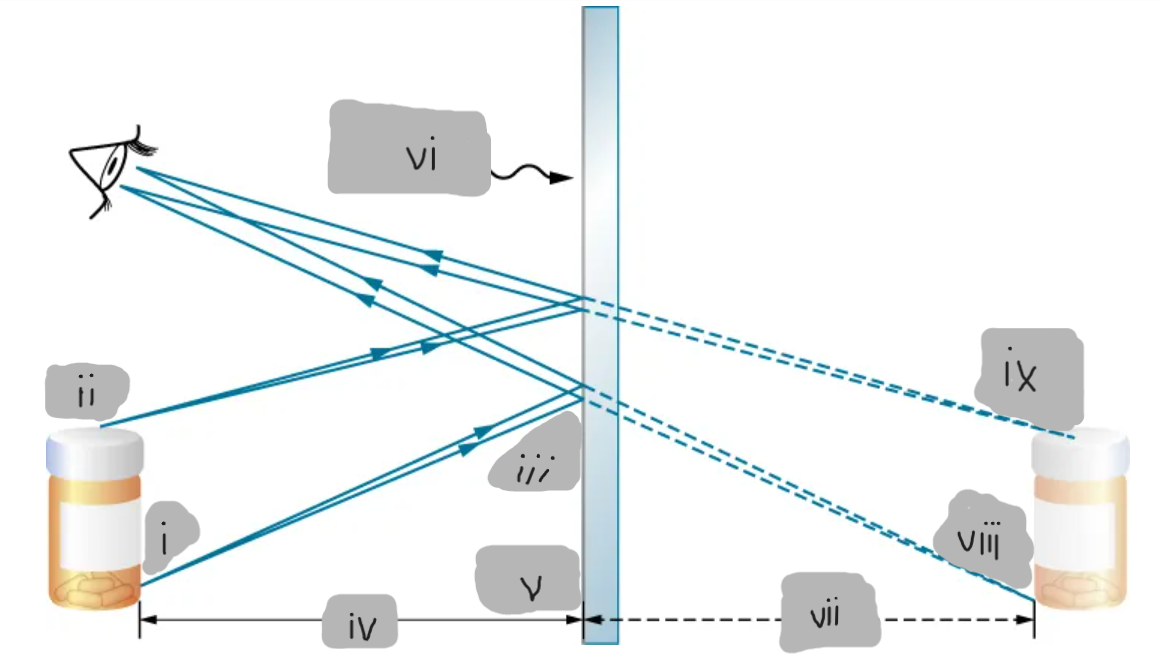
Flat Mirror
(vi)
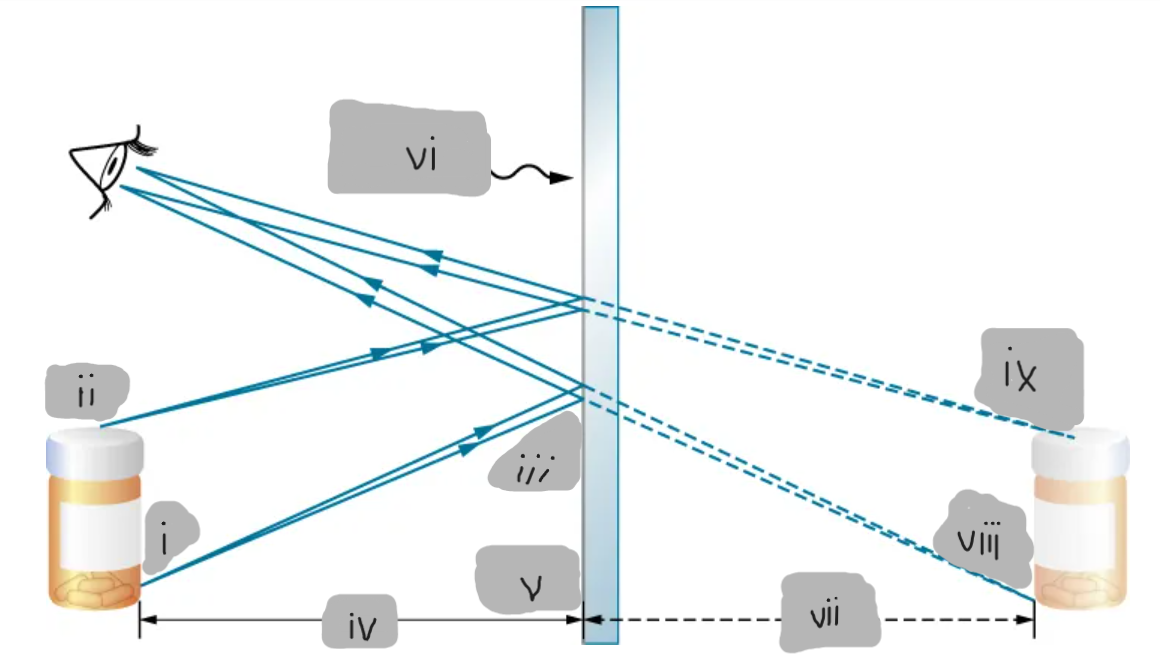
d_i
(vii)
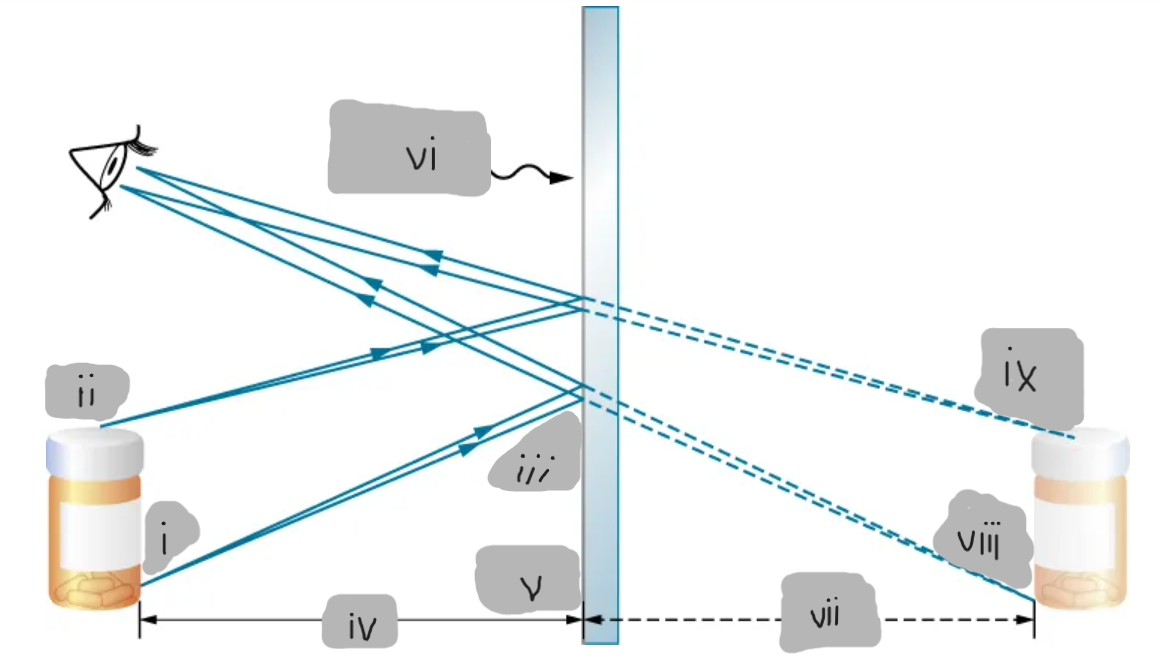
Q
(viii)
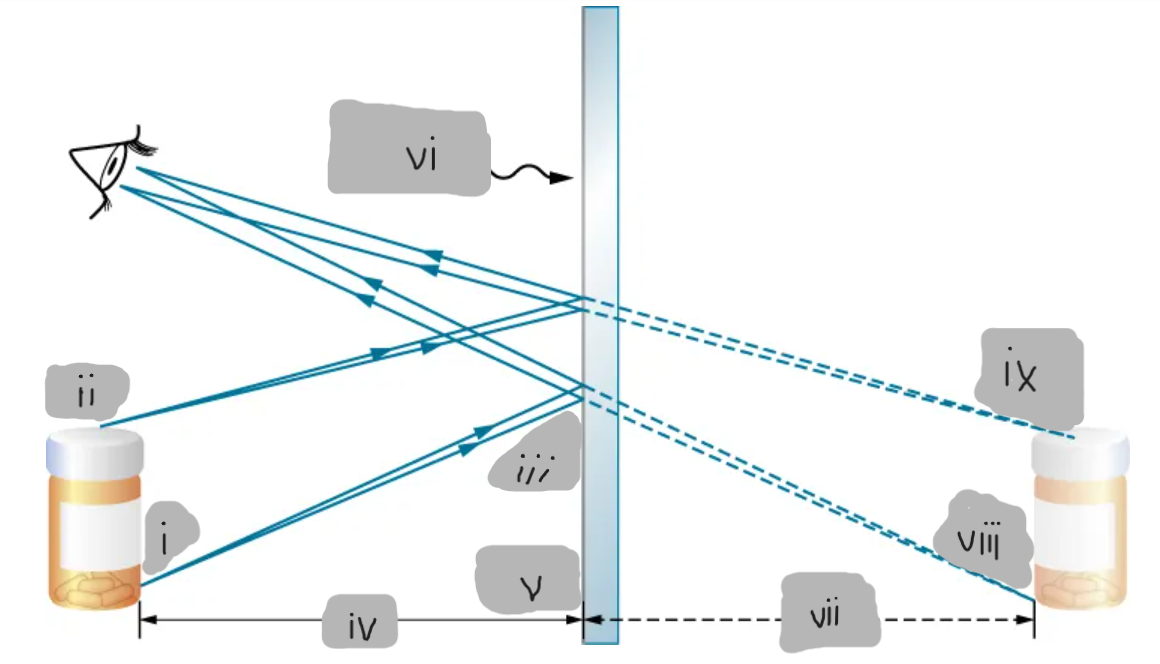
Q’
(ix)
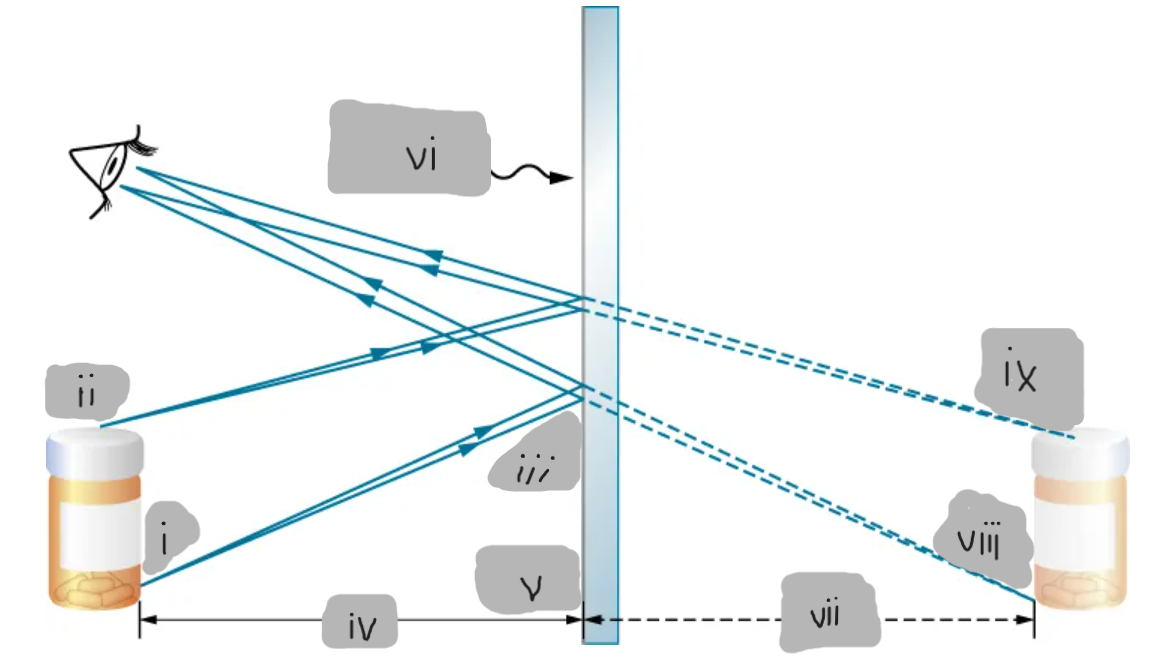
Object and image are on opposite sides of the mirror.
Interpretation of Sign Convention
Congruent Triangles (Mirror Geometry)
Triangles formed by object and image rays are equal, ensuring equal distances.
Equal Distance Property
Image is as far behind the mirror as the object is in front.
Point-by-Point Image Formation
An extended object forms an image by combining images of all its points.
Apparent Origin of Rays
Observer perceives rays as coming from behind the mirror.
Due to backward extension of reflected rays.
Why Image Is Seen Behind Mirror
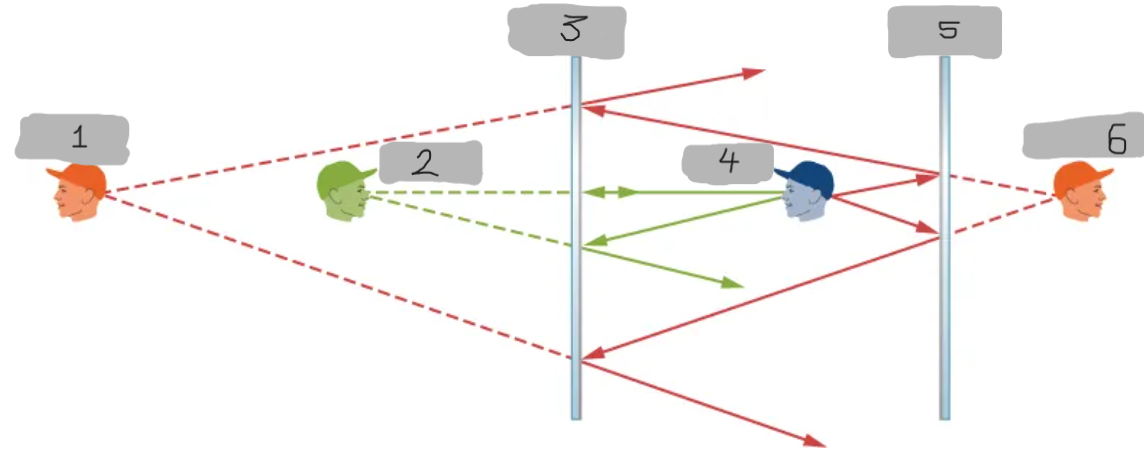
Multiple Image Formation
Occurs when more than one mirror reflects light.
Image of an Image
An image formed by one mirror can act as an object for another.
Image 3
(1)
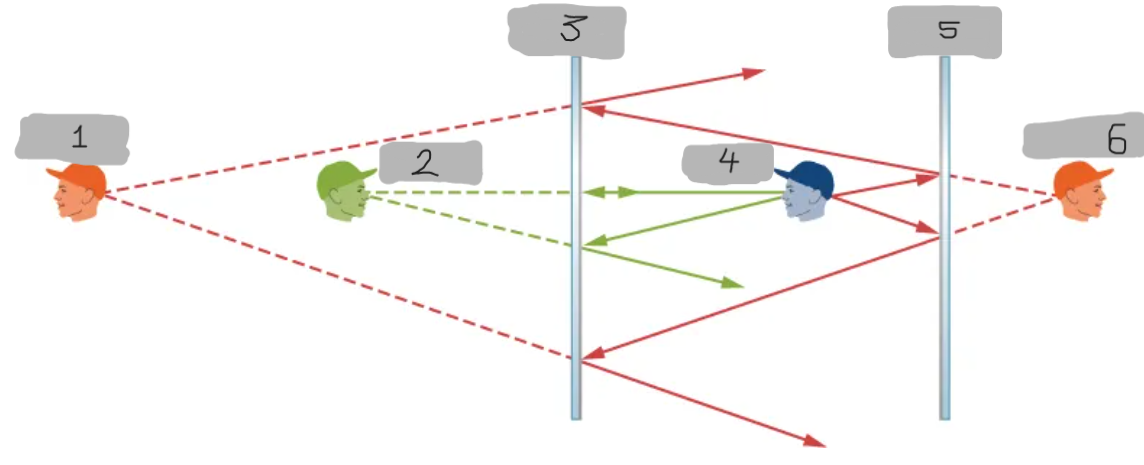
Image 1
(2)
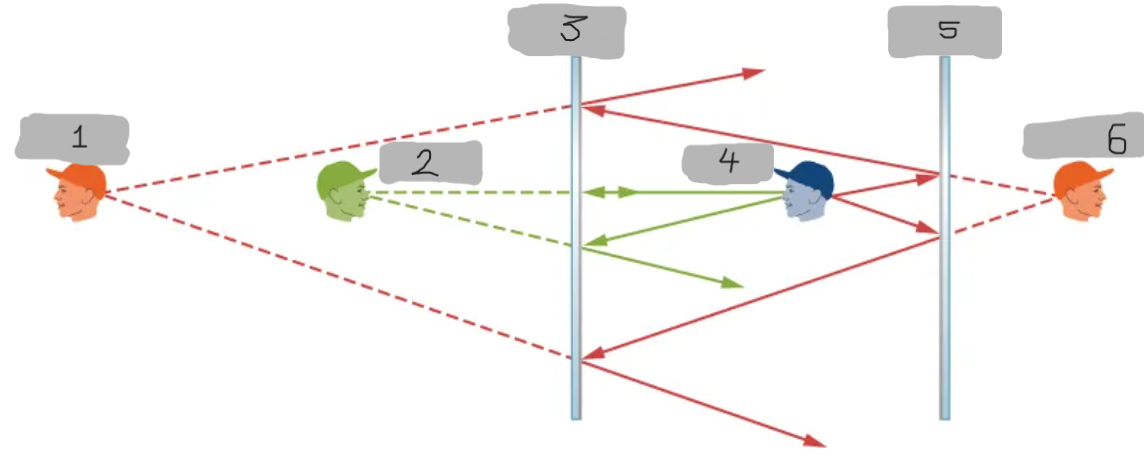
Mirror 1
(3)
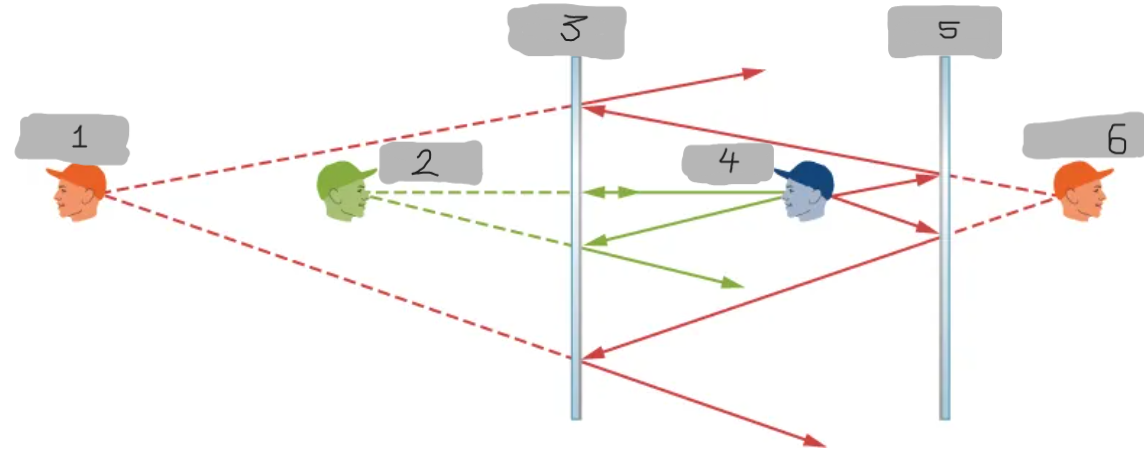
Object
(4)
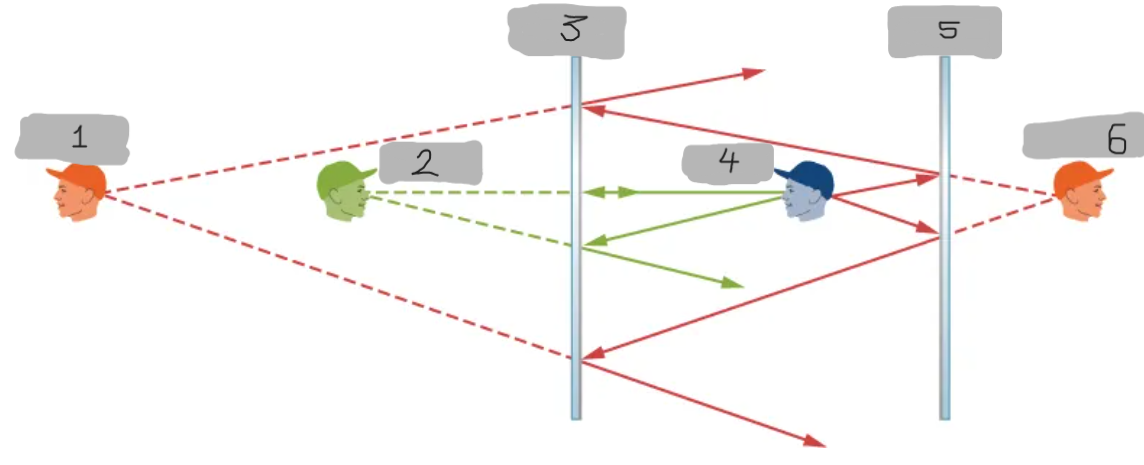
Mirror 2
(5)
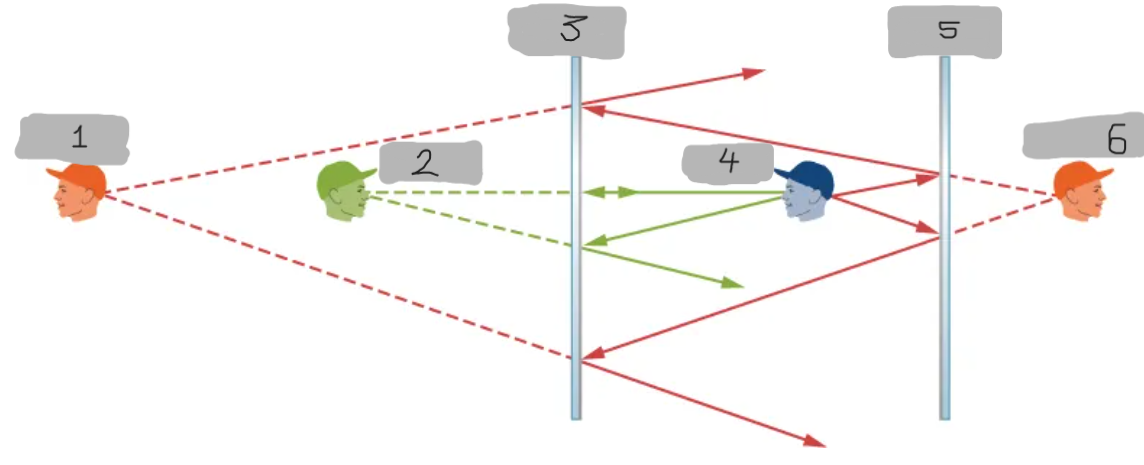
Image 2
(6)
Parallel Mirrors Setup
Two mirrors facing each other.
Infinite Images (Parallel Mirrors)
An infinite sequence of images can form due to repeated reflections.
Condition for Infinite Images
Object is not placed exactly midway between mirrors
Front–Back Inversion
Mirror reverses depth (front and back), not left and right physically.
Mirror Reversal Analogy
Like turning a glove inside out (right becomes left).
Successive Reflections Effect
Each reflection flips front/back relative to the previous image.
Right-Angle Mirrors (90°)
Two mirrors placed perpendicular to each other.
Three images are formed.
Number of Images (90° Mirrors)
Single Reflection Images
Images formed from reflection in only one mirror.
Double Reflection Image
Image formed by reflection from both mirrors
Ray Path Analysis
Tracing rays helps identify how many reflections occur
Image Behind Corner
Some images require looking “behind” mirror intersection.

