Paleolithic Art and The Neolithic Revolution
 Studied by 0 people
 Call Kai
 Learn
Learn Practice Test
 Spaced Repetition
 Match
Match Flashcards
 Knowt Play
1/4

There's no tags or description
Looks like no tags are added yet.
Name | Mastery | Learn | Test | Matching | Spaced | Call with Kai |
|---|
No analytics yet
Send a link to your students to track their progress
5 Terms
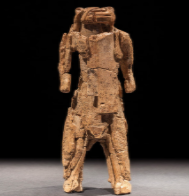
Lion Human, 32,000 BCE
ARTIST: unknown
PERIOD: Upper Paleolithic period
MATERIAL: Carved mammoth ivory, 31cm tall
CONTEXT: Head of a cave lion with a partial human body.
KEY THEMES: Symbolizes ideas about the supernatural.
WHY IT’S IMPORTANT: Part of rituals that hold symbolic meaning. The wear on it’s body suggests that it was passed around. Lion Man is the oldest piece of evidence for religious beliefs
and the connection between animals and human identity in prehistoric culture
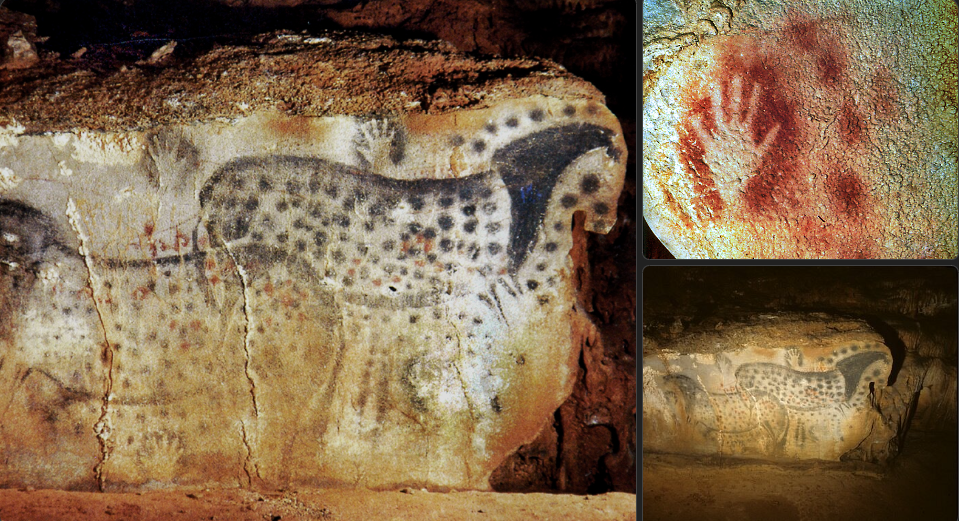
Spotted Horses and Human Hands, Peche-Merle, Dordogne, France, 25,000
Material and Structure: The artwork is a cave‐painting panel on the limestone walls of the Pech‑Merle Cave (Pigments used: red ochre (iron‑oxide), black manganese/charcoal, and perhaps other natural pigments ground and applied to the rock surface.
Creator: The work is by anonymous Upper Paleolithic humans
Date and civilization: It comes from the Gravettian culture (or broadly the Upper Paleolithic of Western Europe) in that region. 25,000 BCE
Meaning: One line of thought: the spots and horse forms represent animals that the artists observed in their environment Another interpretation: the spots are symbolic, abstract, or ritual marks rather than purely representational, perhaps marking the animal in a special way (see below under religious meaning). The hand stencils: possibly a “signature” of the artist, or a mark linking the human to the animal imagery. They may indicate human presence, identity, belonging, or ritual connection.
So in short: meaning likely combines representational and symbolic elements: portraying horses the people knew, but also doing so in a way that signaled meaning beyond mere depiction.
Further religious meaning: the work likely served more than decorative purpose — it may have been part of symbolic behavioral systems involving human‑animal relationship, ritual, and belief in unseen forces.
Why is it important to its culture? This artwork is a stunning example of early human figurative art — showing that hunter‑gatherer societies ~25,000 years ago were capable of sophisticated visual representation, symbolic thinking, and ritual behaviour. It documents the cultural life of Upper Paleolithic people: their relationship with large animals (horses), their use of caves as sacred or special spaces, their social practice of marking human hand‑presence. It also shows a creative relationship between humans and their environment—depicting animals they hunted or observed, and using natural features of the rock to enhance the depiction.
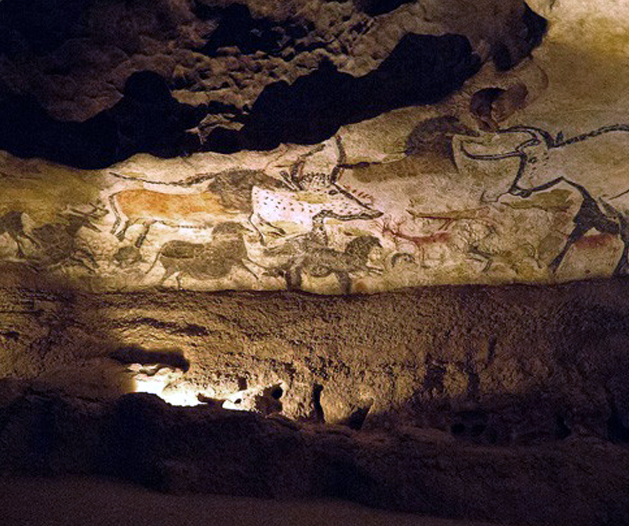
Hall of Bulls, Lascaux Cave, Dordogne, France, c. 15,000 BCE
Material and Structure: The paintings occupy the walls and ceilings of a chamber painted by hand or by blowing pigment through tubes, utilizing the natural rock contours to enhance form
Creator: The artists are anonymous
Date and civilization: Upper Paleolithic hunter‑gatherer society15,000 BCE
Meaning: The images show numerous large animals (auroch bulls, horses, deer, etc) rendered with bold contours, dynamic lines, often grouped, and overlaying earlier images.
Further religious meaning: the cave art may have been part of spiritual systems of meaning, identity, ritual, and the human attempt to engage with nature and the unknown.
Why is it important to its culture? it forms part of the heritage of human creativity and prehistoric art — helping us understand our deep past and the continuum of human culture.
Important characteristics: Pigments used–natural earth minerals: ochres (iron‑oxide pigments like hematite/goethite) giving reds, yellows, browns; manganese / charcoal for black; sometimes mixed with fat, clay, or water as a binder
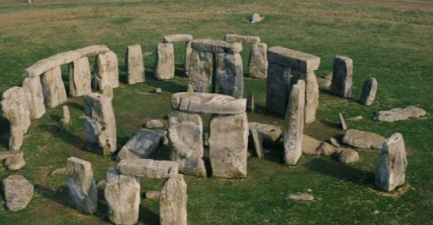
Stonehenge, c. 3000–1500 BCE
PERIOD: Neolithic - Early Bronze Age
LOCATION: England
ARTIST: unknown (evolved over time)
MATERIAL: Sarsen stone (from West Woods) and Bluestones (brought from Preseli Hills)
CONTEXT: It was built in segments. The earliest stage of monument were cremation cemeteries in Britain.
KEY INFO: ritual site, burial ground, and way to honor Neolithic era
WHY IT’S IMPORTANT: It serves as the most prehistoric stone circle in the world. Representing a glimpse of the practices during the Neolithic era.
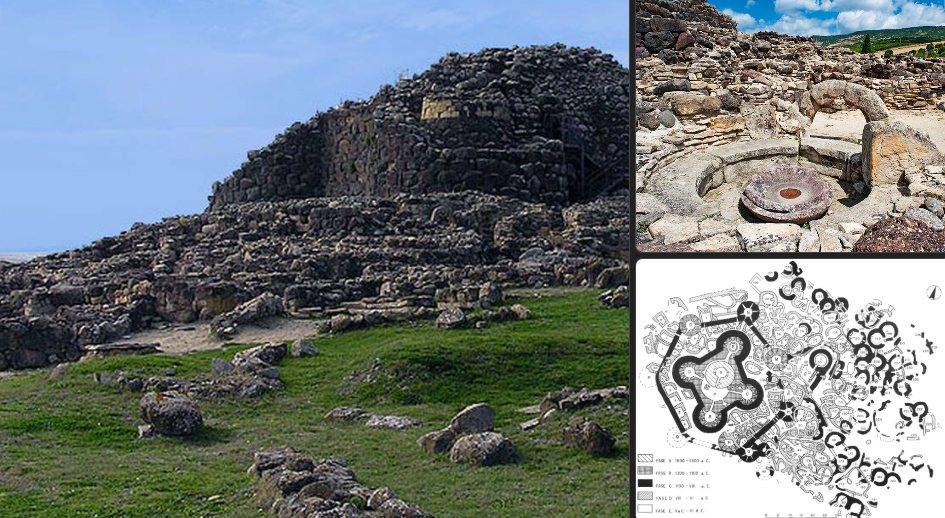
Nuragic Village of Barumini, Sardinia, Italy, 1600 BC
Material and Structure: built primarily of basalt — a hard volcanic stone local to the area (from the nearby Giara plateau) and also some local limestone/marl in later phases.
Date and civilization: The site belongs to the Nuragic civilization of Sardinia, 1600 BC
Purpose: The purpose of the Nuragic Village of Barumini was multifaceted, likely serving as a fortress, a ceremonial and religious center, and a community hub for the surrounding population. The complex featured a central defensive tower, a village of huts with areas for meetings, workshops, and kitchens, and a special "round yard" for ritualistic practices. Its precise function is still debated among archaeologists, but its design reveals a combination of defensive, civil, and religious roles
Why is it important to its culture? It testifies to social, political, and architectural development of the Nuragic people: from simple towers to complex bastioned systems, and surrounding village life. It provides a physical marker of a distinct cultural identity in Sardinia—an island whose Bronze Age culture developed independently of (though in contact with) Mycenaean, Phoenician, and later Roman influences.
Important characteristics: truncated‑conical tower (the “mastio” or keep) with three superposed chambers connected by a spiral staircase. The site therefore combines fortress/defensive architecture and domestic settlement architecture.
Multiple construction phases: The site shows evolution — initial tower, then four tower bastion, then seven‑lobed outer wall — reflecting changing social/military circumstances.
 Note
Note  Flashcards (101)