BIOL 1406: Membrane Structure & Function
 Studied by 0 people
 Call Kai
 Learn
Learn Practice Test
 Spaced Repetition
 Match
Match Flashcards
 Knowt Play
1/83

There's no tags or description
Looks like no tags are added yet.
Name | Mastery | Learn | Test | Matching | Spaced | Call with Kai |
|---|
No analytics yet
Send a link to your students to track their progress
84 Terms
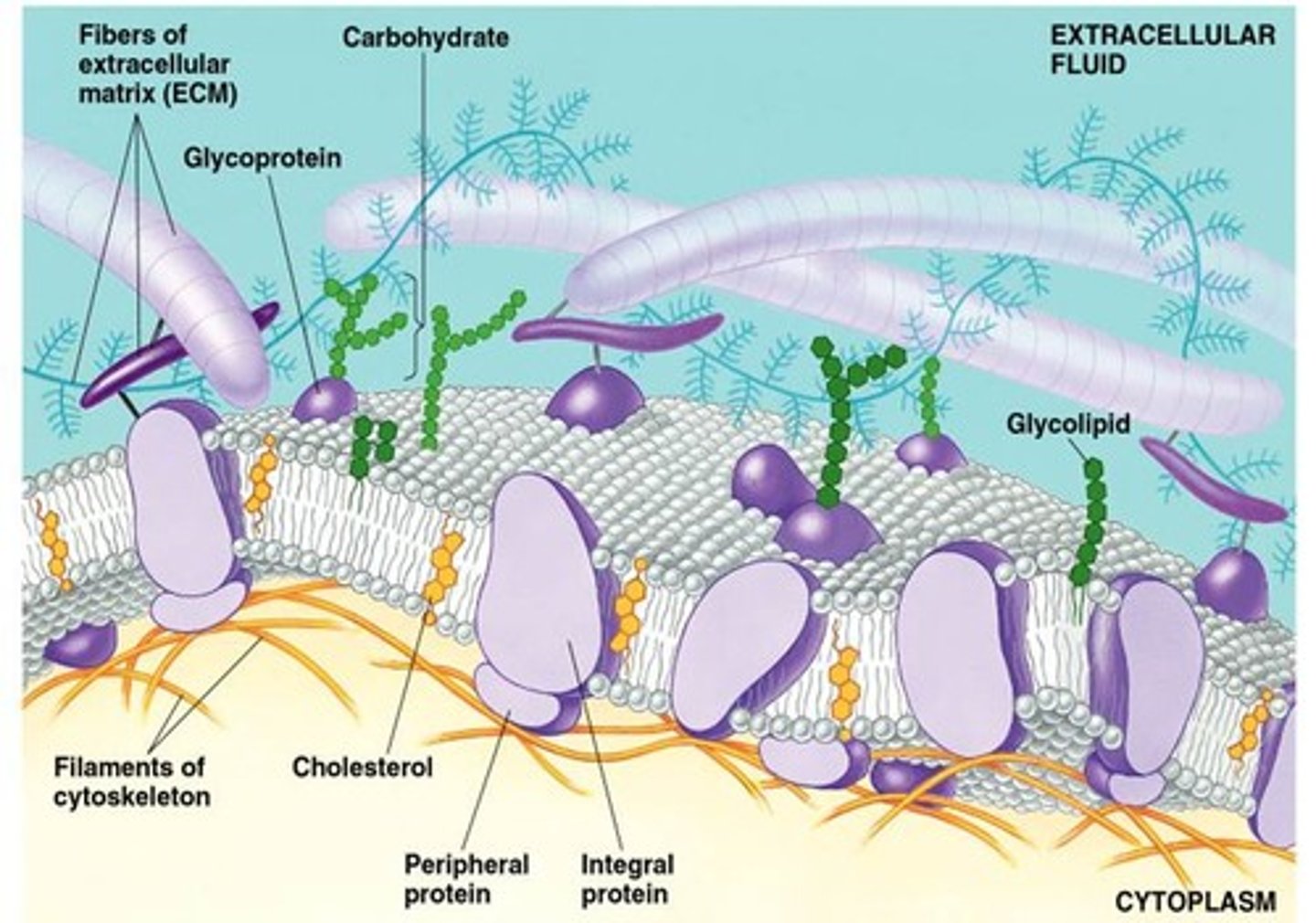
fluid mosaic model:
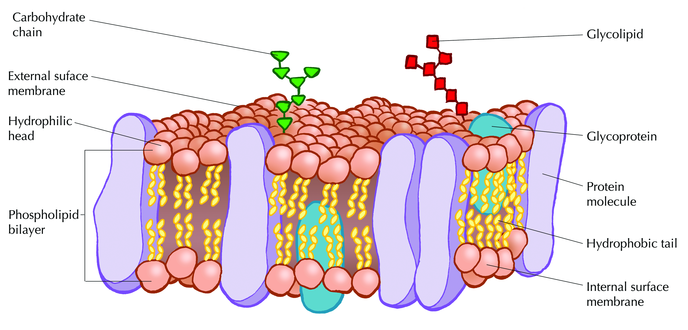
Membrane is a fluid structure with a "mosaic" of various proteins embedded in or attached to a bilayer of phospholipids.
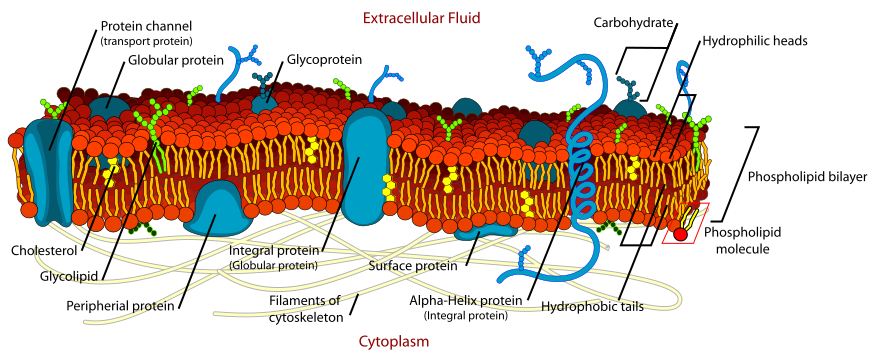
most membrane proteins are:
amphipathic (have hydrophobic and hydrophilic regions)
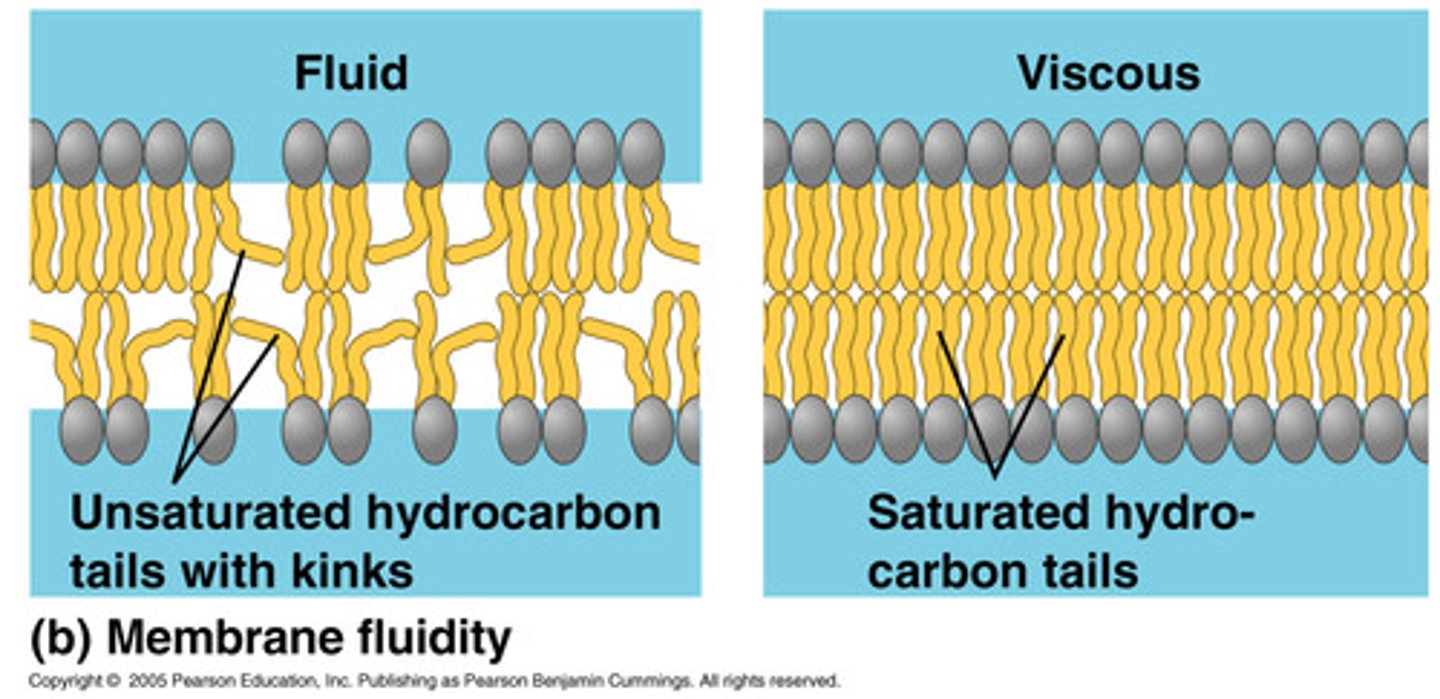
membrane fluidity:
determined by:
- phospholipid movement.
- saturated vs unsaturated hydrocarbons.
- presence of cholesterol.
held together primarily by hydrophobic interactions.
hydrophobic interactions:
weak interactions between a nonpolar molecules in a polar solvent.
4 major components of the cell membrane:
-lipids (phospholipids & cholesterol), proteins, and carbohydrates attached to some of the lipids and proteins.
- proteins: integral proteins, integrins, integrate completely into the membrane structure, and their hydrophobic membrane-spanning regions interact with the phospholipid bilayer's hydrophobic region.
- peripheral proteins: not embedded within the phospholipids.
- carbohydrates: always on cell's exterior surface and are bound either to proteins or to lipids forming. carbs form specialized sites on the cell surface that allow cells to recognize each other.
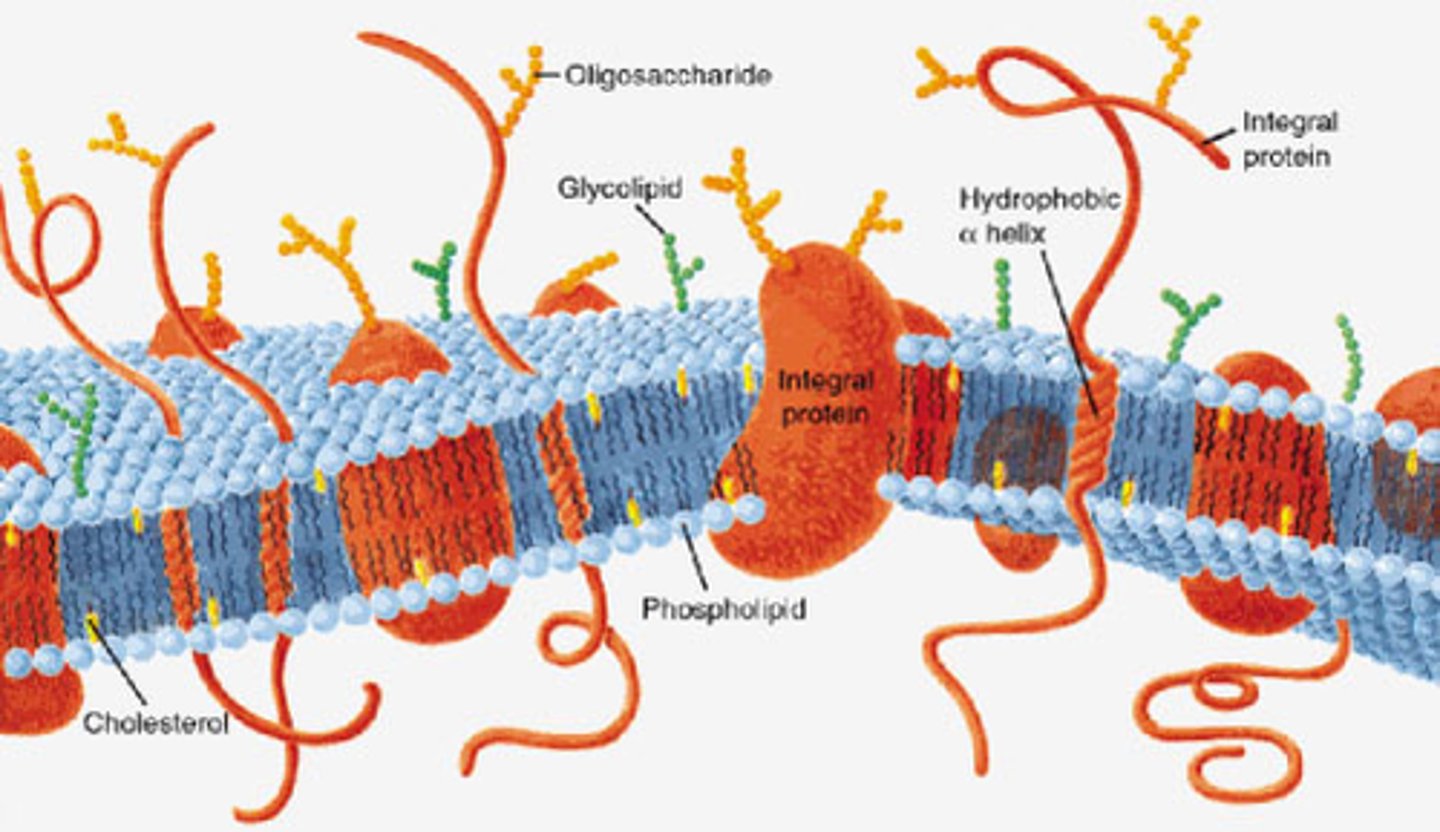
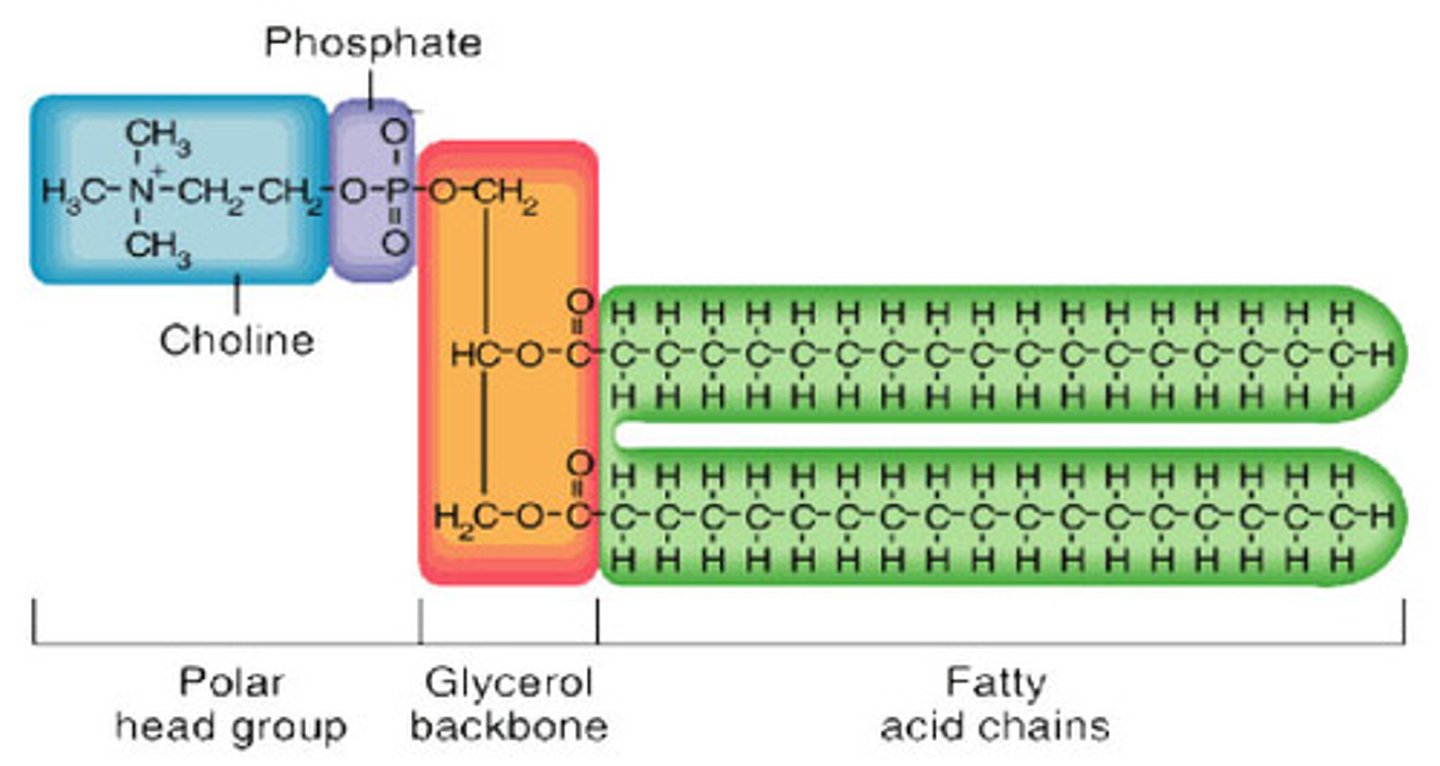
phospholipid molecule
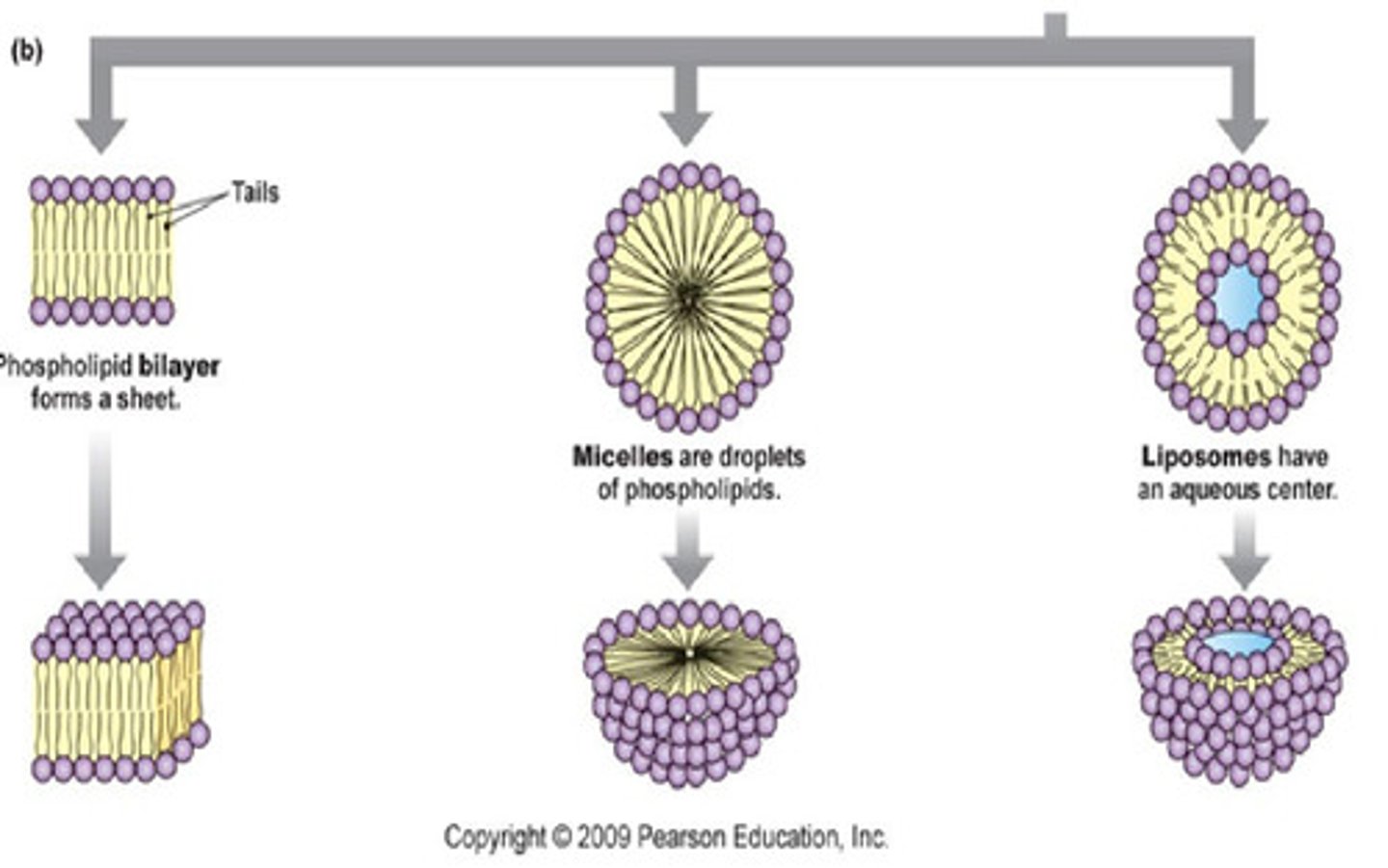
aqueous phospholipid structure
phospholipid structure
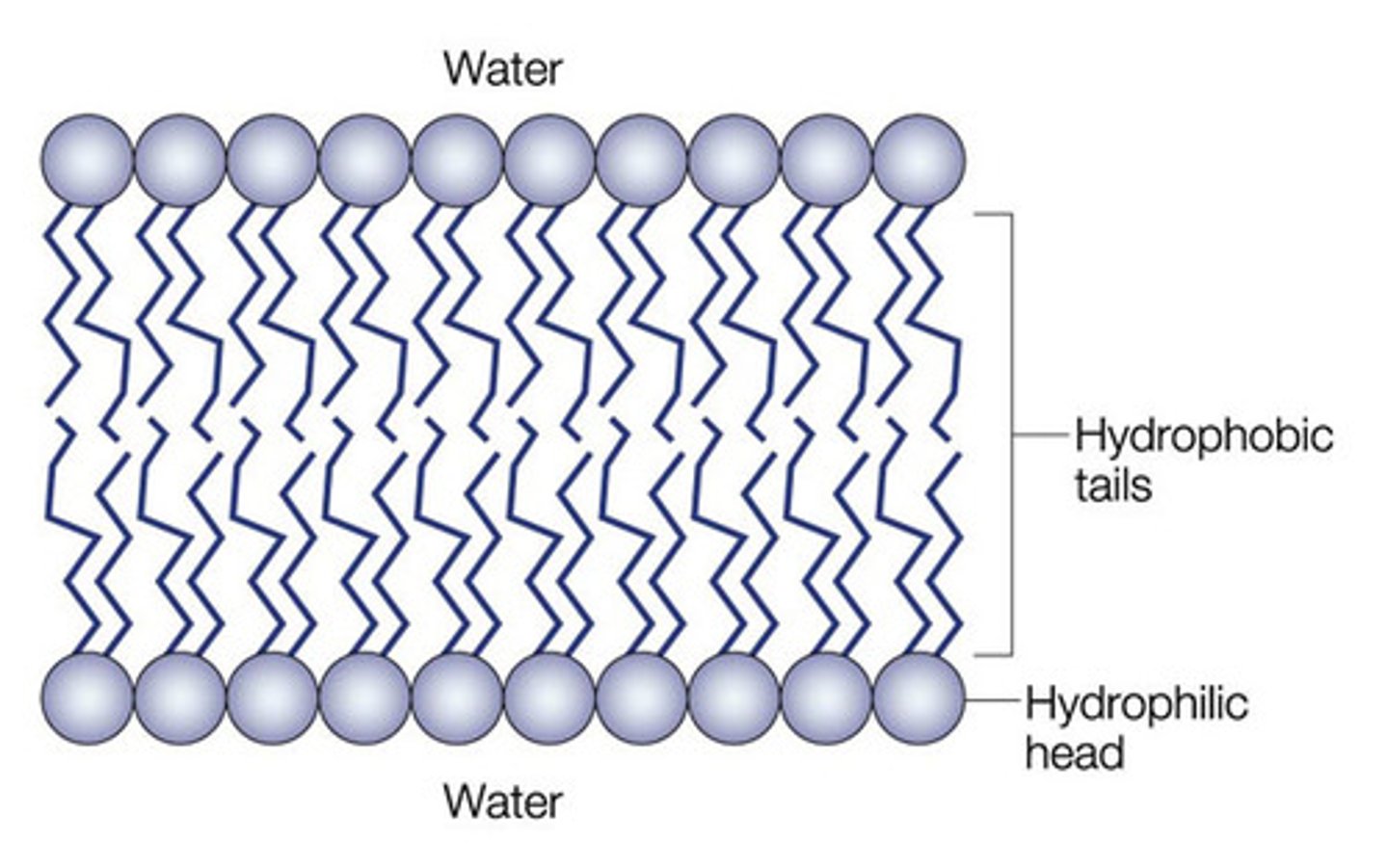
phospholipid: hydrocarbon tails:
as temperatures cool, membranes switch from a fluid state to a more solid state.
*membranes with more unsaturated hydrocarbons remain fluid at lower temps.
Protein Mosaic Model
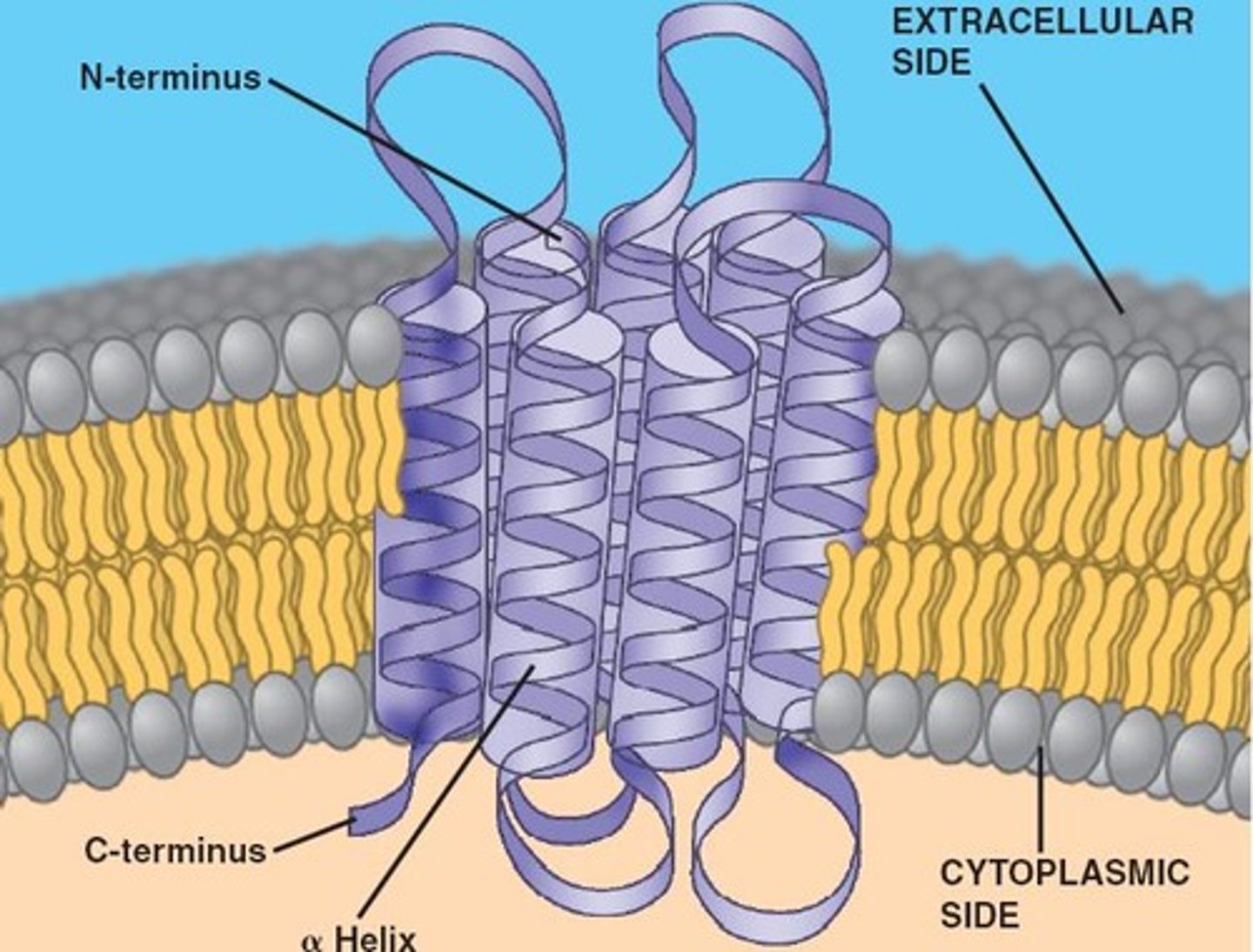
transmembrane proteins:
Integral proteins that span the membrane.
Plasma membrane functions:
transport.
enzymes.
signal transduction.
cell-cell recognition.
intercellular junctins.
cell adhesion.
transport:
of specific solutes
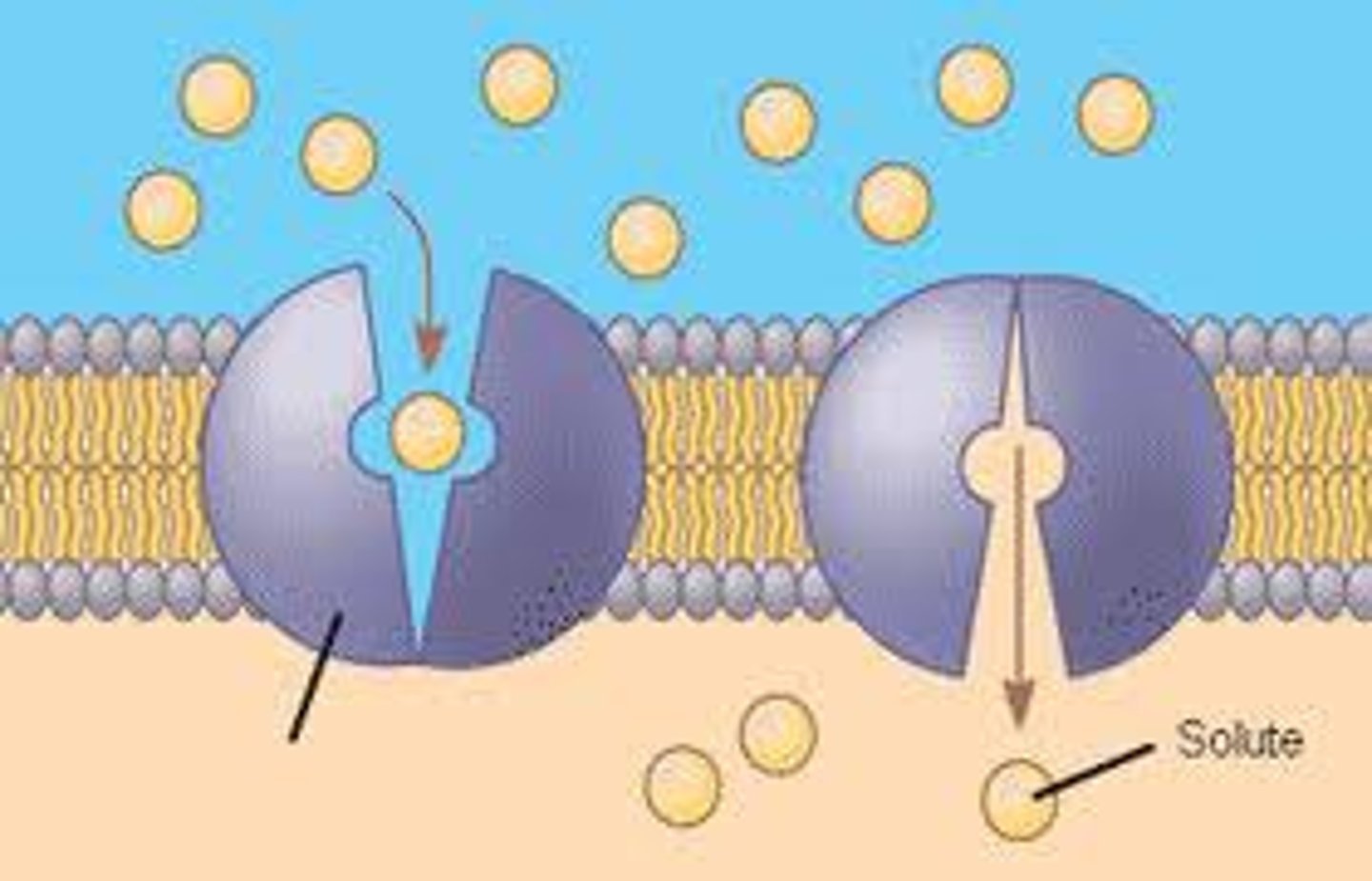
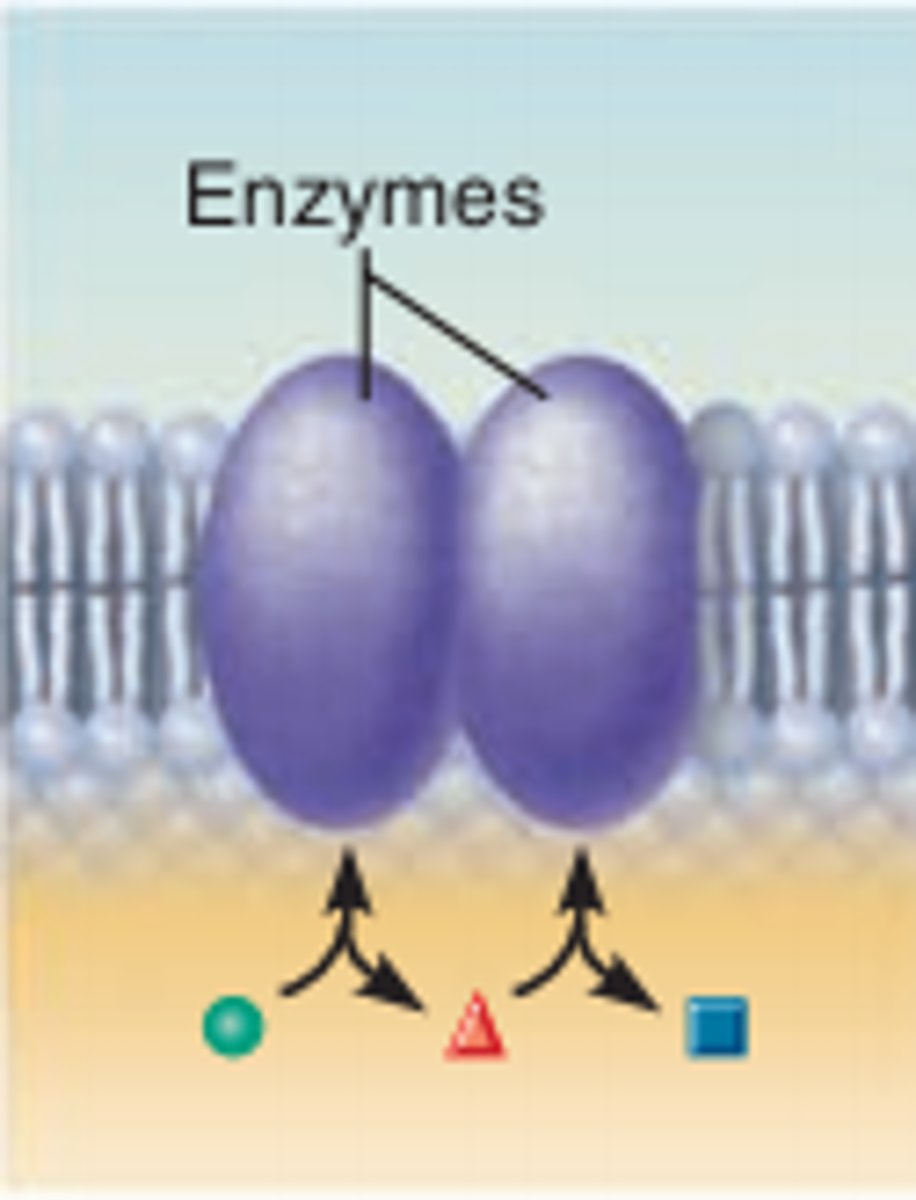
enzymatic activity:
catalyzing a metabolic pathway.
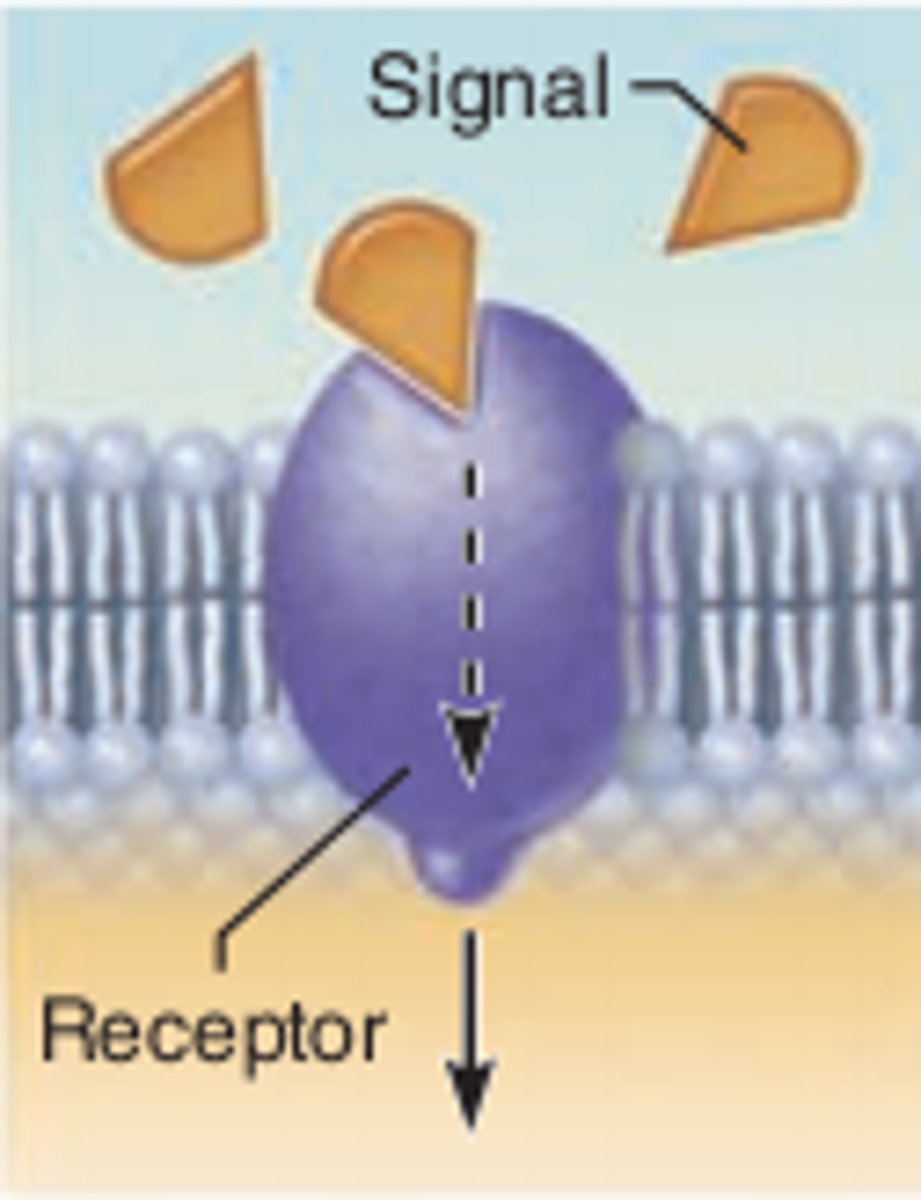
signal transduction:
relaying hormonal messages.
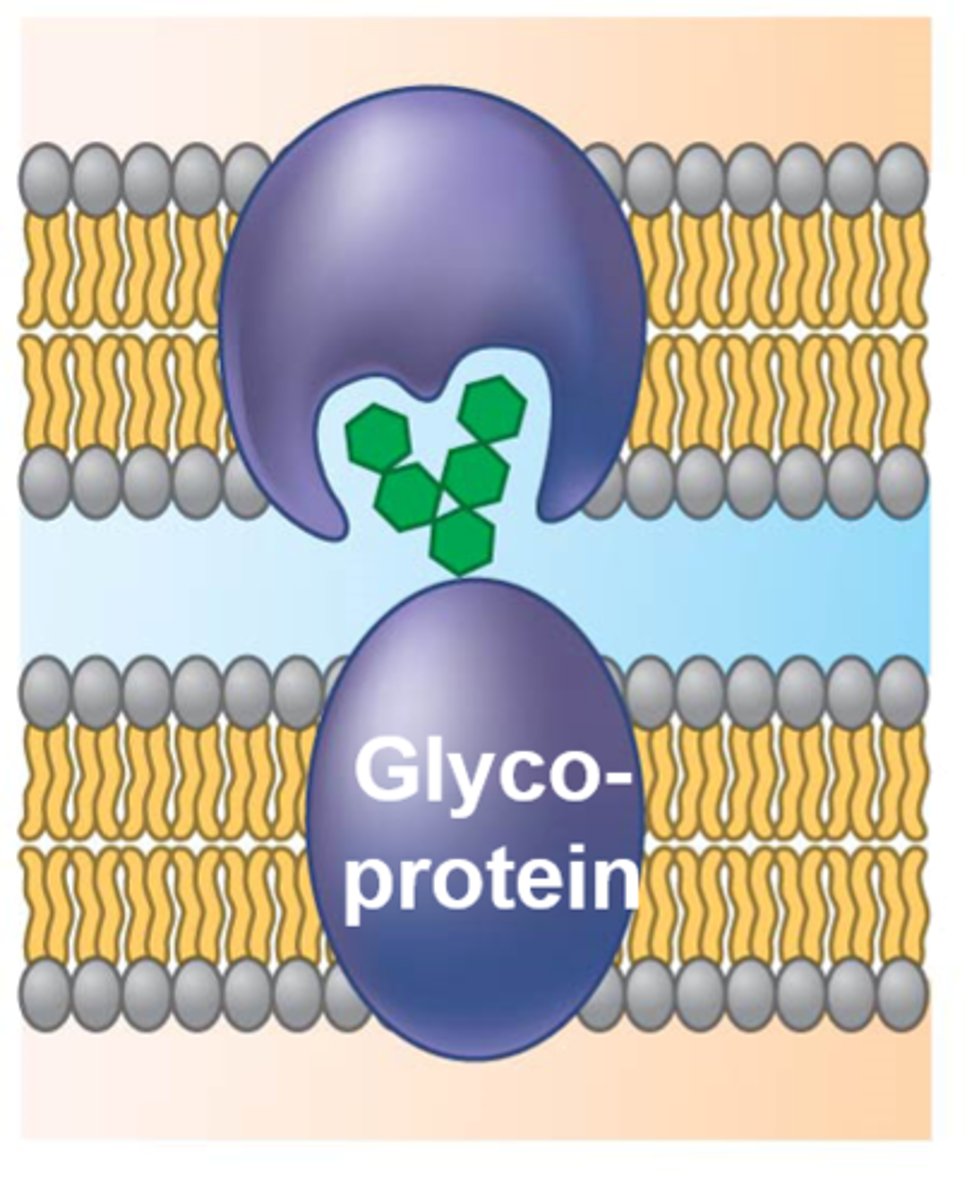
cell-cell recognition:
allowing proteins to attach two adjacent cells together, recognizing "self cells"
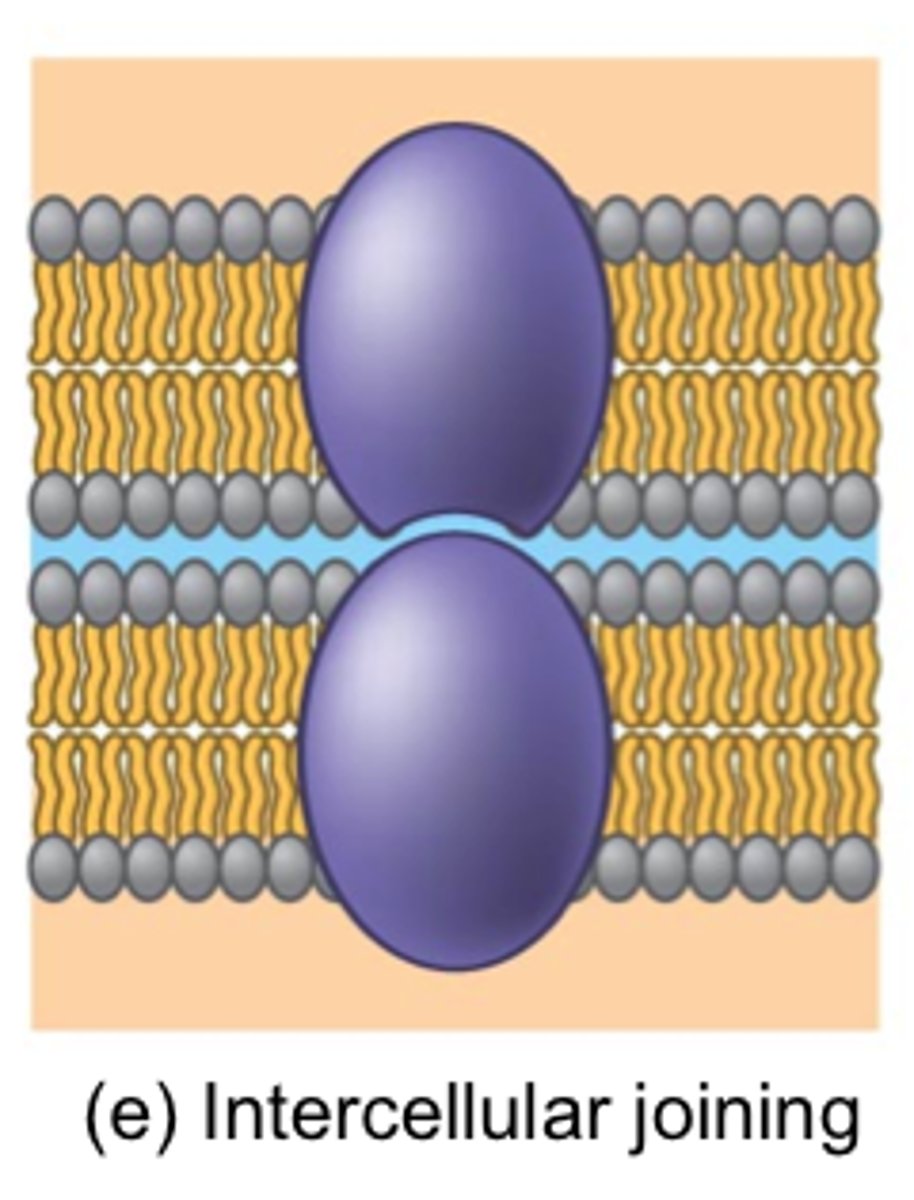
intercellular joining:
of adjacent cells with gap or tight junctions.
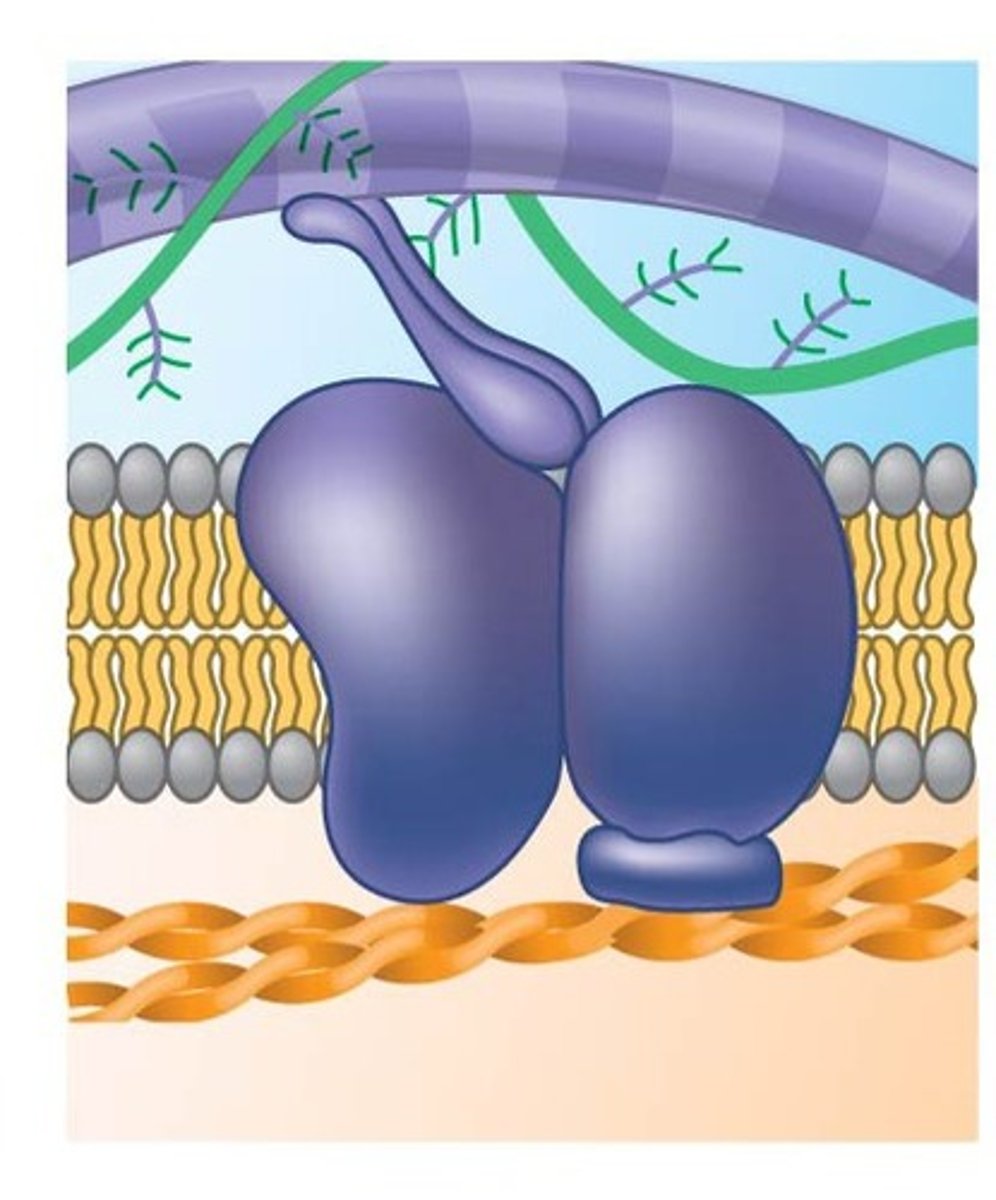
attachment:
to the cytoskeleton and extracellular matrix, maintaining cell shape and stabilizing the location of membrane proteins.
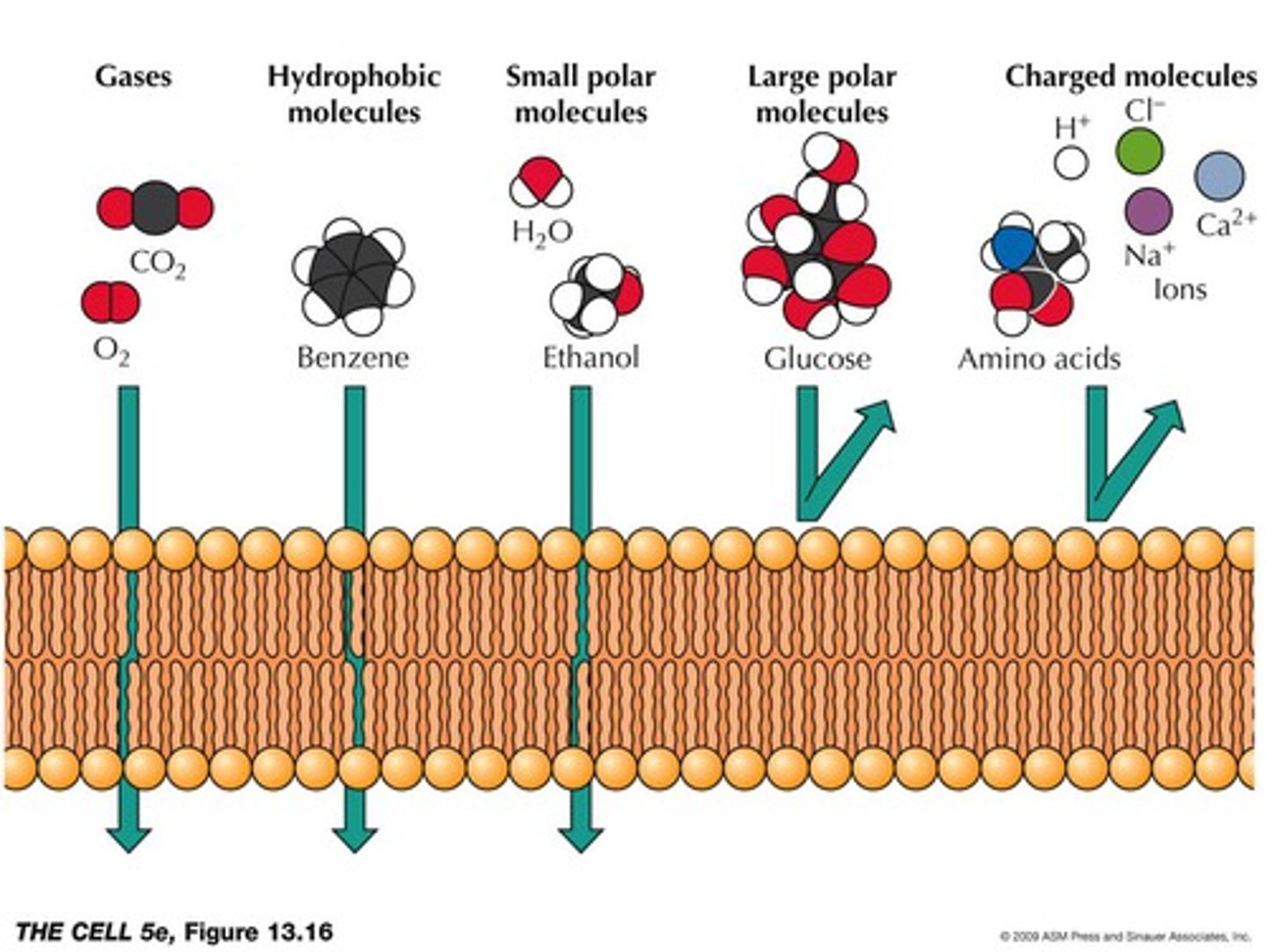
what 2 properties determine whether a molecule can pass directly through the phospholipid bilayer of a cell membrane:
size & nature of molecule (polarity, charge, etc.)
molecules that can pass the plasma membrane freely:
small.
uncharged.
hydrophobic.
non-polar molecules.
molecules that CANNOT pass the plasma membrane freely:
ions.
most polar molecules.
large molecules.
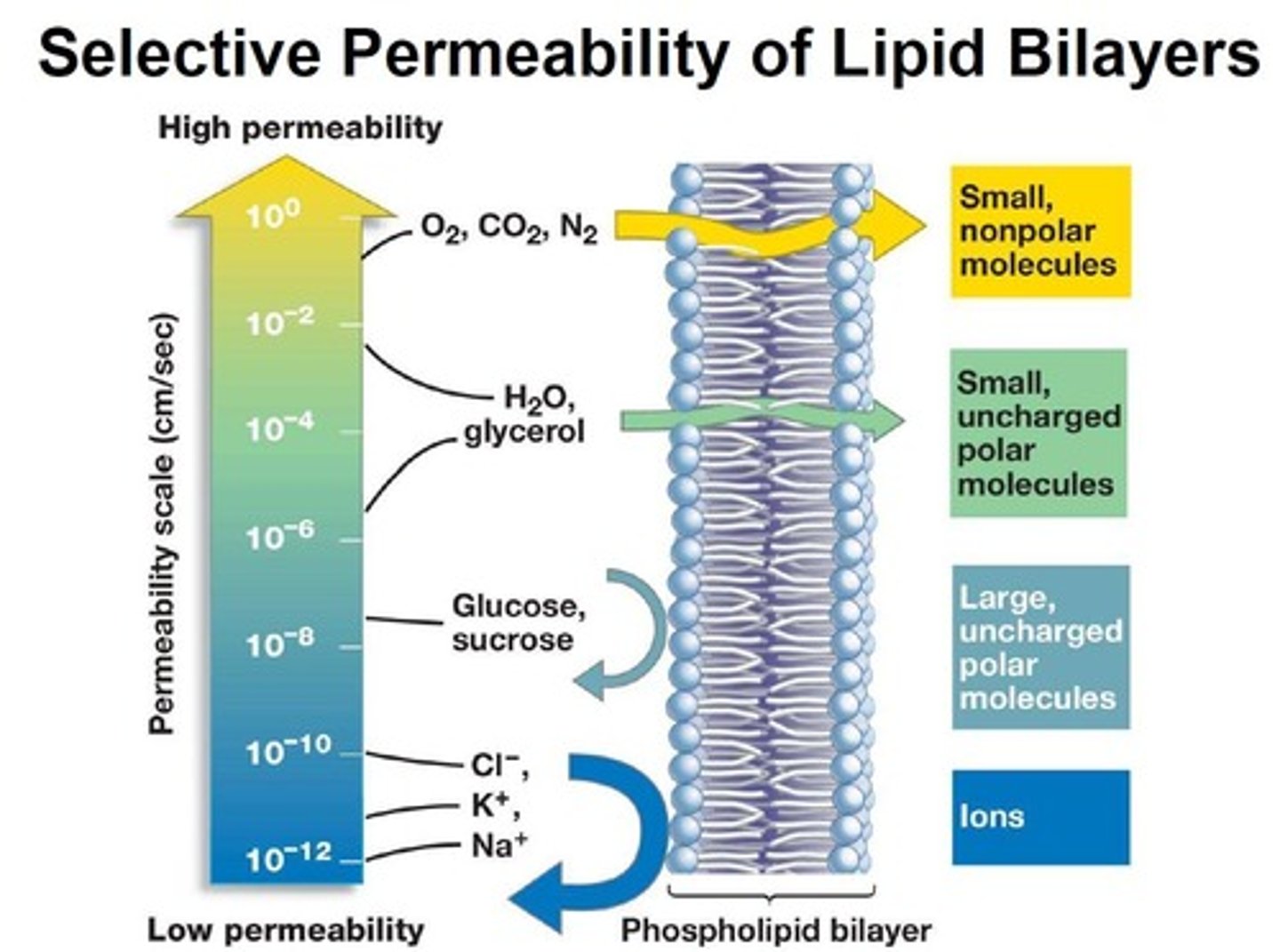
selective permeability of plasma membrane
selective permeability:
only certain molecules can pass freely across the membrane.
extracellular fluid:
fluid outside the cell
intracellular fluid:
fluid inside the cell (cytoplasm)
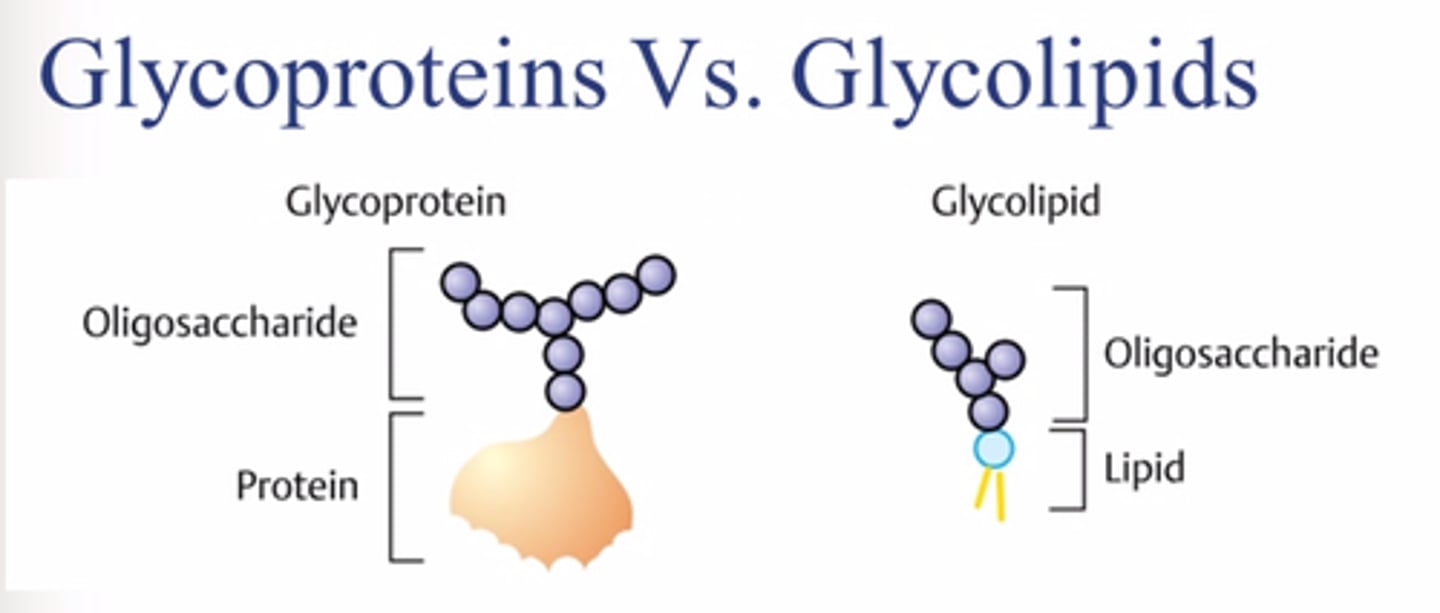
example of glycoprotein & glycolipid
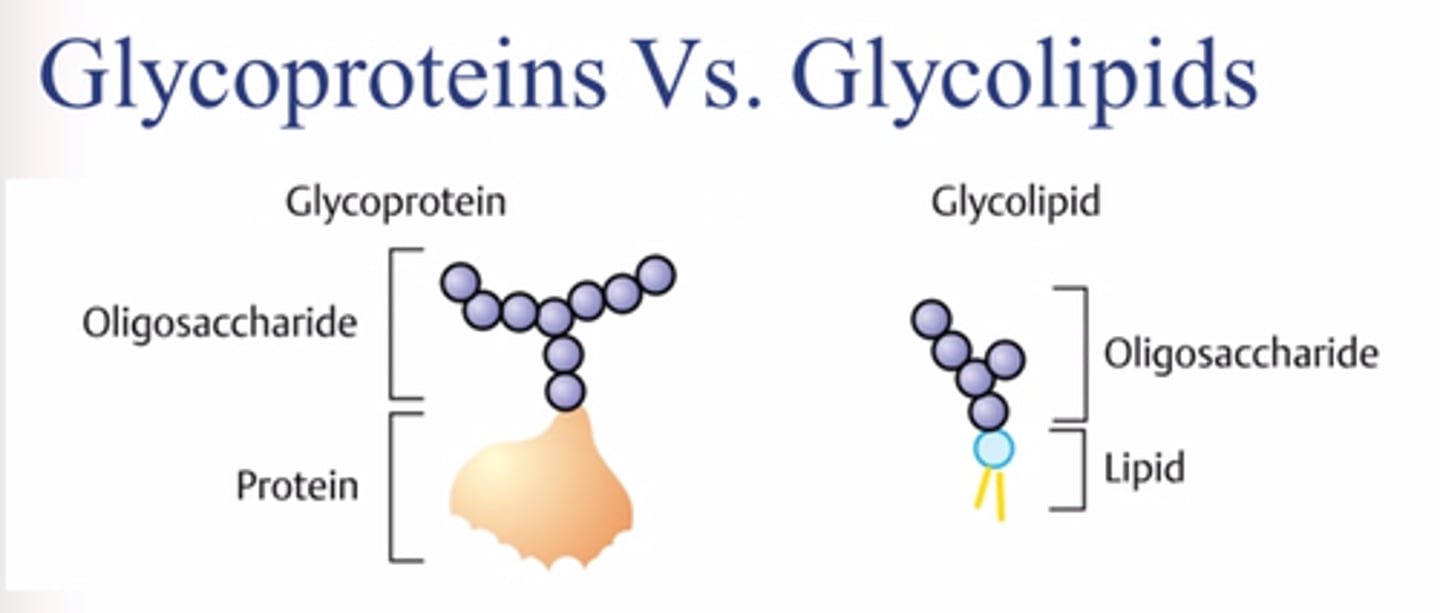
4 types of proteins found in a cell membrane:
glycoprotein.
carrier protein.
channel protein.
receptor protein.
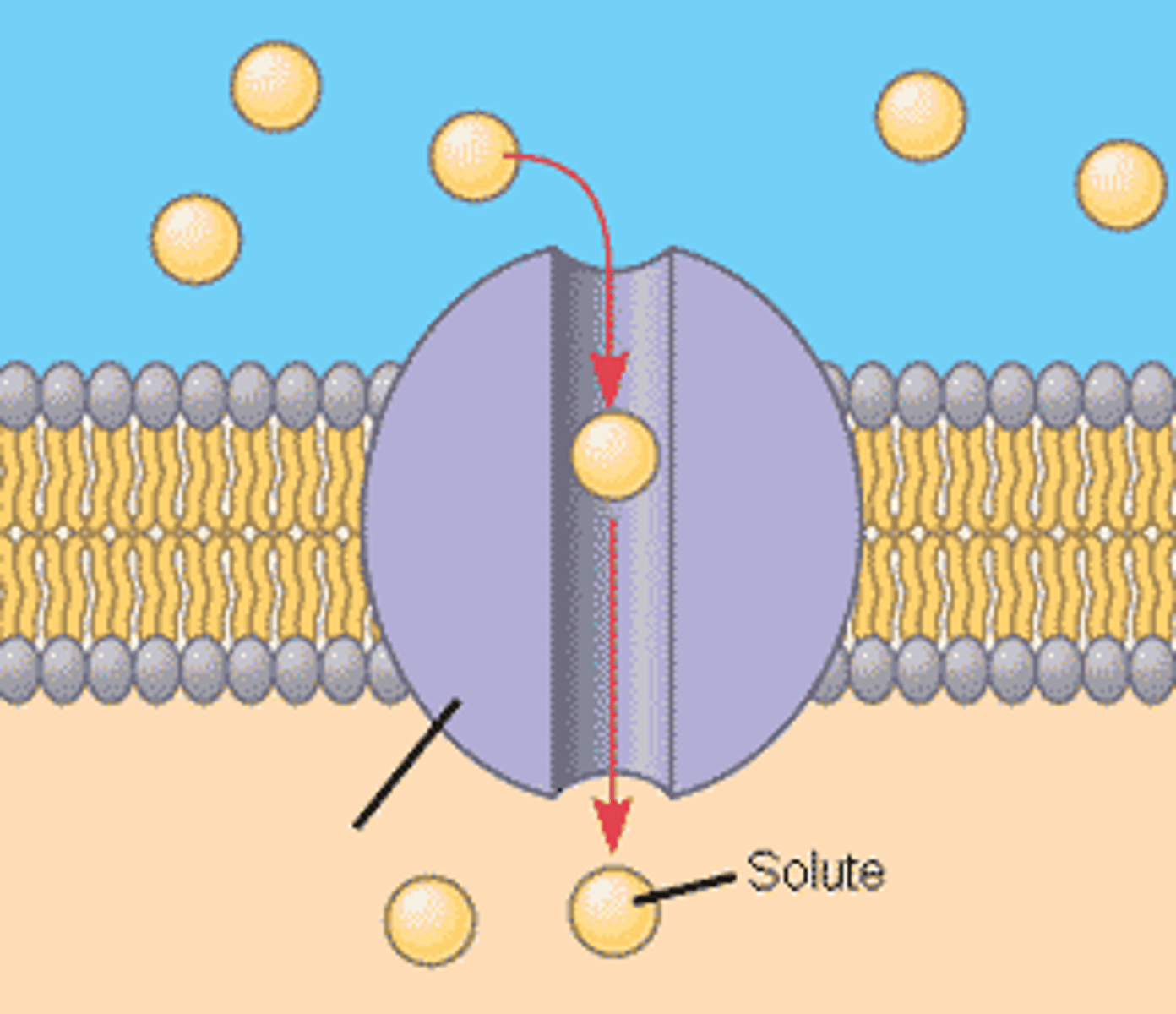
channel proteins:
membrane protein that allows a substance to pass through its hollow core across the plasma membrane.
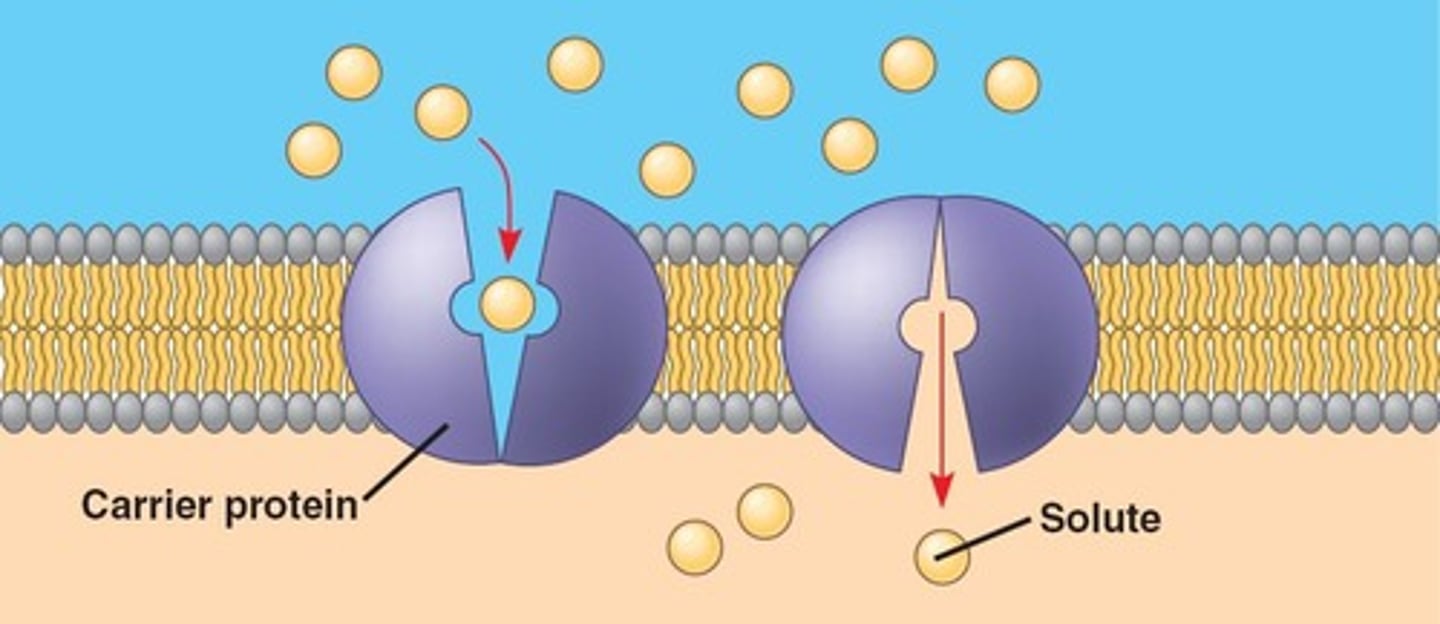
carrier proteins:
pick up molecules on one side of the membrane and releases it onto the other side
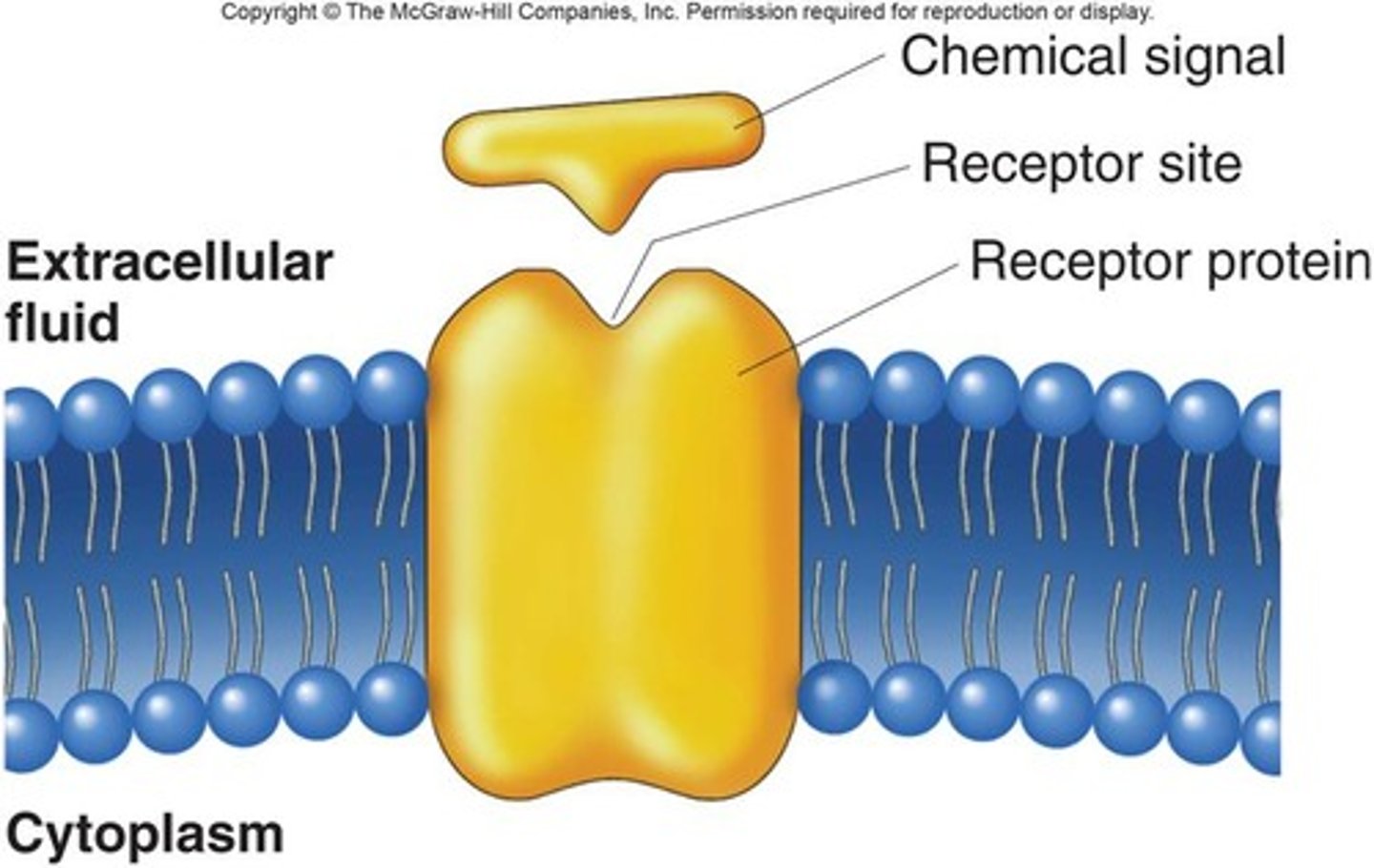
receptor proteins:
Proteins that transmit information in and out of cells. They allow communication between cells.
glycoproteins:
Membrane carbohydrates that are covalently bonded to proteins.
cell-cell recognition.
differentiate between body cells (self) and foreign cells (non-self).
preventing immune cells from recognizing and attacking them.
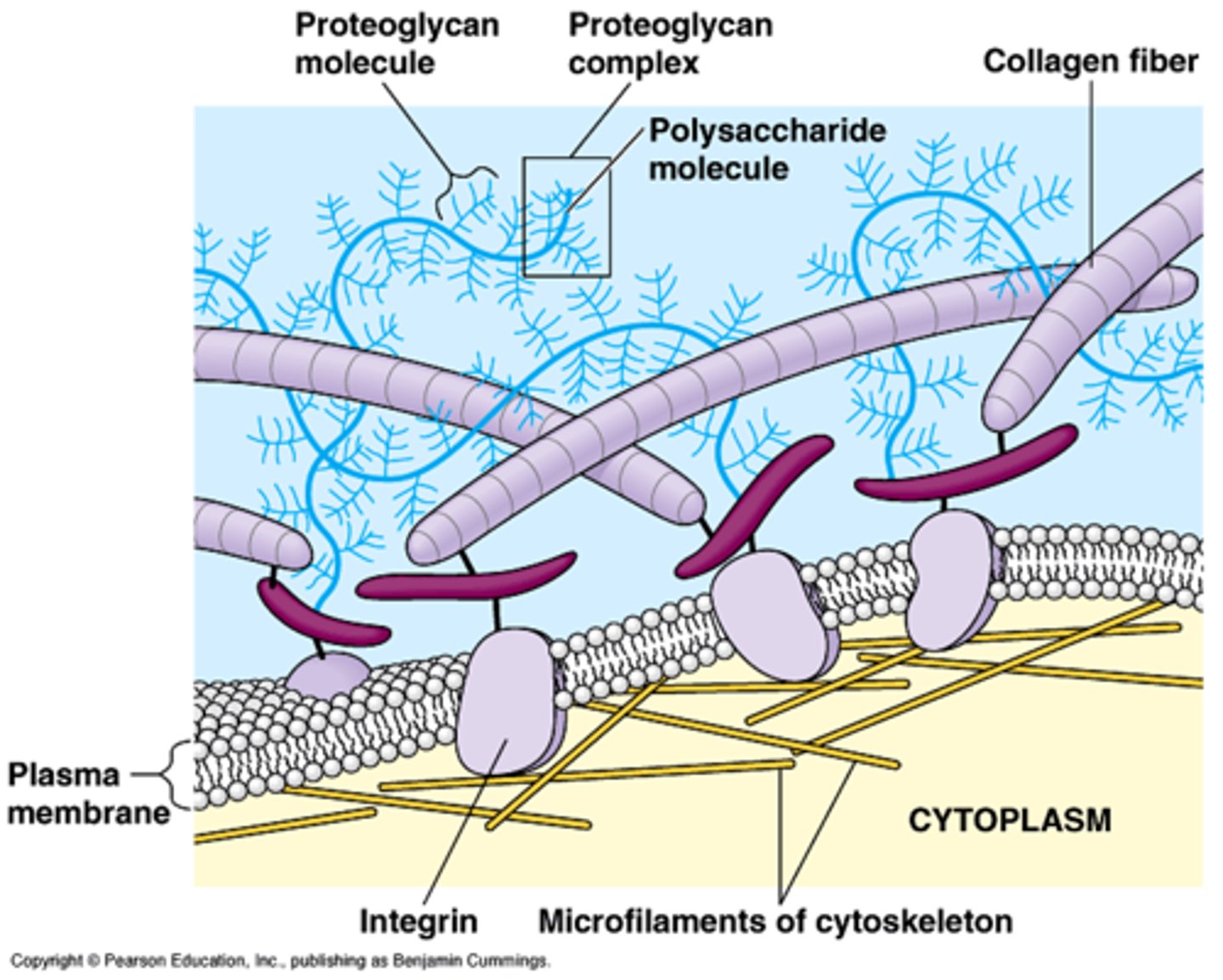
extracellular matrix:
composed of proteins (glycoproteins) and fluids secreted by cells.
two major functions:
-stabilize the structure of tissues .
- protects and supports the plasma membrane.
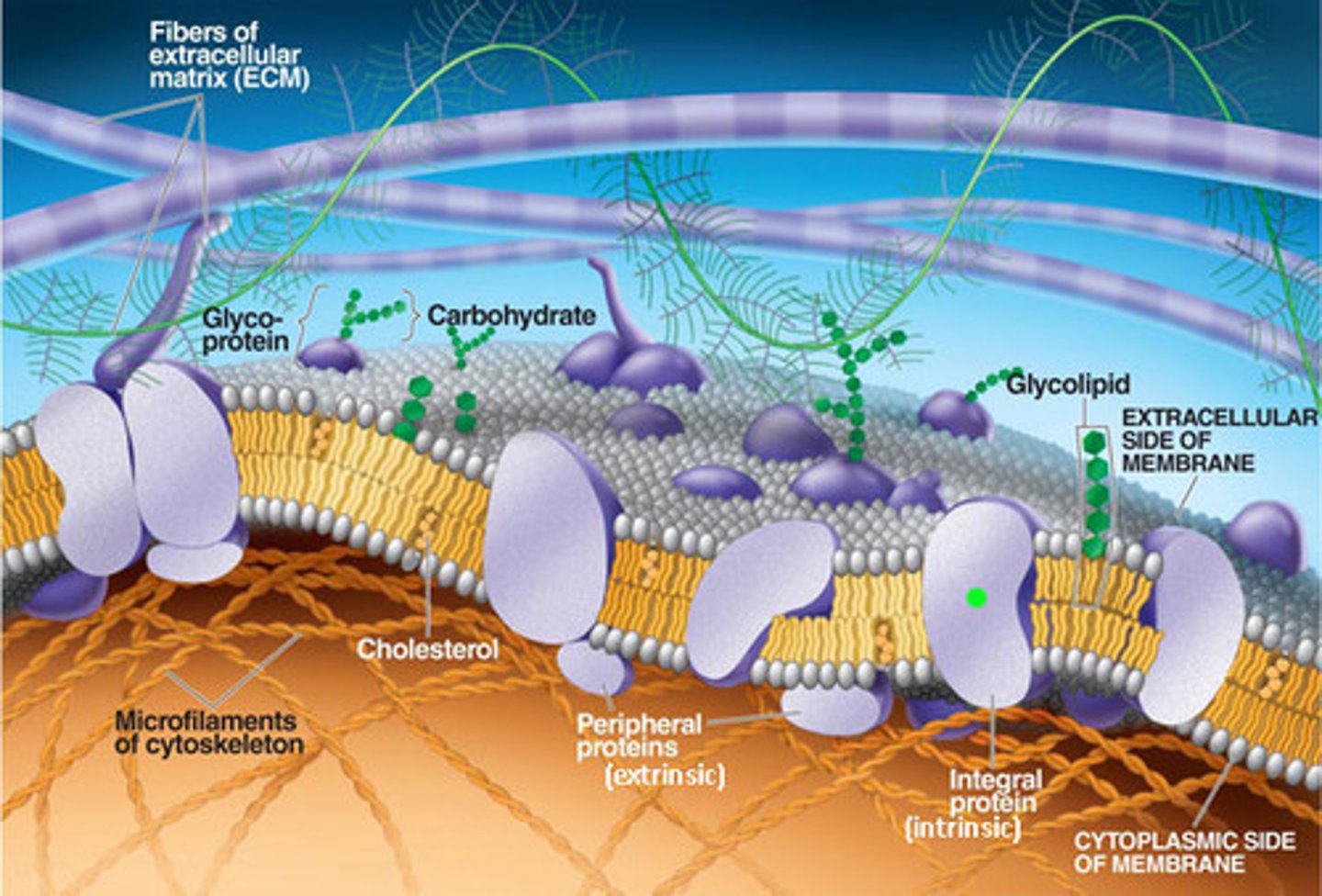
labeling a cell membrane:
molecules that could only pass cell membrane with assistance of proteins:
simple sugars and amino acids.
______ is necessary for a molecule to move across a membrane, but the __________ gradient __________ determines if the molecules will actually cross.
ENERGY.
concentration.
concentration gradient:
area of high concentration adjacent to an area of low concentration
the _______ divides the inside of the cell from the outside of the cell.
cell membrane
Many types of molecules have different concentrations inside and outside the cell. This means there is a concentration ________ on opposite sides of the membrane and that these molecules WILL cross if they CAN in order to go from _______ high _______ to ___ low _______________.
gradient.
high concentration.
to low concentration.
(down concentration gradient)
If a solute can cross though a membrane, over time, it will move ________ from the __________ concentrated side of the membrane to the __________ concentrated side.
molecules.
high.
low.
how long will this movement occur?
until the concentration is equal across a space.
define the term passive transport:
movement of molecules down a concentration gradient from one side of a membrane to another.
Transport that doesn't require any energy (is passive).
includes: diffusion, osmosis, and facilitated transport.
Cells use ATP as their IMMEDIATE source of energy.
Does passive transport require energy in the form of ATP?
no.
diffusion:
is the net movement of molecules from a region of HIGH concentration to a region of LOW concentration BECAUSE OF THEIR KINETIC ENERGY.
Osmosis is the DIFFUSION of water across a membrane.
osmosis is the diffusion of WATER across a permeable membrane.
OSMOSIS follows the same rules as diffusion, even though water is the SOLVENT in biological systems (not the SOLUTE).
When polar or ionic solutes are placed in water, they bind to water molecules.
Are bound molecules free to move across a membrane?
Are these bound molecules part of a concentration gradient of water? ______________
Because of this, osmosis is the diffusion of _________ water molecules across a membrane.
free water molecules
water molecules not bound to a solute
free water concentration
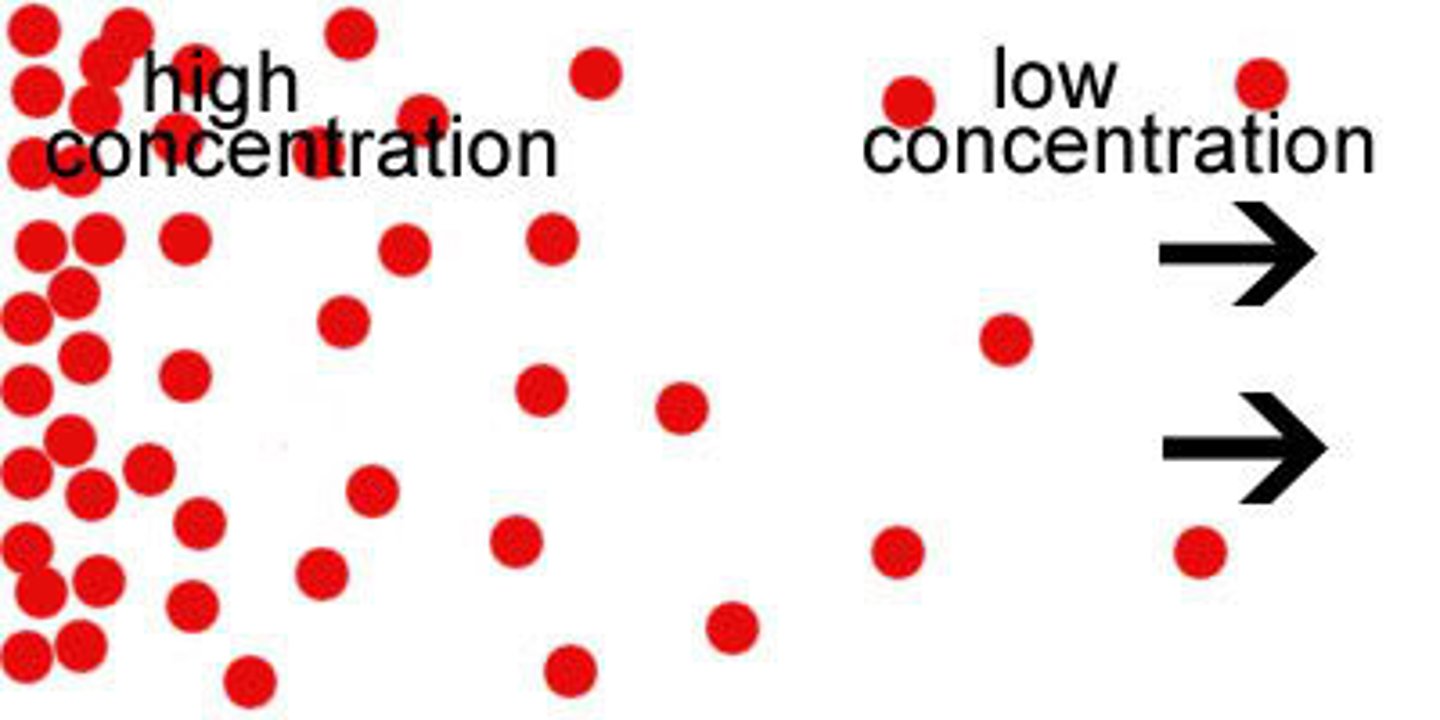
higher concentration vs lower concentration
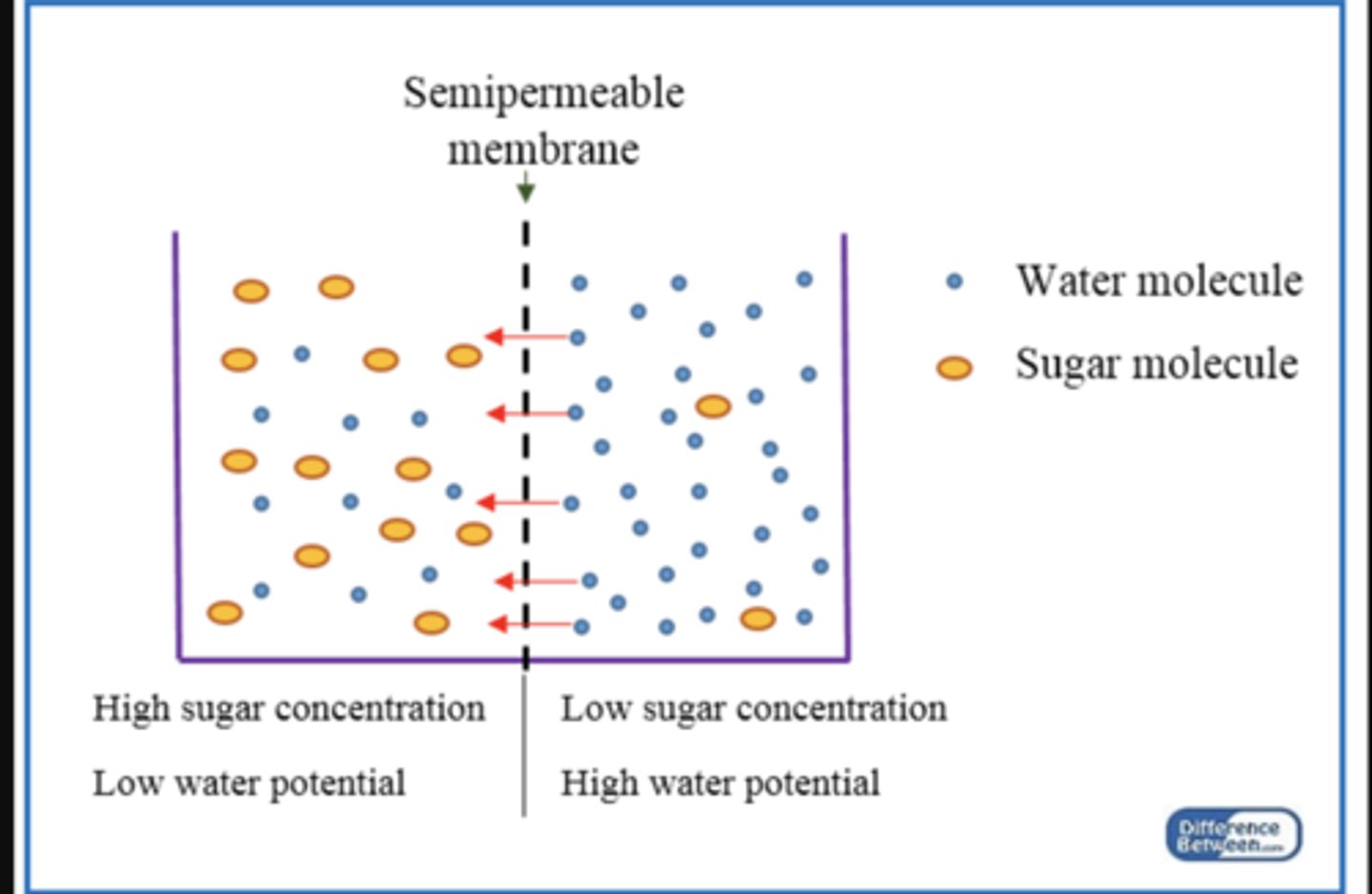
In osmosis, water is diffusing from a solution of _________ solute concentration to a solution of ________ solute concentration.
low. To high
If water moves from one side to the other but solutes do not then one of the two components will end up with more water than the other.
the side or compartment with high solute concentration will move water from the side with fewer solutes.
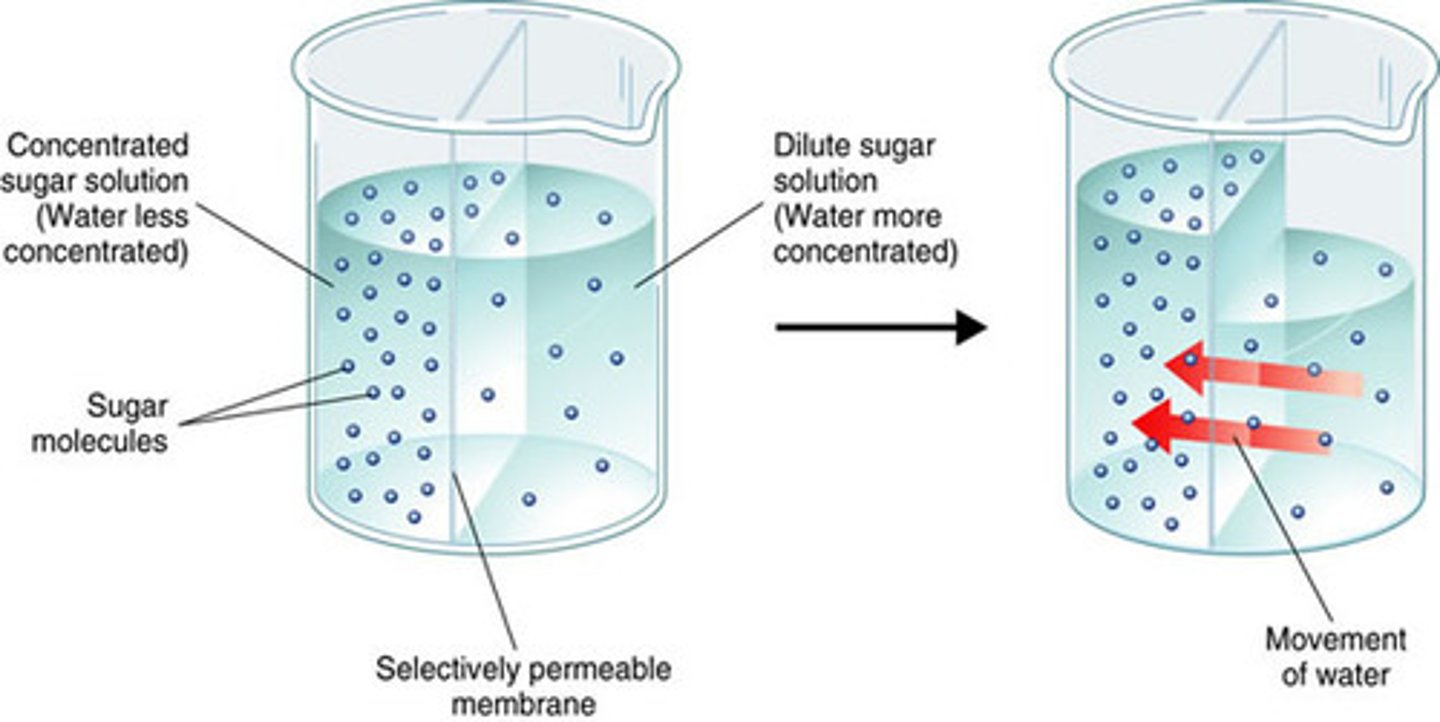
Water is able to cross the cell membrane but most _________ like sugars and salts cannot. So the water levels inside a cell can quickly change if a concentration gradient is formed between solutes inside the cell and outside the cell.
ions.
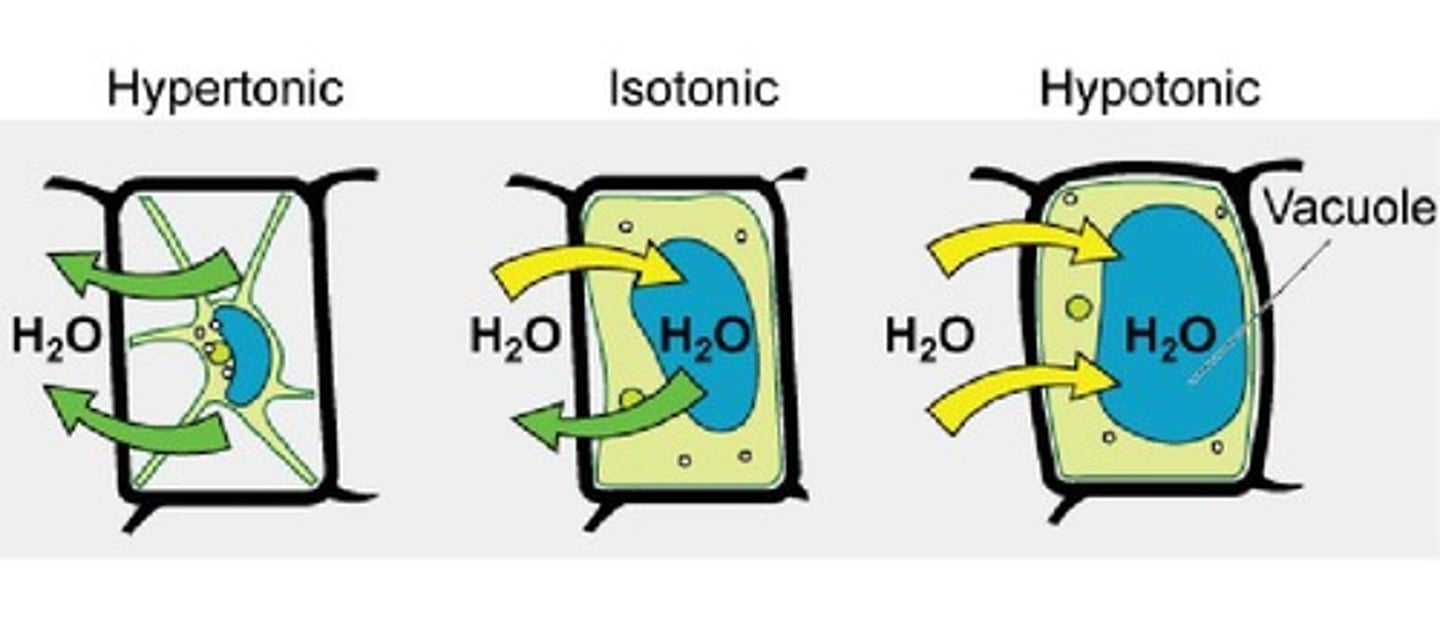
hypertonic:
high solute relative to another fluid; water flows into hypertonic region.
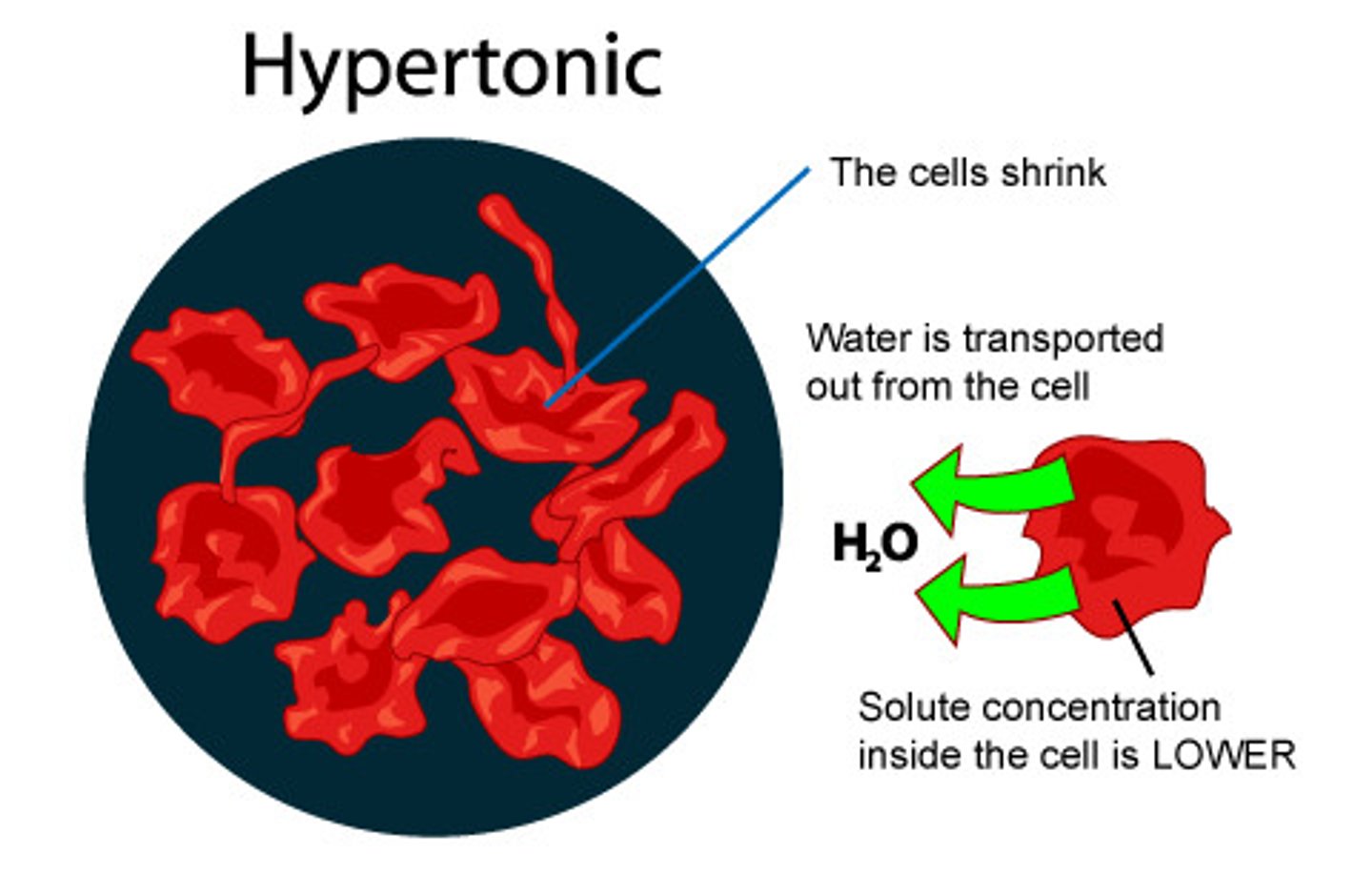
hypotonic:
low solute relative to another fluid; water flows out of hypotonic region.
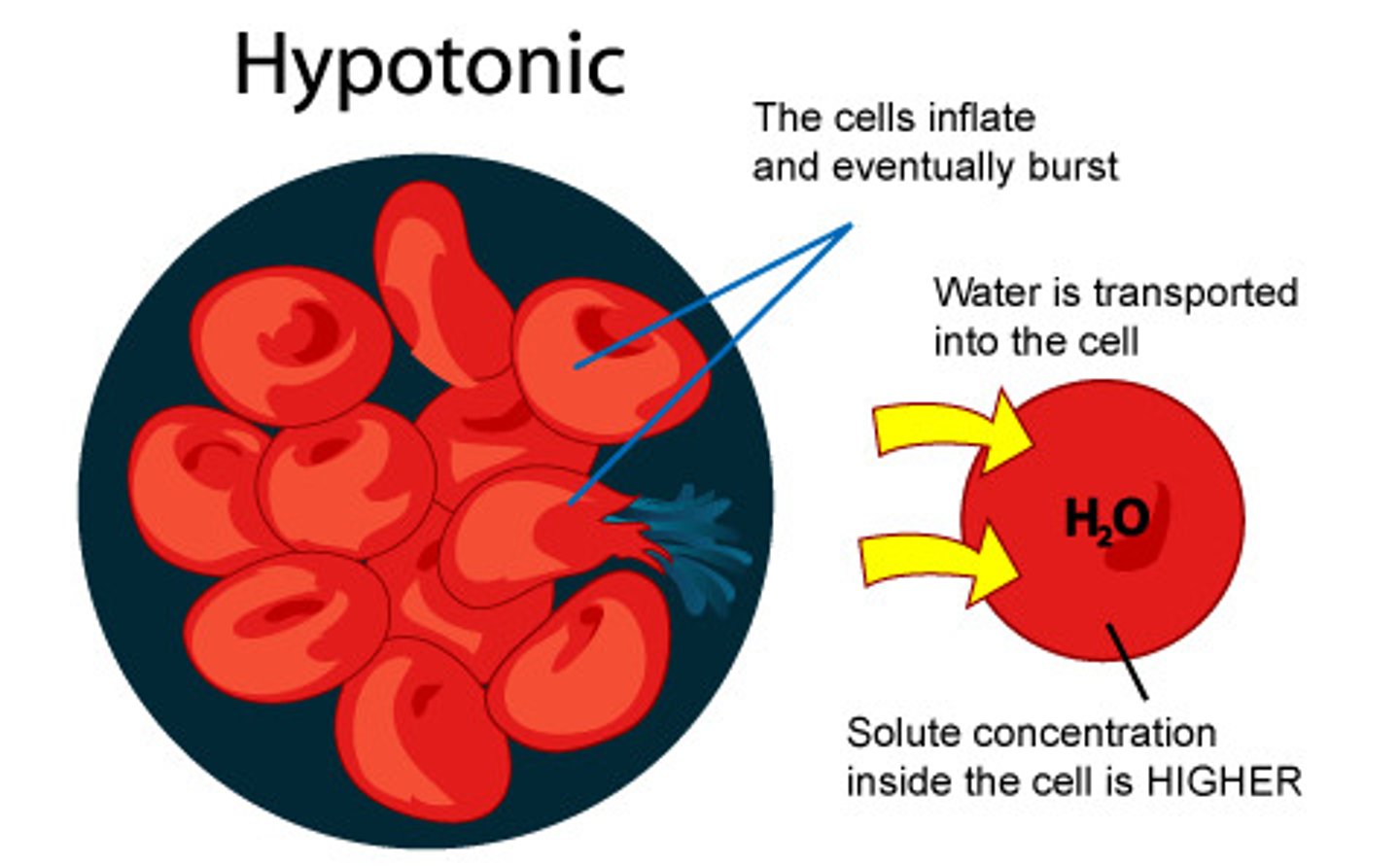
isotonic:
equal solute concentrations; no osmosis.
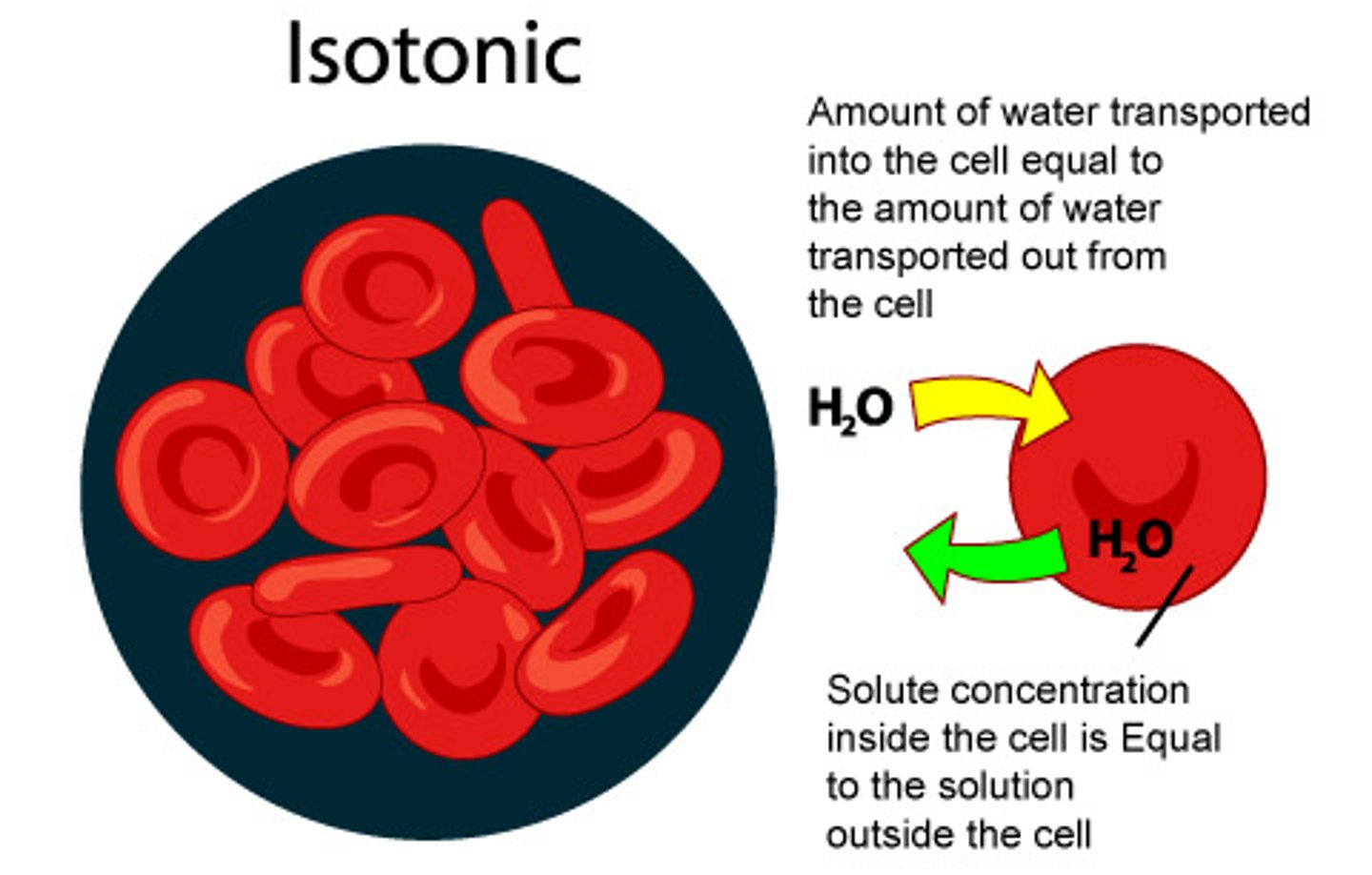
tonicity:
the ability of a surrounding solution to cause a cell to gain or lose water.
different tonicity solutions on plant cells
Facilitated diffusion:
solute binds to transport protein and moves across membrane down its concentration gradient.
- transport proteins allow only specific substance to cross the membrane.
Because a membrane is selectively permeable, some solutes can and some solutes CANNOT cross. If the cell needs the solute, the cell can provide a _________ "door" for the solute to pass through.
channel protein.
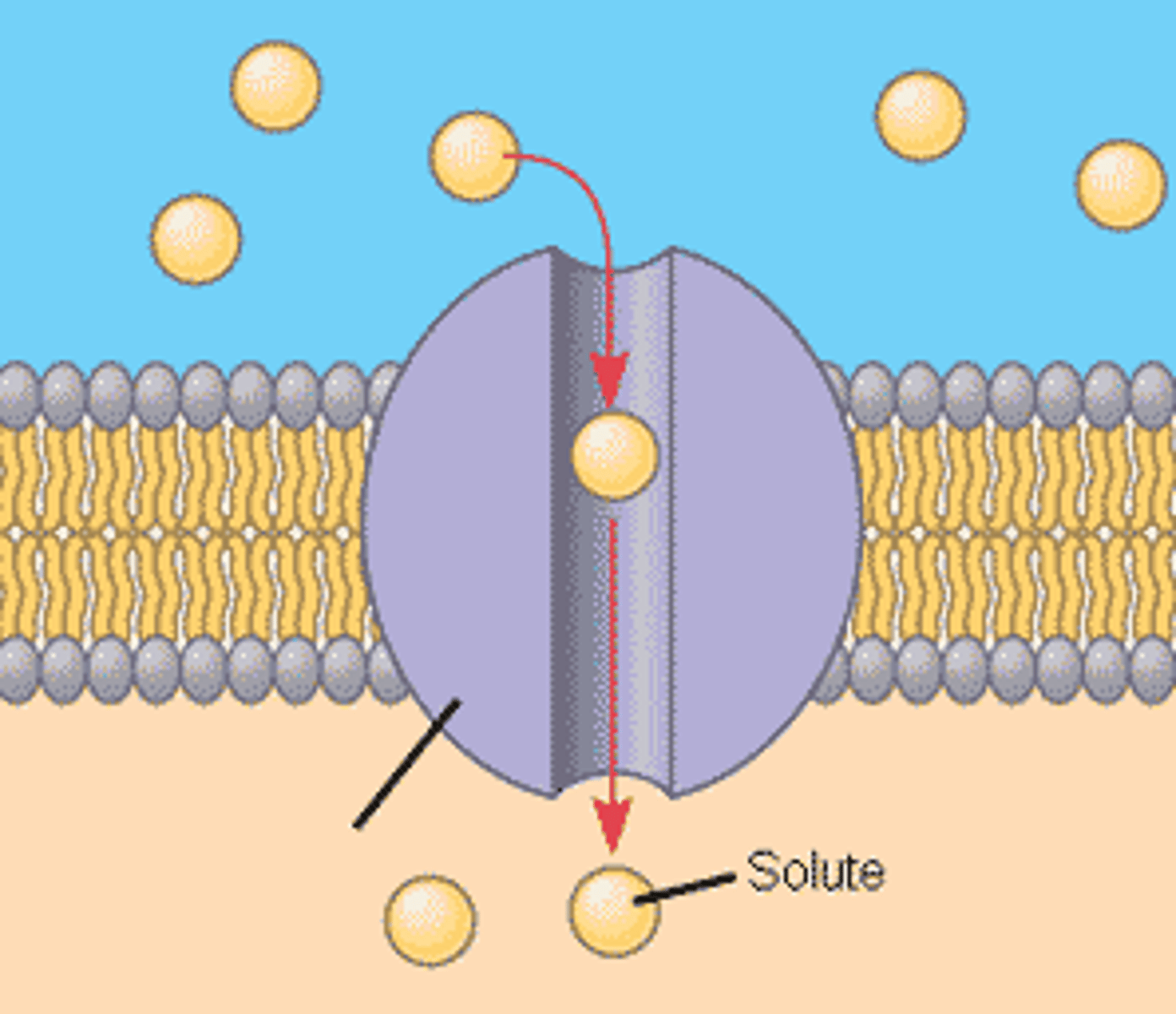
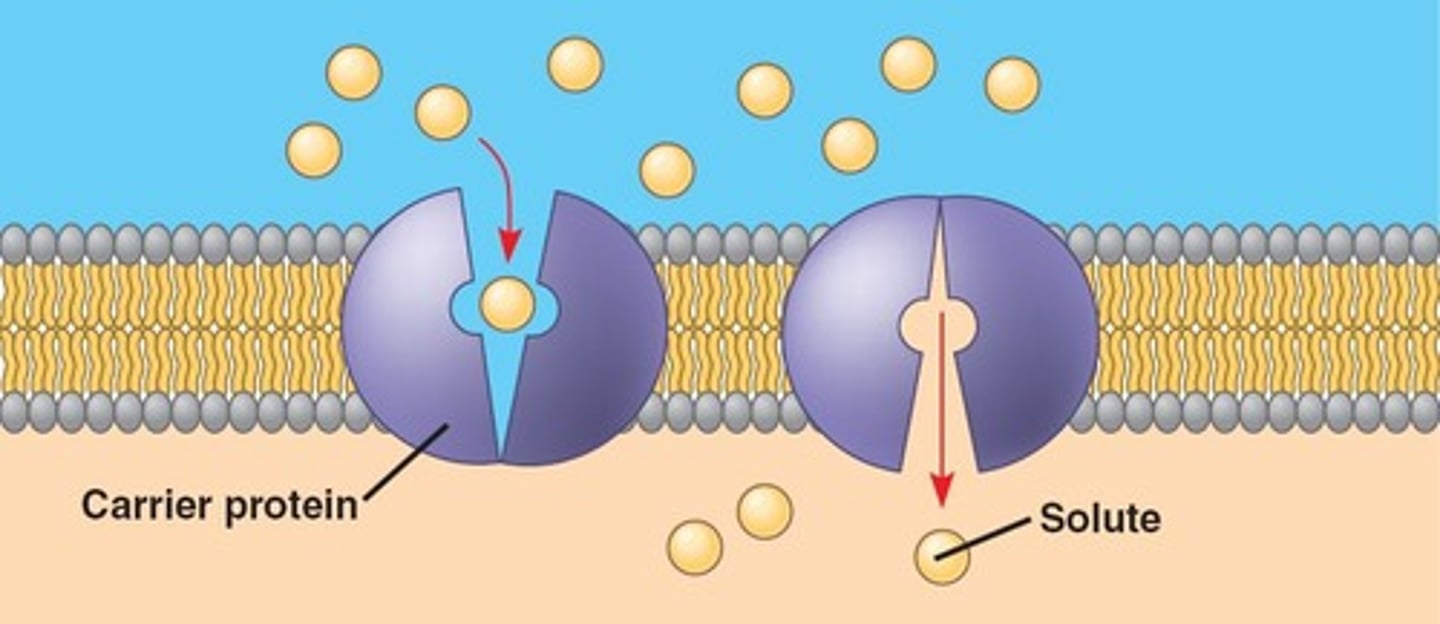
When a protein helps or "facilitates" a molecule to cross the membrane from high to low concentration, we call this ____________. This is important to cells because they often need ions and polar molecules like monomers to cross their membranes.
carrier proteins.
Why is facilitated diffusion still called diffusion?
Why is facilitated diffusion called "facilitated"?
Facilitated diffusion is still considered ____________ because the cell does not spend energy in the form of ATP on this type of movement.
passive transport.
Channel proteins are simply protein __________ for molecules to pass through. They do not change their shape.
What type of molecules move through channel proteins during facilitated diffusion?
polar & charged molecules.
carbohydrates, amino acids, nucleosides, and ions.
Carrier proteins are more like revolving doors because a solute must __________ on one side before it is released on the other. They move and their shape changes.
AGAINST the concentration gradient.: In this case the cell must use its own __________ to ___________ the molecule across the membrane.
ATP (cell's energy).
move.
We remember that cells use energy carried by a nucleotide called ___________.
ATP.
Moving a molecule against its concentration gradient across a membrane is called ___________ because a cell must "Spend" ____________.
active transport.
ATP energy.
sodium-potassium pump
maintains the electrochemical gradient (and correct concentrations of Na & K) in living cells.
an electrogenic pump: a pump that creates a charge imbalance.
creating an electrical imbalance across the membrane and contributing to the membrane potential.
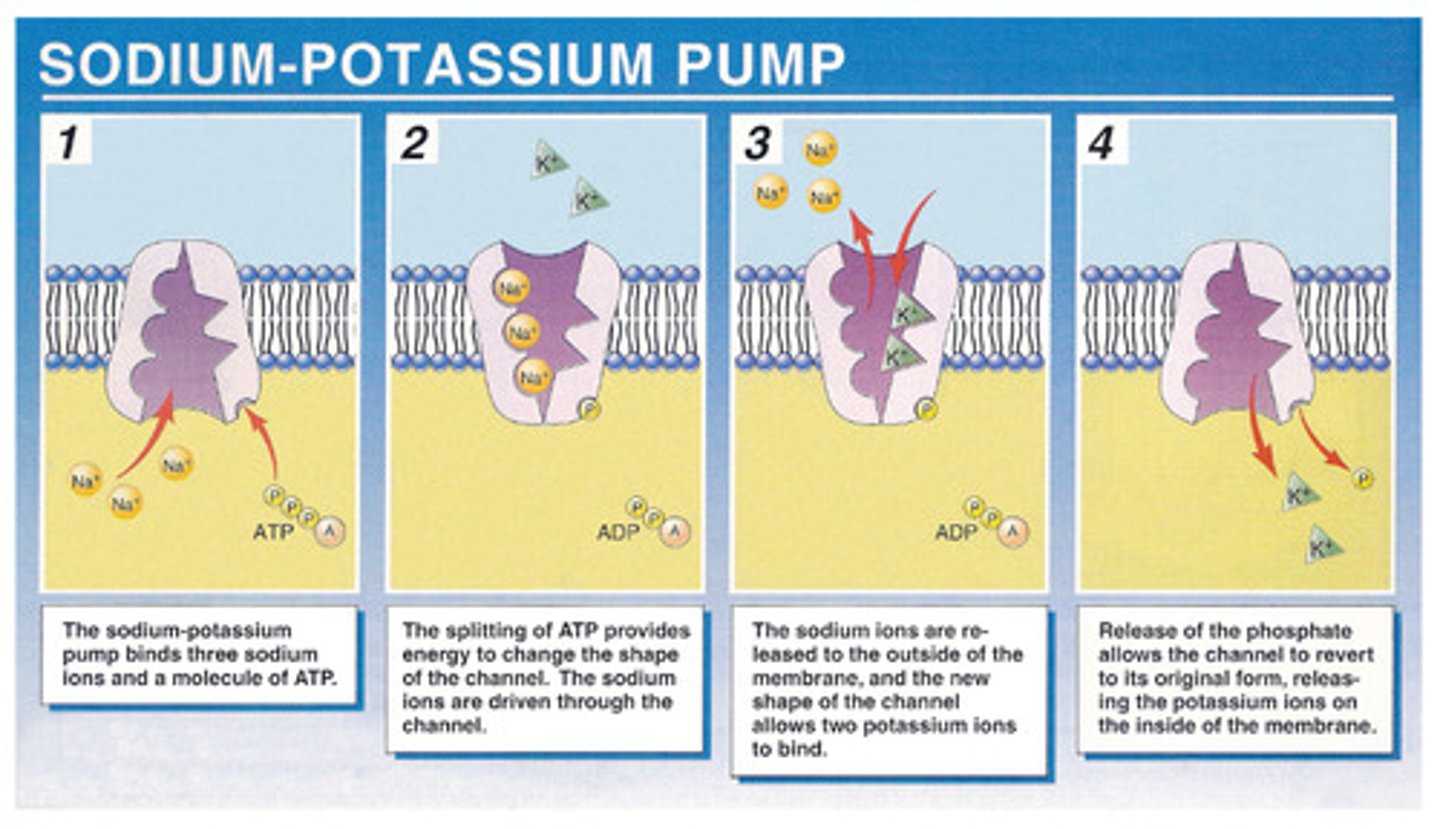
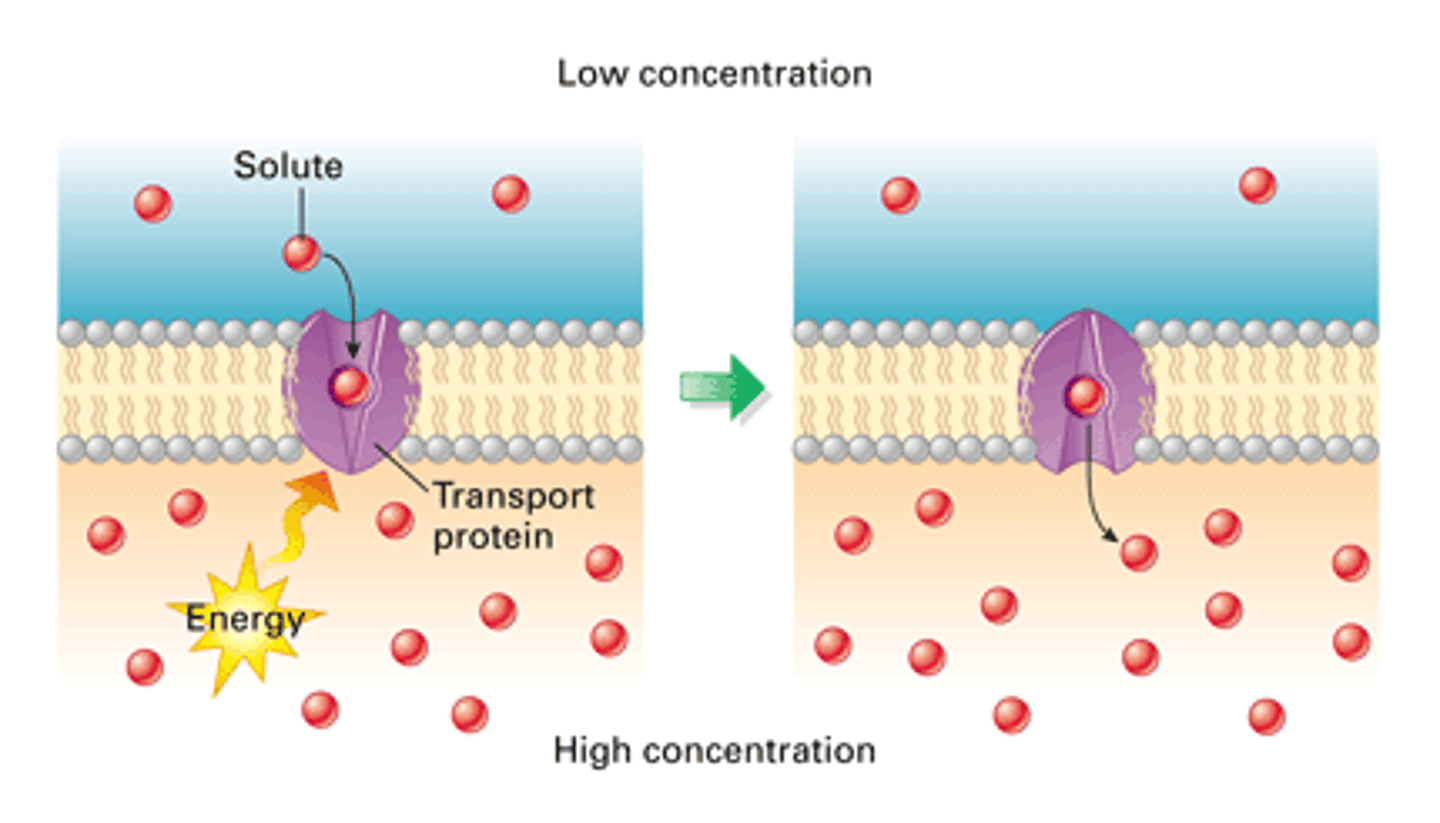
active transport
transport protein (channel proteins) pumps a solute against its concentration gradient; requires ATP energy.
EX: calcium pumps & sodium-pot. pumps.
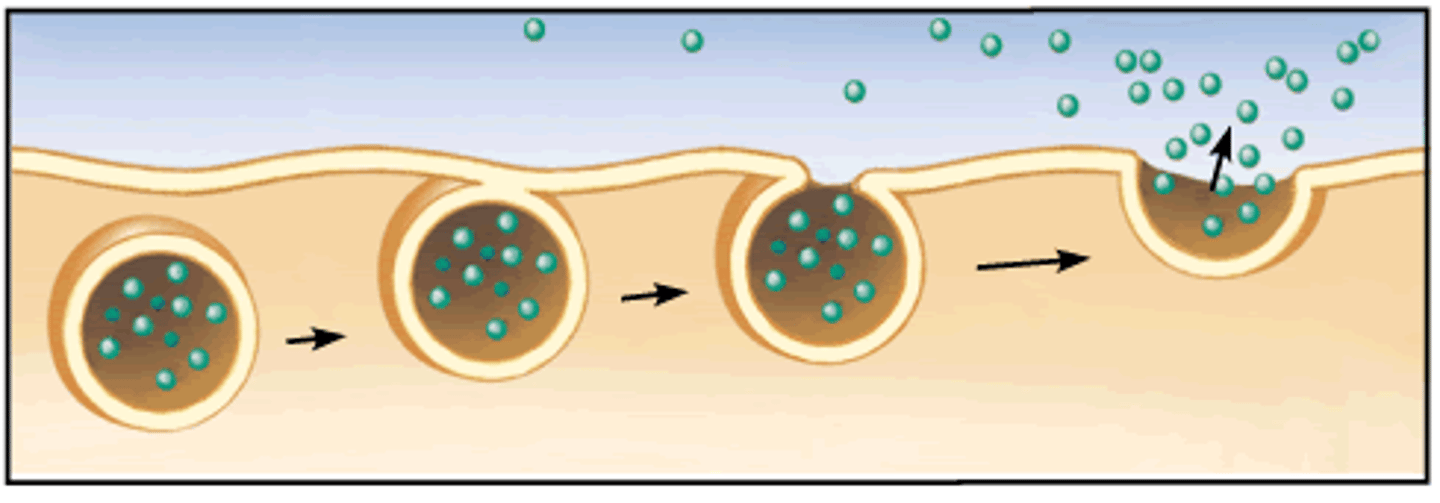
bulk transport:
vesicle transport: used for large particles or bulk substance to enter/leave cell without actually passing thru membrane.
*requires energy.
exocytosis:
movement out of the cell .
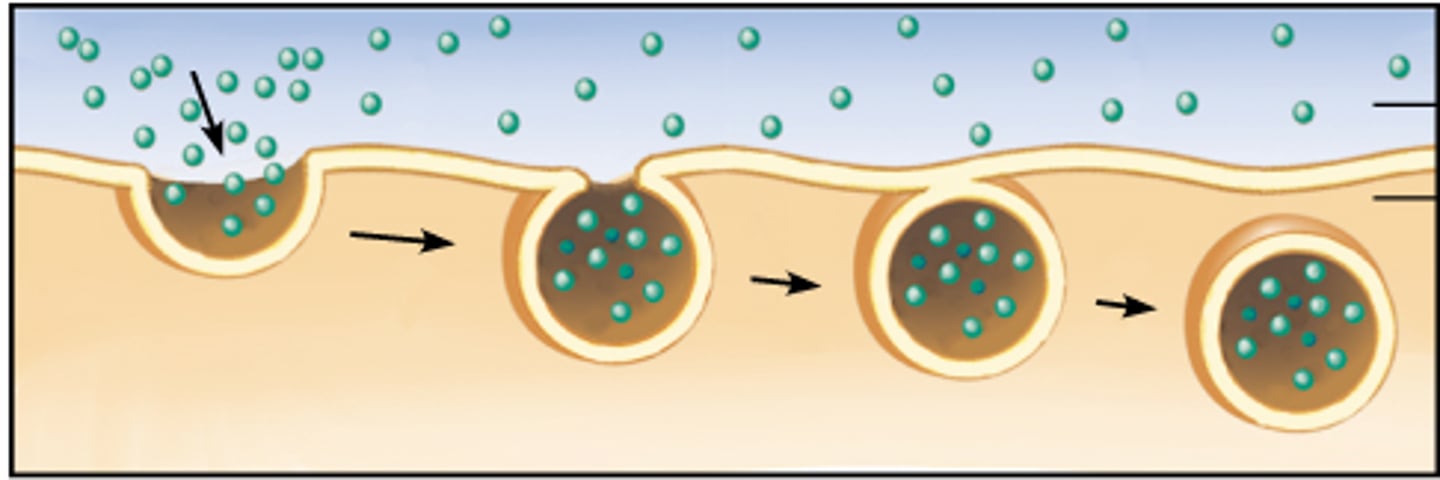
endocytosis:
movement into the cell
phagocytosis:
"cell eating"; a cell takes in large particles, such as other cells or relatively large particles.
movement of solids
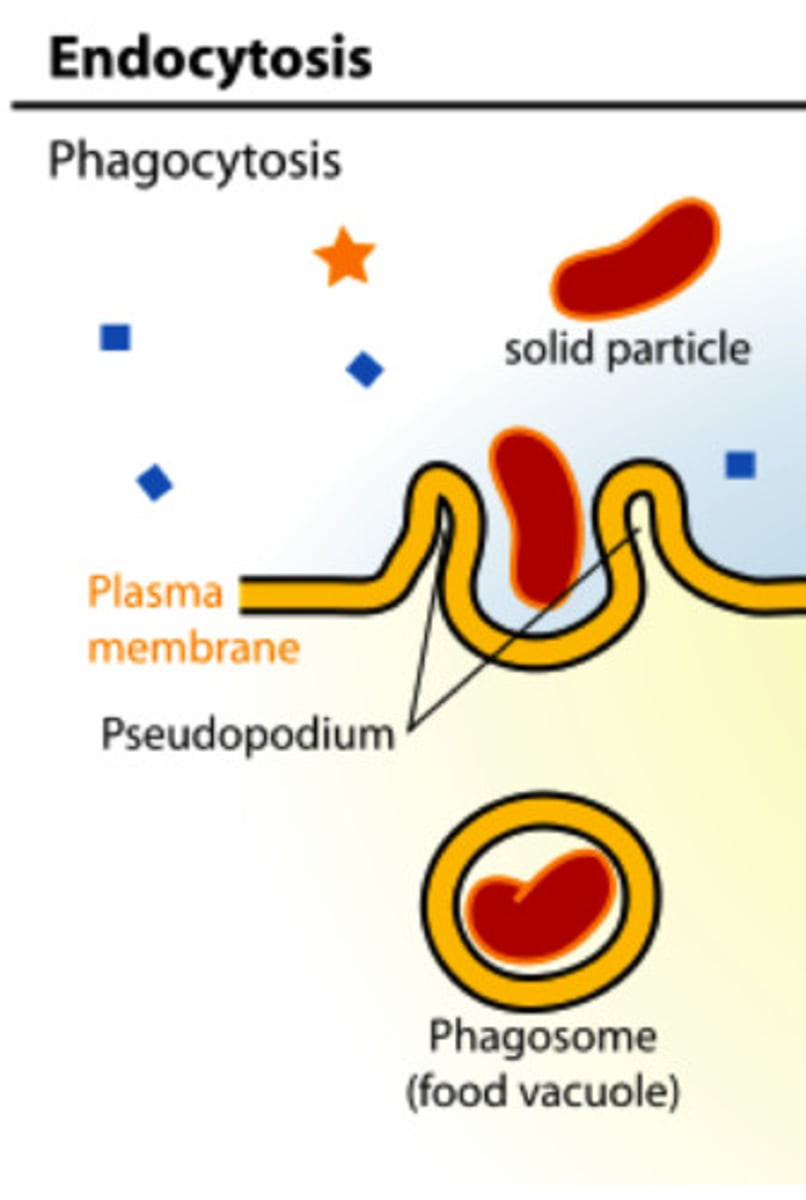
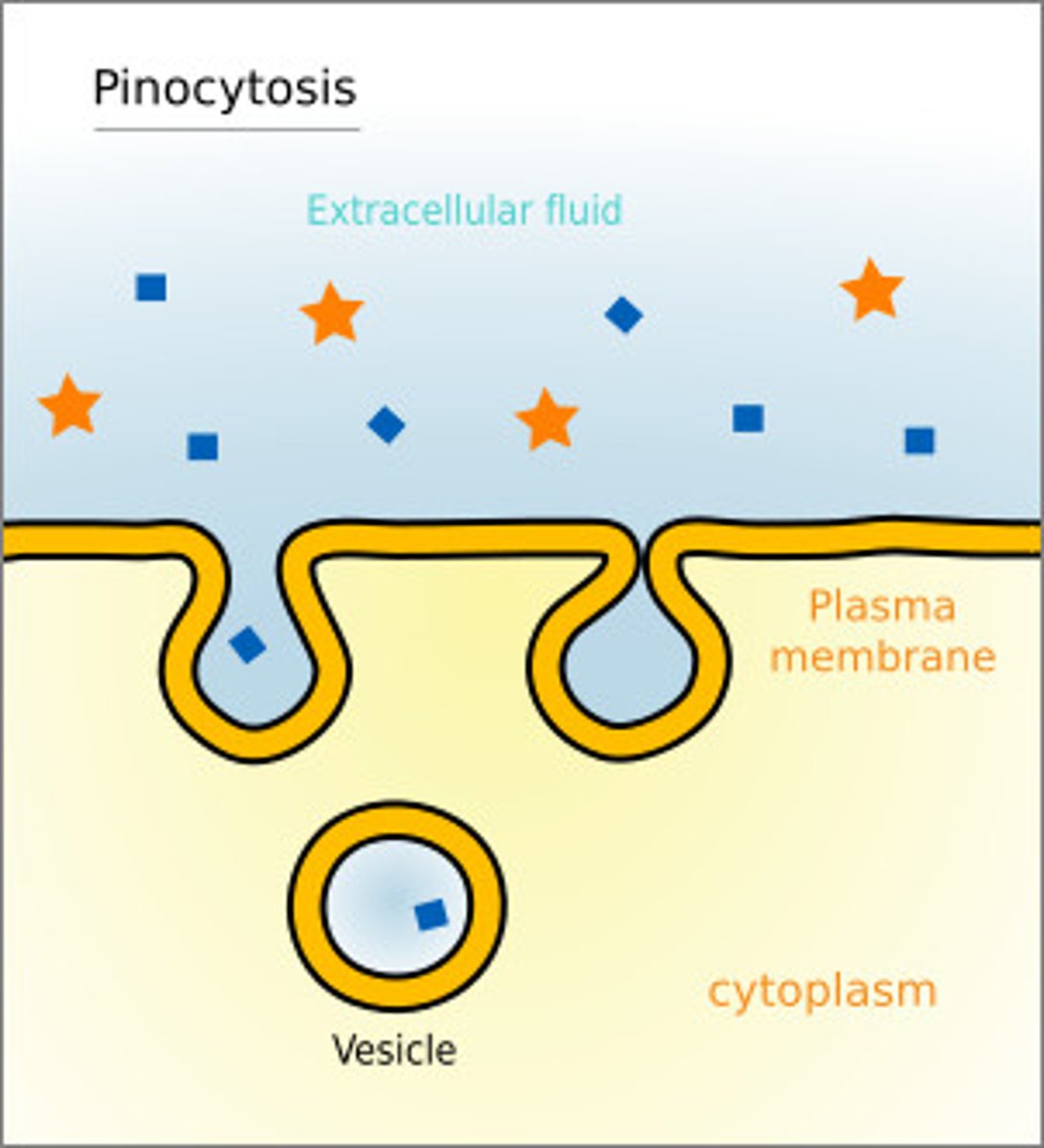
pinocytosis:
"Cell drinking".
A type of endocytosis in which the cell ingests extracellular fluid and its dissolved solutes.
movement of fluids
receptor-mediated endocytosis
The uptake of specific molecules based on a cell's receptor proteins
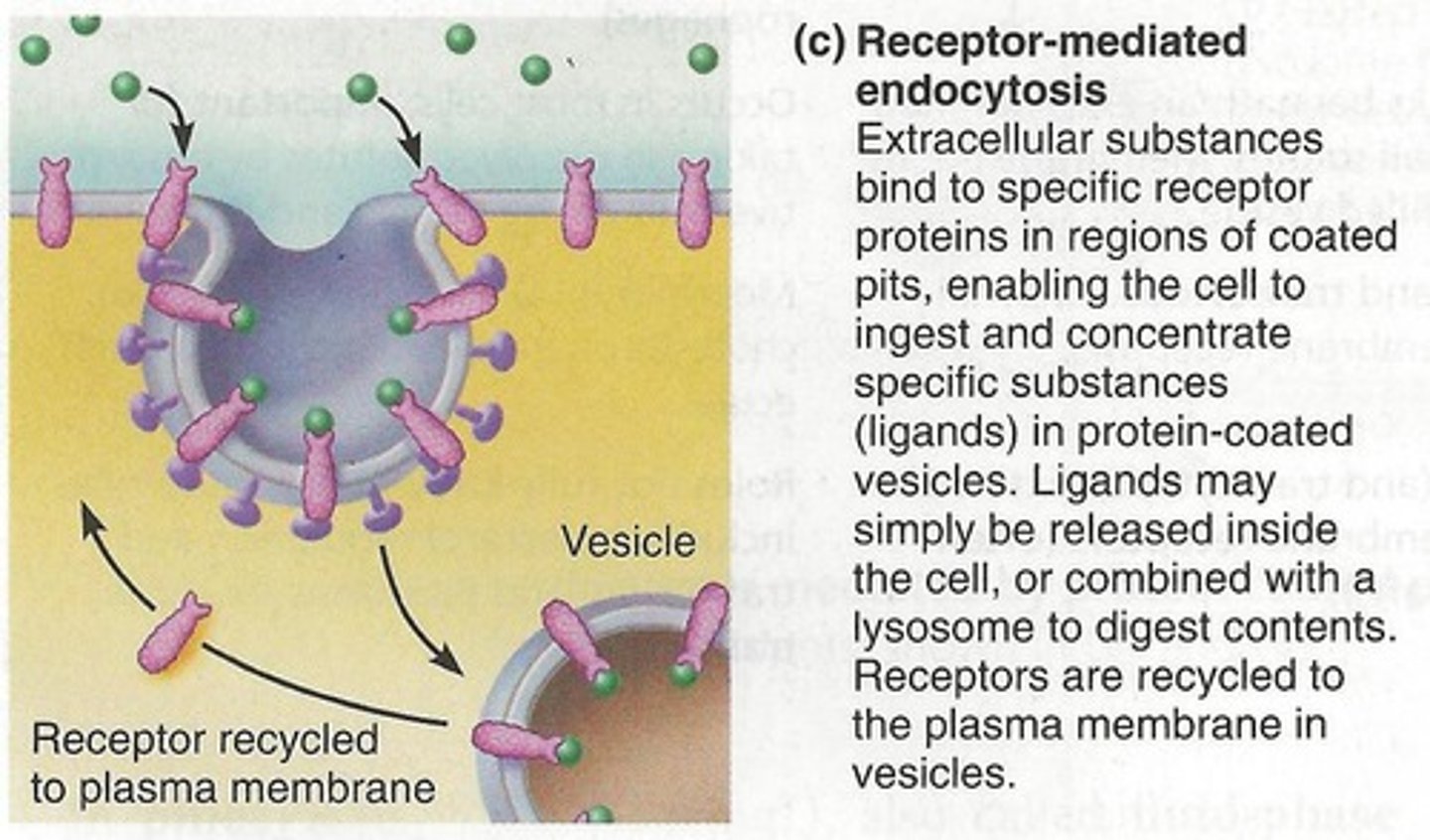
Channel and carrier proteins can transport small and medium molecules well, but to transport large molecules or even large amounts of any molecule, cells use membrane sacs called ___________.
clathrin. vesicles.
what bulk process moves molecules into the cell?
endocytosis.
what bulk process moves molecules out of the cell?
exocytosis.
in what way does receptor-mediated endocytosis differ from endocytosis?
designed to bring specific substances that are normally in the extracellular fluid into the cell.
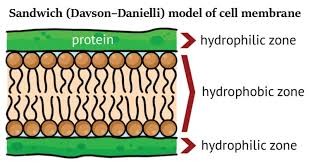
Hugh Davidson and James Danielli
In 1935, proposed a sandwich model in which the phospholipid bilayer lies between two layers of globular proteins
Later studies found problems with this model, particularly the placement of membrane proteins, which have hydrophilic and hydrophobic regions
S. J. Singer and G. Nicolson
proposed that the membrane is a mosaic of proteins dispersed within the bilayer, with only the hydrophilic regions exposed to water in 1972
 Note
Note  Flashcards (65)