2/3 - 2/5: MACRONUTRIENTS: CARBOHYDRATES
 Studied by 0 people
 Call Kai
 Learn
Learn Practice Test
 Spaced Repetition
 Match
Match Flashcards
 Knowt Play
1/106

There's no tags or description
Looks like no tags are added yet.
Name | Mastery | Learn | Test | Matching | Spaced | Call with Kai |
|---|
No analytics yet
Send a link to your students to track their progress
107 Terms
What is the breakdown of carbohydrates?
monosaccharides
What does carbohydrates = ?
energy
What is the classification of carbs?
simple: just one or two sugar units
complex: contain more than one or two units
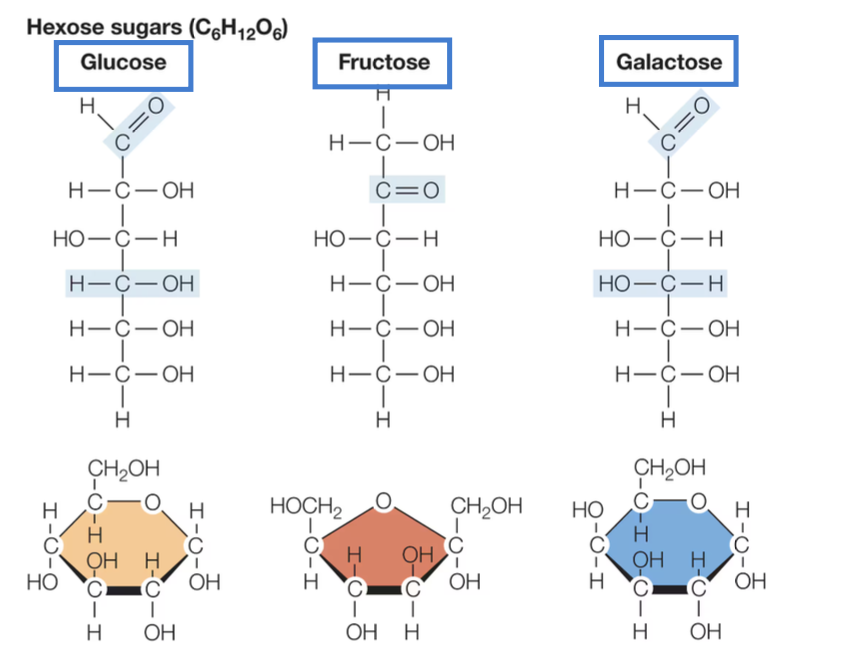
What is a monosaccharide? What are the different types of monosaccharide? What is the most abundant one? What are they a key fuel source for?
monosaccharide is one sugar unit
glucose, fructose, and galactose
glucose is the most abundant monosaccharide
key fuel source for brain cells, nervous system, and RBCs
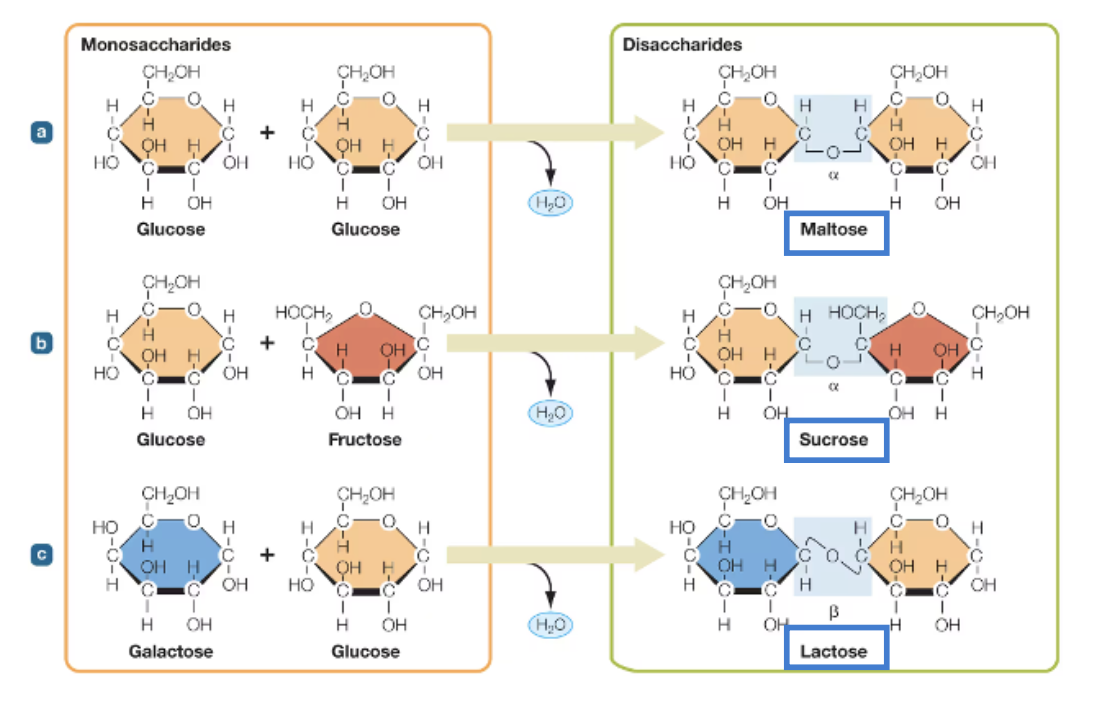
What is a disaccharide? What reaction forms them? What are the different combinations, and what do they produce? What is the most abundant disaccharide?
a disaccharide contain two sugar units
condensation reaction links the two monosaccharides
hydroxyl group (-OH) gains a hydrogen and forms H2O
glucose + glucose → maltose
glucose + fructose → sucrose
galactose + glucose → lactose
sucrose is the most common disaccharide
What is an oligosaccharide? What do they make up a part of? How do humans digest them? What are the common food sources? Why do these food sources produce gas?
an oligosaccharise is a short chain of monosaccharides
3 to 10 units
they make up a part of the plant cell walls
humans lack enzyme necessary to break down bonds, so they are digested in the large intestine by gut bacteria
food sources: produce gas because they are undigested until the bacteria in the large intestine ferment them
legumes
beans
cabbage
brussels sprouts
broccoli
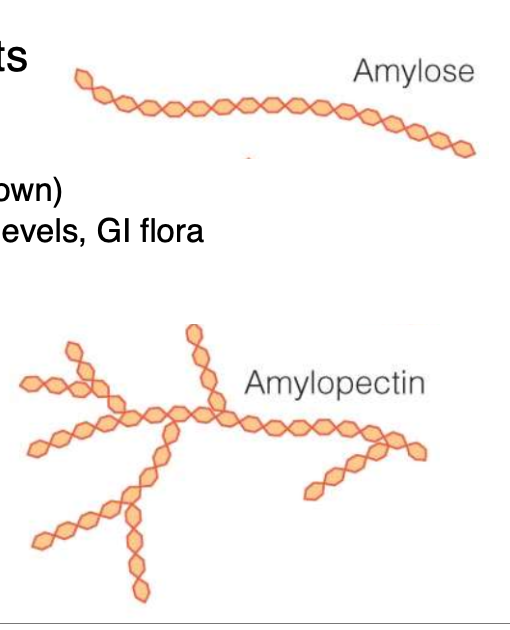
What is a polysaccharide? What is common in plants and what do they do? What are the two types, and what makes them distinctly different?
long chains of glucose linked together
starch: storage form of glucose in plants
amylose: straight chains
amylopectin: branched chains
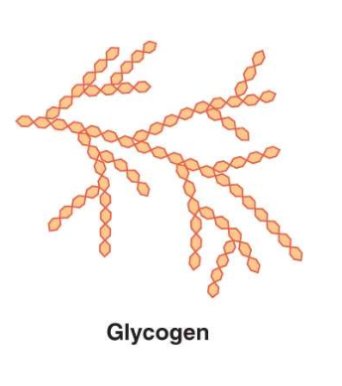
What is glycogen? Where are they stored? Are they easily broken down and mobilized? What do they increased? Are they stored after death?
glycogen is the storage form of glucose in animals
long, branched chains of glucose
stored in muscle and liver
easily broken down and mobilized
increased sites for enzyme action
not stored after death, so eating meat does not provide glycogen
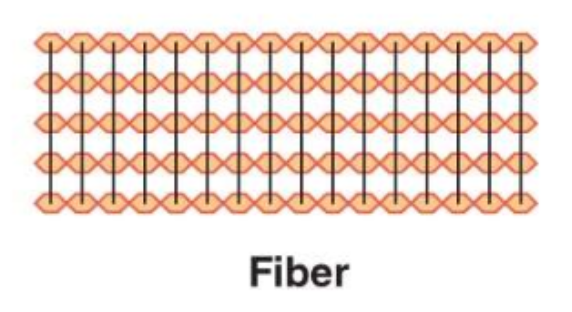
What is dietary fiber? What is most fiber a form of? How are they arranged, and how does that contribute to our inability to digest? What bonds are humans unable to digest? Why is oatmeal beneficial for heart health?
dietary fiber is the nondigestable food component of plants
most fiber is in the form of cellulose (structural)
straight chains of glucose units compacted in layers
beta-glycosidic bonds that humans lack enzymes to digest
oatmeal have fiber that sequester and excrete cholesterol
Carbohydrate Digestion
What is the name of the game?
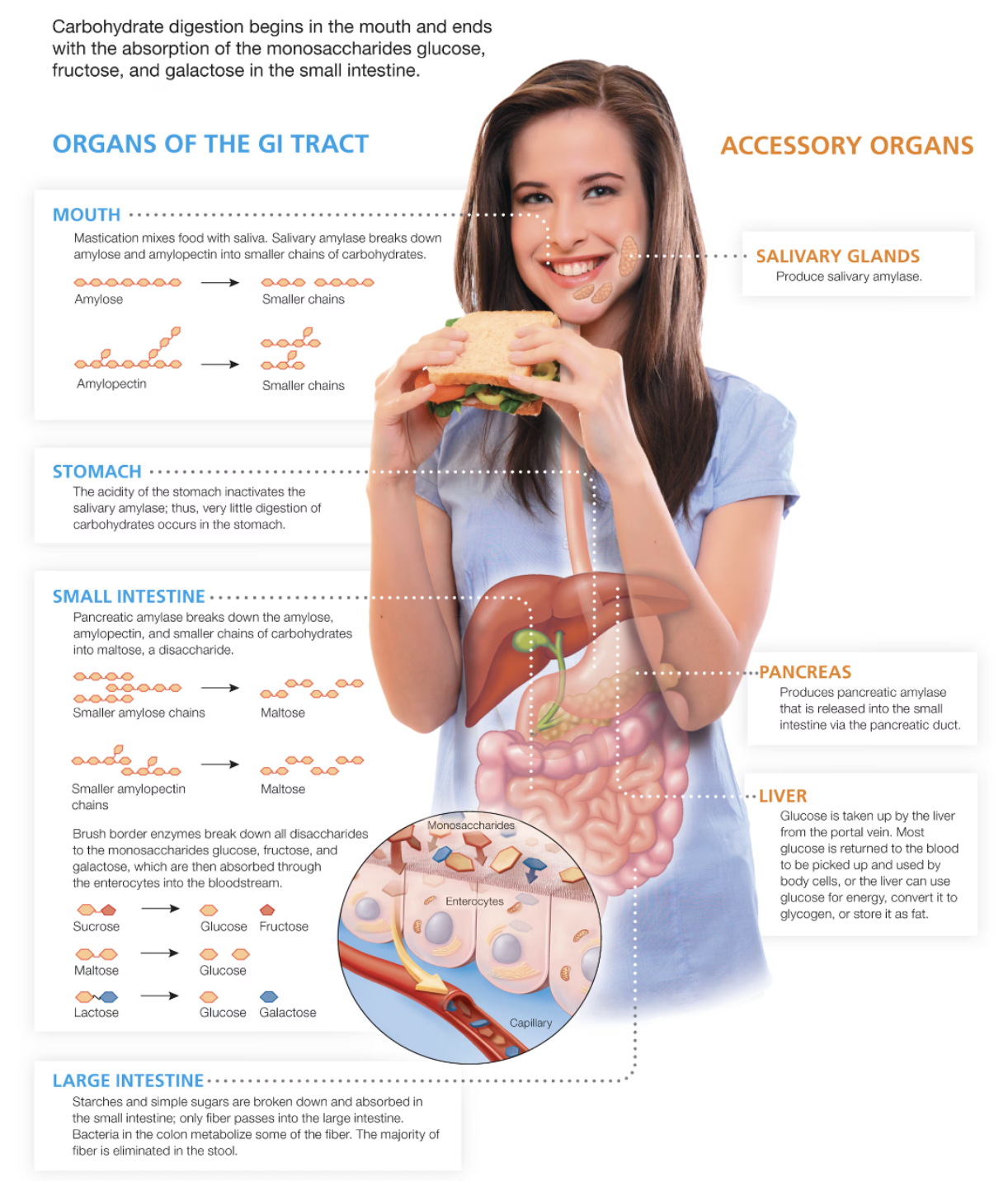
food broken down into progressively smaller components for absorption by enterocytes in the small intestine
Carbohydrate Digestion
What are disaccharides, starch, and dietary fiber digested into? What is special about fiber?
disaccharides and starch get digested into monosaccharides
dietary fiber passes undigested into the large intestine
similar to lactose as it will be important for bacteria to feed on
Carbohydrate Digestion
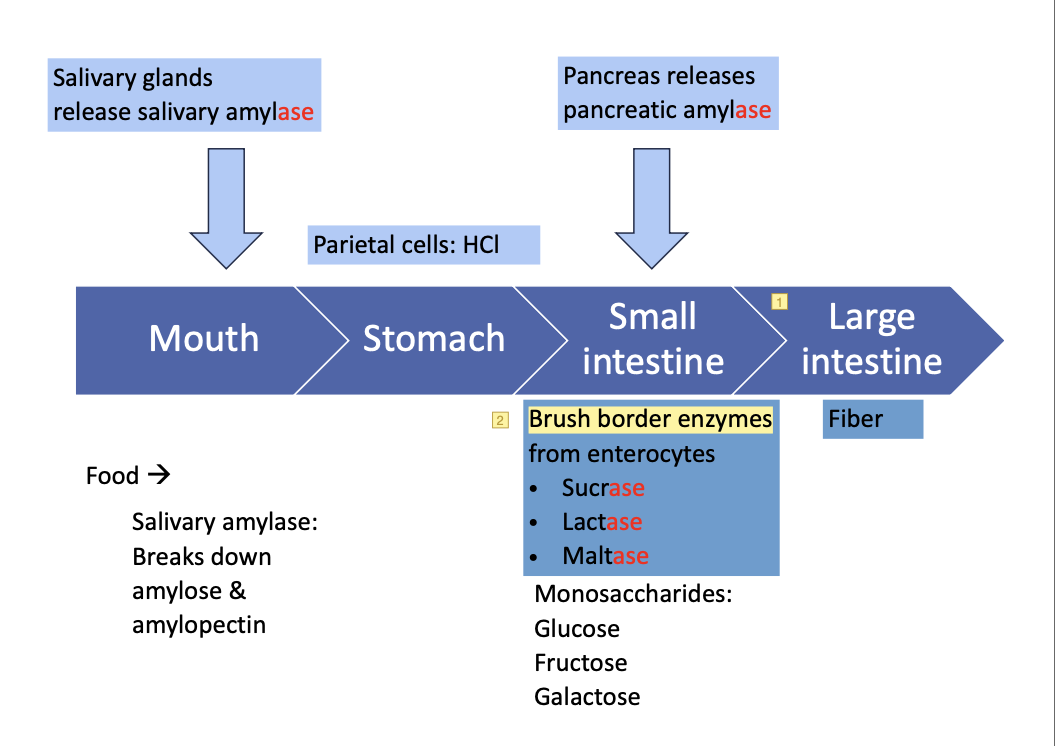
Walk through the steps of digestion and absorption
mouth
mechanical digestion via chewing
chemical digestion through salivary glands releasing salivary amylase, which breaks down amylose and amylopectin
bolus leaves the mouth to go to the stomach
stomach
peristalsis propels food forward in GI tract
mechanical digestion via churning with gastric juices HCl to create chyme
chyme travels to the small intestine
pancreas release pancreatic amylase to hydrolyze the bonds of carbohydrates to be broken down into glucose, fructose, and galactose
brush border enzymes, sucrase, lactase, and maltase from enterocytes digest/hydrolyze disaccharides into monosaccharides
carbohydrates are absorbed, except fiber will continue into the large intestine
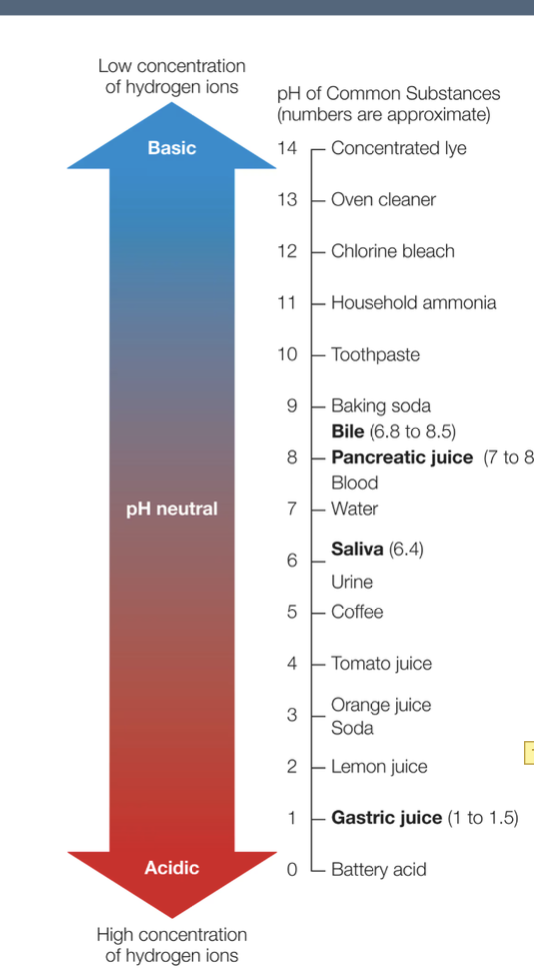
What pH is ideal for salivary amylase? What is our first layer of defense when eating, and why?
a pH between 6 and 7 is ideal for salivary amylase
gastric juice is the first layer of defense for what we are eating
a acidic stomach environment denatures some enzymes (while being ideal for others), and also destroys bacteria
What is sucrose, and what does it get broken into during digestion in the small intestine? How about maltose or lactose?
sucrose (white & brown sugars) → glucose & fructose (abundant in fruits)
maltose → glucose
lactose → glucose & galactose
Are all carbohydrates easily digested? Which ones are, and which ones aren’t?
not all carbohydrates are easily digested
sucrose and maltose are easier to digest
lactose and cellulose are harder to digest
What is resistant starch?
heating in water (cooking) disrupts starch: gelatinization
sequences are broken
cooled starch changes formation slightly: retrogradation
reformation of bonds
cooled starch is now more resistant to digestion (harder to digest, and less quickly digested & absorbed), increasing blood sugar post digestion and absorption
Carbohydrate Absorption
What are carbohydrates absorbed as? What are they absorbed through?
absorbed as monosaccharides
absorbed through the intestinal mucosa cells called enterocytes
Carbohydrate Absorption
How are the carbohydrates absorbed?
glucose: active transport
fructose: facilitated diffusion
galactose: active transport
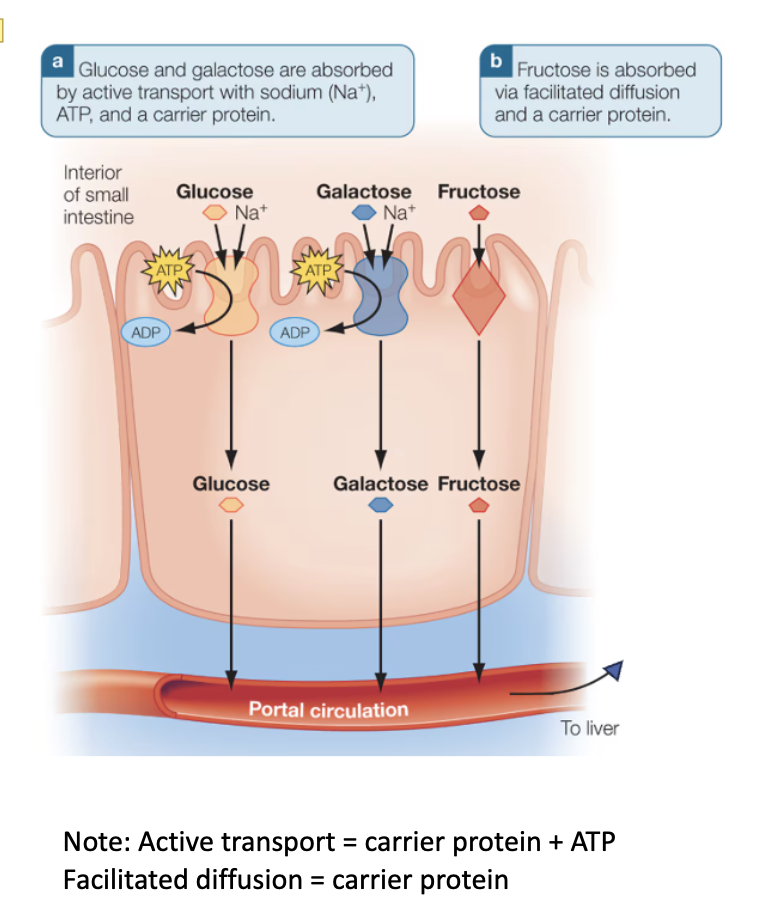
Carbohydrate Transport
Where are they transported and how?
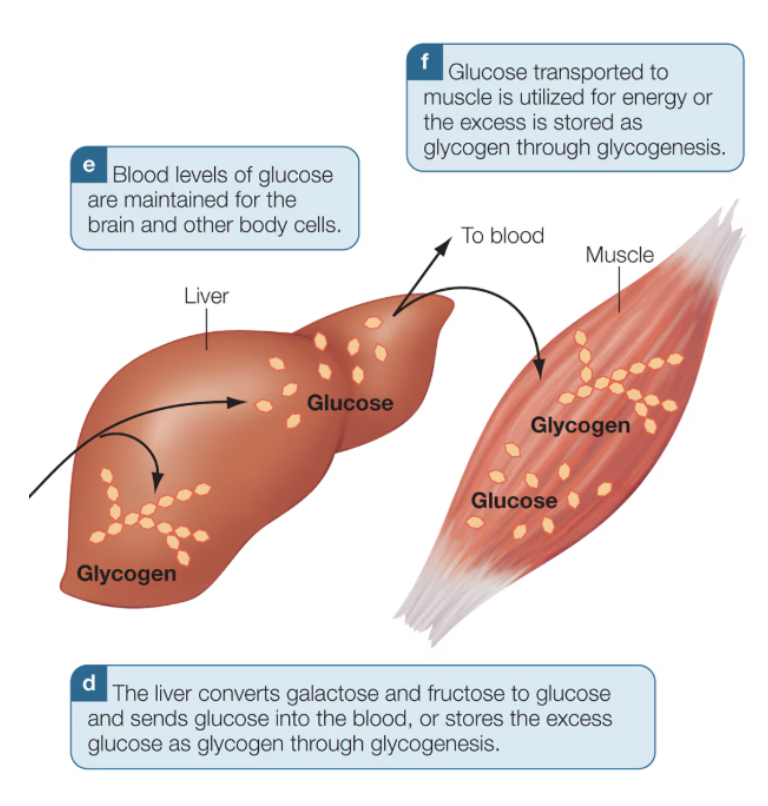
transported to the liver via the portal vein
Carbohydrate Absorption
What are the fates of monosaccharides, and what directs their fates?
metabolic needs direct the fate of monosaccharides
galactose and fructose are used for energy or converted to glucose to be released into the bloodstream
glucose stored as glycogen via glycogenesis
excess glucose is stored as fatty acids & glycerol in adipocytes
Glycemic Index and Glycemic Load
What do they measure?
they are measures of the effects of carbohydrate-containing foods or meals on blood glucose levels
Glycemic Index and Glycemic Load
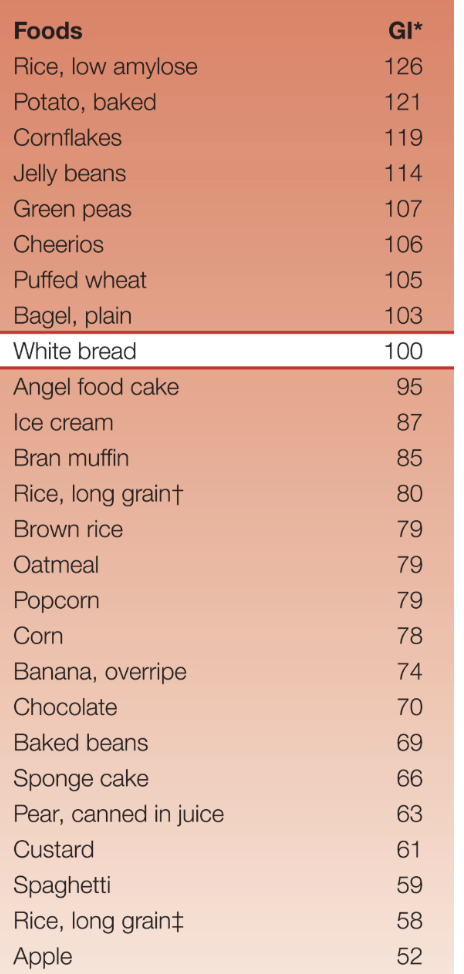
What does this chart mean?
impact or the spike in blood glucose is less for foods under white bread, and higher above white bread
the ones above are quickly digested and absorbed, while the ones below take longer
Glycemic Index and Glycemic Load
_ adjusts _ for what?
GL adjusts GI for CHO quantity and cooking/preparation methods
basically takes the GI, as well as portion size, to get a sense of the impact of a given food in our post glucose levels
Walk through the steps of carbohydrate digestion
What are the functions of carbohydrates?
provides energy for the body as the primary source
regulates blood glucose
protein-sparing: preferred fuel source
What is glucose the only energy source for? What is it a primary source for?
only energy source for red blood cells
primary source for brain cells
How does glucose regulate blood glucose?
prevents blood glucose from going too high (hyperglycemia) or too low (hypoglycemia)
After 4 hours without eating, what does the body utilize?
body utilizes glycogen stores
How is glucose protein-sparring?
there are many other essential functions for proteins, and proteins/amino acids are not stored like glucose/glycogen
Glucose Homeostasis
What is the goal, and ranges?
managing tight BG regulation in a narrow range
generally: 70-110 mg/dL
fasting: 70-100mg/dL
Glucose Homeostasis
What are the key hormones to maintaining homeostasis?
insulin
facilitating glucose entry, which lowers BG levels by having cells take in glucose
glucagon
release of glucose via the breakdown of glycogen
epinephrine/norepinephrine
increase BG levels
cortisol/steroid medications
increase BG levels due to increased glucose production in the liver and increased insulin resistance in body tissue (which will decrease uptake)
Glucose Homeostasis
Which organ plays a big role and why?
liver plays a big role because it acts as a reservoir (of glycogen), and motor (production and release back into the bloodstream)
Glucose Homeostasis
Is there a limit to the liver’s reservoir of glycogen? What will happen to the excess?
there is a limit to glycogen storage
once maximized, the excess glucose is converted to fatty acids via lipogenesis
Glucose Homeostasis
What are the steps for insulin?
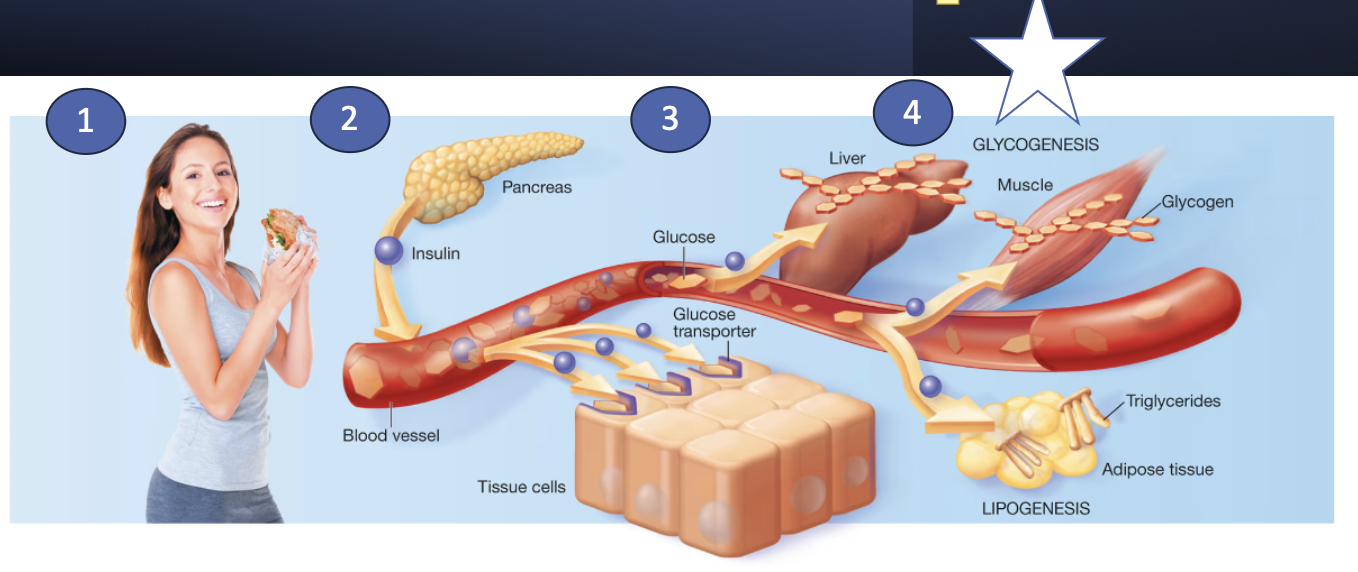
BG increases after meal
CHO content → monosaccharides → portal vein to the liver
Pancreas (specifically beta cells) produce insulin → enters the blood stream
At the cell level: insulin promotes transport across cell membranes
common target tissues: liver, skeletal muscle (also: fat, brain cells, all cells)
majority through insulin mediated glucose transporter: GLUT4 (# of transporters increase)
Insulin stimulates glucose storage
Glucose Homeostasis
Do all cells have insulin receptors?
Yes
Glucose Homeostasis
What are the steps for glucagon?
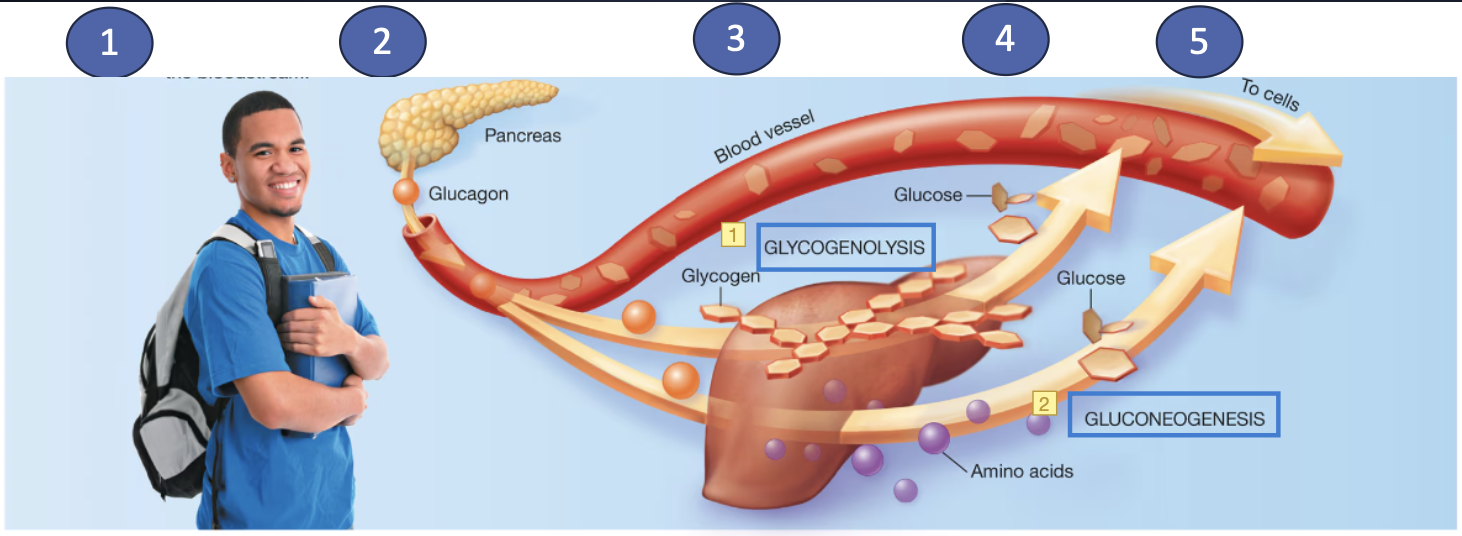
When BG is low, glucagon is a hormone that prompts the liver to increase circulation of glucose
Glucagon is produced by pancreatic alpha cells
Liver is the source of stored glycogen, and the breakdown of glycogen into glucose is glycogenolysis
Release of newly mobilized glucose from glycogen stores into circulation
Glucagon stimulates formation of glucose from other substrates, such as glucogenic amino acids, via gluconeogenesis
Glucose as Energy
What provides fuel between meals?
stored glucose
Glucose as Energy
What happens if you don’t eat for multiple hours?
breakdown of liver glycogen to make glucose via glycogenolysis
glycogen stores in the liver can be depleted and replenished
Glucose as Energy
What happens to extra glucose if the glycogen stores are replenished?
converted to triglycerides and stored as fat via lipogenesis
Glucose as Energy
What happens when glycogen stores are depleted but there is still a demand for glucose? Where does this usually occur?
mobilize other substrates from stored fat and/or amino acids via gluconeogenesis
this primarily occurs in the liver
Intake Recommendations: Carbohydrate DRIs
What is the RDA for carbohydrate? Are they the same across ages, and what are the requirements based on?
RDA for carbohydrate: 130g per day
same across ages
minimum recommended amount to fuel cells
based on glucose requirements for the brain
Intake Recommendations: Carbohydrate DRIs
What is the AMDR for carbs? Are they the same for children and adults?
45 - 65% of daily kcals
same for children and adults
Food Sources of Carbohydrates
What is the current debate about 130g/day?
debate about whether the recommended amount of 130g/day is really necessary because
there are other mechanisms, such as breaking down glycogen to glucose, or using other materials such as amino acids to form glucose
people think the foods provide more energy than nutrients needed
Food Sources of Carbohydrates
What are good sources and moderate sources of carbs?
good sources
grains, fruits, starchy veg
moderate sources
plant-based protein
dairy such as legumes
some non-starchy vegs such as carrots
Types of Fiber
What are the classifications of fiber?
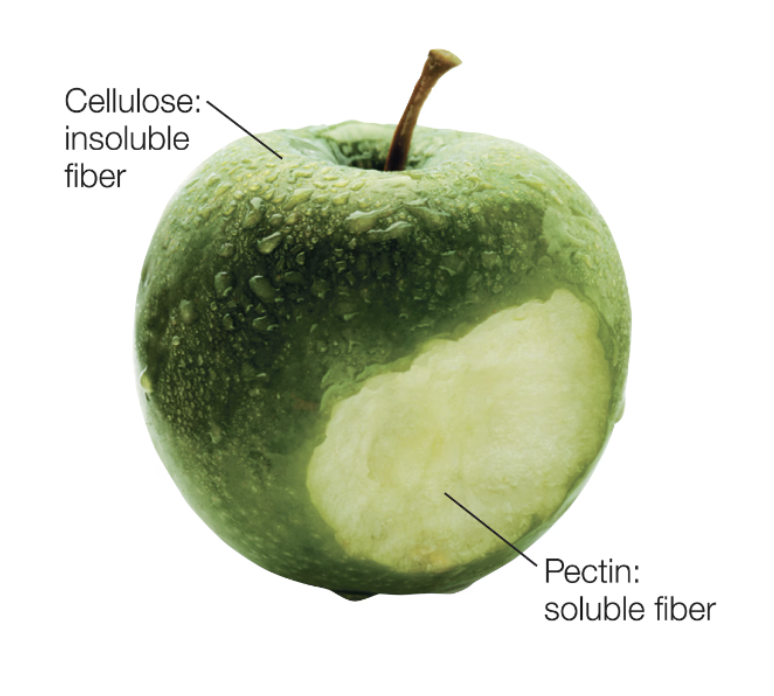
insoluble fiber
does not dissolve in water
cellulose
increase bulk and weight of the formation of stool
stimulates peristalsis → speeds up transit time
helps reduce constipation
soluble fiber
dissolves in water
pectin
fermentable by GI flora
viscous: forms gel that slows gastric emptying
reduces blood cholesterol
Types of Fiber
What does insoluble mean for our poops?
contribute to frequent and comfortable bowel movements
Types of Fiber
Why is adequate fiber necessary?
If food is traveling too slow through the large intestine, it will continue to reabsorb water, which makes the stool formation very hard
this leads to an uncomfortable stool formation/passage
adequate fiber thus helps increase transit speed
Whole Grains and Refined Fiber
What are abundant in complex carbohydrates?
starch and fiber
Whole Grains and Refined Fiber
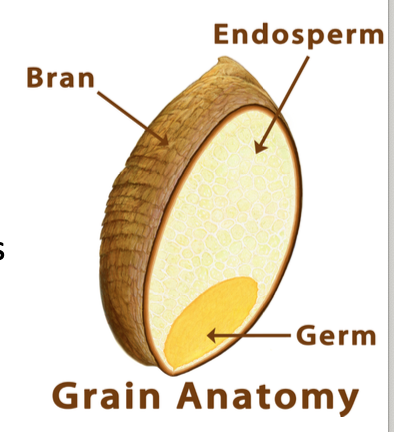
What are the 3 component parts of a grain?
bran
germ
endosperm
Whole Grains and Refined Fiber
What is the bran? What is this the source of?
hard, outer husk/shell
the big source of fiber because it is the non-digestable material
Whole Grains and Refined Fiber
What is the germ? What does it also contribute?
kind of like the egg yolk of an egg
contributes a bit of dietary fats
Whole Grains and Refined Fiber
What is the endosperm?
what is leftover in the grain
the starchy texture
Whole Grains and Refined Fiber
Why is whole grain intake recommended?
reduced risk of chronic disease
higher in fiber
Whole Grains and Refined Fiber
What are refined grains?
after grains goes through processing, nutrients are added back to the refined flour
Whole Grains and Refined Fiber
What are refined grains added with?
nutrients are added back to refined grains
iron, folic acid, vitamins B1-B3
prevention of Type II diabetes
Whole Grains and Refined Fiber
Why is folic acid added to refined grains?
very important for early pregnancy because the neural tube during around week 4 is closed
since a lot of people consume this product, adding folic acid can help decrease a birth defect
Good Sources of Fiber
What products contain and don’t contain fiber?
most plant foods contain both soluble and insoluble fiber
animal foods do not contain fiber
fish, meat, chicken, eggs, dairy
functional fiber
manufactured by the food industry
included for health benefits
ex: psyllium in metamucil
Whole Grains and Refined Fiber
Is protein a good source of fiber?
category of proteins is limited in terms of providing fiber
primarily from beans
Dietary Fiber Recommendations
What is the DRI of fiber?
DRI is Adequate Intake (AI)
14g of fiber per 1,000 kcal intake
Dietary Fiber Recommendations
As age increases to 50, what is the fiber need intake? Is this realistically met?
fiber needs tend to dip lower after age 50, but because the average fiber intake is so low, fiber still needs to be incorporated
Health Applications & Diseases of Digestion
What causes lactose intolerance?
absence of the lactase, a brush border enzyme, that digests the bond in lactose to galactose and glucose
Health Applications & Diseases of Digestion
Is lactose intolerance the same as milk protein allergy?
No, not the same
Health Applications & Diseases of Digestion
Follow lactose in the system for those with lactose intolerance
lactose passes through the small intestine undigested
undigested lactose pulls water into the GI tract → diarrhea and gas
lactose is digested by bacteria in the large intestine
fermentation of sugars lead to gas production
Prevalence of Lactose Maldigestion
Babies and lactase levels?
babies have sufficient lactase to digest breastmilk and/or formula
lactase production declines after infancy
Prevalence of Lactose Maldigestion
What is the general rule of thumb between fluid diary products and lactose levels?
more fluid dairy products tend to be higher in lactose
cheese (hard cheese) < yogurt < milk
Dietary Fiber & Health
What is adequate fiber intake associated with?
manages regular bowel movements through increased transit time
increases satiety
because it takes longer to digest, people feel full for longer
decreased risk of heart disease
diabetes
cancer
Dietary Fiber & Health
What is consumption of fiber absolutely necessary with?
absolutely necessary to increase fluids, and may reduce absorption of some minerals
Fiber Prevents Constipation
Why is a slow transit time bad?
longer duration in the colon = more H2O absorption = harder stool
Fiber Prevents Constipation
What does insoluble and soluble fiber do?
insoluble fiber decreases transit time (speeds it up)
soluble fiber retrains water
Fiber Prevents Constipation
What can chronic constipation lead to?
diverticulosis
increases with age
increased pressure in the colon causes pouches (out pockets) to form along the wall called diverticula
diverticulitis
infection of the diverticula leads to diverticulitis
What does soluble fiber reduce?
soluble fiber reduces blood cholesterol levels
How does soluble fiber reduce blood cholesterol levels?
bile acids contain cholesterol
soluble fiber is a bile acid sequestrator
excreted in feces
bile is reabsorbed in GI tract & recycled
soluble fiber interferes with reabsorption
“bound” cholesterol in bile excreted
How does fiber reduce the risk of diabetes?
soluble fiber helps slow digestion and absorption of glucose
How does fiber reduce the risk of cancer?
decrease time cancer-promoting substances spend in contact with the GI tract
encourages growth of colon-friendly bacteria and fermentation
How does fiber relate to energy balance?
increases satiety
What are the cautions of eating fiber?
must also increase fluid intake
may reduce absorption of some minerals
Gut Microbiome
What is GI flora? Where are they mostly?
bacteria exists throughout the GI tract
mostly in the colon
Gut Microbiome
How does the microbiome impact human health?
GI functioning
fermentation of undigested carbohydrates
immune system
compete with pathogens
informs immune system response
stress, behavior, mental health
Gut Microbiome
What is dysbiosis?
imbalance of body’s microbial composition
can happen in the short-course due to antibiotics
Gut Microbiome
What is probiotics? And what are some sources of them?
living organisms (bacteria) associated with health benefits
fermented diary
fermented vegetables
fermented soy
dietary supplements
Gut Microbiome
What is prebiotics? What are some sources of them?
non-digestable resistant starches (fiber) that support growth and health of gut bacteria populations
banana, garlic, onions, asparagus, leeks, carrots, squash, sweet potatoes, whole grains
Gut Microbiome
How does the gut microbiota play a role in the host metabolism?
reduced diversity associated with increase in metabolic disorders
changes in weight and changes in insulin resistance
What is an important byproduct of the gut bacteria? What is its key role?
vitamin K
coagulation (blood clotting)
Added Sugar
What is the difference between natural and added sugars?
sugar occurs naturally in some foods, such as fruits
foods with naturally occurring sugars are often nutrient-dense
added sugars introduced during food processing
most common added sugars: sucrose and fructose
What is the largest source of added sugar in U.S. diet?
sugar-sweetened beverages
What is the research hypothesis regarding added sugar consumption?
sugar in liquid form impacts hunger (doesn’t increase satiety), and leads to consuming more energy than the body might need
How does sugar cause tooth decay?
it is a food source for bacteria in the mouth
acid produced by the bacteria erodes the tooth enamel
What are sugar substitutes?
polyols or sugar alcohols
stevia
aspartame
What are the benefit of using sugar substitutes instead of added sugar?
able to use very small amounts to achieve the same level of sweetness than when using added sugar
What are the effects of polyols or sugar alcohols?
fewer kcals than sucrose
decreased impact on BG and risk for dental caries
has a laxative effect
less absorption in our small intestine, and will change the osmotic composition in the large intestine by pulling water to experience diarrhea
What are the effects of stevia?
does not provide any energy or calories
does not raise BG
What are the effects of aspartame?
made of amino acids
does not provide much energy in terms of calories
found in diet sodas
Who is aspartame not appropriate for?
not appropriate for individuals with phenylketonuria (PKU)
What is phenylketonuria (PKU)? What is the treatment?
a genetic disorder where there is an enzyme missing to convert the animo acids, and will lead to a buildup of phenylalanine
the treatment is to avoid protein consumption to reduce the amount of byproducts
Digestion: Common Disorders
What is recommended for constipation?
increase in fiber and water/fluid intake
Digestion: Common Disorders
What is diverticulosis → diverticulitis?
the out pouches of the large intestine that gets infected
Digestion: Common Disorders
What causes diarrhea?
too-fast transit time through the small/large intestine and loss of fluid
Digestion: Common Disorders
How can diarrhea be very dangerous for pediatric populations?
dangerous area regarding hydration status
more severe with pediatrics because they have smaller bodies, so they experience more severe effects
Digestion: Common Disorders
What is gastroesophageal reflux disease (GERD)?
also known as heartburn
inadequate/improper closing of the LES (between the esophagus and the stomach)
acidic juice from the stomach jumps to the esophagus, and comes in contact with epithelial cells to cause pain
Digestion: Common Disorders
What population is gastroesophageal reflux disease (GERD) common amongst?
pregnancy because the diaphragm is displaced and organs are squished up

