Chapter 6: Anorganic nutrients
 Studied by 0 people
 Call Kai
 Learn
Learn Practice Test
 Spaced Repetition
 Match
Match Flashcards
 Knowt Play
1/22

There's no tags or description
Looks like no tags are added yet.
Name | Mastery | Learn | Test | Matching | Spaced | Call with Kai |
|---|
No analytics yet
Send a link to your students to track their progress
23 Terms
Anorganic nutrients
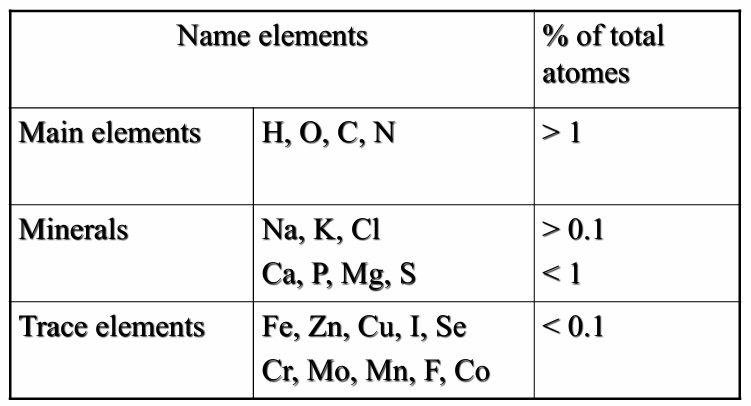
General principles
Alkali metals are completely filtered by glomerulus
Vegetable foods are rich in K
Trace-element are less bioavailable in vegetable foods
Meat is rich in Na and trace elements, poor in Ca, Ca/P «1
Cows milk rich in Ca, but poor trace elements
Strong regulation in uptake and excretion
Salt intake
Important food sources
Meat and meat analogues
Cereals and cereal products
Milk products and subsitutes
Spices and sauces
Na intake is underestimated: salt addition during preparation or added at the table are not taken into account
Macro - elements: Sodium, potassium and chlorine
Macro-element | Location | Function |
Na+ | extracellular, skeleton | Absorption: active transport (Na-K-ATPase) Excretion: urine (low) + sweat |
K+ | intracellular | Absorption: active transport (Na-K-ATPase) |
Cl- | extracellular, gastric acid | Absorption: passive or specific transport (cystic fibrosis) Excretion: gastric juice |
Na absorption
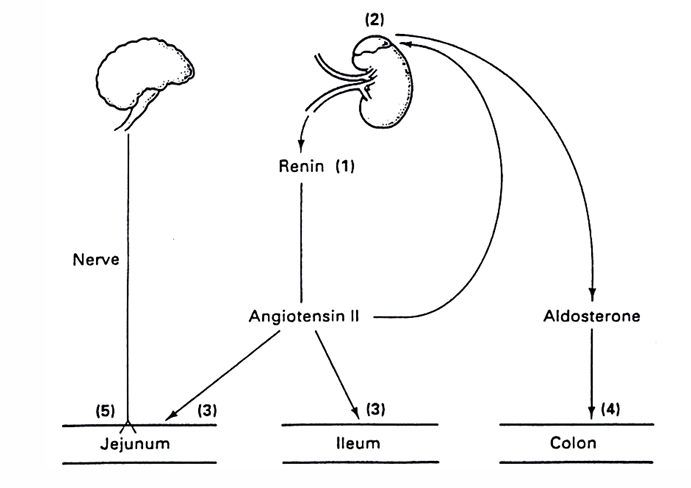
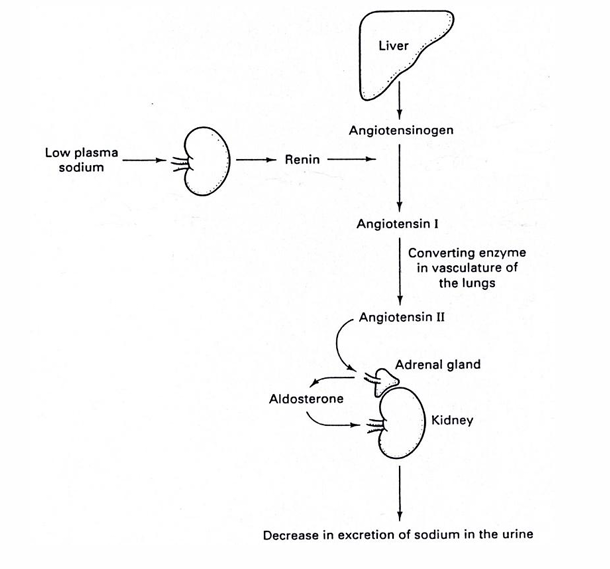
1) Decrease of plasma Na + blood pressure → release of renin and angiotensin II in the bloodstream
2) Angiotensin II stimulates synthesis of aldosteron in the adrenal cortex
3) Increased absorption of Na by jejenum and ileum (angiontensin II) + increased reabsorption of Na by colon (aldosteron) + decrease excretion in urine
Hyperkalemia
= too much K in extracellular water → release of aldosteron → increased K-uptake by cells
Hyponatraemia
= sodium levels in the blood are reduced
Hypertension
= high blood pressure
When sodium intake is higher than recommendation with highly efficient hormonal regulation of the sodium balance
low intakes of Ca and K stimulate Na-induced hypertension
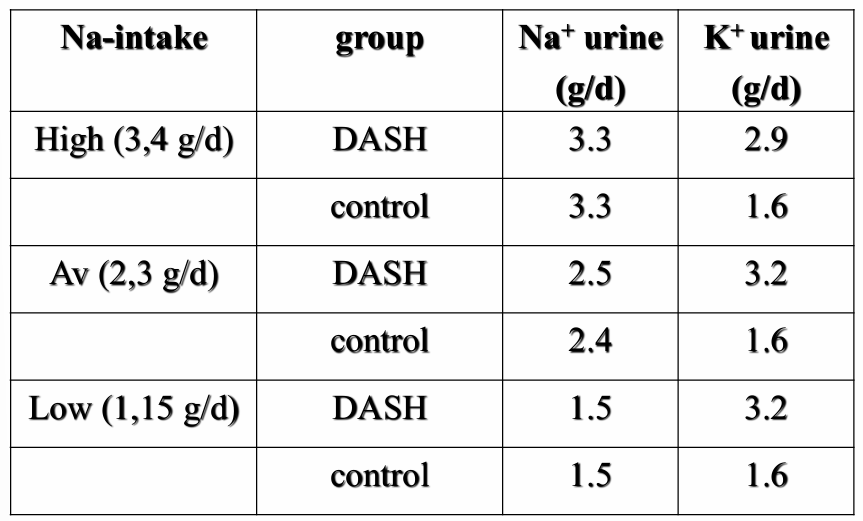
DASH
= Diet Approach to Stop Hypertension
lower amount of total and saturated fat and cholesterol
higher amounts of K, Ca, Mg, fiber and protein
highest reduction at lowest level of sodium intake
↓ = pull strategy, → = push strategy

Macro - elements: Calcium and phosporus
present in the skeleton:
chondroitin
osteoblasts (Ca incorporating cells)
osteoclasts (Ca mobilizing cells)
Ca/P proportion = 2/1
Ca | P |
|
|
Signal function of ATP
1) Binding of an extracellular stimulant (hormone) to membrane receptor
2) Fosfolipase C ↑
3) Convertion of fosfatidylinonositol-diP in DAG and IP3
4) IP3 can increase the Ca-concentration which, together with DAG, activates a protein kinase C
5) Influence on the cell function
Hormone regulation Ca content in body
Hormones
Calcitonine
Parathyroid hormone (PTH)
sex hormones
deregulation → lower osteoblast activity
Ca absorption (Small intestine)
transcellular absorption: active transport, vitamin D, mainly at low Ca uptake, low for elderly
paracellular absorption: passive diffusion, mainly at high Ca uptake
influence of Ca-salts and gastric juice
P absorption (Small intestine)
duodenum: Na-dependent, vitamin D
jejenum and ileum: passive diffustion
better organic than anorganic
Ca excretion → maintain Ca/P ratio
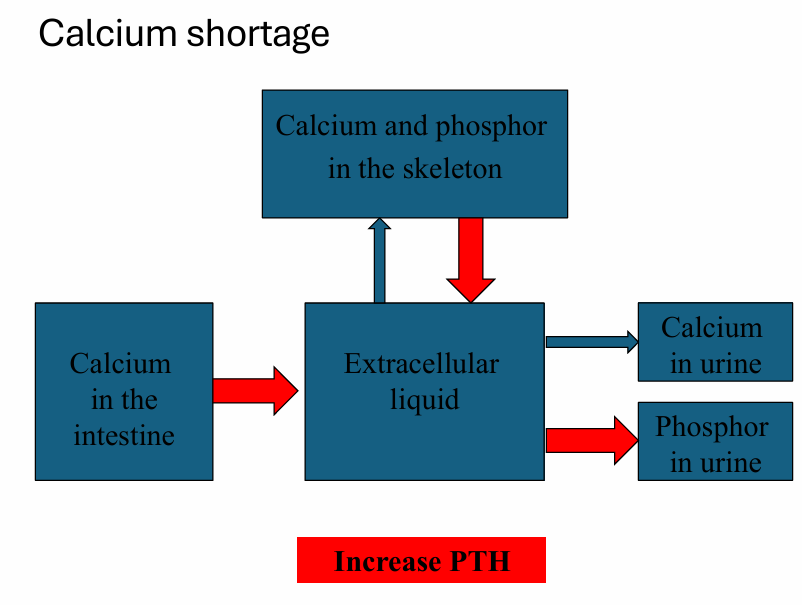

Low free calcium in blood | High free calcium in blood |
|
|
hyperfosfataemia and hypocalcaemia
hyperfosfataemia | hypocalcaemia |
too high phosphate in blood binds to free calcium → induces hypocalcaemia | too low free calcium in blood stimulates PTH release |
Causes: insufficient hormonal regulation or cow’s milk instead of maternal milk
Who: newborns
Consequences: less stable bone structure
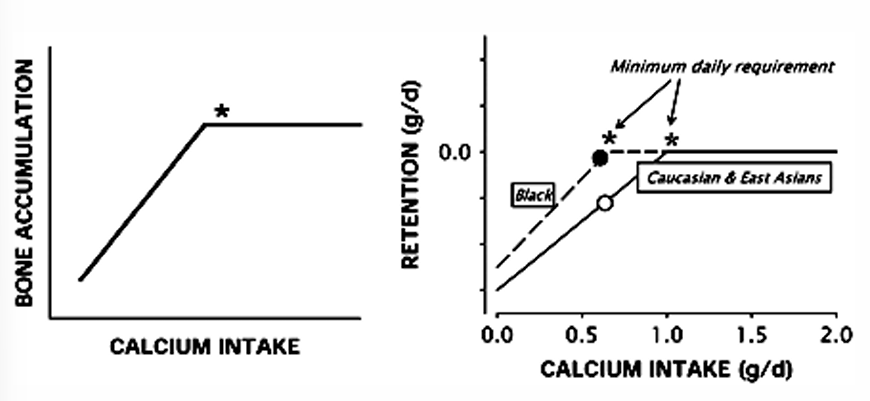
Ca retention as a function of intake
supplementation of Ca in children and adolescents → improvement in total bone mineral content in the body
Sufficient Ca-intake during growing phase of life remains important to develop a sufficient amount of bone mass
Ca-intake below reference value of 400 - 500 mg/d => osteoporosis
acid products → osteoclast activity ↓
physical activity ↓→ osteoclast activity ↓
Solution to maintain bone fraction after bone growth = calcium and vitamin D

Macro - elements: Magnesium
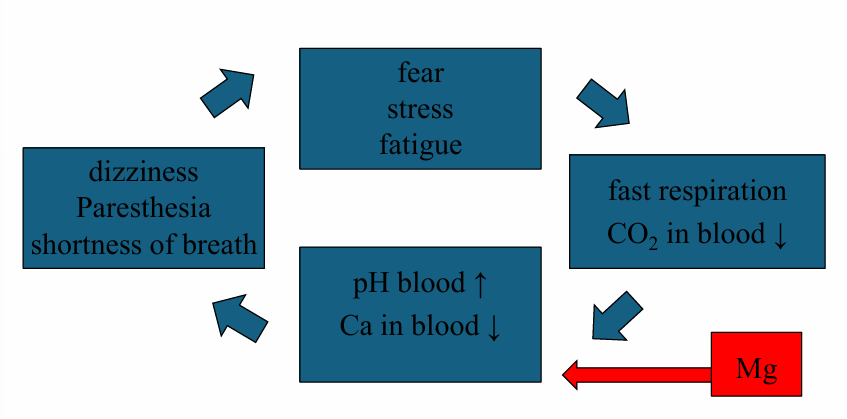
complex formation with ATP via phosphate
Na-K ATPase sensitive for Mg shortage
use against hyperventilation
Macro - elements: Sulphur
Present in S-containing amino acids and mucines, free sulphate in blood plasma
Sulphate incorporated via PAPS in tyrosine of secretory proteins
Role in detoxification, urinary excretion of suphated conjugates
GSH
= Glutathion
Glu-Cys-Gly
GSH = protects cells
GSSG = oxidised form
Metabolism of glutathion
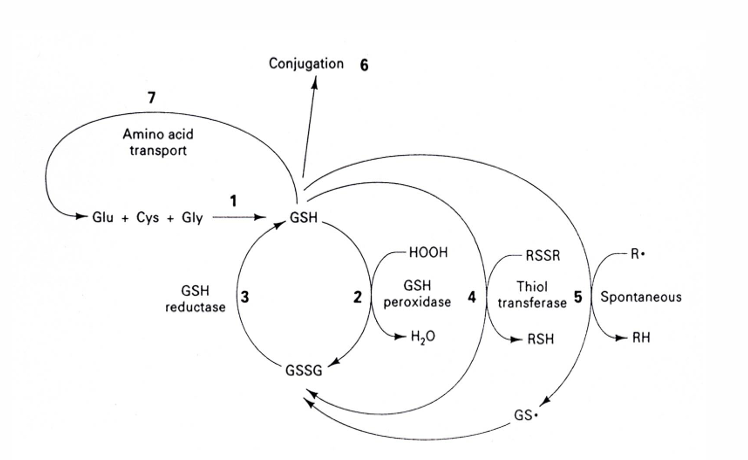
Reabsorption of AA in the kidneys (glutamyl-transpeptidase)
Glutathion peroxidase: Detoxification of H2O2 and ROOH
Thiol transferase: Regeneration of SH-groups in protein and coenzyme A
Non enzymatic inactivation of radicals
GSH-S-transferase: Detoxification of carcinogenic epoxides
Trace- or oligo-elements
Relation to concentration in the body (< 50 mg/kg)
essentiality: cfr. physiological function
Influence analytical methods
Different from contamination
Difference in requirement for Co or vitamin B12
Broad spectrum of metabolic activities
Element | Mainly occuring in |
Fe | liver blood |
Cu | liver eyes blood |
Zn | testes |
Mn | / |
I | thyroid gland |
Se | liver kidneys |
Classified according to essentiality
Essential for humans
Essential for humans with small chance of deficiency
Essential at extreme low concentrations
Demonstrating essentiality (deficiency) is difficult because it is not only determined by different intakes, but also by
Differences in absorption determined by the chemical form of the element and interactions with other nutrients
Differences in excretion depending on the conditions
Differences in requirements depending on the physiology
Choice of physiological criterium
depletion of reserves in the liver
Reduction in serum concentration
Metabolic artefacts (enzymatic activity)
Clinical symptoms (anemia during Cu-deficiency)
Response = concentration dependent
deficiency zone → optimal zone → pharmocological zone → toxicity zone
Trace- or oligo-elements: Utilisation
→ general model of homeokinesis
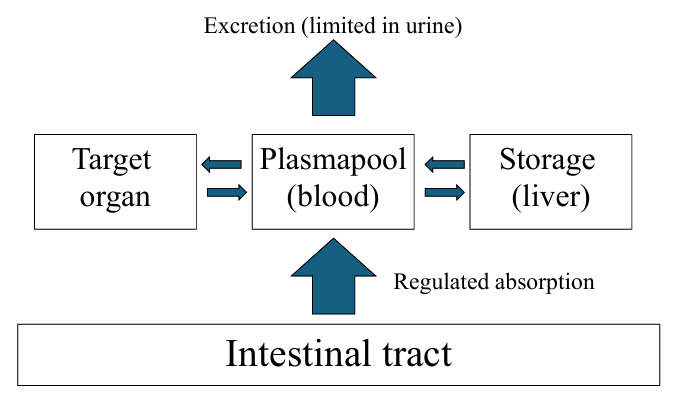
1) absorption is
regulated by saturation level
regulated by synthesis of transport- and/or storage proteins in the enterocytes
inhibited by vegetable foods
2) Excretion is
non-urinary, but difficult (eg. sweat, hair…)
Trace- or oligo-elements: amplifying effect
= large amounts of trace element can cause large biological effects because they act on processes with high turnover
Examples
Cr → large differences in energy metabolism
Co → important for protein synthesis
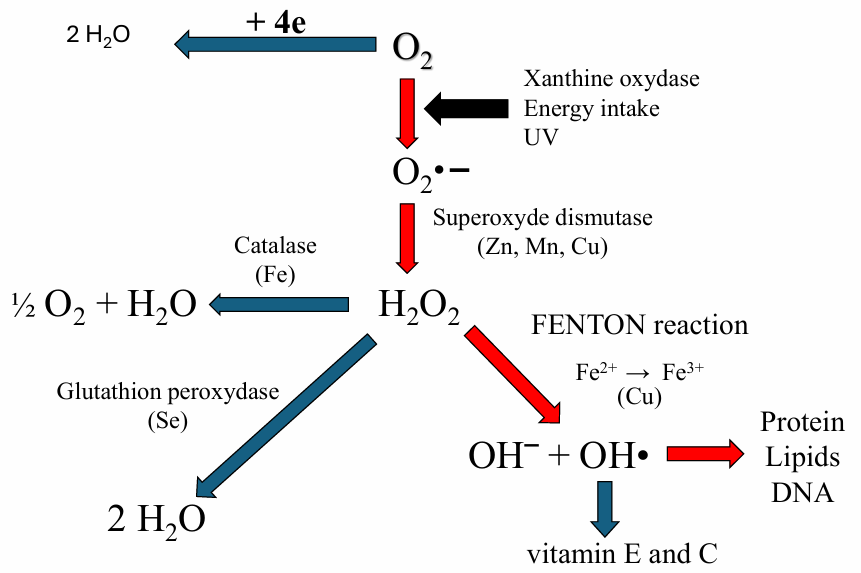
Trace- or oligo-elements: Interactions of trace elements and vitamins in radical formation
Trace- or oligo-elements: Iron
3 unique mechanisms for regulation of iron balance
1) Storage of Fe (ferritin)
2) Reuse of Fe (from erythrocytes)
3) Regulation of Fe absorption
Iron absorption
Luminal phase | Mucosal uptake and transport |
|
|
Flow chart iron
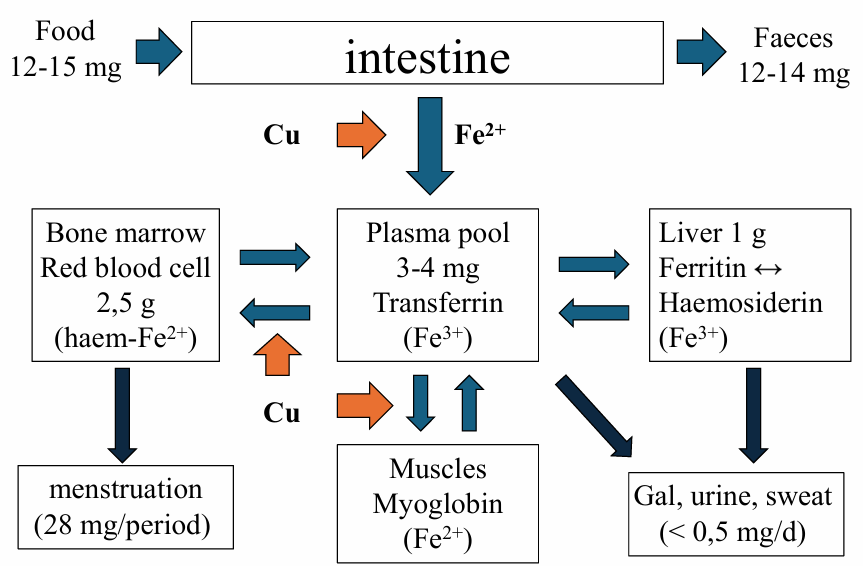
Red blood cell: Fe2+ in center of haemoglobin → oxygen transport
Muscles: Fe2+ bound to myoglobin
proteins: Fe3+ bound to these
transport
transferrin
lactoferrin
storage
ferritin
hemosiderin
What to do to improve Fe solubility
1) pH ↓
2) Valency (Fe3+ vs Fe2+)
3) Haem
Trace- or oligo-elements: Iron - Regulation iron absorption and Mucosal block
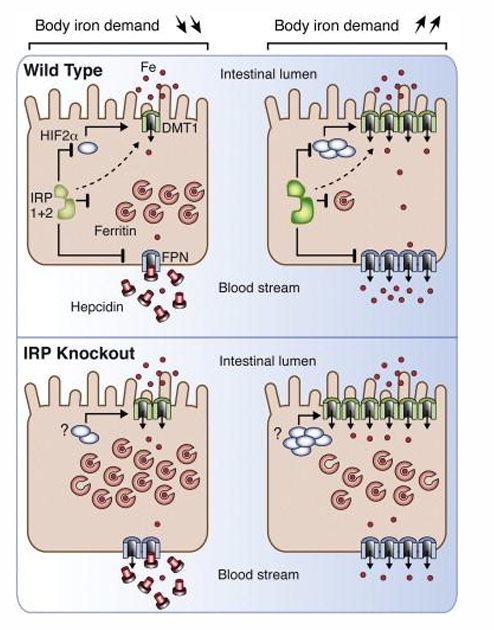
Low body iron demand → iron stored
1) High plasma iron → liver
2) Hepcidin ↑ → ferroportin (FPN) ↓
3) Iron export to blood ↓
4) Iron concentration in enterocyt ↑ → IRP’s get signal
5) Saturation in enterocyte from iron in ferritin → IRP’s inhibit ferritin and DMT1 transporters
6) When enterocyte is saturated → iron in intestine doesn’t get absorbed
High body iron demand → iron absorbed and mobilized
1) Low plasma iron
2) Hepcidin ↓ → ferroportin (FPN) ↑
3) Iron export to blood ↑
IRP deficient
ferritin expression is more pronounced with stronger effects of Fe deficiency on DMT1 expression
Trace- or oligo-elements: Iron - How to improve iron status
Increase in meat consumption
supplementation with iron tablets
fortification (adding iron to cereal flours)
biofortification (enhancing iron content and bioavailability in staple crops = genetic engineering)
Trace- or oligo-elements: Iodine
T3 = triiodothyronine
T4 = thyroxine
Thyroid hormones important for
foetal development
Regulation metabolic activity
Heat production

Thyroid hormones (= tyrosine + iodine) remain bound to thyroglobuline during storage in the thyroid gland
Proteolytic enzymes: thyroglobuline → blood
TSH stimulates hormone production + thyrocide hormone
Blockings
(1) Thyocyanates and perchlorates block iodine-uptake
(2) thiouracil inactivates oxidizing enzymes
(3) sulfonamides interfere in the condensation with tyrosine
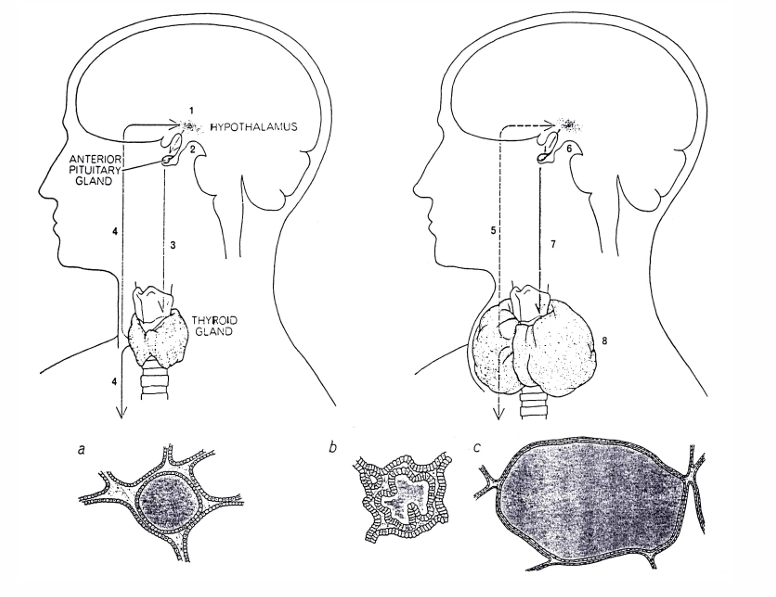
Stap | Voldoende jodium | Jodiumtekort (= goiter) |
Synthese T3/T4 | normale synthese | onvoldoende synthese |
Feedback op hypothalamus (thyroid stimulating hormone) | negatieve feedback → TRH ↓ | negatieve feedback valt weg → TRH ↑ |
Hypofyse (thyrotropine stimulating hormone) | TSH-secretion ↓ | TSH-secretion ↑ |
Thyrocyten | normale grootte | hypertrofie + hyperplasie |
Trace- or oligo-elements: Selenium
Toxic element for Se-rich soils
Se shortage
Absorption as selenomethionine
Excretion as urine
Functions: Selenoproteins
anti-oxidant defence and thyroid metabolism
cytoplasmatic and membrane (phospholipid) hydroperoxide GPx, selective formation
Potential link with immune function, intestinal cancers, cardiovascular disease
 Note
Note  Flashcards (88)