IPS 2: CLINICAL PHARMACY
 Call Kai
 Learn
Learn Practice Test
 Spaced Repetition
 Match
Match Flashcards
 Knowt Play
1/414

There's no tags or description
Looks like no tags are added yet.
Name | Mastery | Learn | Test | Matching | Spaced | Call with Kai |
|---|
No analytics yet
Send a link to your students to track their progress
415 Terms
a health science discipline in which pharmacist provide patient care that optimizes medication therapy and promotes health, wellness, and disease prevention (American College of Clinical Pharmacy)
Clinical Pharmacy Definition
rational selection
monitoring
dosing
control of the overall drug therapy program
clinical pharmacy includes broad responsibility for safe and appropriate use of drugs in patients which include
is a cooperative, patient-centered system for achieving specific and positive patient outcomes from the responsible provision of medicines (Hepler and Strand, 1990)
pharmaceutical care definition
Not product oriented but patient oriented
practice in both community and hospital setting
primary objective: clinical drug use
multidisciplinary
the characteristics of clinical pharmacy (4)
rational drug use
the primary objective of clinical pharmacy
requires that patients receive medication appropriate to their clinical needs, in doses that meet their own time, and at the lowest cost to them and their community (WHO, 1985)
rational drug use definition
right drug
right disease
right dosage form
right patient
right route
Rs of hospital pharmacy
over the counter drugs
are drugs which are safe and effective for use by the general public without doctor’s prescription
symptomatic and not as substitutes for prescription drugs
over the counter drugs are primarily used for
no it can be dangerous
in paracetamol will taking a higher dose than recommended provide more relief?
hepatotoxicity or hepatic necrosis
the overdose of paracetamol can lead to
infant drops
drug that can be significantly stronger for a specific demographic (children)
can cause stomach bleeding and risk is increased in people over 60 years of age.
what happens if you take NSAIDs too much
paracetamol
NSAIDs
COX
Codeine, Tramadol
Morphine/ Hydromorphone
give the hierarchy of pain relievers
blood thinners
steroid
other drugs can cause GI irritation
what other drugs can worsen NSAIDs abuse
stomach bleeding
ulcers
what history or disease of patients can worsen if taken with NSAIDs
Age >60
Diuretic intake
High BP and Heart Disease
Re-existing Kidney Disease
Children/teenagers recovering from a viral infection
Before taking NSAIDs what should be considered (5)
whether an expectorant or antitussive
in cough medications what ingredients or type included should be mindful of
7 days
use of cough preparations should be not more than how many days
seizures, brain damage, or death
in cough preparations using high doses can cause what
for ages 4-6, ask the physicians first
don’t give to children under 4
use the correct dose for children ages what, and what age should not be given without guidance; cough preparation
physical dependence
psychological dependence
two types of misuse and abuse
Decongestants
Antacids
Laxatives
Antihistamines
Sleep aids
Ephedrine
what are the OTC drugs that can be severely habit-forming
Hospitals
Community Pharmacies
Nursing Homes
Home-based care services
Clinics
Clinical pharmacy settings (5)
assess the patient for drug related problems
determine whether drug related problems are being treated
determine whether current drug therapy is appropriate
determine whether additional drug therapy is needed
determine if any of the drug-related problems may have been caused by medication.
give the pharmaceutical care process ASSESSMENT (5 steps)
approach normal physiology
slow progression of disease
alleviate symptoms
prevent adverse effects
control medication costs
educate the patient about the medication
give the pharmaceutical care process CARE PLAN (6 steps)
specify the patient’s progress
monitor potential adverse drug reactions
determine desires endpoints for each parameter and the frequency monitoring
give the pharmaceutical process OUTCOME EVALUATION (3 steps)
minimizing or eliminating patient’s symptoms
modifying or curing of disease process
improve the prognosis of patients
identifying and resolving drug related problems
preventing drug misadventures
what is the outcome of pharmaceutical care (5)
expert knowledge on drug and non-drug therapy
knowledge on lab and diagnostic test
good understanding of disease process
physical assessment skills
therapeutic planning skills
drug monitoring
provision of drug information
communication skills
give the knowledge and skills of clinical pharmacist (8)
interact with the healthcare team
interview and assess patient
review medication order and make therapeutic recommendations
monitor patient response to drug therapy
give the roles of a clinical pharmacist (4)
Patient Medication Profile
is the written summary of all the medicines take regularly, including over the counter and complementary medicines of patient.
assist to understand and manage medicines by informing how, why and when to take medicine
how does patient medication profiles assist
creates the most accurate list possible of all medication a patient is taking that is being compared against the physician’s admission, transfer, and discharge orders; with a goal of providing correct medications.
medication reconciliation process full definition.
drug name, dosage frequency and route
what are listed in the medication reconciliation process
it contains all significant clinical information which enables the physician to give effective continuing care to the patient
what does the patient medical chart contain and do
patient data sheet
consent form
history
physical assessment
physician’s order sheet
consultation, examination, and finding
graphic chart
fluid input and out put record
Medication Administration record
Multidisciplinary progress notes
Laboratory results
parts of patient medication sheet (11)
patient demographics
admission and final diagnosis
condition upon discharge
what are the parts of the patient data sheet
consent form
is a permission or approval given by the patient for admission, testing, procedure, and access to health related or personal information
chief complaint
history of present illness
past medical history
family history
social history
review of systems
parts of a history
Physical examination
are short description, systemic examination
temperature
pulse
RR
Blood pressure
pain
SPO2
what are the vital signs examined in the physical examination
oral, rectal, axillary (rectal being the most accurate)
the body temperature can be assessed in what sites of the body
37.5 + 0.5 0C
the normal body temperature
hyper or hypothermia
what may be the abnormal findings pertaining to body temperature
radial, femoral/ carotid
at what sites of the body can pulse rate be monitored
60-100 beats/min
normal range for pulse rate
bradycardia or tachycardia
what abnormal findings can be associated with pulse rate
16-20 breaths/min
RR normal range
prolonged expiration suggesting narrowing bronchioles, wheezing, or stridor sounds; apnea, Bradypnea, Tachypnea
abnormal findings associated with respiratory rate
<120/80
the normal range for blood pressure
HTN, cardiac disease, orthostatic HTN, venous congestion/ HTN
abnormal findings associated with blood pressure
Inspection
Palpation
Percussion
Auscultation
what are the physical assessment techniques (IPPA)
inspection
is a visual examination of the patient
use of the hand to feel skin texture, and contour, and masses below the surface; temperature and vibration (light and deep)
how palpation is performed in physical assessment
hard to reach organs such as kidney, liver, spleen
deep palpations are used to assess what organs
used to elicit a sound which reflects the density of underlying tissue and structures by tapping the body directly or a finger placed on the body (dull percussive sounds, hyperresonance on percussion)
how percussion is performed in physical assessment
Auscultation
a physical assessment technique in which involves listening to sounds produced by the body originating in internal organs (direct and indirect)
use of ears
what is the direct form of auscultation
use of stethoscope
what is the indirect form of auscultation
Inspection → Palpation → Percussion → Auscultation
what is the general sequence of physical assessment
Inspection → Auscultation → Percussion → Palpation
what is the general sequence for abdomen assessment
doctor progress notes (SOAP)
doctor orders
what are the parts of the physician’s order sheet
Documentation
means by which healthcare professionals communicate with one another
Doctors, Nurses, Medtech etc.
who uses the SOAP format of documentation
Pharmacy
who uses the FARM format of documentation
Medication Order Review is a multistep process in which pharmacists evaluate orders for safety, efficacy and appropriateness by examining drug and patient related factors
what is a MOR
are any preventable event that may lead to inappropriate medication use or cause harm to the patient while the medication is in control of the health care professional patient or consumer.
what is a medication error
Type A
circumstances or events that have the capacity to cause an error
Type B
error occurred but the medication did not reach the patient
Type C
error reaches the patient but did not cause harm
Type D
error occurred that resulted in the need for increased patient monitoring but no patient harm
Type E
error occurred that resulted in the need for treatment or intervention and caused temporary patient harm
Type F
and error occurred that resulted in initial or prolonged hospitalization and caused temporary patient harm
Type G
an error that resulted in permanent patient harm
Type H
an error that resulted in near death event
Type I
an error that resulted in patient Death
Prescription
are written order and instruction of validly registered physicians, dentist, veterinarians for use of specific drug for specific patient
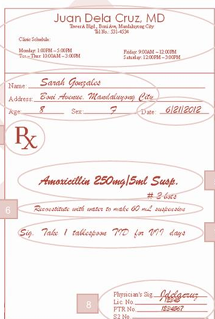
prescribers information and signature
date of prescription written
patient information
Rx (superscription)
Inscription (body)
subscription (instruction to the pharmacists)
Signa (transcription, instruction to the px)
physician’s signature and other information
Parts of a Medication Order Review
Yellow Rx
prescription used to prescribe dangerous or regulated drugs
triplicate ( pharmacist, patient and physician)
how many copies does the Yellow Rx requires
can use white Rx but also in 3 copies, can do partial filling valid within 1 month
instruction according to DOH about having no Yellow Rx
opium and its components/ derivatives
coca leaf and its derivatives
hallucinogenic drugs
what are the prohibited drugs
amphetamine salts
hypnotics
what are the regulated drugs
Amikacin
Amphotericin B
Aztreonam
Ciprofloxacin
Ceftazidime
Chloramphenicol
Flucytosine
Linezolid
Nalidixic acid
Piperacillin + Tazobactam
Sodium Fusidate
Tobramycin
Cefuroxime
Ertapenem
Meropenem
restricted antimicrobials
noxious, unintended reaction to drug in doses used in prophylaxis, diagnosis, and treatment
give the definition of ADR
Augmented (A)
ADR class, that is based on pharmacologic activity, dose dependent, and predictable
Bizzare (B)
ADR class; abnormal reactions, unpredictable, non-dose dependent
dependence, tolerance, addiction
ADRs under Continuous (C)
carcinogenicity, teratogenicity, anticancer drugs
ADRs under Delayed (D)
End of use (E)
ADR class; tapering dose with steroids
Failure of therapy (F)
ADR class; antimicrobial resistance
analysis of each reported ADR
identification of drugs and patients at high risk for being involved in ADRs
The development of policies and procedures for ADR monitoring program
a description of the responsibilities and interactions of pharmacists, physicians, nurses, risk managers and other health professionals in the ADR program.
Use of the ADR program for educational purposes
Development, maintenance, and evaluation of ADR records within the organization
the organizational dissemination and use of information obtained through the ADR program
Reporting of serious ADRs to FDA or the manufacturer (or both)
the pharmacist should facilitate based on the ASHP Guidelines on ADR monitoring and Reporting (8)
pediatrics
geriatrics
pregnant
special populations in reporting and evaluating ADRs
underdeveloped organs
what characteristics pediatrics patient have that makes them susceptible to ADRs
UDP-glucoronosylacetyltransferase (Gray baby syndrome) and Kernicterus
most ADRs associated in pediatric patients are
chloramphenicol
gray baby syndrome induced by what drug
Comorbidity
Polypharmacy
Less functional organs
what are the ADRs or complications associated with geriatrics
teratogenic agents
what are the ADRs or complications associated with pregnant patients
Category A
Adequate well controlled studies in pregnant women have not shown an increased risk of fetal abnormalities to the fetus in any trimester of pregnancy
Levothyroxine
Folic Acid
Liothyronine
Drugs under FDA pregnancy Category A

