Special Tests (How to do each test) (shoulder evaluation)
 Call Kai
 Learn
Learn Practice Test
 Spaced Repetition
 Match
Match Flashcards
 Knowt Play
1/18

There's no tags or description
Looks like no tags are added yet.
Name | Mastery | Learn | Test | Matching | Spaced | Call with Kai |
|---|
No analytics yet
Send a link to your students to track their progress
19 Terms
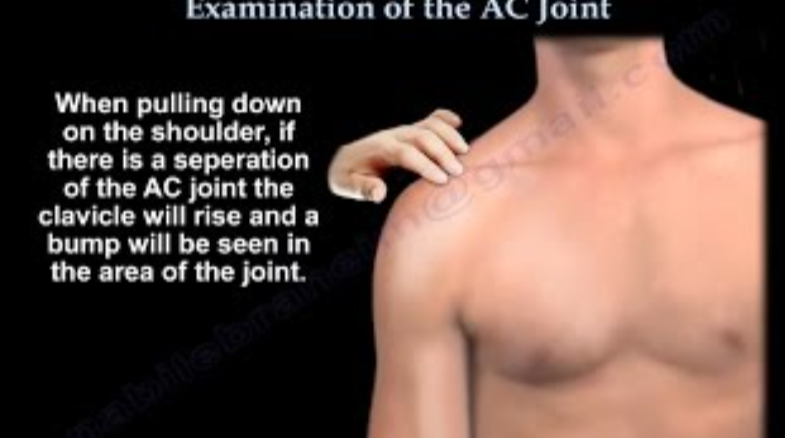
Piano key sign
Find the end of the collarbone near the shoulder. Push it down with your finger, then let go. If it bounces back up like a button, it’s positive.
AC shear test
Put one hand on the front of the shoulder and one on the back. Squeeze your hands together. If this causes pain on top of the shoulder, it’s positive.

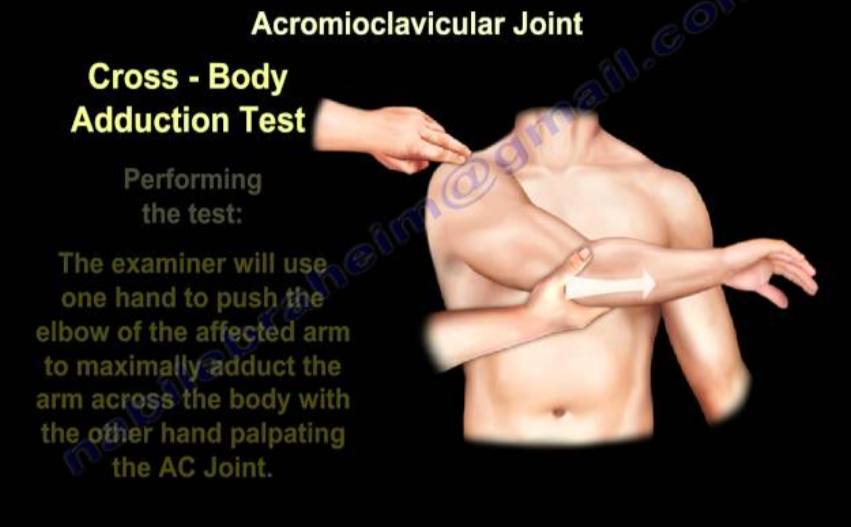
Cross body adduction (scarf) Test
Lift the arm straight out in front, then pull it across the chest toward the other shoulder. Pain on top of the shoulder is positive.
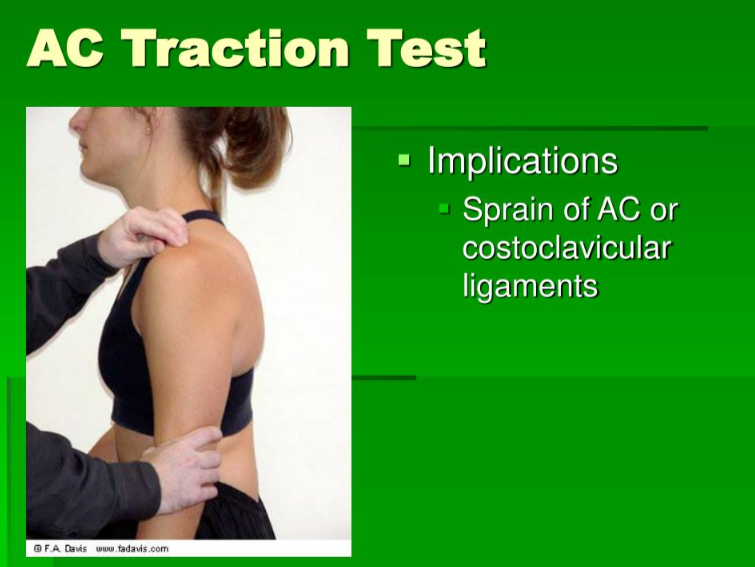
AC traction test
Hold the arm near the elbow and gently pull it straight down. Pain at the top of the shoulder is positive.
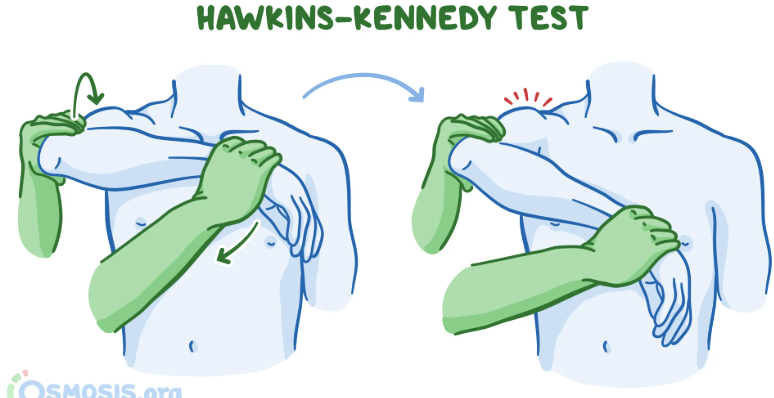
Hawkins-Kennedy test
Lift the arm straight in front to shoulder height. Bend the elbow so the hand points forward. Then push the hand downward. Pain is positive.
This test evaluates for shoulder impingement, specifically involving the supraspinatus tendon and subacromial bursa.
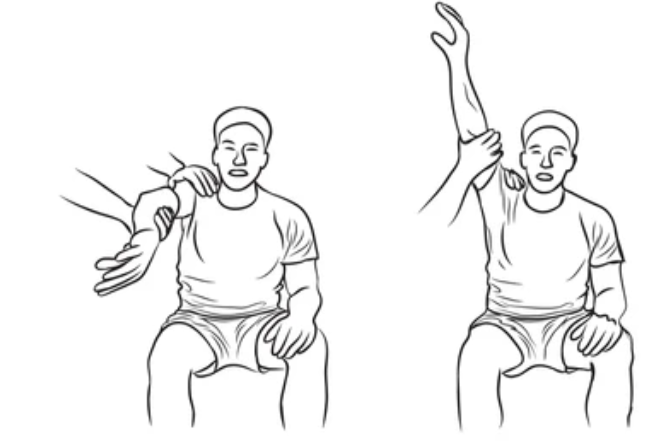
Neer test
Keep the arm straight and slowly lift it all the way up over the head. Pain during this movement is positive.
impingment syndrome
Yocum’s Test (forced flexion)
Place the hand on the opposite shoulder. Then try to lift the elbow up without moving the hand. Pain is positive.
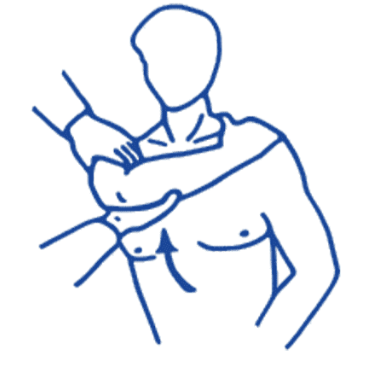
Yergason’s test
Bend the elbow at your side. Start with your palm facing in. Try to turn your palm up while someone tries to stop you. Pain in the front of the shoulder is positive.
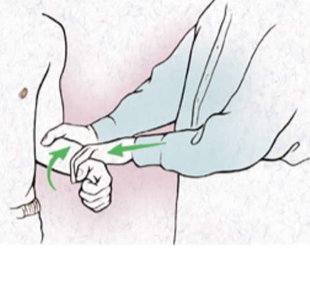
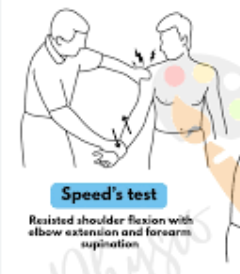
Speed’s Test
Hold the arm straight out in front with the palm facing up. Someone pushes down while you try to hold it up. Pain in the front of the shoulder is positive.
biceps tendon subluxation
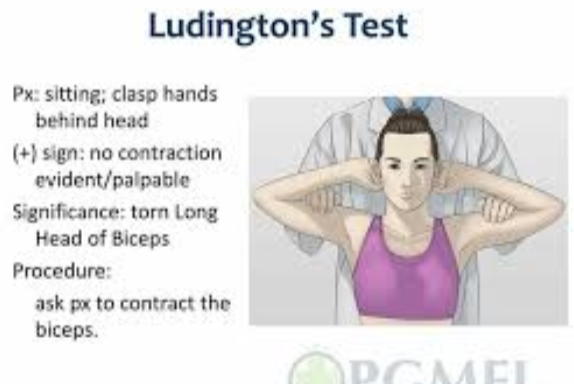
Ludington’s Test
Put both hands behind your head. Tighten your arms like you’re flexing. If the biceps muscle doesn’t tighten or feels uneven, it’s positive.
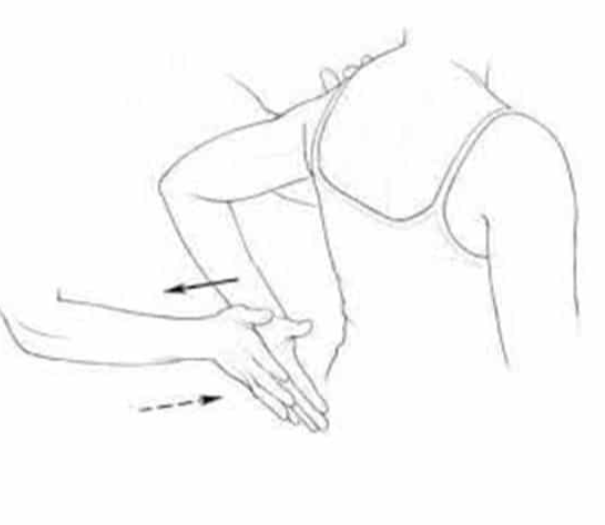
Lift-Off Test (Gerber’s)
Place your hand on your lower back. Try to lift it away from your back. If you can’t, it’s positive.
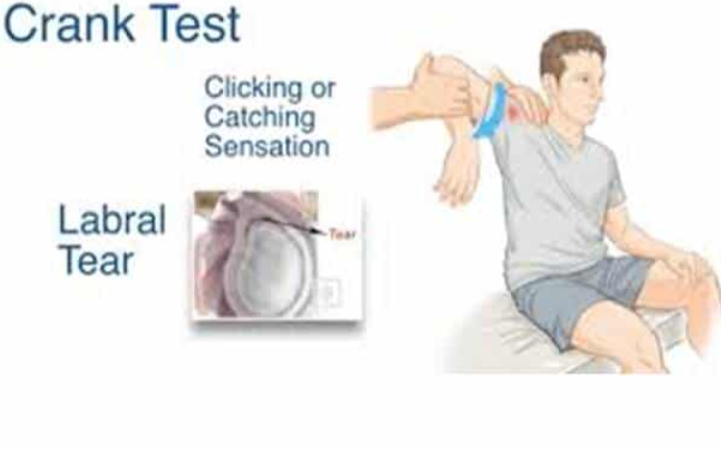
Apprehension (crank) test
Lift the arm out to the side and bend the elbow. Slowly move the hand backward. If it feels like the shoulder might pop out or you get nervous, it’s positive.
Glenohumeral instablity (shoulder subluxation/dislocation histroy)
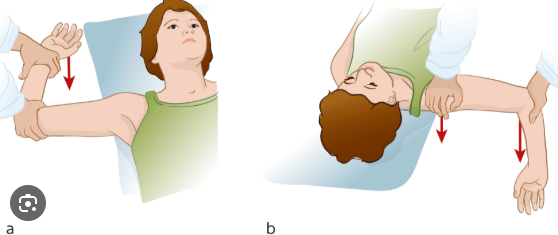
Apprehension with relocation test
Do the same movement as above (Lift the arm out to the side and bend the elbow. Slowly move the hand backward. If it feels like the shoulder might pop out or you get nervous, it’s positive.), but have someone gently press on the front of the shoulder. If that makes it feel better, it’s positive.
Glenohumeral instability shoulder subluxation/dislocation history
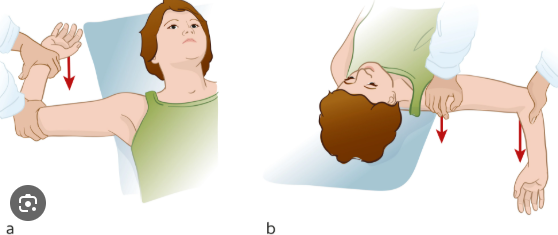
Jerk Test (labrum)
Lift the arm to shoulder height in front of you. Move it across your body, then push it inward. A sudden jump, click, or pain is positive.
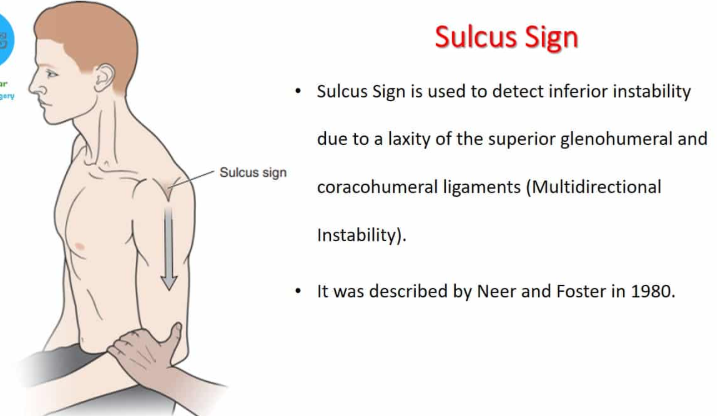
Sulcus Test
Let the arm hang relaxed at your side. Someone pulls it straight down. If a small gap or dip appears at the top of the shoulder, it’s positive.
glenohumeral insablity (shoulder subluxation/dislocation histroy)
Posterior apprehension test
Lift the arm forward to shoulder height. Push it backward. Pain or a feeling like it might slip out is positive.
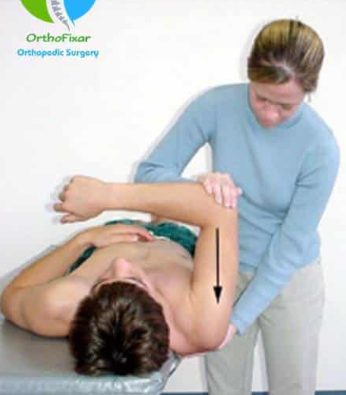
Clunk Test
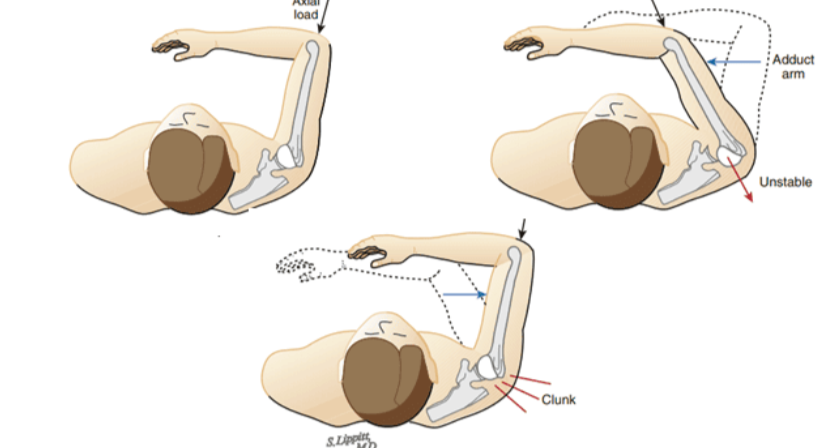
While lying down, lift the arm overhead and rotate it. If you feel or hear a “clunk,” it’s positive.
O’Brien’s Test
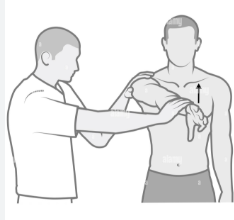
Hold the arm straight out in front. First point the thumb down and resist someone pushing down. Then turn the palm up and repeat. Pain only in the first position is positive.
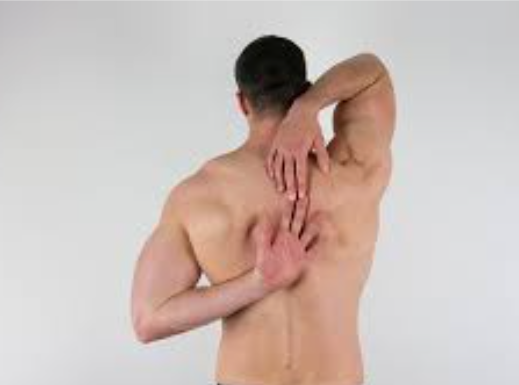
Apley Scratch test ROM Limitations
Scratch test