05 Blood Pressure Review
 Call Kai
 Learn
Learn Practice Test
 Spaced Repetition
 Match
Match Flashcards
 Knowt Play
1/28

There's no tags or description
Looks like no tags are added yet.
Name | Mastery | Learn | Test | Matching | Spaced | Call with Kai |
|---|
No analytics yet
Send a link to your students to track their progress
29 Terms
Pulse Pressure (PP)
systolic pressure - diastolic pressure = PP
Mean arterial pressure (MAP)
pressure forcing blood into tissues, averaged over cardiac cycle
Diastolic pressure + 1/3 of pulse pressure (systolic - diastolic
Ex.
MAP = 80 + 1/3 (40)
MAP = 93 mmHg
hypertension
abnormally high blood pressure 130/90
hypotension
abnormally low blood pressure 110/70
Normal blood pressure
119/79
What blood vessel has valves?
Veins
tunica intima (interna)
the innermost layer of a blood vessel, composed of a single layer of squamous epithelial cells over a sheet of connective tissue and elastic membrane
tunica media of artery
middle layer of smooth muscle and elastic connective tissue
tunica externa
collagen fibers, nerve and blood vessels
sinusoid
most permeable and occur in the liver, bone marrow, spleen and adrenal medulla and large clefts and fenestrations
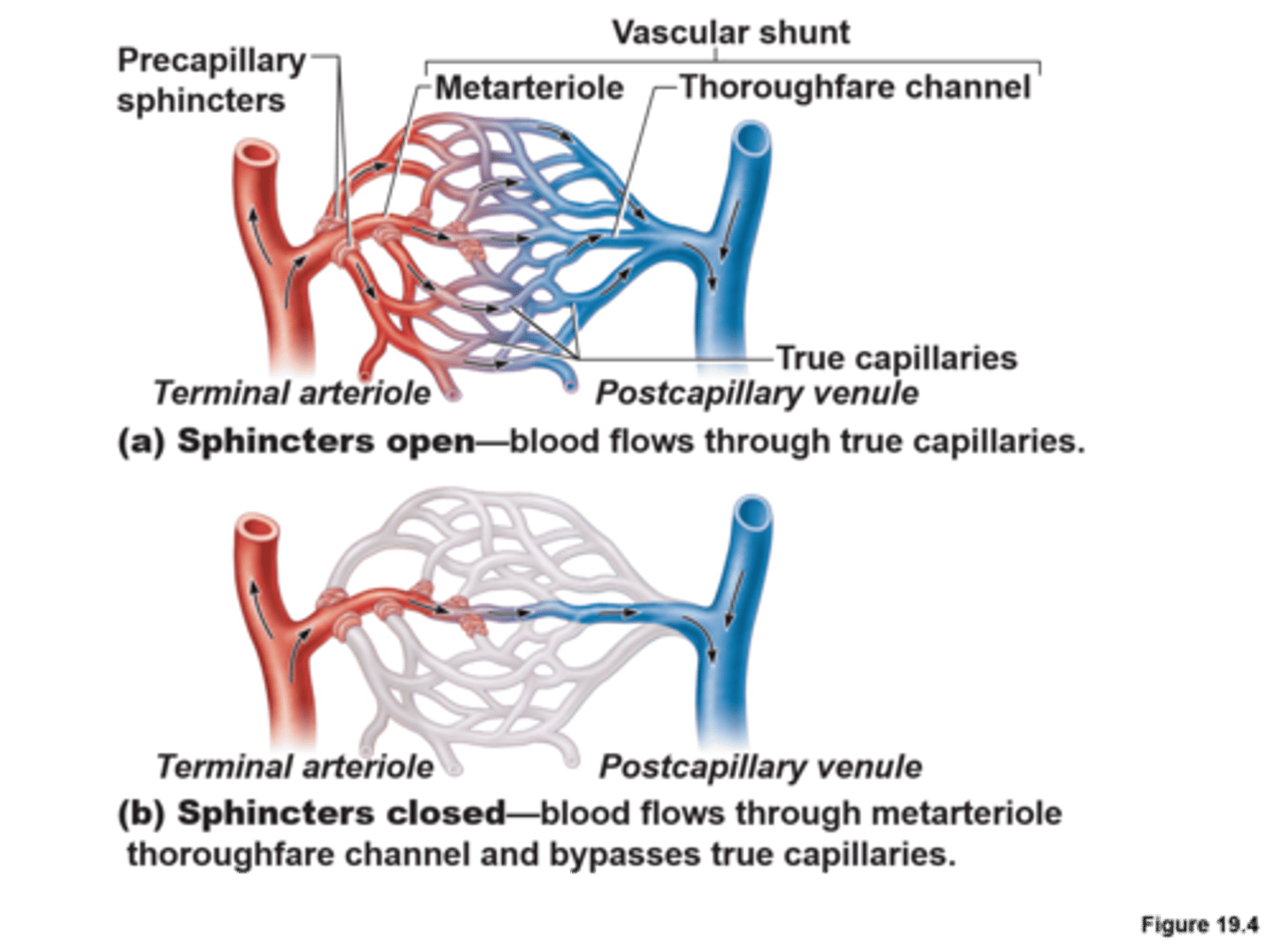
indicate with one occurs during exercise?
Sphincters close during exercise
Varicose veins is due to
incompetent (leaky) valves from prolong standing, obesity or pregnancy
Three important sources of resistance
blood viscosity, total blood vessel length, blood vessel diameter
Aorta Systemic Blood Pressure Range
120-80
Arterioles Systemic Blood Pressure Range
80-35
Vena Cava Systemic Blood Pressure Range
5-0
Venous Blood Pressure Functional Adaptations
Muscular pump, respiratory pump, sympathetic venoconstriction
Primary Hypertension
90% no underlying cause due to diet, obesity, diet, age, diabetes, heredity, stress and smoking
Secondary hypertension
10% due to identifiable disorders, renal artery obstruction, kidney disease, arteriosclerosis, hyperthyroidism, Cushing's syndome
Hypertension Orthostatic (Postural)
sudden increase in BP when someone stands up
White Coat Syndome
Feeling of anxiety in a medical environment causing abnormally high reading of BP
Hypotension Orthostatic (Postural)
low BP, dizziness when rising from reclining or sitting position.
Hypotension Chronic
Poor nutrition (anemic), low protein, Addison's disease, hypothyroidism, tissue wasting
Hypotension Acute
Circulatory shock
Korotkoff sounds
1st and 2nd heart sound (lub-dub)
1st heart sound
Ventricular contraction
2nd heart sound
Ventricular relaxation
What happens to the HR during exercise and pulse
During exercise, the HR increase while the pulse shorten, then rises to normal when at rest.
ECG and pulse wave
Electrical depolarization always comes before mechanical contraction

