5.4: Hormonal communication
 Call Kai
 Learn
Learn Practice Test
 Spaced Repetition
 Match
Match Flashcards
 Knowt Play
1/82

There's no tags or description
Looks like no tags are added yet.
Name | Mastery | Learn | Test | Matching | Spaced | Call with Kai |
|---|
No analytics yet
Send a link to your students to track their progress
83 Terms
What are hormones?
A chemical messenger secreted into the blood that affects target cells.
Where are hormones produced?
Endocrine glands
What is an endocrine system?
Communication via hormones transported in the blood to target cells.
What are endocrine glands?
contain cells that produce a hormone and release it straight into the blood. They are ductless
What are exocrine glands?
they produce a hormone which is not released directly into the blood. They have a duct which carries the secretion to another place
What are the two types of hormones?
peptide/protein hormones and steroid/lipid based hormones
What are peptide hormones?
hormones that are not soluble in the membrane so do not enter the cell. They use the first messenger second messenger model e.g adrenaline
What are steroid hormones?
they can pass through the membrane and enter the cell. They act upon the DNA in the nucleus e.g oestrogen
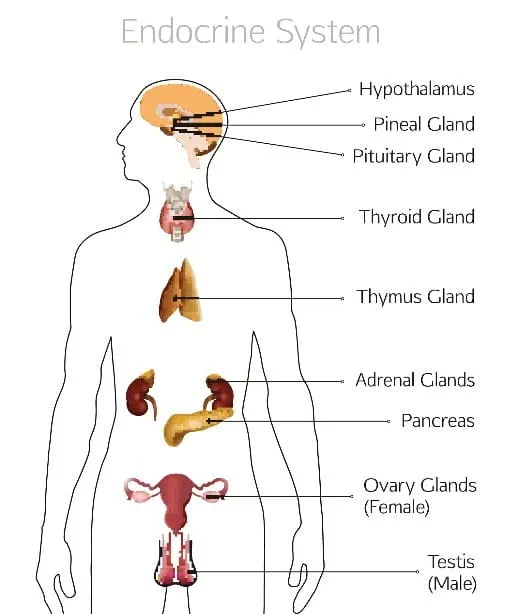
Name the key glands in the body, where they are located and what they do?
pituitary gland - controls other endocrine glands
thyroid gland - releases thyroxine to regulate metabolic rate
thymus - releases thymosin to stimulate the release of t cells
adrenal gland - release adrenaline to prepare body for ‘fight or flight’
pancreas - releases insulin and glucagon to control blood glucose conc
ovaries - release oestrogen to control menstrual cycle and pregnancy
testes - release testosterone to stimulate sperm production and male characteristics
What is a target cell?
A cell with receptors specific to a hormone
Why is endocrine communication slower than nervous communication?
Hormones travel in blood rather than electrical impulses
Why are endocrine effects longer lasting?
Hormones remain in circulation longer
What is a first messenger?
A hormone that travels in the blood and binds to a receptor on a target cell
Where does the first messenger bind?
To receptors on the cell surface membrane
What happens when a hormone binds to its receptor?
The receptor changes shape (conformational change) - complementary
What is activated immediately after the receptor changes shape?
A G protein
What does the G protein activate?
adenyl cyclase
What does adenylate cyclase do?
Converts ATP into cAMP (cyclic AMP)
What is a second messenger?
A molecule inside the cell that relays and amplifies the signal from the first messenger - cAMP in this case
What does cAMP do?
Activates protein kinases, triggering an cascade of enzyme-controlled reactions that alter the activity of the cell
Where are adrenal glands located?
Above the kidney
What are the two regions of the adrenal gland?
Cortex (outer) and medulla (inner)
What are the layers of the adrenal cortex?
zona glomerulosa
zona fasciculata
zona reticularis
What is zona glomerulosa?
the outermost layer which secretes mineralocorticoids such as aldosterone
What is zona fasciculata?
the middle layer, which secretes glucocorticoids such as cortisol
What is the function of cortisol?
Regulates metabolism and increases blood glucose
How does cortisol increase blood glucose?
Stimulates gluconeogenesis
What is zona reticularis?
the innermost layer, which is thought to secrete precursor molecules that are used to make sex hormones
How does the adrenal cortex produce a range of hormones?
using cholesterol
What are hormones produced by the adrenal cortex?
steroid based and are able to enter cells directly by dissolving into the cell surface membrane. The steroid hormones enter the nucleus and have a direct effect on the DNA to cause protein synthesis
Describe the action of steroid hormones?
passes through cell membrane of target cell
binds with specific receptor (complementary shape) in the cytoplasm
receptor-steroid hormone complex enters the nucleus and binds to another specific receptor on the chromosomal material
binding stimulates the production of mRNA, which code for the production of proteins
What is the role of mineralocorticoids?
Maintain blood pressure by balancing salt (sodium and potassium) and water in the blood and body fluids.
What does aldosterone do specifically as a mineralocorticoid ?
acts on cells on the distal tubules and collecting ducts in the kidney. It increases absorption of sodium ions and increases water reabsorption to help maintain blood pressure
What is the role of glucocorticoids?
Regulate metabolism by controlling the conversion of fats, proteins, and carbohydrates to energy
What does cortisol do specifically as a glucocorticoid?
released in response to stress or as a result of low blood glucose concentration. It stimulates the production of glucose from stored compounds (e.g glycogen) in the liver
What is the role of androgens?
taken up by ovaries and converted to sex hormones (testosterone and oestrogen). They then help the development of secondary sexual characteristics and regulate the production of gametes
Which hormones does the adrenal medulla secrete?
adrenaline (epinephrine) and noradrenaline (norepinephrine). both involved in the ‘fight or flight response’
What kind of hormone is adrenaline?
a peptide hormone so it can’t diffuse through the membrane and must use the first messenger second messenger model
What are some of the effects of adrenaline?
increases heart rate
increases ventilation rate - more o2 enters blood
dilates bronchioles - improves airflow to lungs
stimulates glycogenolysis (glycogen → glucose)
dilates the pupils
inhibiting gut action
What type of gland is the pancreas?
A mixed gland meaning it has both exocrine and endocrine functions
What is the endocrine function of the pancreas?
hormones which are secreted from islets of Langerhans into the blood
What is the exocrine function of the pancreas?
pancreatic juices containing enzymes which are secreted into the small intestine via the pancreatic duct
What are clusters of exocrine cells called?
Acinus cells
How do acinar cells appear in stained sections?
Darkly stained
How do islets appear under a microscope?
Pale-staining clusters
What is the normal blood glucose range?
About 4–6 mmol dm⁻³
Why must blood glucose be regulated?
To prevent damage and ensure sufficient respiration. High bgc lowers water potential meaning cells could shrink and lead to cells shrinking- tiredness and thirst
What factors can increase blood glucose concentration?
eating a carbohydrate-rich diet
glycogenolysis
gluconeogenesis
What factors can decrease blood glucose concentration?
exercise
respiration
glycogenesis
Where are glucose regulation hormones released?
pancreas - islets of langerhans - alpha and beta cells
What do alpha cells release?
glucagon, raises blood glucose concentration
What do beta cells release?
insulin, lowers blood glucose concentration
What triggers insulin secretion in beta cells?
An increase in blood glucose concentration
How does glucose enter beta cells?
By facilitated diffusion, using a channel protein down the glucose concentration gradient
What happens to glucose once inside the beta cell?
It is metabolised in respiration releasing energy in the form of ATP
What effect does ATP have on potassium (K⁺) channels?
it binds to them causing them to close
What happens to potassium ions when K⁺ channels close?
Potassium ions cannot leave the cell
What is the effect of K⁺ ions remaining in the cell?
The membrane becomes depolarised (potential becomes less negative)
What does depolarisation of the membrane cause?
Voltage-gated calcium (Ca²⁺) channels to open
What happens when calcium channels open?
Calcium ions diffuse into the cell
What does the influx of Ca²⁺ ions trigger?
Exocytosis of insulin-containing vesicles into the blood stream
What is hypoglycaemia?
abnormally low levels of glucose in the blood; it results in inadequate delivery of glucose to the body tissues in the blood. Can lead to tiredness and even death
What is hyperglycaemia?
where blood glucose concentrations remain high for longer than normal periods, which can lead to organ damage
What cells do glucagon and insulin act on?
liver cells (hepatocytes) which can store glucose in the form of glycogen
What happens once insulin is released if blood glucose is too high?
insulin binds to complementary receptors on hepatocytes
it activates intracellular enzymes
causes vesicles containing glucose channels to move to membrane so more glucose can enter the cell
glycogenesis enzymes activated
more glucose converted to fats and used in respiration
What is glycogenesis?
the conversion of glucose to glycogen for storage
What happens once glucagon is released if blood glucose is too low?
glucagon binds to complementary receptors on hepatocytes
receptor activates adenyl cyclase which converts ATP into cAMP
cAMP (second messenger) activates a series of enzyme controlled reaction
glycogenolysis
gluconeogenesis
What is glycogenolysis?
glycogen converted to glucose
What is gluconeogenesis?
process where amino acids and fats are converted into additional glucose
Why are glucagon and insulin antagonistic?
they have opposite effects on blood glucose concentration
Why is controlling blood glucose concentration as example of negative feedback?
because it works to bring blood glucose concentration back to the optimum
What is diabetes mellitus?
a condition in which blood glucose concentrations can’t be controlled effectively - it can lead to hyperglycaemia or hypoglycaemia
What is type 1 diabetes?
Autoimmune destruction of beta cells (may also result from a viral attack)
What happens to insulin production in Type 1 diabetes?
Little or none is produced meaning the body can’t store excess glucose and glycogen
When does type 1 diabetes usually develop?
in childhood
What is type 2 diabetes (non-insulin-dependent)?
body cells become resistant to insulin and/or insufficient insulin is produced
Why do body cells become less resistant to insulin?
because the specific receptors on the surface of the liver and muscle cells become less responsive
When does type 2 diabetes usually develop?
late in life due to different factors like obesity (also family history, lack of regular exercise etc)
What are some treatments for type 1 diabetes?
regular insulin injections
insulin pump therapy - device constantly pumps insulin into blood through a permanent needle in skin
islet cell transplant (specifically of beta cells)
complete pancreas transplant
exercise and less reducing sugar consumption
stem cells to grow new islets of Langerhans
What are some treatments for type 2 diabetes?
lifestyle - diet, exercise, weight loss
medications to increase cells’ sensitivity to insulin
medication to stimulate more insulin production
some cases, insulin therapy
How else can humans get insulin?
from genetically modified bacteria
What are some of the benefits of using GM bacteria?
avoids ethical and religious concerns associated with animal-derived products
exact copy of human insulin - faster acting + more effective
lower risk of infection
less chance of rejection due to immune response
capability to produce insulin in large quantities.
cheaper to manufacture

