Chapter 04: Beers and Ales (Manage First - Bar & Beverage Management)
 Studied by 0 people
 Call Kai
 Learn
Learn Practice Test
 Spaced Repetition
 Match
Match Flashcards
 Knowt Play
1/23

There's no tags or description
Looks like no tags are added yet.
Name | Mastery | Learn | Test | Matching | Spaced | Call with Kai |
|---|
No analytics yet
Send a link to your students to track their progress
24 Terms
adjuncts
Additional cereal grains added to beer to add flavor or reduce brewing costs.
ales
A beer made with top-fermenting yeast; characterized by a more complex flavor than lager.
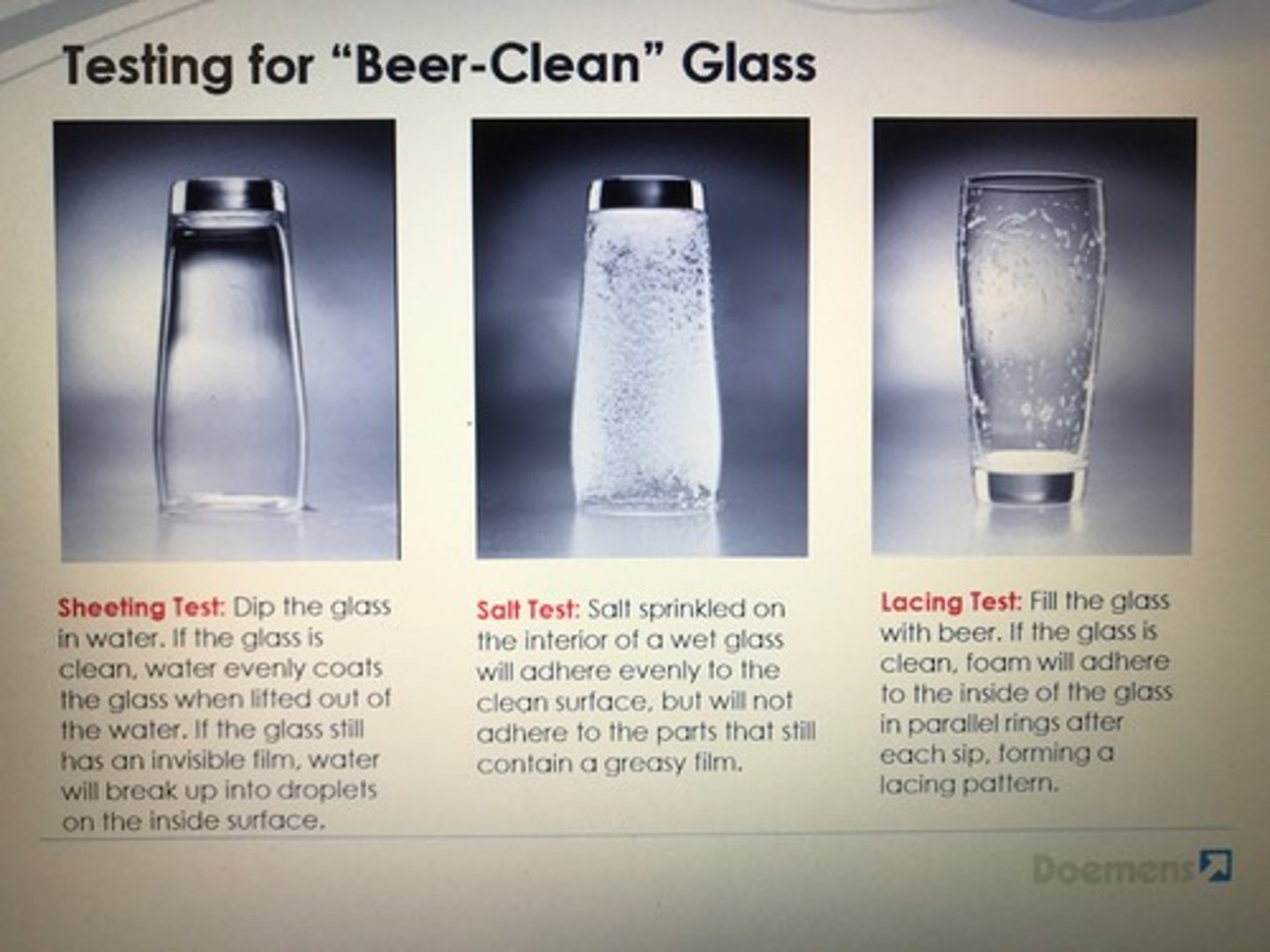
beer-clean glass
A glass that is cleaned and prepared especially for draft beer.
brewpubs
a combination of a brewery and a restaurant, serving both food and a variety of beer brewed on-premise.
coupler
A mechanism that allows beer to flow out of the keg.
craft brewery
A brewery that focuses on smaller batches of higher-quality beers, generally using traditional brewing methods.
forced carbonation
Adding carbonation back to the nearly finished beer, if the beer is not naturally carbonated.
half-barrel
A keg that contains 15.5 gallons of beer.
head
The frothy foam that forms on top of liquid beer when it is poured into a glass
hops
The female flower clusters of Humulus lupulus, which are used to flavor beer and give it its characteristic bitterness.
international bitterness scale (IBU)
measures the amount of isohumulone contained in the beer. This scale ranges from 0 to 100, with the number increasing as the level of bitterness in the beer goes up.
keg
A small barrel used to store beer.
krausening
Adding natural carbonation to beer that results from renewed fermentation.
lager
A beer with an approximately 4 to 5 percent alcohol content, made with bottom-fermenting yeasts; characterized by a cleaner flavor than ale.
macrobrewery
massive facilities made to produce large quantities of a wide range of beer products consistently and efficiently.
malt
Cereal grains used as a starch source in beer production; they are first germinated and then dried in a process known as malting.
microbrewery
brewery that produces less than 15,000 barrels of beer per year.
non-alcoholic beers
Beers that contain less than 0.5 percent alcohol.
pasteurization
Heating to 140°F to 150°F (60°C to 66°C) for a short time period to kill any bacteria and remaining live yeast cells in the beer.
regional brewery
a smaller and more localized brewery that operates in specific geographic location typically having most of their sales in a single state.
regulator
A gauge attached between the tank of gas and the coupler, which allows the right amount of gas to be released when the beer faucet is opened.
shelf life
The amount of time a product can be stored under normal conditions and retain its quality.
wort
A sweet liquid drained from mash and fermented to make beer or whiskey.
yeast
a one celled microscopic plant that is responsible for the fermentation of the sugars used in brewing
 Note
Note  Flashcards (88)