HDFS 314 EXAM 2
 Call Kai
 Learn
Learn Practice Test
 Spaced Repetition
 Match
Match Flashcards
 Knowt Play
1/48

There's no tags or description
Looks like no tags are added yet.
Name | Mastery | Learn | Test | Matching | Spaced | Call with Kai |
|---|
No analytics yet
Send a link to your students to track their progress
49 Terms
What are EBD’S?
Emotional and Behavior Disorders
an umbrella term, includes children with psychiatric disorders
What are the characteristics of EBD’S?
Hyperactivity
short attention span and impulsiveness
Aggression / Self Injurious Behavior
acting out and fighting
Withdrawal
not interacting socially with others + excessive fear / anxiety
Immaturity
inappropriate crying, temper tantrums, and poor coping skills
Learning Difficulties
academically performing below grade level
What is the prevalence in EBD’S?
Not explained by intellectual, cultural, sensory or general health factors
Approx. 8.3 million children (4yrs-17yrs) have talked about EPD difficulties
About 2.9 million children have been prescribed medication
What are Psychiatric Disorders?
Mental, behavioral, or perceptual patterns
impair daily functioning
and may cause distress
What are some examples of Psychiatric Disorders?
Anxiety Disorders
Bipolar Disorders
Obsessive Compulsive Disorder (OCD)
Psychotic Disorders
Mood Disorders
What are Behavioral Disorders?
Disruptive or harmful behaviors in the classroom
cannot be explained by psychiatric disorders
What are some examples of Behavioral Disorders?
Oppositional Defiant Disorder
Conduct Disorder
What are Internalizing Problems of EBD’S?
Negativity that is focused within
social withdrawal, loneliness, guilt, not talking
feeling unloved, sadness, irritability, fearfulness
changes in sleeping / eating / concentrating
What are Externalizing Problems of EBD’S?
Negativity that is focused outside
fighting, threatening, physical aggression
cursing, stealing, destruction
running away from home, underage drinking
refusal to following rules (laws and curfews)
What does the abbreviation of CBCL stand for?
The Child Behavior Checklist
What is the purpose of the Child Behavior Checklist (CBCL)?
To detect emotional and behavioral problems in children
standardized assessment to approach emotional and behavioral problems
one of the most common used measures in schools and research
99 problems are reported by caregivers in this assessment
What are the 7 Syndrome Scales in the CBCL for ages 1.5 - 5?
Emotionally Reactive
Anxious / Depressed
Somatic Complaints
Withdrawn
Sleep Problems
Attention Problems
Aggressive Behavior
What are the 5 DSM Oriented Scales in the CBCL for ages 1.5 - 5?
Affective Problems
Anxiety Problems
Pervasive Developmental Problems
Attention Deficit / Hyperactivity Problems
Oppositional Defiant Problems
What are some ways to summarize the results from the CBCL?
7 Syndrome Scales
5 DSM Oriented Scales
Internalizing Behaviors
Externalizing Behaviors
Sleep Problems
What can a T Score tell you?
Normal Range = 67 and lower
Borderline Range = 67 - 70
Clinical Range = 70 or higher
What are some Risk Factors for EBD?
Parental psychopathology
Poor parent - child relationships
Tobacco exposure / poverty
Developmental delay / male gender
What are some strategies to support children with EBD’S?
Trainings for parents, peers, and teachers
Rules and routines
Consequences for breaking rules
Supporting positive behaviors (behavior chart, token, etc.)
What are Learning Disabilities?
Neurologically based processing problems
can interfere with learning basic skills like reading, writing, and math
CANNOT be cured or fixed
What are diagnostic classifications of a Specific Learning Disability (SLD)?
DSM-5 SLD Diagnostic Criteria
difficulties learning and using academic skills
inaccurate or slow and effortful word reading
difficulty understanding the meaning of what is read
difficulties with spelling
difficulties mastering number sense, number facts, or calculations
difficulties with mathematical reasoning
What is the term of Phonological Processing?
Phonological Loop
eyes to mouth to ear
see it, say it, hear it
What is the term of Orthographic Processing?
Orthographic Loop
ear to hand to eyes
hear it, write it, read it
What is Dyslexia / Specific Reading Disability (SRD)?
Reading difficulties + problems with accurate or fluent word recognition
word reading, reading rate, reading comprehension
usually accompanied by spelling difficulties
Rely on Orthographic Loop
*most commonly recognized form of learning disability
*most common in boys
What are some Intervention Strategies for Reading?
Phonemic awareness and phonic skills
Fluency, accuracy, speed, and expression
Reading comprehension strategies
Teacher education and tools
Digital technology
What is Dyscalculia?
Disability that affects a person’s ability to understand numbers / math
poor comprehension of math symbols, memorizing / organizing numbers
difficulty telling time or have trouble with counting
*roughly equal gender distribution
What are some Intervention Strategies for Dyscalculia?
Use of finger and scratch paper
Diagrams and drawings of math concepts
Graph paper and colored pencils
Pictures for word problems
What is Dysgraphia?
Disability that affects a person’s handwriting ability and fine motor skills
illegible handwriting and inconsistent spacing
poor planning on paper
poor spelling and difficulty writing
difficulty writing and thinking at the same time
May have ILLEGIBLE cursive writing
*more common in male gender
What are some Intervention Strategies for Dysgraphia?
Suggest use of word processor
Use oral exams
Use a note taker / tape recorder
Provide note outlines
Use wide rule paper and graph paper
Is this an example of Dysgraphia or Dyslexia?
Dysgraphia
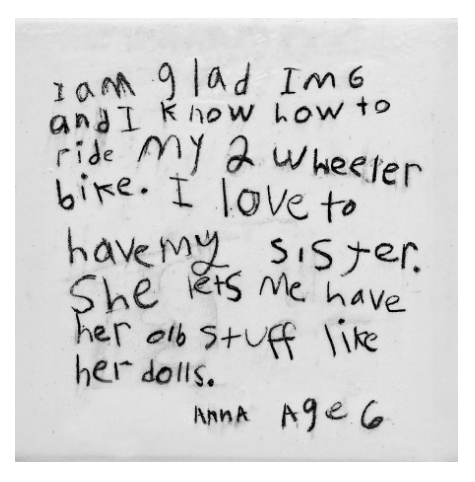
What are some Impairments Associated with Specific Learning Disabilities?
25% - 50% of indv. with disabilities have ADDITIONAL impairments
memory
executive functions
attention deficit / hyperactivity disorder (AHDH)
social cognition
emotional and behavioral disorders
What is Attention Deficit / Hyperactivity Disorder (AHDH)?
Disorder that affects brain function + patterns of inattention, hyperactivity, and impulsivity
*one of the most common mental disorders affecting children
*most common in boys
How likely is it that a child with a learning disorder also has other impairments?
About 25% - 50% of students are identified with a concomitant disorder
memory deficits, executive dysfunction, attention deficits
social / emotional impairments
behavioral noncompliance
sensory impairments + chronic illnesses
What are some of the potential health concerns when misdiagnosed with an SLD?
Developmental Disability
sensory impairments, epilepsy
Chronic Illness
diabetes, sickle cell disease, cancer
Psychosocial Problems
hunger, poverty, abuse
What are some Intervention Strategies for children with SLD’S?
Phonemic / Phonological
sounds in words, letter sounds, rhyming, alphabet awareness, syllables
Fluency
word naming, oral reading, reading to peers, dolls, animals
Comprehension
questions (literal, inferential, creative thinking, and critical)
What is the Dual Route Theory?
Reading occurs through two distinct, parallel cognitive pathways
Lexical (orthographic) route
Non-lexical (phonological) route
What are SMART IEP Goals?
Goals that are …
Specific
Measurable
use Action words
Realistic
Time limited
IEP = written legal document that lays out program of special education
What does the acronym ASHA stand for?
American Speech Language Hearing Association
What are the risk factors for Death and Hard of Hearing Children?
Neonatal Factors
prematurity
intraventricular hemorrhage
necrotizing enterocolitis (NEC)
prolonged ventilation
Bacterial Meningitis
Genetic Syndromes
Family history
What is the definition for the term Pina?
Outer part of the ear that collects sound and directs it into the ear canal
What is the definition for the term Ear Canal?
Tube that carries sound from the outside ear to the eardrum
What is the definition for the term Malleus, Incus, and Stapes?
Three tiny middle ear bones that pass sound vibrations from the eardrum to the inner ear
What is the definition for the term Tympanic Membrane?
Eardrum that vibrates when sound hits it, helping one hear
What is the definition for the term Cochlea and Labyrinth?
A spiral-shaped inner ear structure that converts sound vibrations into nerve signals for the brain
Inner ear passages that includes the cochlea and helps with both hearing and balance
What is the definition for the term Auditory Nerve?
What are the 1-3-6 Guidelines?
Hearing screening by 1 month
Diagnosis by 3 months
Intervention by 6 months
What is Diagnostic Overshadowing?
Underdiagnosis
mistaking a developmental disability as just hearing loss.
lack of diagnosis + lack of early intervention = long term outcomes
child and family miss out on appropriate services
Overdiagnosis
mistaking hearing related challenges for a developmental disability
inappropriate supports may fail to meet needs or help families prepare.
misdiagnosis can lead to schools or programs not accepting the child
What is Sensorineural Hearing Loss?
Damage to the inner ear or auditory nerve causing permanent hearing loss
damage to the hair cells or spiral ganglion neurons in the inner ear
*inner ear, cochlea, auditory nerve
Treatment = amplification through hearing aids or cochlear implants
What is Conductive Hearing Loss?
Sound is blocked in the outer or middle ear, reducing how well it reaches the inner ear
sound waves cannot go to outer ear canal, through the eardrum / small bones of inner ear
*outer ear canal, eardrum, small bones
Treatment = medically, surgically, bone conduction hearing aids
What is Combined or Mixed Hearing Loss?
A combination of sensorineural and conductive hearing loss
*often permanent
Treatment = hearing aids can be beneficial
What are Neural Hearing Disorders?
When the auditory nerve cannot properly send signals to the brain
trouble with speech perception or understanding speech
*auditory nerve
Explore top notes

